 Best
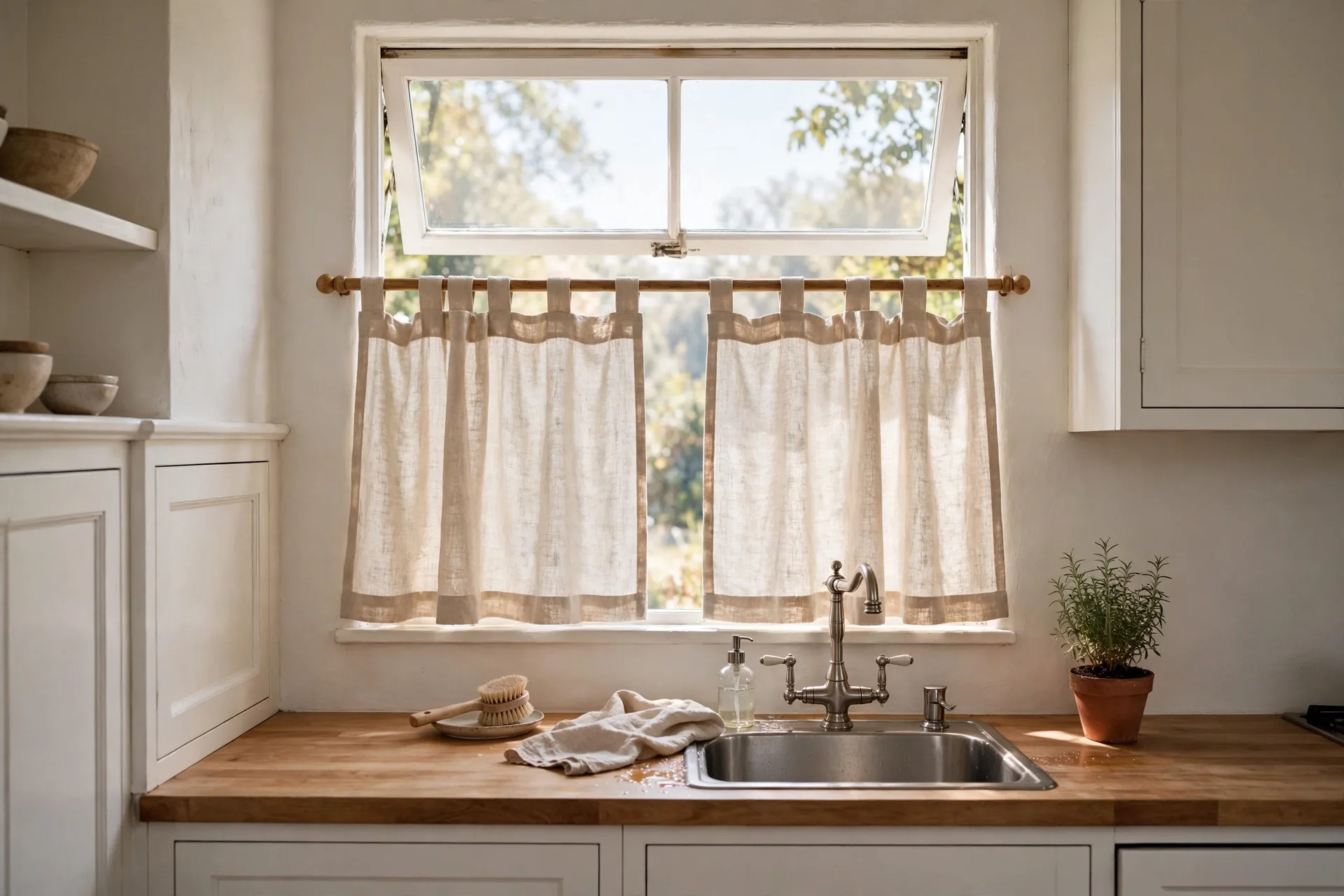
Cafe Curtains
Cafe curtains cover the lower half of a window, so a kitchen stays private at eye level while the top stays open to light. This guide sorts fabrics, lengths, and rods by job.
A cafe curtain is a short panel that covers the lower half of a window and leaves the top half open. That split is the whole point: privacy where people can see in, daylight where they cannot. This guide covers kitchen-proof fabrics, rod height, measuring for short panels, and six picks grouped by job.
Cafe picks by job
Linen-texture tiers suit everyday kitchen sink windows, sheer voile cafe panels suit dark kitchens that still need light, and short washable polyester cafe panels suit bathroom and basement windows. The picks are grouped by the kitchen job each one fits, not by brand. Check fiber content, heading, opacity, and the care label on the listing for the panel you choose.
As an Amazon Associate, we earn from qualifying purchases.
| Pick | Type | Light and privacy | Best for |
|---|---|---|---|
| 1 | Linen-texture rod-pocket tier panels | Light filtering, daytime privacy | Everyday kitchen sink windows |
| 2 | Sheer voile cafe panels | Sheer, soft light, light daytime privacy | Dark kitchens that still need light |
| 3 | Striped linen-blend tier panels | Light filtering, daytime privacy | Farmhouse kitchens |
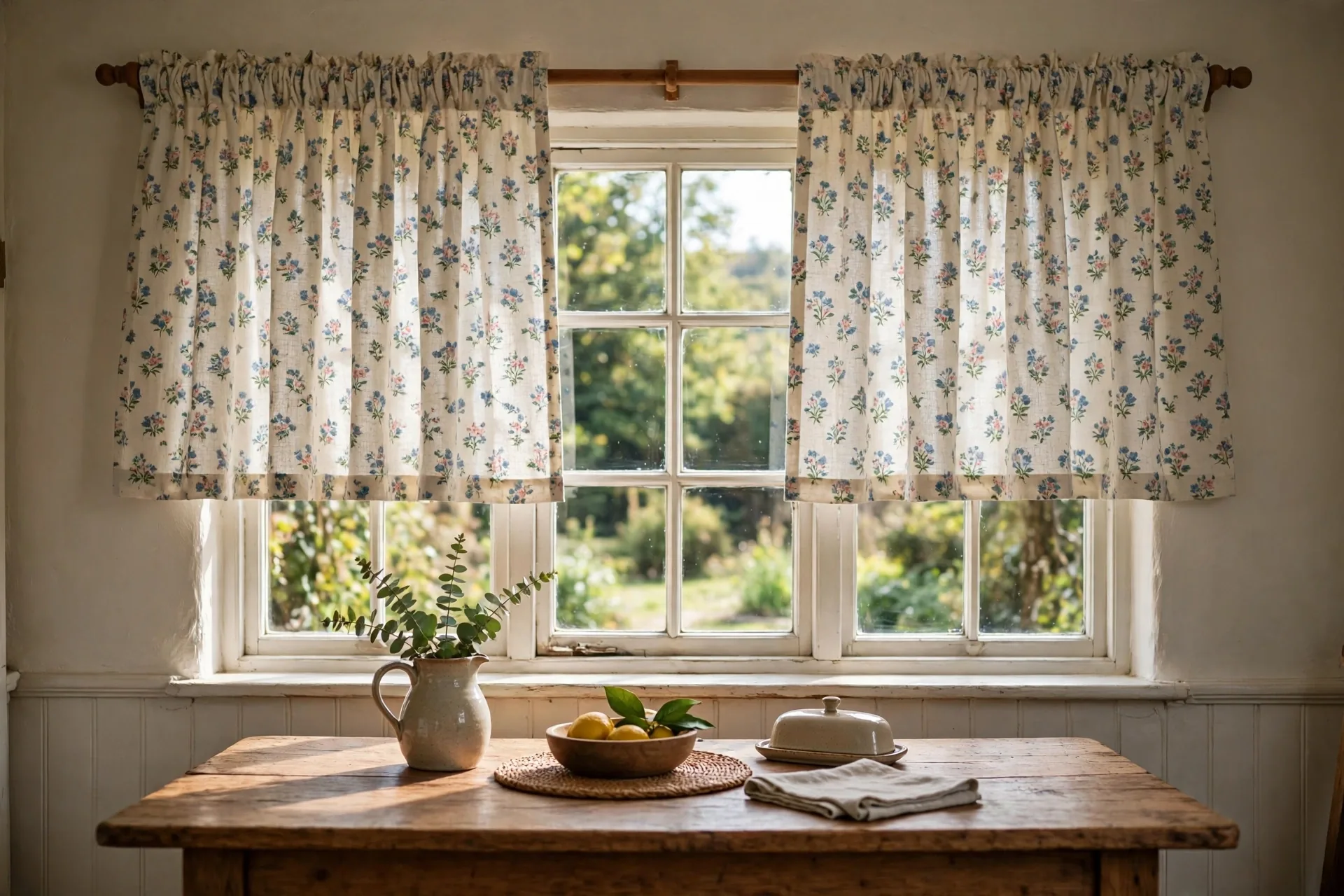
| 4 | Floral linen-blend tier panels | Light filtering, daytime privacy | Cottage dining rooms |
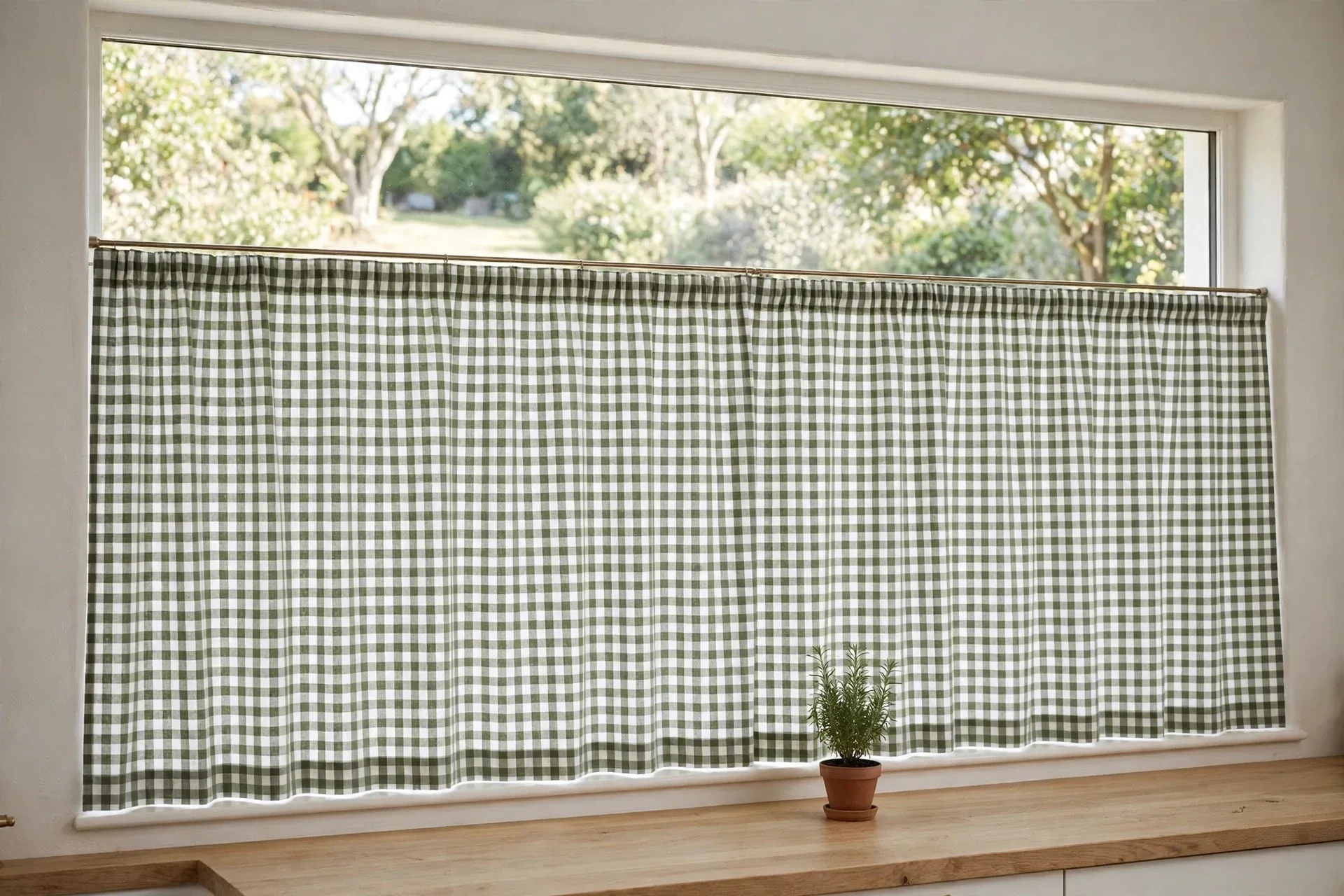
| 5 | Gingham check cafe panels | Light filtering, daytime privacy | Country kitchens |
| 6 | Short washable polyester cafe panels | Light filtering, daytime privacy | Bathroom and basement windows |
1. Linen-texture rod-pocket tier panels: best for everyday kitchen sink windows
- Best for: A kitchen sink window used every day, where soft daylight and a natural texture matter more than darkness.
- Key features: Linen-texture face, rod-pocket heading, light-filtering fall, short tier length, plain, relaxed drape.
- Pros: Natural linen look without pure-linen care, softens daylight at the sink, suits most kitchen styles.
- Cons: Limited night privacy, wrinkles show after washing, check the blend on the listing.
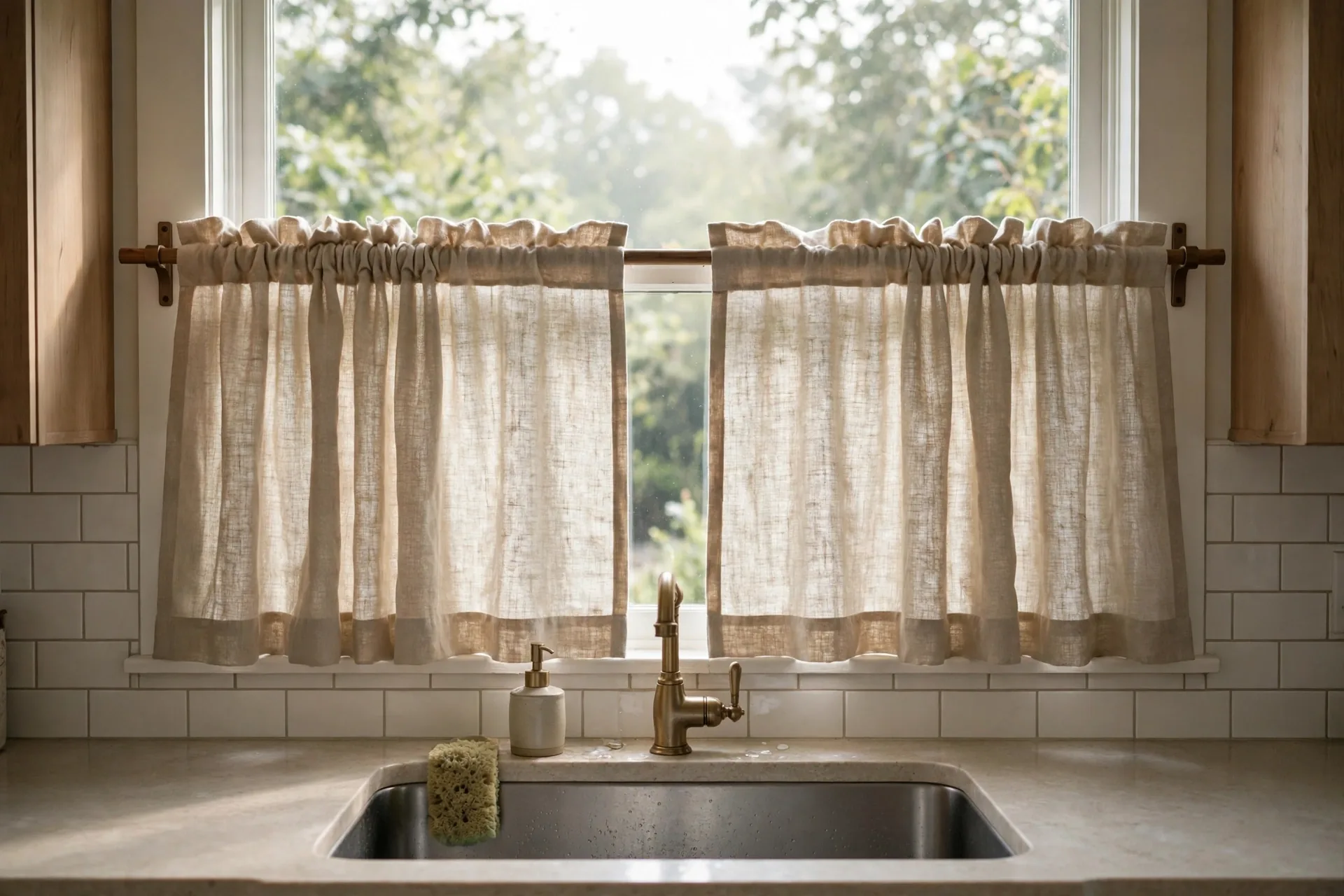
2. Sheer voile cafe panels: best for dark kitchens that still need light
- Best for: A kitchen that faces away from the sun or sits under a deep overhang, where a heavier panel would make the room gloomy.
- Key features: Sheer voile face, rod-pocket or clip-ring heading, sheer fall, short tier length, very light weight.
- Pros: Lets in the most daylight of any cafe fabric, keeps the window dressed without darkening the room, light enough for a tension rod.
- Cons: Least privacy of any cafe fabric, no use alone on a street-facing window at night.
Pick the tier length from where the privacy needs to stop: a 24-inch tier covers the lower half of a small window, while a 36-inch tier suits a taller pane, and either leaves the top of the glass open for daylight.
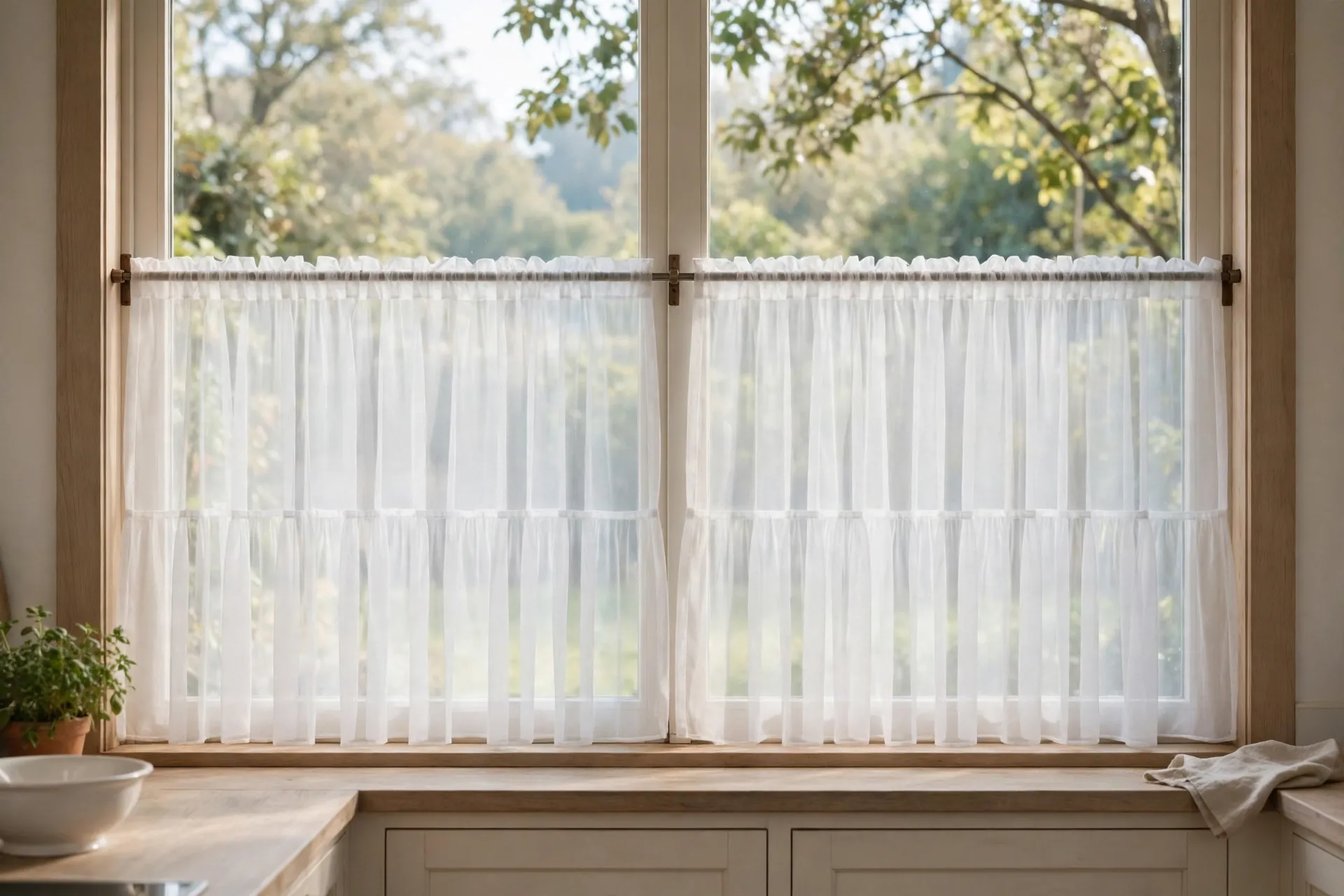
3. Striped linen-blend tier panels: best for farmhouse kitchens
- Best for: A farmhouse or country kitchen where a classic stripe suits wood, stone, and painted cabinets.
- Key features: linen-blend face, ticking stripe, rod-pocket heading, light-filtering fall, short tier length
- Pros: crisp, classic look, stripes make a narrow window read wider, light filtering with daytime privacy.
- Cons: stripes need matching across panels, limited darkness at night.
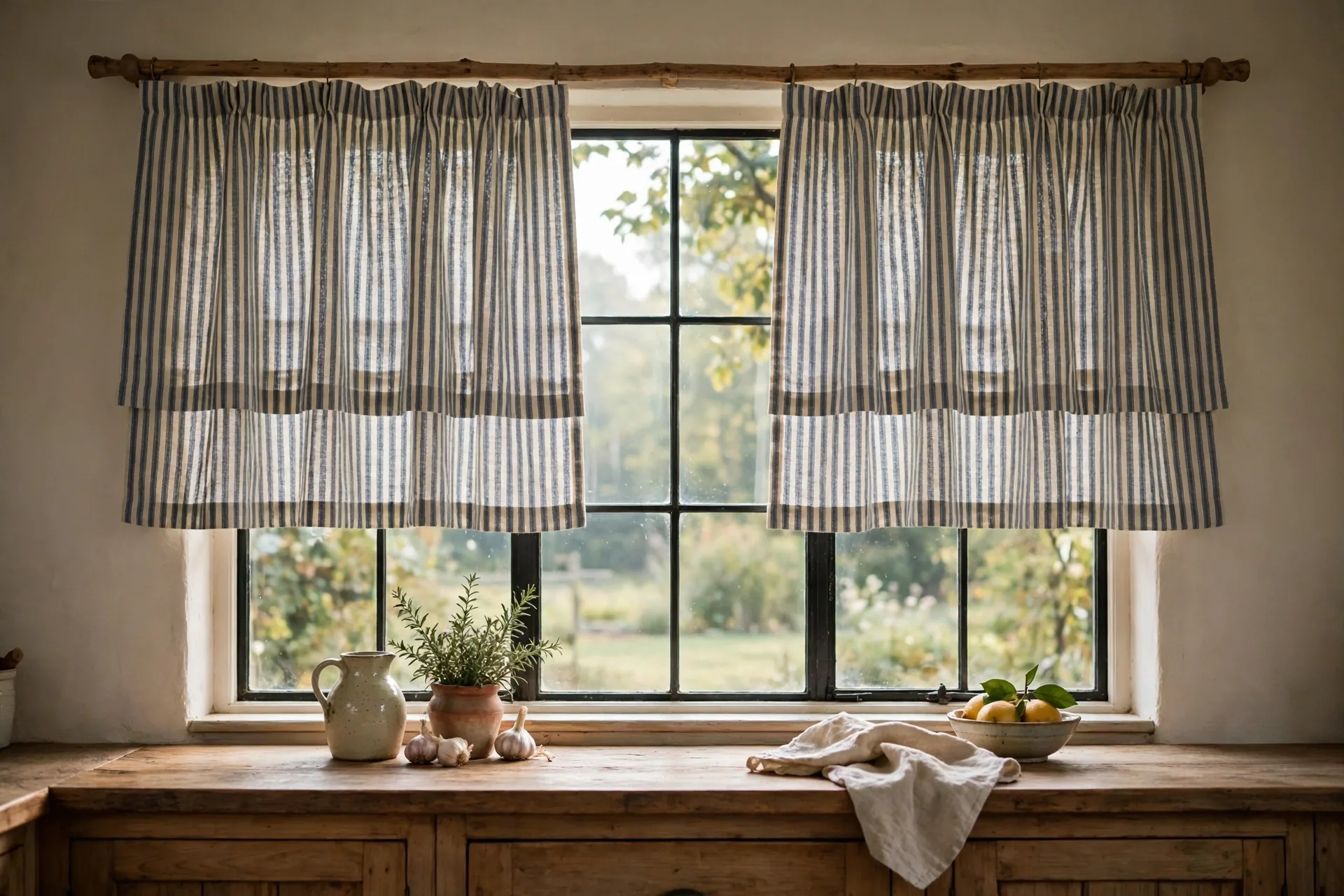
4. Floral linen-blend tier panels: best for cottage dining rooms
- Best for: A cottage dining room or breakfast nook where a soft floral suits painted furniture and plain walls.
- Key features: Linen-blend face, floral print, rod-pocket heading, light-filtering fall, short tier length.
- Pros: Soft, romantic look without a fussy ruffle, blend care is easier than pure linen, print hides small marks better than plain cream.
- Cons: Floral dates faster than plain or stripe if the print is bold, check the print scale against the window size, limited night privacy.
5. Gingham check cafe panels: best for country kitchens
- Best for: A country kitchen where a small check reads cheerful and classic without competing with patterned dishes or tiles.
- Key features: Gingham check face, cotton or cotton-blend fabric, rod-pocket heading, light-filtering fall, short tier length.
- Pros: Timeless pattern that suits wood and white cabinets, small checks read calm from a distance, easy to pair with plain towels and cushions.
- Cons: Large checks can look loud on a small window, red and navy checks fade sooner, no darkness at night.
6. Short washable polyester cafe panels: best for bathroom and basement windows
- Best for: A bathroom, basement, or laundry window where moisture, splashes, and frequent washing matter more than a natural fiber.
- Key features: Polyester face, short tier length, rod-pocket heading, light-filtering fall, quick-drying fabric.
- Pros: Handles moisture and frequent washing better than linen or cotton, dries fast, holds its shape with little ironing.
- Cons: Less natural hand than linen or cotton, can look flat if hung with too little fullness, check the listing for the exact opacity.
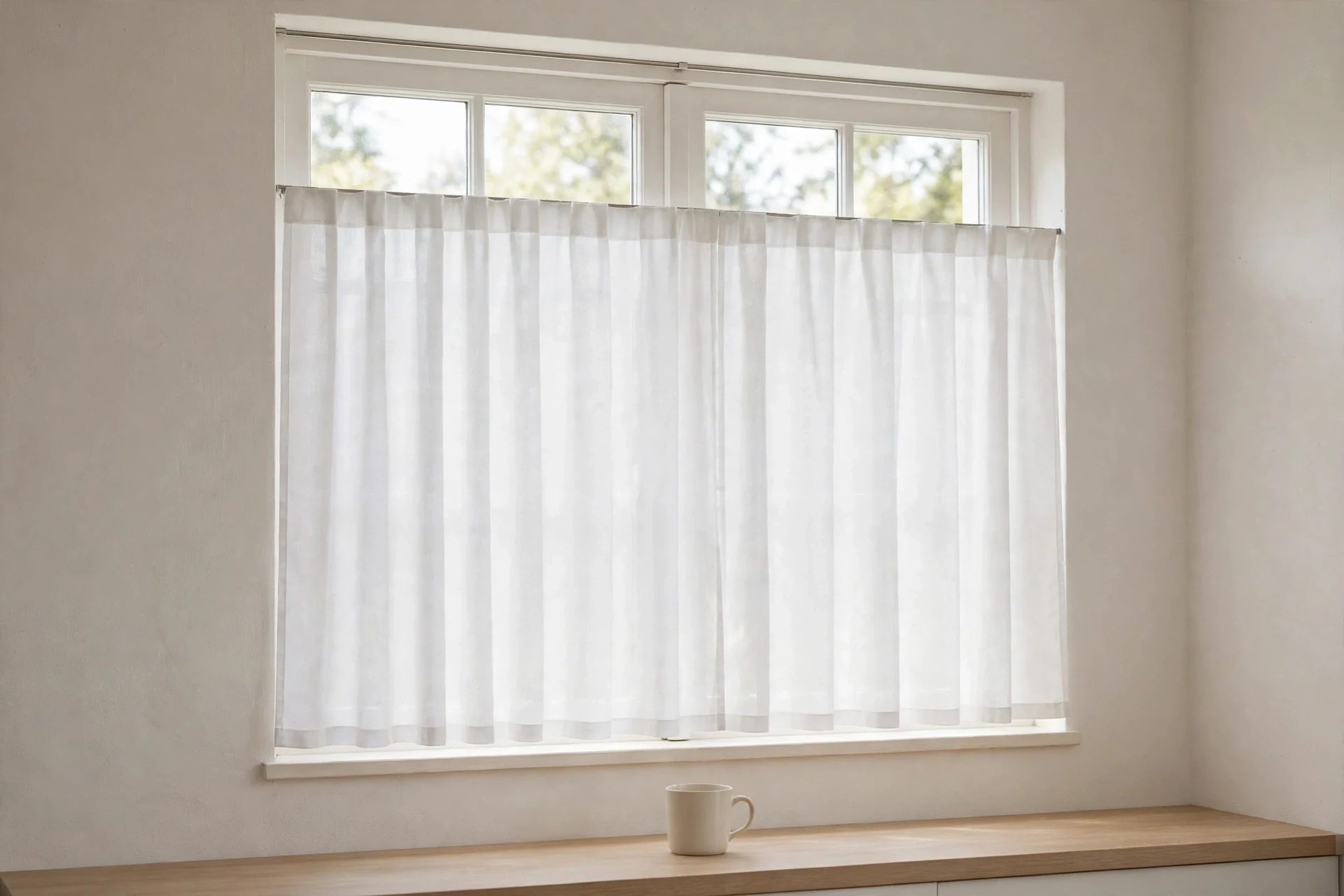
What a cafe curtain is, and where the rod goes
A cafe curtain covers the lower half of a window, from a rod set near the middle of the glass down to the sill or just past it, while the top half stays bare. The rod height is what makes it work, and the most reliable guide on a double-hung window is the meeting point of the two sashes, where the upper and lower sash meet. Set the rod there and the panel covers exactly the part of the window people can see through from outside.
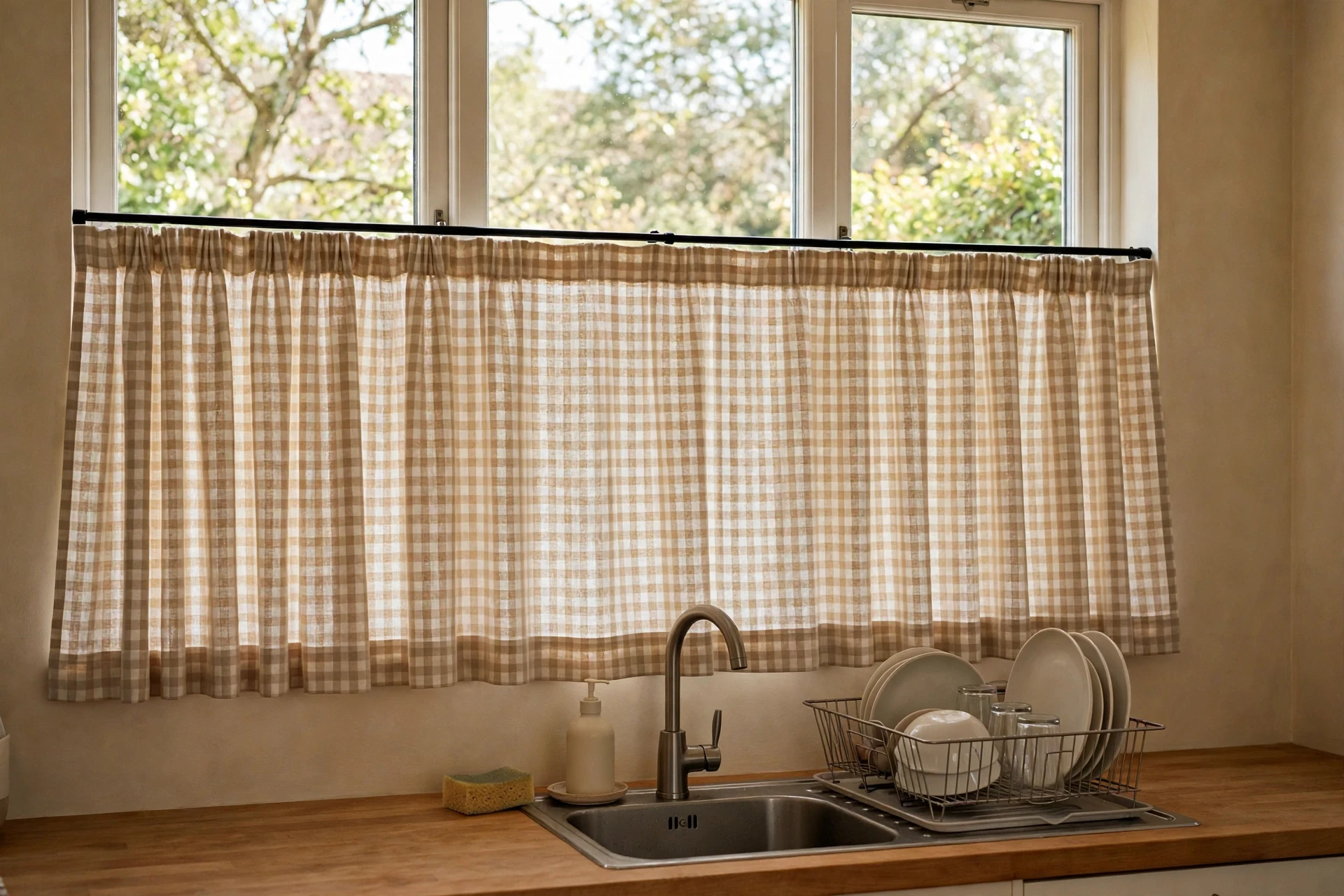
On a window with no sash meeting point, judge by eye level instead: stand outside at the distance a passerby would stand, note how high the view reaches, and set the rod a little above that line. Cafe curtains suit street-facing kitchen and bathroom windows, where the view from outside reaches only the lower half. They do not suit a window that needs darkness, a bedroom that needs sleep, or a room overlooked from above, because the open top lets in both light and view from any higher angle. If night privacy matters, pair the cafe panel with a blind or shade that closes after dark, as covered in the layering section below.
Cafe, tier, and valance: three short lengths kept straight
Cafe, tier, and valance are three different short lengths, and mixing them up is the most common buying mistake in this category. A cafe curtain covers the lower half of a window, hung from a rod near the middle of the glass. A tier curtain is any short panel sold in tiers, usually in a pair, and in practice most tier panels sold today are cafe panels, so the two words are often used for the same product. A valance is the opposite: a short panel that covers only the top of the window, hung from a rod at or above the frame, used for decoration or to hide hardware.
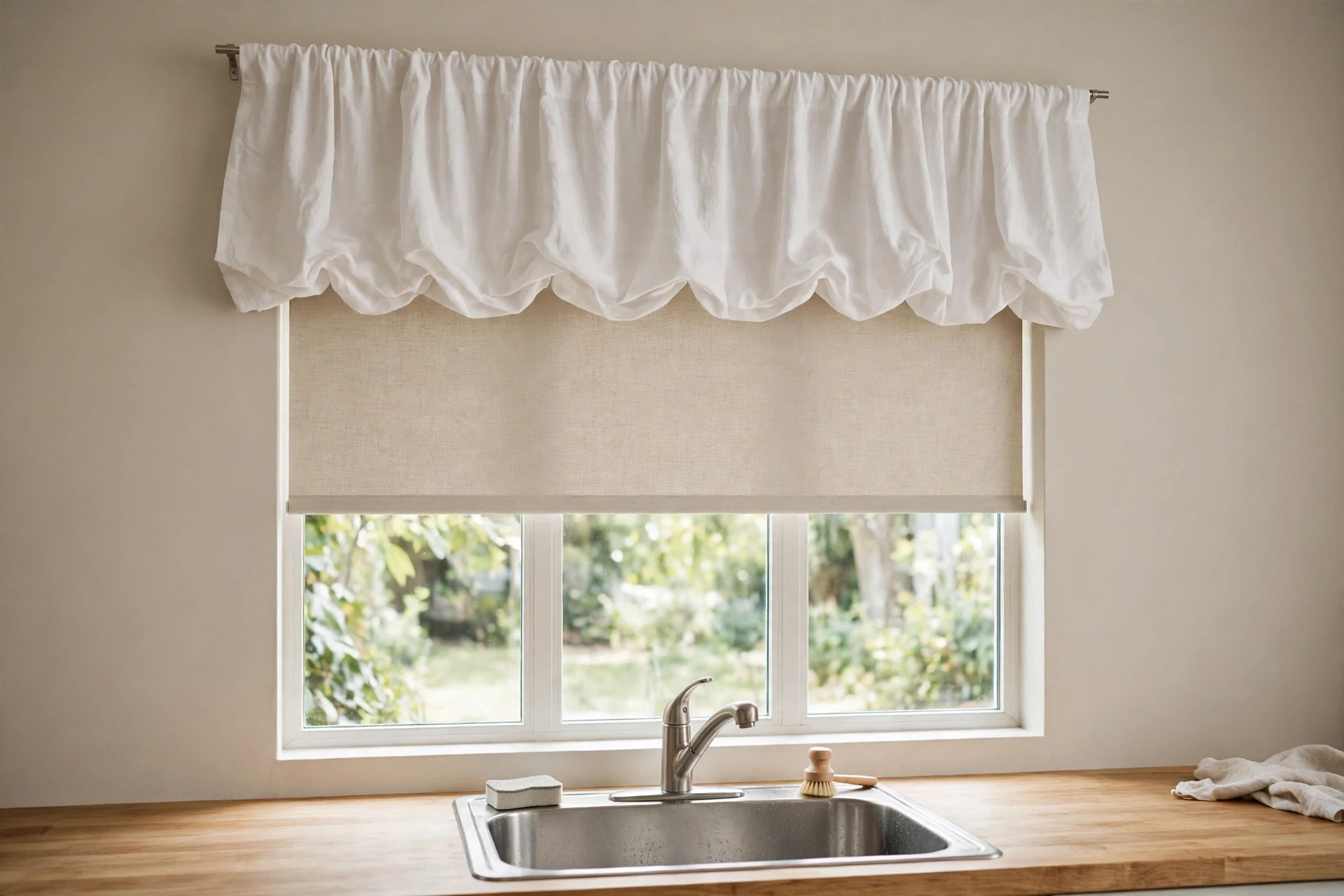
Buy by the job, not the label. If you want privacy at the bottom with light at the top, you want a cafe or tier panel hung at the middle of the window, whatever the listing calls it. If you want to dress the top of a window that already has blinds or a shade doing the privacy work, you want a valance. A listing that calls a top-only panel a cafe curtain, or a bottom-half panel a valance, has the words wrong, and the panel length and rod position in the listing tell the truth. Read the listing for panel count and finished drop before ordering, and measure your window against the drop, not against the name.
Fabric that survives a kitchen
Linen is the fabric most often recommended for kitchen cafe curtains, because its natural texture suits kitchens and it softens with washing. Pure linen wrinkles and needs gentler care, while a linen-texture polyester or a linen blend gives most of the look with easier washing. Check the fiber line on the listing before judging a panel by its title, because a panel called linen may be a blend or a linen-look fabric with little or no flax in it. For linen fabric advice, see Best Linen Curtains.
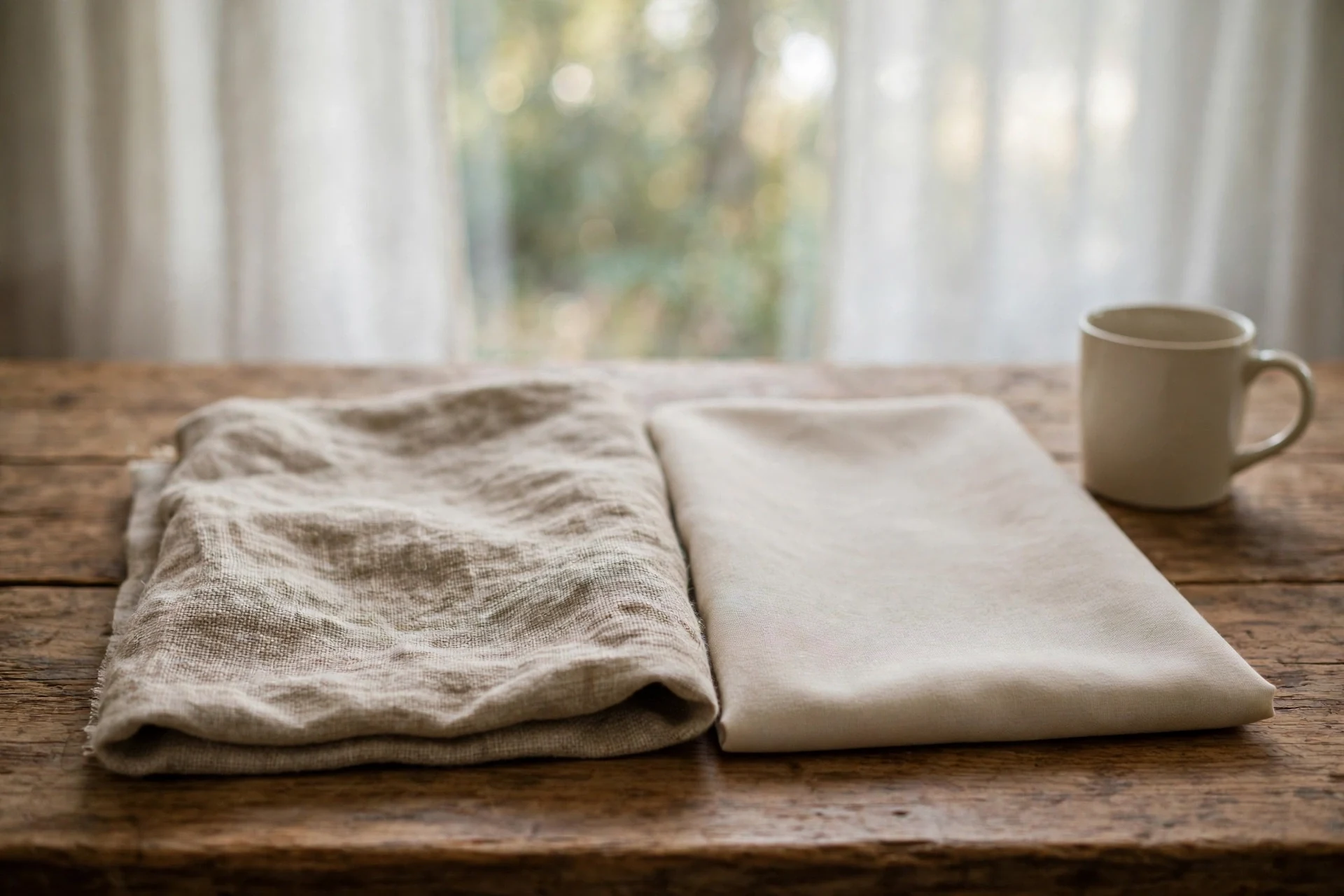
Cotton is the practical middle ground: it washes well at home, holds a stripe or check crisply, and suits farmhouse and country kitchens. Cotton can shrink if washed hot, so the care label matters more than the fabric name, and a cotton panel that just touches the sill before washing can end up short after a hot wash. Polyester suits the hardest-working spots: it dries fast, holds its shape with little ironing, and handles frequent washing in bathrooms, basements, and laundry rooms better than natural fibers.
Sheer voile and lace sit at the light end. Voile gives the most daylight and the least privacy, which suits a dark kitchen or a window that faces a private garden. Lace gives a vintage, textured privacy that reads solid from a distance while still passing light, but lace collects dust in its openwork and needs gentler washing. Neither voile nor lace suits a street-facing window at night on its own, because indoor lights turn a sheer panel see-through after dark. For sheer fabric advice, see Best Sheer Curtains.
Pattern and color that still look good after cooking
Kitchens punish pale, plain fabric. Steam, splashes, and cooking grease reach the lower half of a kitchen window first, which is exactly where a cafe panel hangs, so a cream panel in a hard-working kitchen shows marks sooner than a darker or patterned one. Darker neutrals such as charcoal, navy, and olive hide everyday kitchen marks better than cream, and a small pattern such as a narrow stripe, a small check, or a small floral hides a splash better than a plain panel.
Stripes are the safest pattern for a cafe window.
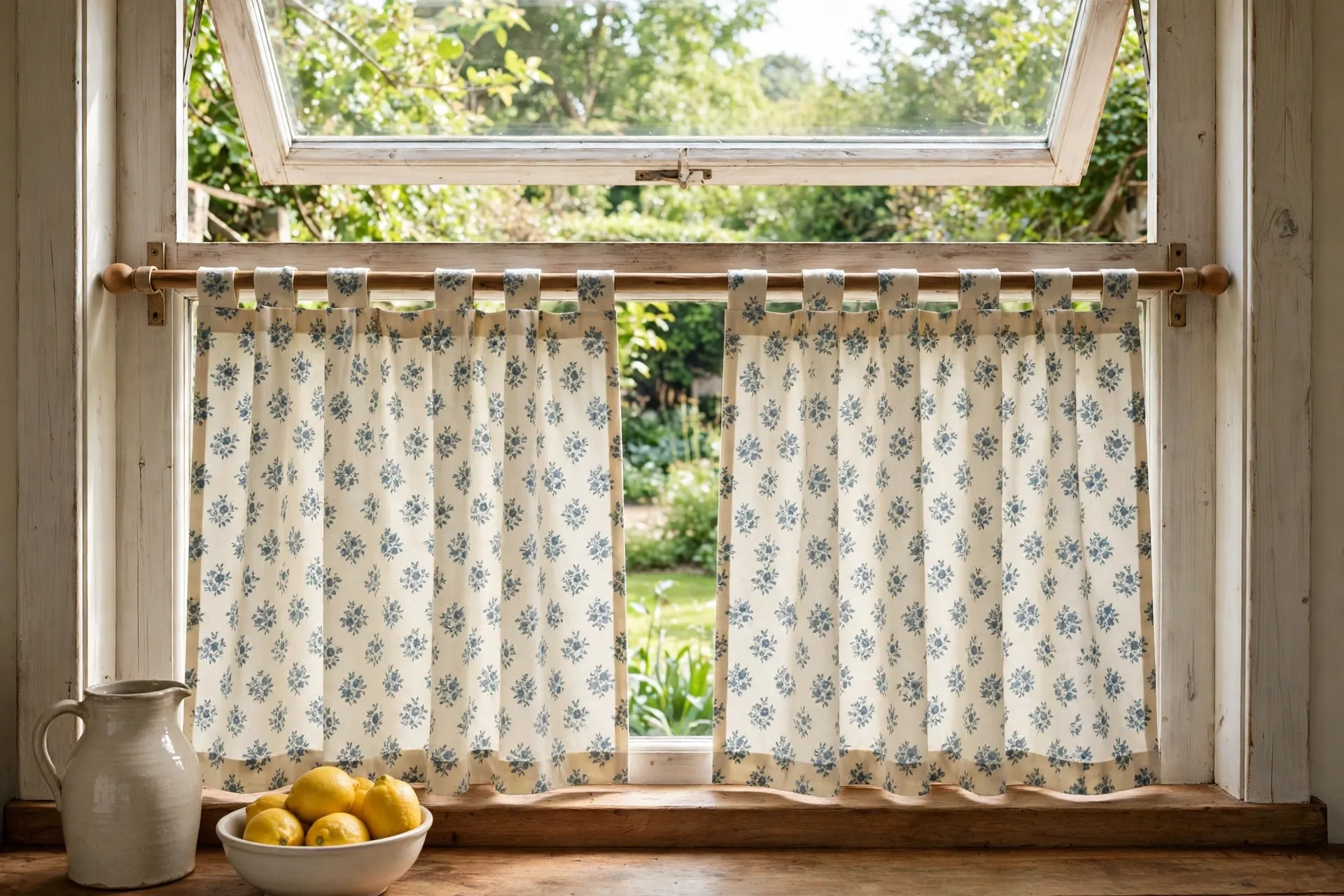
A narrow stripe makes a narrow window read wider, and a ticking stripe suits farmhouse, coastal, and modern kitchens alike. A small check in gingham reads cheerful and classic in a country kitchen, but a large check can look loud on a small window, so match the check size to the window. Florals need more care: a small, muted floral suits a cottage dining room and hides small marks, while a large, bold floral can dominate a small kitchen and date faster than a plain or striped panel. If the kitchen already has patterned tiles or a patterned backsplash, a plain panel is the safer pick, because two strong patterns in one small room compete.
Measuring a short panel without guessing
Measure a cafe window in two numbers: rod width and drop. Rod width is the span the rod must cover, measured from bracket to bracket, and for a cafe panel the rod usually sits inside the window frame or just past it, so measure the inside width of the frame at the rod height, not at the sill. Drop is the finished length from the rod to the hem, and for most cafe panels that means from the middle rod down to the sill or just past it. For measuring steps in full, see How to Measure for Curtains.
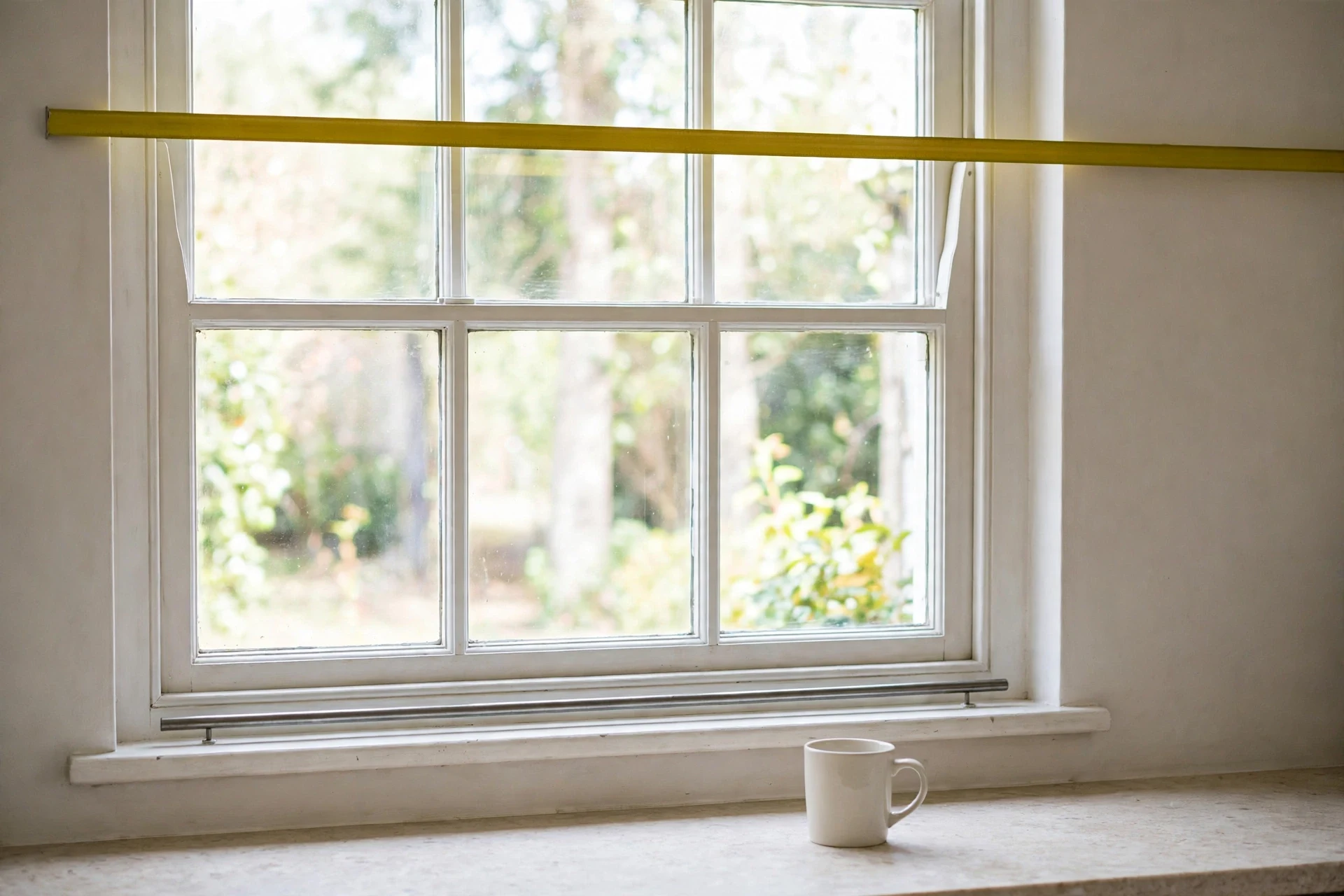
Fullness decides whether a short panel looks like a curtain or a flat sheet. Total fabric width of about one and a half to two times the rod width gives gentle gathering on a short panel, with two times the safer choice for sheer voile, which needs more fabric to read as a curtain rather than a flat sheet. Drop needs the same care as width: a cafe panel that just clears the sill looks finished, while one that stops short above the sill can look sparse. When in doubt, err slightly longer rather than shorter, because a panel that brushes the sill can be shortened, while a short panel cannot be lengthened. Check the finished drop on the listing before ordering. For length choices across rooms, see Curtain Sizes.
Rods that suit short panels
Cafe rods are slim rods made for short panels, and they suit most cafe windows because the panel is light and the span is short. A slim brass, iron, or white rod keeps the look understated and lets the fabric carry the decoration.
Tension rods suit rentals and windows where drilling is not wanted. A tension rod grips the inside of the frame by spring pressure, needs no holes, and comes out cleanly at move-out, which is why it suits short, light cafe panels so well.
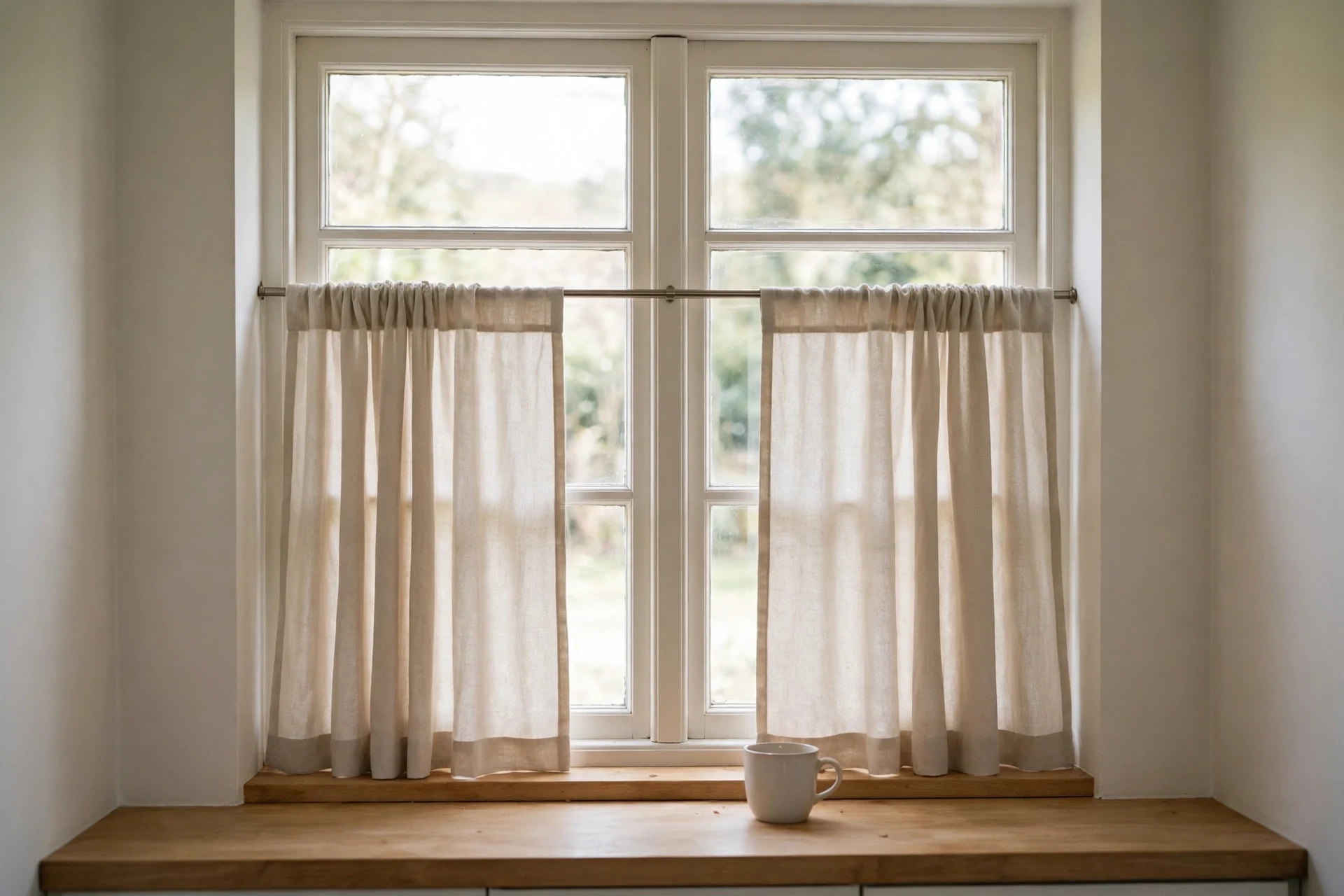
Its limit is weight: a tension rod suits light voile, linen-texture, and cotton tiers, but a heavy lined panel or a wide span can slip, so test the rod with the panel before trusting it, and use a wider-diameter tension rod for a wider window. For hanging steps, see How to Hang Curtains. Clip rings suit panels that need adjusting, because moving the clip changes the hanging length by a little, and they slide more freely than a rod pocket. Inside-mount rods suit deep window frames and tiled kitchen walls where a wall-mounted bracket would sit awkwardly, but they need a frame deep enough for the rod and the gathered fabric to clear the glass and any handle.
Rooms beyond the kitchen
Bathrooms suit cafe panels well, because a bathroom window needs privacy at eye level and light above, and a short panel stays clear of splashes better than a full-length one. Choose a quick-drying fabric for a bathroom, such as polyester or a polyester blend, and a panel that washes often without fuss, because steam and splashes reach a bathroom panel daily.
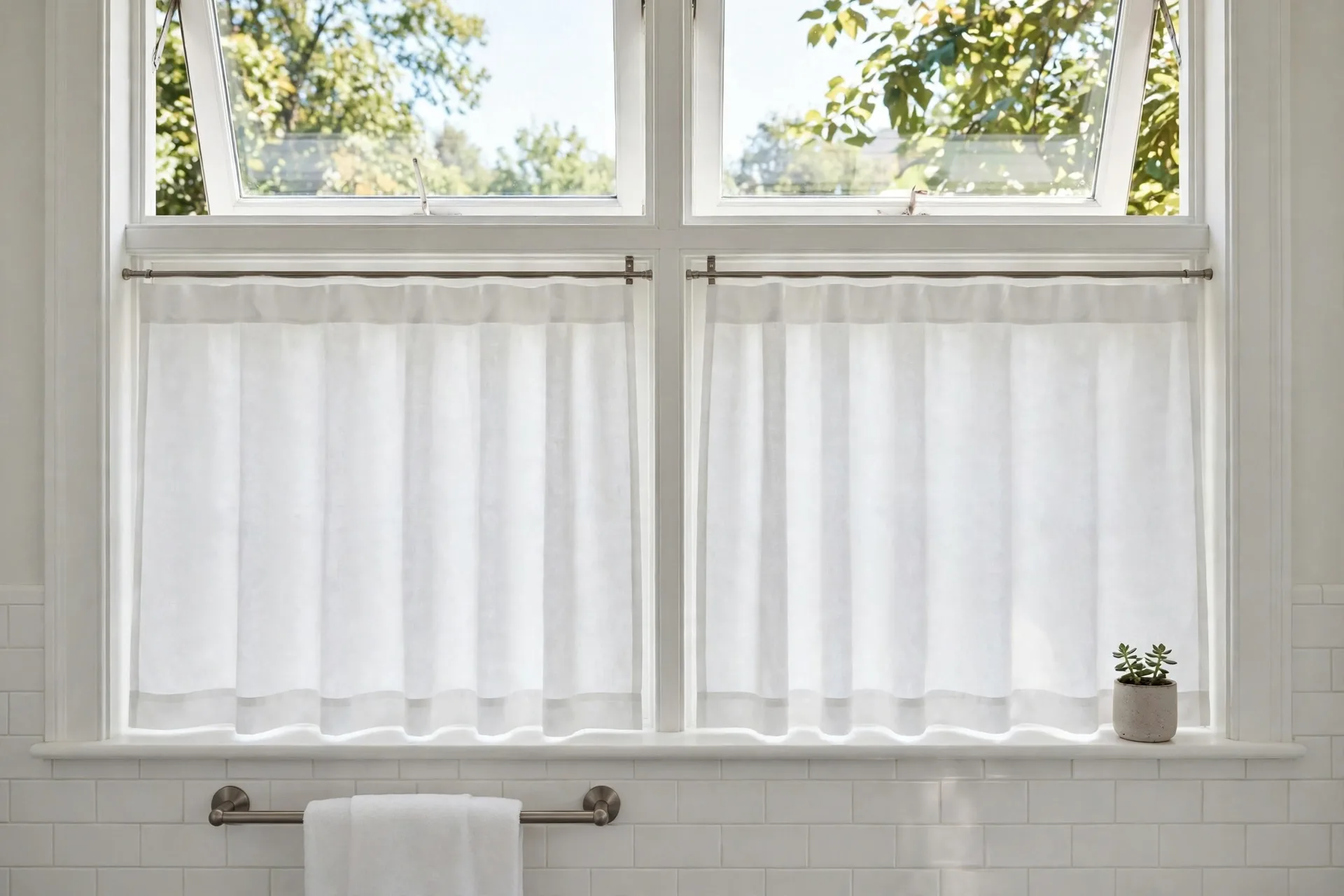
Basements and laundry rooms suit short panels because their windows are often small, high, or partly below ground, and a full-length curtain would overwhelm them and collect dust near the floor. A short washable panel gives privacy and a finished look without bulk. Dining nooks suit cafe panels where the table sits against the window: a full-length panel behind a dining bench gets sat on, splashed, and pulled, while a short panel stays clear of the bench and the table. For room-wide living room advice, see Best Curtains for Living Room.
A cafe panel also suits the top portion of a patio sliding door, not just windows. Hung on the door's upper glass, it gives eye-level privacy where people pass while leaving the lower glass and the handle clear. Keep the panel clear of the door track and handle so the door still slides freely. Cafe panels suit small windows well, because a short tier gives privacy at eye level without swamping the glass, as the small-windows guide shows.
Layering a cafe panel with what is already there
A cafe panel layers well with blinds and shades, because it covers a different part of the window. With a blind or shade that closes fully, the cafe panel can stay in place all day for softness and daytime privacy, while the blind closes at night for full privacy and darkness. Mount the blind close to the glass and the cafe panel on its mid-window rod, and check that the blind cord or wand moves freely and that the panel does not snag it. Cord safety matters wherever blinds are layered: keep cords out of reach of small children, and favor cordless blinds or a cord cleat where children use the room.
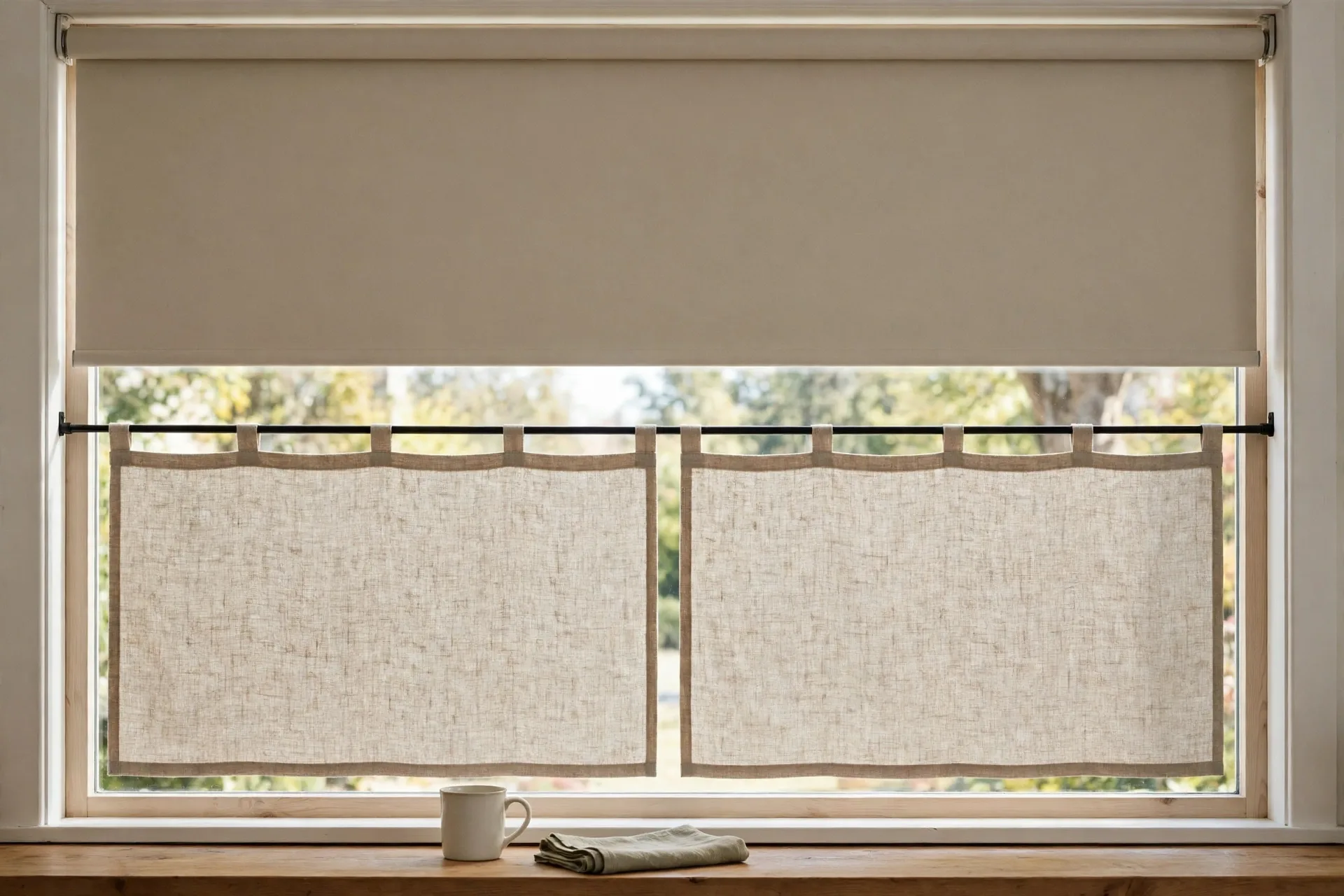
A valance over a cafe panel gives a finished top to a window that otherwise looks bare above the panel, dressing the frame and hiding the top of a blind, while the cafe panel does the privacy work below. Keep the valance clear of the blind's moving parts. Layering also fixes the night privacy problem honestly: a cafe panel alone never gives night privacy on a street-facing window, because the open top and the lit interior defeat it. Rather than buying a heavier cafe panel and hoping, add the layer that actually closes: a blind, a shade, or a full panel that draws after dark.
A cafe panel also pairs well with a woven wood shade for a day and night job. By day, keep the shade up and the cafe panel drawn, so the room gets filtered light with privacy at eye level. At night, lower both, and the shade closes the top half while the cafe panel covers the lower half, giving full coverage without a full-length panel.
Washing kitchen curtains so they stay fresh
Kitchen curtains need washing more often than curtains in other rooms, because cooking grease, steam, and splashes reach them daily. A light cotton or polyester tier panel usually washes at home on a gentle cycle, while pure linen and lace need gentler care, and the care label on the panel you bought is the rule in every case. Wash kitchen panels before grease sets, not after it has yellowed, because old grease is harder to shift than fresh grease.
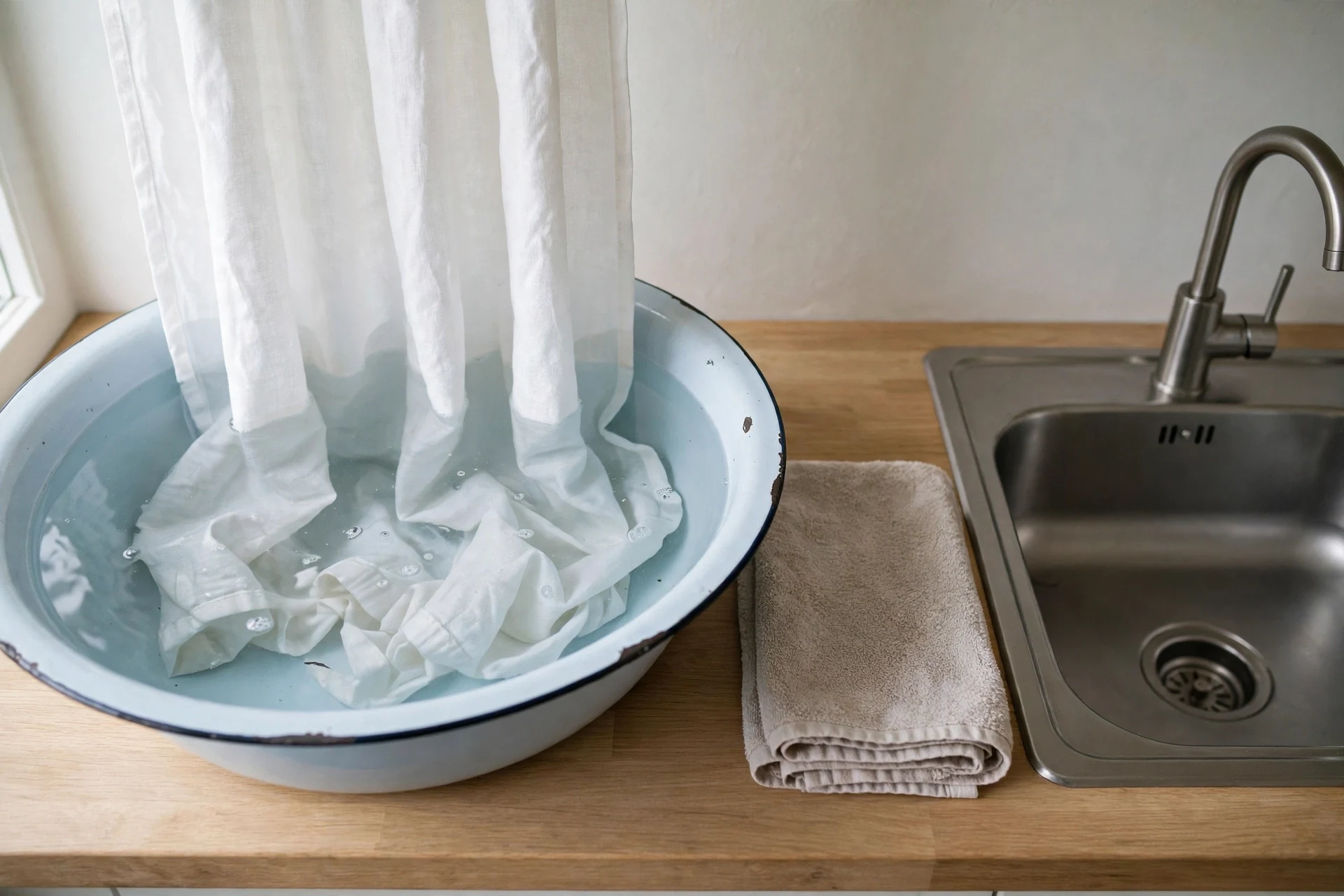
Treat grease before washing: a short soak in warm water with a mild detergent loosens cooking film better than a cold quick wash, and a stain remover on a splash mark before washing beats washing the whole panel twice. Dry panels by hanging them back up while slightly damp where the label allows, because the panel's own weight pulls creases out as it dries, and a short panel dries faster than a full-length one. Read the care symbols on the label rather than guessing: the wash, dry, and iron symbols follow the international care labeling standard, and the symbols are explained by GINETEX under that standard.
Mistakes that spoil a cafe window
The most common cafe mistake is hanging the panel too flat: a short panel with too little fullness pulls tight across the glass, looks like a sheet, and leaves gaps at the folds. A second mistake is setting the rod by the middle of the wall rather than by the window.
A third mistake is trusting a cafe panel for night privacy, which no fabric weight fixes, because the open top defeats it: plan the night layer before buying, not after the first evening reveals the problem. A fourth mistake is hanging a heavy panel on a light tension rod, which slips, sags, and can fall, especially on a wide window: match the rod to the panel weight.
Frequently asked questions about cafe curtains
Most cafe questions come down to rod height, fabric, and night privacy. Get those three right and the rest follows.
What exactly is a cafe curtain?
A cafe curtain is a short panel that covers the lower half of a window, hung from a rod near the middle of the glass down to the sill or just past it. The top half stays open, so daylight and sky come in while the lower half gives privacy at eye level.
Where should the rod go for cafe curtains?
On a double-hung window, set the rod where the upper and lower sash meet, so the panel covers the bottom half and the top stays open. On a window with no sash meeting point, set the rod just above outside eye level. A rod set too low leaves visible glass above the panel, and a rod set too high turns the cafe panel into a near-full curtain.
Do cafe curtains give privacy at night?
A cafe curtain alone does not give night privacy on a street-facing window, because indoor lights turn light fabrics see-through and the top half stays open. For night privacy, pair the cafe panel with a blind, shade, or full panel that closes after dark.
What fabric is best for kitchen cafe curtains?
Linen and cotton suit most kitchens, because they look natural and wash well at home, while polyester suits bathrooms, basements, and hard-working sink windows that need frequent washing and fast drying. Sheer voile suits dark kitchens that need light, and lace suits vintage rooms that need textured privacy.
How wide should cafe curtains be?
Total fabric width of about one and a half to two times the rod width gives gentle gathering on a short panel, with two times the safer choice for sheer voile. On a wide window, use two panels meeting in the middle, with a center support bracket on the rod so it does not sag.
Can cafe curtains work on a bathroom window?
Yes, and bathrooms suit them well, because a bathroom window needs privacy at eye level and light above, and a short panel stays clear of splashes better than a full-length one.
Do cafe curtains work with blinds?
Yes. Mount the blind close to the glass and the cafe panel on its mid-window rod, so the panel gives softness and daytime privacy while the blind closes at night for full cover.
How do you wash cafe curtains?
Most cotton and polyester tier panels wash at home on a gentle cycle, while pure linen and lace need gentler care, and the care label on your panel is the rule.
Are cafe curtains the same as tier curtains?
In practice, most tier panels sold today are cafe panels, because a tier is any short panel sold in tiers and most of those cover the lower half of a window. A valance is different: it covers only the top of the window.
Can you use cafe curtains in a living room?
Yes, on a small living room window where a full-length panel would dominate the wall. A short panel leaves wall space above for pictures or shelves and keeps the room bright.
For other curtain types, see Best Window Curtains.
This guide is research-based curation: we compared maker specifications, published reviews, and current prices. Read how we choose.