 Best

Best Curtains for Bathroom Windows
A bathroom window asks for privacy first, then fabric that dries fast and washes often. This guide sorts short panels, cafe panels, and splash-zone options by the job each one does.
The best curtains for bathroom windows are short, washable panels that keep the room private after dark and dry fully between uses. Privacy comes first, because a panel that looks private in daylight can turn see-through at night, and drying comes second, because a panel that stays damp grows musty no matter how good it looks on the rod.
This guide works through the bathroom jobs in order, from privacy after dark to drying between showers, so you can match a panel to your window instead of guessing from a photo.
Bathroom window picks by job
Polyester privacy panels suit an everyday family bathroom, cafe panels suit eye-level privacy with daylight above, and water-repellent panels suit a window beside the shower. The picks are grouped by the bathroom job each one fits, not by brand. Check fabric, lining, heading, and the care label for the panel you choose.
As an Amazon Associate, we earn from qualifying purchases.
| Pick | Type | Lining | Best for |
|---|---|---|---|
| 1 | Sill-length polyester privacy panels | Unlined | Everyday family bathrooms |
| 2 | Cafe panels in a polyester blend | Unlined | Eye-level privacy with daylight above |
| 3 | Water-repellent polyester panels | Water-repellent finish | Windows beside the shower |
| 4 | Sill-length linen-blend panels | Unlined | Well-ventilated bathrooms where texture matters |
| 5 | Layered sheer over an opaque panel | Opaque inner layer | Bright days and private nights |
| 6 | Cordless short panels on a tension rod | Unlined | Rented bathrooms with no drilling |
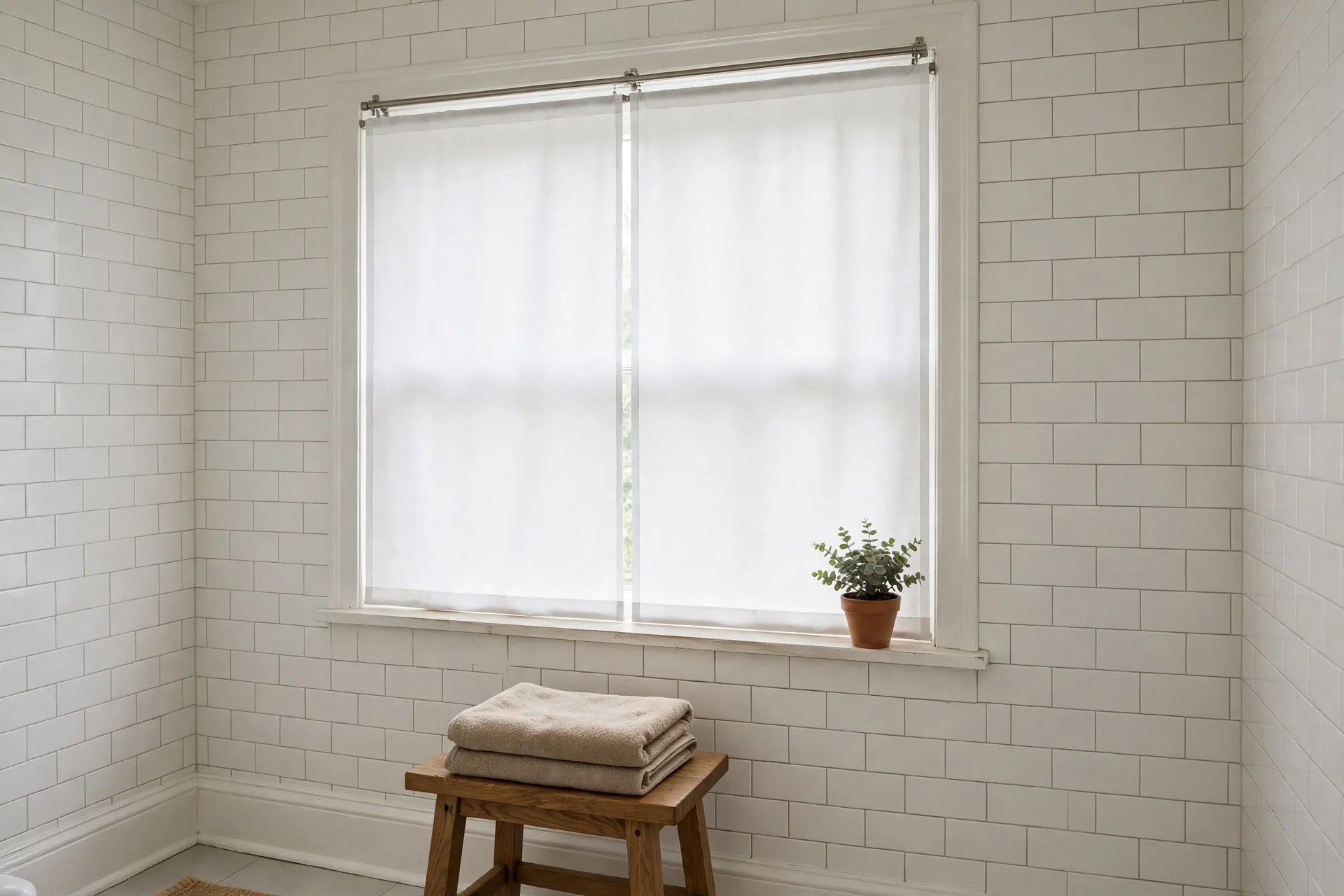
1. Sill-length polyester privacy panels: best for an everyday family bathroom
- Best for: A family bathroom that needs full-window privacy, fast drying, and a panel that can go through the wash often.
- Key features: Polyester face, sill-length fall, tighter weave for day and night privacy, plain color.
- Pros: Dries fast after steam, keeps privacy after dark when fully closed.
- Cons: Less natural texture than linen, needs full closed coverage or sight lines leak at the edges.
2. Cafe panels in a polyester blend: best for eye-level privacy with daylight above
- Best for: A bathroom where the window sits at eye level from outside and daylight matters as much as privacy.
- Key features: Polyester blend face, cafe length covering the lower half, rod-pocket or clip-ring heading.
- Pros: Blocks the view where it matters most, leaves the top of the window open for daylight, short panels dry fast and wash easily.
- Cons: No privacy above the rod line, so it suits only windows where the upper glass is out of sight.

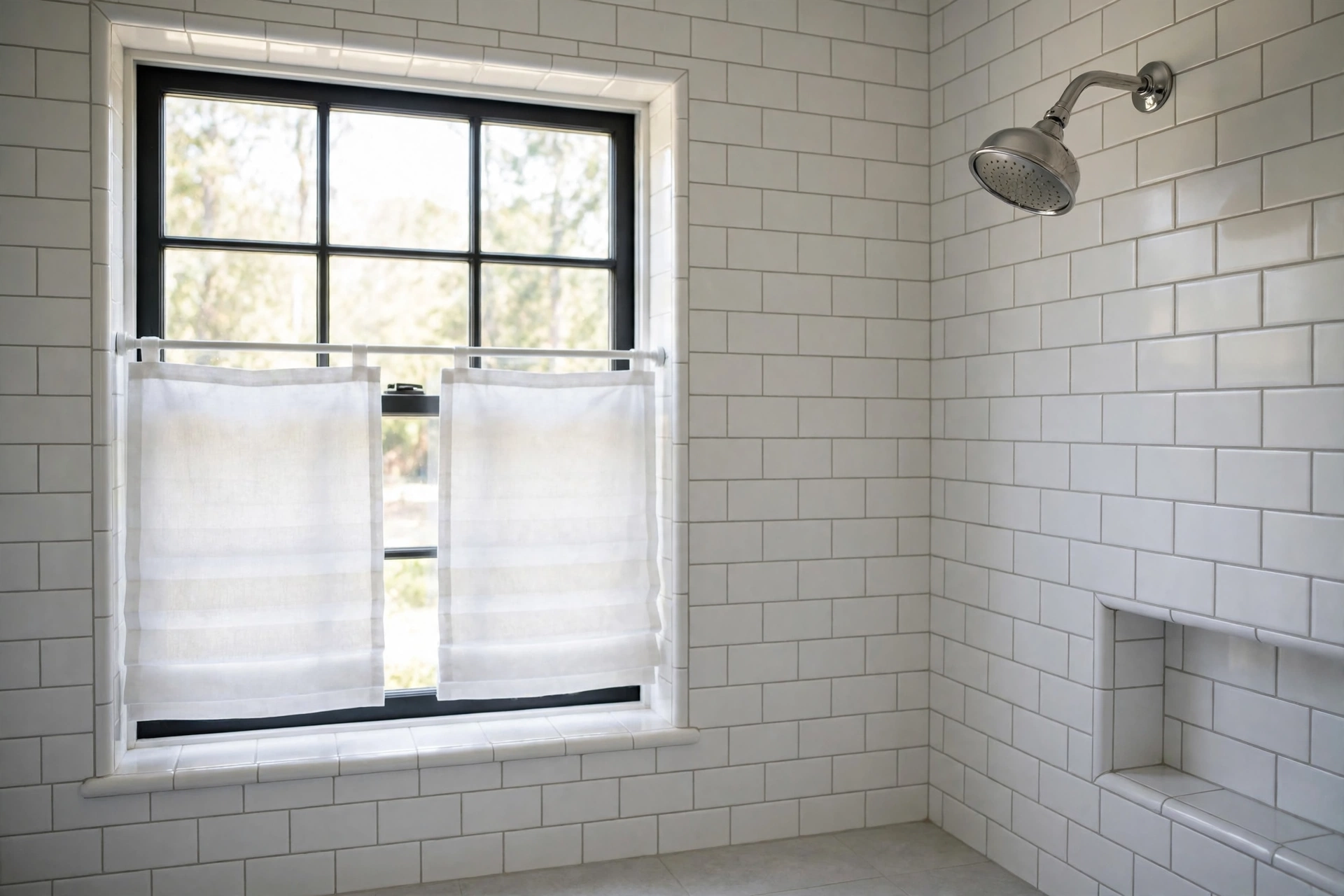
3. Water-repellent polyester panels: best for a window beside the shower
- Best for: A bathroom window close enough to the shower or bath to catch spray, where an ordinary panel would stay wet.
- Key features: Blackout tier panels, water-repellent polyester face, rod pocket hang, 26×24 inches per panel, 2 panels, short fall clear of the bath rim.
- Pros: Sheds spray instead of soaking it up, dries faster than an untreated panel, short length keeps the hem out of standing water.
- Cons: A water-repellent finish is not a promise of waterproofing, so check the listing wording and the care label.
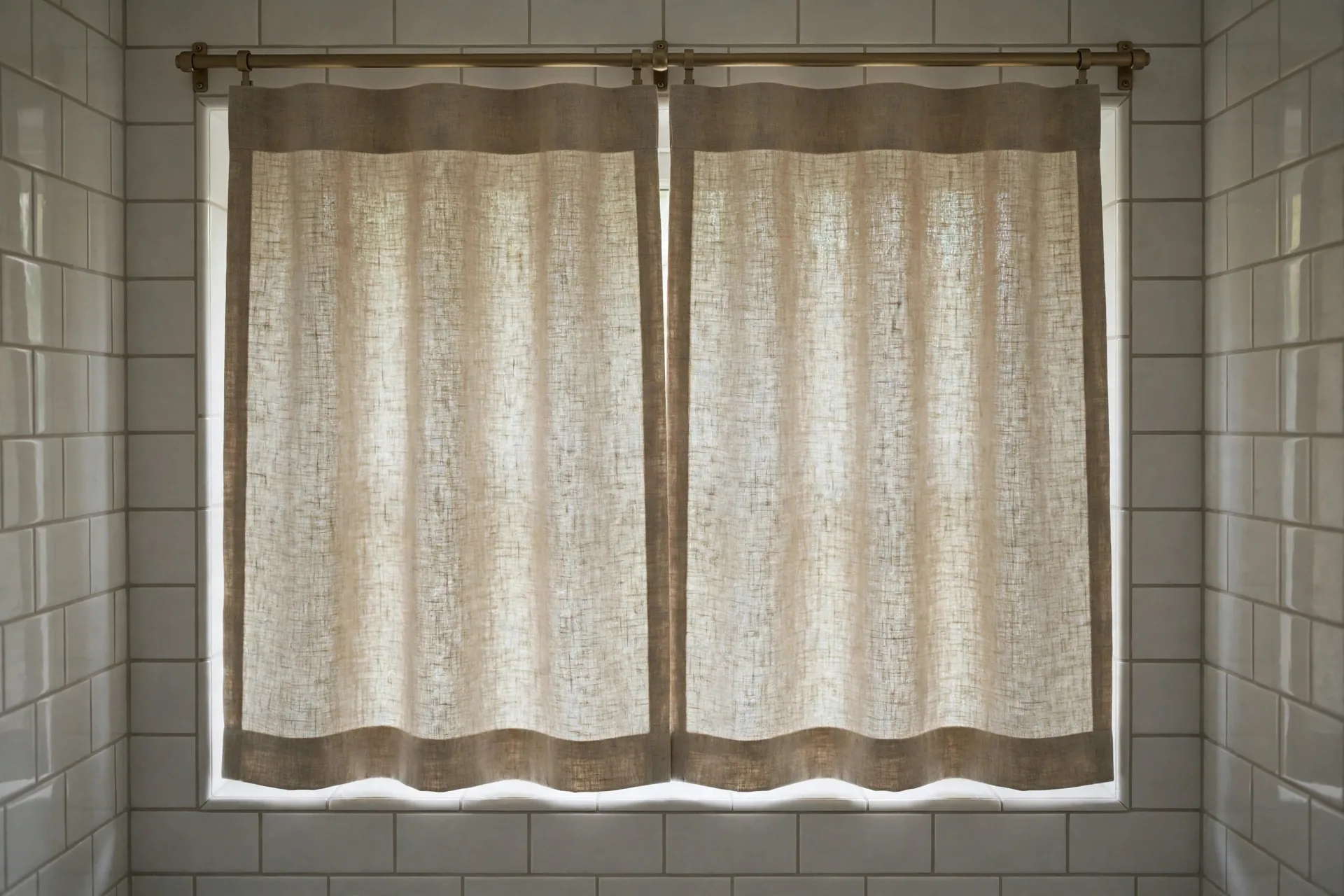
4. Sill-length linen-blend panels: best for a well-ventilated bathroom where texture matters
- Best for: A bathroom with a working fan or an opening window, where the room dries well and texture is worth the extra care.
- Key features: Linen-blend face, light-filtering semi-sheer fall, sill-length, 52 by 45 inches, 2 panels, grommet heading, loose, breathable weave, light neutral color.
- Pros: Soft, natural look, breathes well in a room that dries properly.
- Cons: Dries slower than polyester, so it suits only bathrooms that dry well, wrinkles more readily.
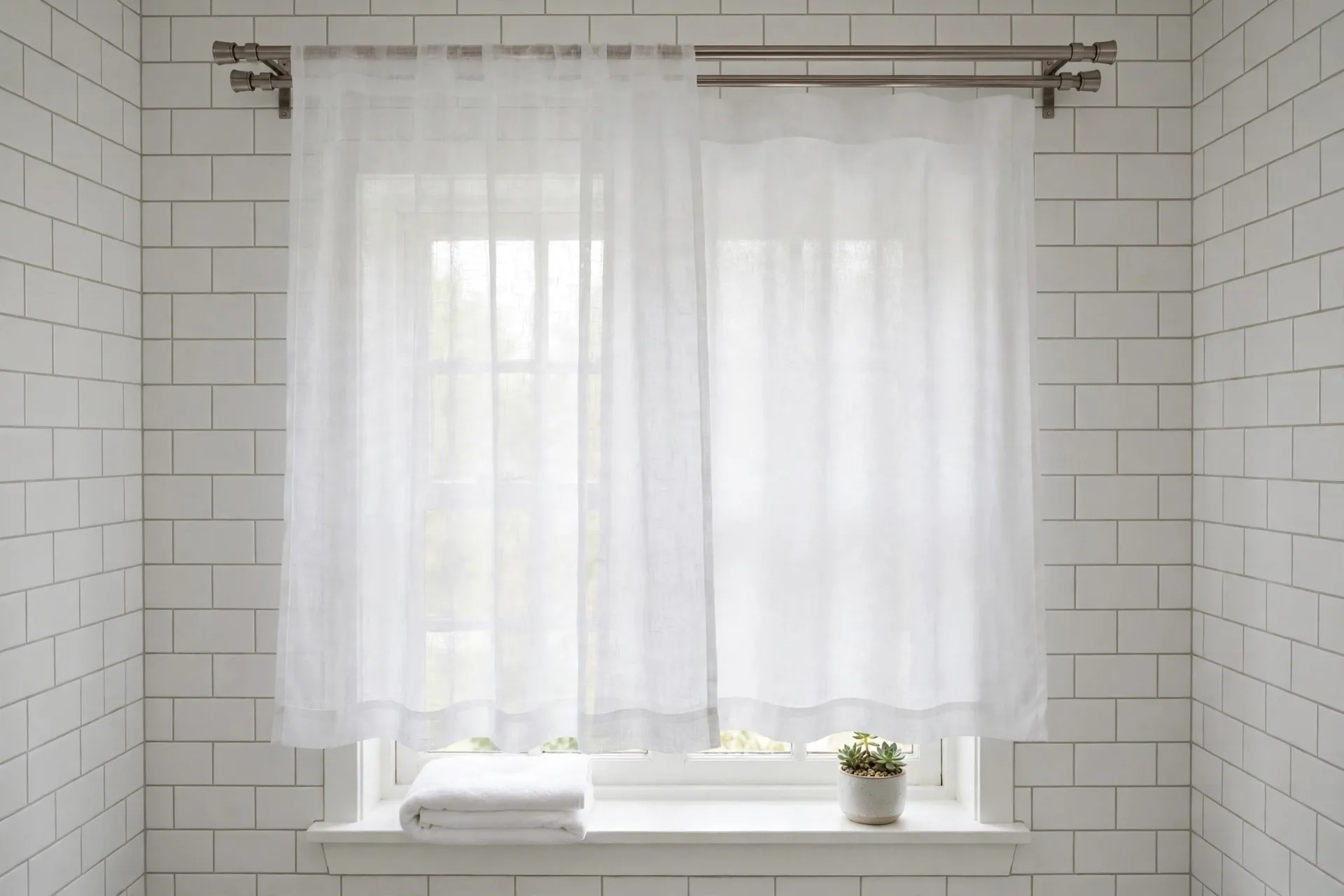
5. Layered sheer over an opaque panel: best for bright days and private nights
- Best for: A bathroom that should stay bright by day but fully private at night, without swapping panels between seasons.
- Key features: Sheer layer and opaque room-darkening layer sewn into one two-layer panel, grommet heading, plain Winter White color, thermal insulation woven in, 52 by 84 inches, 2 panels.
- Pros: Daylight through the sheer layer by day, full cover at night when the panel closes, the sheer layer softens harsh morning light.
- Cons: Layers cannot be drawn separately, so the sheer cannot stay up alone while the dark layer closes, two layers take longer to dry than one.
6. Cordless short panels on a tension rod: best for a rented bathroom with no drilling
- Best for: A rented bathroom where drilling is not allowed and the window frame can hold a tension rod.
- Key features: Short polyester panels, cordless heading, tension rod sized to the frame.
- Pros: No holes in tile or trim, no cords near a wet room, easy to take down for washing.
- Cons: A tension rod suits only light panels and a firm frame, so check the fit before you order.
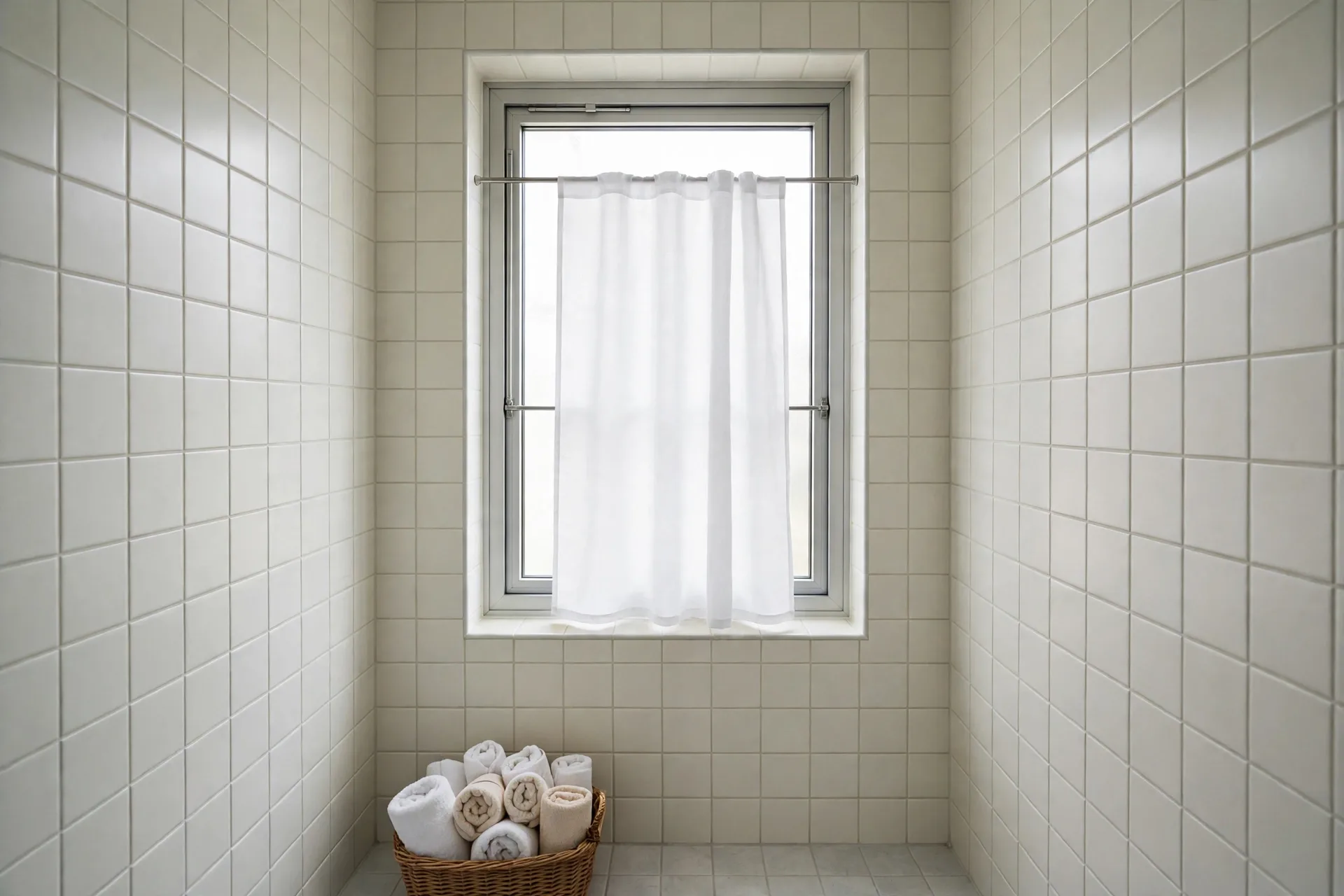
Privacy after dark and why a sheer alone fails at night
A sheer alone fails at night because the light balance flips. By day, bright daylight outside makes it hard to see into a dimmer room, so a sheer looks private. At night, the bathroom light is brighter than the darkness outside, and the same sheer turns into a lit screen that shows shapes and movement. Any panel chosen for a bathroom must be judged by its night-time behavior, not its daytime look.
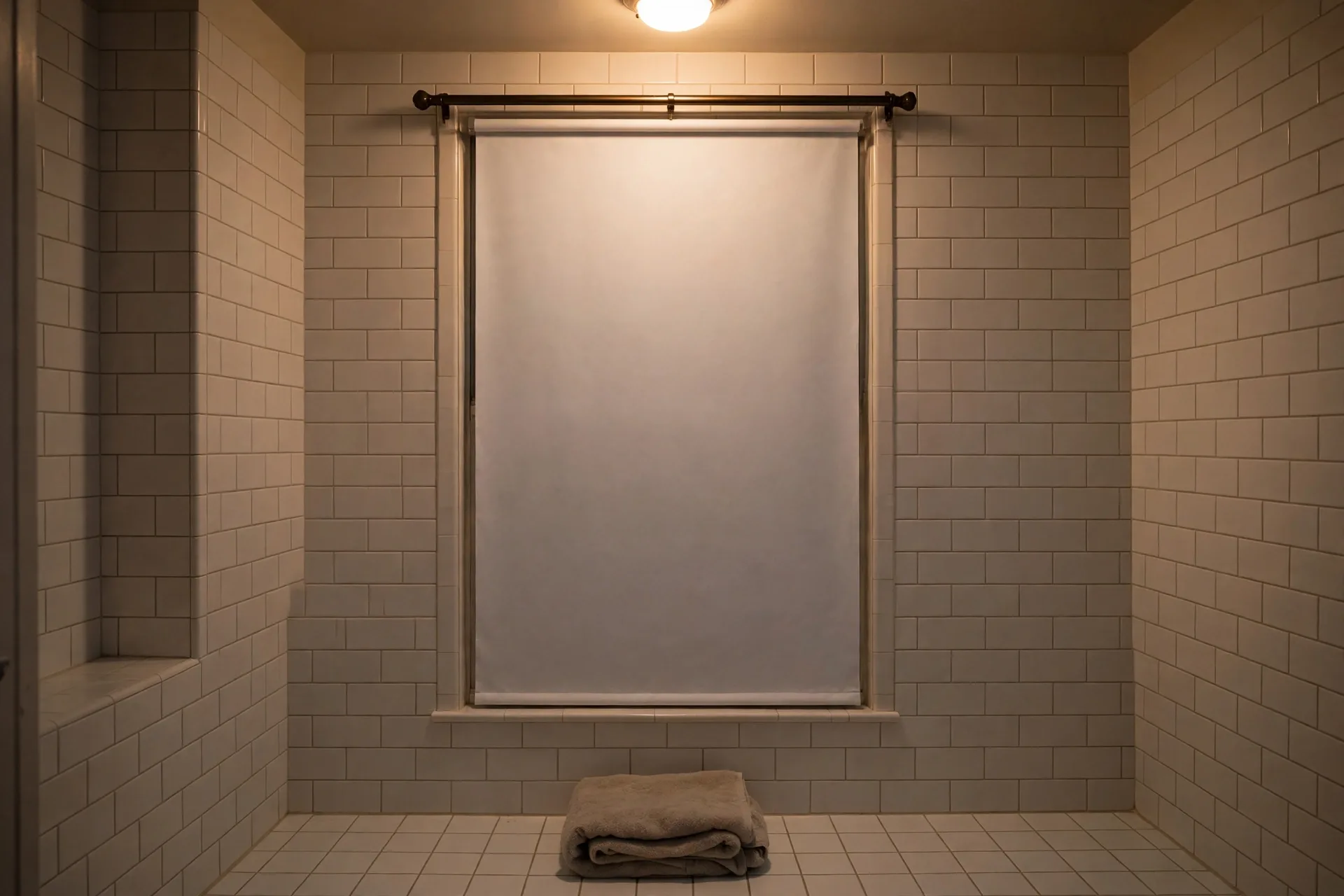
Test a panel the way night will test it. Stand outside after dark with the bathroom light on and the panel closed, and ask someone inside to move past the window. If you can make out shapes, the panel is a daytime panel only, and it needs a closable opaque layer behind it or a different pick. Judge the sight line from outside at night, not from inside by day. Color and weave change the result too. A tighter weave blocks more of the view than a loose weave, and pattern does not fix a thin weave, because light passes through a printed sheer just as it passes through a plain one. For the full privacy picture across fabrics, see Best Sheer Curtains.
Daylight brings a second privacy problem: even a privacy fabric shows a silhouette when sun hits it from behind, so an east or west window may need a heavier lining for daytime cover, not just night cover.
Non-fabric alternatives suit a bathroom too: frosted window film or frosted spray, which a renter can remove, top-down/bottom-up shades that give privacy below and light above, and moisture-resistant shutters in vinyl or composite.
Steam splash and mold in plain words
Steam, splash, and mold are three separate problems that meet on the same panel. Steam is warm, damp air from a hot shower or bath that settles on every cool surface, including fabric. Splash is liquid water that reaches the panel from the shower, the bath, or the sink. Mold is what grows when fabric stays damp long enough for spores to settle and feed, and it shows first as dark spots or a stale, musty smell.
The chain is simple.
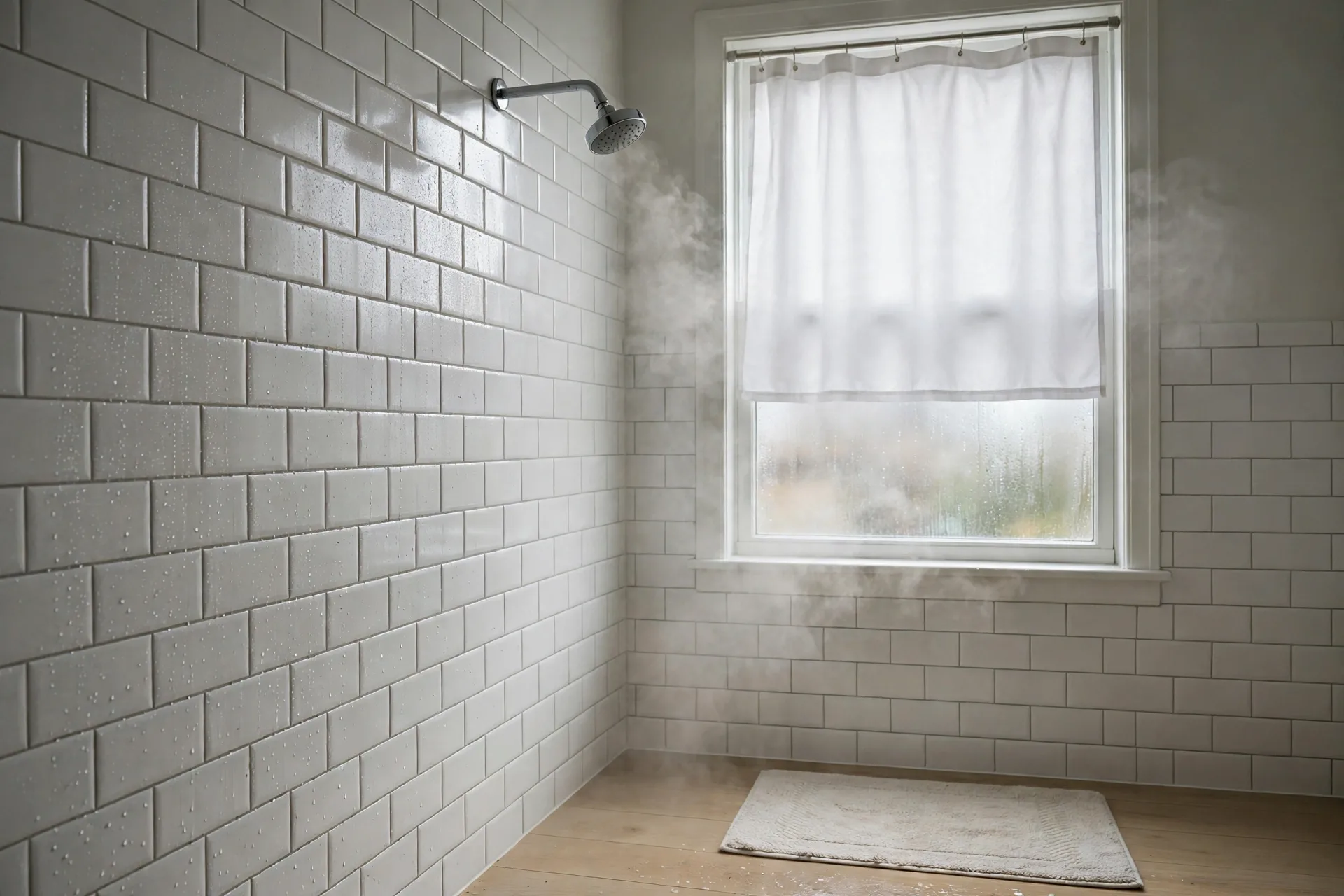
Wet fabric plus still air plus time gives mold its chance, while dry fabric, moving air, and a regular wash break it. That is why this guide keeps returning to the same three habits: choose a fabric that dries fast, let air move past the panel after every shower, and wash before spots appear rather than after. A panel that dries fully between uses can live in a steamy bathroom for years, while one that never fully dries will smell stale within weeks. Splash zones need a stricter standard than steam zones. A window across the room from the shower deals mainly with steam, and a fast-drying panel with good ventilation handles it well. A window beside the shower or above the bath meets direct spray, and only a short, water-repellent panel that stops clear of the water line suits that spot.
Fabrics that dry fast and fabrics that stay damp
Polyester dries fastest of the common curtain fabrics, which is why it leads the picks in this guide. Its fibers take up little water, so a polyester panel shakes off steam and comes back to dry between showers in a ventilated room. A polyester blend keeps most of that advantage while adding a softer hand.
Cotton dries slower than polyester and holds water longer in its fibers.
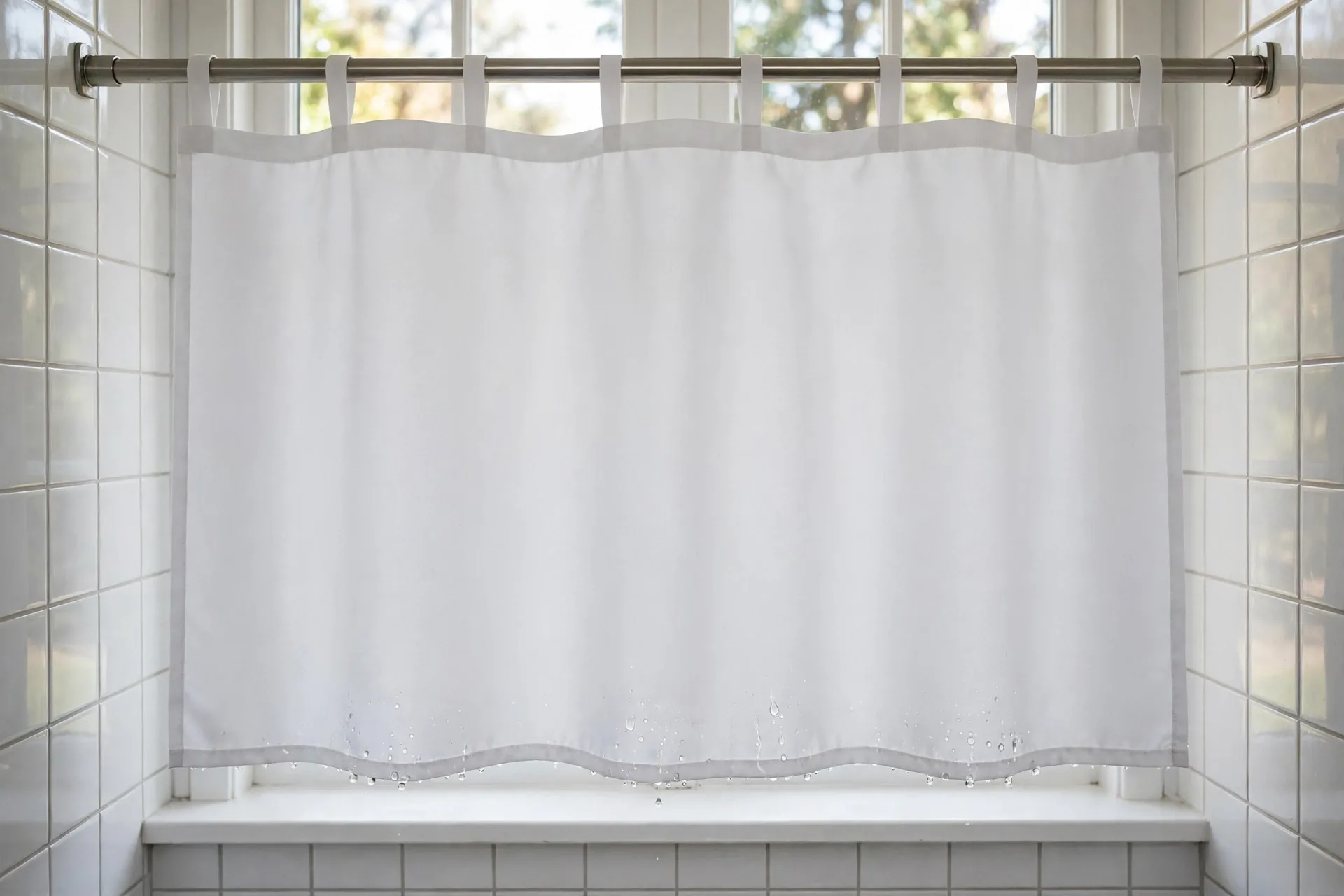
A cotton panel in a steamy bathroom stays damp through the morning, and that damp window is exactly when mold gets its chance. Cotton suits a bathroom only where ventilation is strong and washing is frequent. Unlined natural fibers that stay damp are the main fabric risk in a bathroom, and they should be avoided where the room dries slowly. Linen sits between cotton and polyester on drying, and its loose weave helps air pass through it. That airflow is why the linen-blend pick appears here for ventilated rooms. Pure linen wrinkles readily and needs gentler care, so a blend is the more forgiving bathroom choice. For the full linen picture, see Best Linen Curtains.
Care labels settle what a fabric name alone cannot. A panel called linen may be a blend, and a panel called polyester may carry a coating that changes how it washes. Read the fiber line and the care symbols on the listing before you order. The care symbols follow the GINETEX and ISO 3758 system, so a tub, triangle, or iron symbol means the same thing across makers. Where a listing names a fabric certification, check what it covers: the OEKO-TEX STANDARD 100 label means the textile was tested for harmful substances.
Cheap polyester traps odors, so choose a quality poly-blend instead, and bulky blackout fabrics make a bathroom dingy and stuffy, so prefer a light, opaque, non-insulative fabric that dries fast.
Short lengths and cafe panels for a bathroom window
Short lengths suit a bathroom because they stay clear of water and dry fast. A sill-length panel stops at the sill, so its hem never sits in bath water, never trails across a wet floor, and never bunches against a damp wall. A long panel soaks at the hem, dries last at the bottom, and collects the very dampness the rest of the panel is trying to shed. Short also means less fabric to wash and dry.
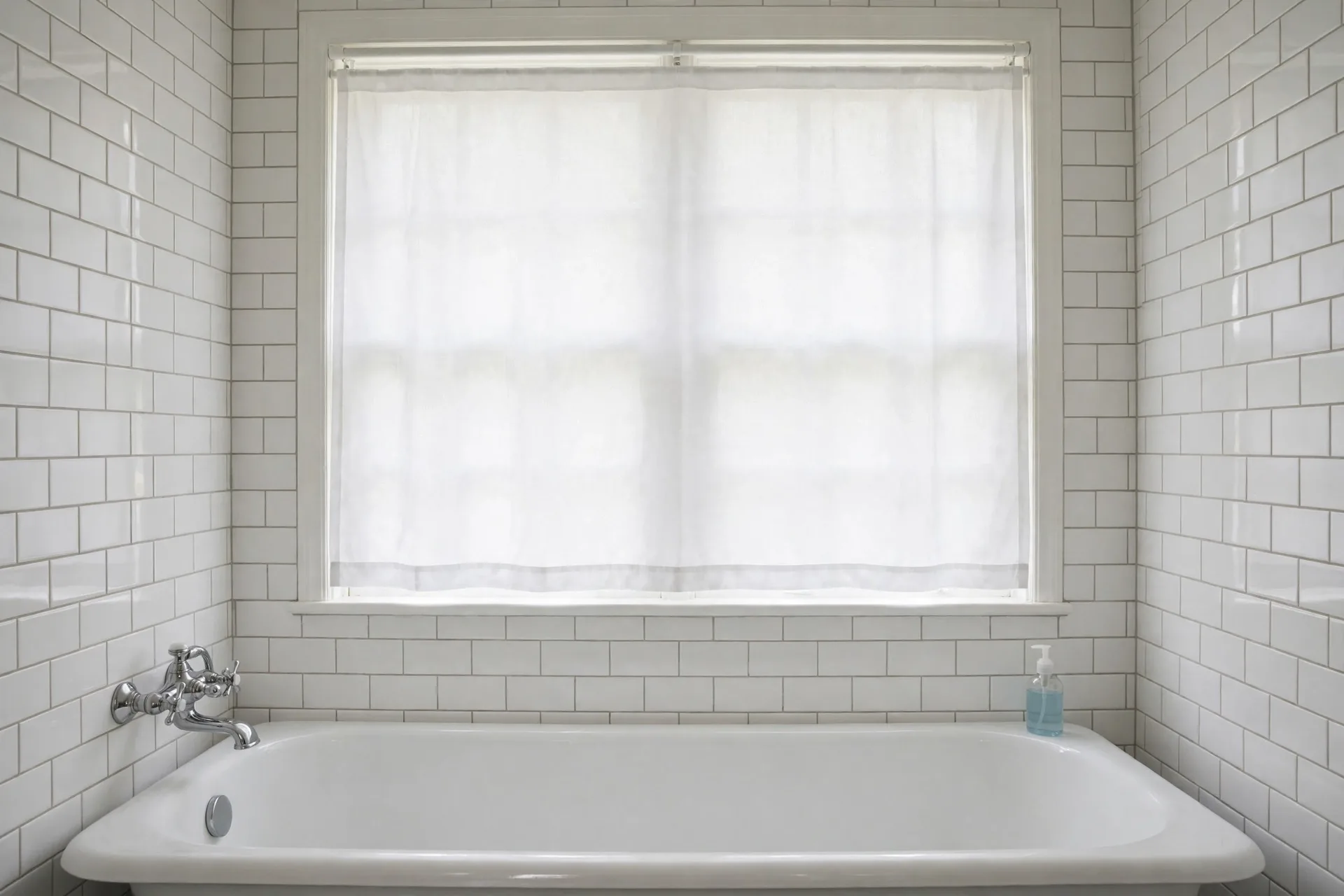
Cafe panels suit a bathroom for a different reason. They cover the lower half of the window, which is where the sight line sits, and they leave the upper glass open for daylight and for steam to escape. That open top helps a small bathroom. Cafe panels work best where the upper glass is out of sight from outside, such as a high window. Where the upper glass is overlooked, a full sill-length panel is the safer pick. Rod height decides whether a cafe panel actually covers the sight line. Set the rod so the panel top sits above the eye-level line from outside, not just above the middle of the glass. A rod set too low leaves a gap where a person standing outside can see over the panel. Measure the sight line from outside before you fix the rod. An apron-length panel, stopping just below the sill, still clears water. A floor-length panel in a bathroom is rarely a good idea, because its hem meets every splash and puddle the room produces. For length options across rooms, see Curtain Sizes. Proportion questions, such as how high and wide to hang the rod on a small window, belong to the small-windows guide.
In a small bathroom, keep pleats shallow and fullness capped: dense pleats trap moisture, dry slower, and attract mildew, so about 1.5 times the rod width keeps folds shallow without going flat.
Ventilation and drying between showers
Ventilation is the habit that decides whether a bathroom panel stays fresh, and it matters more than any fabric choice. A panel in a room with moving air dries between uses, while the same panel in a sealed, steamy room stays damp, and damp fabric is where mold starts. Run the fan during the shower and leave it running after, open the window where the room has one, and leave the bathroom door ajar once the room has cooled.
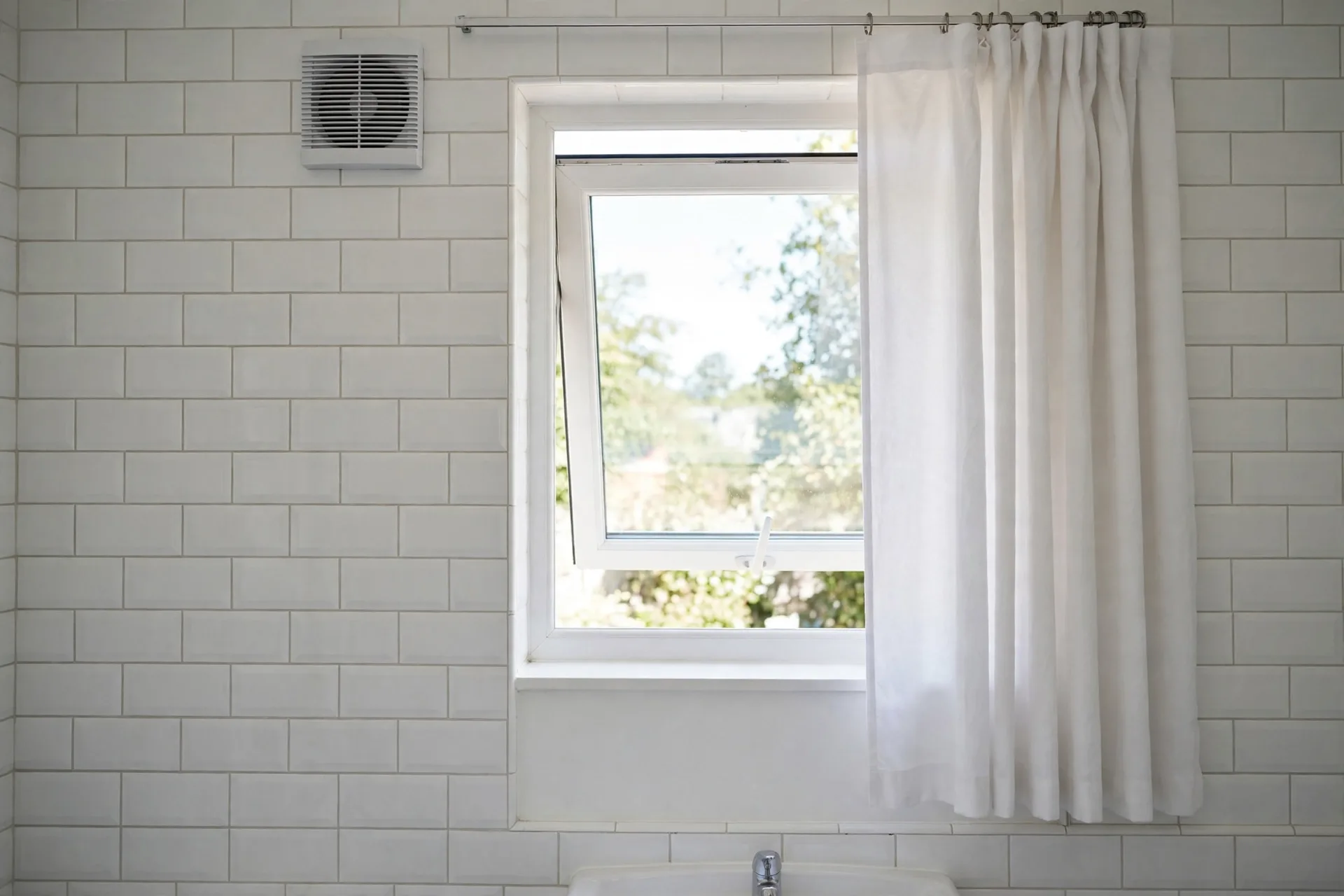
Drying the panel itself is a separate step from drying the room. After a shower, draw the panel fully open so air reaches both faces, and spread the folds rather than leaving the panel bunched at one side. A bunched panel traps dampness inside its folds, and the inside of the bunch dries last. Where the panel sits near the shower, shake the hem gently to drop loose spray. Wash frequency follows the room, not the calendar alone. A bathroom panel that gets daily showers and slow drying needs washing about once a month, while a panel in a well-ventilated guest bathroom that sees weekly use can go longer between washes. Treat once a month as the starting point for a daily-use bathroom, and wash sooner if spots appear, if the hem smells stale, or if the fabric feels damp long after a shower. Waiting until spots are visible means mold has already settled. Between washes, look at the back of the panel, not just the front, because the glass side catches condensation and dries last.
Bathroom window curtains need washing about once a month, because steam and splashes soil them faster than curtains in dry rooms.
Run the exhaust fan for 30 minutes after showering, keep humidity below 50%, and clean the fan filter, because a dust-felted filter restricts airflow and leaves the room damp longer.
Hardware that survives steam: rods, rings, and rust
Steam attacks hardware as surely as it attacks fabric, and rust spots on rings or a stiff rod are the first signs. Plain steel rings and rods can rust in a steamy bathroom, and rust stains can transfer to the panel hem where the fabric touches metal. Stainless steel, coated metal, or plastic hardware resists that rust far better, so check the hardware material on the listing, not just the panel fabric. Replace rusting hardware before it marks a new panel.
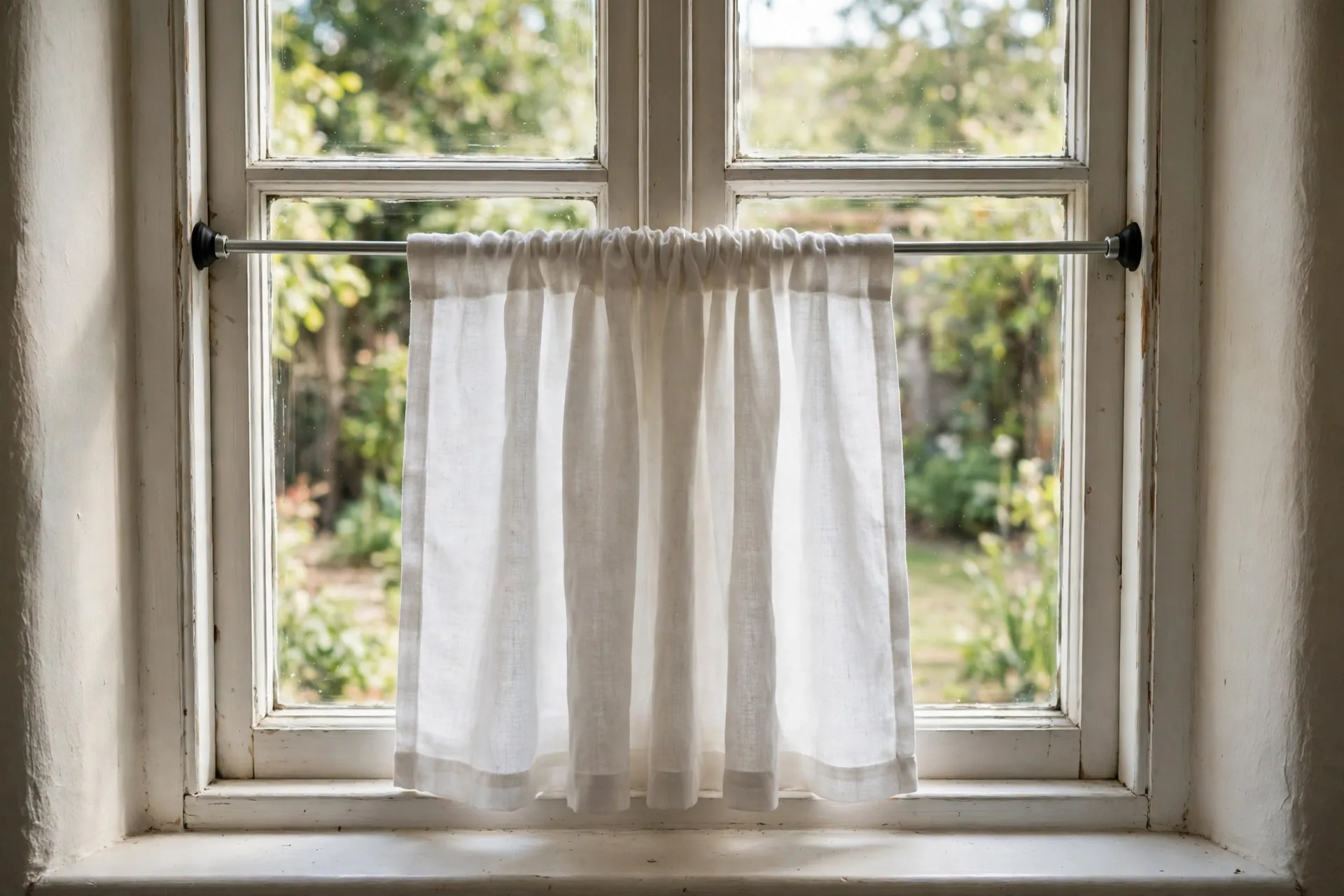
Tension rods suit small bathroom windows well, because they need no drilling into tile and they hold a light, short panel without fuss. A tension rod needs a firm, flat frame on both sides and suits only light panels. A heavy panel on a tension rod can slip. For a fixed rod, fix brackets into solid wall or proper anchors, and leave enough rod past the frame for the open stack. Cords deserve a safety note in any bathroom used by children. A corded panel near a bath or a climbing step is a hazard, and cordless headings or a wand-operated track remove that risk entirely. Safety guidance on corded window coverings comes from the U.S. Consumer Product Safety Commission, which has long warned about cord hazards around young children. Where children use the bathroom, choose cordless.
Heading should follow use: glide headings such as rings or eyelets suit curtains opened daily, while a rod pocket or back tab suits stationary cafe panels that rarely move.
Windows in or beside the shower and the stricter rule
A window in or beside the shower follows a stricter rule than any other bathroom window, because it meets direct spray, soap, and standing dampness every day. Only a short, water-repellent panel suits that spot, and only where the panel can hang clear of the water line and dry fully between showers. If the window sits inside the shower enclosure itself, a fabric panel is often the wrong answer entirely, and a wipe-clean blind or a frosted glass treatment may serve the room better.
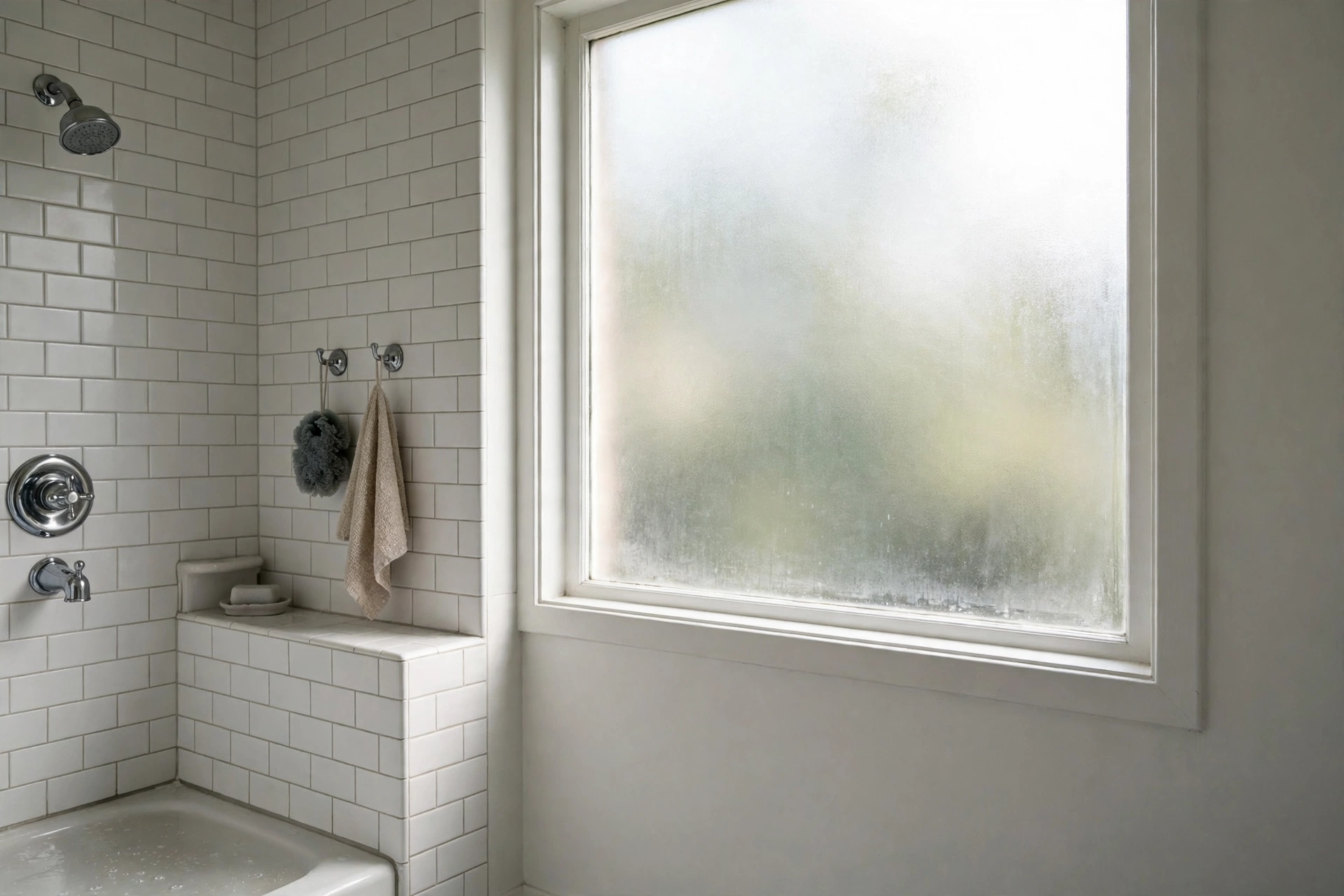
Where a panel does suit a shower-adjacent window, keep the fall short and the fabric light. The hem must stop clear of the bath rim and clear of any ledge where water pools, and the panel must draw fully open after every shower so both faces dry. A liner behind the panel adds a second line of defense, but it needs the same drying and washing routine, and two damp layers dry slower than one. Frosted glass changes the job. Where the glass itself is frosted or textured, the window already gives daytime privacy, and the panel then handles night-time cover and softening rather than full privacy. A light panel or a cafe panel may be enough there. Check the frosted glass at night with the bathroom light on before relying on it, because some frosted glass still shows shapes under bright indoor light. Water that runs down the wall behind a panel collects at the sill and wicks into the hem from below, so wipe the sill after a shower.
What to avoid on a bathroom window
Heavy, slow-dry fabrics are the first thing to avoid. Velvet, thick cotton, and heavy lined drapes hold water, dry slowly, and can smell stale before they look dirty. A lined panel traps dampness between layers where air cannot reach it, and a floor-length panel soaks at the hem. For rooms where heavy fabric does suit, see Best Curtains for Living Room. Unlined natural fibers that stay damp are the second thing to avoid, unless the bathroom dries very well and washing is frequent. Pure linen and pure cotton both hold water longer than polyester.
A sheer alone is the third thing to avoid as the only layer, because it fails the night-time privacy test in this guide. A sheer works as a day layer over an opaque panel, but never as the whole answer. Long lengths, puddled hems, and tiebacks that hold a panel bunched are also poor bathroom choices. A puddled hem sits in water and dust, and a tied-back panel stays bunched and damp inside its folds. Keep bathroom panels short, straight, and able to hang fully open. Finally, avoid hardware that rusts and cords that hang loose.
Pattern scale matters in a small bathroom: lighter colors and simple patterns keep the room open, busy dark prints shrink the space, and a pattern repeat no larger than 3 to 4 inches stays in proportion.
Checks to run before you order bathroom curtains
Start with the night-time privacy test, not the fabric color. Decide whether the panel must cover the full window or only the lower half, and judge that from outside after dark with the bathroom light on. Next, measure the window and the sight line, and confirm the length stops clear of water. For measuring steps, see How to Measure for Curtains, and for rod placement, see How to Hang Curtains. Then check the water distance. A window across the room from the shower needs a fast-drying panel and good ventilation. A window beside the shower needs a short, water-repellent panel that stops clear of the bath rim. A window inside the shower enclosure may need no fabric panel at all. Match the pick to the water distance before you fall for a color.

Then read the listing the way this guide reads it. Confirm the fiber content, the lining or finish, the heading, the finished length, and the care label. Confirm the hardware material where a rod or rings come with the panel, and confirm the panel is cordless where children use the bathroom. Order a swatch where one is offered. For the full range of curtain types, see Best Window Curtains.
Frequently asked questions about bathroom window curtains
Most bathroom curtain questions come down to privacy after dark, drying, and washing.
What type of curtain is best for a bathroom window?
A short, washable panel in polyester or a polyester blend is the best starting point for most bathroom windows. It gives full privacy when closed, dries fast after steam, and stands up to frequent washing. A cafe panel suits windows where only the lower half needs cover, and a water-repellent panel suits windows beside the shower.
Do sheer curtains give privacy in a bathroom at night?
Sheer curtains alone do not give privacy in a bathroom at night. By day they look private because daylight outside is brighter than the room, but at night the bathroom light is brighter than the darkness outside, and shapes show through the sheer. Use a sheer only as a day layer over a closable opaque panel.
Can bathroom curtains go in the washing machine?
Many polyester bathroom panels can go in the washing machine, but the care label is the rule. Some panels need a gentle cycle, some need hand washing, and some need dry cleaning. Never machine wash a panel whose label says dry clean only, and always let it air dry fully after washing, spread out rather than bunched.
How often should bathroom curtains be washed?
A bathroom panel in daily use should be washed about once a month as a starting point, and sooner if spots appear or the hem smells stale. Panels in a well-ventilated guest bathroom can go longer. Washing before spots appear is far easier than removing set-in mold marks.
Do bathroom curtains cause mold?
Bathroom curtains do not cause mold on their own, but a panel that stays damp gives mold the damp surface it needs to grow. The risk comes from wet fabric plus still air plus time. Fast-drying fabric, airflow after every shower, and washing about once a month break that chain.
What curtains work for a window inside the shower area?
A window inside a shower enclosure often suits no fabric panel at all, because direct spray every day keeps any fabric wet. A short, water-repellent panel can work only where it hangs clear of the water line and dries fully between showers. Where it cannot dry, a wipe-clean blind or a frosted glass treatment serves the room better.
Are cafe curtains private enough for a bathroom?
Cafe curtains are private enough for a bathroom only where the upper glass is out of sight from outside. They cover the lower half of the window, which is where the eye-level sight line sits, and they leave the top open for daylight. Where the upper glass is overlooked, a sill-length panel is the safer pick.
Should bathroom curtains be long or short?
Bathroom curtains should be short in most cases. A sill-length panel stops at the sill and stays clear of bath water and wet floors, while a cafe panel covers the lower half and leaves the top open for light and air. A floor-length panel soaks at the hem and dries last at the bottom.
Are cordless curtains safer in a bathroom used by children?
Cordless curtains are safer in a bathroom used by children, because they remove the cord hazard entirely. Safety guidance on corded window coverings comes from the U.S. Consumer Product Safety Commission, which has long warned about cord hazards around young children. Where children use the bathroom, choose a cordless heading.
For other rooms, see Best Curtains for Bedroom.
This guide is research-based curation: we compared maker specifications, published reviews, and current prices. Read how we choose.