 Best
Best Linen Curtains
Linen gives a room soft light and natural texture, but not every panel labeled linen is the same fabric. This guide sorts real linen, blends, and linen-look panels by room, care, and lining.
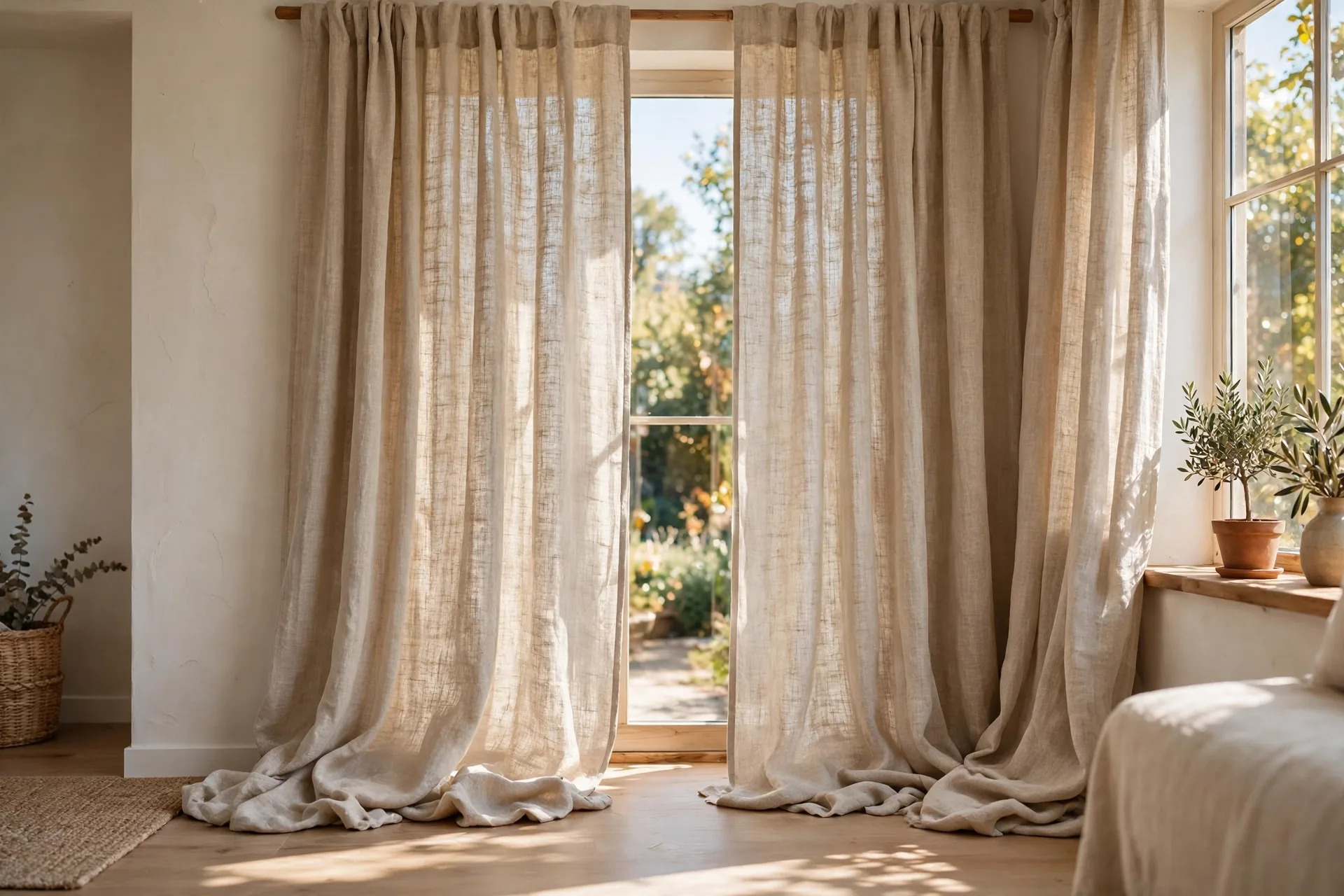
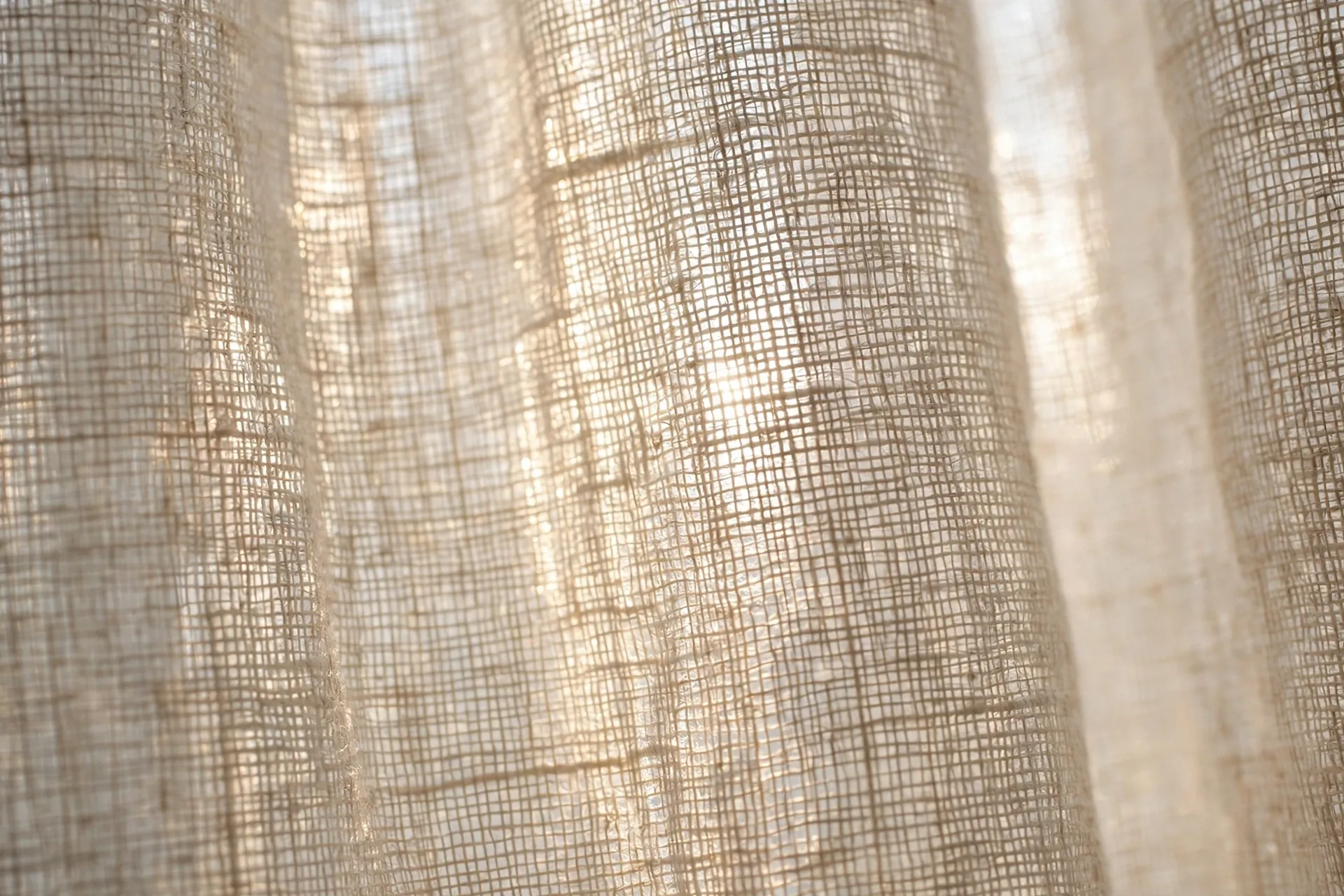
Linen curtains soften a room in a way few fabrics match. Light passes through with a warm, uneven glow, the surface shows small slubs in the weave, and the panels move a little in a breeze instead of hanging stiff and flat. A panel can look like linen, feel close to linen, or be linen through and through, and each behaves differently after washing and at night.
This guide explains the three labels in plain words, matches each type to living rooms, bedrooms, and dining rooms, and gives honest notes on wrinkling, shrinking, washing, and lining.
As an Amazon Associate, we earn from qualifying purchases.
Shortlist: linen picks by job
Semi-sheer linen suits relaxed living rooms that want natural texture and soft light; blackout-lined linen suits bedrooms that need the linen look with real darkness; and easy-care linen blends suit daily use where washing matters. The picks below are grouped by job. Check the fiber content, lining, and care label on the listing before you order, because the same brand name can cover different panel types. No pick states a panel count, size, or exact fiber mix here, because those vary by listing: confirm them on the listing before you order.
| Pick | Type | Best for | Lining |
|---|---|---|---|
| 1. VOILYBIRD White Linen Semi Sheer Tab Top Curtains | Polyester linen texture | Relaxed living room | Unlined |
| 2. MIULEE Linen Curtains | Blend | Easy-care living room | None stated, needs a lining or layer for a bedroom |
| 3. H.VERSAILTEX Linen Blackout Curtains | Linen-look | Bedroom darkness | Blackout lining |
| 4. Solino Home Pure Linen Curtain | Pure linen | True linen sheer | Unlined |
| 5. NICETOWN Natural Linen Curtains | Blend | Daily use | None stated, needs a lining or layer for a bedroom |
| 6. MIULEE Beige Linen Curtains | 30% linen / 70% polyester | Tailored back-tab look | Unlined |
1. VOILYBIRD White Linen Semi Sheer Tab Top Curtains - Best for a relaxed living room with natural texture
- Best for: A living room where soft daylight and a natural, slubbed texture matter most.
- Key features: Tab top heading; polyester linen texture (not pure linen); semi-sheer fall; 2 panels, each 52" wide x 84" long; fits rods up to 1.75".
- Pros: Natural linen look without pure-linen care; diffused daylight; relaxed drape.
- Cons: Polyester texture, not pure linen; creases show after washing; limited night privacy unlined.
2. MIULEE Linen Curtains - Best for easy-care light filtering in living rooms
- Best for: A busy home that wants linen texture with simpler washing, in a living room. For a bedroom it needs a blackout lining or a closing layer, because on its own it will not darken a bedroom.
- Key features: Linen blend panel type; semi-sheer fall (middle level); rod pocket and back tab options.
- Pros: Easier to wash than pure linen; diffused light; suits living rooms.
- Cons: Not a blackout panel alone; smoother texture than pure linen; check the blend per listing.
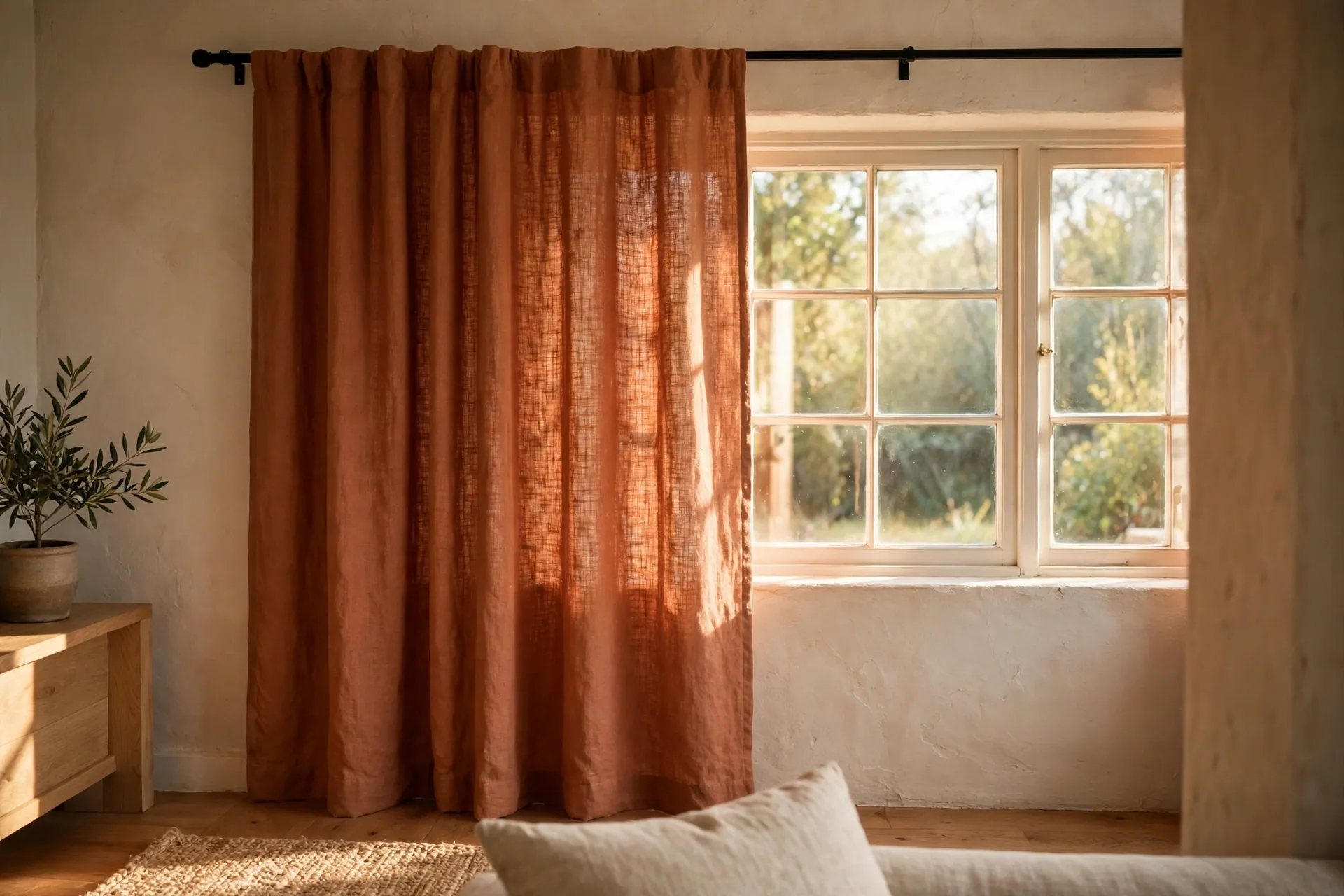
3. H.VERSAILTEX Linen Blackout Curtains - Best for a bedroom that needs darkness with a linen look
- Best for: A bedroom where sleep and darkness come first, but a linen surface is still wanted.
- Key features: Linen-look face with a blackout lining; grommet heading; heavier fall than an unlined sheer.
- Pros: Strong light blocking for sleep; linen-style texture inside; better night privacy than unlined linen.
- Cons: Heavier and stiffer than unlined linen; needs a strong rod; less airy in daylight than a sheer.
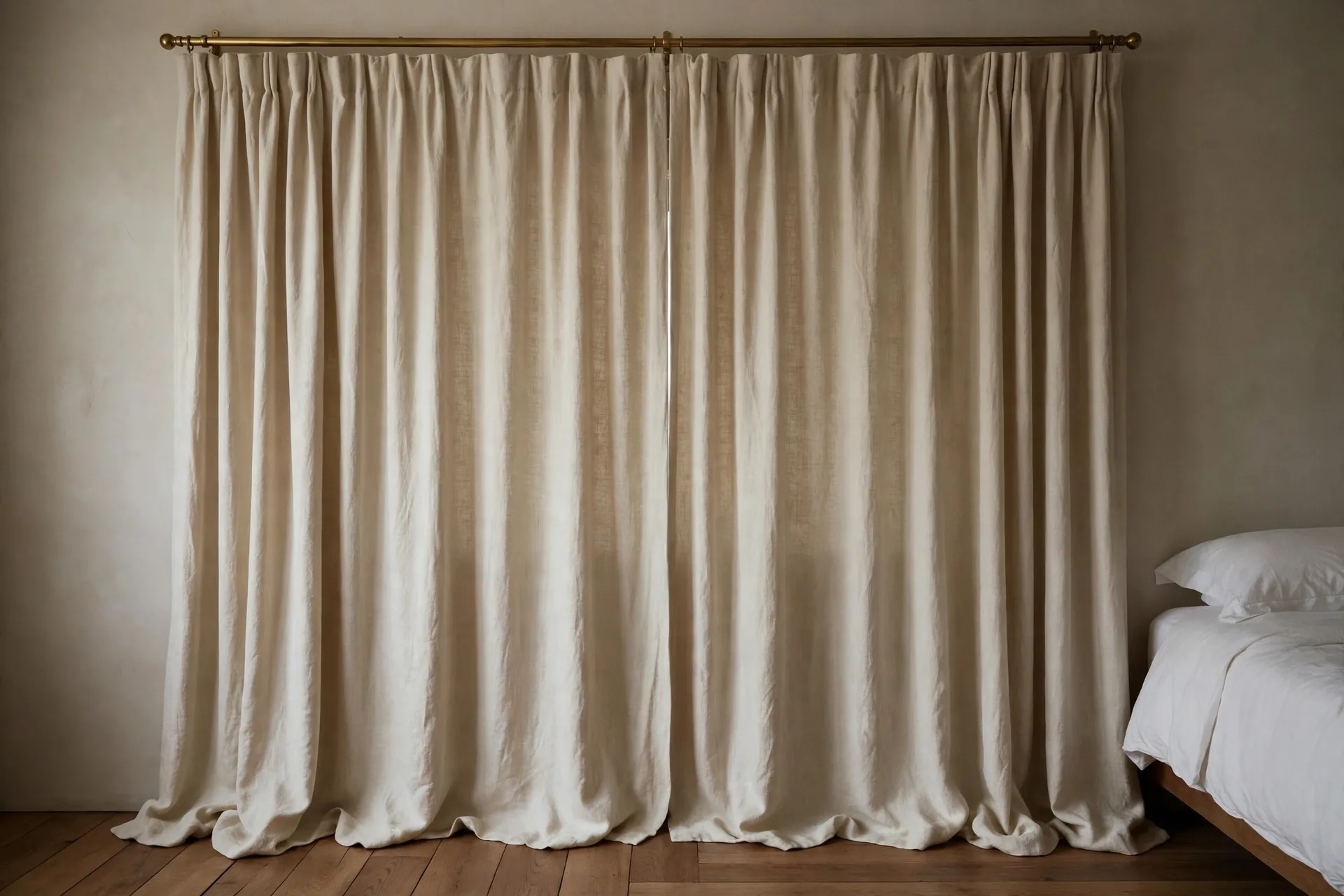
4. Solino Home Pure Linen Curtain - Best for a true linen sheer with a soft glow
- Best for: A room where a genuine flax sheer and gentle light matter more than darkness.
- Key features: 100% pure European flax linen; sheer, light-filtering fall; rod pocket heading; 1 panel, 52" wide x 144" long.
- Pros: Authentic linen texture and slub; soft, warm daylight; gets softer with use.
- Cons: Wrinkle-prone; follow the care label closely; little darkness or night privacy alone; single panel, not a pair, and the 144" length needs a high rod, so measure before ordering.
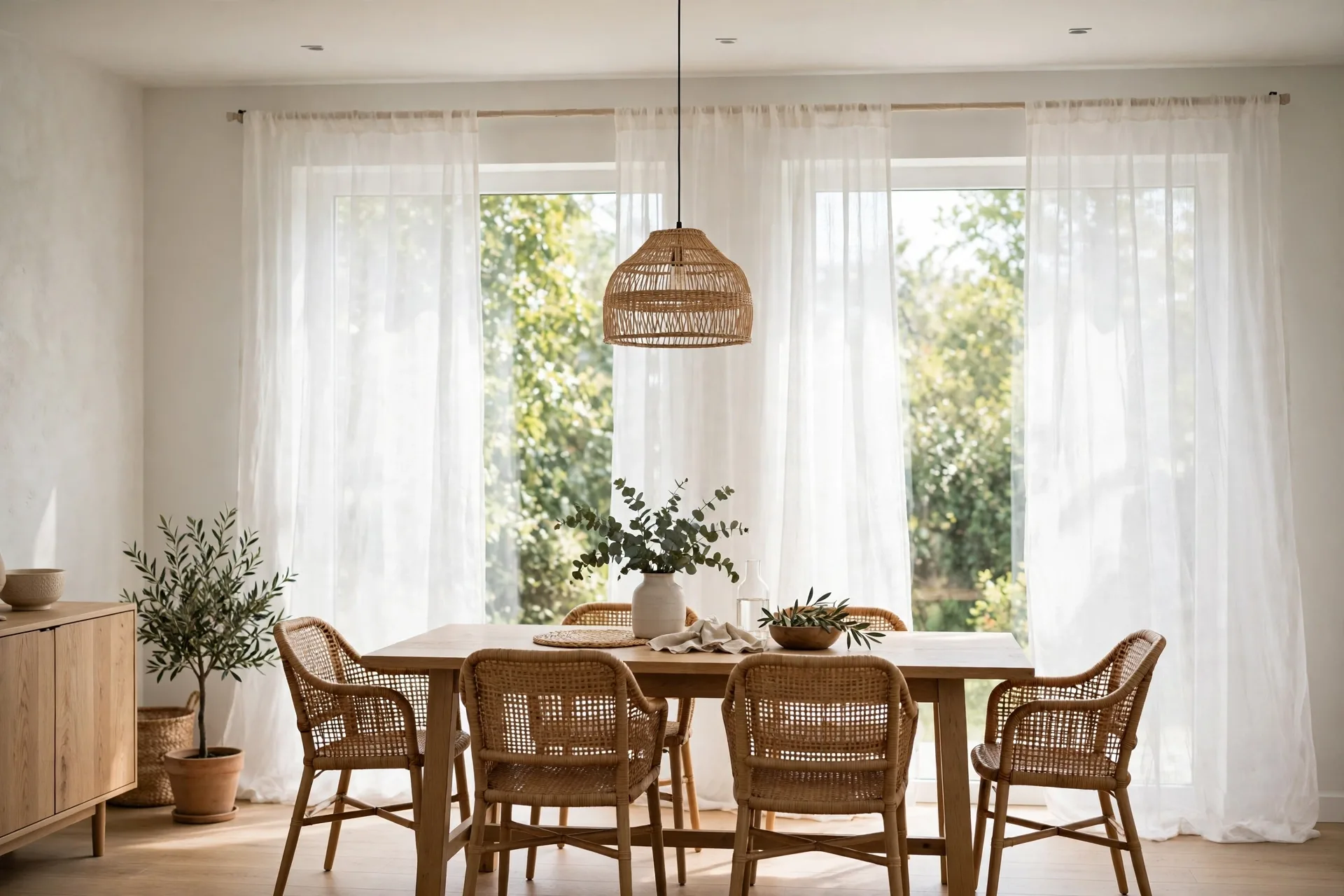
5. NICETOWN Natural Linen Curtains - Best for a linen panel with rod pocket and back tab for daily use
- Best for: A living room where curtains open and close daily. For a bedroom, add a blackout lining or a closing layer, since the panel alone will not darken a bedroom.
- Key features: Linen blend panel type; rod pocket and back tab headings; semi-sheer fall (middle level).
- Pros: Two ways to hang, rod pocket or back tab; natural linen-style texture; good daytime privacy for a semi-sheer panel.
- Cons: Rod pocket panels slide less freely than grommet panels; not a blackout panel.
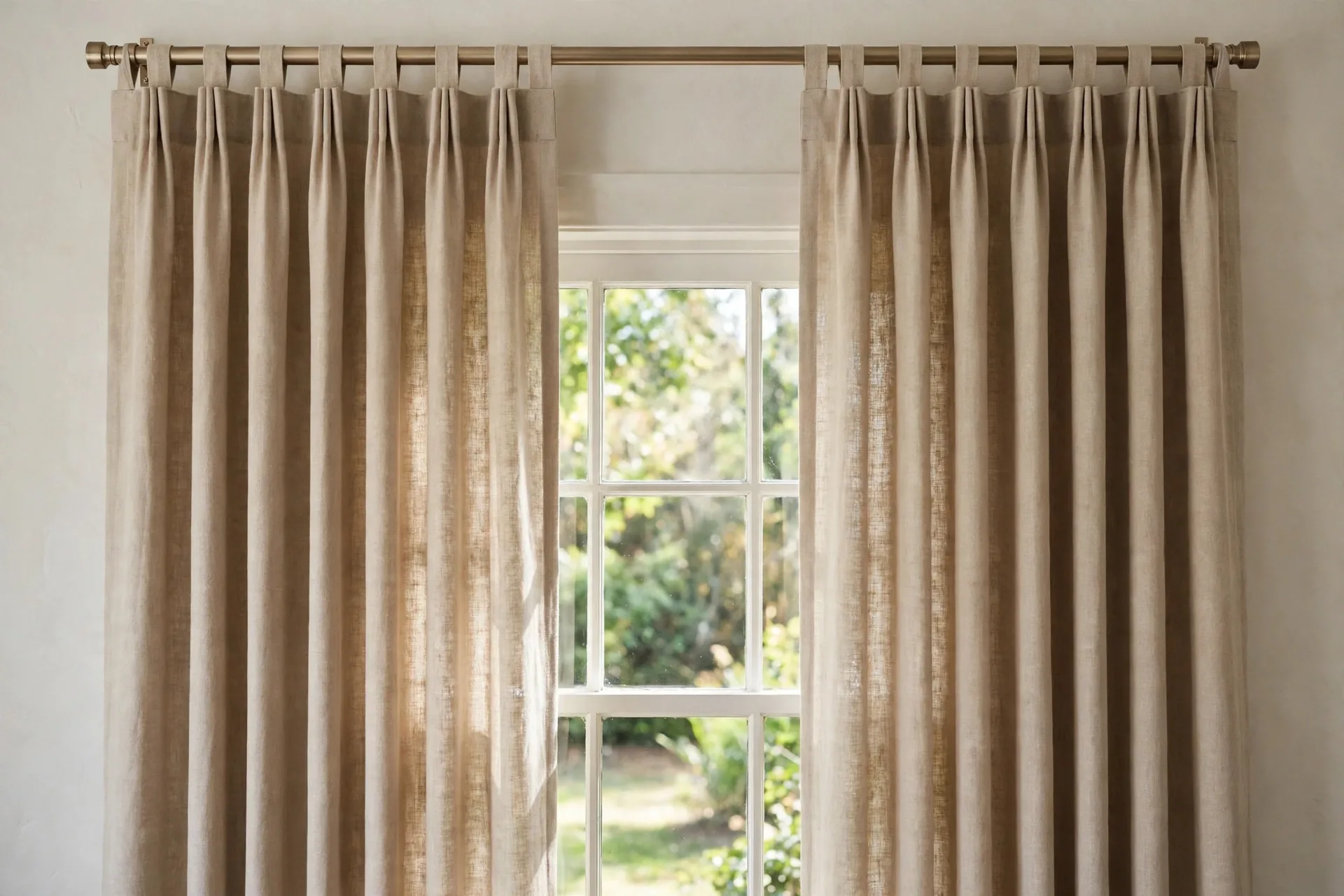
6. MIULEE Beige Linen Curtains - Best for a tailored beige linen panel with back tabs
- Best for: A window where a tailored look is wanted, in a soft beige that suits most rooms.
- Key features: Back tab and rod pocket headings; 30% linen / 70% polyester; semi-sheer fall; 2 panels, each 52" wide x 90" long.
- Pros: Tailored back-tab fall; linen look with easier care than pure linen; soft beige suits most rooms.
- Cons: Blend, not pure linen; semi-sheer gives limited night privacy; light color shows marks.
What real linen, linen blend, and linen-look actually mean
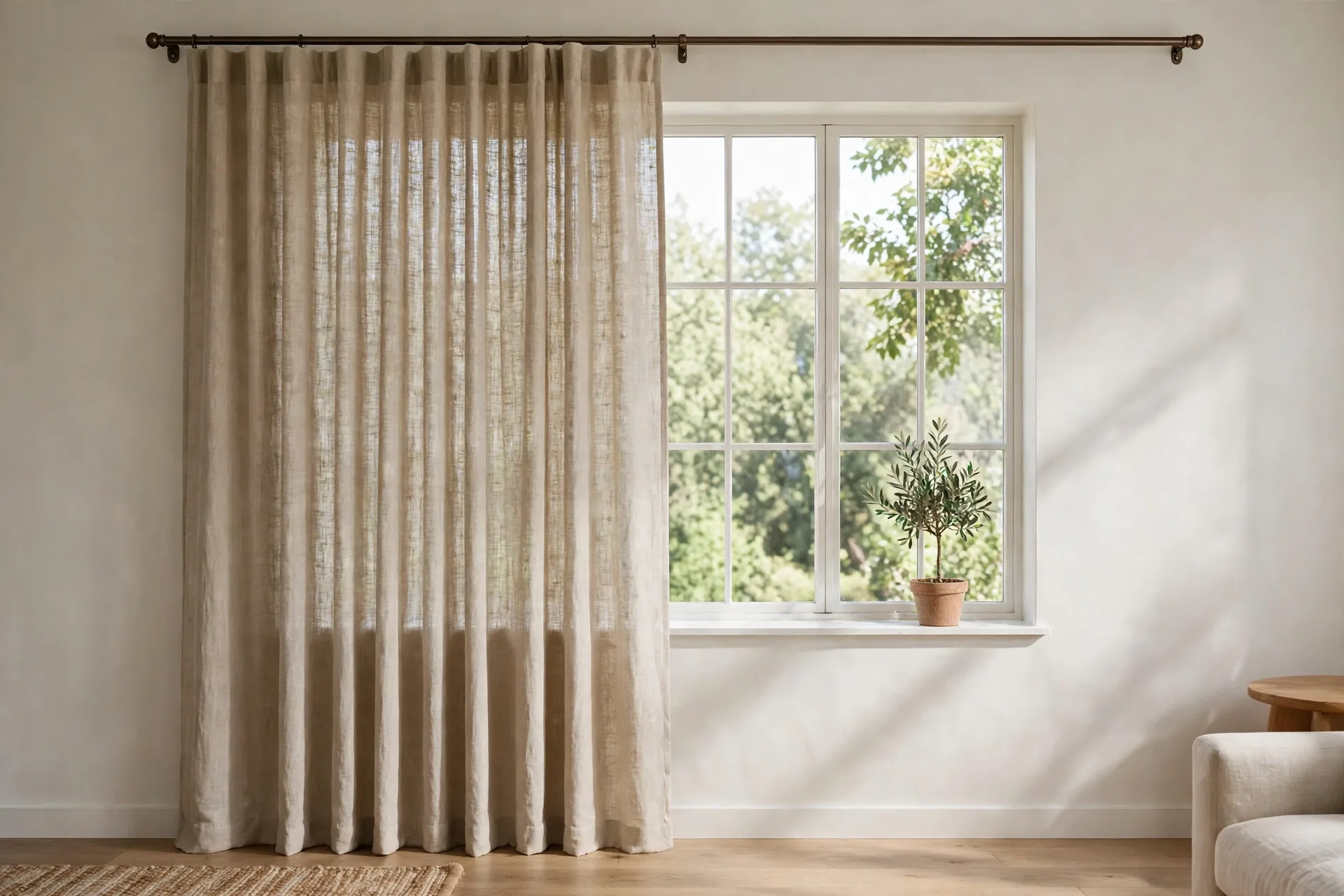
Real linen is woven from flax fiber. A linen blend mixes linen with another fiber, often cotton or polyester, so the panel keeps some linen texture with more stability. Linen-look is usually polyester made to copy the slub texture and matte surface of linen, with little or no flax in it.
The label tells you more than the product name. A panel called "linen curtains" may still be a blend or a linen-look fabric, so check the fiber content line before you judge it by its title.
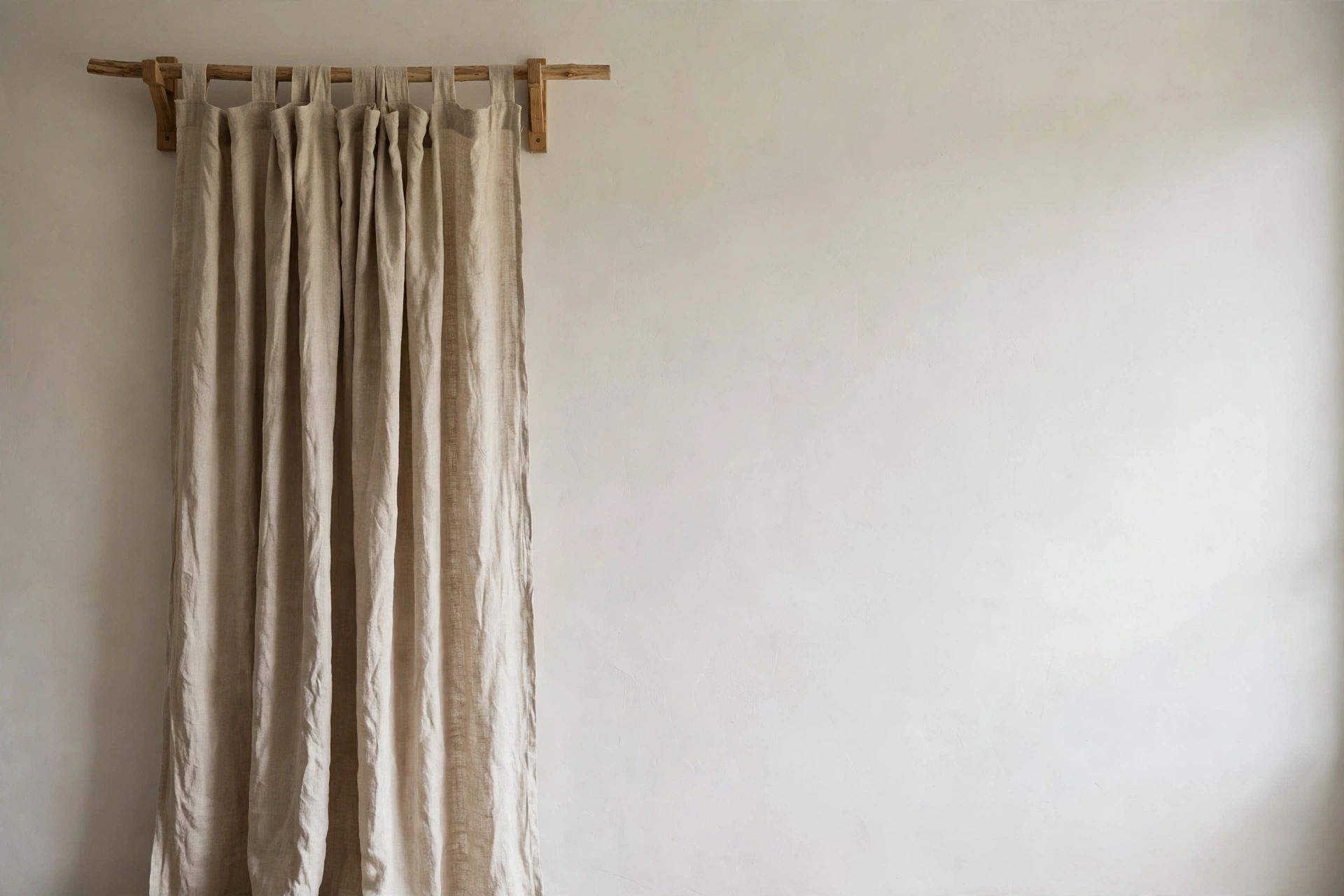
Real linen feels dry and slightly crisp at first, then softer with use, and it drapes in soft, uneven folds. A blend feels smoother and holds its shape a little better. A linen-look panel feels the most uniform, resists creasing better, and holds its color in sun with less fuss than unlined natural linen, but it lacks the natural feel of flax. On the light scale used in this guide, sheer is the thinnest level, semi-sheer is the middle level, and light-filtering is the densest level of the three. The mistake is buying one type while expecting the behavior of another. The sheer end of that scale is covered in full in the sheer curtains guide.
Which linen type fits your room and your patience for care
Pick the fabric by how the room is used and how much care you will give. Real linen suits a room where soft light and texture matter most and a few creases will not bother you. A blend suits a busy room where curtains open and close every day and wash more often. Linen-look suits a sunny room, a rental, or a household that wants the linen style without special washing steps.
Sun comes first.
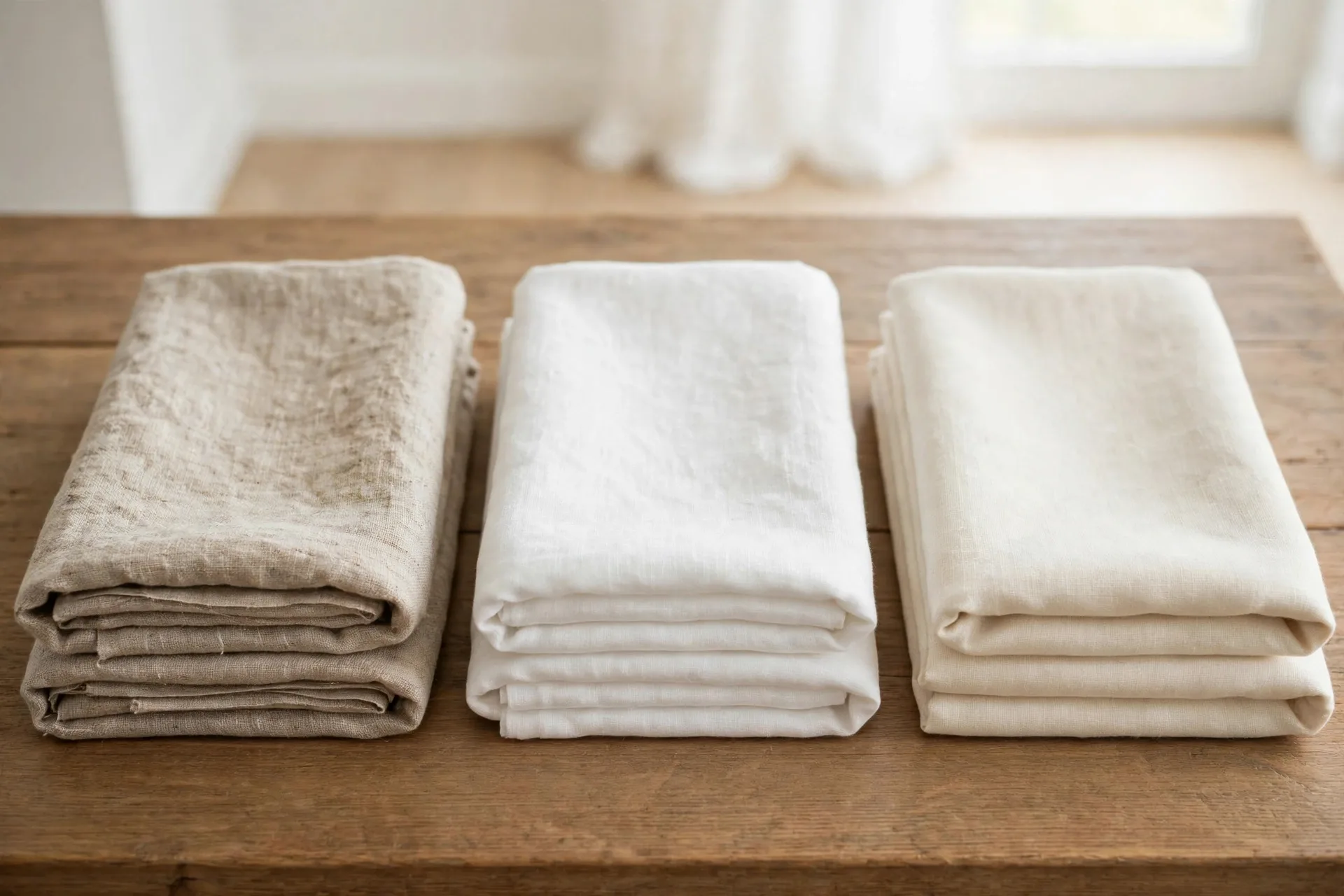
A south-facing or west-facing window in the Northern Hemisphere with strong afternoon sun tests any natural fiber harder than a shaded window. In the Southern Hemisphere, north-facing and west-facing windows take the strong sun instead, so a blend, a linen-look panel, or a lined real linen panel will hold up with less fuss there. If you plan to wash curtains at home and hang them back the same day, a blend or linen-look panel is easier, because it dries faster and needs less steaming before it looks presentable. If you are happy to steam, dry clean, or hang panels while still slightly damp, real linen is a fair choice. A light weave filters light but gives little night privacy, while a medium weight gives more body and a fuller fold.
Linen for a living room that stays bright but private
A living room usually needs soft daylight, daytime privacy, and a panel that looks good open and closed. A medium-weight, light-filtering linen or linen blend panel meets that brief for most living rooms. It keeps the room bright, takes the hard edge off direct sun, and still gives a sense of cover from the street during the day.
Privacy has a limit to know before you buy. A light-filtering panel that looks solid from outside in daylight can turn see-through at night once indoor lights are on.
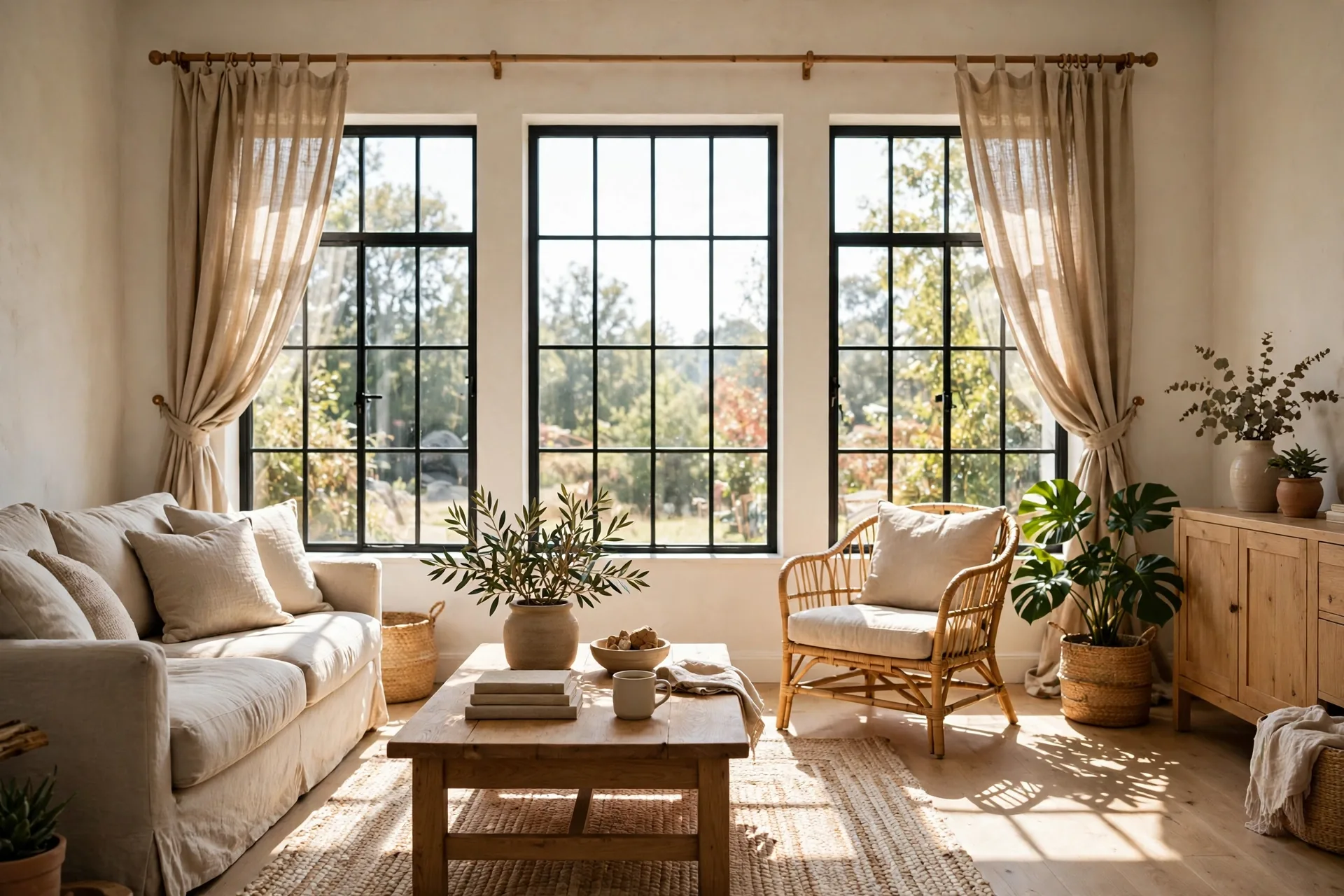
If your living room faces a street and you use it after dark, add a lining or hang a sheer linen panel nearest the glass, with the heavier panel in front of it on the room side. A standard lining adds body and privacy without changing the linen face you see inside. A blackout lining is more than most living rooms need, so save it for rooms where darkness is the point. For a full room guide, see Best Curtains for Living Room.
Linen for a bedroom that still lets you sleep in
A bedroom needs a different answer, because darkness and sleep matter more than bright daylight. Unlined linen on its own will not darken a bedroom well. It softens light, but morning sun still comes through, and a light sheer will glow at dawn. If you sleep late, work nights, or face east, treat lining as part of the purchase, not as an extra.
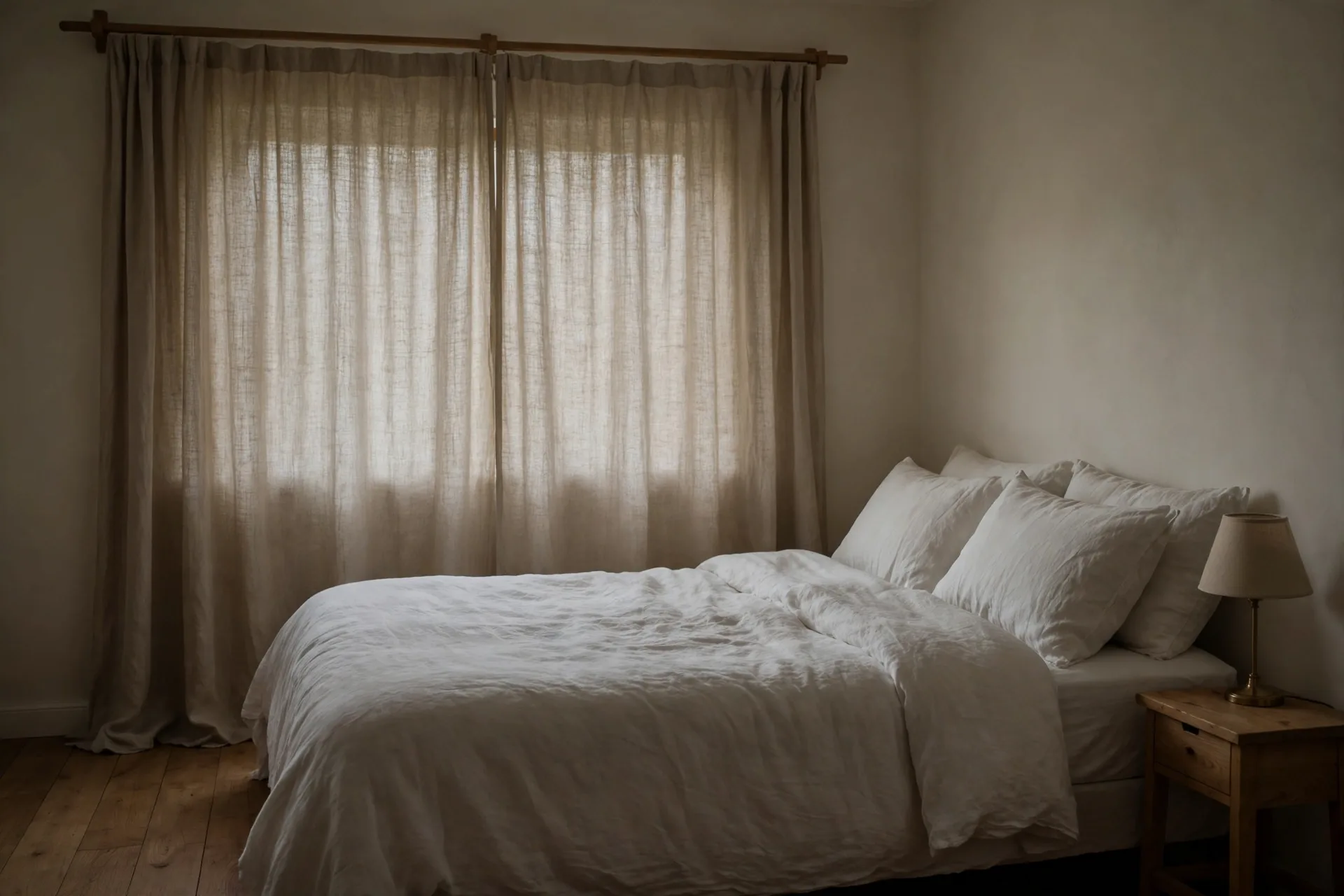
A linen face with a sewn-in blackout lining, of the kind covered in the blackout curtains guide, gives both sides: linen texture inside the room and darkness behind it. Check that the panel still closes fully across the window, because light leaks most often at the sides, at the top, and through the center gap. Hang the rod 6 to 12 inches past the frame on each side, so closed panels overlap the frame, and choose total panel width of about 2 times the rod width, so folds stay full when closed. No shortlist pick pairs pure linen with a blackout lining: the closest is Pick 3, a linen-look face with a blackout lining. If you want pure linen with darkness, choose a pure linen face panel of the Pick 4 type plus a separate blackout liner behind it. For room-wide bedroom advice, see Best Curtains for Bedroom.
Linen for a dining room that suits long meals and soft light
A dining room suits linen well, because meals feel calmer in soft, even light than in harsh glare. A light-filtering linen or linen blend panel softens midday sun without turning the room dark, and the natural texture suits wood tables and plain walls. Sheer linen works in a dining room that is not overlooked, while a medium-weight panel works better in a street-facing dining room.
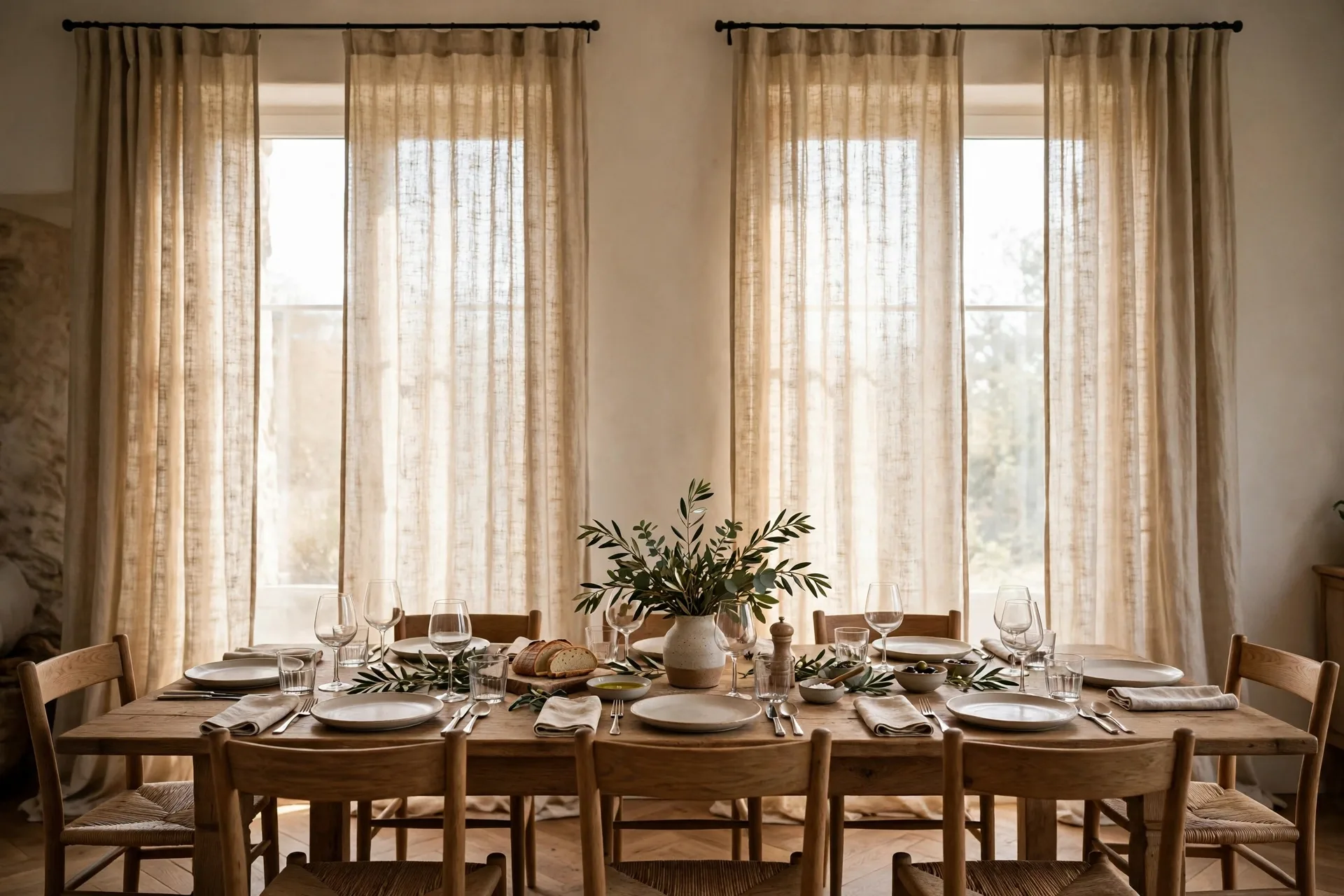
Think about steam and splashes before you choose. A dining room near a kitchen gets more steam, cooking smells, and the odd splash than a living room, so a washable blend or linen-look panel is easier to live with there than a dry-clean-only pure linen panel. Length is practical too: panels that just touch the floor look calm and finished, while panels that pool on the floor collect dust and get stepped on near chairs. From the shortlist, the dining pick is Pick 2 (a washable blend) for a dining room near a kitchen, or Pick 1 for a formal dining room away from steam. See How to Measure for Curtains for the measuring steps.
Why linen wrinkles, and what to do about it
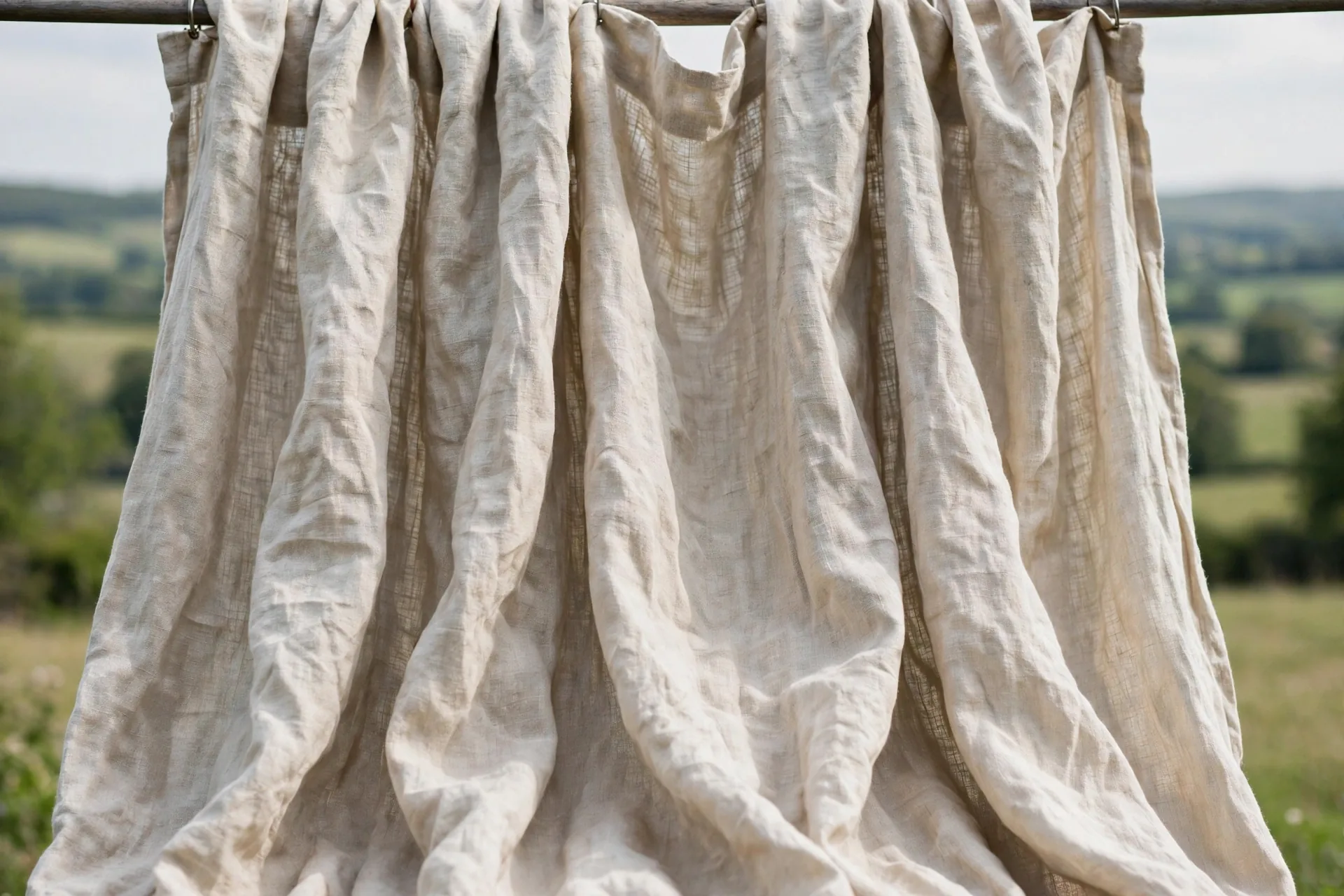
Linen wrinkles because flax fiber bends and holds a crease more readily than polyester. Creases after washing, after folding in a parcel, and after sitting bunched to one side are normal for real linen, not a sign the panel is faulty. Blends wrinkle less, and linen-look panels wrinkle least, which is one of the clearest everyday differences between the three types.
You can reduce creases without fighting the fabric. Hang panels as soon as they arrive, let their own weight pull the folds straight, and steam from top to bottom if creases remain. Hanging a panel while still slightly damp after washing helps in the same way. If a crisp, pressed look matters daily, choose a blend or linen-look panel, or accept that real linen will need a quick steam after washing.
Will linen shrink, and how to wash it without regret
Pure linen can shrink after washing, and heat makes the risk worse. That is why the care label matters more for linen than for many other curtain fabrics. Some makers recommend dry cleaning only for pure linen panels, while many blends and linen-look panels are machine washable on a gentle cycle. Follow the label on the panel you bought, not a general rule from another listing. The wash, dry, and iron symbols on that label follow the care symbols explained by GINETEX under the international ISO 3758 care labeling standard.
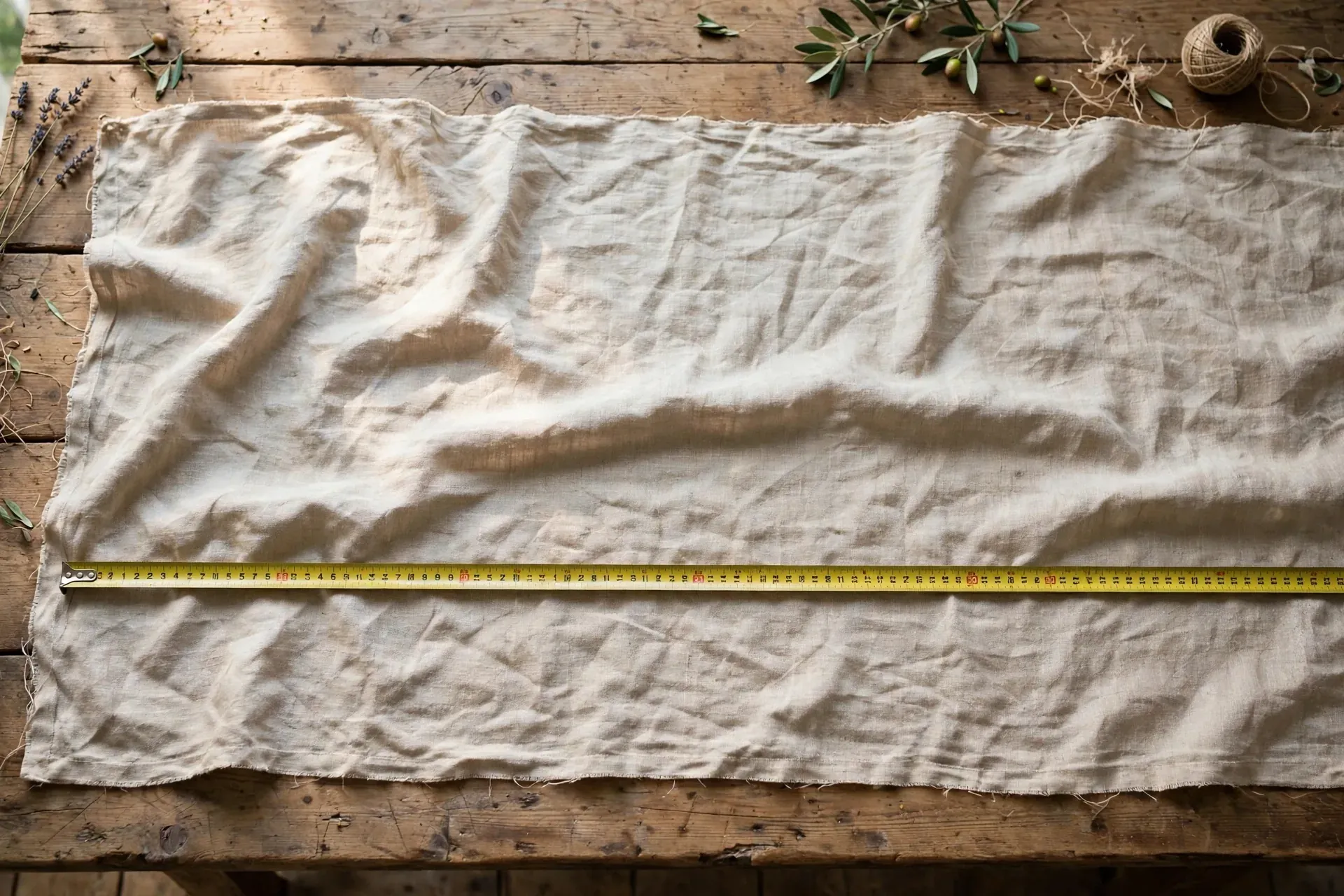
For machine-washable linen, a gentle cycle in cool or lukewarm water with a mild detergent is the safer route, and line drying or hanging the panel back up while slightly damp beats high-heat tumble drying. Keep white and colored panels apart in case color runs. Before the first wash, check the finished length: if a panel already just touches the floor, even a small amount of shrinkage will show. Buy the next length up and hem it, or choose a length with a small float above the floor, so shrinkage does not leave the panel short.
Lining choices that change light, privacy, and drape
Choose lining by the job. Leave a living room panel unlined or standard-lined for daylight, line a bedroom panel for sleep, and use blackout lining for the strongest night privacy. Thermal lining adds insulation, not darkness.
Lining changes a linen curtain more than most buyers expect. An unlined panel is the lightest and most relaxed option, with soft light and soft folds. A standard lining adds body, helps folds fall evenly, protects the linen face from sun, and adds daytime privacy.

Room darkening sits between light filtering and blackout: it dims daylight strongly but does not block it fully. A blackout lining blocks most light and gives the strongest night privacy. A thermal lining adds insulation, but it is a separate job from darkness, so do not buy a thermal panel and assume it will black out a room. Choose thermal lining when temperature, not darkness, is the main complaint, and pair it with a blackout lining or a separate layer if you also need darkness. No shortlist pick uses thermal lining, because the shortlist is sorted by linen type and room job.
Choose lining by room, not by habit. Line a street-facing panel for privacy. Lining adds weight, so a lined panel needs a stronger rod than the same panel unlined, and it stacks wider when open. A separate liner is a useful middle step: it lets you keep a linen panel you like and add darkness behind it.
Headers, fullness, and length: choices that change the look
The header is the top of the panel, and it sets the whole look. A pinch pleat header gives neat, tailored folds and suits medium or heavy linen. A grommet header, with metal rings along the top, slides easily and suits a relaxed room, but its folds are wider and less formal. A rod pocket header hides the rod and suits a soft, casual look, but it can be harder to slide daily. A back tab header hides the rod with a cleaner fall, and a tab top header shows fabric loops over the rod. Tab top loops slide less freely than grommet rings, so they suit panels that mostly stay in place; if you open and close daily, prefer grommet.
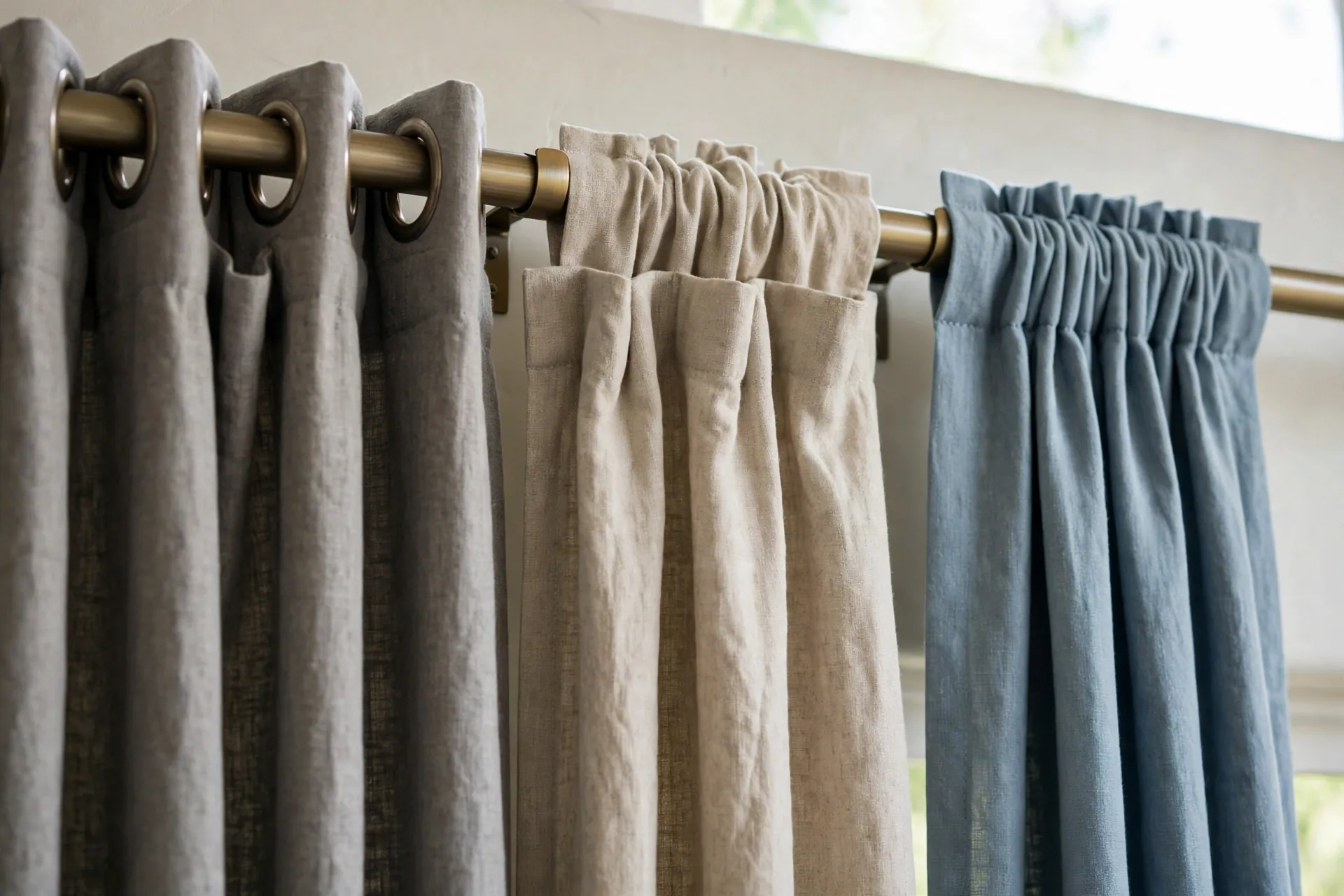
Fullness is how much fabric covers the window when closed. Too little fabric looks thin and flat, with gaps between folds. Aim for total panel width of about 2 times the rod width for standard fullness, not just equal to it, and add a panel rather than stretching two thin panels across a wide window. Floor-length panels suit living rooms and bedrooms with tall windows, while sill-length panels suit small windows and windows above furniture. See How to Hang Curtains for rod placement and hanging steps.
How to pick a color and pattern without dating the room
Natural linen colors are the safest starting point. White, ivory, natural flax, oatmeal, and soft gray suit most walls and furniture, and they keep a room bright. They also show dirt sooner, so a washable blend or linen-look panel in a light color is easier to keep fresh. A deeper color, such as charcoal or navy, adds contrast and hides dirt better in any linen type, not only linen-look. Color choice is separate from fiber type, but a deeper color darkens the room.
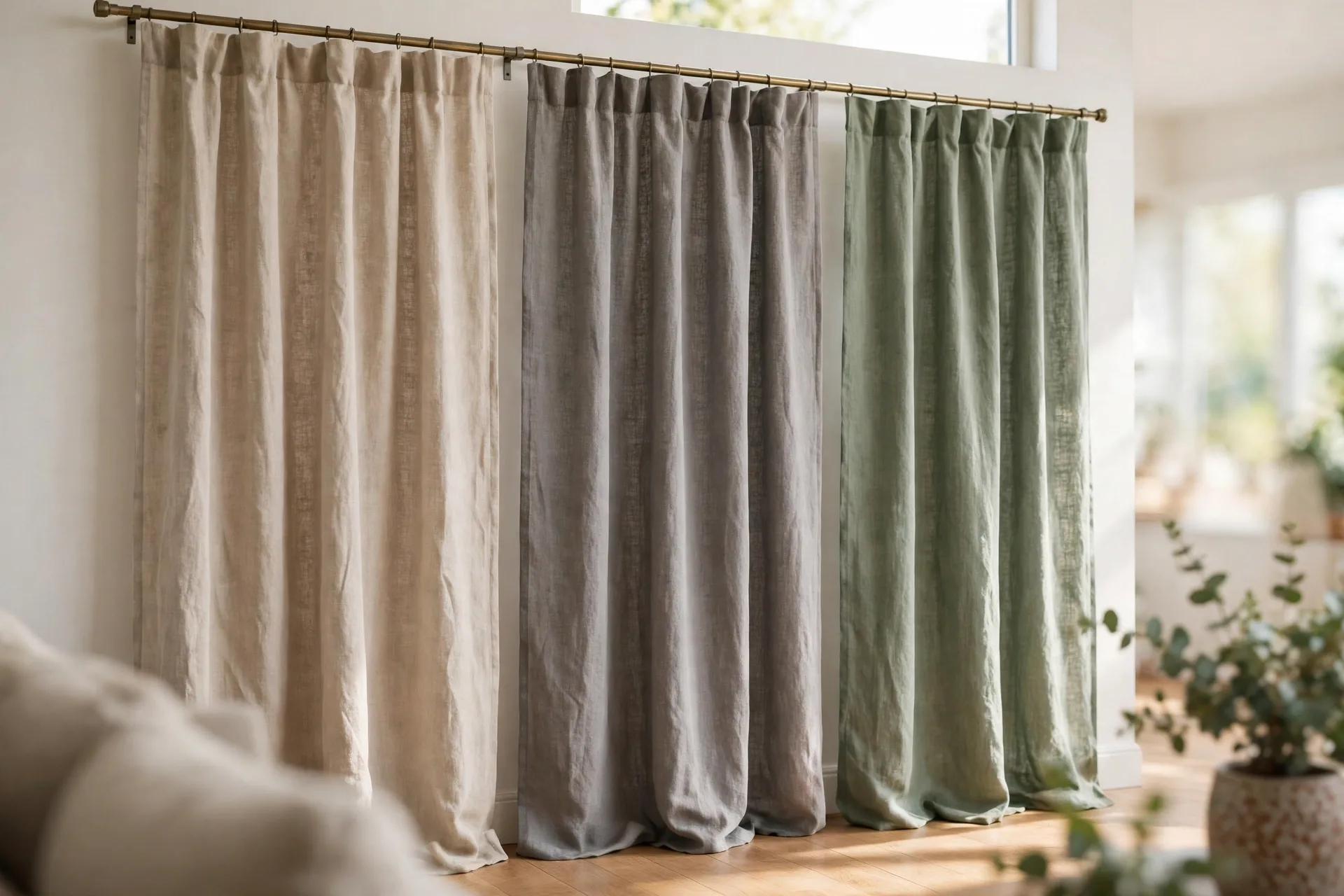
Pattern needs restraint with linen, because the slub texture already adds visual interest. A stripe or a small check can lift a plain room without fighting the furniture, while a large, bold print can date fast and clash with patterned rugs. If your room already has pattern, choose a plain linen panel. Order a swatch where you can, and look at it in daylight and at night, because linen changes with light.
Linen weight in GSM and how much fabric each header needs
Linen weight is measured in grams per square meter, or GSM, and it tells you how much light, privacy, and drape a panel will give before you buy. Sheer linen sits around 80 to 120 GSM, mid-weight linen around 150 to 200 GSM, and heavy linen around 200 to 280 GSM. A sheer weight glows in daylight and gives little privacy, a mid-weight panel filters light with more body, and a heavy weight hangs in deep folds and screens far more.
Header changes how much fabric you need. Linen pleats gather differently, so on linen only, allow about 2 times the rod width for a grommet header, 1.5 to 2 times for a rod pocket header, and 1.25 times for a pinch pleat header as a minimum, because pleats already build fullness into the panel. Those figures are minimums for a gathered look in linen. Where you want deep folds in linen, the 2 times standard overrides the minimum for every header, including pinch pleat. Other fabrics need more: the curtain fullness guide keeps a 2.5x minimum for a pinch pleat.
Flax sourcing, certifications, and washed finishes
Flax sourcing, certification, and washed finishes explain much of what a linen label promises. European flax means flax grown in Europe, where the fiber is long and well suited to weaving, and it is often named on listings for pure linen panels. Stone-washed linen has been washed with stones or an equivalent process to soften it before sale, so it feels broken-in from the first hang. Pre-washed linen has been washed once before sale to soften it and to take out most of the first-wash shrinkage, though the care label still rules after that.
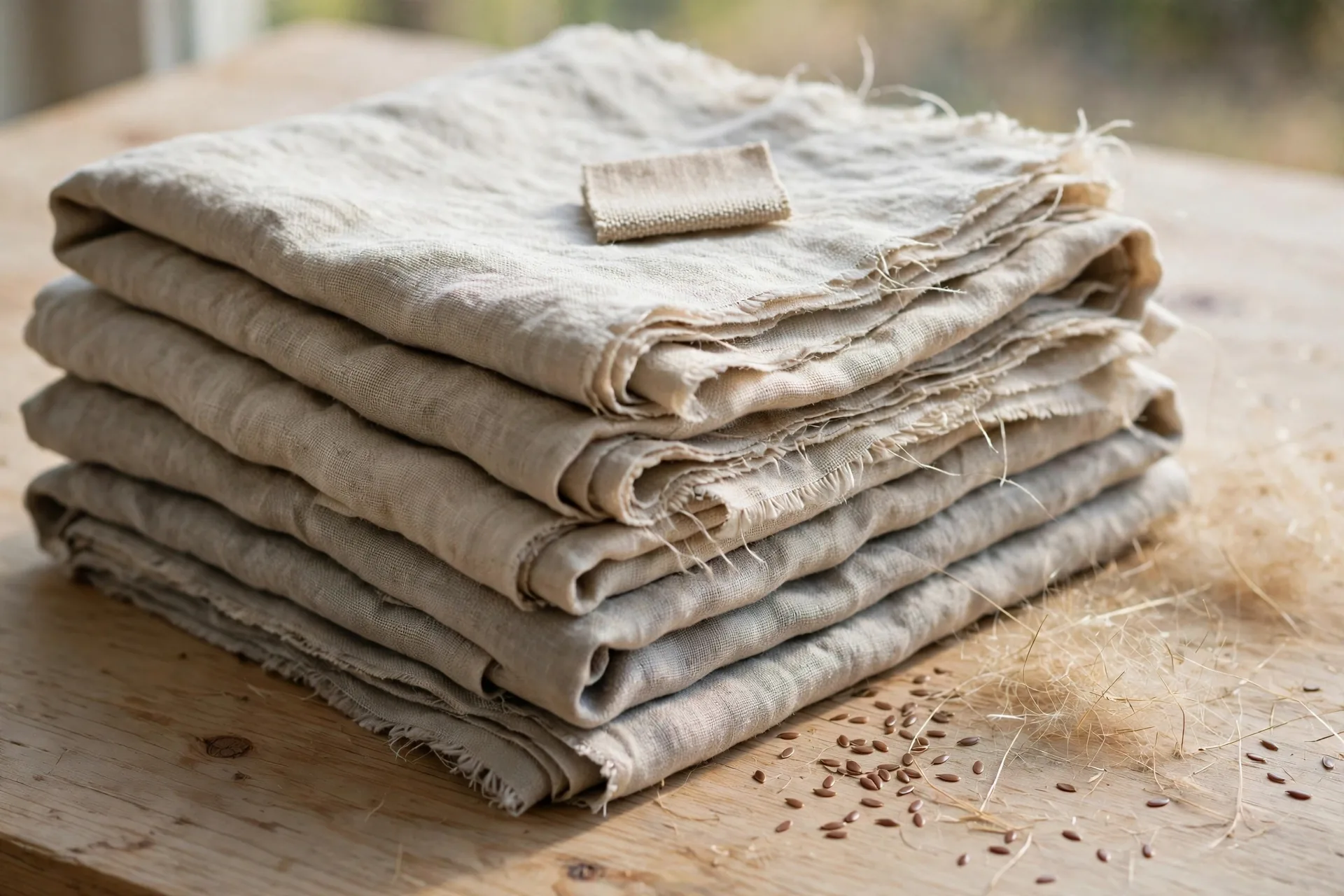
Certification is a separate claim from fiber content. The OEKO-TEX STANDARD 100 label means the textile has been tested for harmful substances, and curtains fall under Product Class 4, which covers home textiles and decoration materials, as described in OEKO-TEX's explanation of the STANDARD 100 label, which tests textiles for harmful substances. A label tells you about testing, not about how the panel will drape or wash, so read it alongside the fiber content and care label rather than in place of them.
Made-to-measure linen for awkward windows
Made-to-measure linen suits windows where ready-made lengths and widths do not fit, such as tall windows, arched tops, bay windows, and very wide openings. A made-to-measure panel is cut to your rod width, drop, and header, so the hem lands where you planned it instead of hovering above the floor or pooling where you did not want it.
Order made-to-measure only after measuring the rod width, the drop from the rod to the hem point, and the header allowance, and confirm whether the order covers one panel or a pair before ordering. For a standard window with a standard drop, a ready-made panel is the simpler choice, and made-to-measure earns its place where the window itself is not standard.
Linen for sliding doors, wide windows, and tall windows
Sliding doors, wide windows, and tall windows each test linen in a different way, and each needs more panels and more stacking room than a standard window. A sliding door needs panels that stack fully clear of the opening, so the door moves without catching fabric, and a traversing track or a long rod with freely sliding headers suits daily use better than a rod pocket that drags.
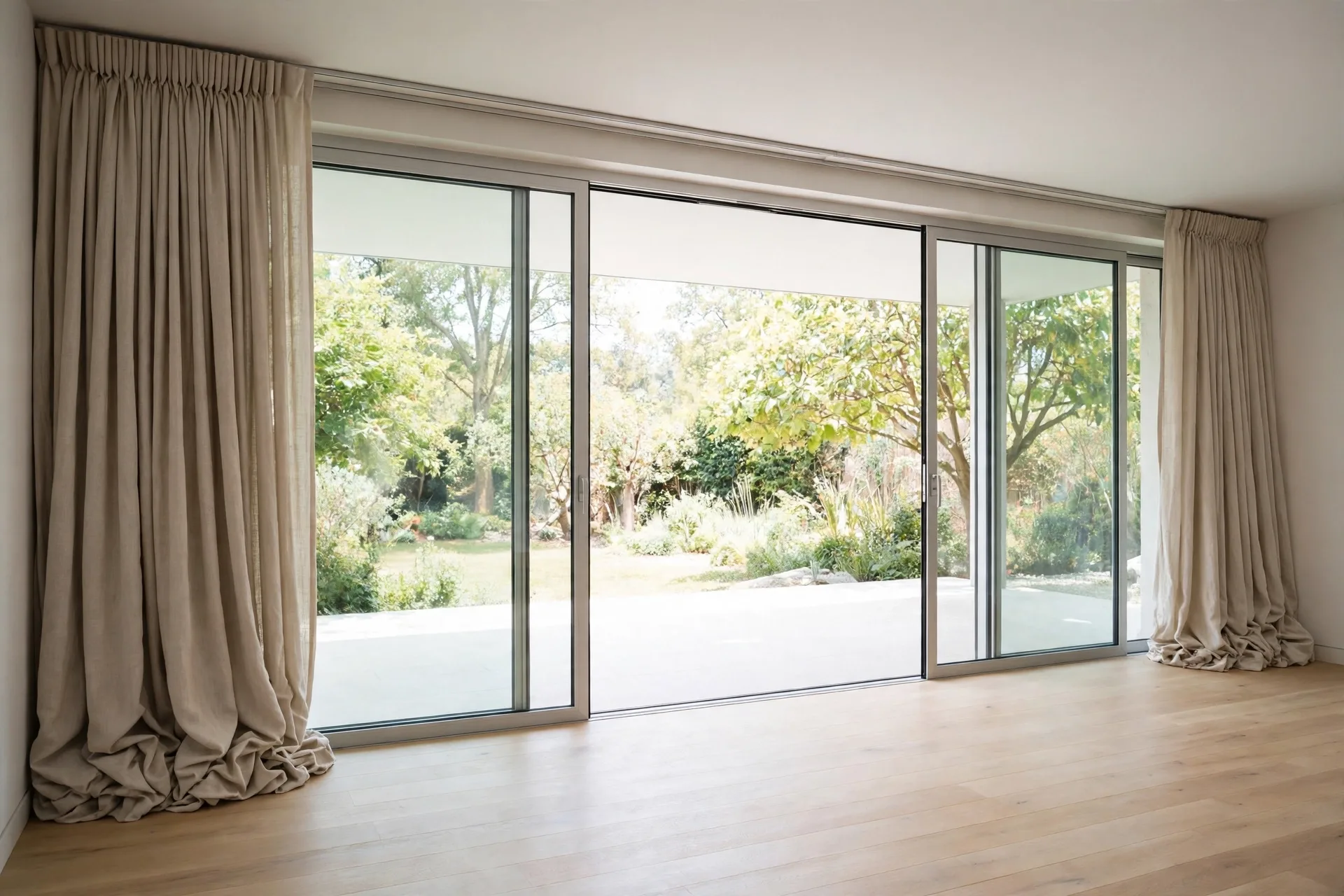
Wide windows need extra panels rather than stretched panels, since linen stretched flat loses its folds and its texture. Tall windows need the drop measured from the rod to the floor on each side, since floors are rarely perfectly level, and a heavy linen on a tall drop needs a strong rod with center support. Count stacking width before ordering, by gathering one panel and measuring the bunch, then multiplying by the panels on each side.
Short linen for kitchens and cafe windows
Short linen suits kitchens and cafe windows, because it covers the lower half of the window, leaves the upper half open, and stays clear of countertops and steam. A cafe linen hangs from a rod set halfway up the window and ends at or just below the sill, which suits a window above a sink or a countertop where a floor-length panel would hang in the way.
A kitchen panel needs washing more often than a living-room panel, since steam and cooking smells settle into natural fiber. A washable blend or linen-look panel is easier to live with above a sink than a dry-clean-only pure linen panel, and a short drop dries faster after washing. Keep linen away from an open flame, and choose a drop that cannot brush a stovetop.
Linen or cotton: which suits the room
Linen and cotton differ in texture, breathability, and care, so the better choice depends on the room rather than on a single winner. Linen has a slubbed texture, a dry feel, and an uneven drape that softens with use, while cotton is smoother, more uniform, and softer from the first hang. Linen breathes well and suits warm rooms, while cotton gives a tidier, more even fall.
Care splits them too.
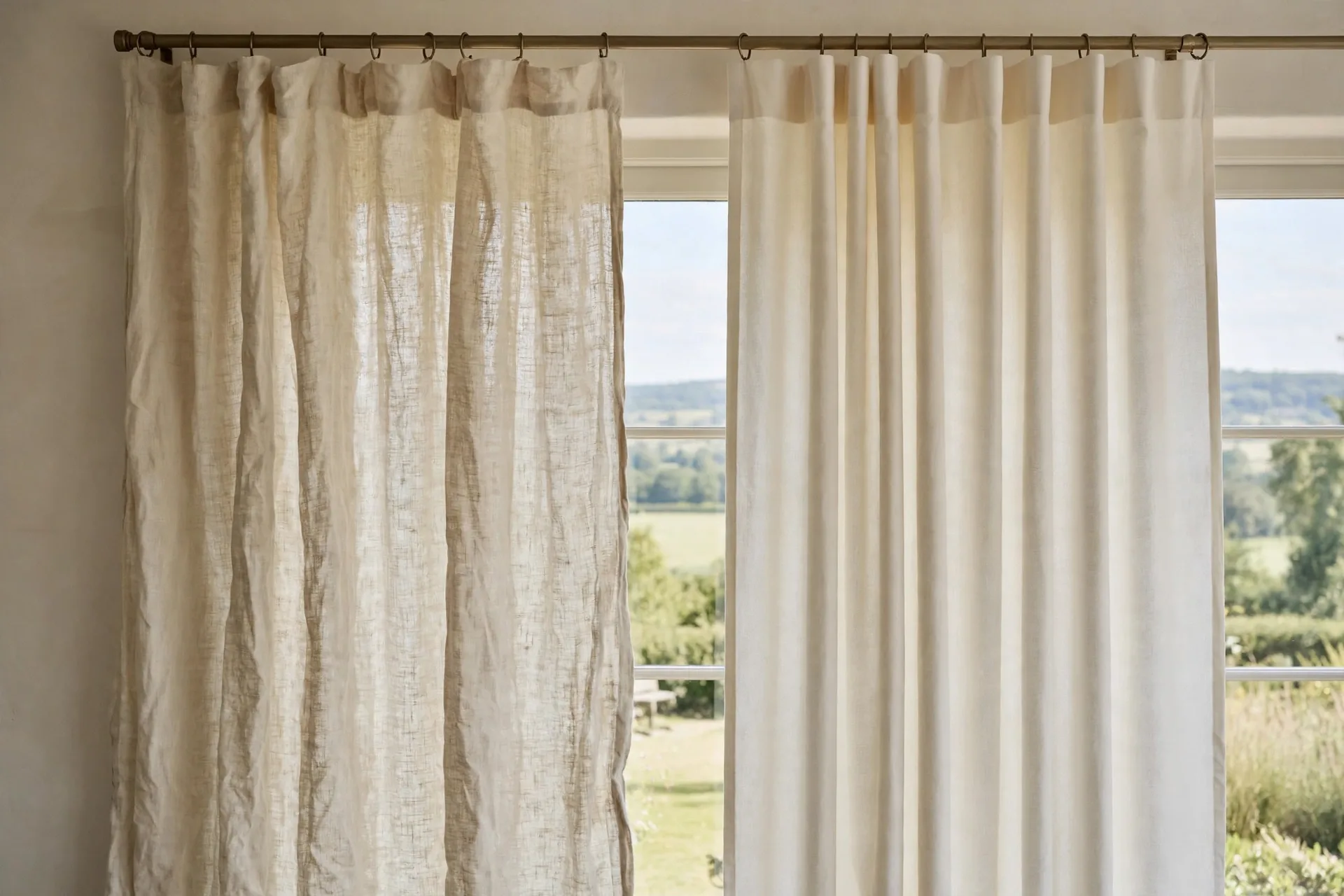
Cotton usually washes at home with less fuss and wrinkles less than pure linen, while linen needs gentler washing, shrinks more with heat, and rewards steaming after washing. Choose linen where texture and airflow matter most, and cotton where a smooth, low-maintenance panel matters more.
Fading in sun and how to slow it
Real linen fades in strong sun over time, and the change shows first on the side facing the glass. A lined panel fades more slowly than an unlined one, because the lining takes much of the sun before it reaches the linen face, and a deeper color shows fading less quickly than a pale color in the same sun.
Rotation and shade slow fading further. Turn panels end to end now and then so one edge does not take all the sun, and close a solar shade or a heavier layer during the strongest afternoon hours on a south-facing or west-facing window. Fading that has already happened cannot be washed out, so prevention at the sunny window matters more than any later treatment.
Linen in a rented home without drilling
Linen in a rented home needs hanging that leaves no holes, which means tension rods, adhesive mounts, or a track fixed to existing fittings rather than drilled brackets. A tension rod suits a light or mid-weight linen inside a straight-sided recess, and it holds best when the recess width is measured at the top, middle, and bottom and the smallest reading is used.
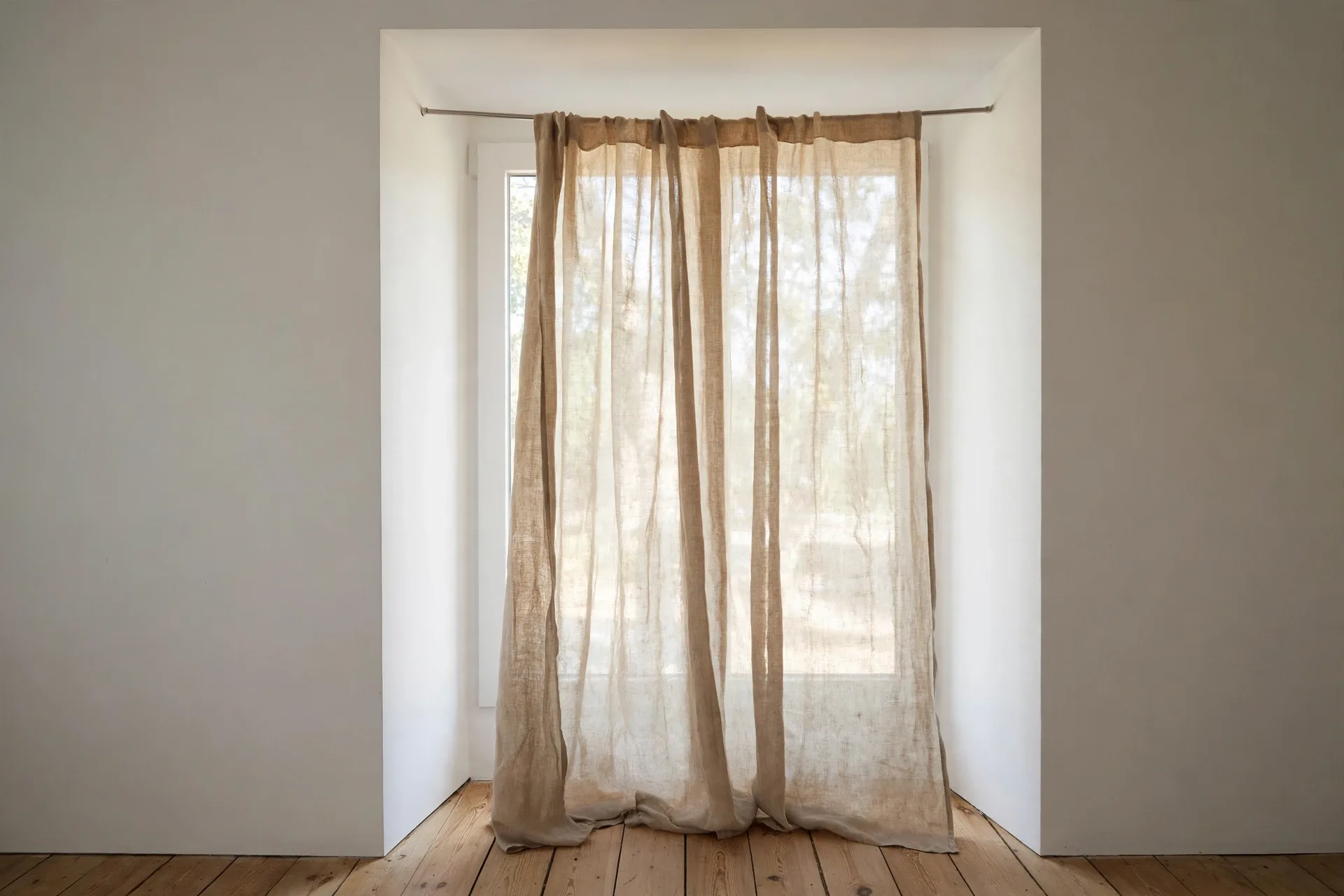
Weight is the limit to respect. A heavy lined linen panel can pull a tension rod down or peel an adhesive mount off the wall, so check the weight guidance for the mount before hanging, test the rod empty first and then with one panel, and move to a drilled bracket only with the landlord agreement. A light unlined linen is the safest weight for a no-drill hang.
Linen in homes with pets and children
Linen in a home with pets or children needs a fabric and a length that cope with claws, stains, and small hands. A mid-weight blend stands up to claws better than a fine pure linen sheer, and a washable blend cleans up after muddy paws where a dry-clean-only panel would not. A float-length hem that ends just above the floor keeps panels clear of paws and feet, while pooled linen near chairs gets stepped on and stained.
Stains need fast, gentle treatment, and cords need the same care as fabric. Blot a fresh mark rather than rubbing it into the weave, and follow the care label for washing. In a child room, keep the crib away from the window and choose cordless operation where you can, following the safety guidance on window covering cords from the U.S. Consumer Product Safety Commission.
Why linen feels cooler in summer
Linen breathes naturally, which is why it feels cooler in summer than a dense synthetic panel. Air moves through the open flax weave, so a linen panel lets a warm room breathe while still softening glare, and that airflow is the flax story itself rather than anything a lining adds.
In winter the same openness means linen alone insulates less than a lined or thermal panel, so pair it with a lining or a closing layer when warmth matters.
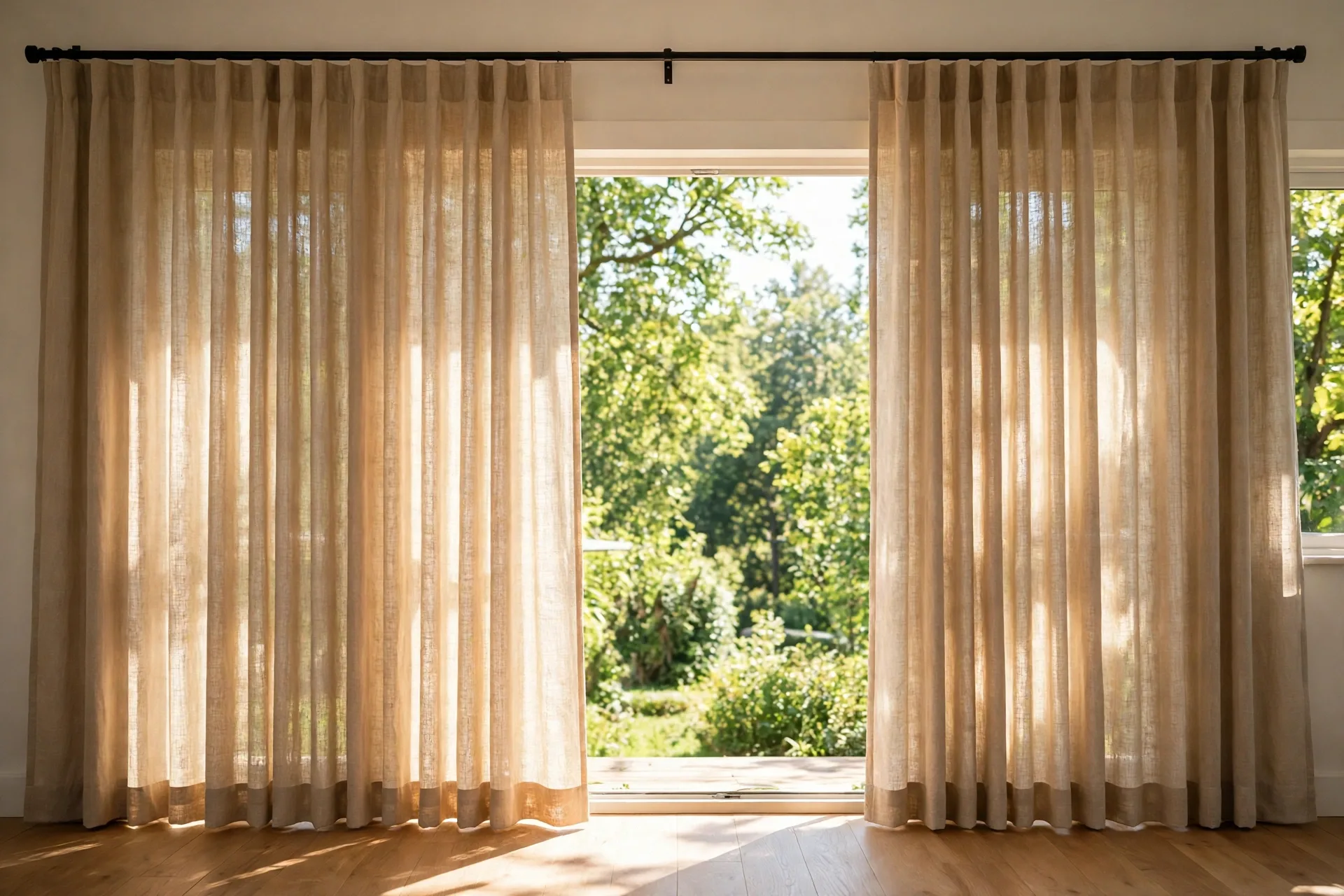
The daily habit helps too: open linen panels on a sunny winter morning to let sun warm the room, and close panels before the sun hits the glass in summer to keep heat out, as described in the energy guidance on window coverings from the U.S. Department of Energy.
How long linen curtains last
Linen curtains last well when they are washed gently and hung with enough fullness, and pure linen softens with use rather than wearing thin quickly. The fiber is strong for its weight, so a mid-weight or heavy linen panel holds its drape through many washes, while a very sheer linen needs gentler handling and shows wear sooner.
Wear shows first at the folds, the hem, and any point where the panel rubs a rod or a bracket, so ease panels along the rod rather than dragging them, and repair a loose hem before it frays further. A blend trades a little of the pure linen feel for easier washing and less creasing, which can mean a longer neat life in a busy room.
Looking after linen between washes
Linen needs routine care between washes, or dust settles into the weave and dulls the texture. Vacuum panels with a soft brush attachment every few weeks, working from top to bottom, and brush off surface dust before it works deeper into the fiber.
Kitchen grease needs the same routine in a dining room near a kitchen, since cooking smells and fine grease settle on fabric even without visible marks.
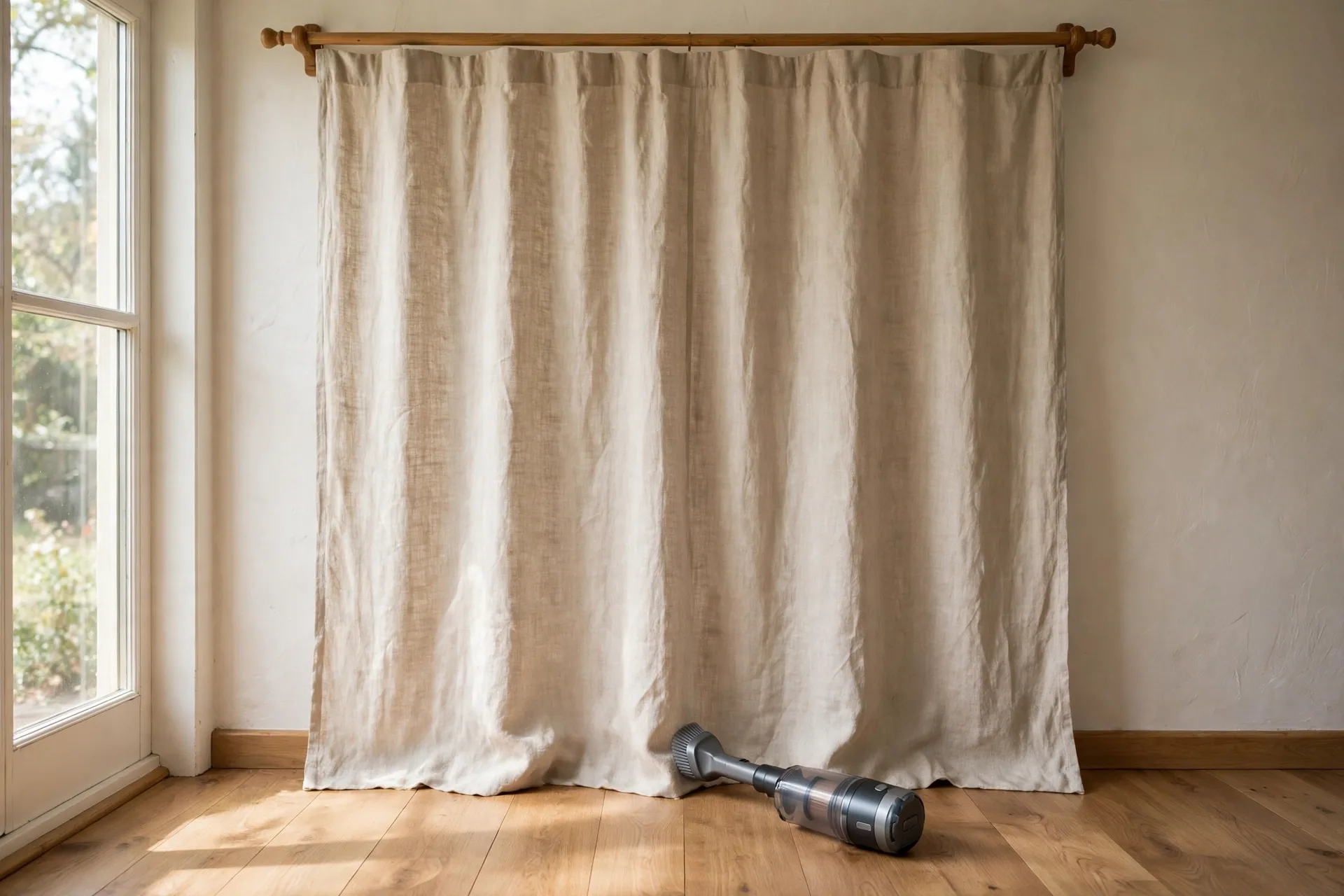
A quick vacuum and an airing by an open window keep a kitchen linen fresh longer, and a panel that smells of cooking despite vacuuming is ready for its next wash rather than another month of use.
Matching linen to formal and relaxed rooms
Linen suits both formal and relaxed rooms, but the weave and header should match the room. A smooth plain weave with a pinch pleat header suits a minimal room, where clean folds and an even fall matter more than texture. A slubby weave with a grommet or rod pocket header suits a farmhouse room, where visible texture and a relaxed fall belong.
A boho room suits a lighter, more open linen with a soft, gathered header, while a formal dining room suits a mid-weight or heavy linen in a plain color with tailored pleats. Keep pattern quiet in a formal room, since the slub already gives the panel interest, and let texture carry a relaxed room instead of adding a bold print.
Buying checklist before you order
Start with the fiber label, not the title. Confirm whether the panel is pure linen, a blend, or linen-look, and match that fact to your care patience. Next, confirm the light job: light filtering, room darkening, or blackout, and whether that result comes from the fabric alone or from a lining. Then check the heading, total panel width, and finished length against your rod and window, using How to Measure for Curtains and How to Hang Curtains.
Order a swatch if one is offered.

No shortlist pick states whether a swatch is offered, so check the listing for a swatch option before you order. Check the care label for washing or dry cleaning. For a bedroom, confirm the lining and closed width, so light does not leak at the sides. For a busy room, favor a washable blend or linen-look panel over a dry-clean-only pure linen panel.
Frequently asked questions about linen curtains
Most linen questions come down to fiber, texture, washing, and how linen behaves in daily use.
Is real linen better than a linen blend for curtains?
Real linen is not better in every case. It gives the most authentic texture and softens with use, but it wrinkles more and needs more careful washing. A blend keeps much of the linen look with less creasing and easier care, so it suits busy rooms better.
Do linen curtains wrinkle a lot?
Pure linen wrinkles more than blends and linen-look panels, and creases after washing or folding are normal. Steaming and hanging panels while slightly damp will reduce creases. If a smooth, pressed look matters daily, a blend or linen-look panel is the better pick.
Do linen curtains shrink when washed?
Pure linen can shrink, especially with heat, so follow the care label on your panel. Some pure linen panels need dry cleaning only, while many blends and linen-look panels wash on a gentle cycle in cool or lukewarm water.
Can I machine wash linen curtains?
Some linen curtains can be machine washed, and some cannot. The care label on your panel is the rule. For washable types, use a gentle cycle, cool or lukewarm water, and a mild detergent, and avoid high-heat drying.
Are linen curtains good for blackout?
Unlined linen is not good for blackout. It filters light and softens glare, but it will not darken a bedroom well on its own. For darkness, choose a linen panel with a sewn-in blackout lining, or layer it with a separate blackout layer.
Do linen curtains give privacy at night?
Daytime privacy from a light-filtering linen panel does not carry over to night. Once indoor lights are on and it is dark outside, a sheer or light panel can show shapes from the street. For night privacy, use a lined panel or a layered setup.
Should linen curtains be lined or unlined?
Unlined linen suits a relaxed living room where soft light matters most. A standard lining suits a street-facing room that needs more privacy and body. A blackout lining suits a bedroom where sleep matters. Match the lining to the room, not to a default choice.
What is the difference between linen-look and real linen?
Real linen is woven from flax and shows natural slubs, a dry feel, and a relaxed drape. Linen-look is usually polyester made to copy that texture, with a more uniform surface, less wrinkling, and easier care.
For other curtain types, see Best Window Curtains.
This guide is research-based curation: we compared maker specifications, published reviews, and current prices. Read how we choose.