 Best
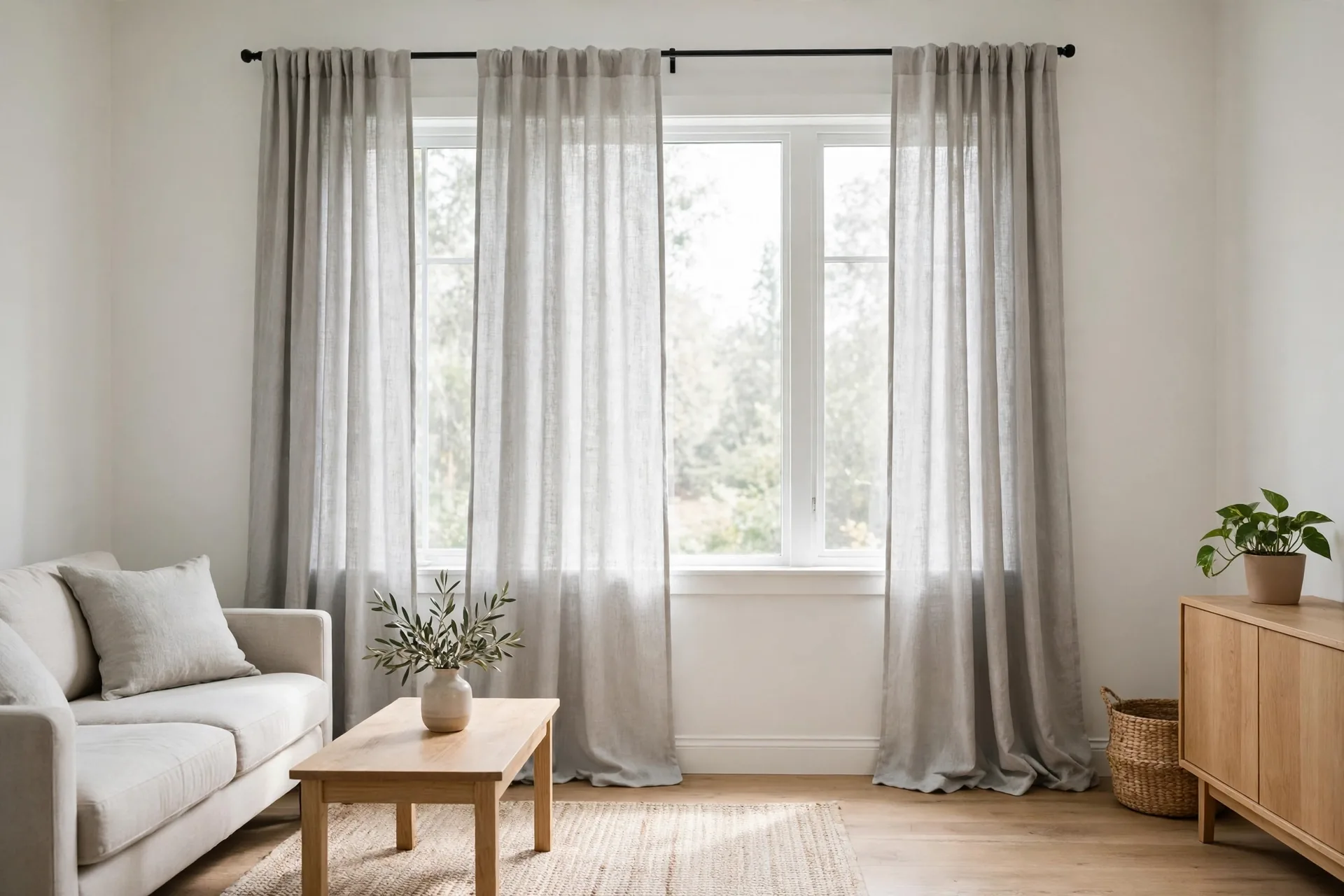
Best Polyester Curtains
Polyester curtains take sun, washing, and busy family life better than most fabrics, but cheap polyester looks cheap. This guide sorts polyester by type and finish, then matches panels to bedrooms, living rooms, and homes with kids and pets.
The best polyester curtains are the ones that match the room's wear job first and the finish second. A triple-weave blackout panel suits a bedroom that must stay dark, a linen-look panel suits a living room that needs texture without linen care, and a microfiber panel suits a home with pets that needs hair to brush off. Pick by type and finish before you trust the word polyester alone, because one label covers flat weaves that look thin, triple weaves that block light, and faux silks that shine like the real thing.
Polyester is the hardest-working curtain fabric: it resists wrinkles, shrinking, and fading better than cotton or linen, it usually machine washes at home, and it holds color in sun that fades natural fibers. It is also the fabric most likely to look cheap when the wrong finish meets the wrong room, because thin, shiny polyester shows its synthetic hand at once. This guide sorts polyester by type, explains when it looks good and when it does not, covers heat care and blackout coatings honestly, and matches panels to bedrooms, living rooms, and homes with kids and pets.
Polyester picks by job and finish
The six picks below run from a linen-look weave to a triple-weave blackout, grouped by the finish and the job each type does best. With polyester the finish is the thing to read: a linen-look weave hides the synthetic hand with texture, a microfiber face stays smooth and sheds pet hair, and a coated blackout does the darkening work a lining would do on cotton. Check the fiber line, the finish, the lining or coating, and the care label on the listing before you order, because a panel that says polyester in its title may still be a blend, and a blend drapes and washes differently from pure polyester.
As an Amazon Associate, we earn from qualifying purchases.
| Pick | Type | Lining | Best for |
|---|---|---|---|
| 1 | Light-filtering polyester linen-look panels | No lining stated | Living rooms that need texture without linen care |
| 2 | Triple-weave polyester blackout panels | Triple-weave blackout, no separate lining | Bedrooms that must stay dark |
| 3 | Room-darkening polyester panels | Room-darkening | Media rooms and home offices that need glare control |
| 4 | Polyester faux-silk panels | No lining stated | Formal rooms that need sheen without silk care |
| 5 | Polyester voile panels | Unlined | Layering under a closing panel |
| 6 | Microfiber polyester panels | No lining stated | Homes with pets that need hair to brush off |
1. Light-filtering polyester linen-look panels: best for a living room that needs texture without linen care
- Best for: A living room where a linen surface is wanted, but linen's wrinkling and washing care are not.
- Key features: Polyester face with a linen-look texture, light-filtering opacity, soft natural-looking drape.
- Pros: Linen texture without linen washing, resists wrinkles and fading, daytime privacy from the street.
- Cons: Texture is a look, not real linen, so check the fiber line, limited darkness alone, can look flat in a dim room.
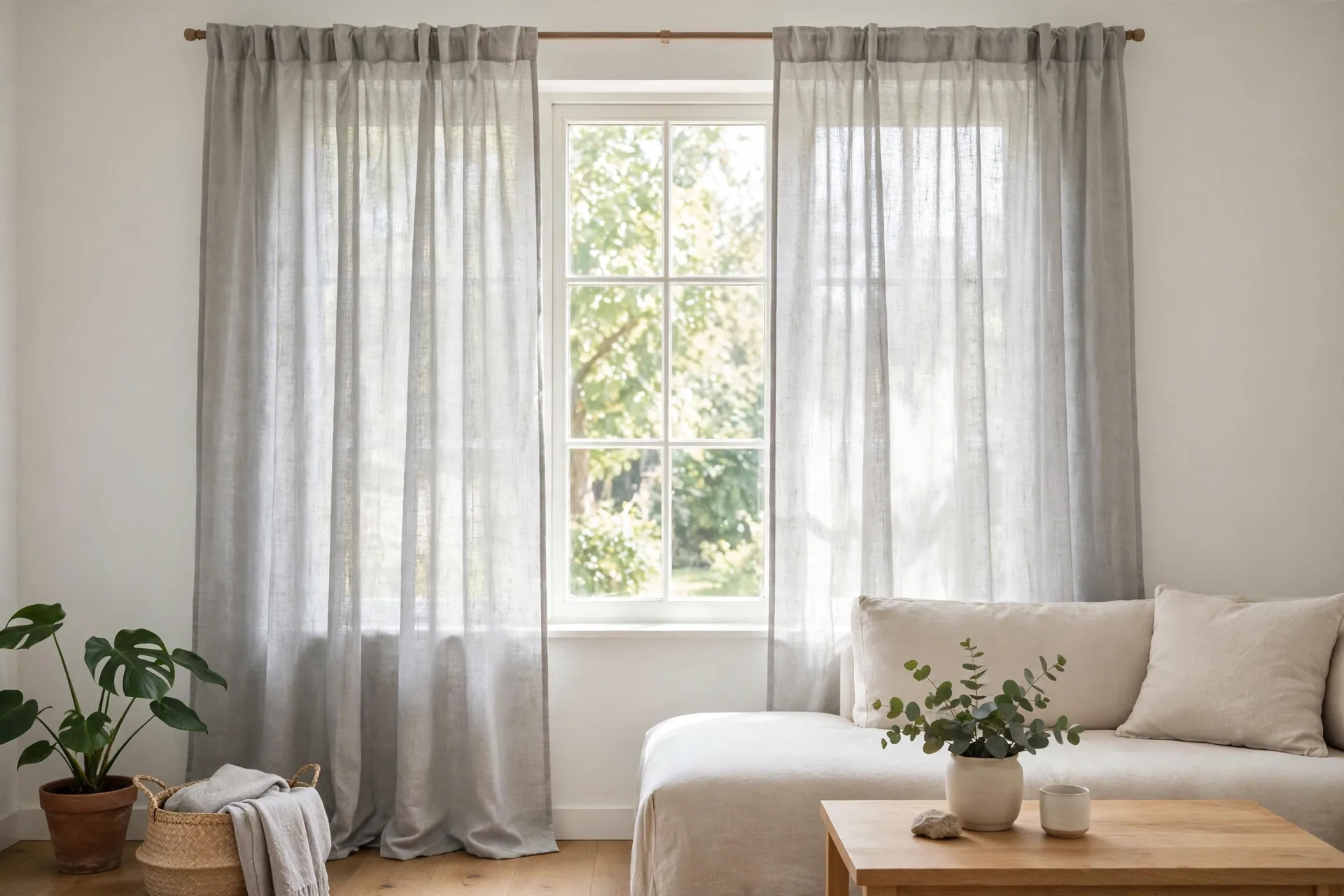
2. Triple-weave polyester blackout panels: best for a bedroom that must stay dark
- Best for: A bedroom where sleep comes first, including rooms facing street light or early sun.
- Key features: 100% polyester triple-weave construction, blackout opacity without a separate lining, fuller fall than a flat weave.
- Pros: Strong darkness without a separate lining to wash apart, holds color in sun, keeps its shape after washing.
- Cons: Heavier than a flat polyester panel, so rod and brackets must be firm, needs full closed coverage or light leaks at the edges, check the care label, because heat harms some blackout weaves.
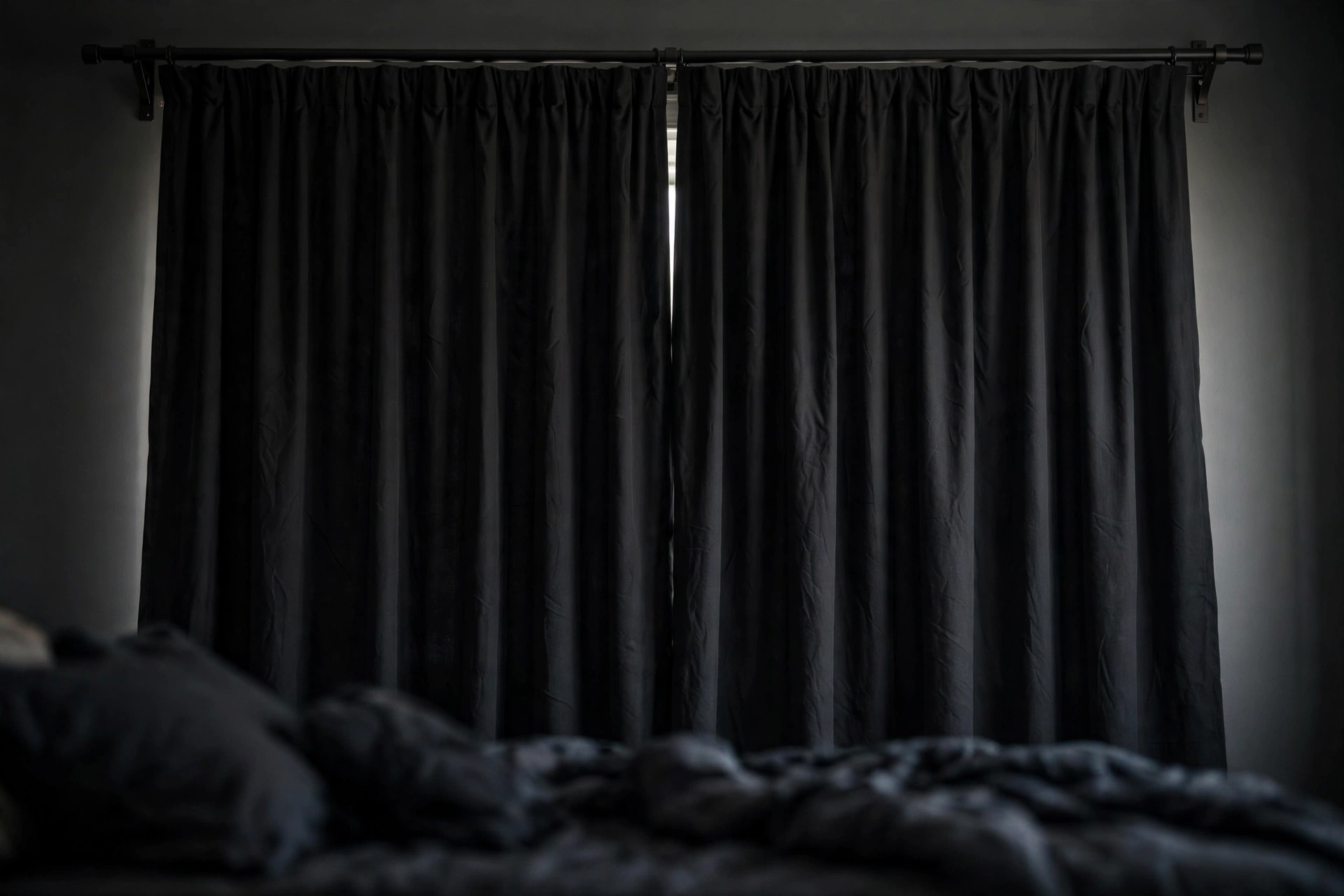
3. Room-darkening polyester panels: best for a media room or home office that needs glare control
- Best for: A room where screen glare must go, but full blackout darkness is not needed.
- Key features: Polyester face with a room-darkening build, floral print, dimmed daylight, steady drape that hangs straight.
- Pros: Cuts glare without a cave-dark room, resists fading and wrinkling, suits rooms where panels open and close daily.
- Cons: Light still leaks at the sides and top, not a sleep-darkness panel, check whether the dimming comes from weave or coating.
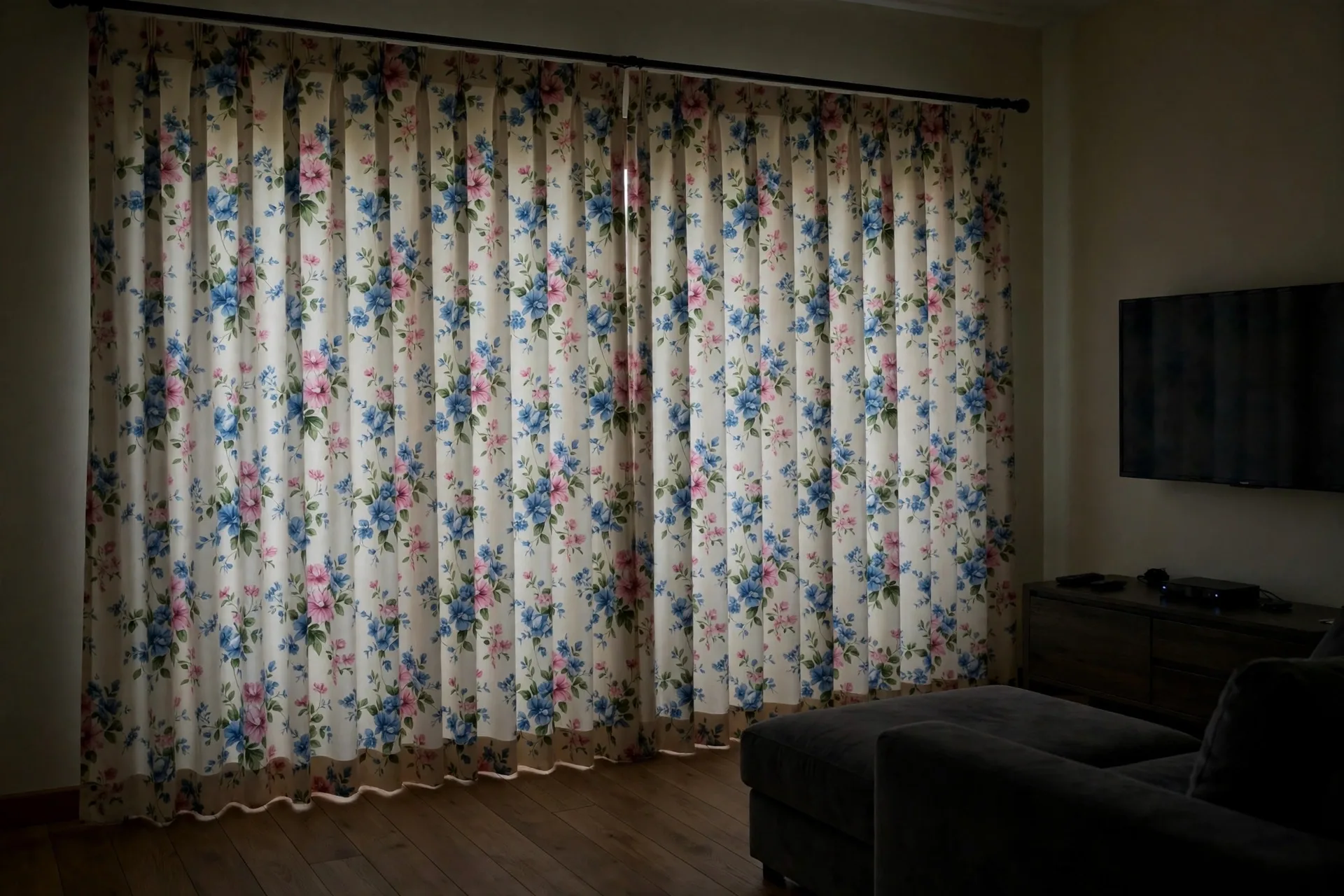
4. Polyester faux-silk panels: best for a formal room that needs sheen without silk care
- Best for: A formal room where a lustrous, dressy fall is wanted, but silk's sun damage and dry cleaning are not.
- Key features: Polyester faux-silk face with a gentle sheen, light-filtering opacity, smooth drape, set includes a scarf valance.
- Pros: Silk look without silk fragility, resists sun damage better than real silk, usually machine washable.
- Cons: Sheen can look shiny under bright light, shows marks more than a matte weave, needs low heat when ironing or steaming.
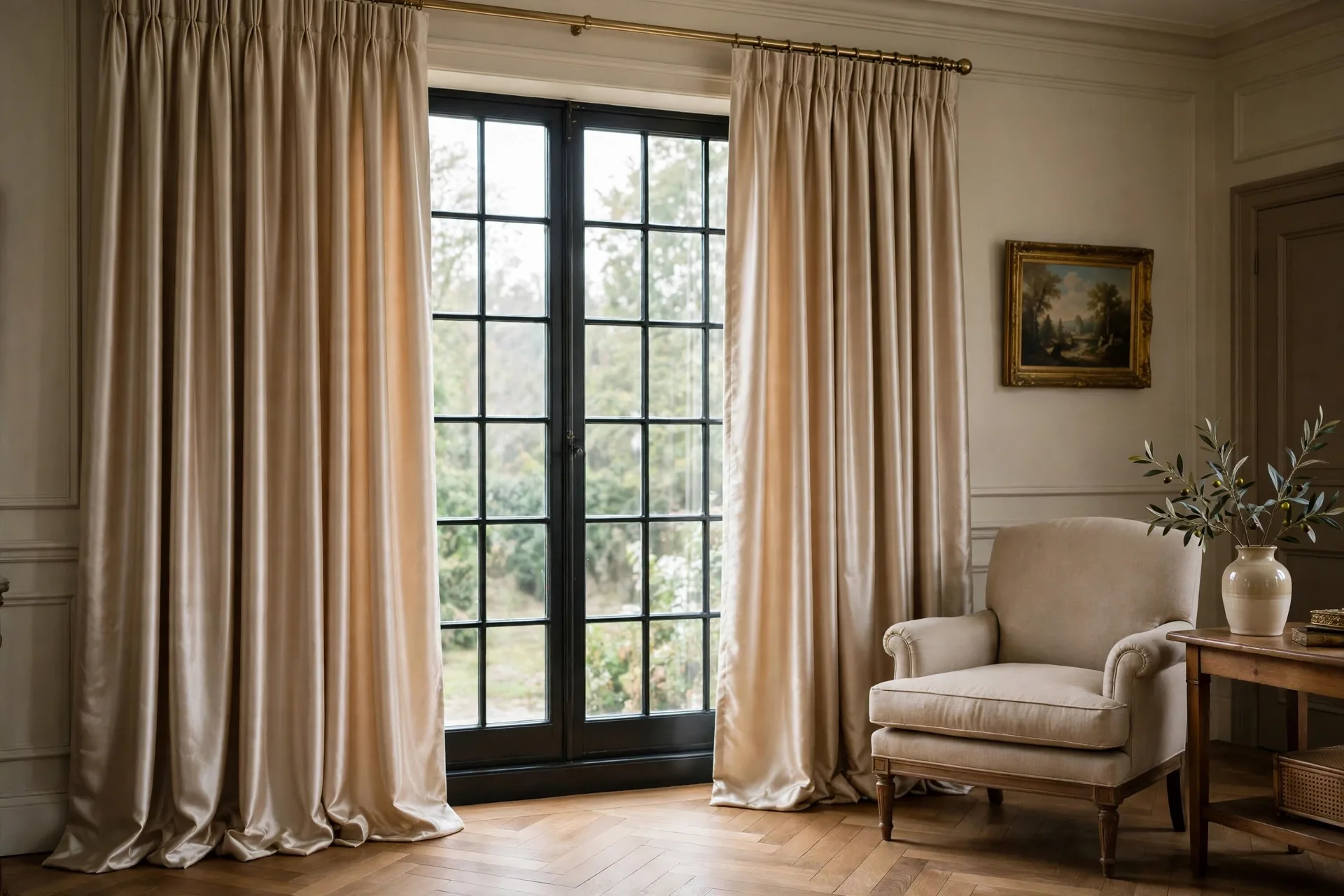
5. Polyester voile panels: best for layering under a closing panel
- Best for: A window where a sheer day layer sits nearest the glass and a heavier panel closes at night.
- Key features: Lightweight polyester voile face, unlined fall, sheer opacity, airy drape that moves in a breeze.
- Pros: Soft daylight by day, pairs cleanly with a closing panel, washes easily and dries fast.
- Cons: Little privacy at night alone, no darkness alone, thin voile can snag on rough hardware.
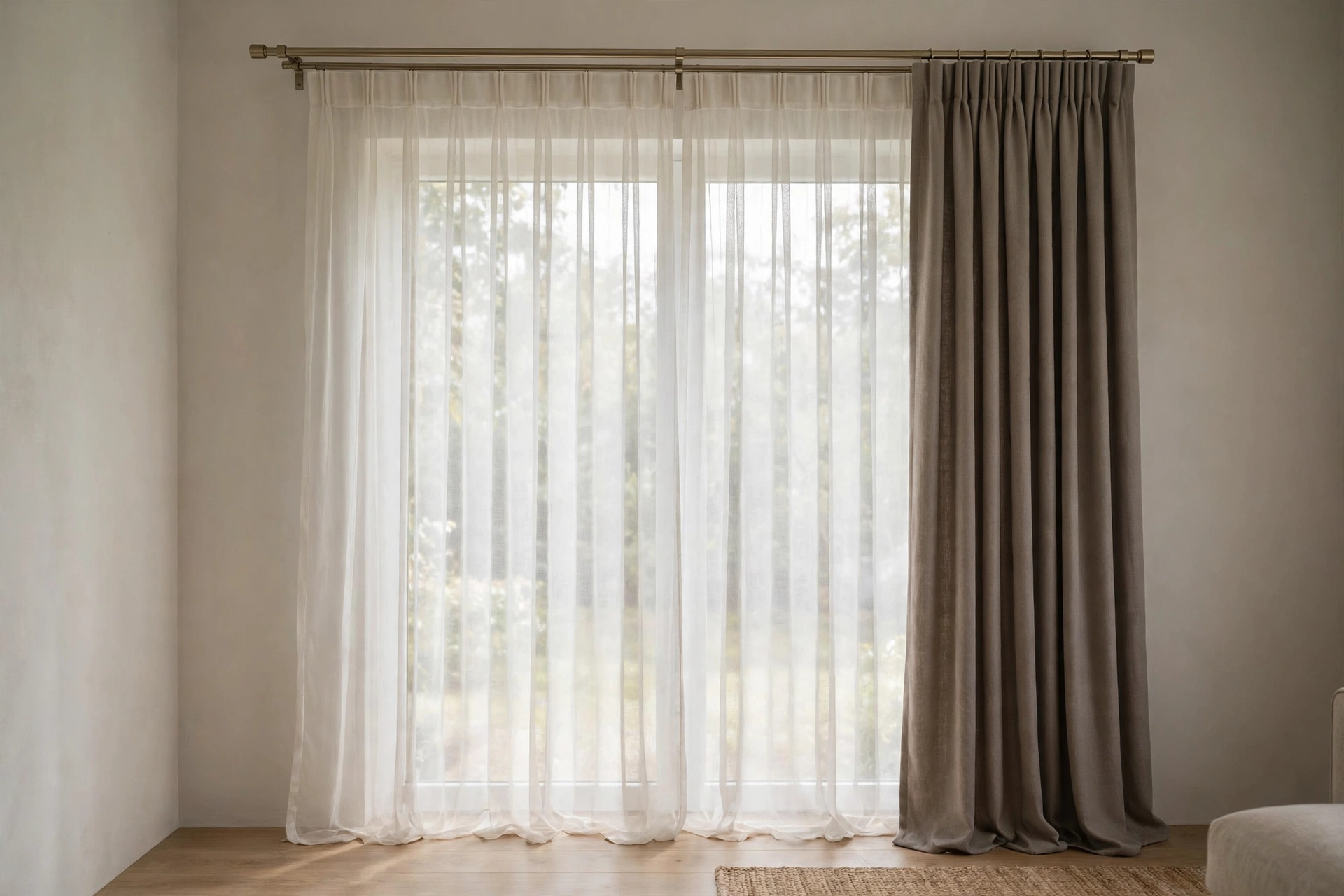
6. Microfiber polyester panels: best for a home with pets that needs hair to brush off
- Best for: A home where pet hair on curtains is a daily fact, not an occasional problem.
- Key features: Tight microfiber polyester weave, light-filtering opacity, smooth face that sheds hair more easily than a pile fabric, floral print.
- Pros: Pet hair brushes off rather than gripping, resists wrinkles and shrinking, usually machine washable.
- Cons: Smooth face can look plain in a formal room, static can build in dry air, limited darkness alone.
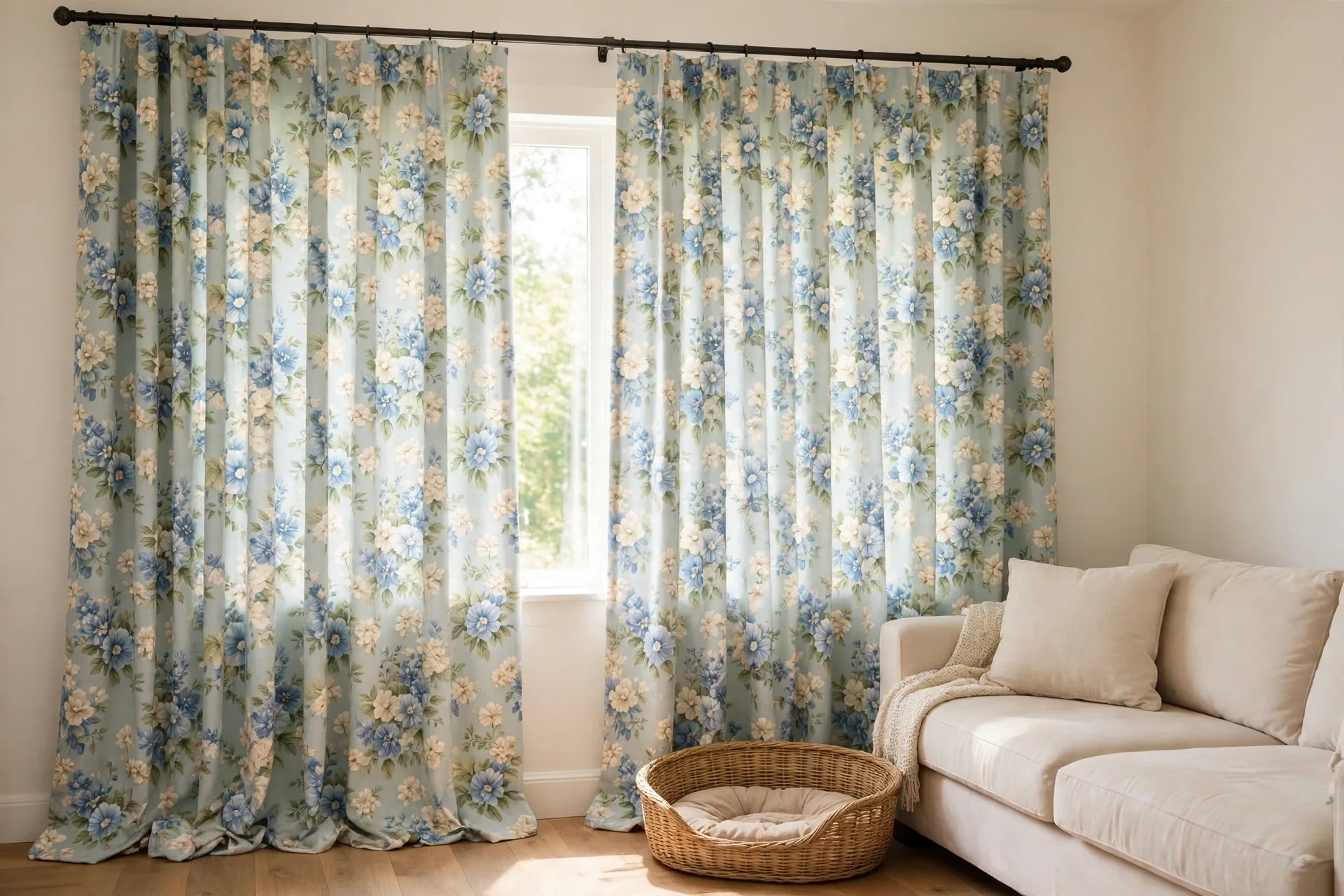
Polyester types in plain words
Polyester types decide how a panel looks, hangs, and wears, more than the fiber name alone does. Flat-weave polyester is the simplest type: a smooth, even face that hangs straight and suits rooms where a clean, plain panel is wanted, but it can look thin when the weave is light. Triple-weave polyester is a denser construction where three layers of yarn are woven together, which blocks light and gives body without a separate lining, and it suits bedrooms and media rooms where darkness matters. Linen-look polyester copies linen's slub texture and matte surface in a synthetic face, which suits living rooms that want texture without linen care. Faux-silk polyester copies silk's sheen and smooth drape, which suits formal rooms that want luster without silk fragility. Voile polyester is the lightest type: sheer, airy, and soft, suited to day layers and dining rooms where daylight matters most.
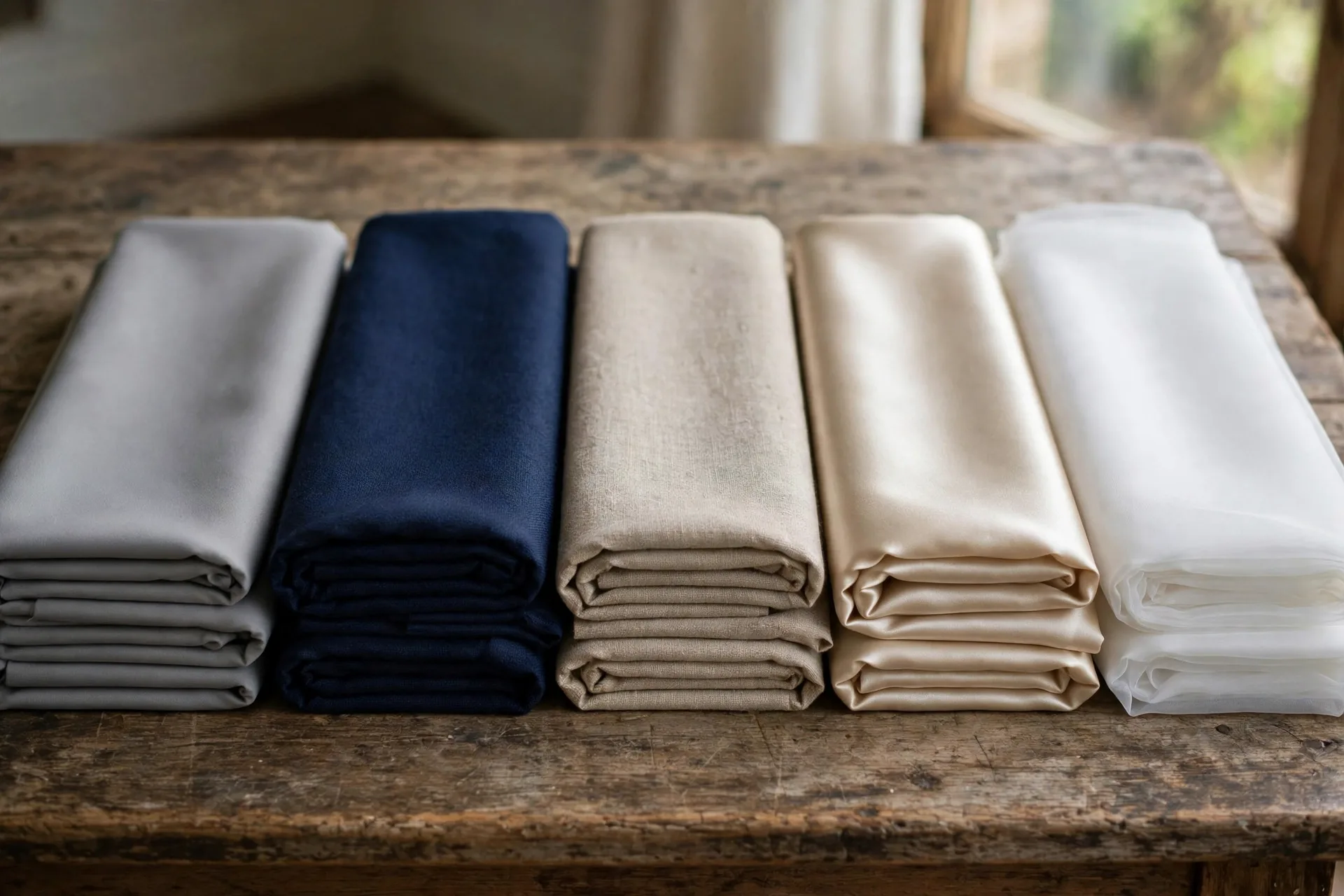
Microfiber polyester uses very fine fibers in a tight weave, which gives a smooth, dense face that sheds pet hair and resists wrinkles, and it suits homes with pets and busy family rooms. Read the type before you judge a panel by its photo. A flat-weave panel and a triple-weave panel can share a color and a polyester label while behaving like different fabrics at the window, and a listing photo taken in soft light will not show that difference. When a listing names no type, look at the words it does use: blackout usually means triple weave or a coating, linen texture usually means a linen-look face, and sheer usually means voile. If the listing names neither type nor construction, the panel is a guess, and a guess is a poor buy for a room with a real job to do.
When polyester looks good, and when it looks cheap
Polyester looks good when the finish fits the room, and it looks cheap when the finish fights it. A linen-look or textured polyester panel looks good in a living room, because the texture hides the synthetic hand and gives the eye something to read besides a flat surface. A triple-weave panel looks good in a bedroom, because its weight and body read as substance rather than shine. A faux-silk panel looks good in a formal room with soft light, because its sheen reads as dressy rather than plasticky. A heavier polyester panel with a visible weave looks good almost anywhere, because weight and texture are what keep polyester from looking thin.
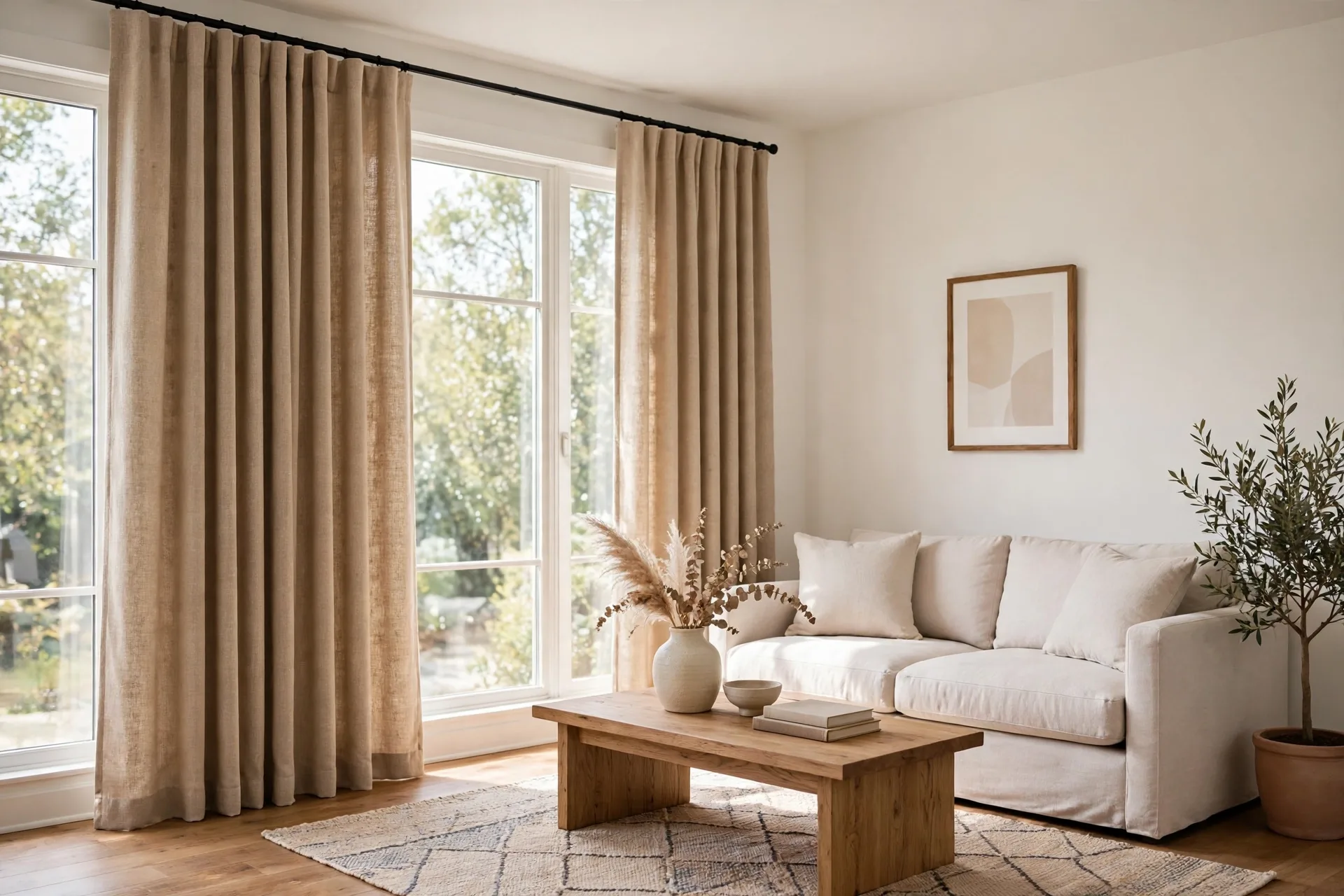
Polyester looks cheap in a few plain situations. A thin, flat, shiny panel looks cheap in a bright room, because the shine and the thinness show at once, and no heading fixes a face that has no body. A white or pale polyester panel that has gone shiny from too-hot ironing looks cheap, because the shine marks are permanent and catch the light. A panel that is too narrow for its window looks cheap in any fabric, but pale polyester shows a flat, stretched hang most plainly. Avoid all three by choosing a textured or heavier face, keeping heat low when ironing or steaming, and ordering full width of about 2 times the rod width, so folds stay full when closed. Polyester's reputation comes from its worst panels, not its best, so buy the finish, not the fiber name.
Polyester in a bedroom
A polyester bedroom needs darkness first, which makes triple-weave blackout the natural pick for a room where sleep comes first. A triple-weave panel blocks most light through its construction alone, without a separate lining to wash apart, and it keeps its shape after washing better than a lined panel whose face and lining age differently. Hang the rod 6 to 12 inches past the frame on each side, so closed panels overlap the frame, and choose total panel width of about 2 times the rod width, so folds stay full when closed. Light leaks most often at the sides, at the top, and through the center gap, so check the closed coverage in daylight before blaming the fabric.
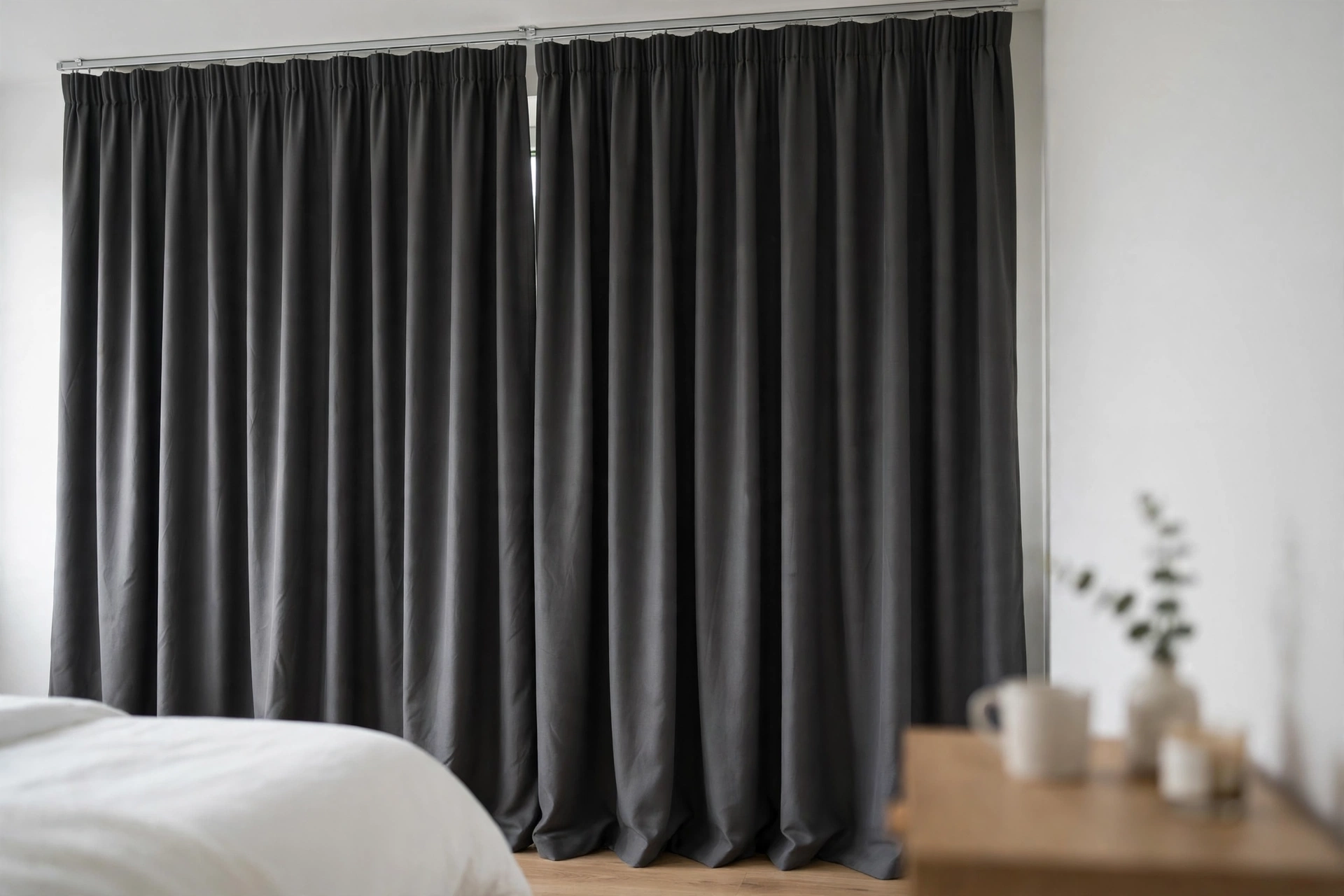
Polyester has one bedroom advantage over cotton: it wrinkles far less, so a bedroom panel that opens and closes daily still looks neat without steaming after every wash. It has one bedroom cost as well: polyester breathes less than cotton, so a bedroom with sealed polyester panels can feel stuffier overnight than a room with a natural face. A room-darkening polyester panel suits a bedroom where gentle waking matters more than full darkness, because it dims morning light without shutting it out. For room-wide bedroom advice, see Best Curtains for Bedroom, and for the full darkness job, see Best Blackout Curtains.
Polyester in a living room that never sits still
A living room that never sits still suits polyester better than any natural fabric, because the room's wear is exactly what polyester resists. Kids, pets, daily opening and closing, sun through the glass, and the odd splash are all routine in a busy living room, and a medium-weight polyester panel takes them without wrinkling, shrinking, or fading the way cotton or linen would. A linen-look polyester panel suits this room best, because its texture gives the room warmth while its synthetic face takes the wear. Hang panels high and wide, so the window looks larger and the panels stack clear of the glass when open.
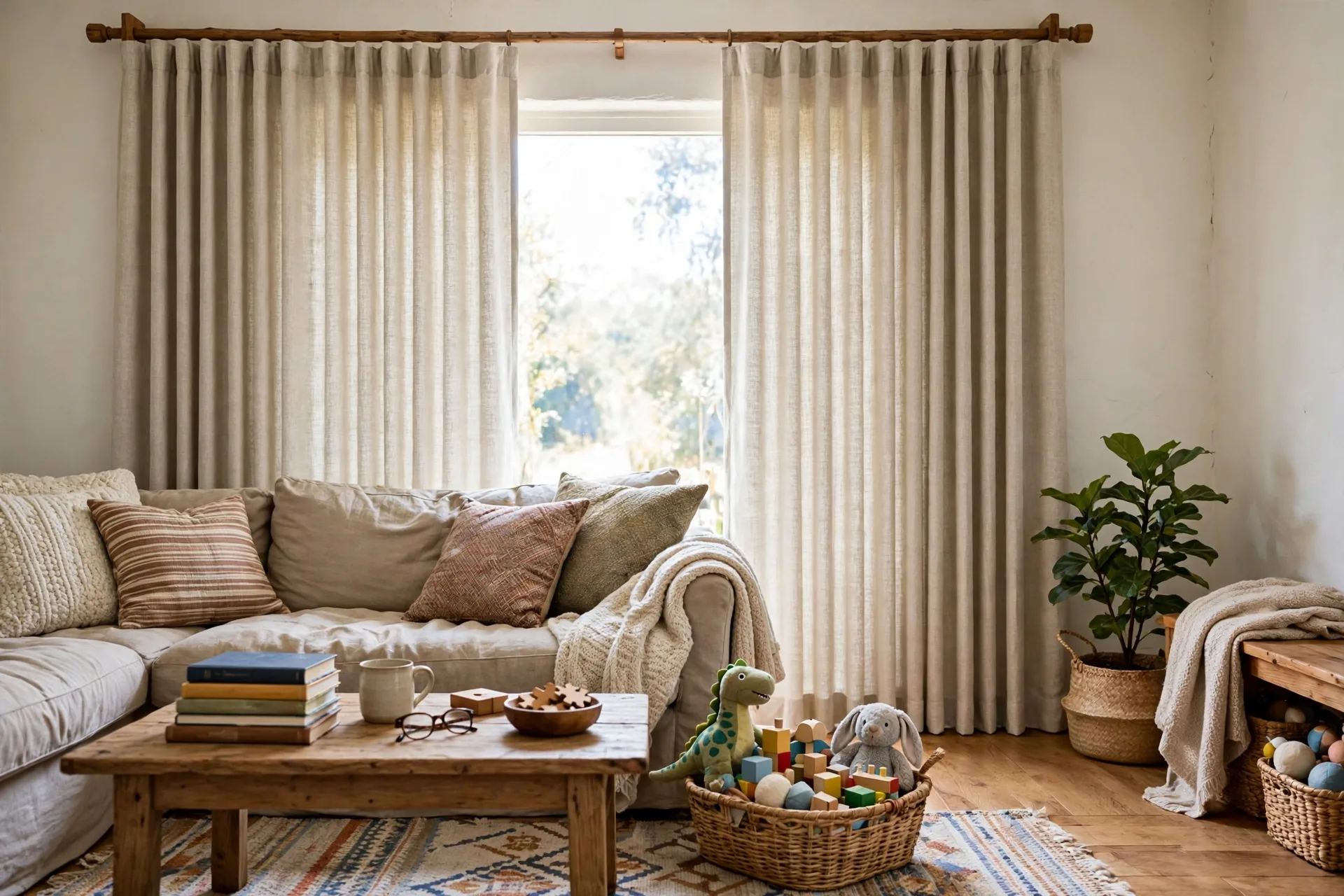
Watch the finish in a bright room. A flat, shiny polyester face can look plasticky under strong daylight, while a textured linen-look or microfiber face reads as fabric rather than plastic. If the room faces a street and gets used after dark, add a lining or hang a voile polyester panel nearest the glass with a heavier panel in front of it on the room side, because a light-filtering panel that looks solid from outside in daylight can turn see-through at night once indoor lights are on. For room-wide living room advice, see Best Curtains for Living Room.
Polyester for kids, pets, and rented homes
Polyester suits kids, pets, and rented homes for the same reason: it forgives the wear that those rooms produce. A panel that gets pulled, splashed, and washed often needs a fabric that comes out of the wash looking the same as it went in, and polyester does that better than cotton or linen. A microfiber polyester panel suits a home with pets best, because its tight, smooth weave sheds hair more easily than a pile fabric or a textured weave, and a quick brush or a wash restores it. A medium-weight polyester panel suits a child's room, because it survives tugging and washing without shrinking short or wrinkling into a mess.
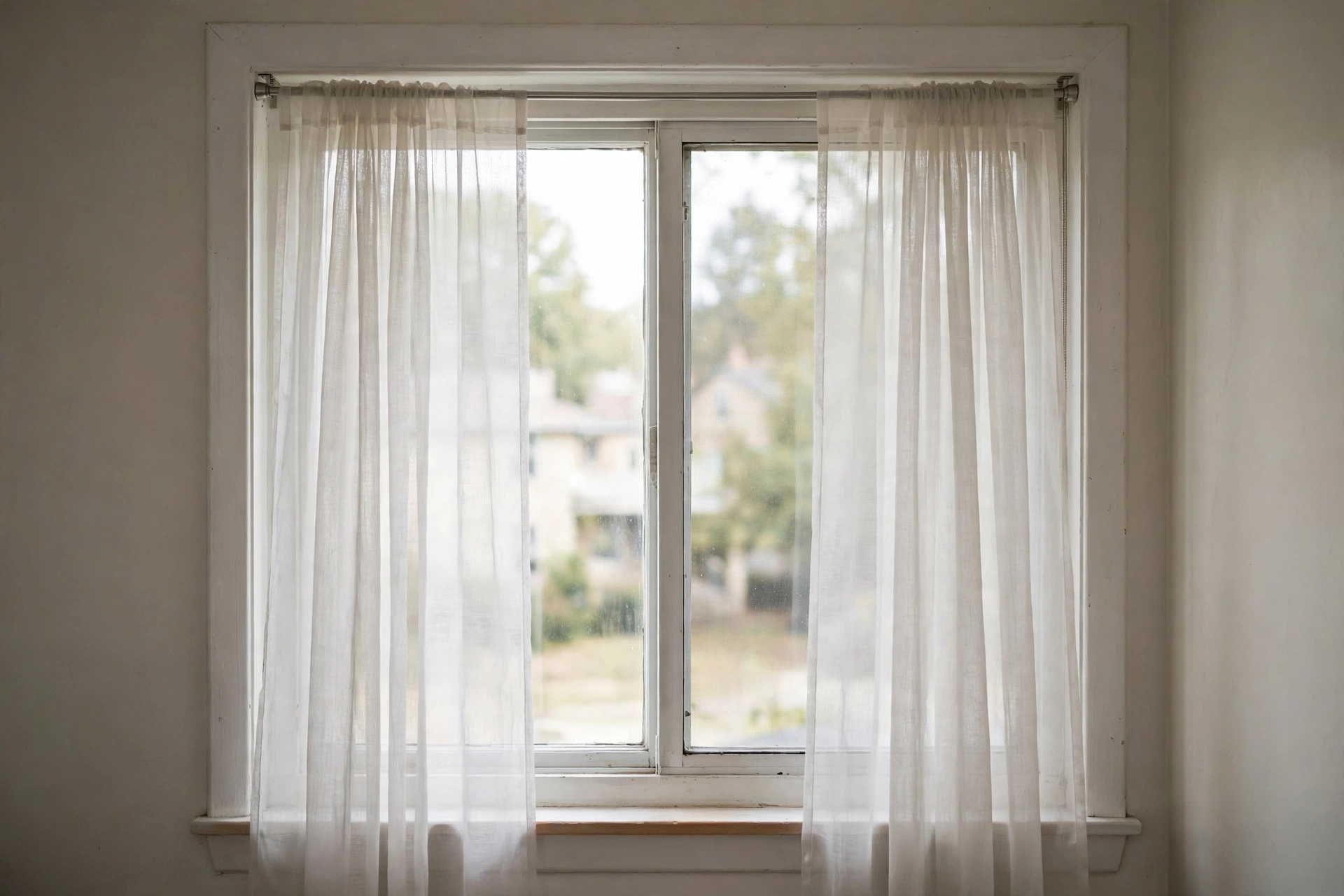
Rented homes add one more reason for polyester: no-drill hanging and easy removal. A polyester panel on a tension rod or a no-drill track can go up and come down without damage, and a panel that washes at home can move to the next home still looking new. Keep the safety rules in mind whatever the fabric: cords must stay out of a child's reach, and a cordless panel or a cord cleat is the safer choice in a child's room or nursery, as set out in safety guidance on window covering cords from the U.S. Consumer Product Safety Commission. Check the listing for the heading and care label before ordering, and pick a panel that washes at home, because a panel that needs dry cleaning will not get washed often enough in a house with kids or pets.
Sun, fading, and heat
Polyester handles sun better than cotton or linen, but it has its own heat limit that matters more than fading does. Polyester resists fading well: its color is held in the fiber rather than sitting on the surface, so a polyester panel in a sun-facing window keeps its color longer than a cotton panel in the same window. That fading resistance is the main reason polyester suits sun-blasted rooms, south-facing windows, and rooms where the sun hits the glass for hours a day. A polyester panel still changes slowly in extreme sun, but the change is far slower than on a natural fiber.
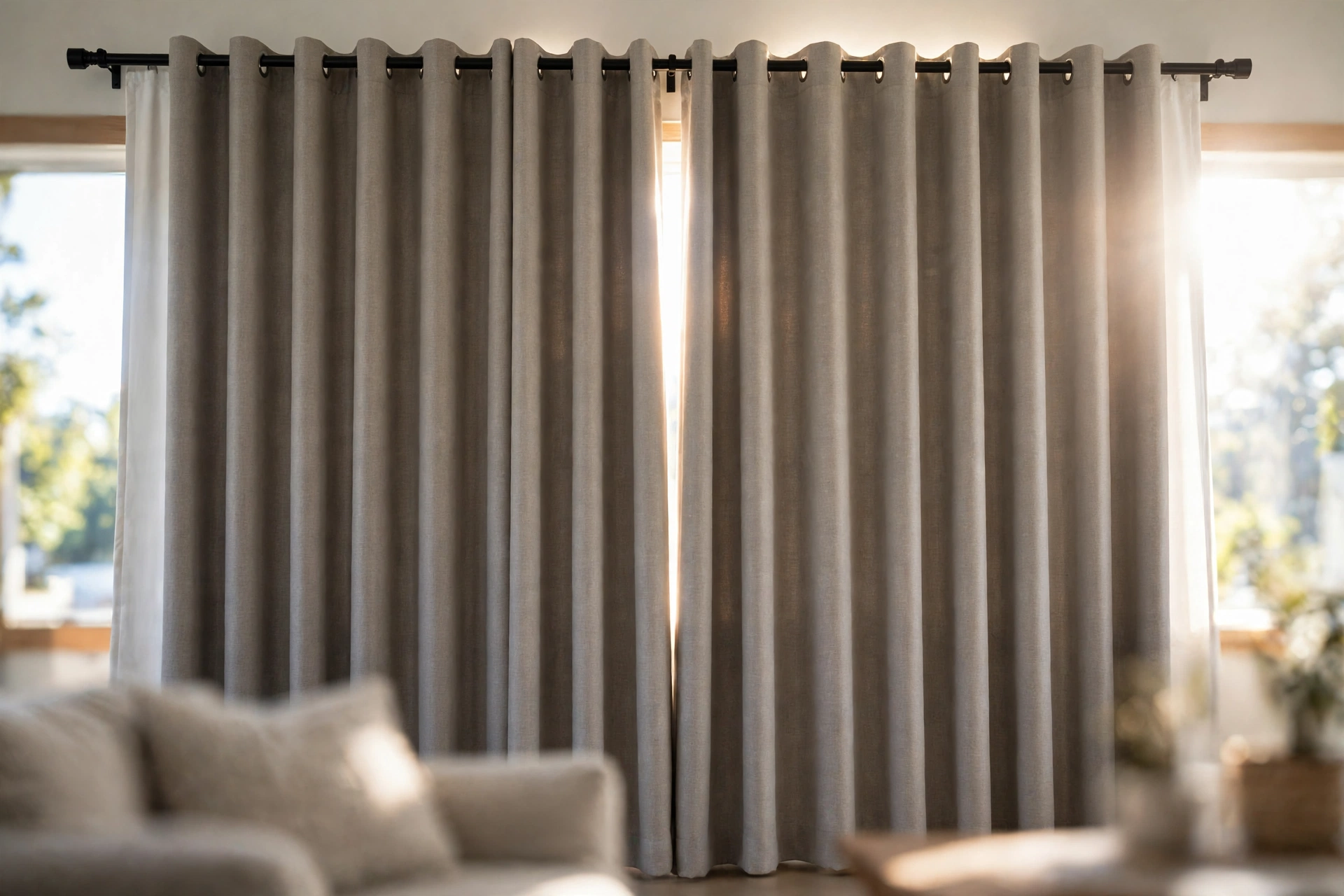
Heat is where polyester warns. Polyester softens under high heat, so a hot iron, a high-heat tumble dry, or a panel trapped against a hot radiator can shine the fabric, press creases in permanently, or damage a blackout coating. Keep the iron on a low setting, test on a hidden corner first, and prefer steaming at a distance over pressing when wrinkles need removing. Hang panels so air moves behind them, rather than trapping them against hot glass or a radiator, and keep polyester away from direct stove heat in a kitchen. Sun is polyester's friend and high heat is its enemy, so give it the first and protect it from the second.
Static, dust, and shine
Static, dust, and shine are the three complaints that follow polyester most often, and all three have plain causes and plain fixes. Static builds in dry air, when synthetic fibers rub and hold a charge, and it shows as panels that cling together, attract dust, and crackle when drawn. Dust sticks to a charged panel more readily than to a natural face, so a polyester panel in a dry, dusty room needs vacuuming with a soft brush head every few weeks to stay clean. Shine appears when a panel is ironed or steamed too hot, or when a flat, shiny face catches bright light, and shine marks from heat do not wash out.
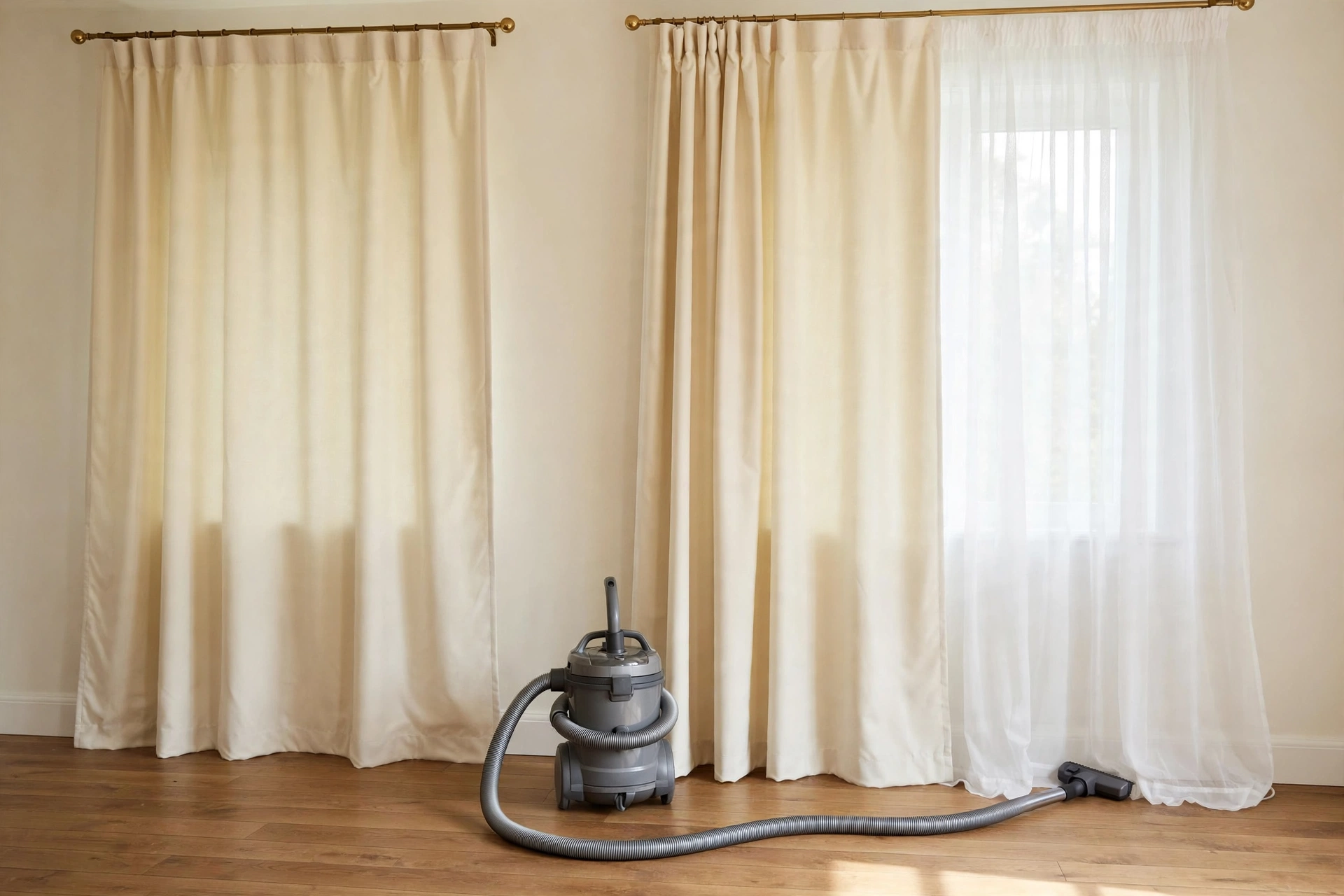
Manage all three with steady habits. Wash with a mild detergent and skip fabric softener sheets that coat the fibers, because coatings can change how the panel hangs and feels. Dry panels away from high heat, and steam at a distance rather than pressing, so the face keeps its matte finish. Choose a textured face, like a linen-look or microfiber weave, over a flat shiny face when the room gets bright light, because texture breaks up reflections and hides dust better than a smooth surface. A polyester panel treated this way stays matte, clean, and quiet at the window, which is the honest difference between a panel that looks synthetic and one that simply looks like curtains.
Washing polyester, and the heat rule
Washing polyester well is easy, and the whole method fits in one rule: cool water, gentle cycle, low heat, every time. Machine wash in cool water with a mild detergent, keep white and colored panels apart in case color runs, and remove the panel promptly when the cycle ends. Line dry or tumble dry on low, and hang the panel back up while slightly damp, because hanging damp lets the panel's own weight pull the folds straight. Most polyester panels come out of a cool wash nearly wrinkle-free, which is the main reason busy homes choose them.
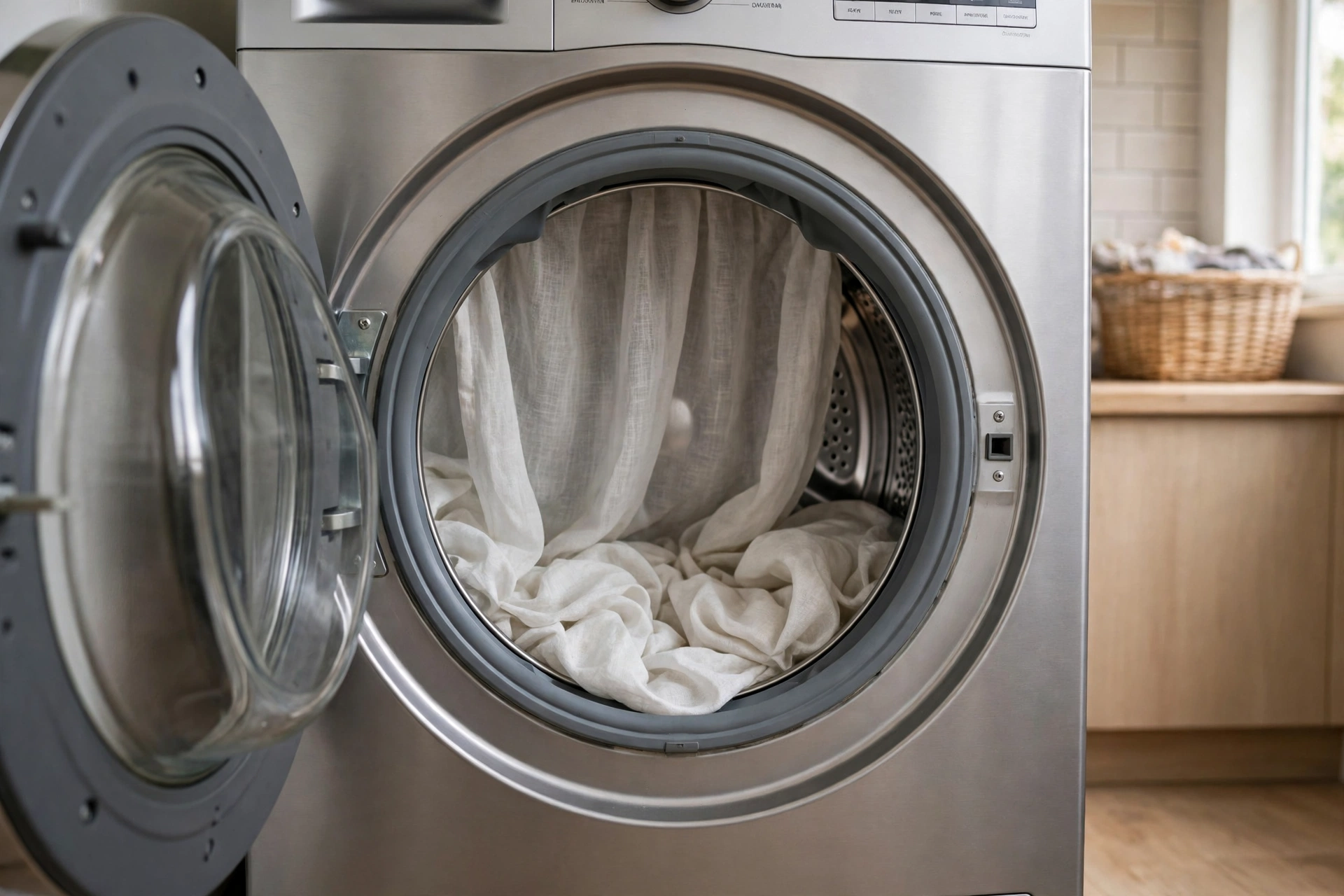
The heat rule protects everything else about the panel. Never use a hot iron on polyester, never tumble dry on high, and never steam at close range on a coated panel, because heat softens the fibers, shines the face, and can crack a blackout coating. Read the care label before the first wash, because the label on your panel is the rule for that panel, and a panel with a coating or a lining may need gentler care than its face alone would suggest. Treat a stain as soon as you see it by blotting gently with a damp cloth, never rubbing, and wash both panels of a pair together so they age the same shade. Polyester washed cool and dried low stays soft, keeps its color, and avoids the one regret that spoils polyester most: a panel that went into the wash matte and came out shiny.
Storing polyester panels has its own rules. Roll them or fold them loosely, never compress them tightly, because tight compression creases the face and can mark a coating. Store them in a cool, dry place away from direct sun, and never store them damp, because polyester can hold moisture and develop odors.
Blackout coatings
A blackout coating is a layer applied to the back of a polyester panel that blocks light, and it behaves differently from a triple weave or a sewn-in lining. A coated panel can block light well while staying lighter and cheaper than a lined panel, which is why coatings are common on budget blackout panels. The coating sits on the back of the face fabric, so it does not show from inside the room, and it gives darkness without the bulk of a separate lining layer.
Coatings fail in ways that weaves and linings do not, so check the listing before trusting one. Heat is the main enemy: a hot wash, a high-heat dry, or a hot iron can crack, peel, or bubble a coating, and a cracked coating lets light through in lines and patches that no hanging fix can hide. Agitation matters as well: harsh washing and wringing wear a coating faster than a gentle cycle. A triple-weave panel avoids both problems, because its darkness comes from its construction rather than a layer that can crack, so it suits a bedroom where the panel washes often. A coated panel suits a bedroom where the panel washes rarely and the budget matters, provided it always washes cool and gentle. When a listing says blackout without saying weave, lining, or coating, ask what gives the darkness before ordering, because the answer decides how the panel must be washed.
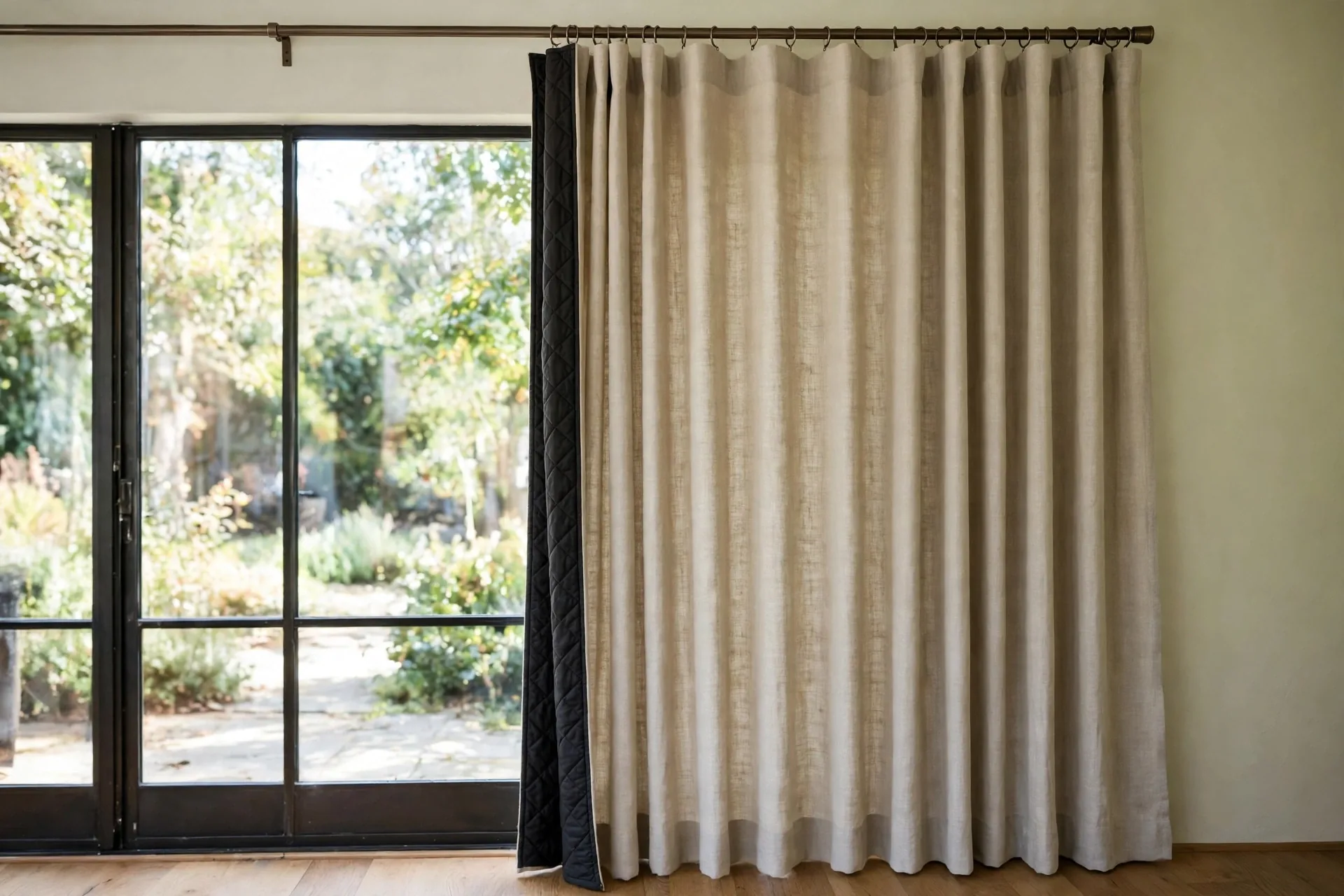
One lined construction is worth knowing: a white face on the street side with a black liner backing behind it, so the street side stays light while the room side keeps its color.
Polyester or cotton
Polyester and cotton suit different rooms, and the choice comes down to wear, washing, and feel. Polyester wins on wear: it resists wrinkles, shrinking, and fading, it usually machine washes at home, and it holds color in sun that fades cotton. Cotton wins on feel: it breathes better, feels softer against the skin, and takes dye in a matte, natural way that polyester copies but does not fully match. A room that gets daily wear, sun, kids, or pets suits polyester better, while a room that needs a natural hand and gentle use suits cotton better.
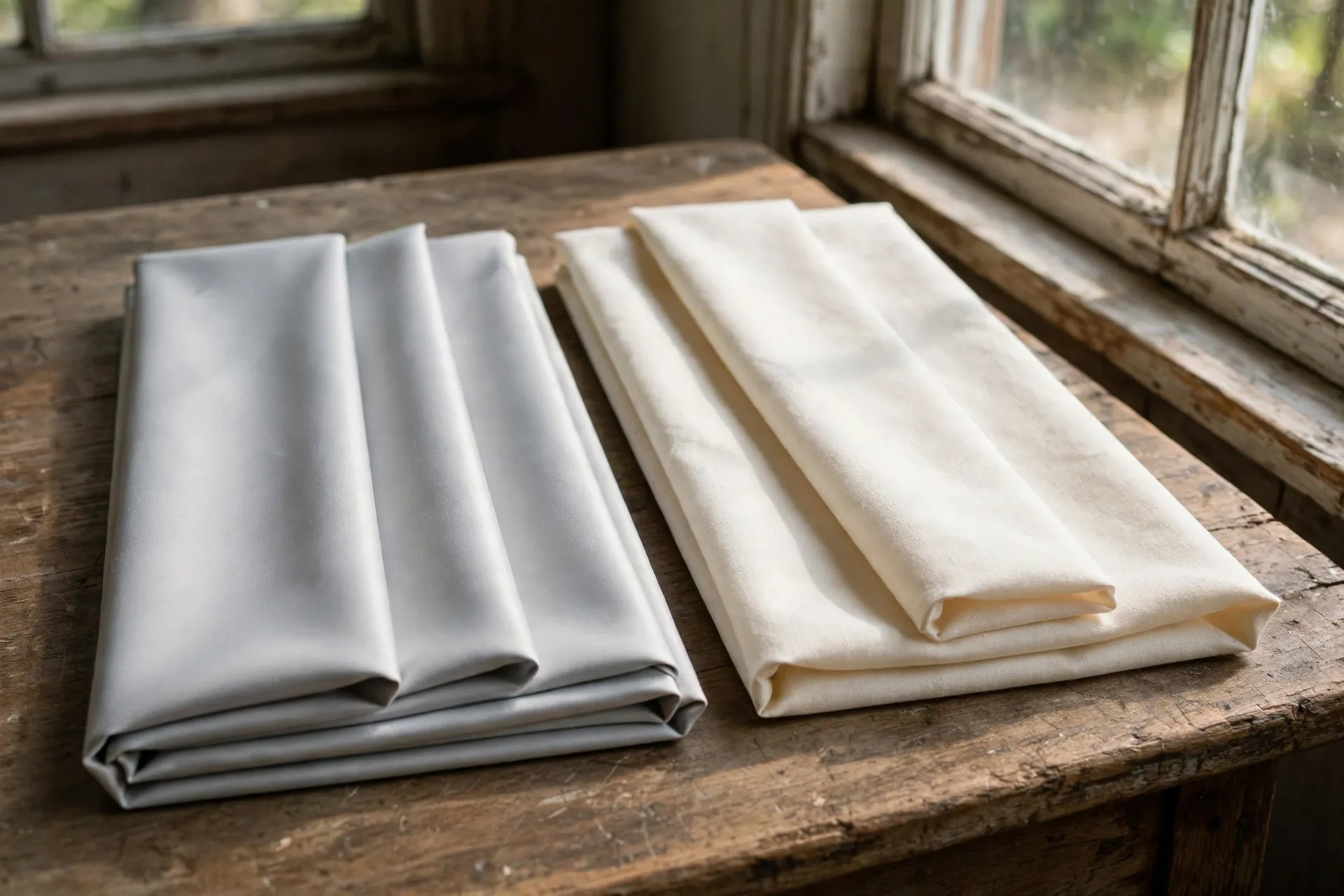
Washing sharpens the choice. A polyester panel comes out of a cool wash nearly wrinkle-free and ready to hang, while a cotton panel needs steaming after washing to look crisp. A cotton panel breathes better overnight in a bedroom, while a polyester panel keeps its shape better after years of daily opening and closing. When the two are close, let washing decide: if the panel will wash often and must look neat without steaming, polyester wins on ease, and if the panel will rarely wash and the room needs a natural feel, cotton wins on hand. Neither choice is wrong, but buying one while expecting the other is how both disappoint. The cotton side of the choice is covered in full in the cotton curtains guide.
Headers, rods, and fullness for polyester panels
Start with the coating, not the fiber name, when you pick a rod for polyester. A voile panel hangs fine on a slim rod, but a triple-weave or coated blackout panel is heavier than it looks: the coating adds weight without adding bulk, so the panel feels light in the hand and hangs heavy on the rod. Give it a rod rated for heavy panels, brackets fixed into solid wall or proper anchors, and a center support on a wide span, and check that the bracket depth clears the window frame and any handle, or the panel will catch when it slides.
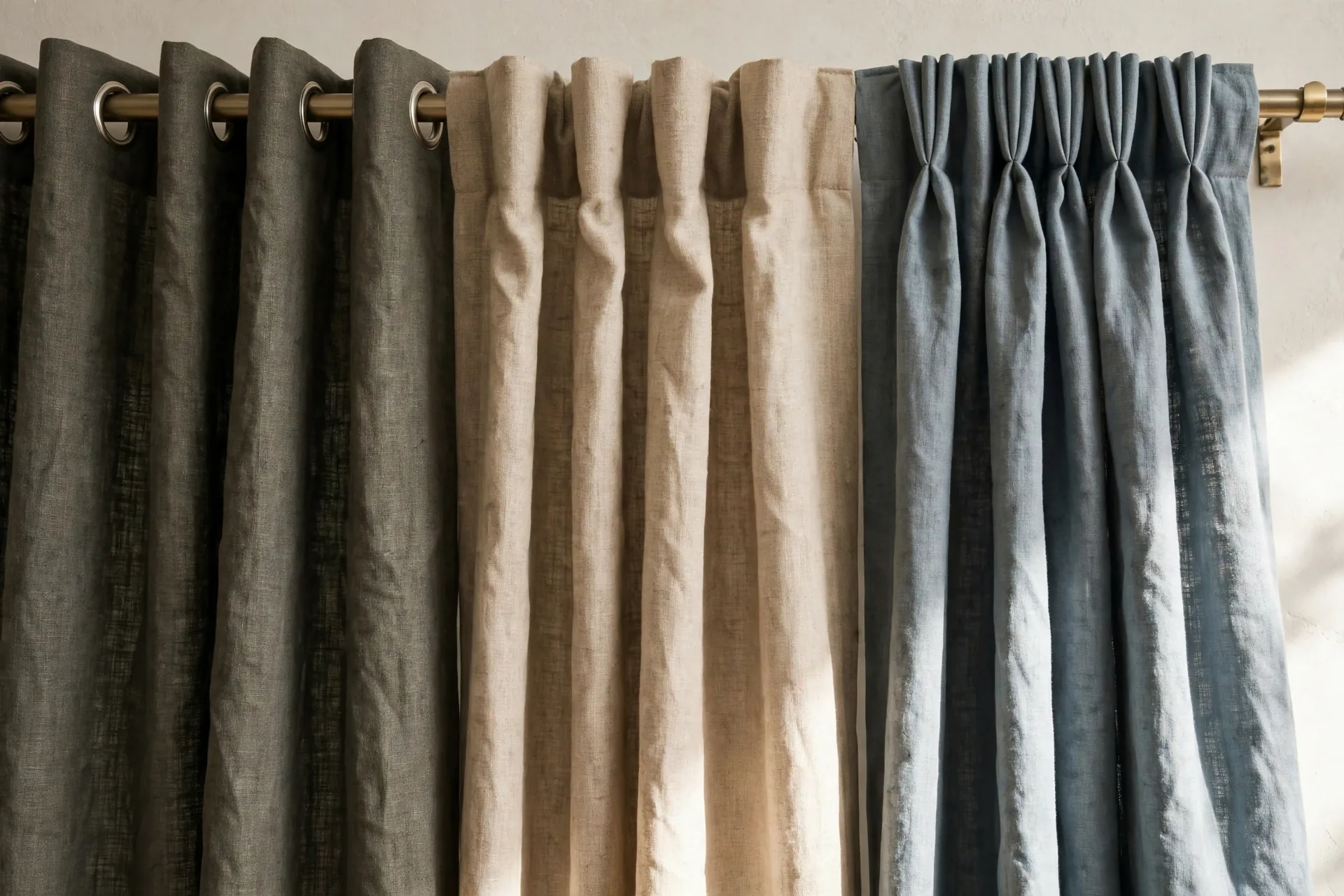
With polyester, the heading has to suit the finish as well as the room. A grommet heading slides freely and suits a smooth microfiber or faux-silk panel that opens and closes daily, because the rings glide on the slick face. A rod-pocket heading suits a textured linen-look panel that mostly stays in place, since the weave grips the rod and the panel slides less freely, which is fine for a panel that rarely moves. A back-tab heading gives a clean fall with no visible rings and hides the synthetic hand better than bare grommets on a plain weave, and a pinch-pleat heading gives neat, tailored folds that suit a formal room, though the pleats need hooks and rings. Total panel width runs 1.5 to 2 times the rod width for a standard look, 2 to 2.5 times for a full look, 2.5 to 3 times for pinch pleat, and 2 to 2.5 times for sheer, so folds stay full when closed, and measure the drop in three places, using the shortest reading, so no panel drags. For the measuring steps, see How to Measure for Curtains, and for hanging, see How to Hang Curtains.
Check grommet diameter before ordering: a 1.6-inch inner-diameter grommet needs a rod thinner than 1.6 inches, because a rod that is too thick binds and stops the panel sliding freely.
Frequently asked questions about polyester curtains
Polyester questions come down to type, cheap looks, heat, coatings, and washing. Get those five right for the room.
Are polyester curtains good quality?
Polyester curtains can be good quality, and the finish decides it more than the fiber name. A textured linen-look panel, a triple-weave blackout panel, or a microfiber panel with a dense weave reads as good quality at the window, while a thin, flat, shiny panel reads as cheap. Check the listing for the weave or construction type, the weight words, and the care label, and order full width so folds stay full. A heavier, textured polyester panel suits most rooms better than a thin, shiny one.
Do polyester curtains look cheap?
Polyester curtains look cheap when the finish fights the room: a thin, flat, shiny face in bright light, a panel ironed too hot that has gone shiny, or a panel too narrow for its window so it hangs flat. A textured or heavier face, low heat when ironing or steaming, and full width of about 2 times the rod width keep polyester from looking cheap. Polyester's reputation comes from its worst panels, not its best, so buy the finish, not the fiber name.
Can you machine wash polyester curtains?
Most polyester curtains can be machine washed, but the care label on your panel is the rule. Wash in cool water on a gentle cycle with a mild detergent, and line dry or tumble dry on low. A panel with a blackout coating or a lining may need gentler care than its face alone would suggest, because heat and harsh washing can crack a coating. Wash both panels of a pair together so they age the same shade.
Do polyester curtains fade in sunlight?
Polyester curtains resist fading better than cotton or linen, because their color is held in the fiber rather than sitting on the surface. A polyester panel in a sun-facing window keeps its color longer than a cotton panel in the same window. Extreme sun still changes polyester slowly over time, but the change is far slower than on a natural fiber, which is why polyester suits sun-blasted rooms well.
Are polyester curtains good for bedrooms?
Polyester curtains work in a bedroom when the construction fits the sleep job. A triple-weave blackout panel darkens a bedroom well without a separate lining to wash apart, and it keeps its shape after washing. A room-darkening polyester panel dims morning light without full darkness, which suits a bedroom where gentle waking matters. An unlined light-filtering polyester panel will not darken a bedroom at dawn, so it suits only a room where darkness does not matter.
Do polyester curtains block light well?
Polyester curtains block light according to their construction, not according to the fiber name alone. A triple-weave panel or a coated panel blocks most light, a room-darkening panel dims light well, and an unlined light-filtering panel filters light without darkness. Check the listing for whether the darkness comes from weave, lining, or coating, because the answer decides how the panel must be washed and how long the darkness will last.
Why do polyester curtains go shiny?
Polyester curtains go shiny when they meet too much heat: a hot iron, a high-heat tumble dry, or steaming at close range softens the fibers and presses a shine into the face. Shine marks from heat do not wash out, so keep the iron on a low setting, test on a hidden corner first, and prefer steaming at a distance over pressing. A flat, shiny face can also look shiny in bright light even without heat damage, which is why a textured face suits bright rooms better.
Are polyester curtains safe for kids and pets?
Polyester curtains suit homes with kids and pets well, because they survive pulling, splashing, and frequent washing without shrinking or wrinkling. A microfiber panel sheds pet hair more easily than a pile fabric, and a medium-weight panel survives tugging better than a sheer one. Keep the safety rules in mind whatever the fabric: cords must stay out of a child's reach, and a cordless panel or a cord cleat is the safer choice in a child's room or nursery.
What is the difference between polyester and cotton curtains?
Polyester curtains resist wrinkles, shrinking, and fading, usually machine wash at home, and hold color in sun, while cotton curtains breathe better, feel softer, and take dye in a matte, natural way. Polyester suits rooms with daily wear, sun, kids, or pets, while cotton suits rooms that need a natural hand and gentle use. When the two are close, let washing decide: frequent washing without steaming favors polyester, and a natural feel with rare washing favors cotton.
How long do polyester curtains last?
Polyester curtains last according to their construction, sun exposure, and washing care, not according to a fixed number of years. A triple-weave or textured polyester panel in a sunny room that washes cool and gentle can stay presentable for many years, because polyester resists fading, shrinking, and wrinkling. High heat is what shortens polyester life most: hot washing, hot drying, or hot ironing can shine the face or crack a coating, so cool washing and low heat stretch polyester's life the furthest.
This guide is research-based curation: we compared maker specifications, published reviews, and current prices. Read how we choose.