 Best

Best Cotton Curtains
Cotton curtains suit almost every room, but one label covers crisp percale, soft slub, and heavy canvas. This guide sorts cotton by weave and weight, then matches panels to bedrooms, living rooms, and kitchens.
The best cotton curtains are the ones that match the room's weight and wash job first and the fiber name second. A lightweight cotton voile suits a dining room that needs soft daylight, a medium cotton sateen suits a bedroom that needs a dressier fall, and a lined cotton canvas suits a sun-facing room that needs privacy and body. Pick by weave and weight before you trust the word cotton alone, because one label covers fabrics that hang, wash, and wear very differently.
Cotton is the most approachable curtain fabric: breathable, soft to the touch, easy to dye in any color, and usually machine washable. It is also the fabric most likely to disappoint when the wrong weight meets the wrong room, because cotton wrinkles, can shrink, and fades in strong sun faster than polyester. This guide sorts cotton by weave and weight, explains lined versus unlined, covers shrinking and wrinkling honestly, and matches panels to bedrooms, living rooms, and kitchens.
Cotton picks by weight and room job
The six picks below run from light muslin to lined damask, grouped by the weight and the room job each weave does best. Cotton weight decides more than the name does: a light muslin breathes and drapes softly, a duck weave holds a crisp line, and a lined damask carries body and sun protection. Check the fiber line, the weave, the lining, and the care label on the listing before you order, because a panel that says cotton in its title may still be a blend, and a blend washes and wears differently from pure cotton.
As an Amazon Associate, we earn from qualifying purchases.
| Pick | Type | Lining | Best for |
|---|---|---|---|
| 1 | Lightweight cotton muslin panels | Unlined | Dining rooms that need soft daylight |
| 2 | Crisp cotton duck panels | No lining stated | Home offices and living rooms that need clean lines |
| 3 | Soft printed cotton panels | No lining stated | Bedrooms that need a smoother, dressier fall |
| 4 | Cotton slub panels | No lining stated | Relaxed family living rooms |
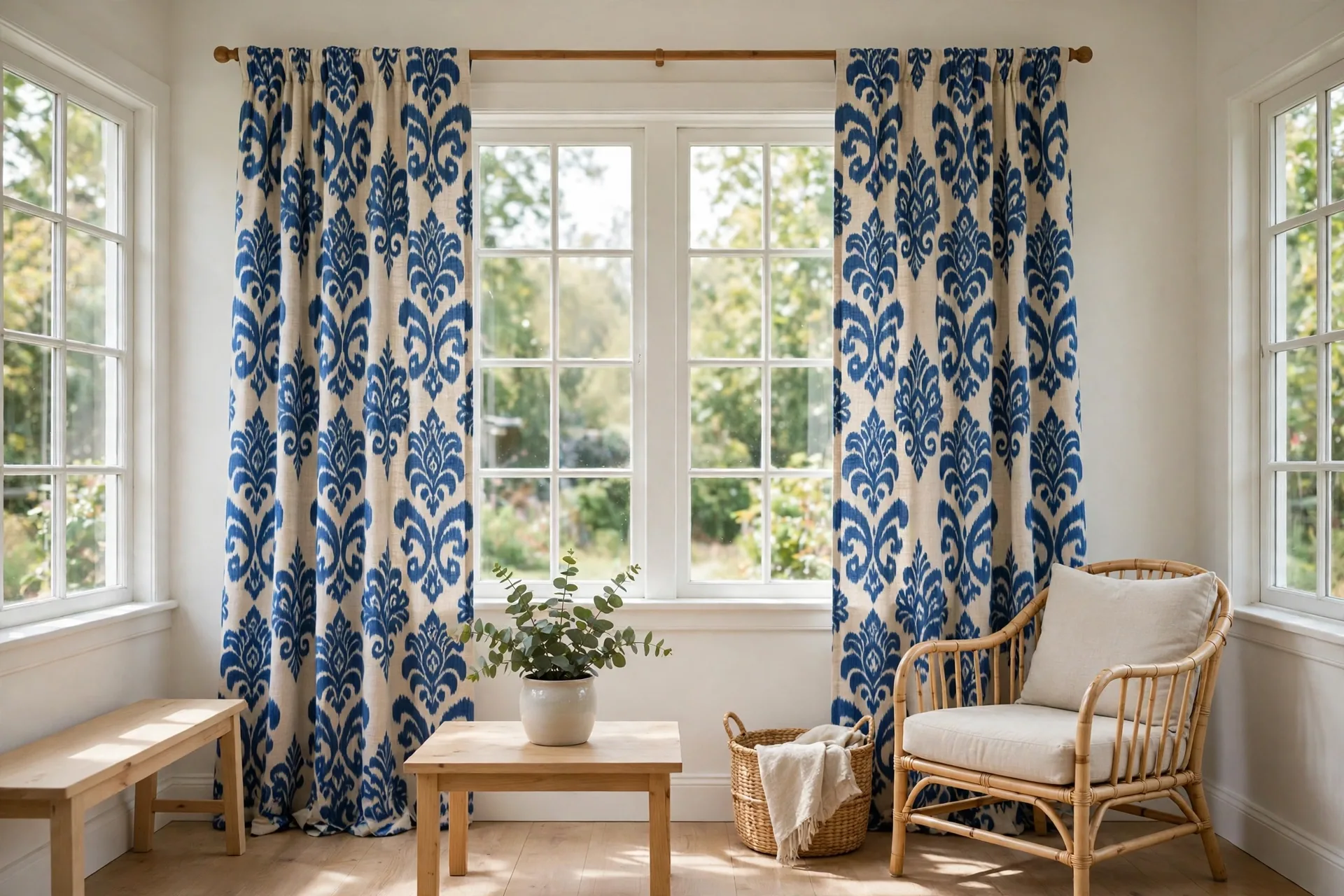
| 5 | Lined cotton damask panels | Standard lining | Sun-facing rooms that need privacy and body |
| 6 | Cotton blend panels | Unlined | Busy homes that want cotton with easier washing |
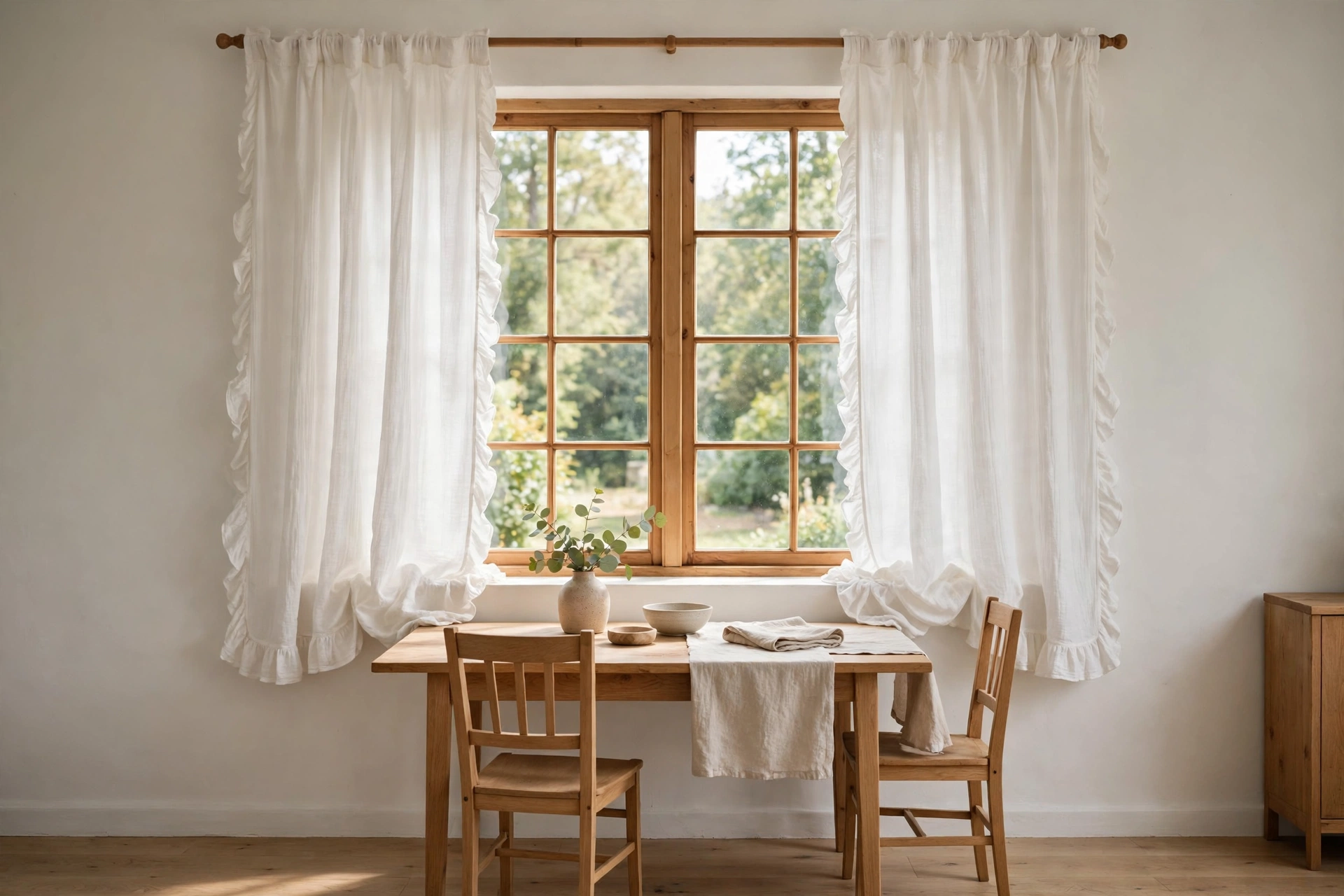
1. Lightweight cotton muslin panels: best for a dining room that needs soft daylight
- Best for: A dining room where meals feel better in soft, even light than in harsh glare.
- Key features: Lightweight 100% cotton muslin face with a soft ruffled finish, unlined fall, semi-sheer light-filtering opacity, airy drape.
- Pros: Soft daylight without darkness, breathable natural face, gentle look for wood tables and plain walls.
- Cons: Little privacy at night, wrinkles show plainly, needs a lining or layer for evening cover.
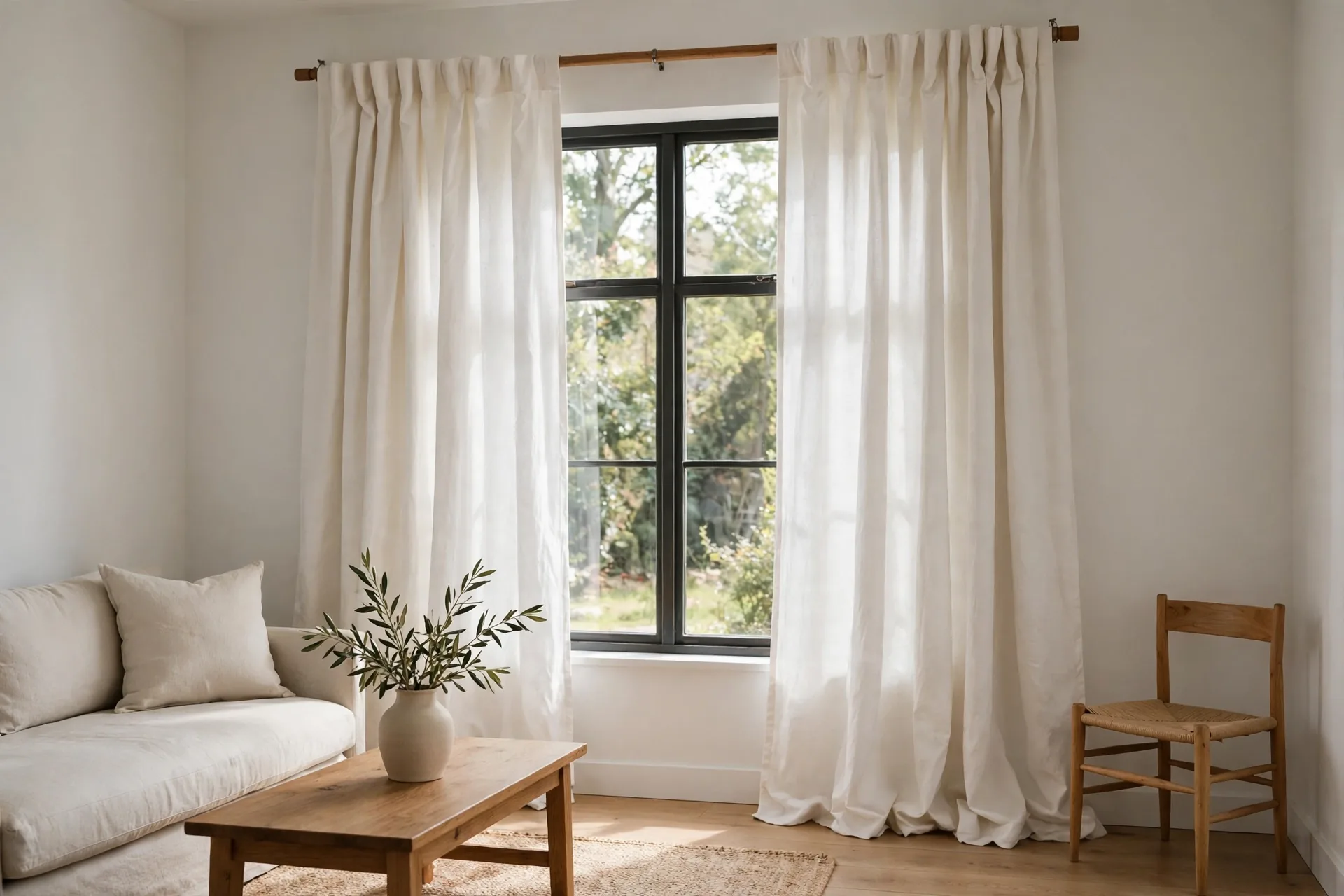
2. Crisp cotton duck panels: best for a home office or living room that needs clean lines
- Best for: A room where a tidy, tailored outline matters more than a soft, relaxed fall.
- Key features: Crisp 100% cotton duck weave, light-filtering opacity, clean folds, tab-top hang, 2 panels with tiebacks.
- Pros: Neat tailored look, breathable face, suits rooms with straight lines and plain furniture.
- Cons: Shows creases after washing, can look stiff in a relaxed room, limited darkness alone.
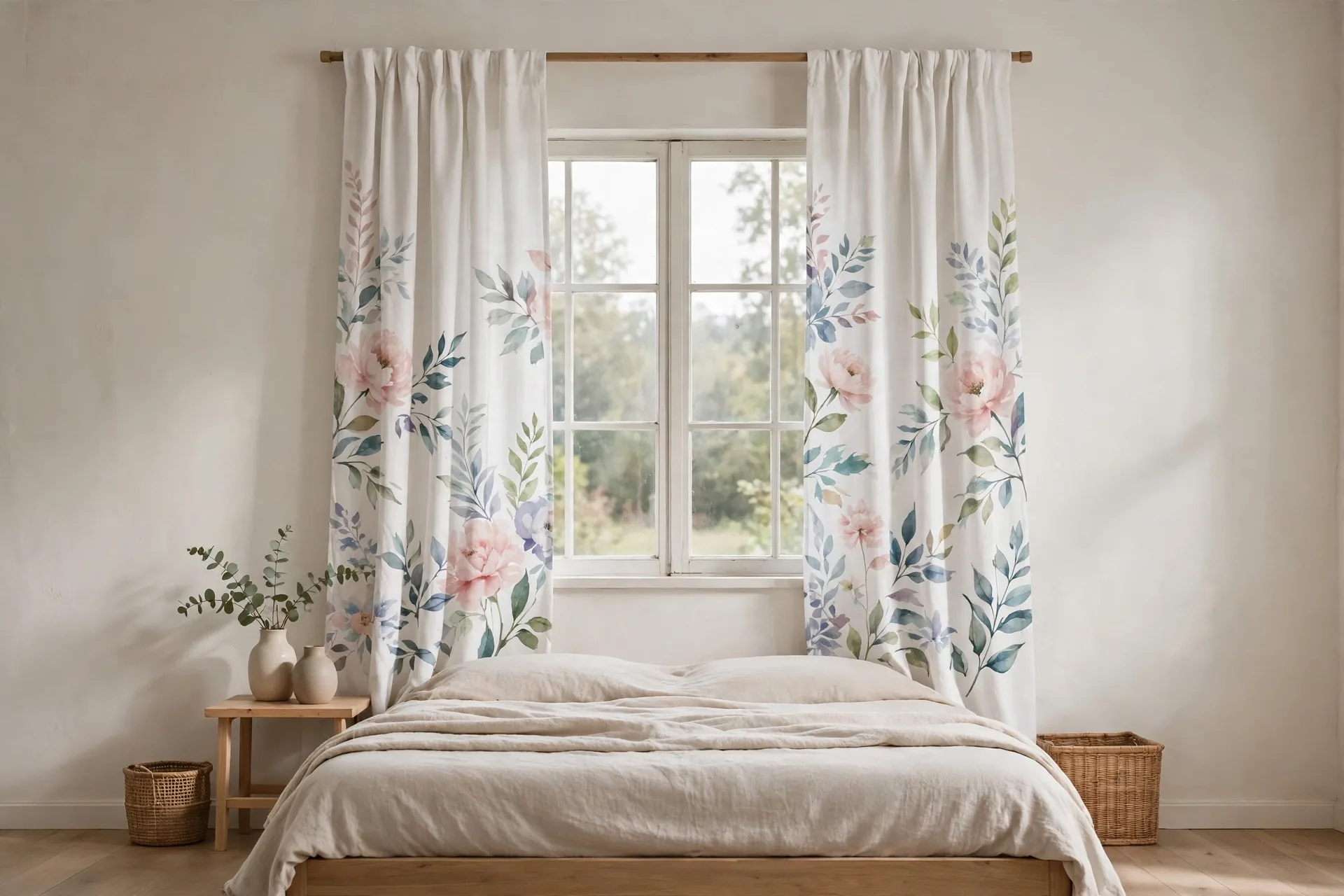
3. Soft printed cotton panels: best for a bedroom that needs a smoother, dressier fall
- Best for: A bedroom where a smooth surface and a slightly formal fall suit the room better than a matte weave.
- Key features: Soft 100% cotton face with a printed watercolor motif, light-filtering opacity, smooth drape, single panel with rod pocket and back loop.
- Pros: Dressier fall than percale or slub, smooth hand, suits bedrooms and dressier living spaces.
- Cons: Printed motif suits a bedroom better than a plain modern room, sold as a single panel so check coverage, not a darkness panel alone.
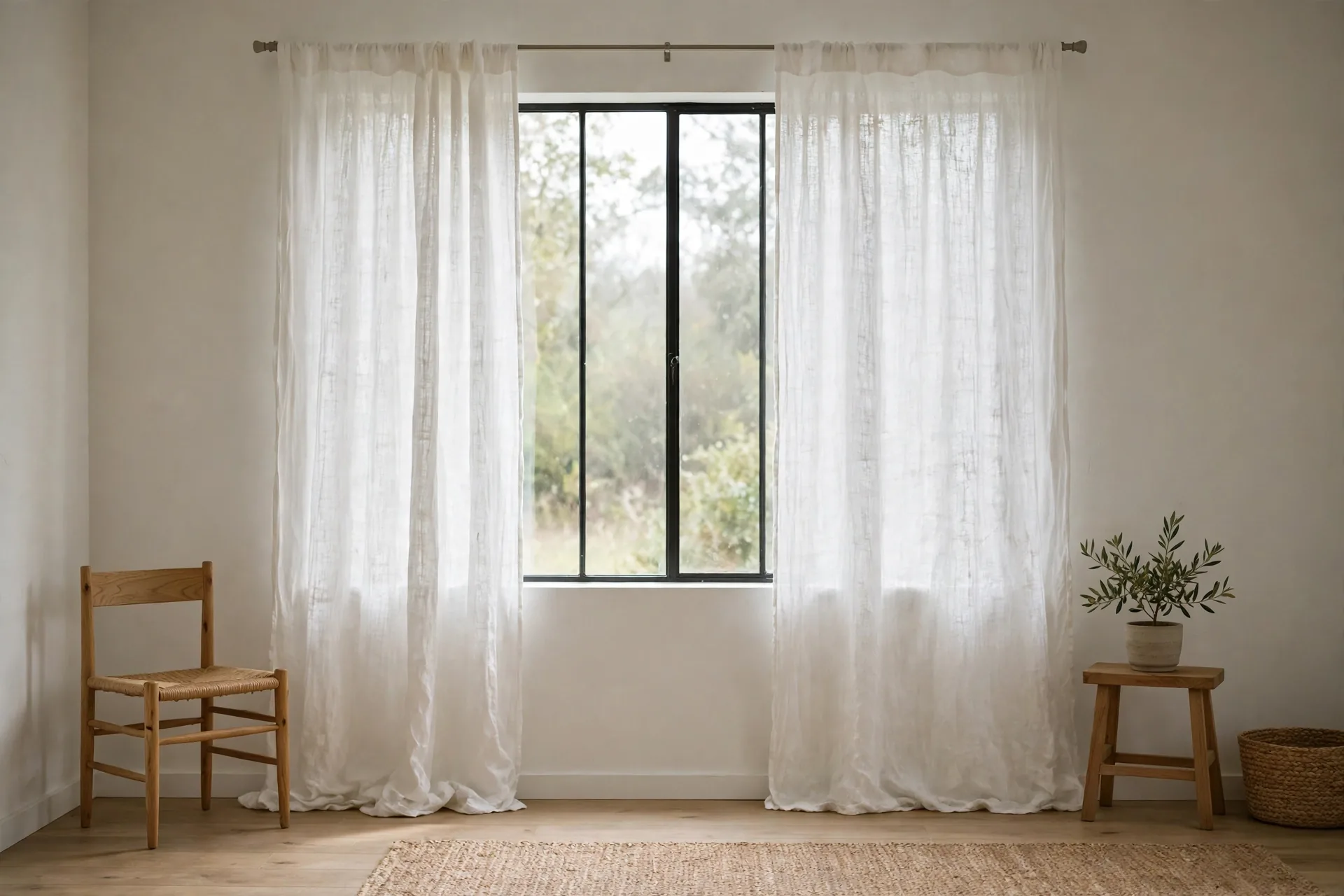
4. Cotton slub panels: best for a relaxed family living room
- Best for: A family living room where a relaxed, lived-in look matters more than a pressed finish.
- Key features: Textured cotton slub weave, light-filtering opacity, soft irregular texture.
- Pros: Forgiving texture that hides wrinkles, relaxed fall, breathable face that suits daily use.
- Cons: Less crisp than percale, texture can read as casual in a formal room, limited night privacy alone.
5. Lined cotton damask panels: best for a sun-facing room that needs privacy and body
- Best for: A sun-facing room where a thin cotton panel would fade, glare, or hang flat.
- Key features: 100% cotton blue damask face with a privacy lining, room-darkening lining that blocks 60 to 65% of light, fuller fall, single panel with rod pocket, back tab and hook belt.
- Pros: Body and presence at the window, better sun protection for the face fabric, stronger daytime privacy.
- Cons: Heavier than unlined cotton, so rod and brackets must be firm, lining adds washing bulk, sold as a single panel so check coverage.
6. Cotton blend panels: best for a busy home that wants cotton with easier washing
- Best for: A busy home where cotton's look is wanted, but pure cotton's wrinkling and shrinking are not.
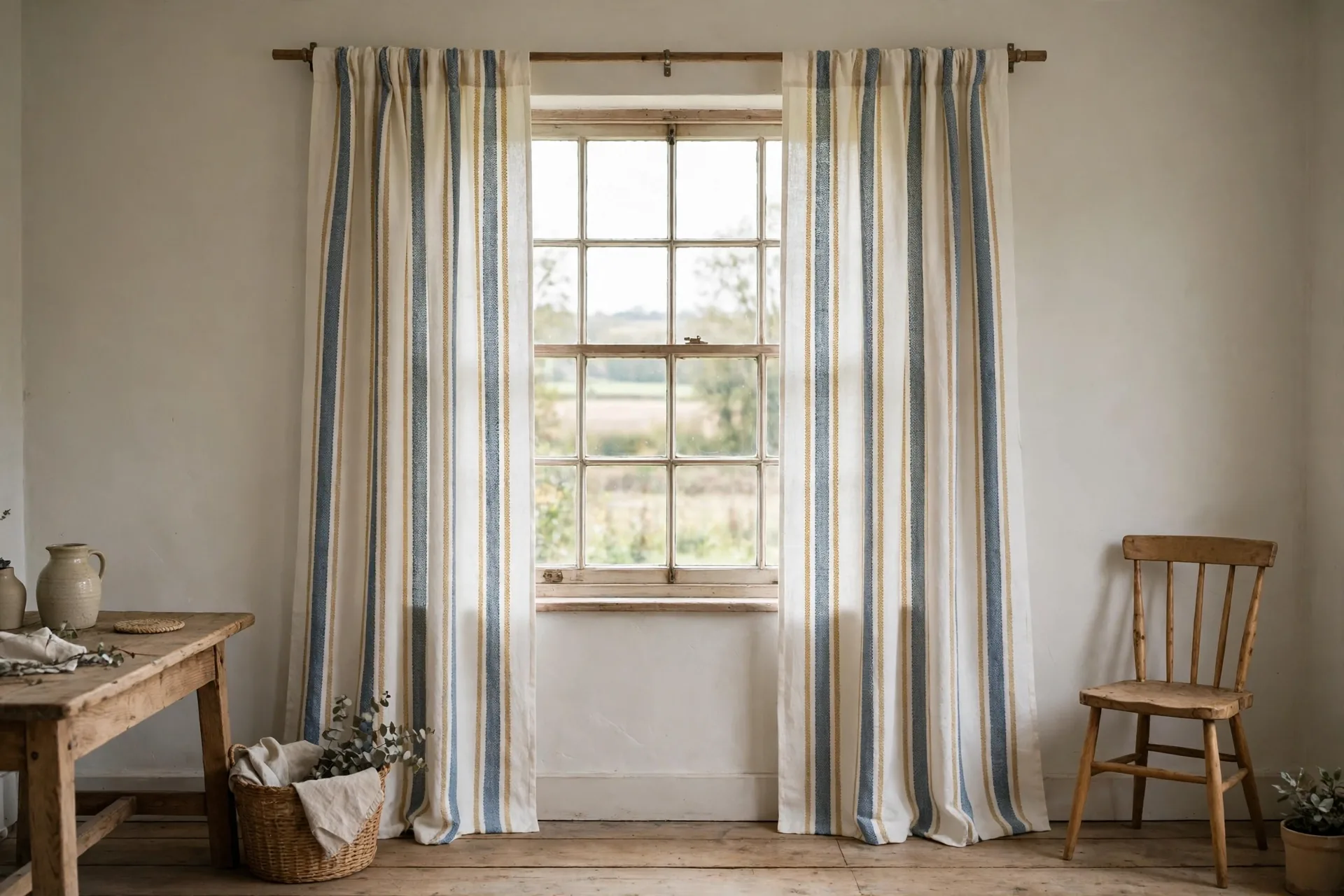
- Key features: Cotton-polyester blend face with a yarn-dyed stripe, unlined fall, light-filtering opacity, smoother wash and dry.
- Pros: Less wrinkling and shrinking than pure cotton, keeps a cotton look and feel, usually machine washable.
- Cons: Less breathable than pure cotton, blend ratio varies by listing, so check the fiber line.
What 100% cotton means on a label
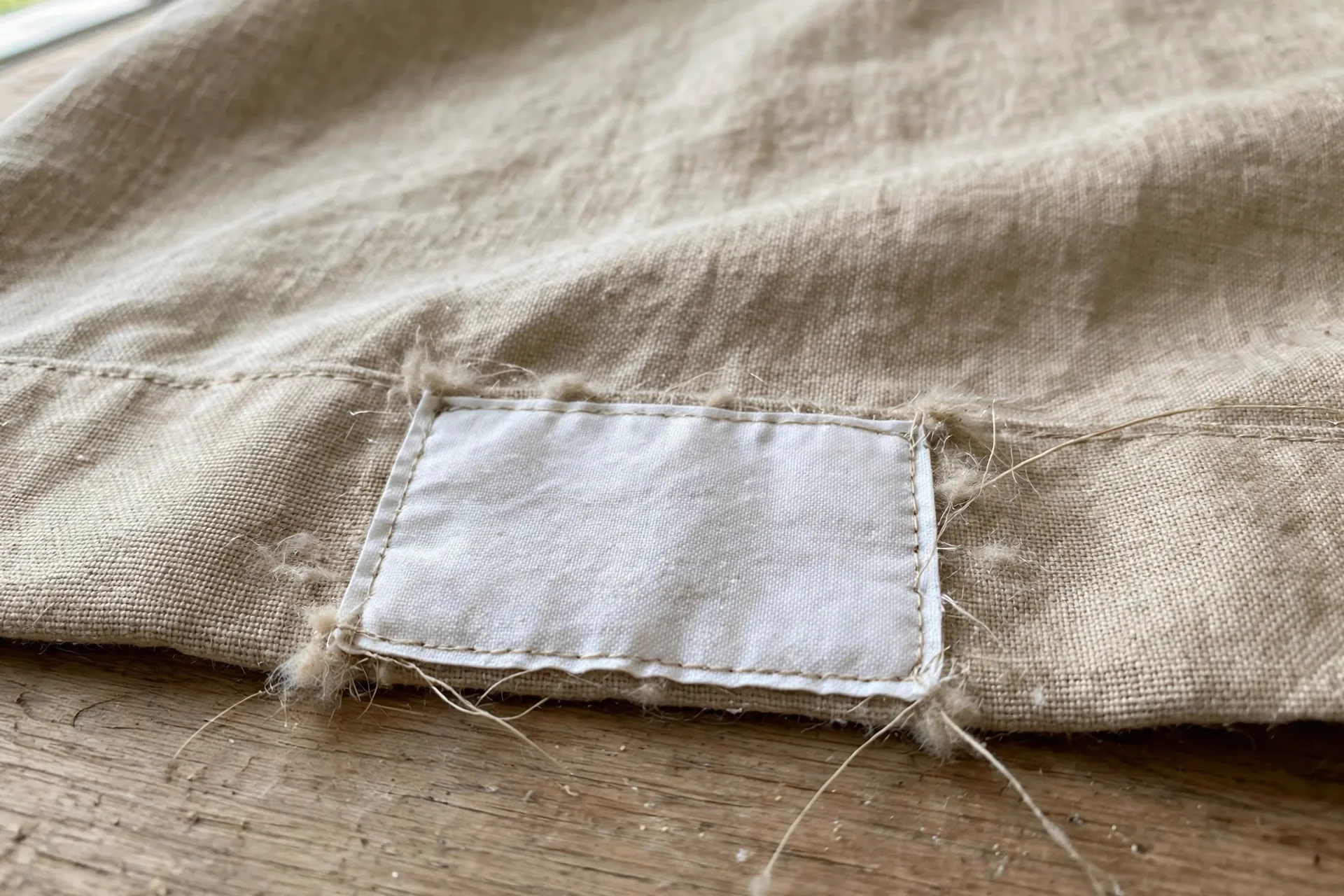
A label that says 100% cotton means the face fabric is made entirely of cotton fibers, not a blend with polyester or another fiber mixed in. That sounds simple, but listings blur it in two ways worth checking. A panel can carry a cotton face with a polyester lining or backing, and still be sold under a cotton name, so the face can be pure cotton while the panel as a whole is not. A panel can also be called cotton in its title while the fiber line says a blend, because titles are written for search, not for accuracy. Read the fiber line in the listing details, not the title, and read it for the face, the lining, and the backing separately.
Why it matters is practical, not pedantic. Pure cotton breathes better than a blend, feels softer against the skin, and takes dye in a matte, natural way. A blend trades some of that breathability for less wrinkling and shrinking, which suits a busy home better. Neither is better in every room, but buying a blend while expecting pure cotton behavior, or the reverse, is how cotton disappoints. If the listing does not state the fiber content plainly, treat that as a gap in the listing, not as a detail you can guess, and check with the seller before ordering.
The OEKO-TEX STANDARD 100 label carries classes, and two matter for reading a cotton label. Class I covers textiles for babies, with the strictest limits, and Class II covers textiles that touch the skin. A curtain label that names a class tells you which limits the textile was tested against, so check the class on the OEKO-TEX STANDARD 100 label for textiles tested for harmful substances rather than treating every labeled textile the same.
Cotton weaves in plain words
Cotton weaves decide how a panel looks, hangs, and wears, more than the fiber name alone does. Voile is the lightest cotton weave: airy, sheer, and soft, suited to dining rooms and layered windows where daylight matters most. Percale is a crisp, tight weave with a clean matte surface, suited to rooms that need tidy lines, like a home office or a tailored living room. Sateen is a smoother weave with a gentle sheen, because more threads sit on the surface, which suits bedrooms and dressier rooms where a soft glow is wanted. Slub is a textured weave with visible thick and thin threads, which gives a relaxed, organic look and hides wrinkles better than a flat weave.
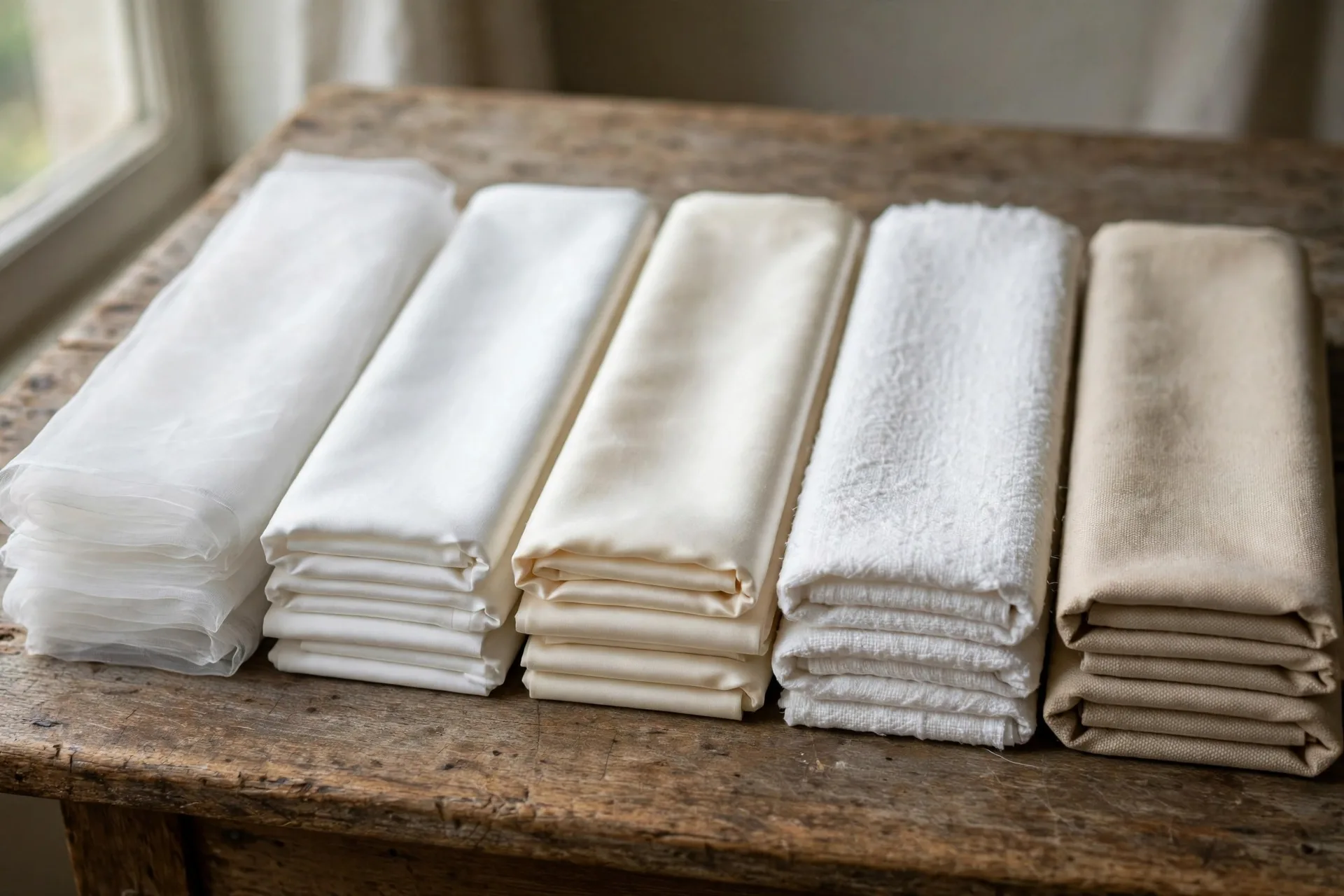
Canvas and twill are the heaviest cotton weaves: sturdy, structured, and private, suited to sun-facing rooms, bedrooms, and media rooms where body matters. Read the weave before you judge a panel by its photo. A voile panel and a canvas panel can share a color and a cotton label while behaving like different fabrics at the window, and a listing photo taken in soft light will not show that difference. When a listing names no weave, look at the weight words it does use: lightweight usually means voile or a light percale, medium usually means percale or sateen, and heavy usually means canvas or twill. If the listing names neither weave nor weight, the panel is a guess, and a guess is a poor buy for a room with a real job to do.
Printed cotton deserves its own note, because a print behaves differently by weave. Check the pattern scale first, because a large print can overwhelm a small window while a small print can vanish on a wide one. Prints fade in sun like any cotton color, so a sunny window needs a lining behind a printed panel. Percale prints stay crisp, because the flat weave holds the line, while slub prints soften, because the uneven yarn breaks the edge.
Lightweight, medium, and heavy cotton
Cotton weight changes three things you notice at once: how the panel hangs, how much sun passes through it, and how much help it gives against heat and drafts. Lightweight cotton hangs with a loose, fluttery fall, lets more light through, and suits rooms where daylight and an airy look matter most, like a breakfast nook or a dining room. Medium-weight cotton forms cleaner folds, looks more finished, and gives the best balance of drape, privacy, and everyday comfort, which suits most living rooms and bedrooms. Heavy cotton holds deeper folds, gives a fuller and more anchored look, and stands up better to strong sun and long exposure, which suits tall windows, sun-facing rooms, and bedrooms that need substance.
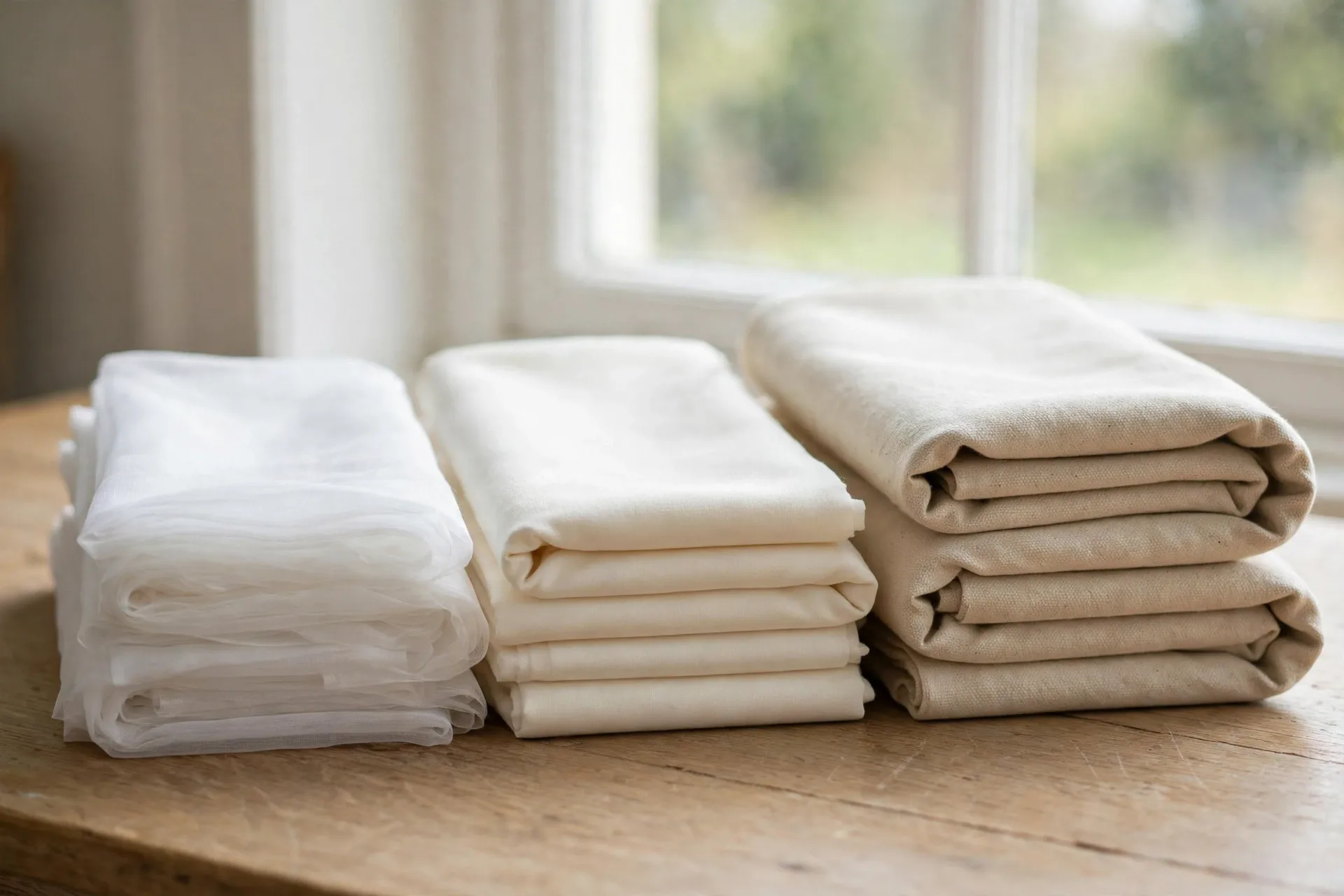
Match the weight to the room, not to the heaviest option. A panel that is too light looks washed out on a blazing west-facing window, while a panel that is too heavy feels flat and bulky in a breakfast area that needs morning glow. A simple rule: choose lightweight cotton where daylight matters most, medium-weight cotton where balance matters most, and heavier or lined cotton where sun, privacy, or insulation matters most. Lining shifts the answer by a step: a lined medium cotton behaves closer to a heavy cotton at the window, because the lining adds body, privacy, and sun protection of its own.
Budget changes what cotton buys. A budget panel is usually a lightweight voile, good for soft light and easy washing. A mid-range panel is usually a lined canvas, with body and privacy for daily rooms. A premium panel is usually a made-to-measure finish, with matched pattern, reinforced header, and a lining fitted to the face. Pick the tier by the room's daily use, not by the cotton name alone.
Lined or unlined cotton
A lining changes a cotton panel more than most buyers expect, because it changes light, body, privacy, and sun protection all at once. An unlined cotton panel shows its weave against the light, breathes freely, and washes easily, which suits rooms where soft daylight and an easy wash matter most. A standard lining adds body so folds fall evenly, protects the cotton face from sun, gives stronger daytime privacy, and helps with drafts, which suits living rooms and bedrooms that need presence at the window.
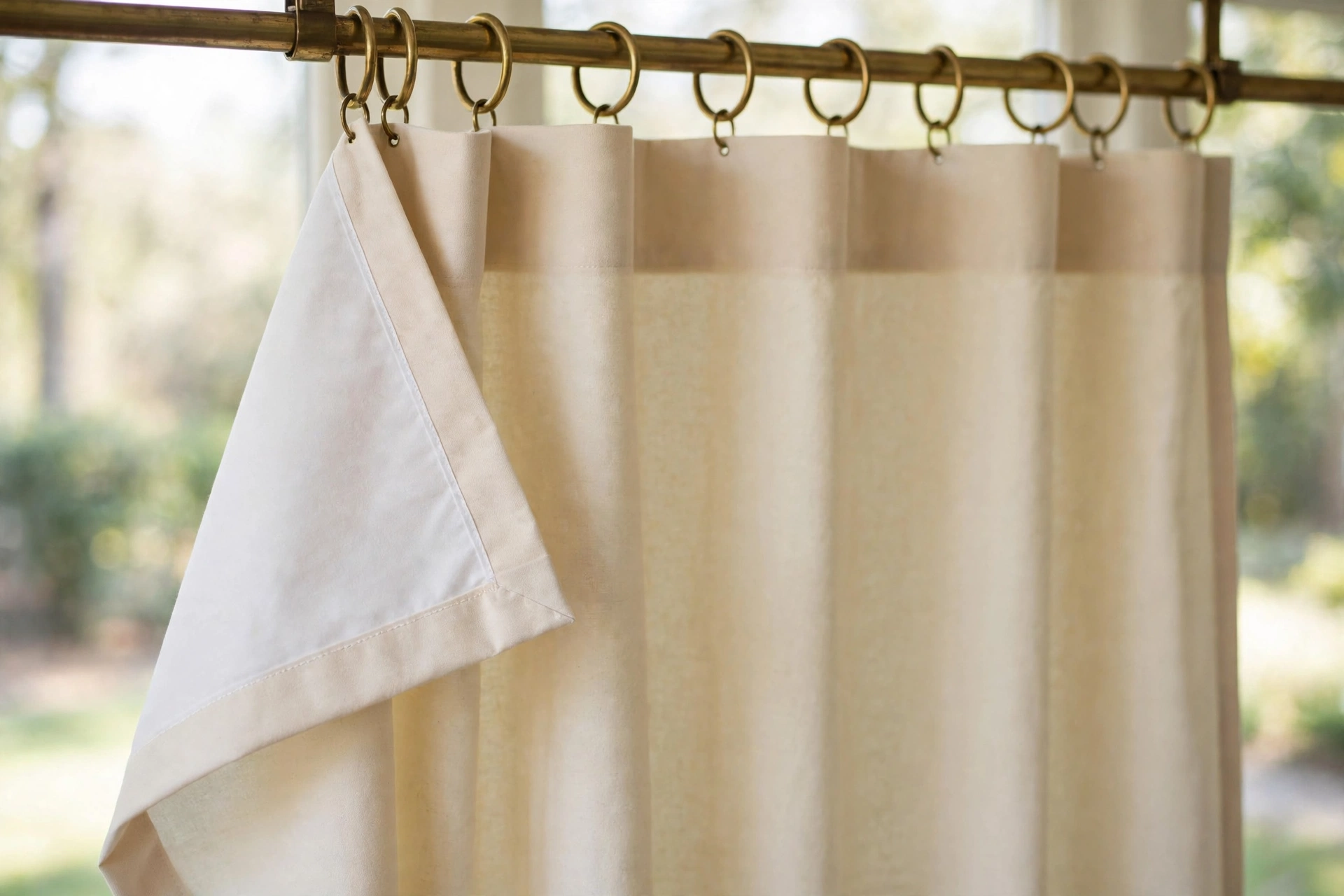
A blackout lining is a separate, denser layer that blocks most light through the fabric itself, which is what a bedroom needs when darkness is the point rather than dimming. The trade is care and weight. A lined panel is heavier, so the rod and brackets must be firmer, and a lined panel is bulkier in the wash, so check the care label for whether face and lining wash together. A lined panel also hides the cotton face from the street, which matters on a sunny window: the lining takes the sun so the face keeps its color longer. Choose unlined cotton where glow and easy washing matter most, standard lining where body and privacy matter most, and blackout lining where darkness matters most. For the full darkness job, see Best Blackout Curtains, and for the warmth job, see Best Thermal Insulated Curtains.
Cotton in a bedroom
A cotton bedroom needs rest first, which means the lining and the weight matter more than the weave name. A medium-weight cotton panel with a standard lining dims morning light and gives good daytime privacy, which suits a bedroom where gentle waking matters more than full darkness. A cotton panel with a blackout lining darkens a bedroom well while keeping a cotton face inside the room, which suits a bedroom where sleep comes first, including rooms facing street light or early sun. An unlined lightweight cotton panel suits only a bedroom where darkness does not matter, because morning sun will come straight through it.
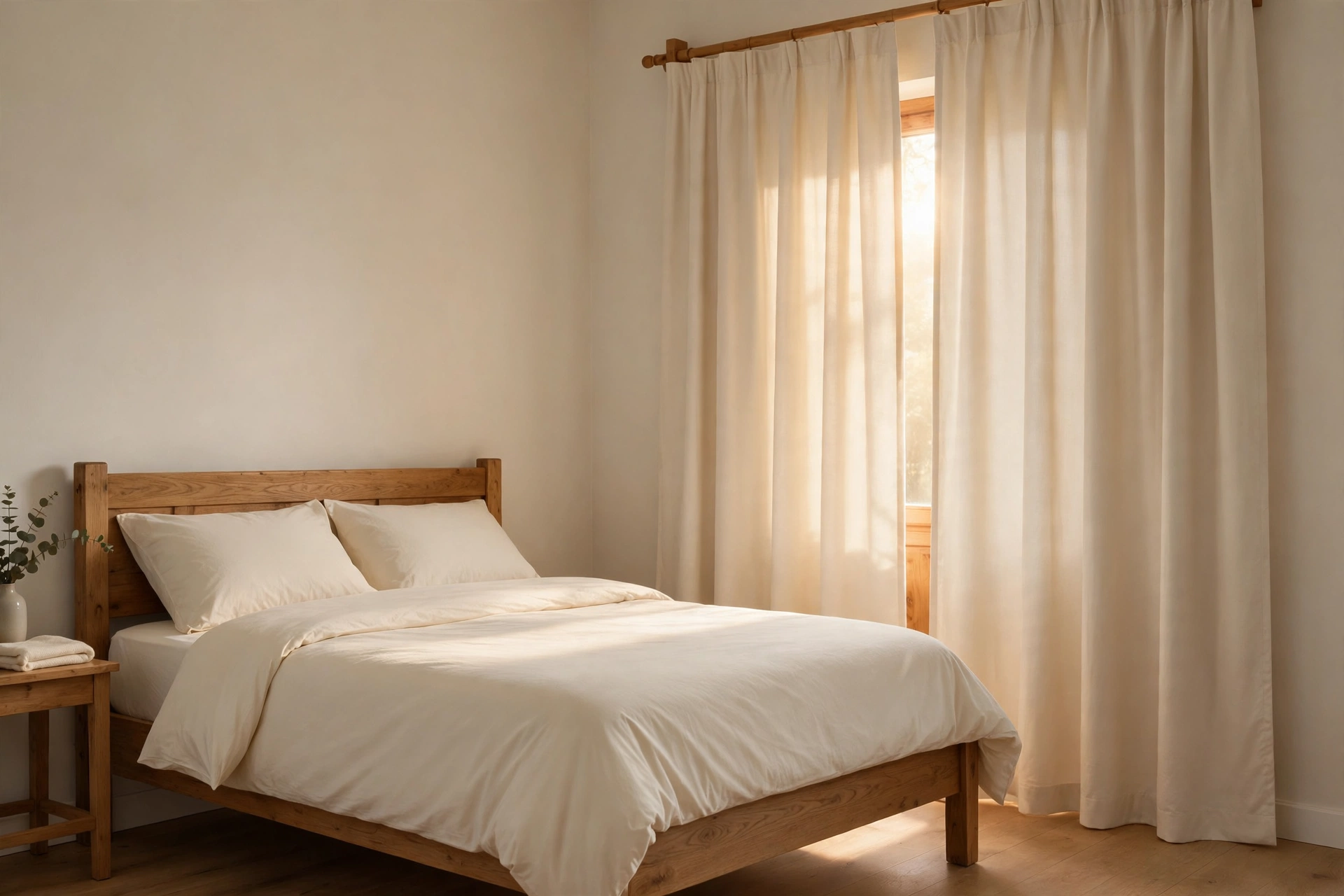
Hang bedroom cotton to overlap the frame when closed, with the rod 6 to 12 inches past the frame on each side and total panel width of about 2 times the rod width, so folds stay full. Light leaks most often at the sides, at the top, and through the center gap, so check the closed coverage in daylight before blaming the fabric. Cotton has one bedroom advantage over polyester: it breathes, so a bedroom with cotton panels feels less stuffy overnight than a room with a sealed synthetic panel. It has one bedroom cost as well: cotton wrinkles, so a bedroom panel that opens and closes daily will need steaming after washing to look crisp. For room-wide bedroom advice, see Best Curtains for Bedroom.
Cotton in a living room that gets daily use
A living room that gets daily use suits medium-weight cotton best, because it balances drape, privacy, and washing in a way that light and heavy cotton do not. A medium percale or slub panel gives a finished look without the fuss of a dressy sateen, survives daily opening and closing, and washes at home without a trip to the cleaner. Hang panels high and wide, so the window looks larger and the panels stack clear of the glass when open, and let the cotton texture do the work that pattern would do on a darker panel.
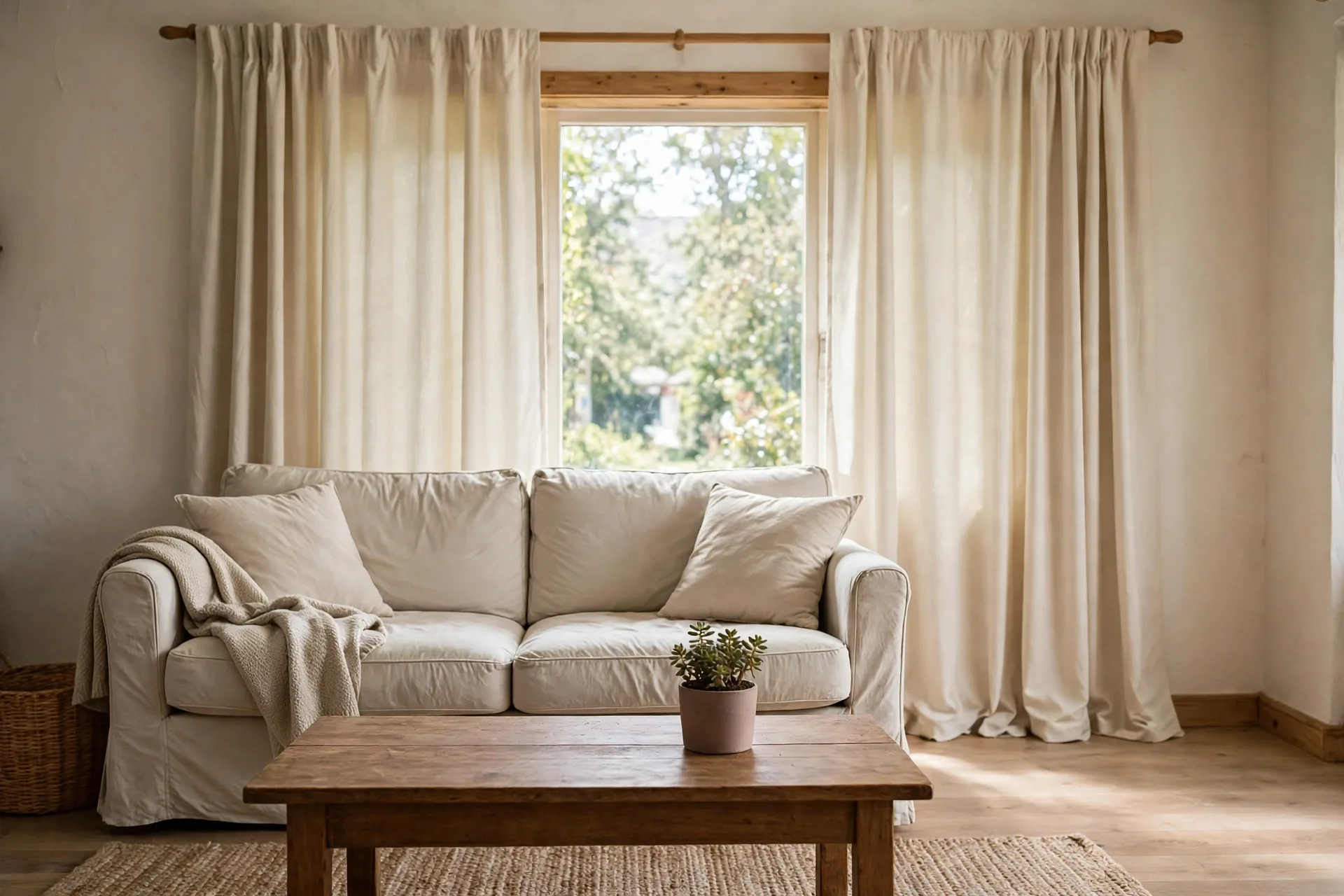
Watch the sun-facing side of the room. A south-facing or west-facing living room takes strong afternoon sun, and an unlined cotton panel there will fade faster than the same panel in a shaded room. A standard lining behind the cotton face slows that fading, protects furniture and floors from sun, and adds body so the folds fall evenly, without taking the brightness away. If the room faces a street and gets used after dark, add a lining or hang a sheer cotton panel nearest the glass with a heavier panel in front of it on the room side, because a light-filtering panel that looks solid from outside in daylight can turn see-through at night once indoor lights are on. For room-wide living room advice, see Best Curtains for Living Room.
Cotton in a kitchen or dining room
A kitchen or dining room suits cotton well, because cotton washes at home and handles the spills, steam, and smells those rooms produce. In a kitchen, choose a short cotton panel or a cafe length, because a full-length panel hangs where splashes and steam collect, and a short panel stays clear of sinks and counters while giving eye-level privacy. In a dining room, choose a lightweight or medium cotton panel that softens midday sun without turning the room dark, because meals feel calmer in soft, even light than in harsh glare.
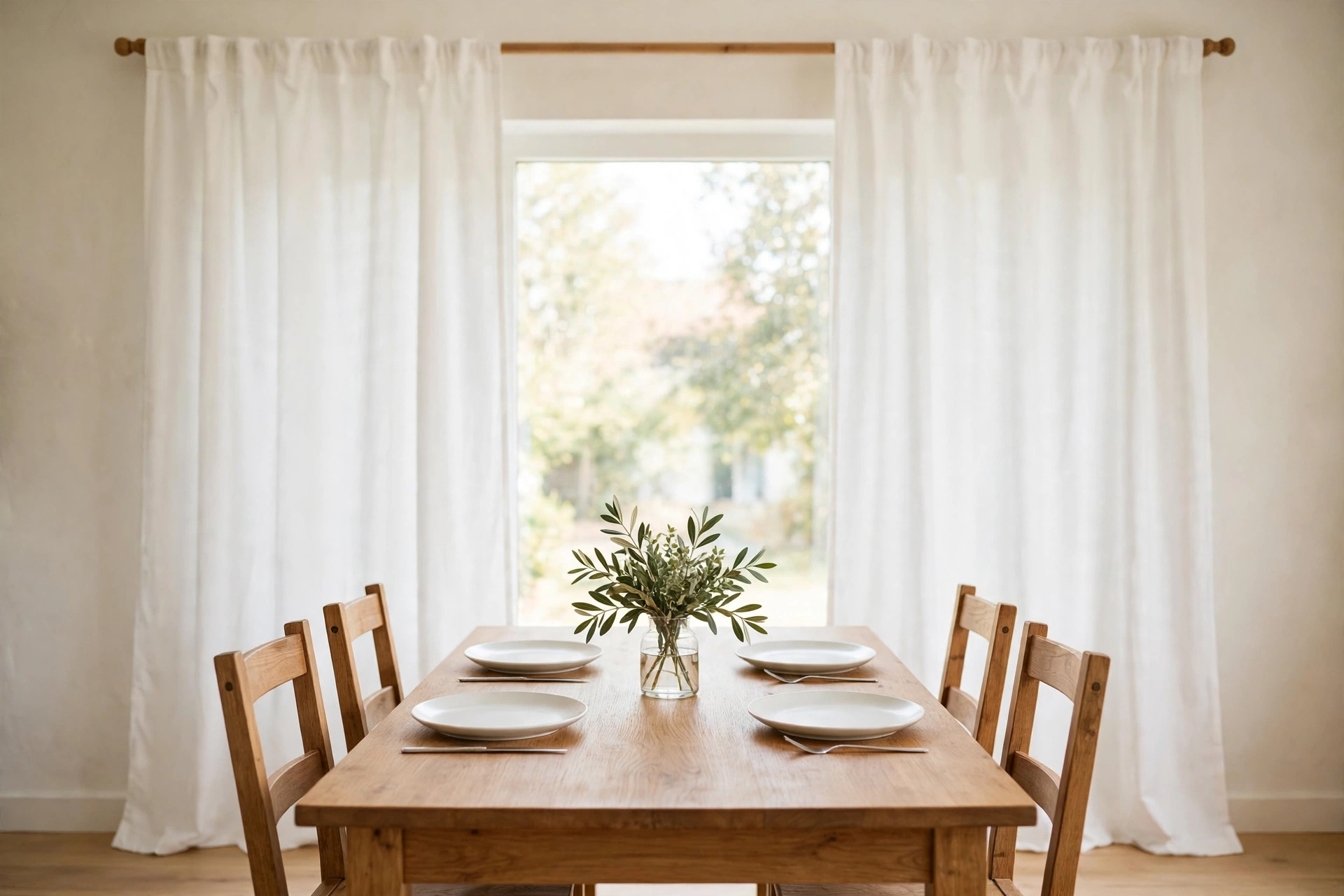
Pick the weave for the room's mess. A smooth percale panel wipes and washes clean more easily than a textured slub, which traps crumbs and dust in its uneven threads, so a kitchen suits percale better than slub. A dining room near a kitchen gets more steam and cooking smells than a living room, so a washable cotton panel is easier to live with there than a dry-clean-only one, and washing both panels of a pair together keeps them the same shade. Keep cotton away from direct stove heat: a panel that hangs beside a stovetop or above a hot radiator dries out, fades, and wears faster, and no weave fixes a bad position.
Shrinking, wrinkling, and fading
Cotton shrinks, wrinkles, and fades more plainly than polyester, and an honest cotton guide says so instead of promising otherwise. Shrinking happens most at the first wash, when cotton fibers relax and tighten, and heat makes it worse: a hot wash or a high-heat tumble dry shrinks a panel more than a cool wash and a line dry. Wrinkling is part of cotton's nature, especially in lightweight and percale weaves, and it shows most after washing and after sitting bunched to one side. Fading happens in strong, direct sun, where even good cotton loses color over time, and pale colors show the change sooner than deep colors.
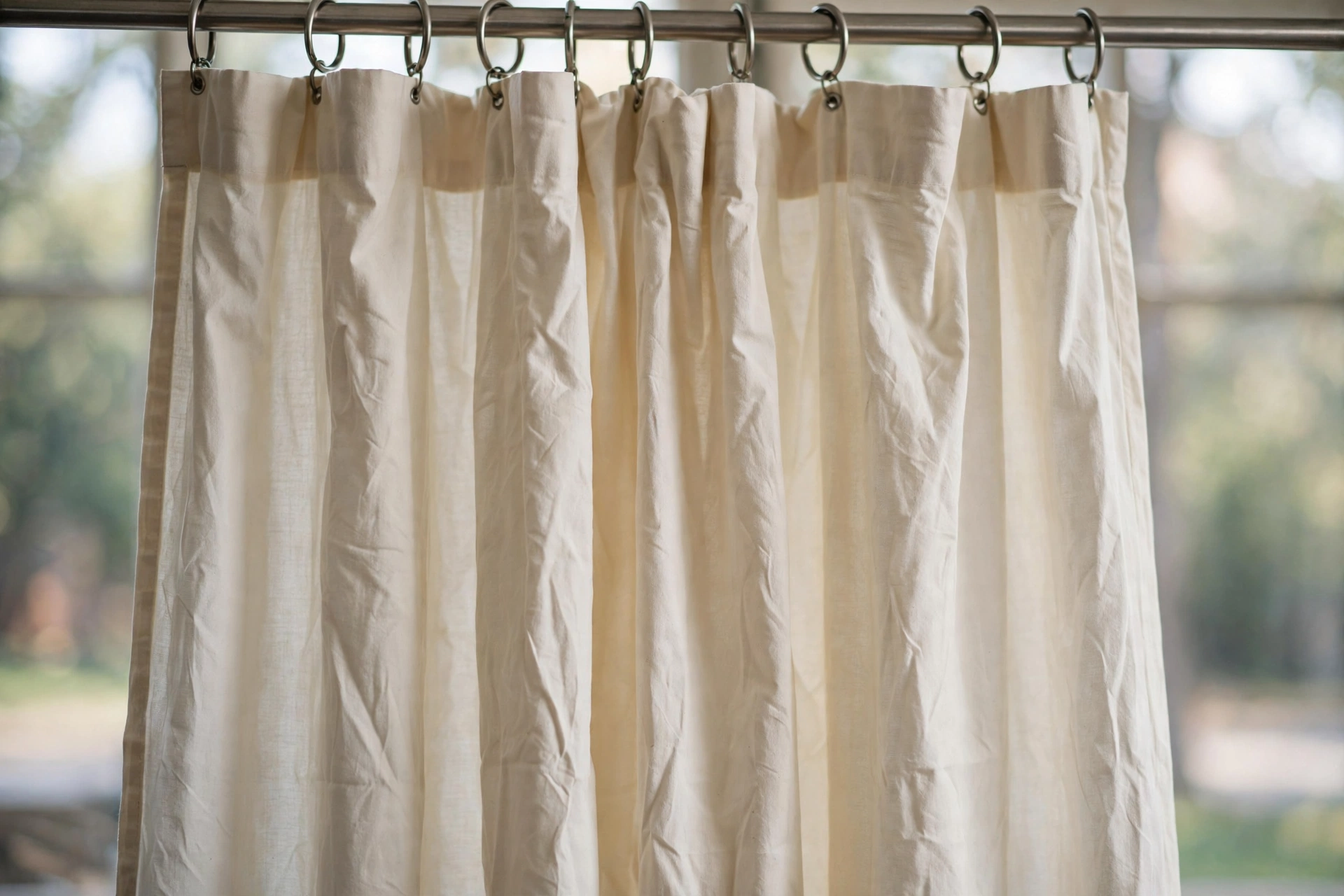
Manage all three with a few steady habits. Buy the next length up when a panel already just touches the floor, so a small amount of shrinkage does not leave it short, or wash and dry the panel before hemming when a custom length is planned. Wash in cool water on a gentle cycle with a mild detergent, line dry or hang the panel back up while slightly damp, and steam from top to bottom if creases remain. Hang panels as soon as they arrive, let their own weight pull the folds straight, and use a standard lining on a sunny window to slow fading. A cotton panel treated this way will still wrinkle and will still change shade slowly in sun, but it will stay presentable for years, which is the honest promise cotton can keep.
Cotton blends
A cotton blend mixes cotton with another fiber, usually polyester, and the blend fixes the two things that annoy pure cotton buyers most: wrinkling and shrinking. A blend keeps much of cotton's look and breathability while behaving better in the wash, because the synthetic fiber holds its shape where pure cotton relaxes and creases. Most cotton blends machine wash on a gentle cycle and hold their color well, even with regular cleaning, which suits busy families, kitchens, and rooms where panels wash often.
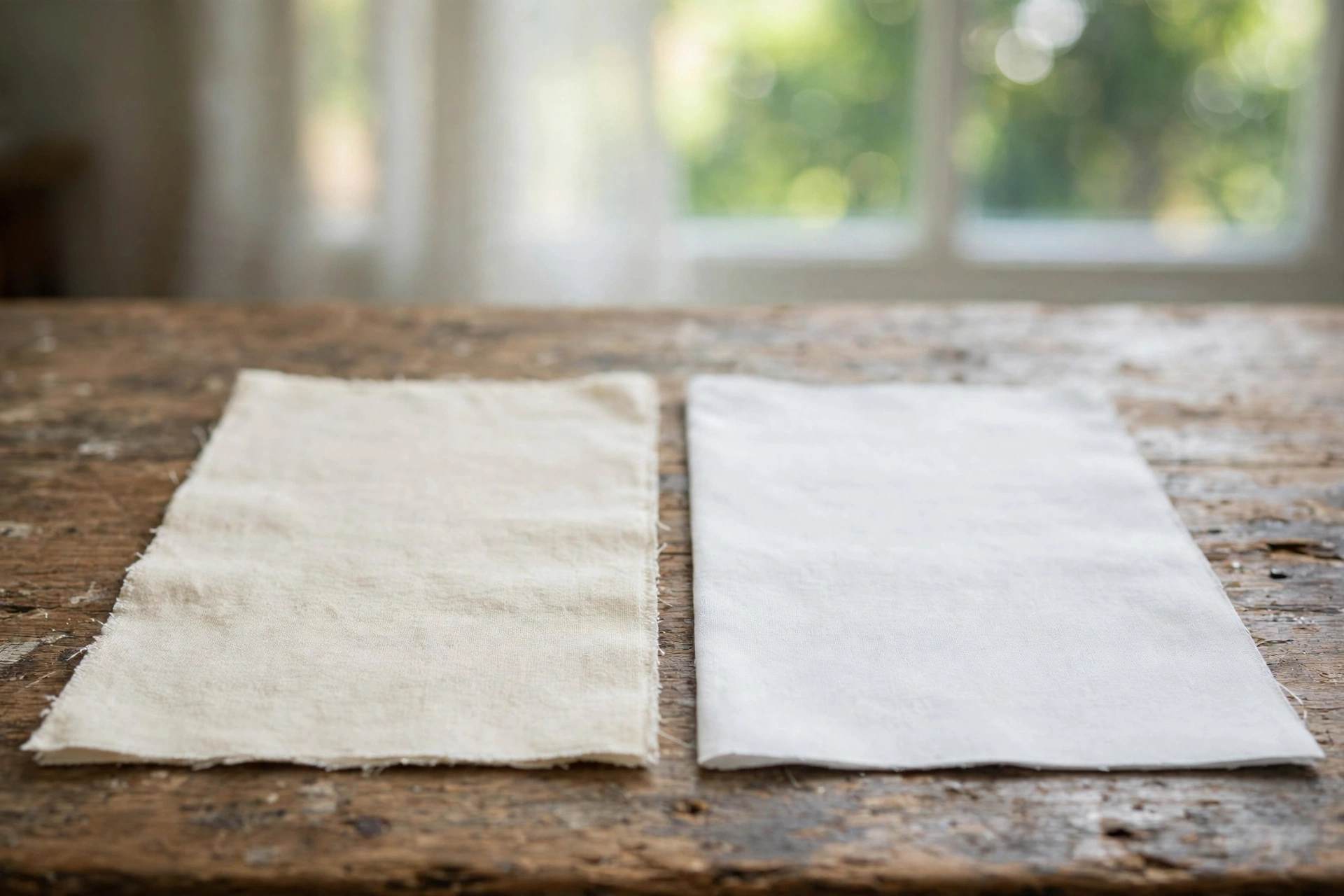
Read the blend ratio before you judge what you are buying, because blends vary widely. A panel that is mostly cotton with a little polyester behaves close to pure cotton, with a little extra forgiveness, while a panel that is mostly polyester with a little cotton behaves closer to polyester, with a cotton look on the surface. The listing's fiber line is the rule: if it says a blend without a ratio, treat the panel as an unknown blend and check with the seller. Choose a blend when the room needs cotton's look with easier care, and choose pure cotton when breathability and a natural hand matter more than wash-and-go ease. Neither choice is wrong, but buying one while expecting the other is how blends disappoint.
Choosing between cotton and linen for the same window
Cotton and linen suit different rooms, and the choice comes down to texture, wrinkling, and washing. Cotton gives a cleaner, more tailored look, with weaves from crisp percale to smooth sateen, and most cotton panels machine wash at home without special care. Linen gives a relaxed, slubbed texture with a warm, uneven glow, but it wrinkles more, shrinks more readily, and often needs gentler washing or dry cleaning. A room that needs tidy lines and easy washing suits cotton better, while a room that needs relaxed texture and can accept creases suits linen better.
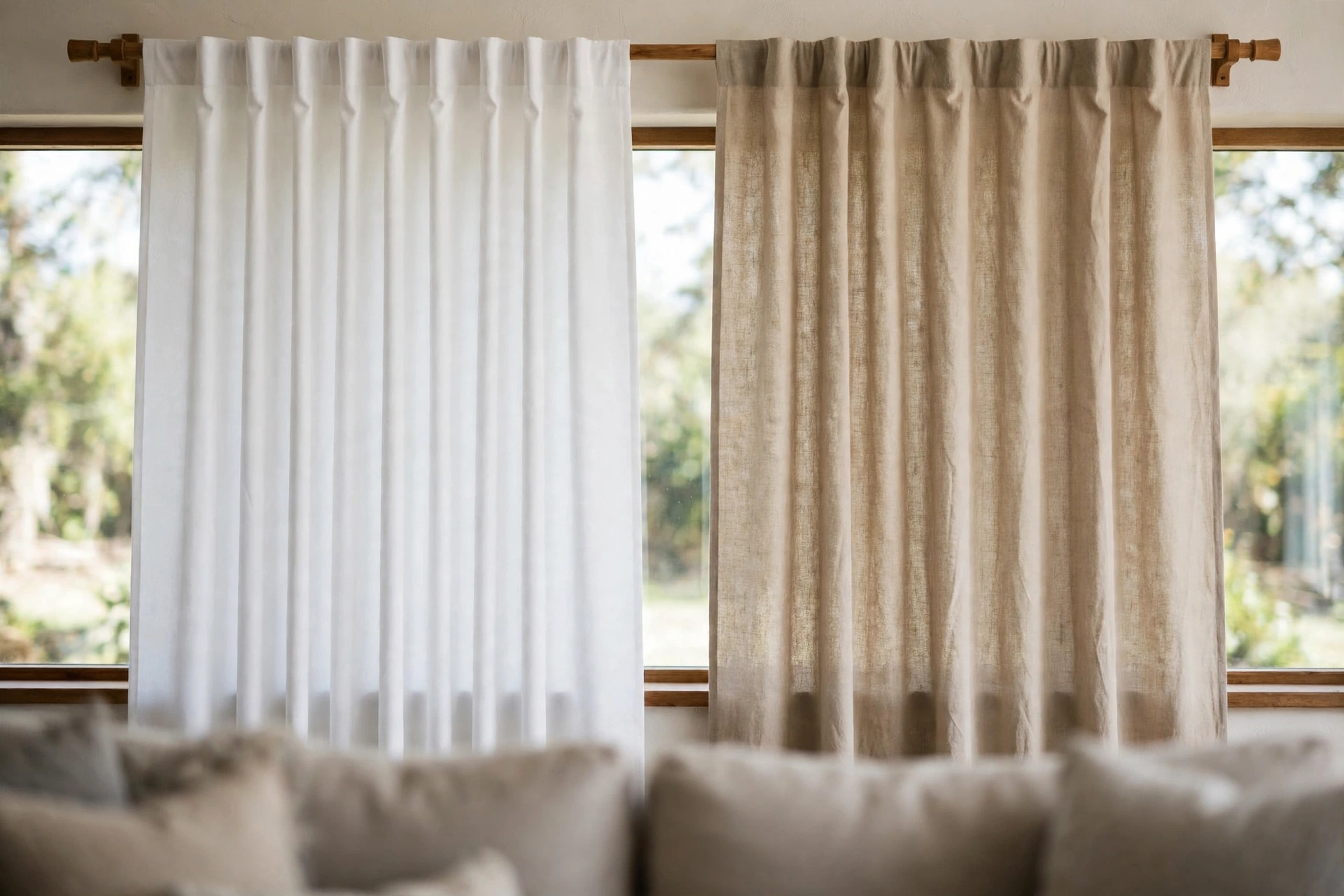
Sun and moisture sharpen the choice. Linen handles heat and breathability well but needs more care after washing, while cotton handles frequent washing better but fades faster in strong sun without a lining. A sunny room with daily use suits a lined cotton panel, because the lining protects the face and the cotton washes easily. A formal room with gentle use suits linen, because the texture carries the room and washing is rare. When the two are close, let washing decide: if the panel will wash often, cotton wins on ease, and if the panel will rarely wash, linen's texture wins on looks. For the linen side of the choice in full, see Best Linen Curtains.
Headers, rods, and fullness for cotton panels
The rod must match the actual panel, not the fiber name, because cotton weight varies more than any other fiber on this site: a muslin panel weighs almost nothing and hangs fine on a slim rod, while a lined canvas or damask panel needs a rod rated for heavy panels, brackets fixed into solid wall or proper anchors, and a center support on a wide span. Check the rod rating against the panel weight on the listing, and check that the bracket depth clears the window frame and any handle, or the panel will catch when it slides. Leave some margin in the rating, because cotton takes up moisture from damp air and a rod that only just holds a dry panel can sag in a damp room.
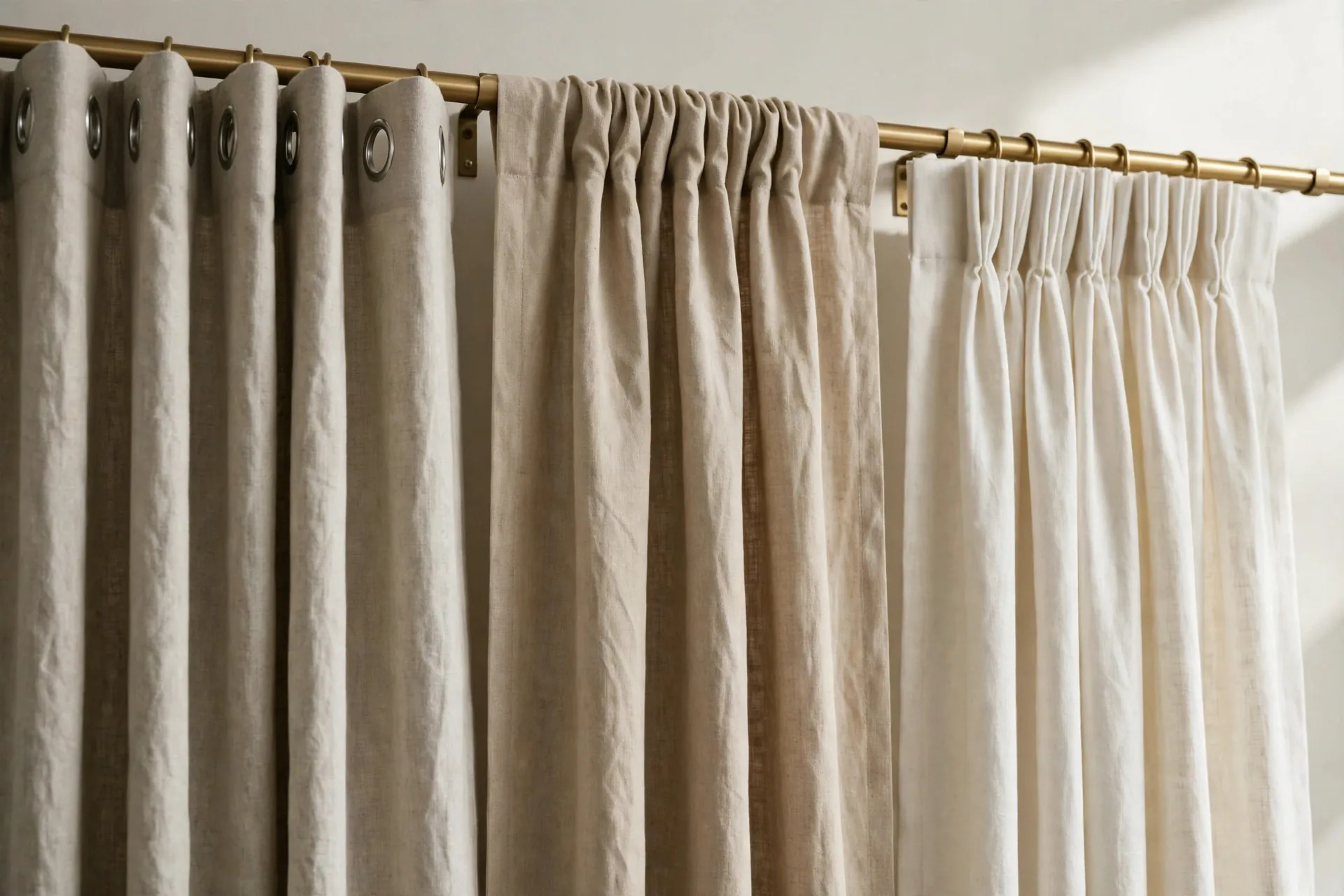
With cotton, the heading has to suit the weave as well as the room. A grommet heading slides freely and suits a light muslin or slub panel that opens and closes daily, because the rings take the weight off the fabric. A rod-pocket heading suits a heavier duck or canvas panel that mostly stays in place, since the pocket spreads the weight across the rod and the panel slides less freely. A back-tab heading gives a clean fall with no visible rings on a mid-weight weave, and a pinch-pleat heading gives neat, tailored folds that suit a formal room, though the pleats need hooks and rings and the folds crease more after washing. Total panel width runs 1.5 to 2 times the rod width for a standard look, 2 to 2.5 times for a full look, 2.5 to 3 times for pinch pleat, and 2 to 2.5 times for sheer, so folds stay full when closed, and measure the drop in three places, using the shortest reading, so no panel drags. For the measuring steps, see How to Measure for Curtains, and for hanging, see How to Hang Curtains.
Quality checks matter as much as header type. Check that stitching runs straight, that seam finishes are neat with no fraying edge, that the header is reinforced where it takes the rod or hooks, and that any lining is attached evenly without pulling the face. A panel that fails those checks will show it at the window, however good the cotton name sounds.
Washing cotton curtains without regret
Washing cotton well is mostly a matter of cool water, gentle handling, and drying before the panel sets into creases. Wash in cool or lukewarm water on a gentle cycle with a mild detergent, keep white and colored panels apart in case color runs, and remove the panel promptly when the cycle ends. Line dry or hang the panel back up while slightly damp, because hanging damp lets the panel's own weight pull the folds straight, which beats high-heat tumble drying on every count: less shrinkage, fewer creases, and a longer life for the fabric.
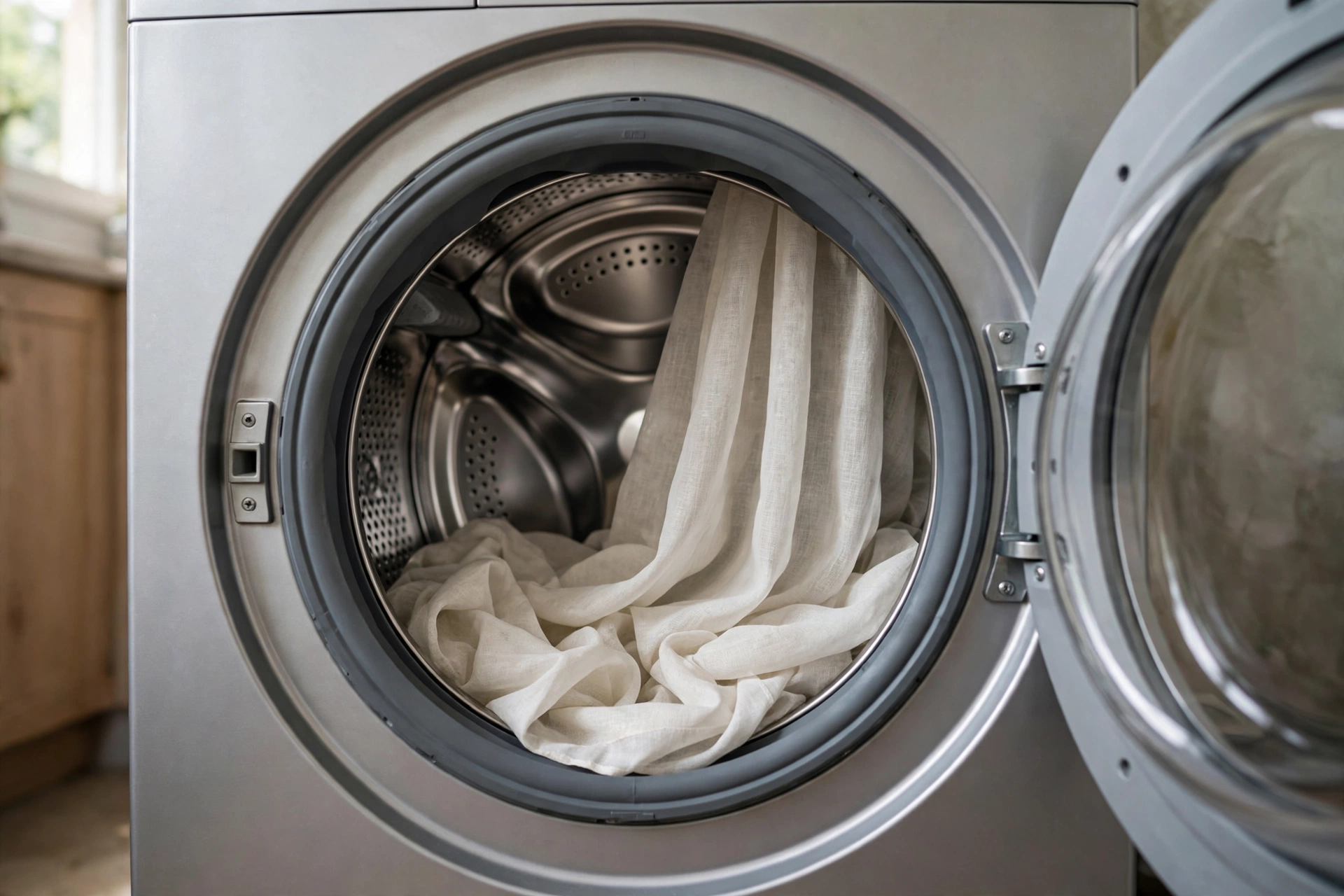
Read the care label before the first wash, not after a mistake, because the label on your panel is the rule for that panel, not a general rule from another listing. A panel that says dry clean only should not go in the machine, and a panel with a lining may need gentler care than its face alone would suggest. Treat a stain as soon as you see it by blotting gently with a damp cloth, never rubbing, because rubbing pushes the stain deeper and can shine the fabric. Steam from top to bottom if creases remain after drying, and wash both panels of a pair together so they age the same shade. Cotton washed this way stays soft, keeps its color longer, and avoids the two regrets that spoil cotton most: a panel that shrank short, and a panel that came out of the dryer a creased mess.
Frequently asked questions about cotton curtains
Cotton questions come down to fiber labels, weight, shrinking, and washing. Get those four right for the room.
Are 100% cotton curtains better than cotton blends?
Pure cotton and cotton blends suit different rooms, so neither is better everywhere. Pure cotton breathes better, feels softer, and takes dye in a matte, natural way, which suits rooms where a natural hand matters most. A cotton blend wrinkles and shrinks less, washes more easily, and holds its color well, which suits busy homes and rooms where panels wash often. Read the fiber line on the listing, because a panel that says cotton in its title may still be a blend.
Do cotton curtains shrink after washing?
Cotton curtains can shrink after washing, and heat makes the risk worse. A hot wash or a high-heat tumble dry shrinks a panel more than a cool wash and a line dry. Buy the next length up when a panel already just touches the floor, so a small amount of shrinkage does not leave it short, and wash and dry the panel before hemming when a custom length is planned. The care label on your panel is the rule for that panel.
Are cotton curtains good for bedrooms?
Cotton curtains work in a bedroom when the lining and weight fit the sleep job. A medium-weight cotton panel with a standard lining dims morning light and gives good daytime privacy, which suits a bedroom where gentle waking matters. A cotton panel with a blackout lining darkens a bedroom well while keeping a cotton face inside the room. An unlined lightweight cotton panel will not darken a bedroom at dawn, so it suits only a room where darkness does not matter.
Do cotton curtains block light well?
Cotton curtains block light according to their weave, weight, and lining, not according to the fiber name alone. A lightweight unlined cotton voile filters light and gives little darkness, a medium cotton panel with a standard lining dims light well, and a cotton panel with a blackout lining blocks most light. Check the listing for the lining by name, because a panel that says blackout in its title but names no blackout lining may only be room-darkening.
Can you machine wash cotton curtains?
Most cotton curtains can be machine washed, but the care label on your panel is the rule. Wash in cool or lukewarm water on a gentle cycle with a mild detergent, and line dry or hang the panel back up while slightly damp. A panel that says dry clean only should not go in the machine, and a panel with a lining may need gentler care than its face alone would suggest. Wash both panels of a pair together so they age the same shade.
Why do cotton curtains wrinkle so much?
Cotton curtains wrinkle because cotton fibers bend and hold a crease more readily than polyester, especially in lightweight and percale weaves. Creases after washing, after folding in a parcel, and after sitting bunched to one side are normal for cotton, not a sign the panel is faulty. Hang panels as soon as they arrive, let their own weight pull the folds straight, and steam from top to bottom if creases remain. A slub weave or a cotton blend hides wrinkles better than a flat percale weave.
Are cotton curtains good for sunny windows?
Cotton curtains can work on a sunny window, but they fade faster in strong, direct sun than polyester, and pale colors show the change sooner than deep colors. A standard lining behind the cotton face slows fading by taking the worst of the sun before it reaches the face fabric, and a heavier canvas weave holds up better than a lightweight voile. On a south-facing or west-facing window, a lining is worth having even when darkness is not the job.
What is the difference between cotton and linen curtains?
Cotton curtains give a cleaner, more tailored look and usually machine wash at home, while linen curtains give a relaxed, slubbed texture with a warm glow but wrinkle more and often need gentler washing. Cotton suits rooms that need tidy lines and frequent washing, while linen suits rooms that need relaxed texture and gentle use. When the two are close, let washing decide: frequent washing favors cotton, and rare washing favors linen's texture.
Do cotton curtains help with allergies?
Cotton curtains can suit a home with dust allergies better than a pile fabric, because a flat cotton weave traps less dust than velvet and washes at home. Regular vacuuming with a soft brush head and frequent washing keep dust down, but cotton does not remove allergens from a room on its own. In a home where dust allergies are a daily problem, a washable cotton panel that goes through the wash often is easier to keep clean than a panel that rarely washes.
How long do cotton curtains last?
Cotton curtains last according to their weight, lining, sun exposure, and washing care, not according to a fixed number of years. A lined medium-weight cotton panel in a shaded room that washes gently can stay presentable for many years, while an unlined lightweight panel on a sun-blasted window will fade and wear faster. Lining a sunny window, washing in cool water, and drying away from high heat are the habits that stretch cotton's life the furthest.
This guide is research-based curation: we compared maker specifications, published reviews, and current prices. Read how we choose.