 Best
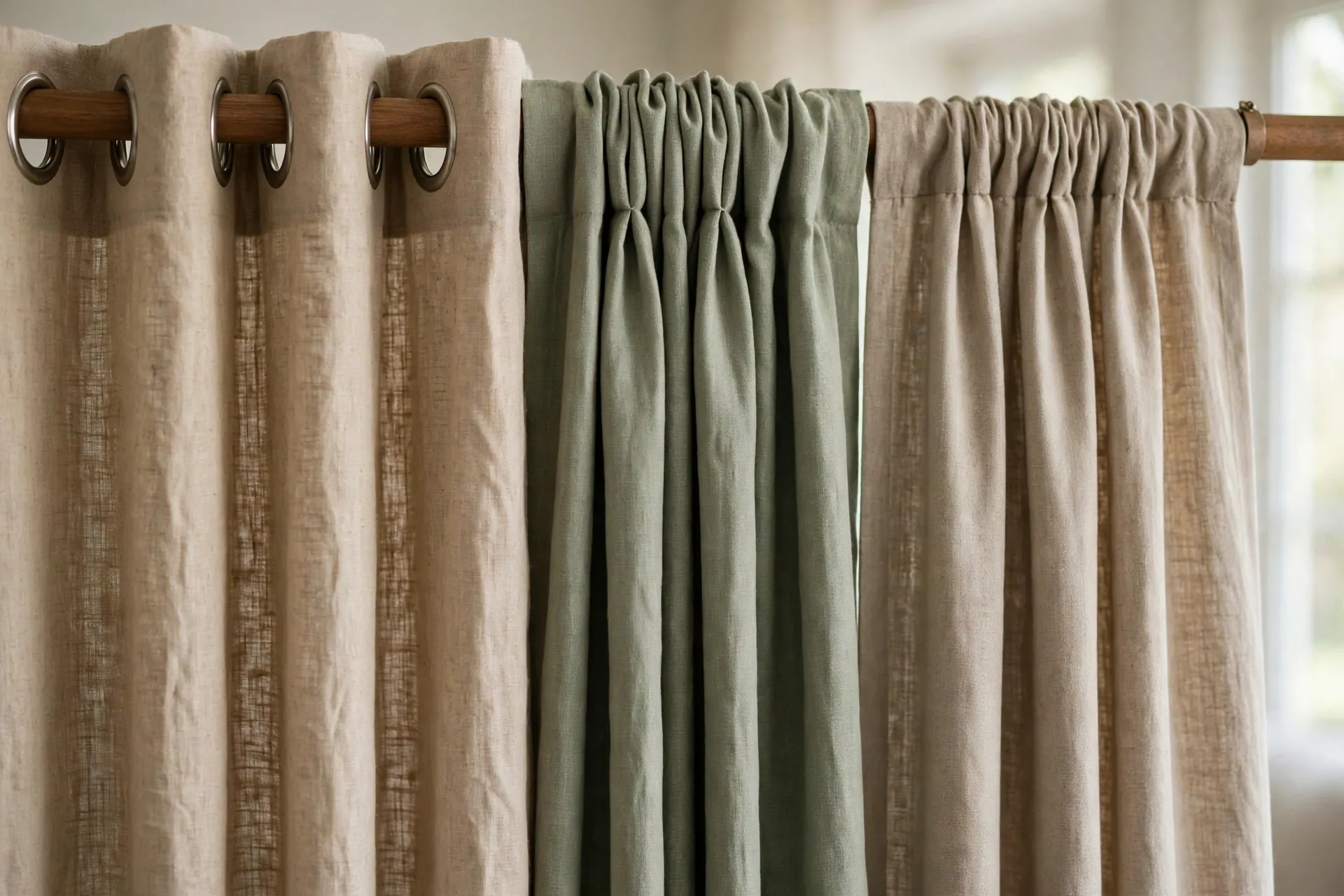
Curtain Header Styles Explained
The header is the top of the curtain, and it decides how the fabric folds, what rod or track it needs, and how easily it slides. This guide sorts every common header by job.
The header is the top edge of a curtain, and it decides how the fabric folds, what rod or track it needs, how easily it slides, and how formal or casual the room looks. Two curtains in the same fabric can look entirely different with different headers, and a header that needs a track will not work on a rod you already own. This guide covers every common header, the hardware each one needs, how much fabric each one takes, and the mistakes to avoid.
Start with your hardware, not the fabric
Your rod or track decides your shortlist before fabric ever enters it. A heading that needs a specialist track, such as wave, cannot hang on a rod, and a heading that needs a rod, such as eyelet, cannot hang on a standard track. Start by noting what is already on the wall: a rod with rings, a plain rod, a corded track, or a specialist track, and then choose from the headings that suit it. Replacing hardware to suit a heading is possible, but it costs more than choosing a heading that suits the hardware already there.
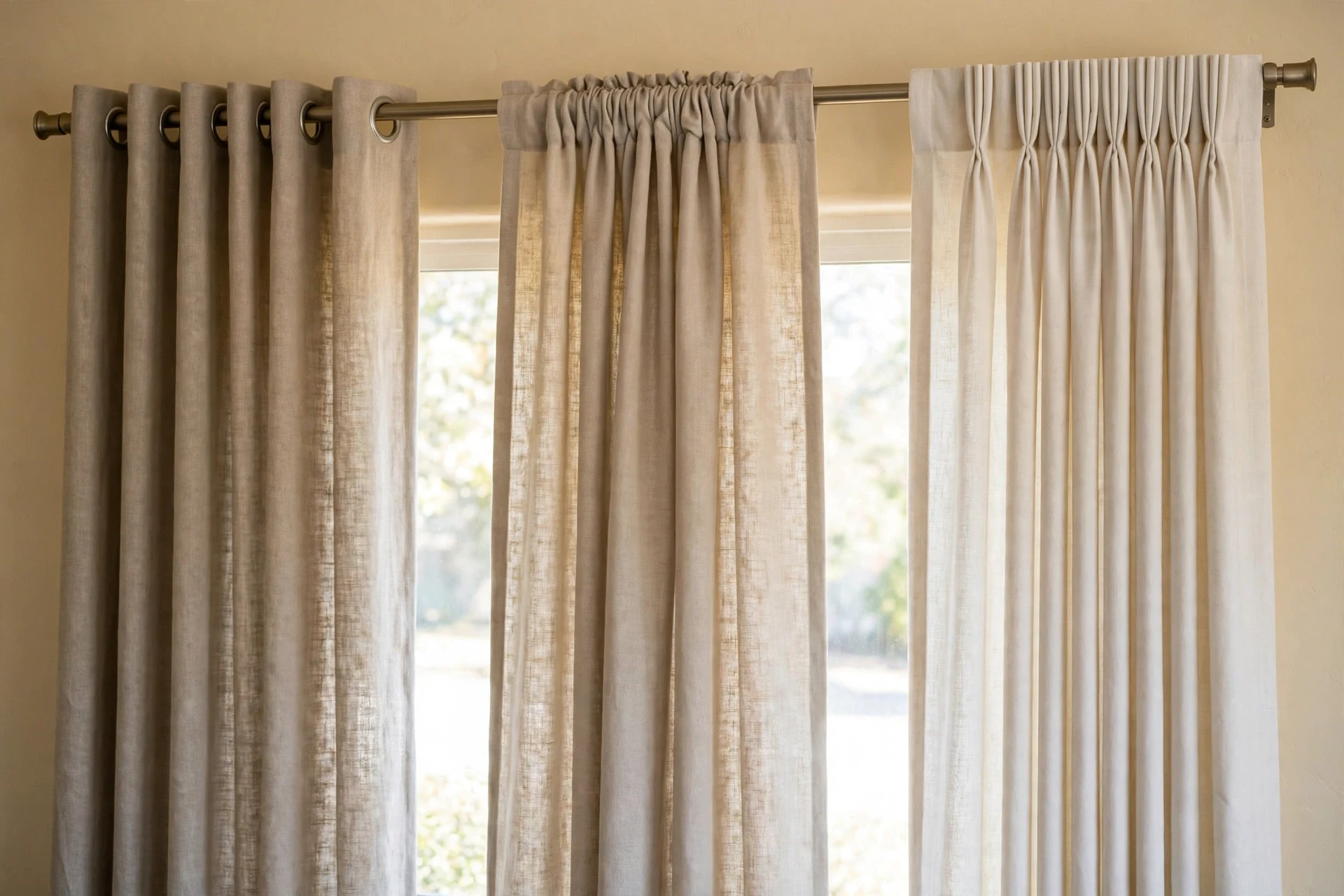
Next, decide how often the curtain moves. A curtain that opens and closes daily needs a heading that slides freely, such as eyelet, wave, or clip rings. A curtain that stays mostly drawn, such as a bedroom blackout or a cafe tier, suits a heading that grips, such as rod pocket or pinch pleat with hooks.
Finally, decide the look. Formal rooms suit structured pleats such as pinch, goblet, and box, which hold a tailored shape. Casual rooms suit relaxed headings such as tab top, rod pocket, and pencil pleat gathered loosely. Modern rooms suit wave, which gives even, architectural folds with no fuss.
Pencil pleat: the adjustable all-rounder
Pencil pleat is the most flexible heading sold, because it gathers on a sewn tape with cords, and the gathering can be adjusted after the curtain is made. Pull the cords tighter for a fuller gather, loosen them for a flatter one, and the curtain adapts to a slightly wider or narrower window than planned. That adjustability suits renters especially well, because the same curtain can move to a new window and still gather correctly. It hangs on a rod with rings or on a standard track with hooks, so it suits most existing hardware.

Pencil pleat takes about two to two and a half times the rod width in fabric for a full look, which is more than eyelet and less than some decorative pleats. The folds are small, neat, and slightly irregular, which suits both plain and lightly patterned fabrics, and it suits light to medium fabrics best. Heavy fabrics can overwhelm the tape and pull it out of shape, so a heavy velvet or lined panel usually suits a stiffer pleat better.
Grommet: even folds that slide easily
A grommet heading is a metal ring set into the fabric, threaded onto a rod. The rings force the fabric into wide, even folds that look clean and modern, and the curtain slides along the rod with almost no friction, so it suits windows that open and close daily and wide sliding doors.
Grommet needs a rod, not a track, and the ring size must match the rod.
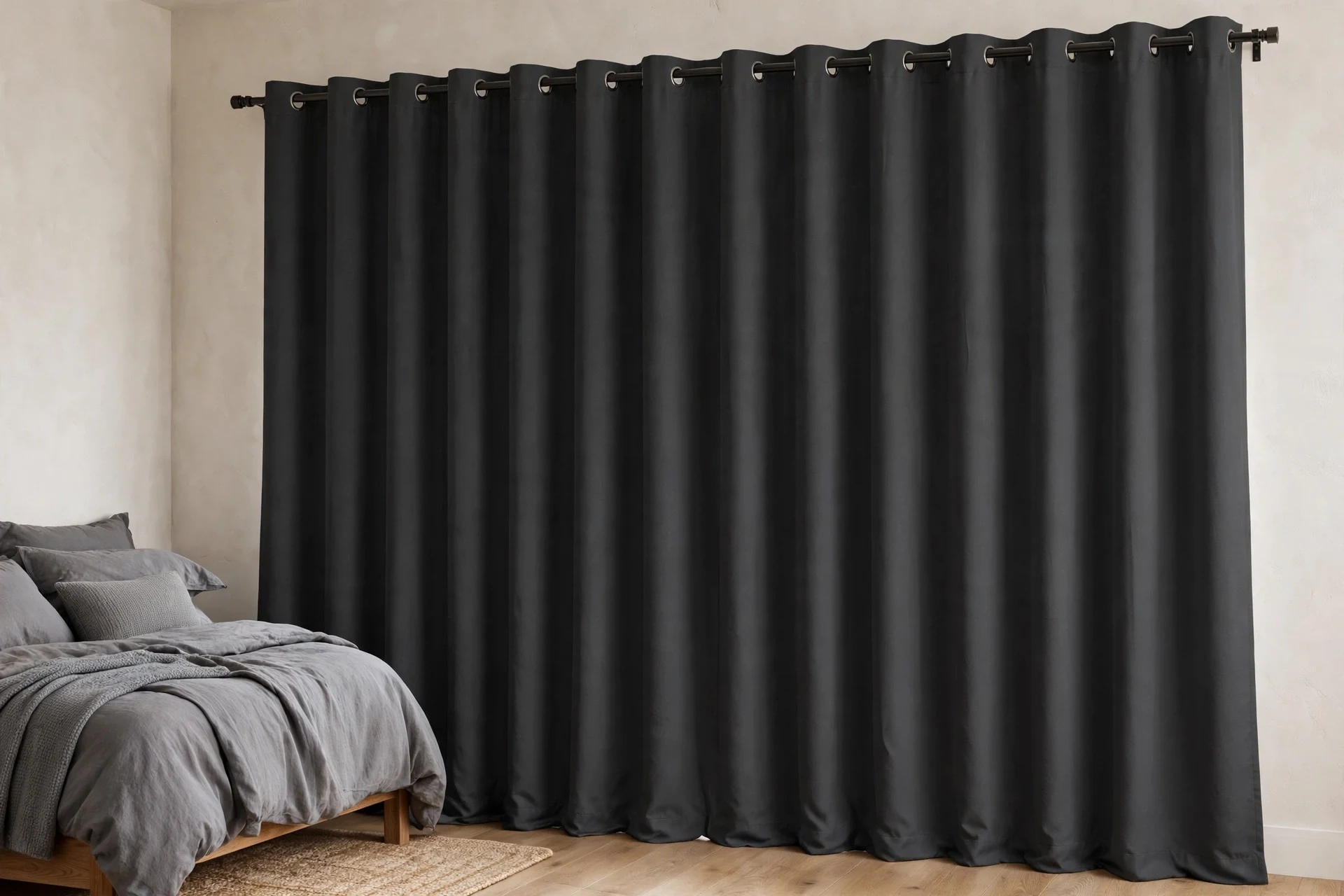
The ring's internal diameter should be a little larger than the rod, and as a rule of thumb the rod should be about 1/8 in smaller than the ring, so the rings glide without catching. Eyelet takes about 1.75 to 2.25 times the rod width in fabric, with 2 times as the safe center, which is less than pencil or pinch pleat, so it costs less fabric for the same window. Watch one quirk: a small gap sits between the fabric and the rod where the rings ride, and that gap lets a little light through at the top, so eyelet suits bedrooms less well alone, and pairs well with a blackout blind or shade behind it where darkness matters.
Pinch pleat: the formal, tailored look
Pinch pleat is the classic formal heading, made by pinching the fabric into fixed groups of folds, usually two or three fingers per pinch, and stitching each group in place. The result is a structured, tailored curtain with deep, regular pleats that holds its shape when open and when drawn, which suits formal living rooms, dining rooms, and traditional bedrooms. Pinch pleat hangs on a rod with rings or on a standard track with hooks, and it suits medium to heavy fabrics, because the stiffened pleats carry weight well and give a lined panel its proper drape.

Pinch pleat takes 2.5 to 3 times the rod width in fabric, so it is one of the more fabric-hungry headings, and it costs more to make because each pleat is formed by hand or by machine with care. Pattern needs attention: a bold stripe or a large motif can be lost inside the folds, because the fabric doubles back on itself at each pinch, so pinch pleat suits solids and small, subtle patterns better than large prints.
On ready-made pinch pleats, check the pleat pattern looks balanced across your exact window width before buying, because fixed pleats cannot be re-spaced. A pattern that ends mid-pleat at the edge will look unfinished once hung.
Wave and ripple fold: the modern, compact stack
Wave, also called ripple fold or S-fold, gives the curtain a smooth, even wave from top to bottom, with no pleats, no gathers, and no bulk. The curtain hangs from a specialist wave track with carriers spaced evenly, and the carriers set the wave size, so the folds are perfectly regular and the stack when open is compact, which suits wide windows, sliding doors, and modern rooms where a bulky stack would cover too much glass.

Wave takes 80 to 120 percent of the track width in fabric, a percentage scale rather than a multiple, depending on the carrier spacing, with wider spacing giving a deeper wave and narrower spacing giving a tighter one. The hard rule is hardware: wave needs its specialist track, and it cannot hang on a rod or a standard track, so a room that already has a rod needs a track change before wave is possible. Wave slides easily on its track, so it suits windows that open and close daily, and its compact stack is a genuine advantage on a sliding door, where other headings stack wide and block the opening.
Wave spacing is adjustable, usually at 2⅜, 3⅛, or 4¾ in intervals, and wave fullness typically runs 80 to 120 percent of the track width. A wider interval gives a bolder, more open wave, while a narrower one gives a tighter, more even fall.
Rod pocket: the simple, stationary gather
Rod pocket is the simplest heading of all: a channel sewn at the top of the fabric, threaded onto a slim rod, with the fabric gathering on the rod. It suits short panels such as cafe tiers, kitchen curtains, and light sheers that stay mostly in place, because it is cheap, easy to make, and needs no rings, hooks, or specialist hardware.
Rod pocket has one clear limit: it grips the rod, so it does not slide well. A rod-pocket panel on a wide window or a sliding door is hard to open and close, and pulling it drags the rod and bunches the fabric.

Buy rod pocket for windows where the panel stays drawn, or moves rarely, and choose a sliding heading for any window that opens daily. Rod pocket takes 2 to 3 times the rod width in fabric for a gentle gather, and it hides the rod entirely, which suits rooms where the hardware should disappear rather than show.
Pocket depth typically runs 2¾ to 4 in, and the rod diameter should sit slightly smaller than the pocket, so the panel slides on without gripping. A pocket sewn too tight for its rod will bunch and refuse to draw.
Tab top: the casual, relaxed hang
Tab top is a heading of fabric loops sewn at the top of the curtain, threaded onto a rod so the rod shows between the loops. It suits casual rooms, country kitchens, and children's rooms, because the loops give a relaxed, handmade look that pairs well with cotton, linen, and light prints. Tab top suits light to medium fabrics.
Tab top takes 1.5 to 2 times the rod width in fabric, and it slides less freely than eyelet or wave, because the loops grip the rod more than rings do.
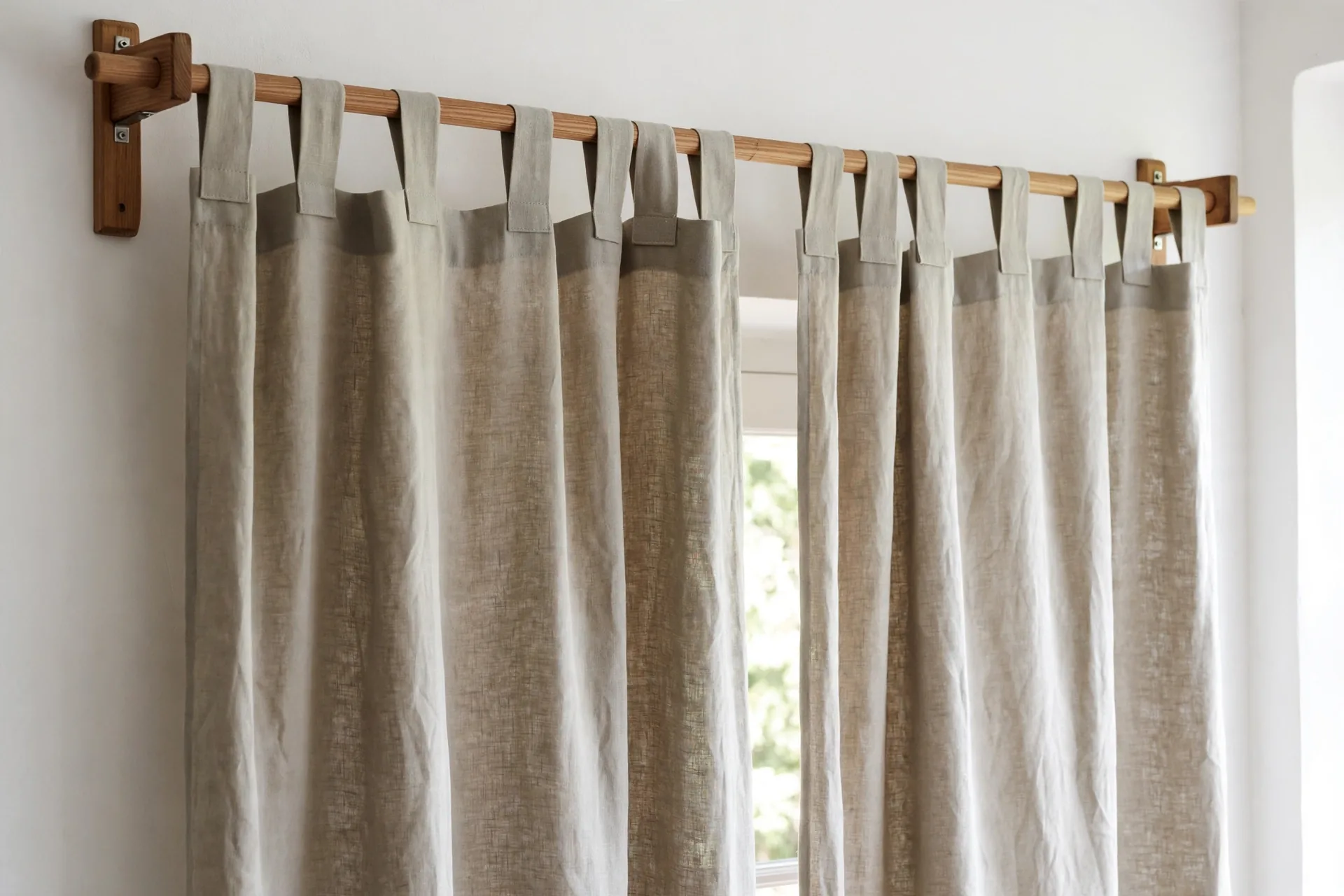
A trick helps: sewing small rings on the back of each tab lets the panel glide better while keeping the tab look from the front, and it is worth asking a maker for this where the panel will move often. Tab top does not suit heavy fabrics, because wide tabs under a heavy panel sag and stretch, and it does not suit formal rooms, because the looped look is casual by nature.
Goblet, box, and cartridge pleats: the decorative set
Goblet, box, and cartridge pleats are the decorative pleats, made for rooms where the curtain is a feature rather than a background. Goblet pleats are cup-shaped pleats that stand away from the fabric, stiffened with interlining so the cup holds its shape, and they suit large windows and high ceilings in formal rooms. They take about two to two and a half times the rod width in fabric, and they are usually made by hand, which makes them the most expensive heading here. Goblet suits solids and small patterns, because a large pattern is lost in the cup.
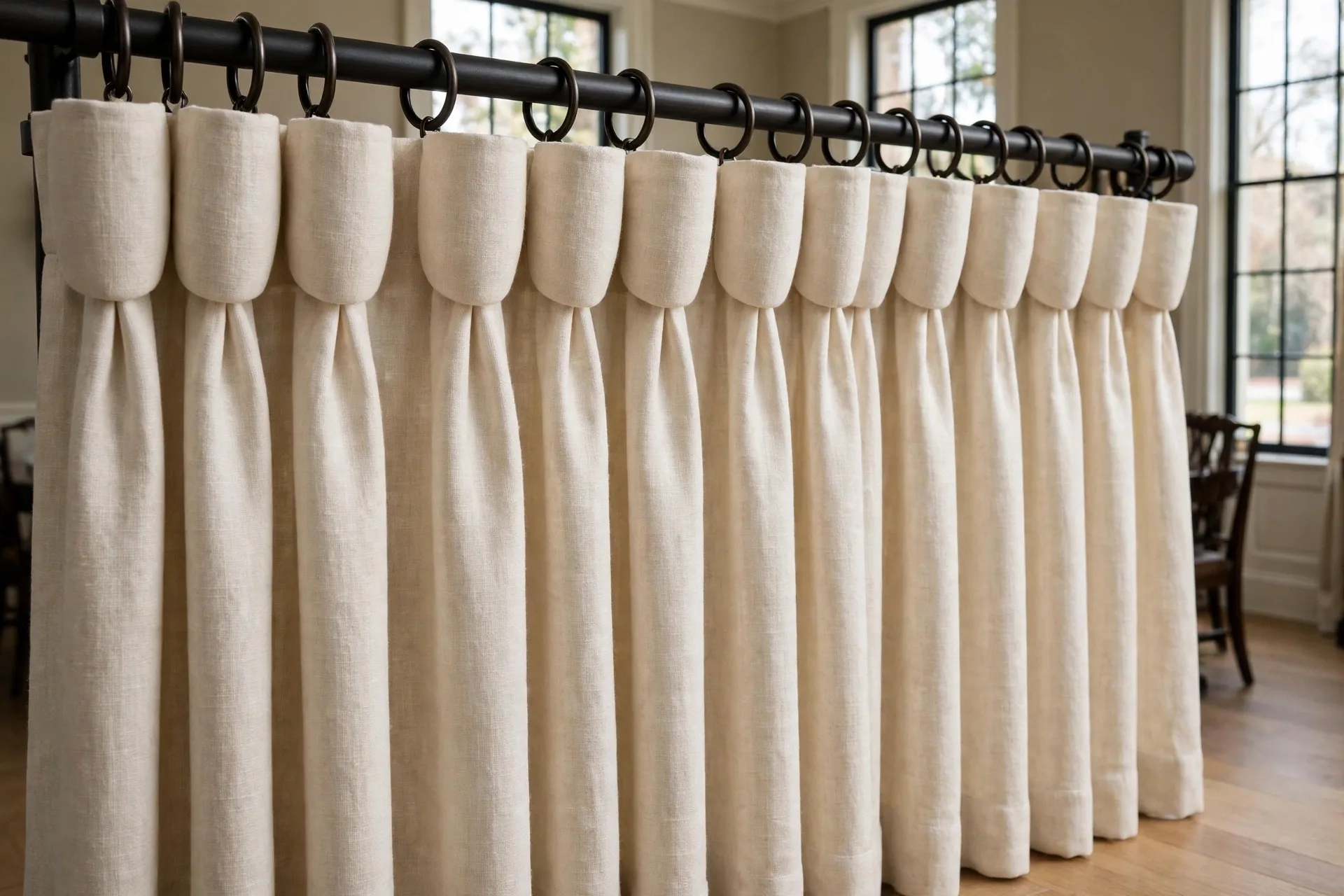
Box pleats are flat, tailored pleats that fold in a box shape, giving an orderly, architectural look that suits modern formal rooms and large windows. Inverted pleats are the reverse of box pleats: the fold faces the back, so the front looks flat and sleek, and the pleat opens at the back. Both suit solids and subtle patterns, because a pattern repeat is shortened at the top where the pleat folds, so a bold print can look broken. Cartridge pleats are rounded, cylindrical pleats that stand away from the fabric like goblet pleats but in a tube shape, and they suit formal rooms with tall windows.
Hidden tabs and clip rings: two flexible fixes
Hidden tabs and clip rings are two flexible fixes for panels that need to hang without a sewn heading. Hidden tabs are loops sewn on the back of the panel, so the panel hangs from a rod with a flat, tailored front and no visible loops, which suits a panel that should look like a pinch pleat from the front but hang simply from the back. Hidden tabs suit light to medium fabrics and rooms where the front should stay clean, and they slide less freely than rings, so they suit panels that move rarely.

Clip rings are rings with small clips that grip the top of a panel, so any flat panel, including a panel bought without a heading, can hang from a rod. Clip rings suit panels whose drop needs fine-tuning, because moving the clip changes the hanging length by a little, and they suit sheers and light panels that need adjusting. Clip rings slide freely on a rod, so they suit windows that open and close daily better than a rod pocket does.
Heading, lining, and fabric weight together
Heading, lining, and fabric weight work as a set, and a heading chosen without the other two often disappoints. A heavy lining on a light heading, such as a blackout liner behind a rod pocket, pulls the heading out of shape and grips the rod so hard the panel barely moves. A light heading on a heavy fabric, such as pencil pleat tape on a lined velvet, sags and loses its gather. Match them: light headings for light fabrics, stiff pleats for heavy and lined fabrics, and a heading that slides freely wherever a lined panel must move daily.

Lining changes the pleat as well. A lined panel holds a pleat better than an unlined one, because the liner stiffens the fold, which suits pinch and goblet pleats. Blackout lining behind an eyelet panel leaves the top light gap already noted, so a bedroom that needs darkness pairs eyelet with a blackout blind or shade behind it, rather than relying on the lining alone. For the full warmth and darkness job, see Best Thermal Insulated Curtains.
Pattern and heading interact too. A bold pattern survives best in headings with wide, flat folds, such as eyelet, wave, and rod pocket, because the folds are shallow and the pattern stays visible. A bold pattern is lost inside deep pleats, such as pinch, goblet, and box, because the fabric doubles back and hides part of the print. Where the pattern matters, choose a flat-fold heading, and where the pleat matters, choose a solid or a small, subtle pattern.
Measuring a heading into your drop
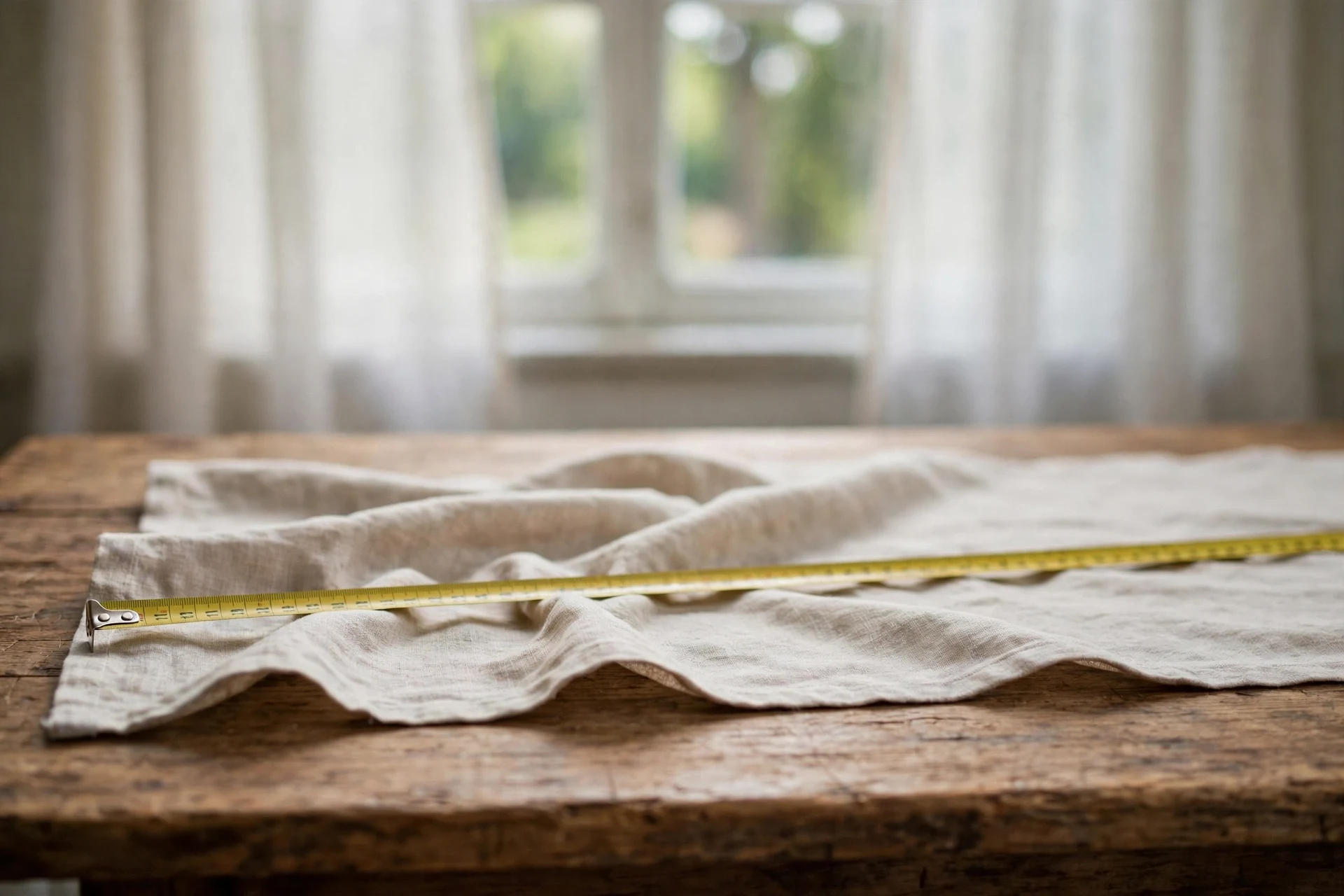
A heading eats some of the curtain's length, and forgetting it is a common measuring mistake. The drop you order is the finished length from the top of the heading to the hem, but different headings hang from different points: an eyelet panel hangs from the rod through its rings, a rod-pocket panel gathers above the rod, a pinch pleat hangs from hooks that sit below the ring, and a pencil pleat hangs from a pocket row you choose. Measure from the point the heading actually hangs from, not from the top of the fabric, and check the listing or the maker for how that heading measures. For measuring steps in full, see How to Measure for Curtains.
Rod height rules still apply, with one heading-specific note. A rod set four to five inches above the frame and a few inches past each side suits most headings and makes a window look taller, while a rod set no more than one-third of the window width past each side keeps the proportions right for a wider look. For rod placement steps, see How to Hang Curtains. For length choices across rooms, see Curtain Sizes.
Pencil pleat carries one measuring bonus already noted: its tape often has several pocket rows, and choosing a different row changes the hanging height by a little, which rescues a curtain bought slightly long or hung on a rod slightly high. Clip rings carry a similar bonus, because moving the clip changes the hanging length.
Washing by heading: hooks out, tape checked
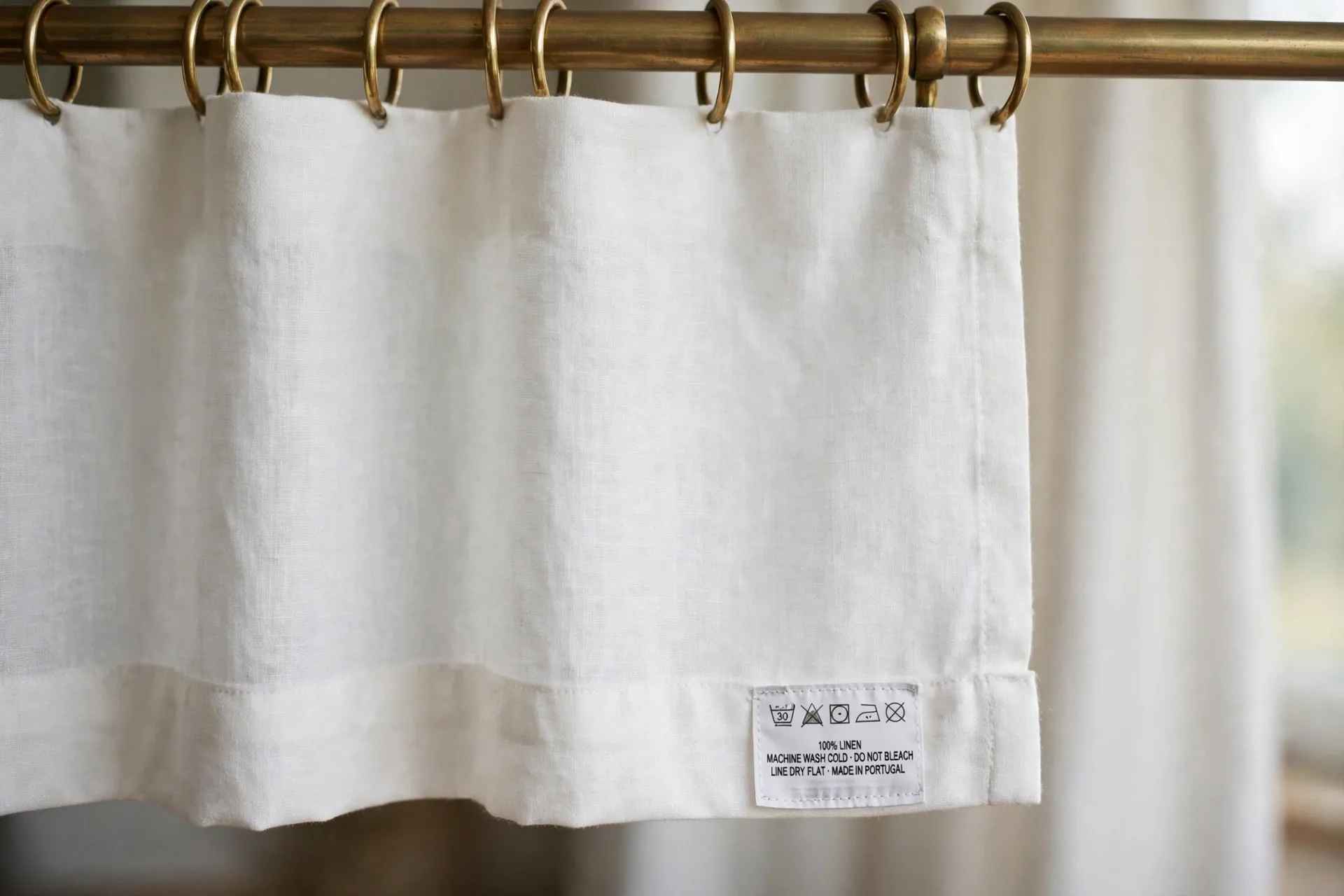
Washing by heading starts with one rule: take the hardware off before the fabric goes in the machine. Hooks, rings, and clips left on a panel snag the fabric, bend in the wash, and damage the machine, so remove every hook from a pinch pleat, every ring from a clip ring, and every clip from a clipped panel before washing. Eyelet rings cannot be removed, so eyelet panels need a gentler cycle and a wash bag where the label allows, because the metal rings can knock against the drum and chip.
Pencil pleat tape needs its cords checked before washing, because a cord pulled loose in the wash leaves one side of the panel ungathered and hard to restore. Tie the tape cords loosely at each end before washing, or tape them down, so they cannot work free. Goblet, box, and cartridge pleats need the stiffening and interlining checked against the label, and a decorative pleat panel often needs dry cleaning rather than a home wash.
The wash, dry, and iron symbols on the label follow the international care labeling standard, and those symbols are explained by GINETEX under that standard. If a heading's label says dry clean only, do not machine wash it to save a trip, because a pleat that loses its shape cannot be restored at home.
Heading mistakes that cost money
The most expensive heading mistake is buying a heading that needs hardware you do not own. A wave panel bought for a rod, or an eyelet panel bought for a track, cannot hang without new hardware, and the hardware change often costs more than the panel. Check the hardware first, then the heading, and treat any heading that needs a specialist track as a hardware decision, not just a fabric one.
The second mistake is ring size against rod diameter. An eyelet ring too tight for its rod catches and tears, while a ring far too loose for its rod slides unevenly and lets the panel droop between rings. Match ring internal diameter to rod diameter with a little clearance, and check both numbers before ordering. The third mistake is fullness: a heading bought with too little fabric for its pleat type looks flat and sparse, because a pinch pleat needs 2.5 to 3 times the width to pleat properly, and a wave panel needs its carrier spacing to form its wave at all.
The fourth mistake is a heavy lined panel on a light heading, which sags, grips, and wears the tape out. The fifth mistake is a rod-pocket panel bought for a sliding door, which will not slide. Each of these mistakes is avoidable by the three filters at the start of this guide: hardware, movement, and look, in that order.
Frequently asked questions about curtain header styles
Most header questions come down to hardware, movement, and look. Get those three filters right and the heading follows.
What is a curtain header?
A curtain header is the top edge of a curtain, shaped to fold, gather, or hang in a particular way. It decides how the fabric folds, what rod or track it needs, how easily it slides, and how formal or casual the room looks.
Which header style is best for beginners?
Pencil pleat is the easiest heading for beginners, because it gathers on a tape with adjustable cords, hangs on a rod with rings or a standard track, and adapts to a slightly wider or narrower window than planned.
Do eyelet curtains need a special rod?
Eyelet curtains need a rod, not a track, and the ring size must match the rod. The ring's internal diameter should be a little larger than the rod, so the rings glide without catching.
Can wave curtains hang on a normal rod?
No. Wave curtains need a specialist wave track with carriers spaced evenly, and they cannot hang on a rod or a standard track, so treat wave as a hardware decision, not just a fabric one.
Which heading slides easiest for a sliding door?
Wave and eyelet slide easiest, because wave runs on its specialist track with even carriers and eyelet rings glide along a rod with almost no friction. Rod pocket and tab top grip their rods and suit panels that stay mostly in place, not doors that open daily.
Which heading is best for blackout curtains?
Pinch pleat suits blackout curtains well, because its stiffened pleats carry a lined panel's weight and hold a tailored shape. Eyelet also suits blackout curtains when paired with a blackout blind or shade behind it, because of the top light gap. For the full blackout job, see Best Blackout Curtains.
How much fabric does each heading need?
As a guide, eyelet takes about 1.75 to 2.25 times the rod width, with 2 times as the safe center, pencil pleat takes about two to two and a half times, pinch pleat takes 2.5 to 3 times, wave takes 80 to 120 percent of the track width, which is a percentage rather than a multiple, rod pocket takes 2 to 3 times, and tab top takes 1.5 to 2 times.
Can I change a curtain's header style later?
Changing a heading means remaking the top of the curtain, which is a sewing job rather than a quick fix. Pencil pleat tape can be regathered to adjust fullness, and clip rings can rescue a flat panel without sewing, but turning a rod-pocket panel into a pinch pleat panel needs a maker.
Which heading is best for sheers?
Wave and eyelet suit sheers best, because their even, flat folds show sheer fabric at its best and let light through evenly. For sheer fabric advice, see Best Sheer Curtains.
Do headers affect how a curtain washes?
Yes. Remove every hook, ring, and clip before washing, tie pencil pleat tape cords loosely so they cannot work free, and wash eyelet panels gently because the rings cannot be removed. A decorative pleat panel with stiffening or interlining often needs dry cleaning rather than a home wash, so check the label before buying.
For other curtain types, see Best Window Curtains.
This guide is research-based curation: we compared maker specifications, published reviews, and current prices. Read how we choose.