 Best
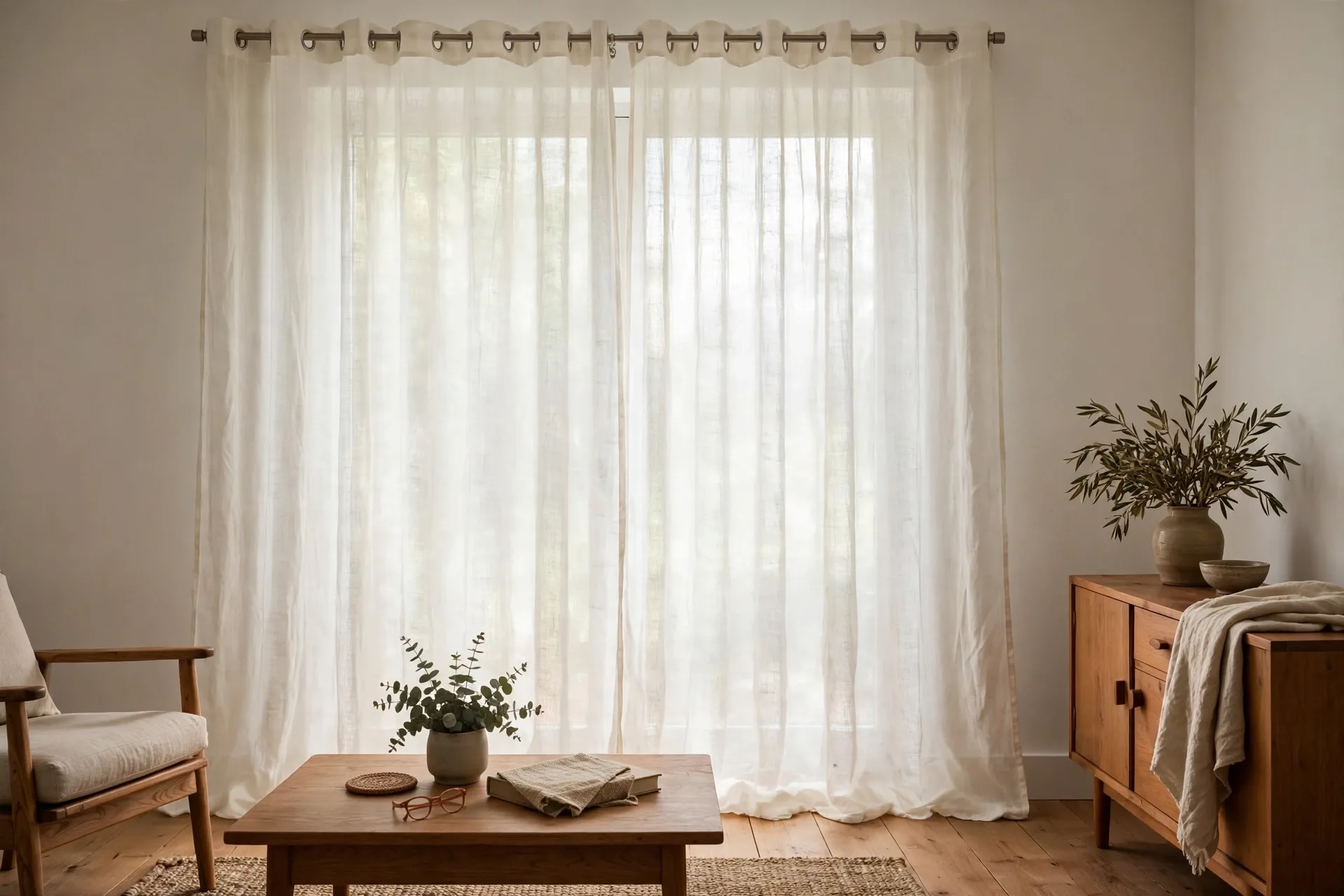
Best Voile Curtains
Voile softens daylight without shutting it out, but it needs generous fullness and a closing layer at night. This guide sorts the fabric, the fit, and the care.
The best voile curtains are light, smooth, and generously full, so they soften daylight into a gentle glow, give daytime privacy from the street, and drape in soft folds instead of hanging flat. Voile is the sheer that suits a bright room best, as long as you plan for night privacy with a second layer.
Voile looks simple, but it fails when it is bought too flat, hung on the wrong rod, or trusted alone at night. This guide sorts the fabric, the fit, and the care.
Voile curtain picks by job
The picks below are named by voile type rather than by maker, because the weave and the weight decide the light, and the maker varies by listing. No pick names a size here, because sizes vary by listing and must be confirmed on the listing before you order. Check the fiber, the finished width and length, the header, and the care label on the listing for the panel you choose.
As an Amazon Associate, we earn from qualifying purchases.
| Pick | Type | Light job | Best for |
|---|---|---|---|
| 1 | Plain white polyester voile panels | Sheer | A bright living room that needs soft daylight and daytime privacy |
| 2 | Linen-look voile panels | Sheer | A living room that needs texture with its soft light |
| 3 | Crushed voile panels | Sheer | A room that needs gentle texture without a pattern |
| 4 | Embroidered voile panels | Sheer | A bedroom or dining room that needs quiet detail in the sheer layer |
| 5 | Colored voile panels | Sheer | A plain room that needs a soft tint of color in daylight |
| 6 | Short voile cafe panels | Sheer, short length | A kitchen window that needs privacy at eye level with light above |
1. Plain white polyester voile panels: best for a bright living room that needs soft daylight and daytime privacy
Best for: A bright living room where the job is softening glare and screening the street by day, without darkening the room.
Key features: Smooth plain-weave polyester voile, light airy fall, plain white or ivory, easy drape.
Pros: Softens harsh sun while keeping the room bright, gives daytime privacy from the street, washes easily and dries fast.
Cons: Little privacy at night once indoor lights are on, white shows marks sooner than a tinted voile, a flat panel looks thin, so fullness matters.
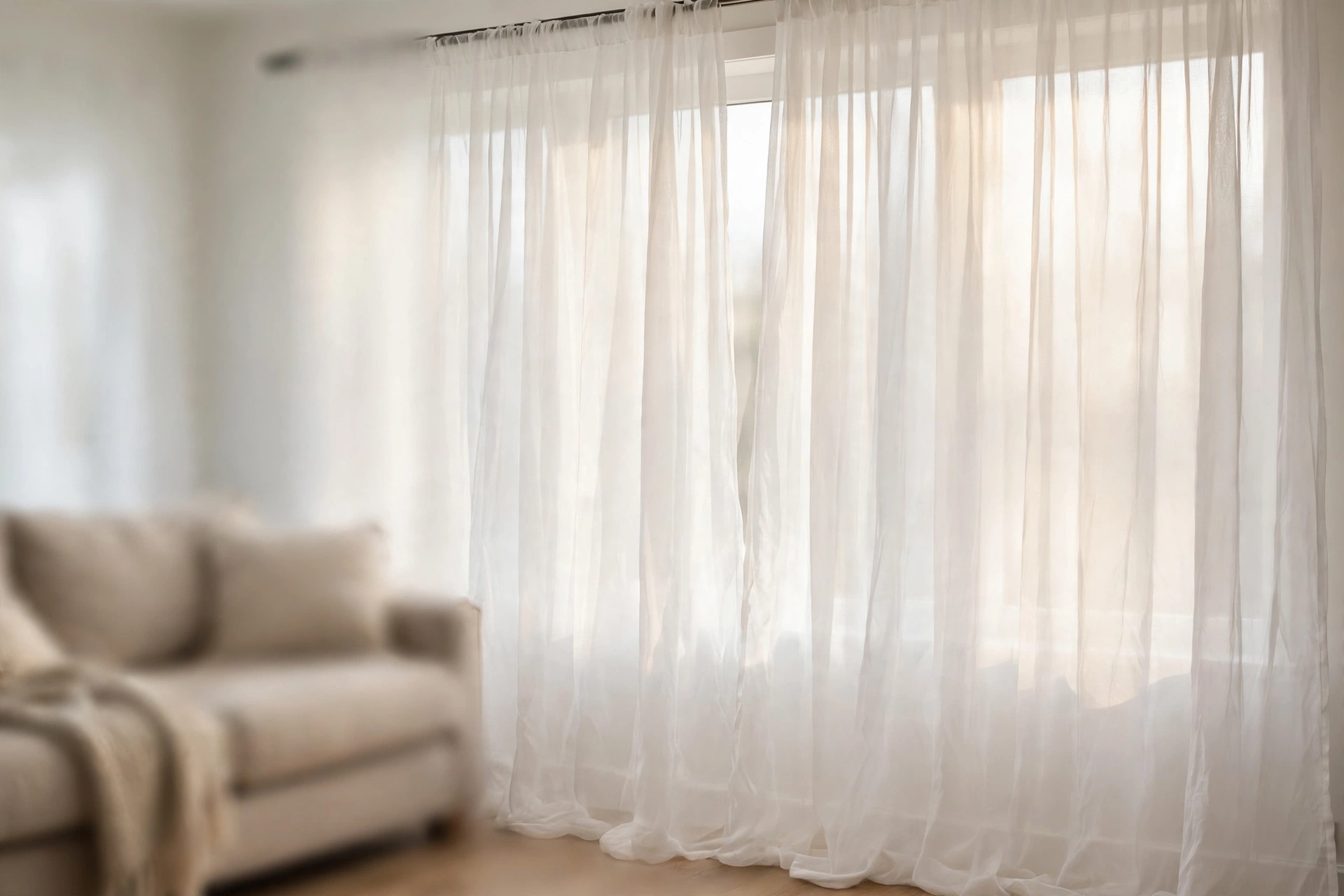
2. Linen-look voile panels: best for a living room that needs texture with its soft light
Best for: A living room with wood, plain walls, or natural textures, where a plain voile would look too smooth and flat.
Key features: Polyester voile with a linen-like slub, soft textured fall, light-filtering face, plain neutral tones.
Pros: Adds texture without a pattern, keeps the light soft and the room bright, easier care than real linen.
Cons: Texture can catch dust sooner than a smooth voile, check the weave on a swatch, because a coarse linen-look can read as rough beside smooth furniture.
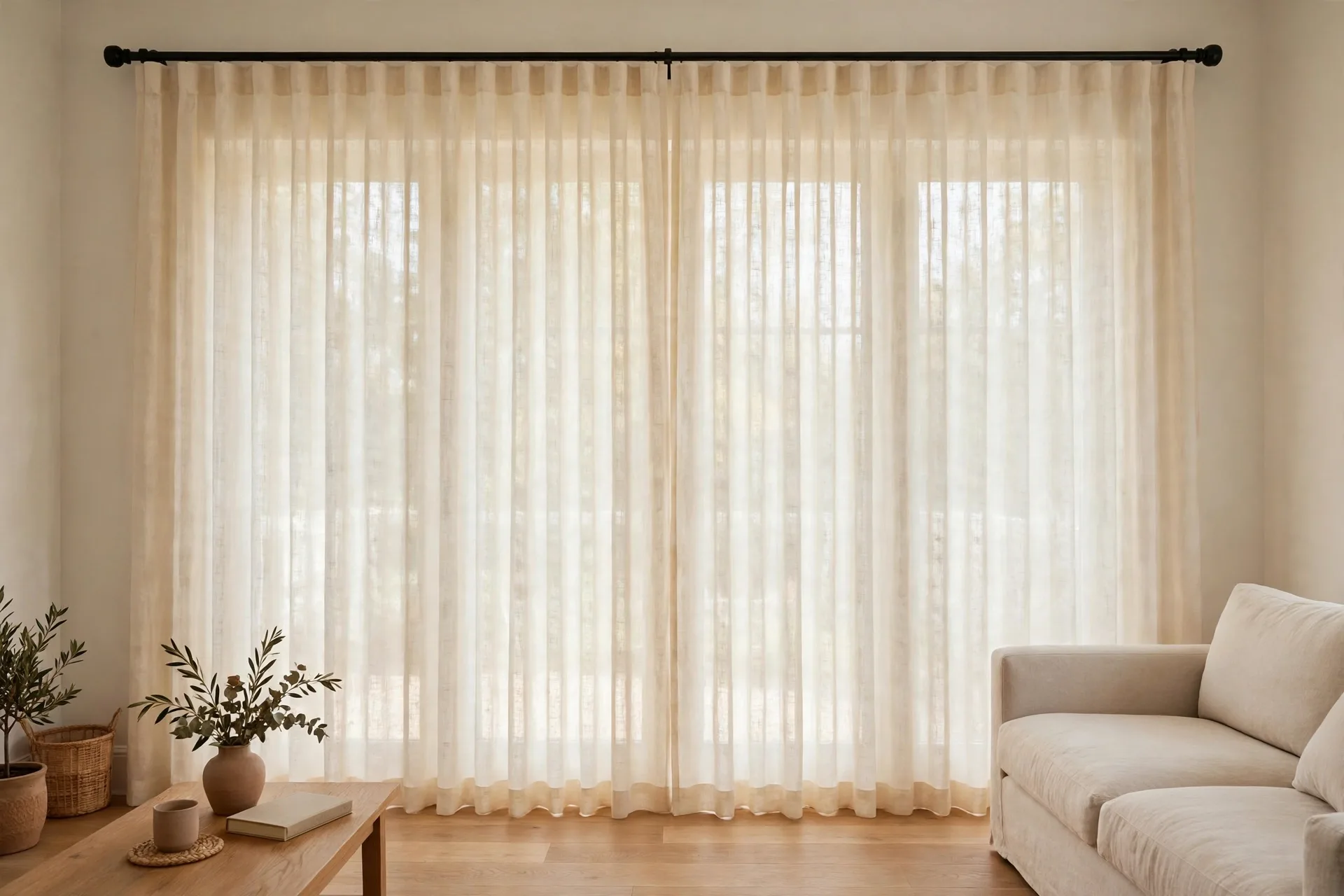
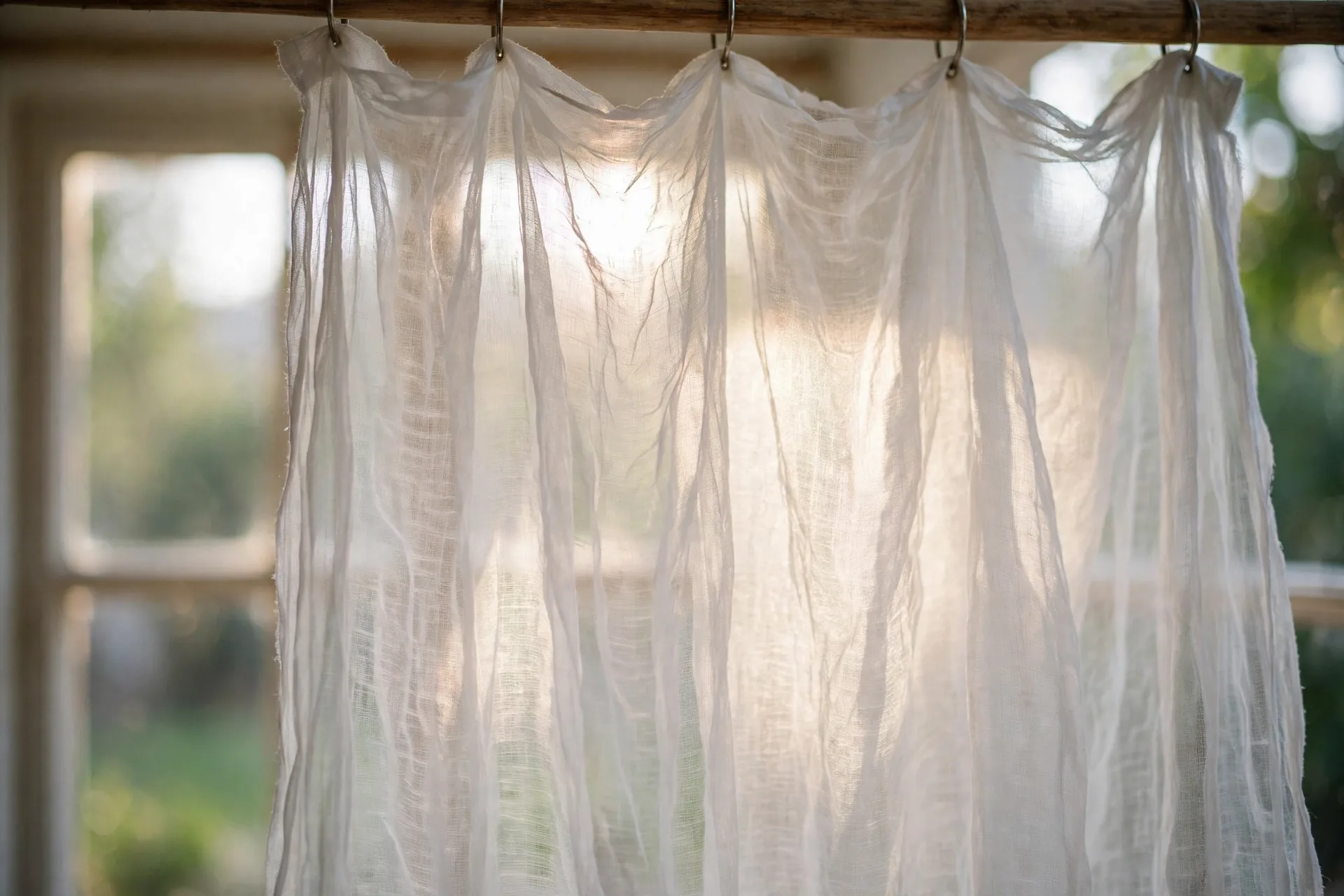
3. Crushed voile panels: best for a room that needs gentle texture without a pattern
Best for: A bedroom or living room where a plain voile feels too bare, but a print would fight the room.
Key features: Crinkled semi-sheer voile texture, sheer light-filtering fall, soft drape, 100% polyester voile.
Pros: Texture hides small creases better than a smooth voile, adds interest without color or pattern, suits relaxed and modern rooms.
Cons: Crushed texture can look untidy if the panel is hung flat, check that the texture survives washing on the listing before ordering.
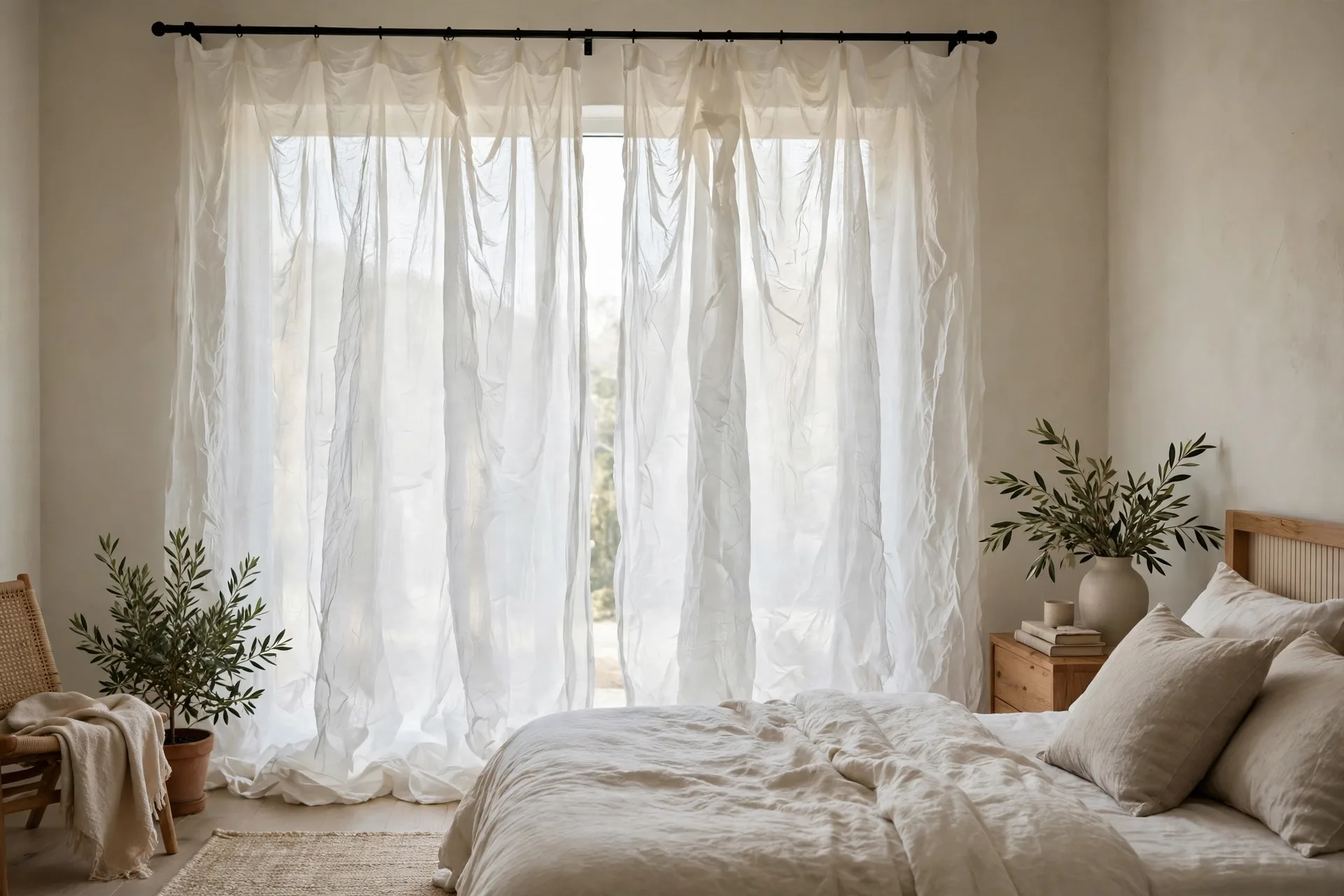
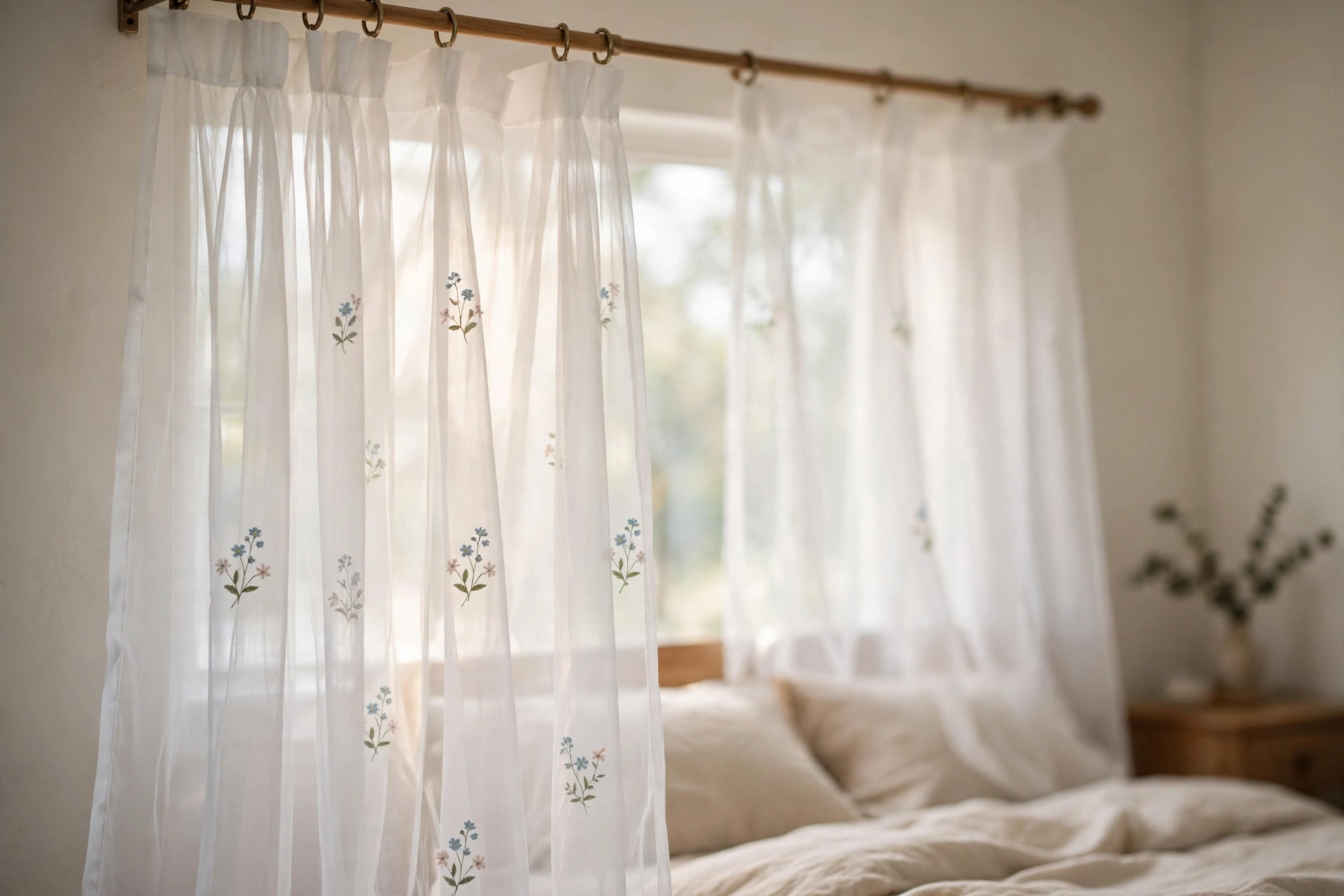
4. Embroidered voile panels: best for a bedroom or dining room that needs quiet detail in the sheer layer
Best for: A bedroom or dining room where the sheer layer is the main decoration and needs a little craft without heaviness.
Key features: Voile face with embroidered detail, sheer light-filtering fall, soft drape, plain ground with a small motif.
Pros: Embroidery reads as detail in daylight and as a soft shadow at dusk, keeps the room light while adding character, suits traditional and relaxed rooms.
Cons: Embroidery can snag if it catches on a hook or a rough surface, hand wash or mesh-bag wash only, a large motif can dominate a small window.
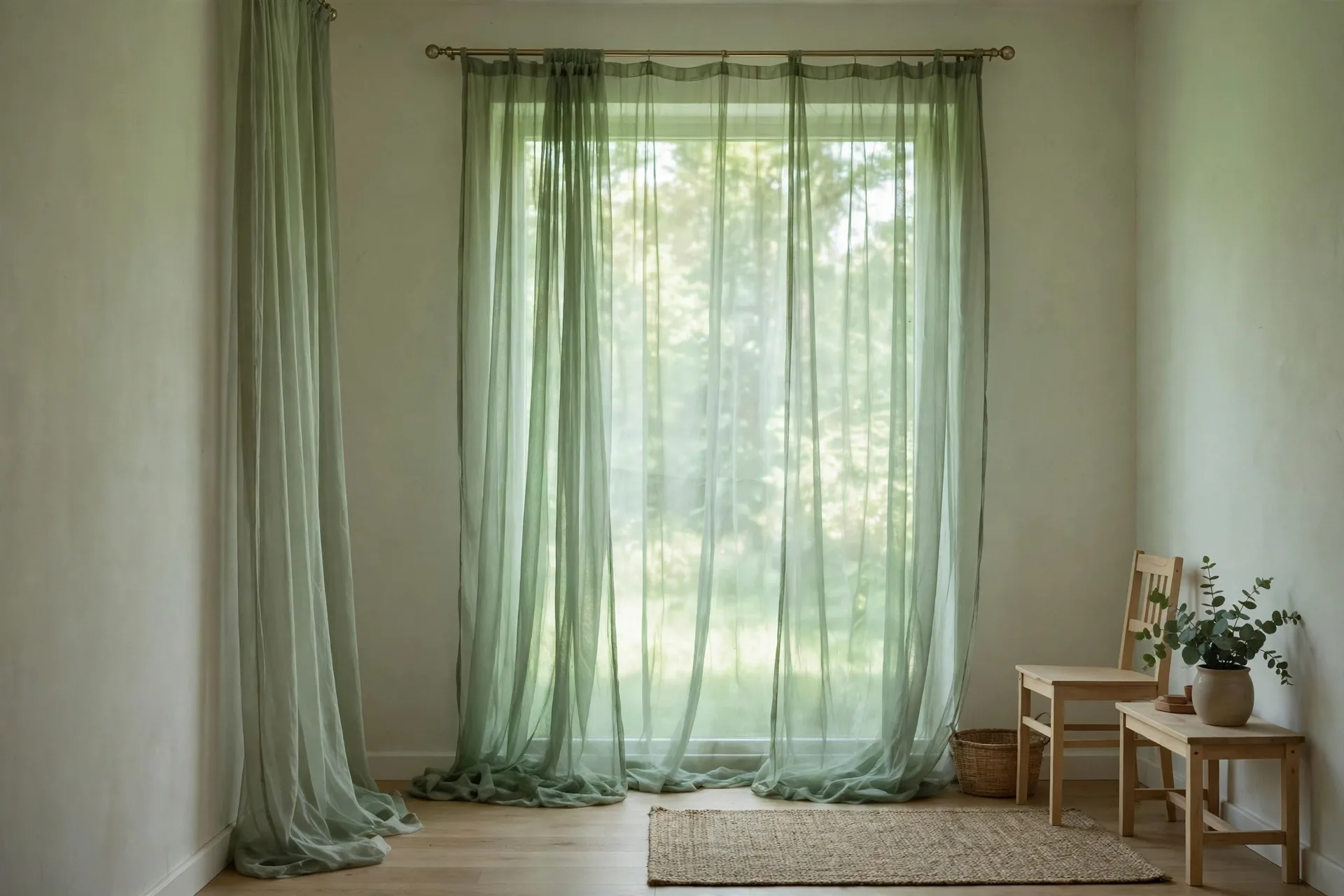
5. Colored voile panels: best for a plain room that needs a soft tint of color in daylight
Best for: A plain room with plain walls and plain furniture, where white voile would disappear and the window needs a soft tint.
Key features: Voile in a soft tint, such as pale gray, blush, or sage, sheer light-filtering fall, smooth drape.
Pros: Tints daylight gently without darkening the room, adds color without a heavy curtain, suits rooms that feel cold in white alone.
Cons: Darker tints fade faster in strong sun, so pick a pale tint for a south-facing window, color must be checked in daylight, because a screen shifts pale tints.
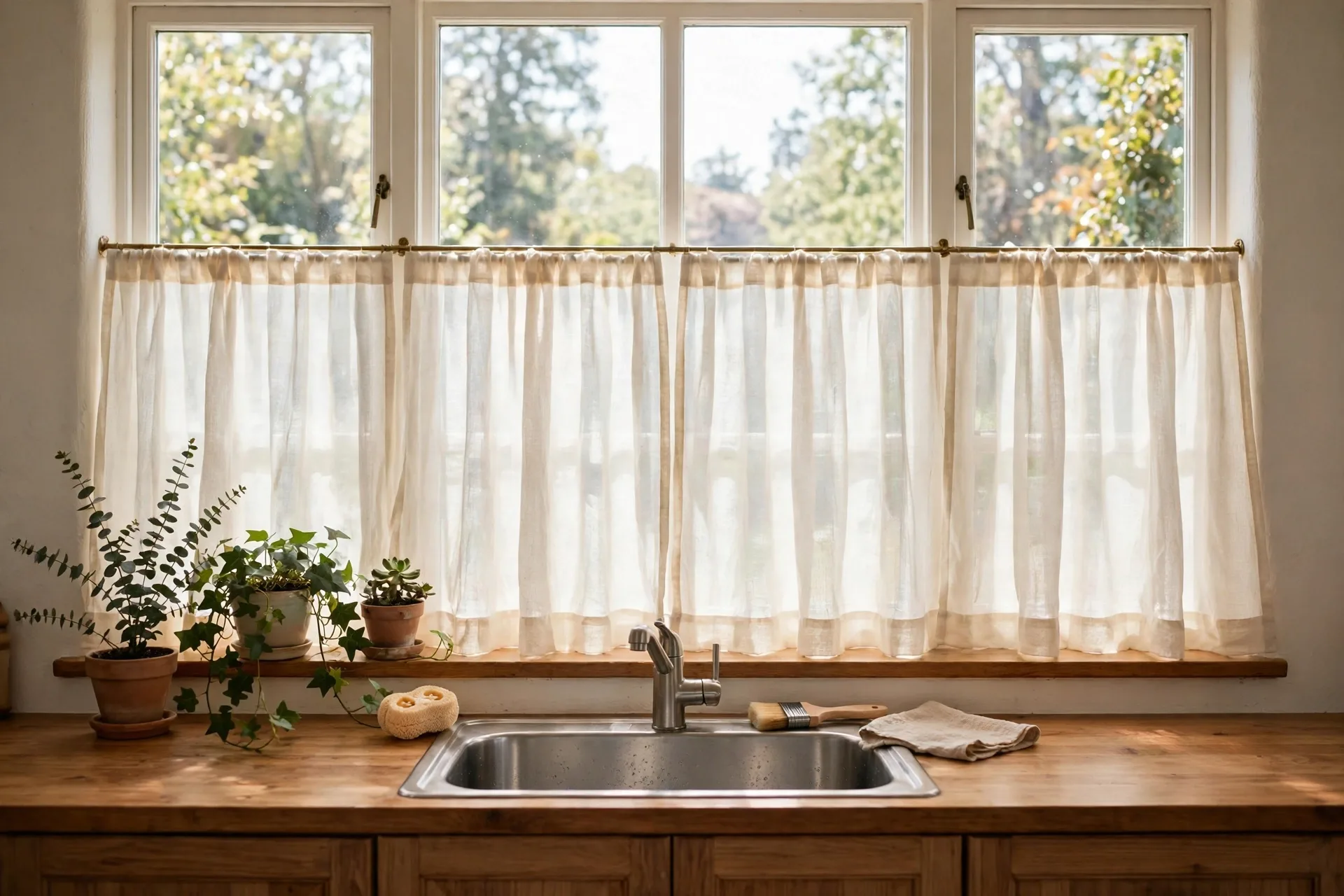
6. Short voile cafe panels: best for a kitchen window that needs privacy at eye level with light above
Best for: A kitchen window where the job is privacy at eye level with daylight above, and the fabric must wash often.
Key features: Short 36-inch cafe length ending at or just below the sill, light-filtering tier panels, light Natural tone, privacy at eye level.
Pros: Keeps daylight above the panels, leaves the sill and the sink area free, light tone suits a kitchen.
Cons: Limited privacy at night, no darkness alone, short panels suit casual rooms better than formal ones, check the care label on the listing, as washing guidance is not stated on the panel page.
What voile is, in plain words
Voile is a light, sheer, plain-weave fabric with a smooth face and a soft drape, made from polyester, cotton, or a blend, and sometimes from silk or linen. The weave is fine and even, so voile lets daylight through in a soft, scattered glow instead of a hard beam, and it screens the view from outside by day without shutting the room in.
Voile is not the same as net, chiffon, or organza, though all four are sheers. Net is knitted, often with a coarse yarn and a visible mesh, and it reads as traditional.
Chiffon is softer and more fluid than voile, with a looser drape. Organza is stiffer and shinier than voile, holds its shape, and reads as more formal. Voile sits between them: smoother than net, firmer than chiffon, and softer than organza.
Net curtains have had a recent resurgence as a traditional Victorian style, and they are easier to clean than voile, which is one reason they still suit smaller traditional windows.
Most ready-made voile is polyester, because polyester voile holds its shape, resists wrinkles, washes easily, and holds color in sun better than cotton voile. Cotton voile feels softer and more natural, but it can shrink and crease more, and it needs gentler washing. A linen-look voile is usually polyester with a linen texture woven in, so it gives the look of linen with the care of polyester. Check the fiber on the listing, because the fiber decides the wash, the creasing, and the fading. For the full sheer job, see Best Sheer Curtains.
Voile fullness: how much fabric makes it look right
Voile needs more fabric than a heavy curtain, because a sheer that is stretched flat looks thin, cheap, and bare. Fullness is the ratio of fabric width to rod width, and voile needs a high ratio to form deep, soft folds. A good rule is two to two and a half times the rod width in total fabric, and two and a half to three times for a fuller, more luxurious look on a wide window.
The header changes the fullness you need.
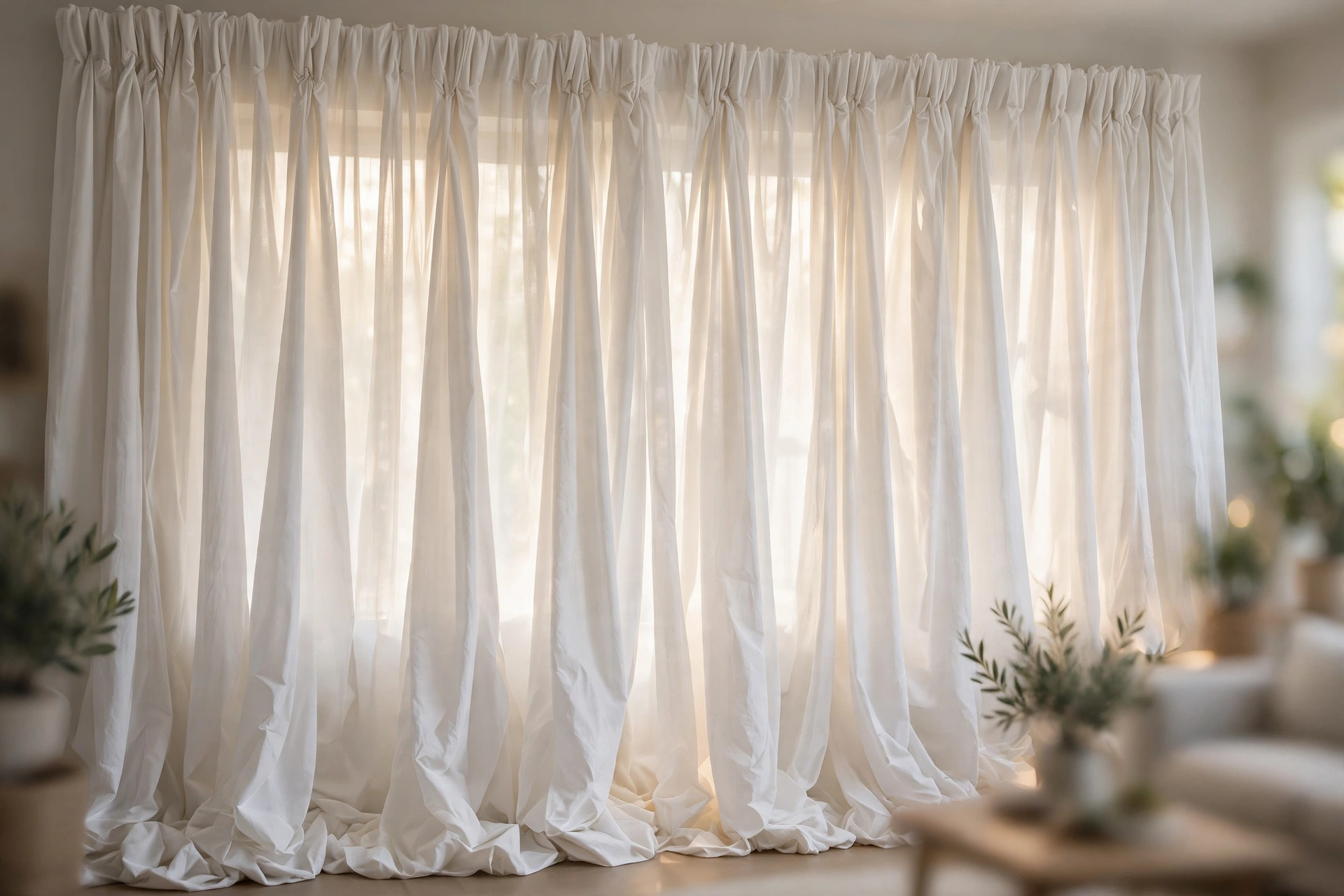
A rod pocket or a pencil pleat header gathers the fabric into folds, so it needs the higher end of the range to look full. A grommet header forms wider, flatter folds, so it can work at the lower end, but it still needs more than a one-to-one width. A back tab header sits between the two.
A quick check before you order is to hold the panel width against the rod width on paper: add the widths of all the panels you plan to buy, divide by the rod width, and check the result is at least two. If it is less, add another panel. A voile that is too flat cannot be fixed by hanging it differently, while a voile that is a little too full can be gathered tighter.
Allow for finished size as well: ready-made panels can vary by roughly 1 to 2 inches from the stated size, and standard sizes fit average windows poorly, which sheers show more than heavier fabrics. Voile can also pick up fold creases and slight distortions in storage, which made-to-order panels avoid, so check the finished width on the listing and measure the panel when it arrives.
Density is a buying check too: a heavier voile with a tighter weave filters more light and gives more daytime privacy than a very fine open weave, while a finer weave suits layering under drapes, where maximum diffusion is the job. For panel counts and widths, see Curtain Sizes.
Voile colors and prints that keep daylight soft
White and ivory are the safest voile colors, because they tint daylight the least and suit every wall color. White voile keeps a room bright and reads as clean, while ivory voile warms daylight slightly and suits cream walls and wood furniture. A white voile in a north-facing room can look cool and flat, so an ivory or a warm white suits a cool room better. A pale gray voile cools a warm room and suits gray walls, while a blush or sage tint adds a soft color without darkening the room.
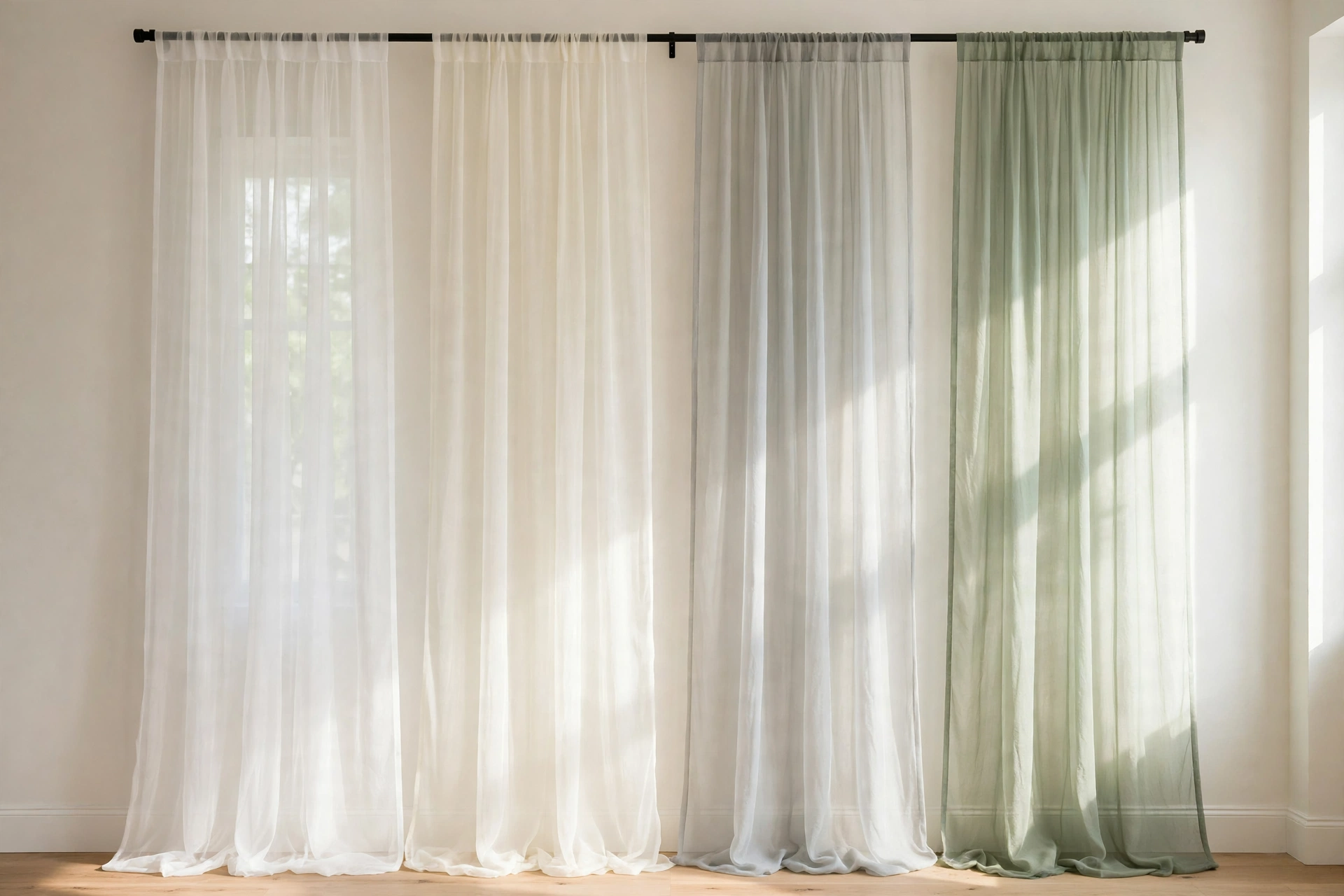
Prints on voile need a light hand, because a strong print on a sheer fabric reads as a shadow when the sun is behind it. A small floral, a fine stripe, or a quiet geometric print works, because the motif shows as a soft detail in daylight. A large, bold print fights the sheer quality and can look heavy from outside, where the print shows as a dark shape.
Crushed voile is usually polyester or a polyester blend, and the crushed effect comes from crumpling the fabric and setting it, which diffuses light while giving some privacy.
Voile comes in more forms than polyester and cotton: silk, linen, organza, chiffon, and georgette voiles all exist, with patterns that run from jacquards and embroidered cotton to dotted Swiss and metallic threads, and the drape changes with the material, since some fall gracefully, others form stiff pleats, and some are billowy.
Voile also acts as a sunscreen for the room: it slows fading of furnishings and upholstery, and west- and south-facing windows take a large UV dose, so choose light colors at those windows and the curtains themselves fade less.
Voile by room: living room, bedroom, and kitchen
A living room suits plain or linen-look voile best, because the living room job is soft daylight, daytime privacy, and a bright, open feel together. Hang voile on an inner track or rod close to the glass, so it screens the street by day, and pair it with a closing panel on a second rod or track for evening privacy. A living room with a television suits voile well, because voile cuts glare on a screen without darkening the room. For living room direction, see Best Curtains for Living Room.
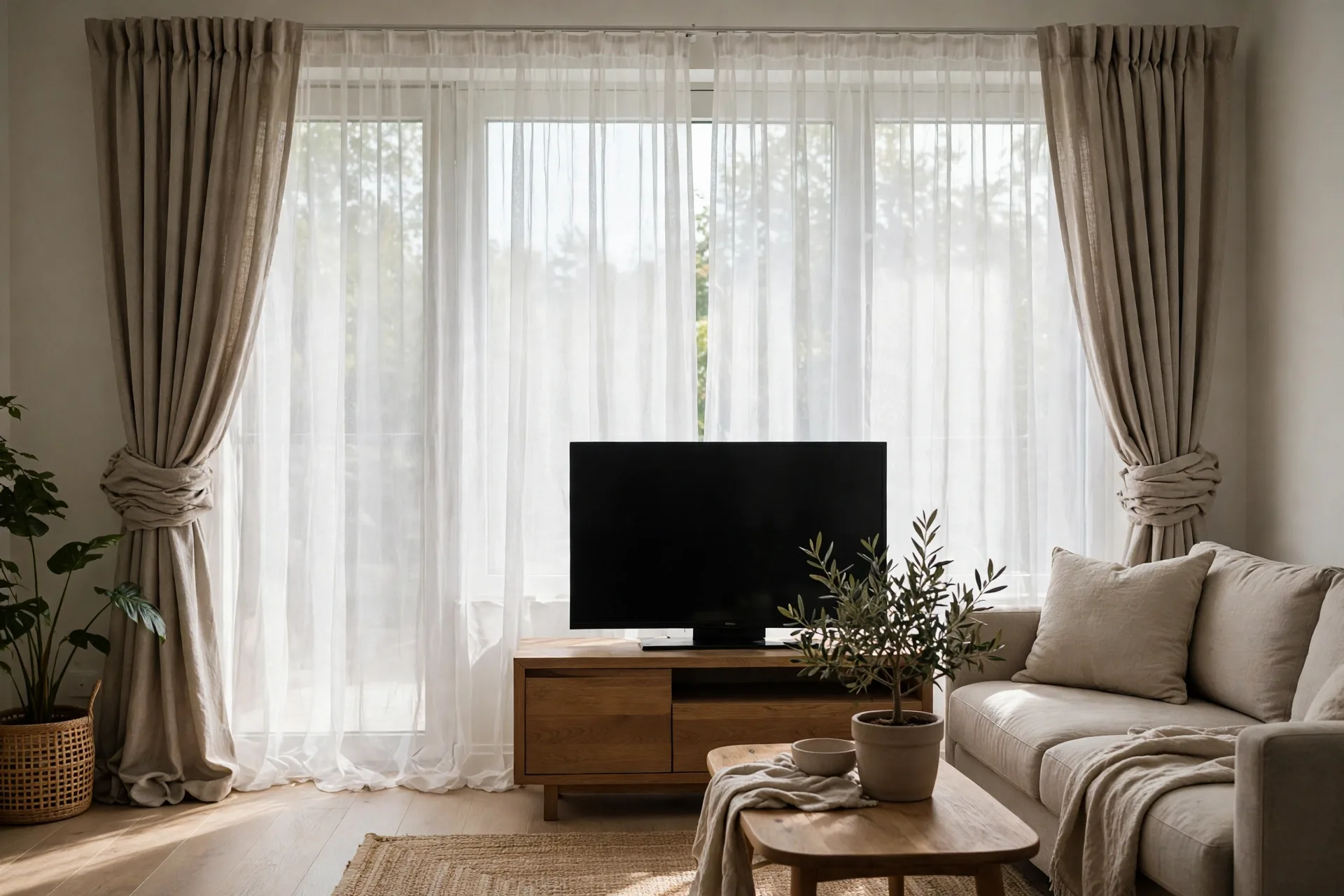
A bedroom suits voile only as a day layer, never alone, because sleep needs darkness and voile gives none. Hang voile behind a blackout or room-darkening panel, so the voile softens morning light when the heavy panel is open, and the heavy panel closes at night. An embroidered voile suits a bedroom where the sheer layer shows during the day, while a plain voile suits a bedroom where the heavy panel carries the color. For bedroom sleep jobs, see Best Curtains for Bedroom.
A kitchen suits short voile cafe panels, because steam, splashes, and cooking smells reach the fabric, and a short panel washes often and leaves the sill free. A floor-length voile suits a kitchen poorly, because it hangs near the stove and the sink and picks up marks fast. A bathroom suits voile only where the room dries well, because a damp bathroom marks pale voile fast, and a short panel suits a bathroom window better than a floor-length one.
A home office is another room that suits voile: it scatters direct sunlight and kills harsh glare on screens and floors while keeping the room bright, which is the same job voile does for a television in the living room.
Voile also suits door windows and sliding doors: door sidelight panels and French door panels soften glass entry doors, French doors, and hallway windows, while custom-width sheer panels run floor-to-ceiling on sliding doors and soften the hard glass line.
Beyond windows, voile dresses a bed canopy, a window scarf or swag, and a room divider, and several panels hung together give depth where one panel would look thin.
The night-privacy limit of voile
Voile gives daytime privacy, not night privacy, and the difference comes from light. By day, the outside is brighter than the inside, so the voile catches daylight and screens the view in. At night, the inside is brighter than the outside, so the light reverses: indoor lights shine through the voile, and silhouettes show clearly from the street.
Test the limit before you rely on voile alone. Hang the voile, turn on the room lights at night, step outside, and look back at the window.
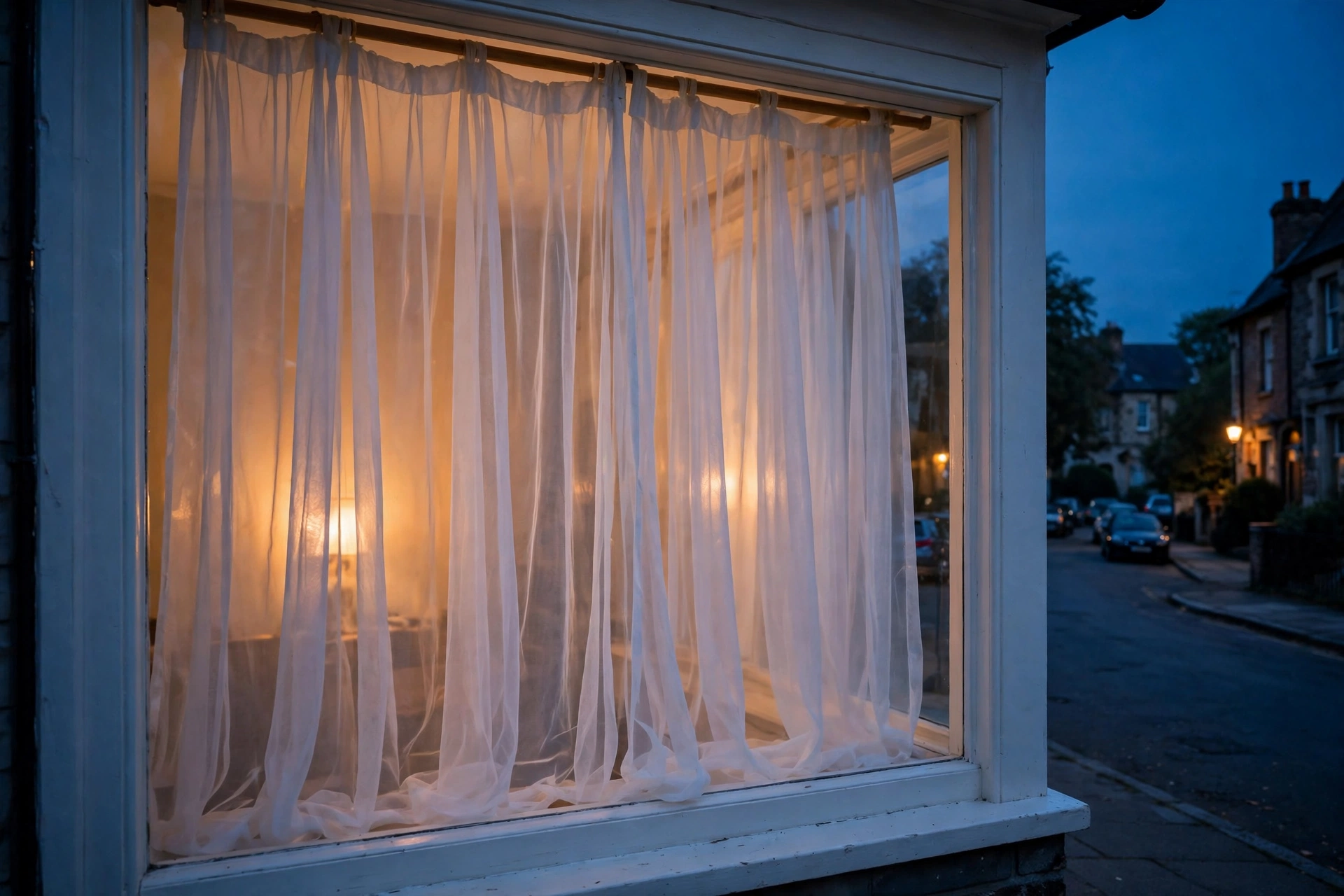
If you can see shapes, movement, or the layout of the room, the voile is not giving night privacy. That test matters most for street-facing windows, ground-floor rooms, and bedrooms, where the view in is closest.
The fix is a second layer, not a thicker voile. A blackout, room-darkening, or lined panel on a second rod or track closes at night and opens by day, so the voile does the day job and the heavy panel does the night job. A blind behind the voile does the same job in a smaller space.
Layering voile with a closing panel
A voile layer earns its place by the way it falls: gather about twice the rod width into soft, even folds, because voile hung flat looks thin and lets the room show straight through. The voile stays on the inner rod, nearest the glass, and stays closed through the day, softening the light and shielding the room. The closing panel waits on the outer rod, stacked clear of the glass by day, and draws only after dark, when the sheer alone turns see-through.
Two rods, one for each layer, keep the job simple on most windows: the voile slides on its own rod and the closing panel on the other.
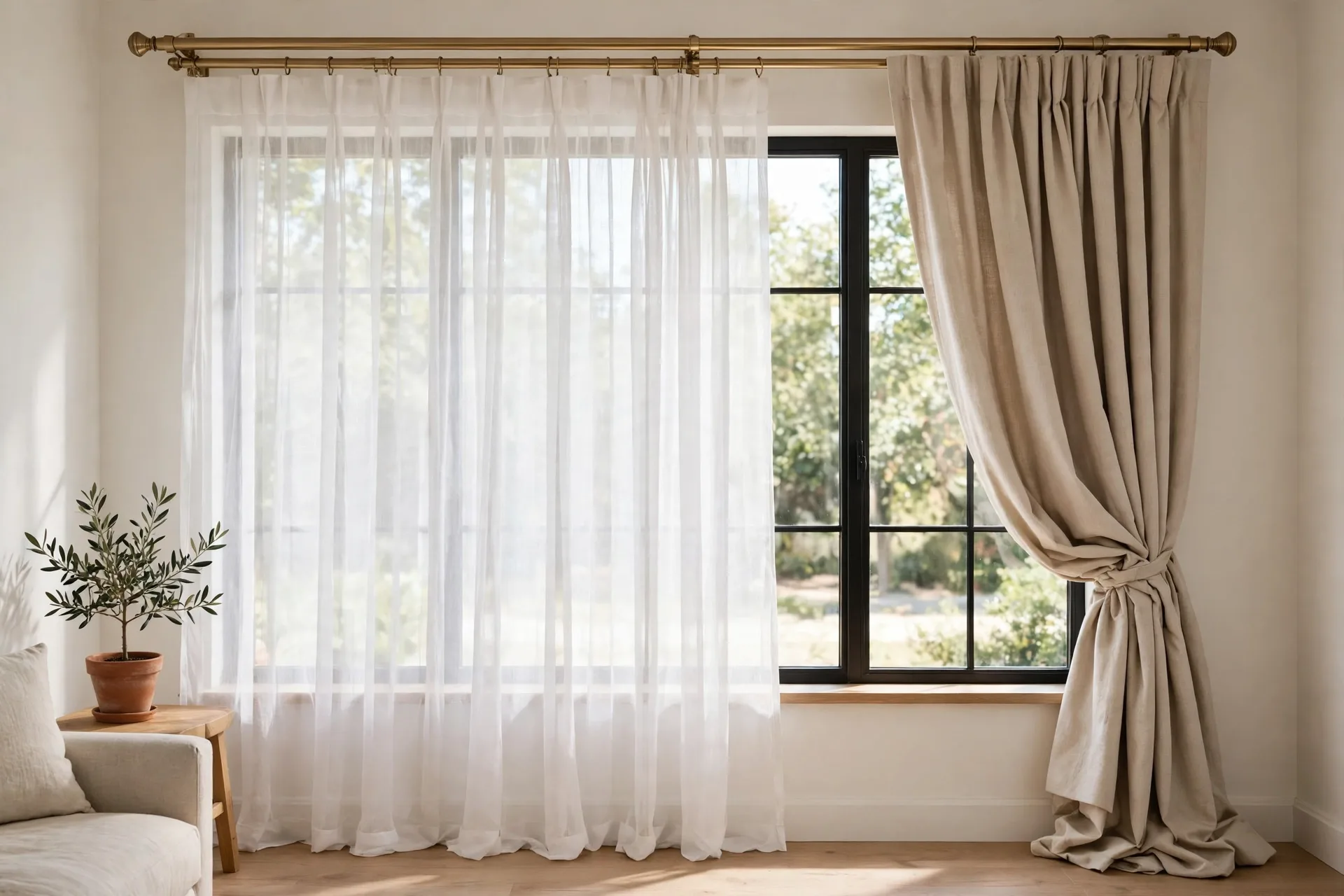
Wide windows and sliding doors suit a double track better than two rods: the carriers run in straight lanes, each layer stacks to its own side, and nothing tangles when the panels move. Leave a clear gap between the two tracks, because a full voile drape needs room to gather — pressed flat against the closing panel, it loses the soft fall that makes it worth hanging. A single rod with clip rings can carry both layers only where the rings are large and both layers are light; beside a heavy closing panel, a double rod is the safer choice.
Washing is the quiet constraint on any voile layer: the sheer comes down for a mesh-bag wash far more often than the closing panel, so hang it where it lifts off on its own — clip rings, or a separate inner rod — instead of threading it behind a heavy panel on a shared rod. Two single rods work, as does a track for the voile with a rod for the closing layer, and a bedroom can even reverse the order, blackout at the glass with the voile in front. In cold months, pair crushed voile with thermal liners or heavier drapes, because the sheer alone holds little warmth.
Let the room choose the closing layer, not the voile. Bedrooms need blackout or room-darkening for sleep, living rooms need a lined or light-filtering panel that keeps the daylight, and a street-facing window needs a panel that meets in the middle with no gap. One pattern per window is enough: plain voile behind a patterned panel, or patterned voile in front of a plain one — two patterns on one window fight each other. For the full darkness job, see Best Blackout Curtains.
Voile headers, rods, and hanging
Voile is light, so it suits light hardware, but the header still decides how it gathers and slides. A rod pocket header gathers voile into soft folds and suits a stationary panel that rarely opens, because the fabric bunches on the rod and slides stiffly. A pencil pleat header gathers voile evenly and suits a panel that opens and closes, because the pleats hold their shape. A grommet header forms wide, even folds and slides easily, and it suits a modern room, but it needs a rod that fits the grommet size. A back tab header gives a clean, tailored look and slides well, and it suits a voile that opens daily.
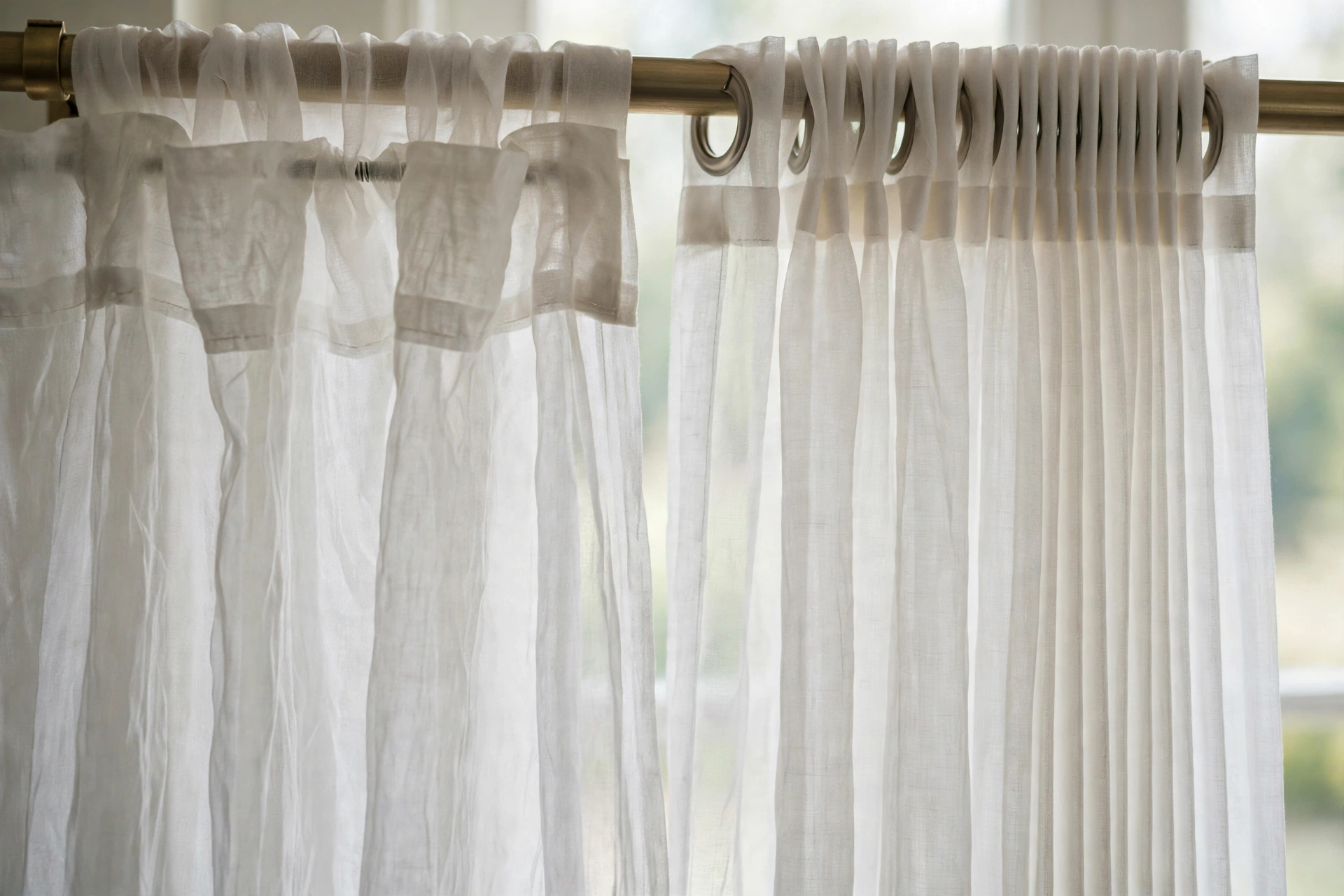
A weighted hem helps voile drop straight instead of floating: a lead-weighted hem, a tiny chain sewn into the bottom seam, or a deep double-folded bottom hem all add the weight that keeps the panel hanging true.
Voile can also puddle slightly on the floor for a romantic look, with about 3 inches of extra length, and panels sweep to the side with tiebacks or holdbacks. A puddle finish gathers dust and suits low-traffic rooms, so keep it out of busy walkways.
Clip rings are another hanging option for voile, and they suit lightweight sheer well, because the rings grip the top edge without a sewn header.
A slim rod suits voile, because the fabric is light and does not need a heavy rod, but the rod must still be straight and well fixed, because a sagging rod shows at once in a sheer panel. A track suits voile well, because the carriers hold the light fabric at regular points and the panel glides smoothly. Hang voile high and wide, so the panel covers the glass fully when closed and stacks clear of the glass when open. For hanging steps, see How to Hang Curtains.
Washing voile in a mesh bag and hanging it damp
Voile is delicate, so it needs a gentle wash, and the mesh bag is the habit that prevents most damage. Put each voile panel in a mesh laundry bag before it goes in the machine, so hooks, zips, and other items in the wash cannot snag the fine weave. Wash on a gentle or delicate cycle in cool water with a mild detergent, and never use bleach on voile, because bleach weakens the fibers and yellows white voile. Wash panels one at a time where you can, so they have room to move and do not tangle.
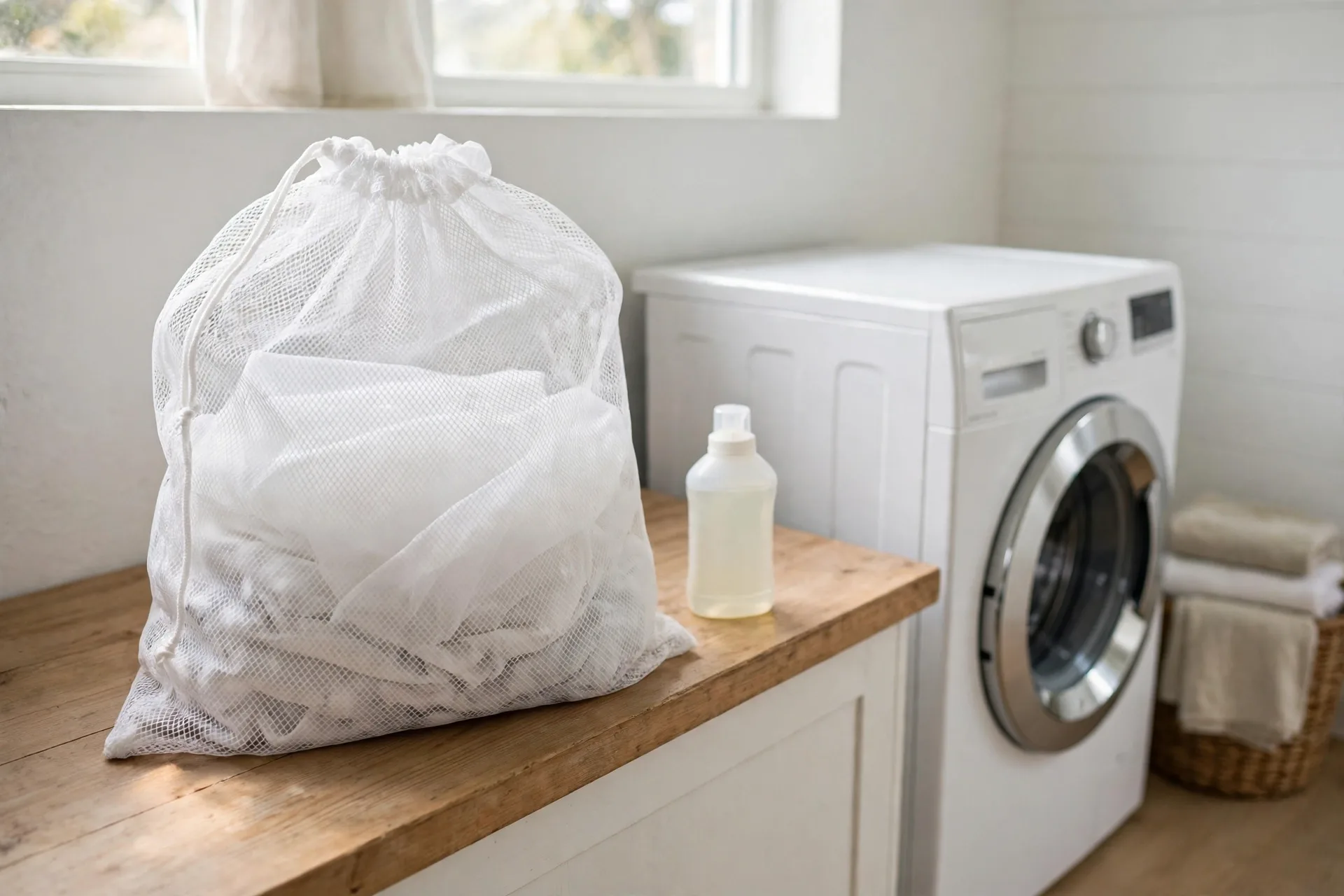
Do not wring voile, because wringing twists the fine weave and can leave permanent creases. Press water out gently, or let the machine spin on its lowest setting, then take the panel out while it is still damp. Hang the panel back at the window while it is still slightly damp, so the weight of the damp fabric pulls out creases as it dries in the warmth of the room.
Launder voile often rather than waiting until it looks dirty, because waiting can cause discoloration. Do not overload the machine, soak for about five minutes before starting, and tumble dry on air for a few minutes, then remove the panel while damp, hang it on a line, and straighten it so the fabric regains its shape. A cool iron takes out wrinkles and puckers along the seams, and dry cleaning may suit materials that shrink or wrinkle easily better than a machine wash.
If curtains are switched seasonally, clean them before storing, so they keep their appearance through the months off the rod.
Voile mistakes that leave a window flat or bare at night
The most common voile mistake is buying too little fabric, so the panel hangs flat, looks thin, and gives almost no daytime privacy. The second is trusting voile alone at night, then finding silhouettes show from the street once indoor lights are on. The third is washing voile loose in the machine, where it snags on hooks and zips and comes out with pulls that cannot be fixed.
Other mistakes follow from color and hanging: picking a dark tint for a south-facing window, where it fades fast; hanging voile on a sagging rod, where the uneven hem shows at once in a sheer fabric; and choosing a bold print for a small window, where the print dominates the room. A further mistake is hanging voile without a closing layer in a bedroom, where morning light wakes the room early and night privacy fails.
Keep voile away from sharp objects, pets, and children, because the fine weave snags easily, and pet-friendly weaves resist snags and clean more easily where pets brush past the window.
Frequently asked questions about voile curtains
Most voile questions come down to fullness, privacy, and washing.
What is the difference between voile and net curtains?
Voile is woven, with a fine, smooth, even weave that gives a soft drape and takes color and embroidery well. Net is knitted, often with a coarse yarn and a visible mesh, and it reads as more traditional. Voile is smoother and more robust than net, and it suits modern rooms better, while net suits traditional rooms and smaller windows.
Can you see through voile curtains at night?
Yes — once the indoor lights are on, the sheer stops shielding the room: anyone outside sees shapes moving against the lit glass. By day the balance runs the other way, with bright daylight outside keeping the room hidden. For darkness after dark, close a blackout, room-darkening, or lined panel over the voile at night.
How much fullness do voile curtains need?
Voile needs two to two and a half times the rod width in total fabric, and two and a half to three times for a fuller look on a wide window. A panel that only matches the rod width hangs flat and looks thin. Add the widths of all the panels you plan to buy, divide by the rod width, and check the result is at least two.
Are voile curtains easy to wash?
Voile is easy to wash if you wash it gently. Put each panel in a mesh laundry bag, wash on a gentle cycle in cool water with a mild detergent, and hang the panel back at the window while it is still slightly damp so creases fall out. Never use bleach, never wring voile, and hand wash embroidered voile. Silk voile needs dry cleaning.
Do voile curtains block light?
Voile curtains soften light; they do not block it. Voile scatters daylight, cuts glare, and keeps a room bright, but it will not darken a room for sleep or for a screen. For darkness, pair voile with a blackout or room-darkening layer, or choose a lined panel for the night job.
What color voile is best?
White and ivory suit most rooms, because they tint daylight least. Ivory warms a cool room, white keeps a bright room bright, and a pale gray, blush, or sage tint adds soft color without darkening the room. Check a swatch in daylight before ordering, because a screen shifts pale tints, and pick a pale tint for a south-facing window, where darker tints fade fast.
This guide is research-based curation: we compared maker specifications, published reviews, and current prices. Read how we choose.