 Best
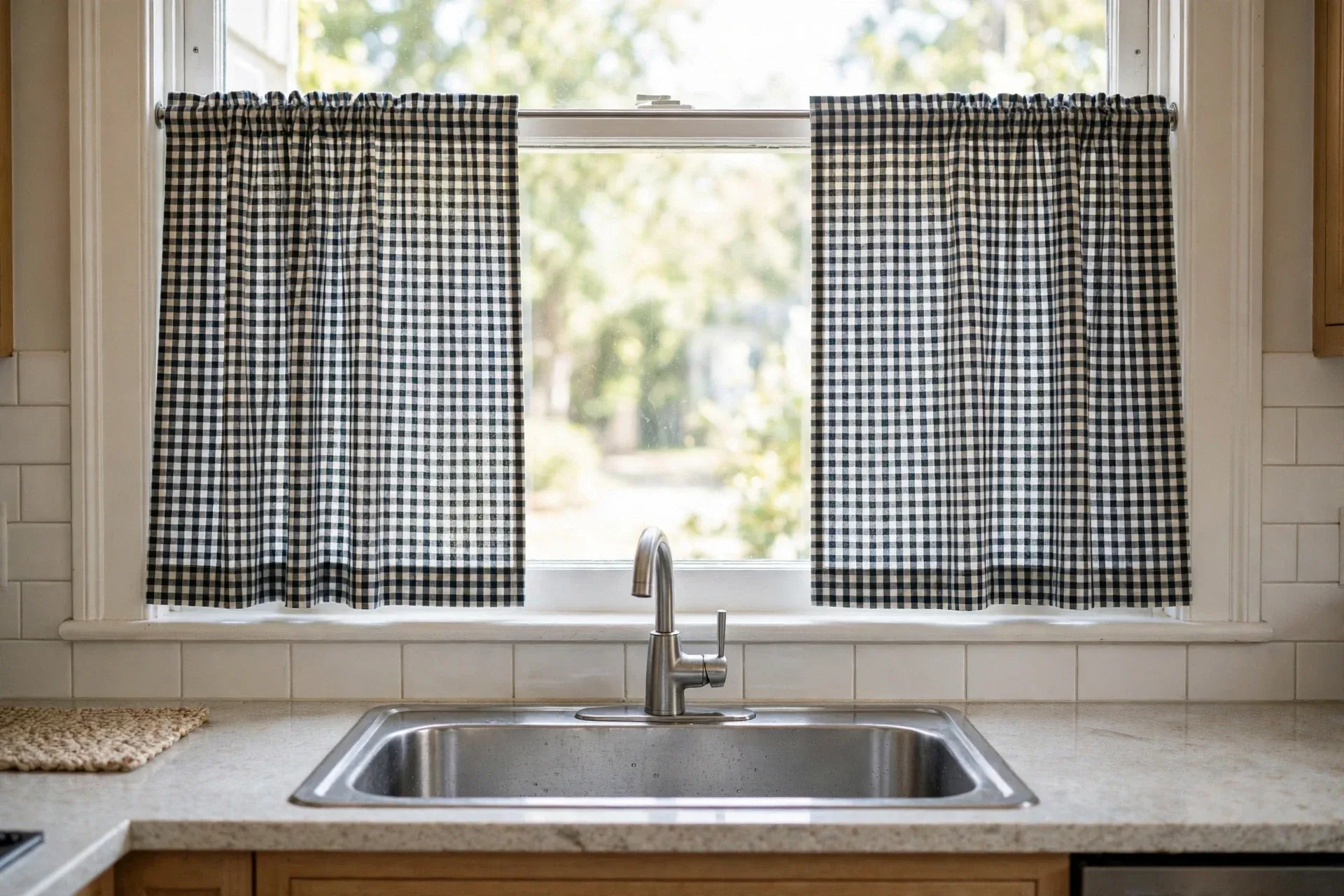
Best Kitchen Curtains
A kitchen window needs short, washable cover that gives privacy without darkening the room. This guide compares cafe curtains, Roman shades, and valances by window job.
The best kitchen curtains are short, washable panels that cover the lower part of the window, keep fabric clear of the sink and the counter, and let daylight in while screening the view at eye level. For most kitchens that means cafe curtains first, with a Roman shade as the neater choice for a large window and a valance as a finishing touch where privacy is already covered. Long, heavy, or hard to wash panels fail in a kitchen, because a kitchen window lives next to water, steam, grease, and daily use.
The sink window gets splashed, the stove window collects a thin film from cooking, and steam rises past the glass many times a day.
Shortlist: kitchen picks by job
The best kitchen pick depends on the window job: cafe curtains for sink windows, short panels for small kitchens, and a Roman shade for a large window. The picks below name the product, with the job each one fits best.
As an Amazon Associate, we earn from qualifying purchases.
| Pick | Type | Lining | Best for |
|---|---|---|---|
| 1 | Pitalk Linen Cafe Tiers | Unlined | Sink windows |
| 2 | KOUFALL White Sheer Panels | Unlined | Small kitchens |
| 3 | NICETOWN Semi Sheer Short Linen Blend Panels | Unlined | Bright eat-in kitchens |
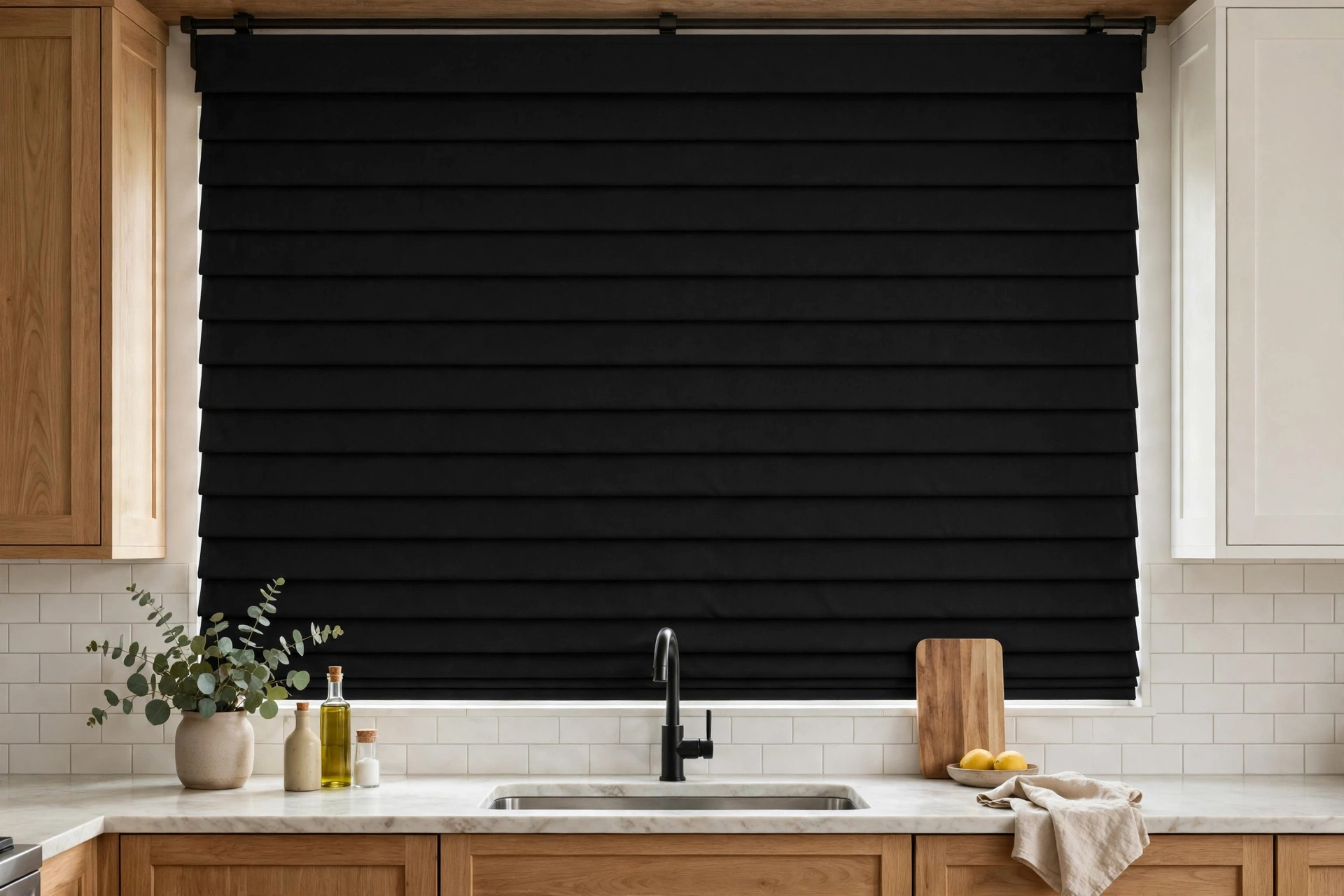
| 4 | CHICOLOGY Cordless Blackout Roman Shade | Blackout | Large kitchen windows |
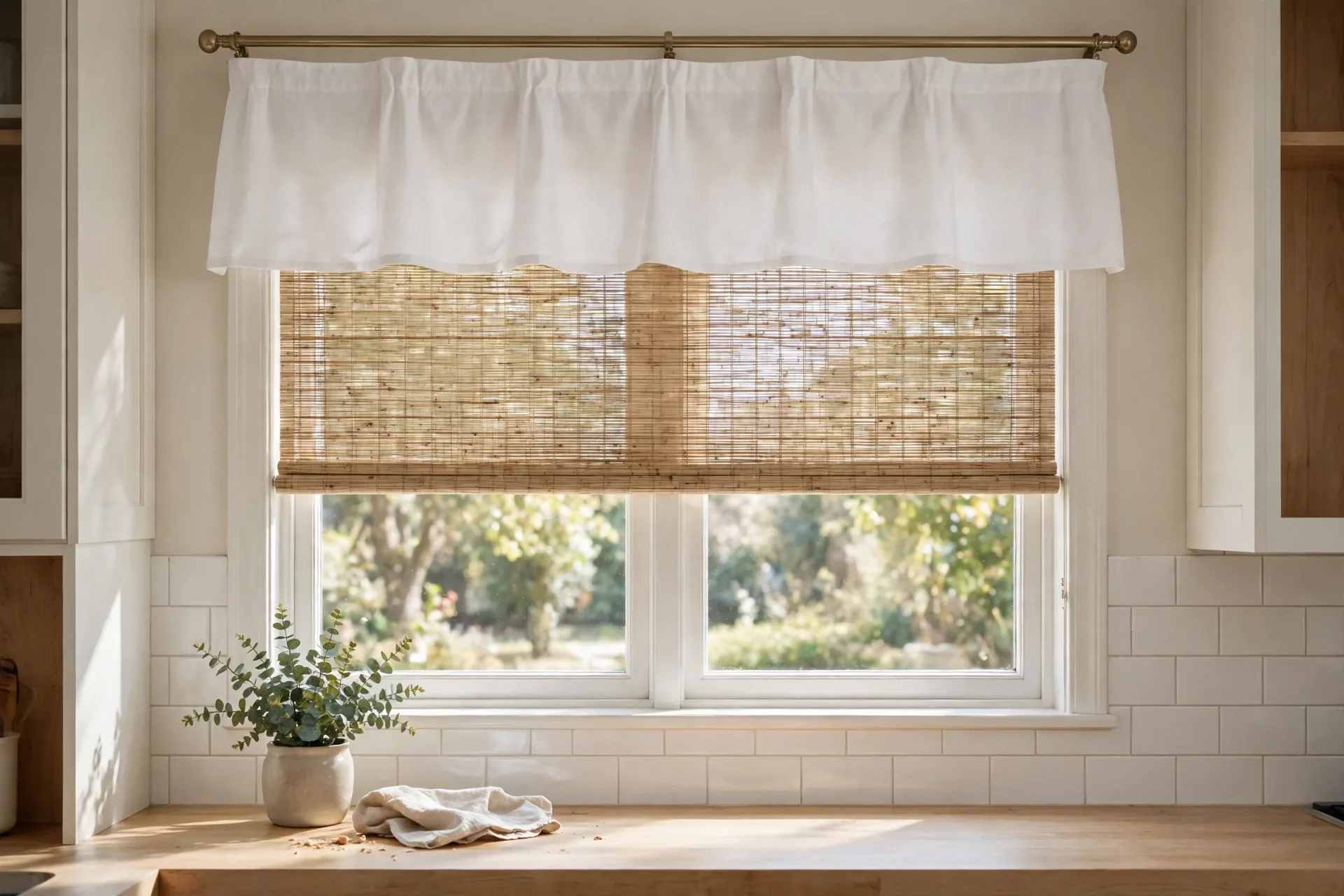
| 5 | LIVEKID Valance | Unlined | Windows with cover already in place |
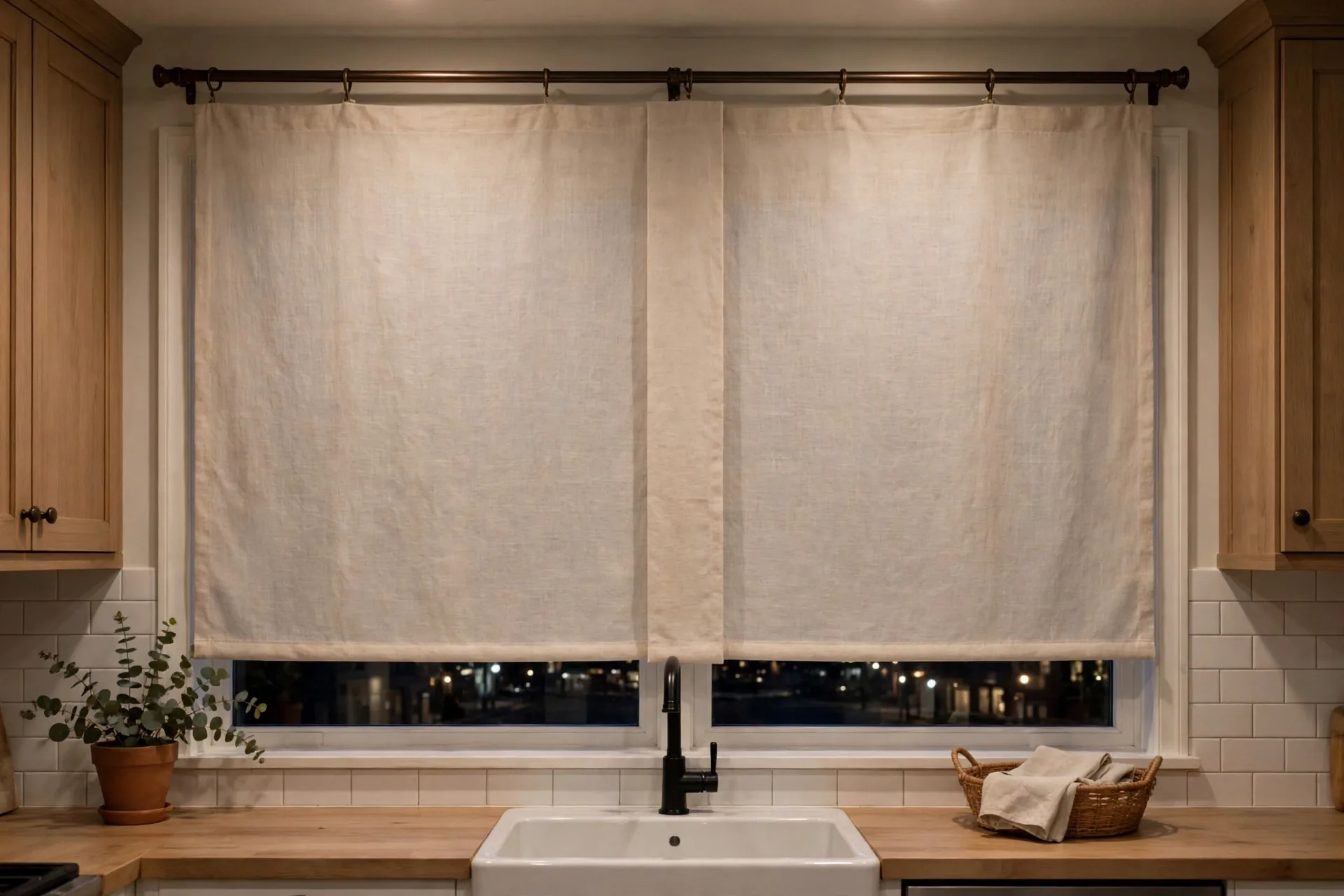
| 6 | LAMIT Short Linen Curtains | Unlined | Street-facing kitchens |
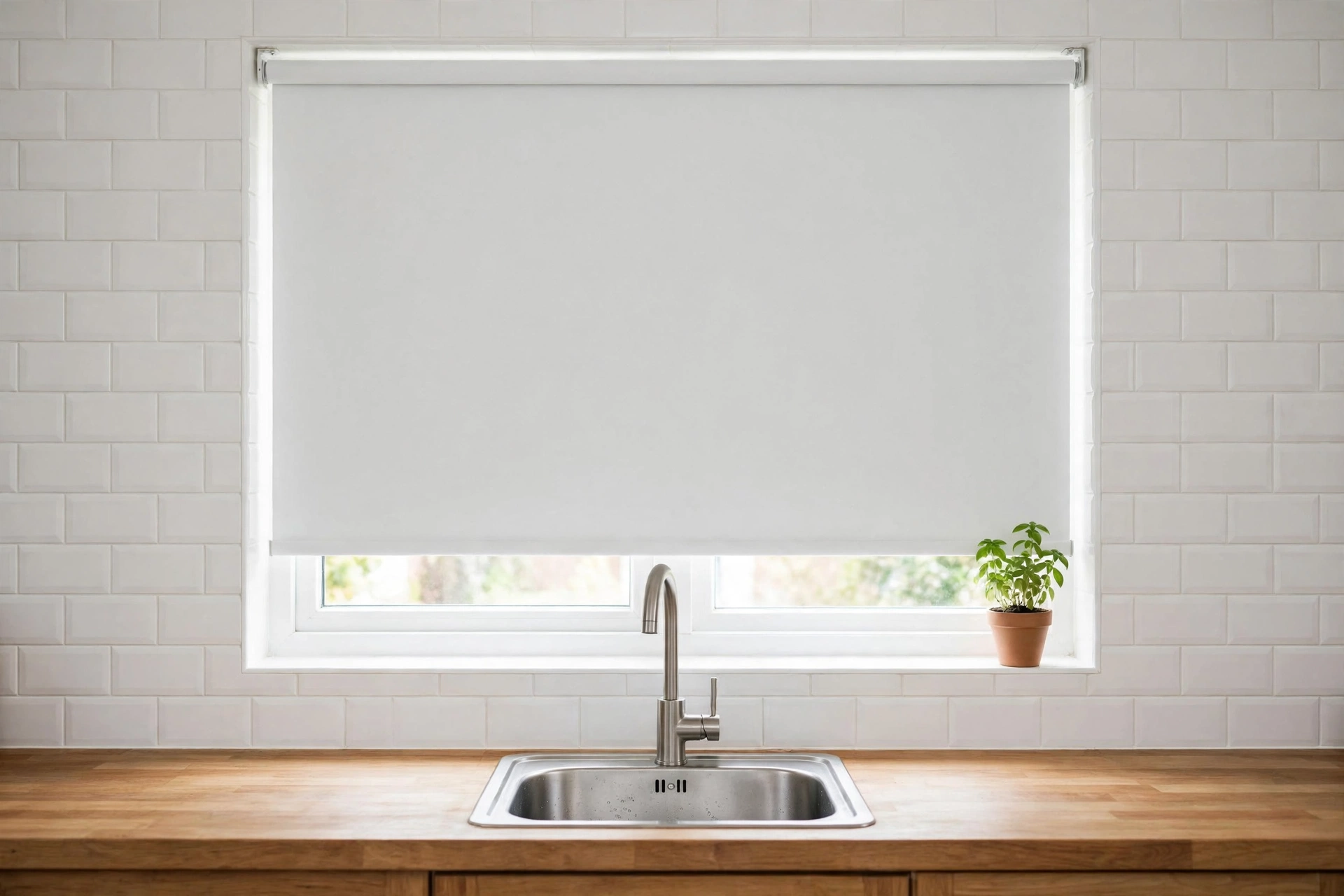
| 7 | CHICOLOGY Cordless Blackout Roller Shade | Blackout | Tight and stove-adjacent windows |
Pitalk Linen Cafe Tiers: best for sink windows
- Best for: A window over a kitchen sink, where splash, faucet clearance, and eye-level cover matter.
- Key features: Tier panels covering the lower window; top stays open; short length clear of the counter; washable fabric confirmed on the listing.
- Pros: Daylight stays strong; lower glass is screened; panels come down fast for washing.
- Cons: Open top gives no night privacy alone; needs a closing layer for a street-facing window at night.
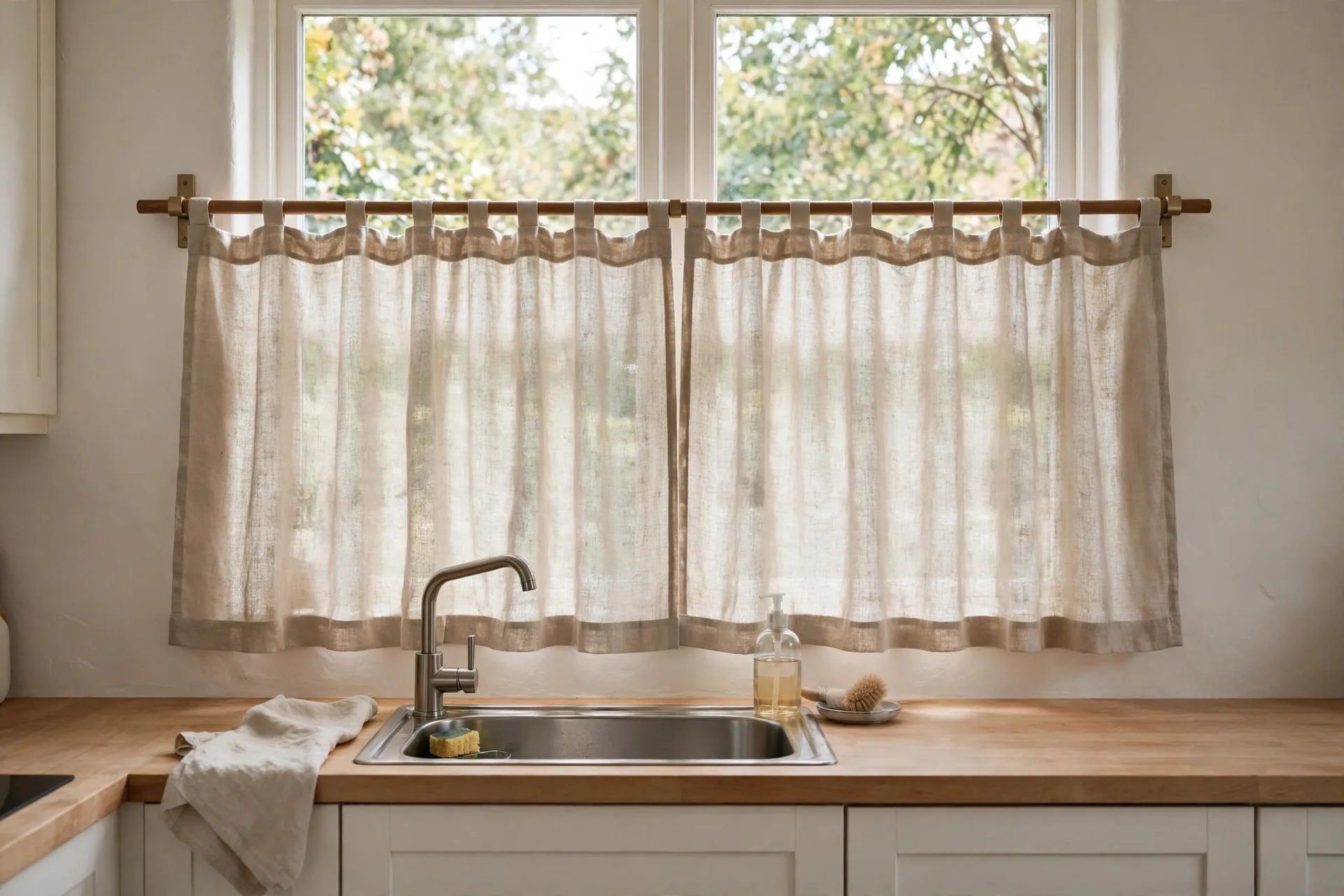
KOUFALL White Sheer Panels: best for small kitchens
- Best for: A small kitchen window, a window over a counter, or a rental kitchen.
- Key features: Short full panels ending at or just below the sill; light-filtering fabric; washable fabric confirmed on the listing.
- Pros: Keeps the room bright; stays clear of counters; simple to hang and wash.
- Cons: Pale colors show marks sooner; needs accurate measuring so the panel does not rest on the counter.
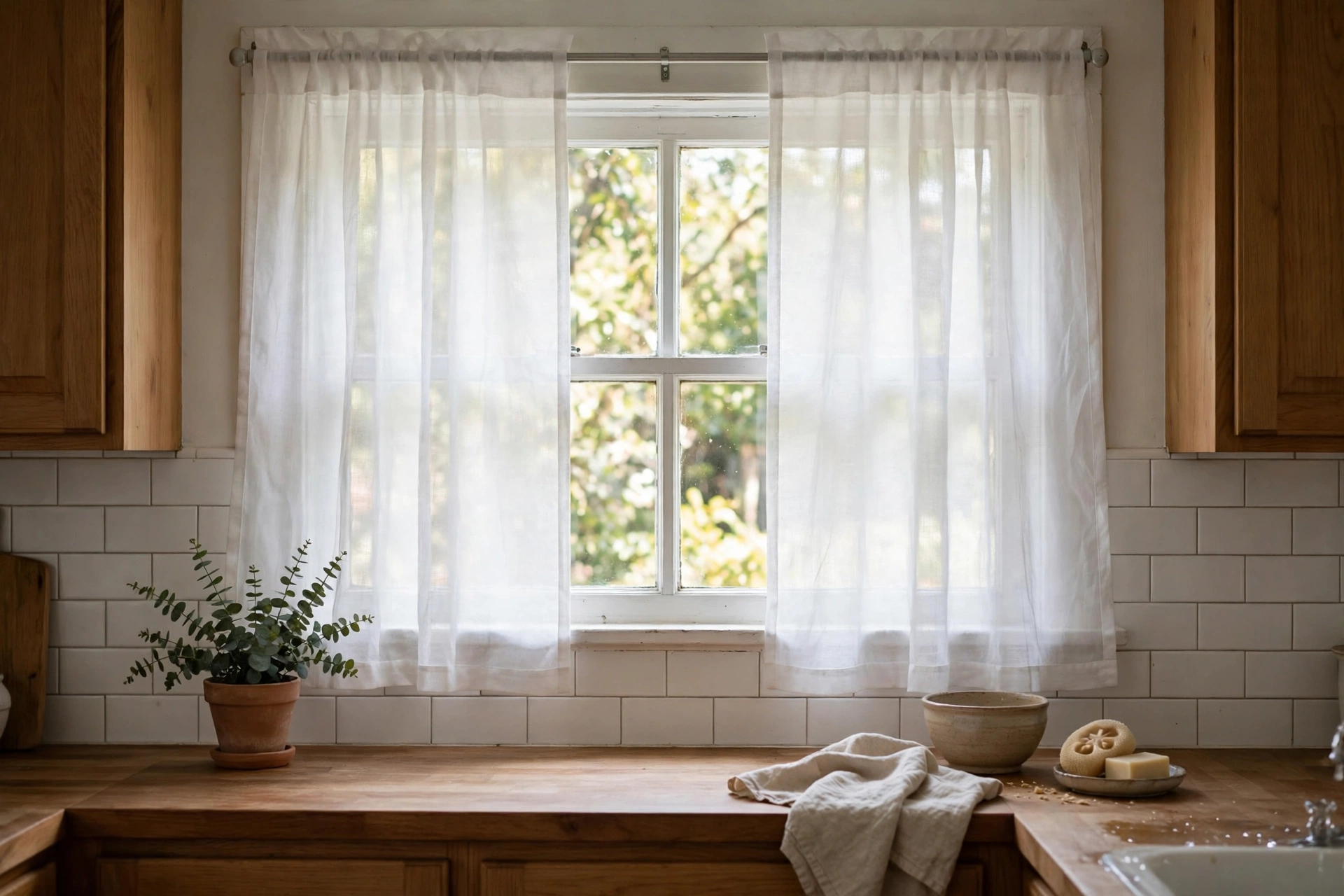
NICETOWN Semi Sheer Short Linen Blend Panels: best for bright eat-in kitchens
- Best for: A kitchen table window, a breakfast nook, or an open plan kitchen where soft light matters most.
- Key features: Light-filtering full panels at a short length; softer fabric, including linen-look; washable fabric confirmed on the listing.
- Pros: Softens glare over a table; keeps the eating area bright.
- Cons: Softer fabrics need washing sooner near cooking; sheer versions give little night privacy.
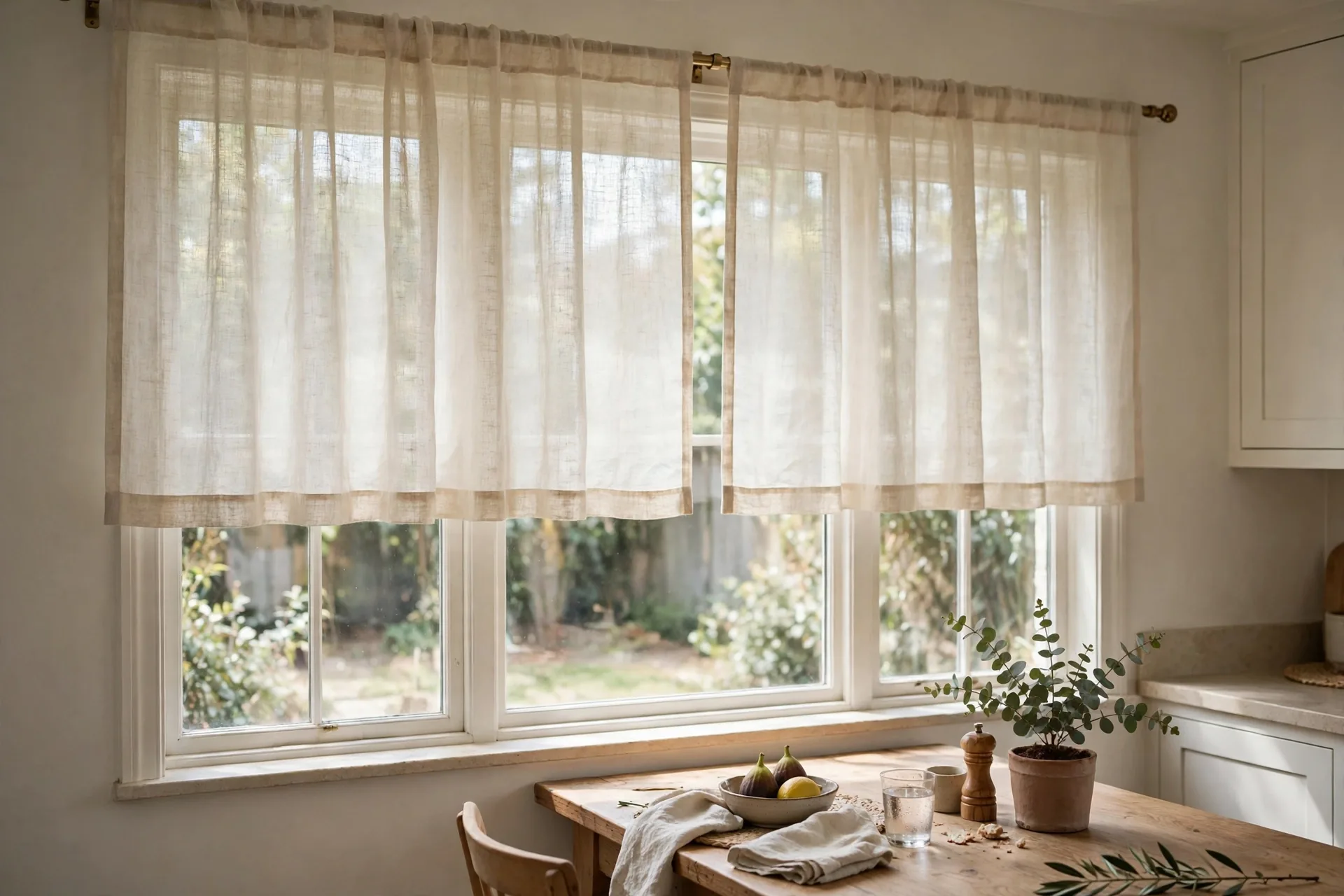
CHICOLOGY Cordless Blackout Roman Shade: best for large kitchen windows
- Best for: A large kitchen window, a wide eat-in window, or a window with little side wall for panels to stack.
- Key features: Flat panel that folds up when raised and covers the full window when lowered; easy-care fabric confirmed on the listing.
- Pros: Full cover at night; clean look with no side stack.
- Cons: Slower to wash than short panels; fabric sits close to steam and splash; this is a shade, and it washes like one.
LIVEKID Valance: best for windows with cover already in place
- Best for: A kitchen window that already has privacy glass, a shade, or another cover underneath, or a private garden window.
- Key features: Short top panel only; adds color and pattern; pairs with an existing cover; washable fabric confirmed.
- Pros: Finishes the window without darkening the room; adds pattern without bulk.
- Cons: Almost no privacy alone; almost no light control alone; a poor pick as the only cover on a street-facing window.
LAMIT Short Linen Curtains: best for street-facing kitchens
- Best for: A kitchen window facing a street, a path, or a neighbor window, where night privacy matters as much as daylight.
- Key features: Short full panels; light-filtering linen-blend face fabric; back tab and rod pocket heading; close fully at night as a pair.
- Pros: Full cover at night; cover by day without full blackout; short length stays clear of the counter.
- Cons: Linen blend still creases and may need steaming; no lining is stated on the listing, so buy it as an unlined short panel; care label must be checked on the listing before ordering.
CHICOLOGY Cordless Blackout Roller Shade: best for tight and stove-adjacent windows
- Best for: A small kitchen window or a stove-adjacent window, where loose fabric must stay out and a cover that spot-cleans matters.
- Key features: Cordless Snap-N-Glide roller shade; vinyl-backed blackout fabric that blocks sunlight and UV; spot-clean with a slightly damp cloth; inside or outside mount; full privacy when lowered; 21 inches wide by 72 inches high as listed.
- Pros: No cords and no loose fabric near a burner; full cover at night; sits close to the glass with no side stack; raises fully clear by day.
- Cons: Blackout gives no half cover, so lower it for privacy and raise it for daylight; spot-clean only, do not wash and do not use detergents; the 21-inch width shown suits a small window, so check the width on the listing before you order; still needs the heat check before it is chosen for a stove-adjacent window.
What a kitchen window asks of a curtain
A kitchen curtain must survive water, steam, and grease, wash without a fuss, stay short enough to clear the work below it, and still give privacy without turning the room dark.
Start with the window, not the pattern. A sink window needs splash tolerance and easy removal. A street-facing window needs eye-level cover. A small window needs a short, light treatment. A window beside a stove needs a safety check first.
Light matters in a kitchen, so treatments filter light rather than block it. For a full darkness guide, see Best Blackout Curtains.
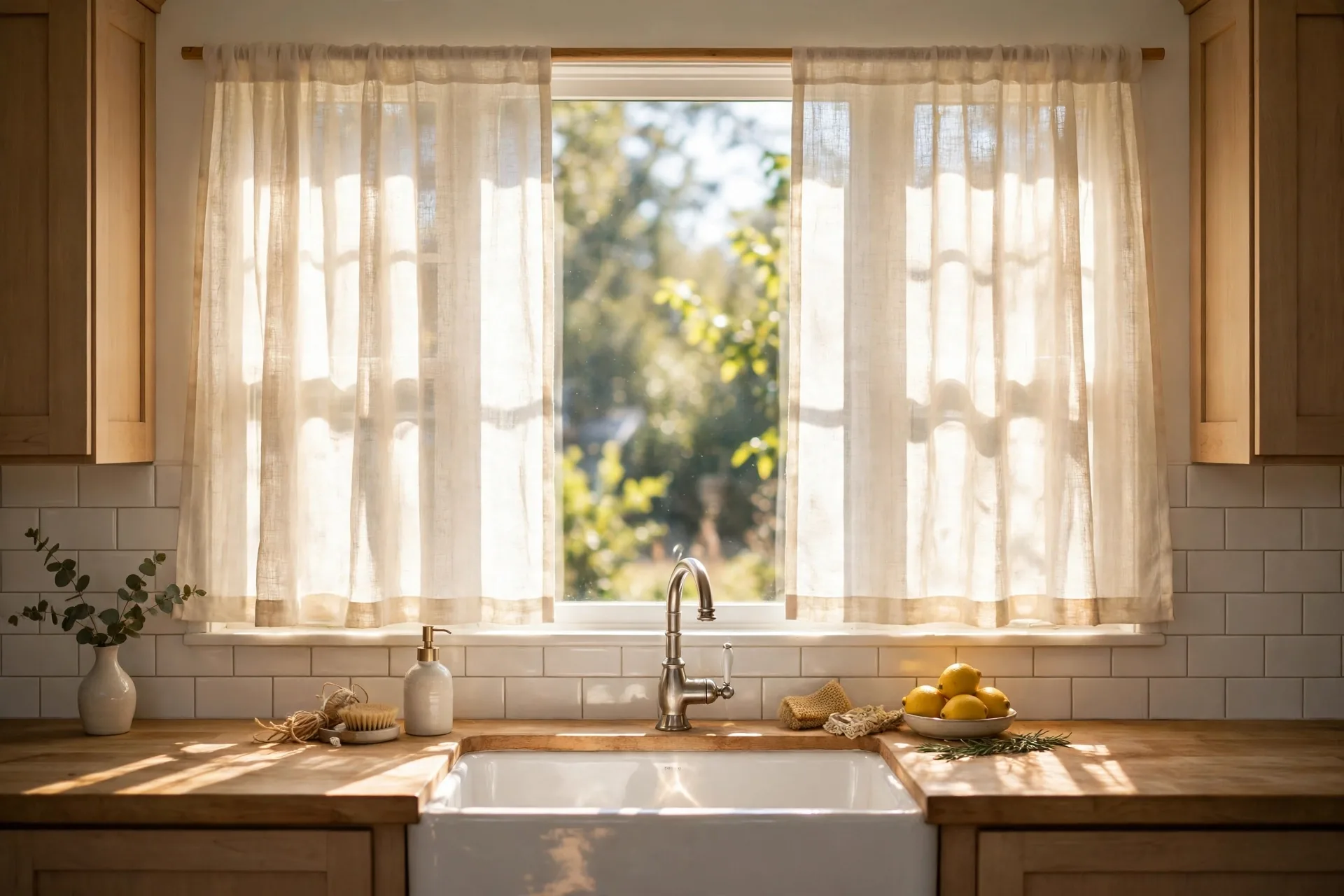
Cafe curtains, Roman shades, and valances side by side
Cafe curtains are the best starting point for most kitchen windows, Roman shades are the best choice for a large window that needs a tidy finish, and valances are best as decoration over cover that already gives privacy.
Cafe curtains, also called tier curtains, hang from a rod placed partway up the window and cover only the lower part. The top stays open, so daylight pours in while the lower glass, the part a passerby looks through, is screened. They stay clear of sinks and counters and come down fast for washing. Their limit is plain: the open top gives no cover at night.
Roman shades are a single flat panel that folds up when raised and drops flat when lowered. Lowered, a shade covers the full window, so it gives more complete privacy and glare control than a cafe curtain. Raised, it clears the whole window. Its drawback is kitchen care: the fabric sits close to splash and steam, and it takes longer to wash than short panels. A Roman shade wins where the window is large or where there is no room at the sides for panels to stack.
A valance covers only the top of the window. It adds color, pattern, and a finished edge. On its own it gives almost no privacy and almost no light control, because most of the glass stays bare. A valance earns its place where privacy glass, a shade, or another cover already sits underneath it, or on a private garden window. Used alone on a street-facing window, it will disappoint.
| Option | What it covers | Best for | Watch out for |
|---|---|---|---|
| Cafe curtains | Lower window, top open | Sink windows, small kitchens | No night cover at top |
| Roman shades | Full window when lowered | Large windows, full night cover | Slower to wash |
| Valances | Top only | Finish over existing cover | Almost no privacy alone |
Roller shades in a kitchen: wipe-clean cover for tight and stove-adjacent windows
A roller shade is a single flat sheet that rolls up and down on a tube at the top of the window, so it sits close to the glass and takes no side stack at all. Raised, it clears the whole window. Lowered, it covers the full window in one flat sheet, which gives it a tidier finish than a curtain panel on a small or awkward window.
Roller shades suit a kitchen where washing is the problem, because many roller materials wipe clean with a damp cloth, so a splash is wiped rather than washed.
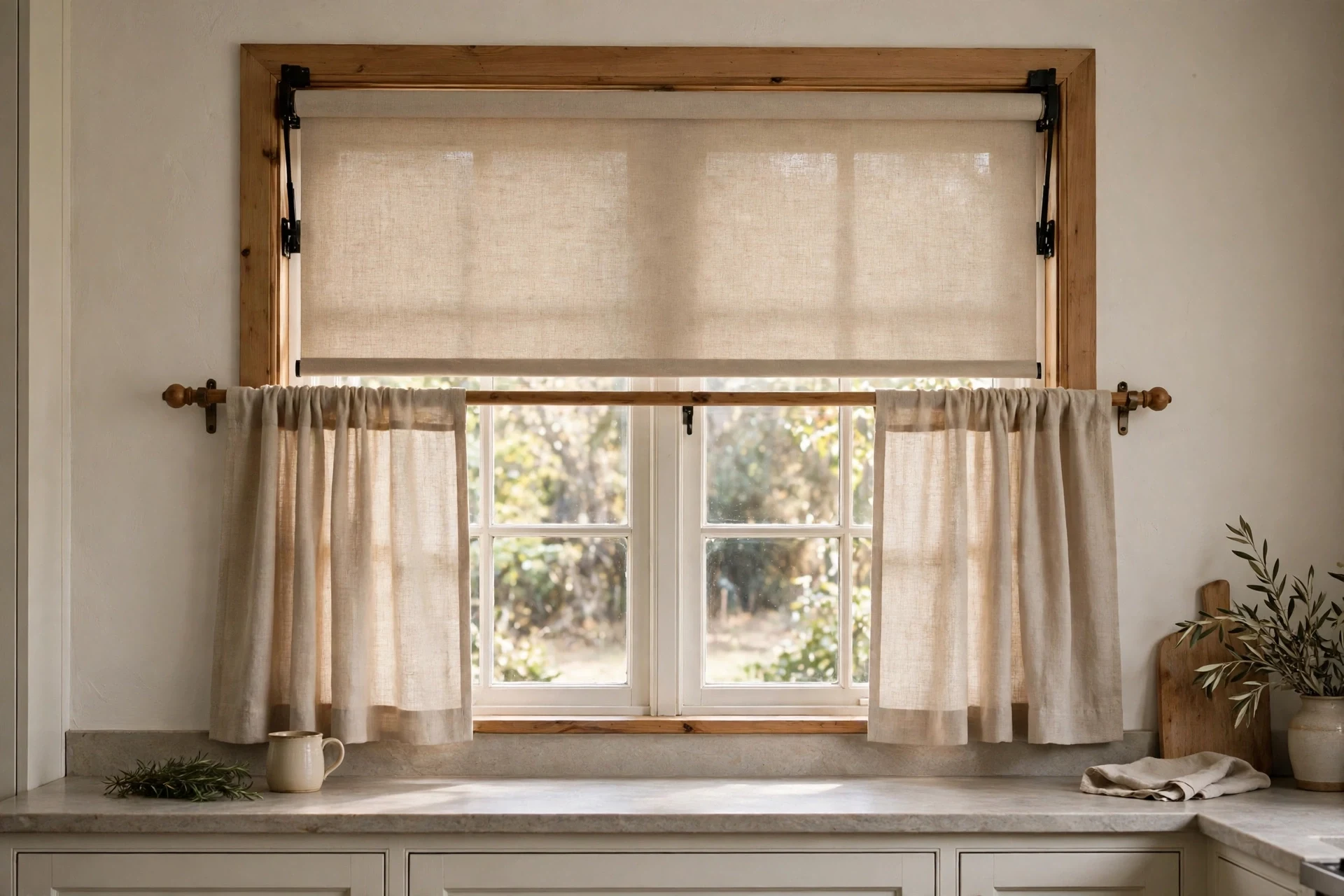
Check the care on the listing before you buy, because a fabric roller washes differently from a wipe-clean one, and a roller that cannot be wiped is no easier in a kitchen than a short curtain panel.
A roller shade also suits a small kitchen and a stove-adjacent window, because it has no loose fabric to swing toward a burner or to hang over a counter. It still needs the same heat check as any cover, and it must stay clear of heat in every state, open, closed, and part raised, before it is chosen for that window.
Against a cafe curtain, a roller shade gives fuller privacy when lowered but no half cover, because it cannot leave the top open while screening the lower glass. Against a Roman shade, a roller shade washes faster where it wipes clean, but it gives a flatter look and less softness, so the choice is between easy care and a softer finish, not between good and bad cover.
Curtains or blinds and shades in a kitchen: which suits the window
Curtains are not the only kitchen cover, and the right choice depends on whether washing, privacy, light, or space matters most at that window. Blinds and shades give a flatter, closer fit, while curtains give a softer look and faster washing, and neither wins on every window.
| Aspect | Curtains | Blinds and shades |
|---|---|---|
| Appearance | Softer look, fabric folds | Flatter, closer fit to the glass |
| Privacy | Full cover only when a full panel closes; cafe tiers leave the top open | Full cover when lowered; no half cover |
| Cleaning | Short panels come down fast for washing | Wipe-clean types wipe with a damp cloth; fabric shades wash slower |
| Light control | Light-filtering fabric softens daylight; full darkness needs a lining or a closing layer | Light-filtering or blackout roller types control light by how far they lower |
| Space and stack | Panels stack at the sides and must clear cabinets | No side stack; the shade sits inside or just above the frame |
| Maintenance | Wash on a kitchen rhythm and dry fully before rehanging | Wipe often, check cords and lifting parts, and replace a damaged slat or sheet rather than washing the whole cover |
Beside a stove, the comparison changes. Where fabric must stay out because it cannot stay clear of heat in every state, a non-fabric shade that wipes clean and sits close to the glass is the safer alternative to a curtain, and it still needs the heat check in the windows near heat section before it is chosen. A shade is an alternative, not a reason to hang fabric where fabric cannot stay clear.
Sink windows: privacy at eye level without losing daylight
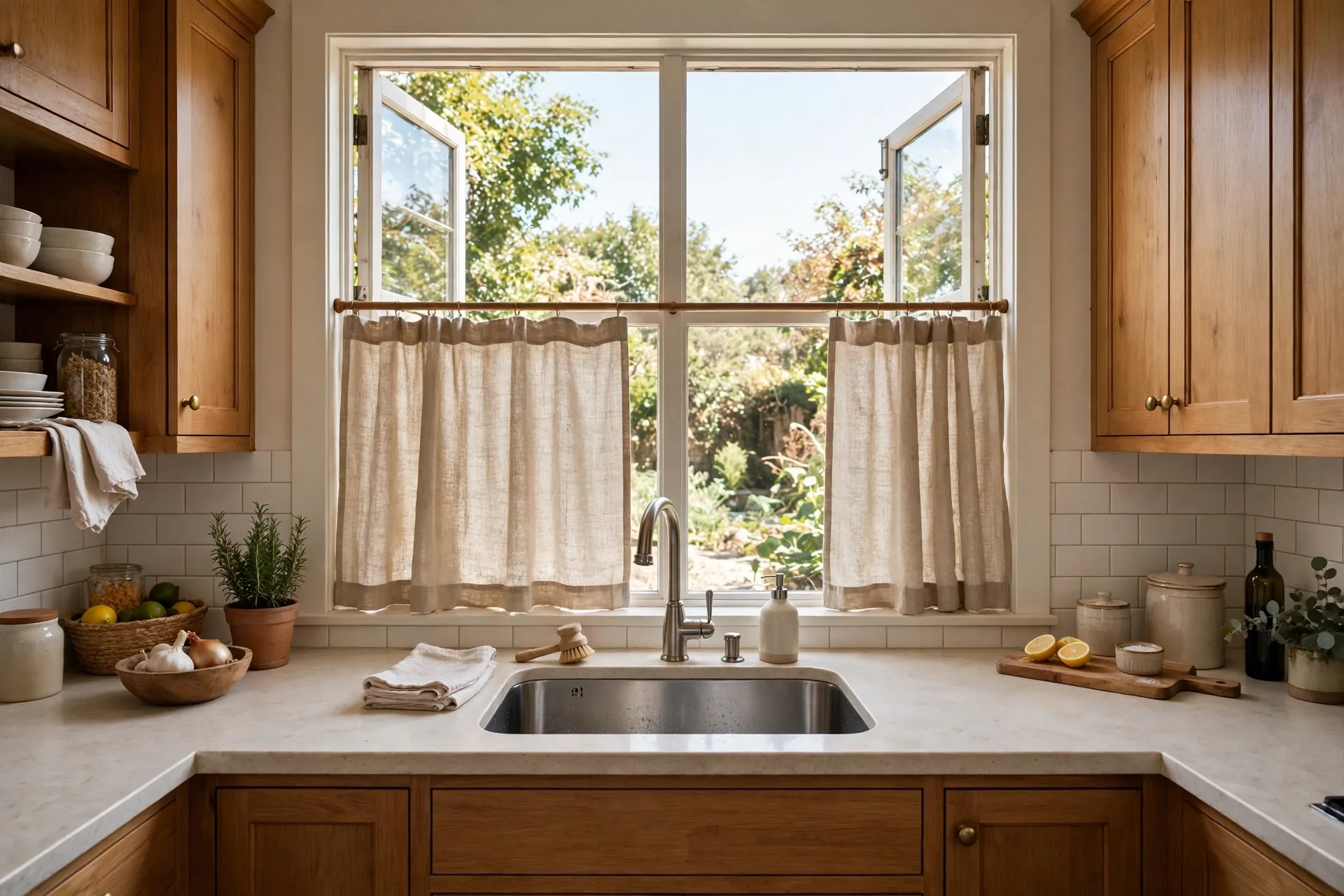
For a sink window, cafe curtains are the right answer in most kitchens, because they screen the view at standing eye level while leaving the top of the window open to daylight.
The sink sets the length rule. The curtain must end above the counter and clear of the faucet, so it never rests on a wet surface or catches when you turn a faucet. Measure from the rod to the stopping point, and check that point against the faucet arc before you order.
This is the window that gets splashed most, so pick a fabric you can wash often and hang back quickly. A light-filtering cotton blend or a linen-look panel suits many sink windows.
Small windows and tight kitchens: short lengths that stay clear
For a small kitchen window, a short panel that ends at the sill is usually the best fit, because it gives cover without crowding the wall or stealing light. Small kitchens punish long fabric: it hangs over a counter and makes the wall look busy.
Keep the treatment simple. One short panel pair, or a single cafe tier, in a plain color or a small check or stripe, suits a tight kitchen better than layers or a bold large print. A plain curtain suits a busy backsplash.
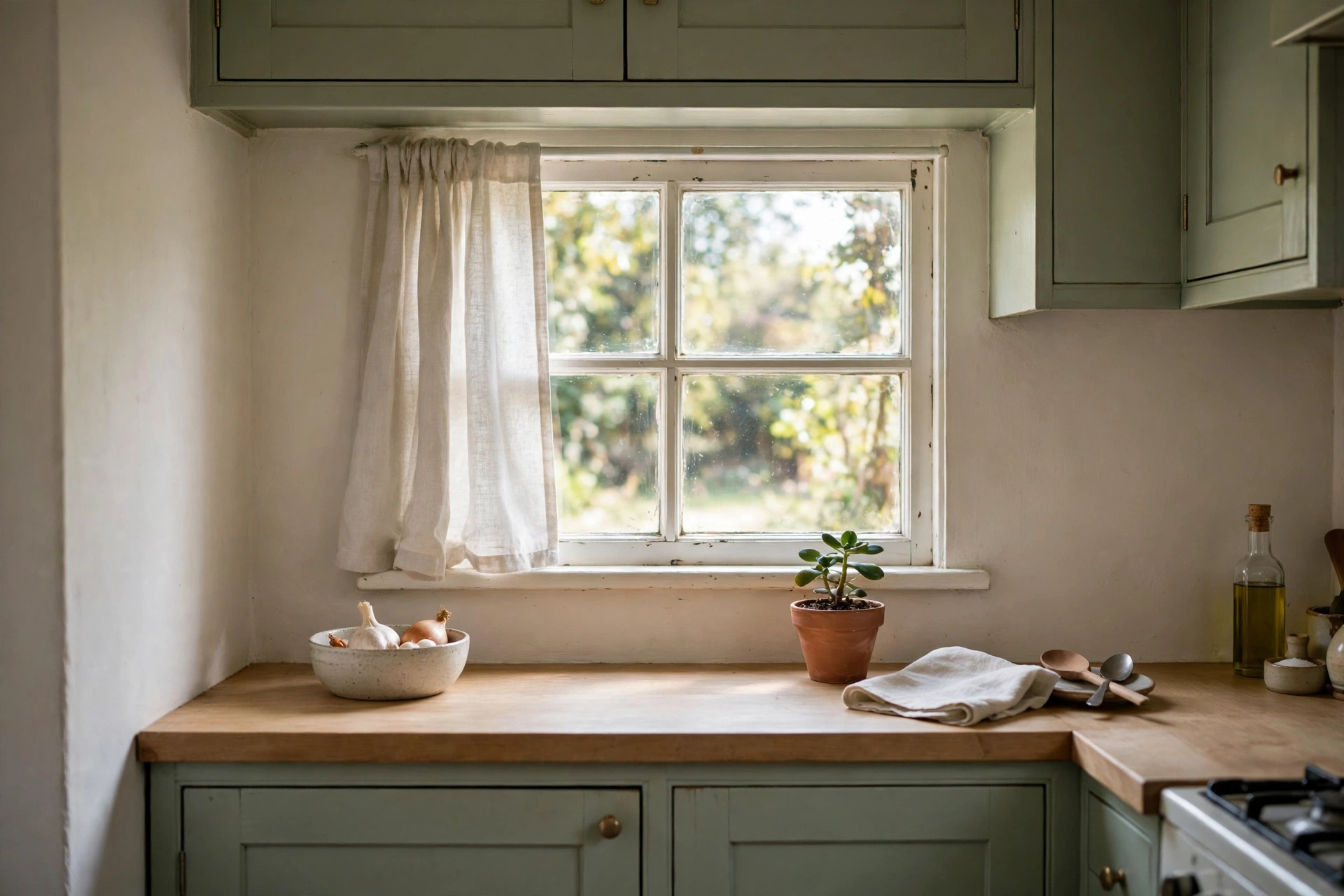
Apron length is a third short length worth knowing. It means a panel that ends just below the sill, a short step past sill length. It suits a window where sill length looks abrupt but a longer drop would reach a counter, provided the extra drop still clears the work below it. Measure the drop to the apron point and check it against the counter before you order, in the same way as any other stopping point.
Splash, grease, and steam: what holds up to daily cooking
In a kitchen, the fabric that holds up best is a washable, light to medium weight fabric that dries fast and does not trap cooking smells, because splash, grease, and steam reach the window every day. No common fabric is truly grease proof, so the real test is how easily it washes clean.
Splash is the simplest problem. Water from the sink hits the lower part of a sink window curtain. Short panels limit the damage, because less fabric sits in the splash zone, and a washable fabric means a splash is a wash, not a stain to live with.
Grease is slower and harder to see. Cooking sends a fine mist into the air, and it settles on fabric near the stove as a thin film that dulls color and holds smells.
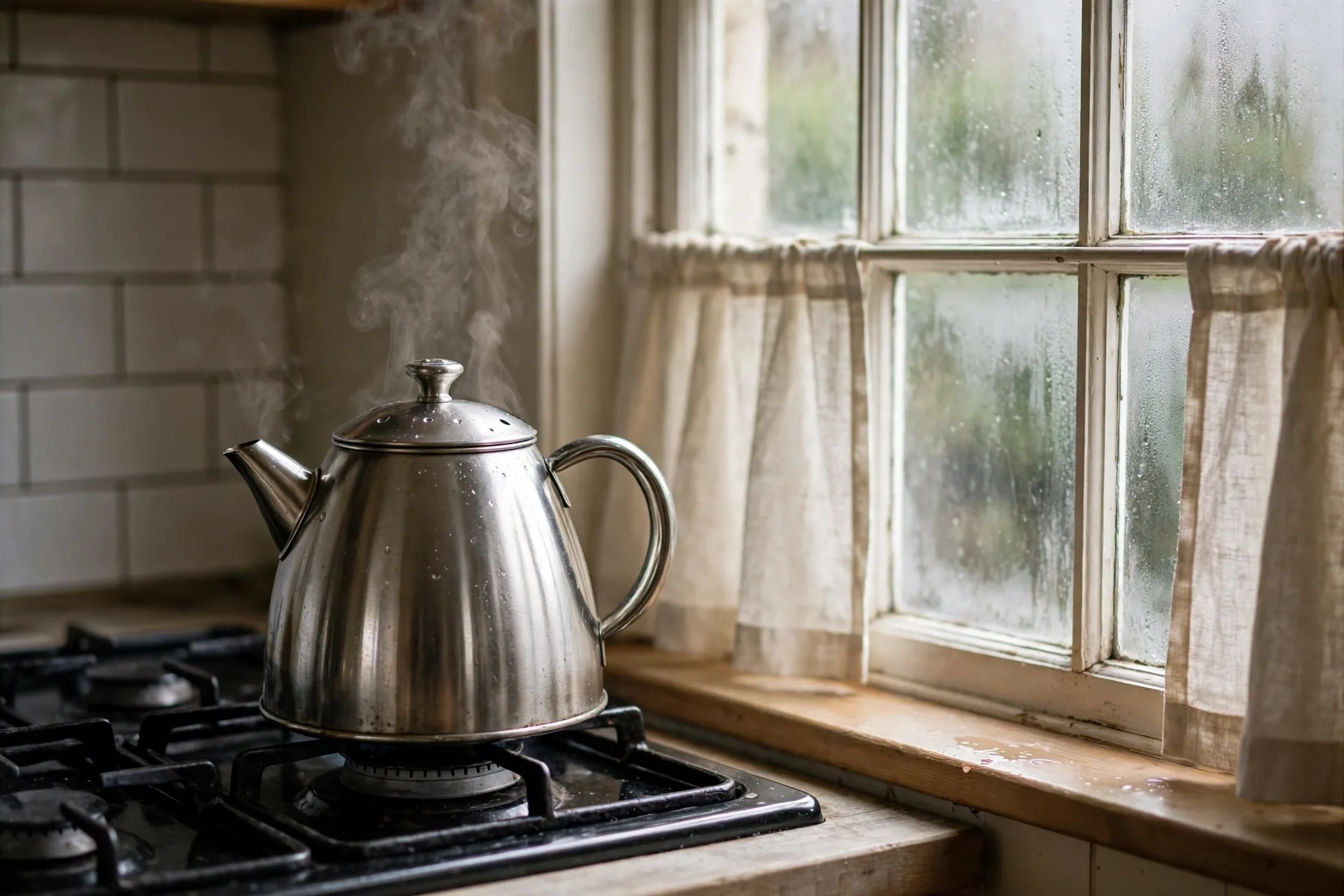
Steam is the quiet problem. Kettles, pots, and dishwashers fill the air with moisture, and a heavy or slow drying fabric stays damp, which can leave a stale smell and marks. Light fabrics dry faster, which is one more reason short, light panels suit kitchens better than heavy drapes. For the sheer side of this choice, see Best Sheer Curtains.
Kitchen washing in practice: quick, often, and fully dry
Kitchen curtains wash best on a short, frequent rhythm: take them down often, wash them by the care label, and hang them back only when fully dry. That rhythm, not any single wash, is what keeps a kitchen curtain fresh.
This section covers kitchen washing only. It is not a full washing guide for every curtain type, and it does not replace the care label on the panel you bought. That label is the rule for water heat, cycle, and drying.
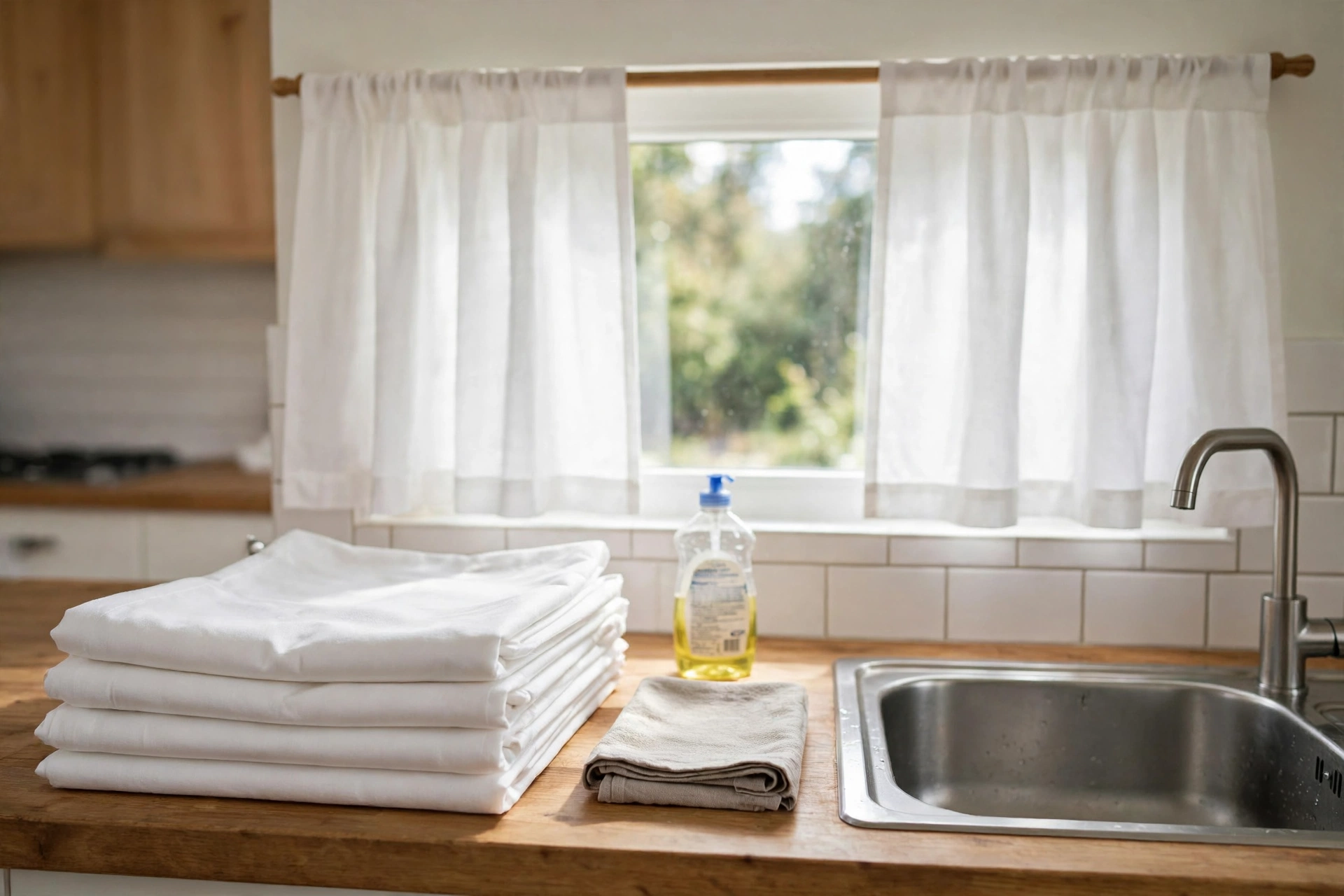
Shake the panels outside or over a sink before washing, and spot clean a fresh splash or food mark as soon as you see it, with a damp cloth, rather than leaving it to set until wash day. Wash kitchen panels on their own or with similar light items, so grease and lint from heavier laundry do not transfer onto them. Dry the panels fully before rehanging: a panel hung back while still damp in a steamy kitchen stays damp and can smell stale fast. Judge wash timing by look and smell, not by a calendar rule. For the full washing steps for every curtain type, see How to Wash Curtains.
Privacy without darkness: daylight and cover at the same time
Privacy without darkness in a kitchen comes from covering the lower glass with a light-filtering fabric while leaving the upper glass open, or from a full cover in a light fabric that closes at night.
Daytime privacy is the easy half. From outside in daylight, a light-filtering cafe curtain or a light short panel screens the view into the kitchen, because the bright side is outside and the room behind the fabric is dimmer by comparison. That cover fails at night, and it is the most common kitchen curtain disappointment.
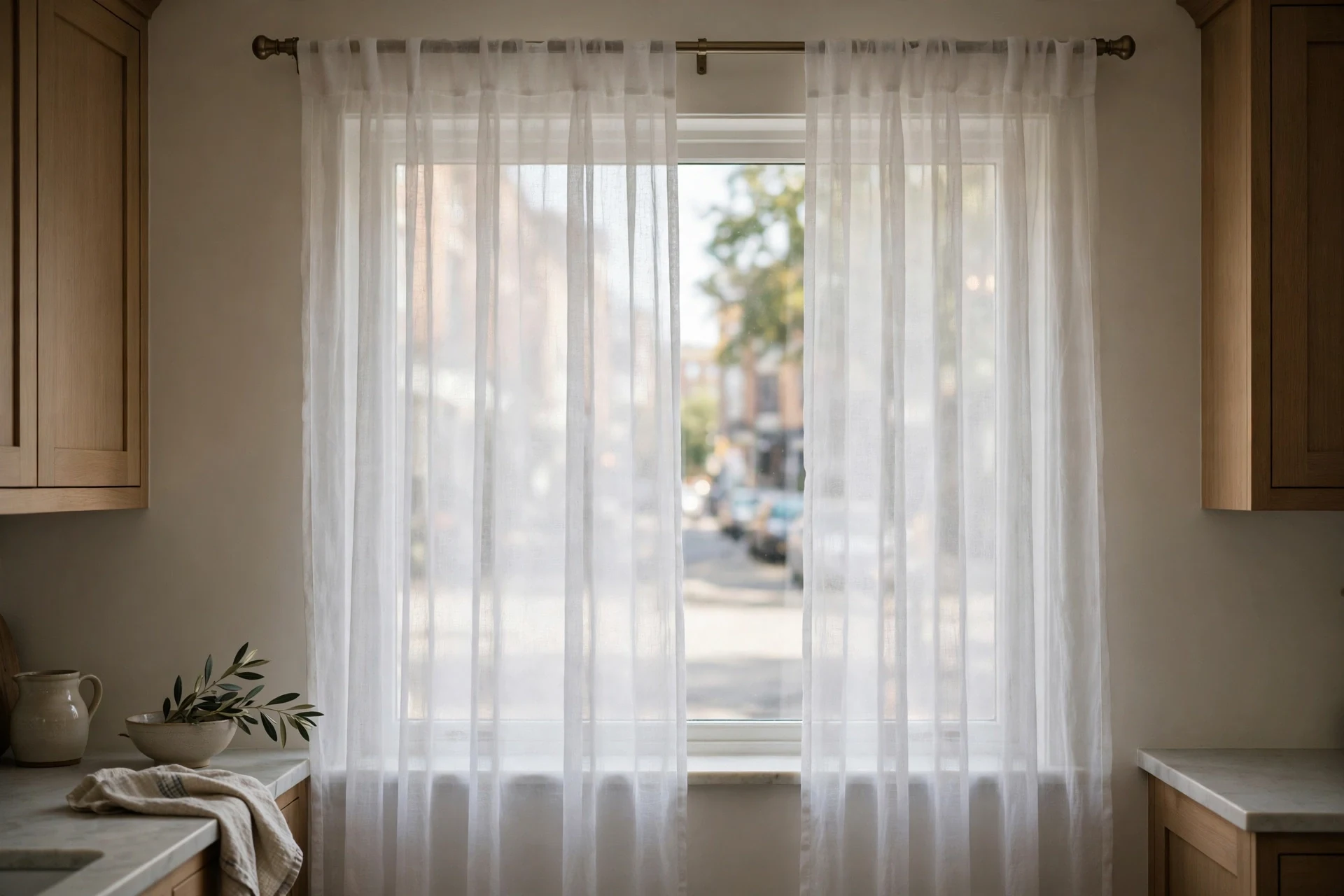
Once kitchen lights are on and it is dark outside, the bright side flips, and a light fabric can show shapes from the street. A cafe curtain with an open top is worst for this at night.
Fix night privacy by closing the panel at night, not by darkening the room all day. A short full panel that closes at night, a Roman shade lowered in the evening, or a cafe curtain paired with a closing layer gives full cover when it matters and leaves the daytime open. Plan the night layer from the start if the kitchen faces a street, a path, or a neighbor window. Lining is only a partial answer: it adds body but does not close the open top of a cafe curtain. For lined options, see Best Linen Curtains and Best Thermal Insulated Curtains.
For a street-facing kitchen, the answer on this page is a short full panel that closes at night, bought as an unlined panel. The closing pair is what gives night cover, not a lining. A lining would add body and a fuller fall, but it would also dry slower and wash with more fuss, so weigh that trade on the listing rather than expecting it from the street-facing pick here.
Windows near heat: where fabric should not go
Fabric should not hang where it can touch a flame, a hot cooktop, a toaster, or any hot surface, and a kitchen window right beside a stove needs that check before any style is chosen. Short length alone does not make a curtain safe near heat, because loose fabric moves in air from an open window or a fan. Fire safety guidance on keeping curtains away from the stovetop from the U.S. Fire Administration states that anything that can catch fire, including curtains, should be kept away from the stovetop.
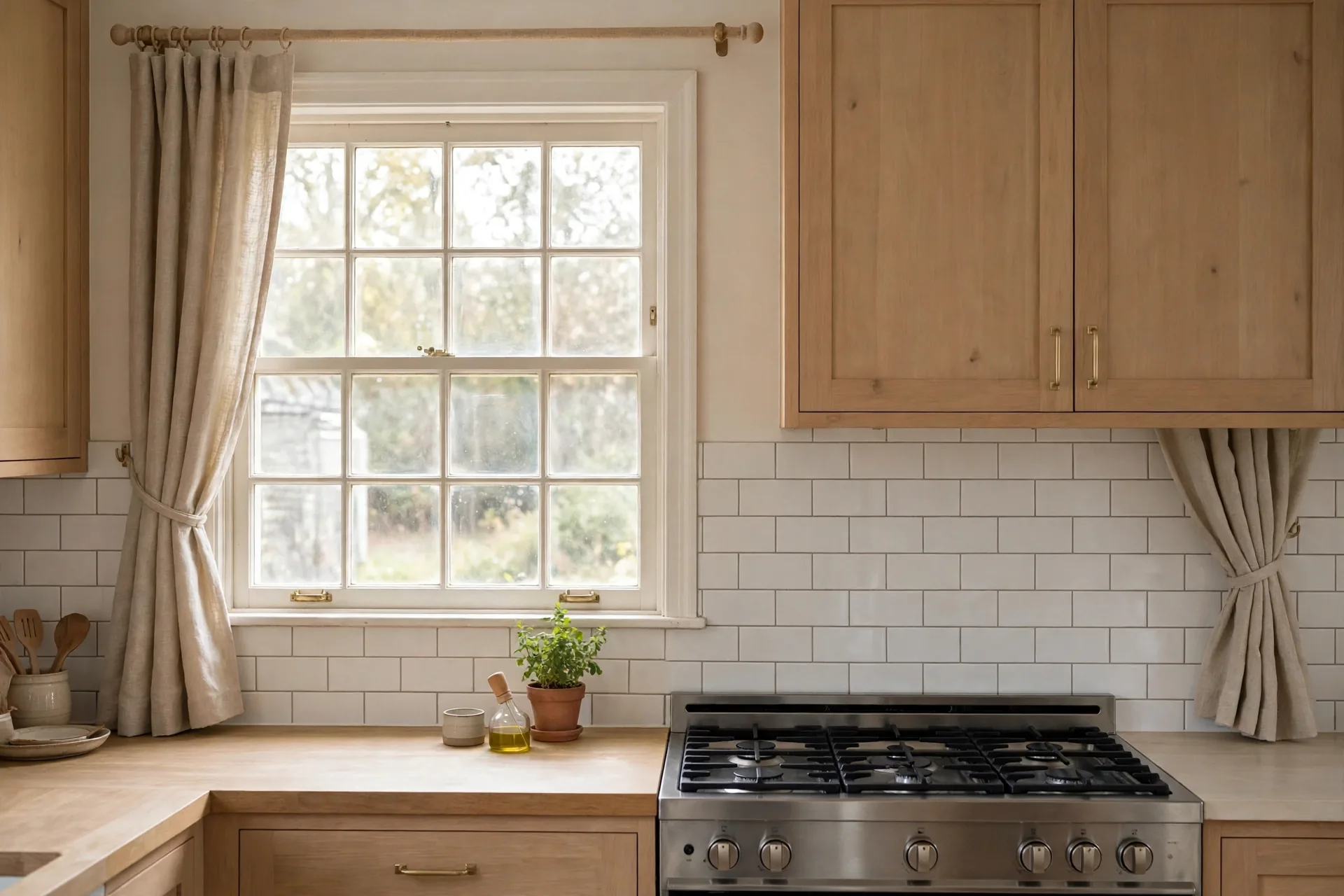
Stand at the window and trace what the fabric can reach. Open the window, run the fan, and watch how far a light panel swings. If the panel can reach a burner or a hot surface in any of those states, do not hang fabric there. Keep cords clear as well. A Roman shade near a stove needs the same check, because its lower edge and cords sit close to the work below when lowered. If fabric cannot stay clear of heat at that window, leave fabric out of that spot.
Cords need their own safety check, especially where children use the kitchen. A corded shade or blind can leave a loop within a child's reach, so choose a cordless option where children are present, keep any cords out of reach, and move furniture and climbing aids away from the window so a child cannot reach a cord from them. Safety guidance on window covering cords from the U.S. Consumer Product Safety Commission recommends cordless window coverings as the safest option where young children are present, and gives steps to reduce risk where a corded cover cannot yet be replaced.
Fabric and color choices that hold up in a kitchen
The easiest kitchen fabrics to live with are washable cotton blends and polyester blends, because they combine a soft look with simple washing and fast drying. Pure cotton can crease and, in some panels, shrink. Pure linen needs more care and slower drying than a kitchen usually allows, while a linen-look panel keeps much of the texture with easier washing. Polyester varies widely by weave, so judge it by its weave and its care label.
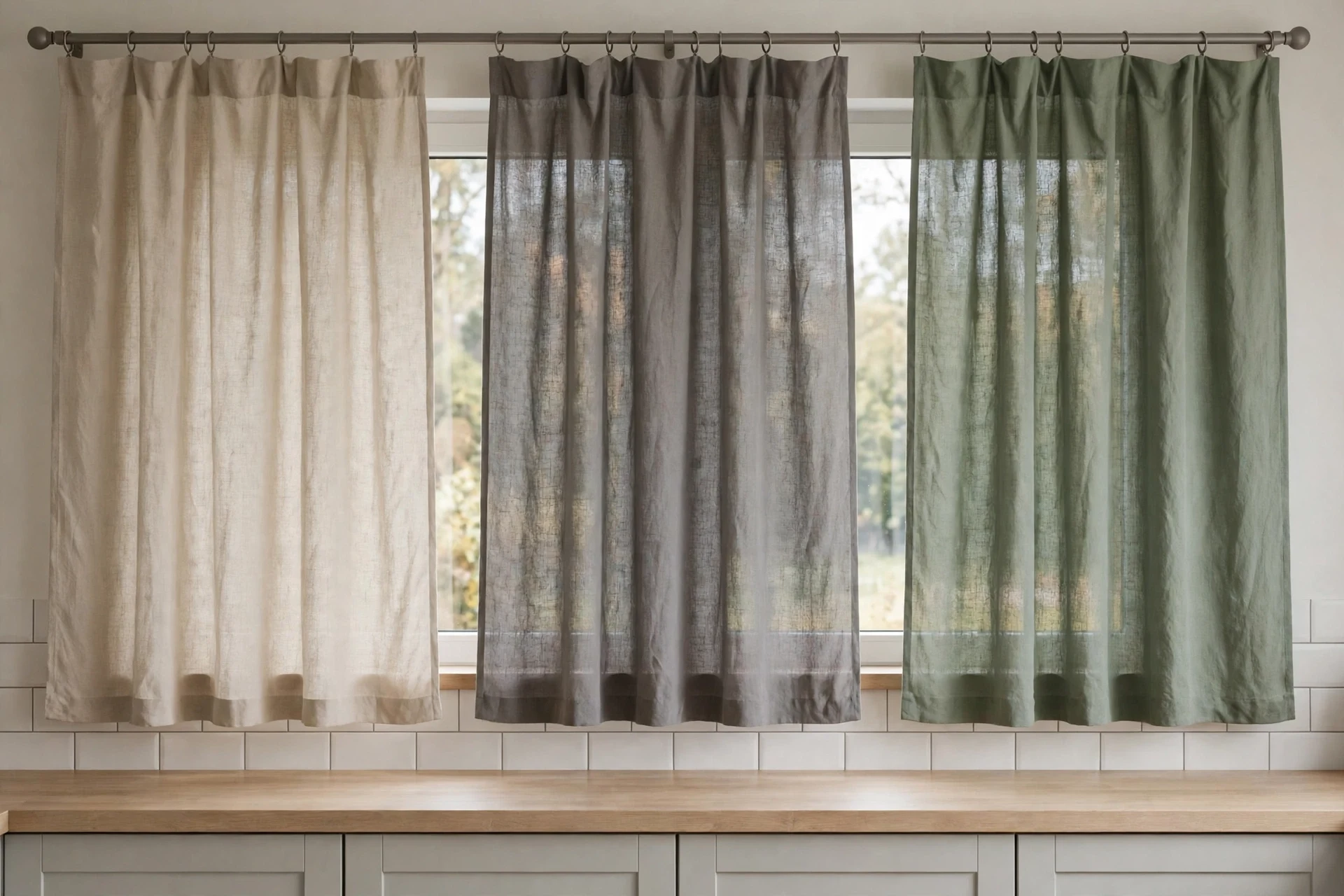
Voile and sheer fabrics suit kitchens away from cooking, such as a breakfast nook, where they soften light without closing the room in. Near a sink or a stove, a sheer panel still collects splash and grease, and its thin weave shows marks more plainly, so a light-filtering fabric with more body is usually better there.
Color follows the same working logic. White and ivory brighten a small kitchen but show marks sooner than mid tones such as soft gray, sage, and warm beige. A small check, stripe, or floral print breaks up a mark better than a plain pale panel. For an open plan kitchen, a plain panel in a shared neutral often sits better with the next room than a strong kitchen only print. For living room fabric ideas, see Best Curtains for Living Room.
Performance fabrics are a named category worth checking on a listing, because they are made to resist stains, fading, and moisture, and to stand up to frequent cleaning. The name alone proves nothing, so judge a performance fabric by its care label and by what the listing actually claims it resists, not by the word performance on its own.
Some fabrics are best avoided in a kitchen. Pure silk is too delicate for splash, steam, and strong sun, heavy velvet traps cooking odors and dries slowly, dry-clean-only fabric breaks the kitchen washing rhythm because it cannot go in a regular wash, and very heavy fabric near heat swings further and stays damp longer, so keep heavy fabric away from a stove window.
Sun is a separate fabric check. A south-facing or west-facing kitchen window gets the strongest sun, and strong sun fades color over time, so choose a fade-resistant fabric or a lined panel for that window, and favor mid tones over pale or very dark colors where fading would show first. A lining helps protect the face from sun, but it does not make a panel fade proof, so check the listing for what it claims about fading before you order.
Color and pattern also follow the kitchen style. A farmhouse kitchen suits a small check or a warm neutral, a modern kitchen suits a plain panel in a clean color with little pattern, a traditional kitchen suits a soft floral or a warm mid tone, a small kitchen suits a plain light panel that does not crowd the wall, and an open-concept kitchen suits a shared neutral that sits well with the next room, as noted above. For the full fabric comparison, see Curtain Fabric Types Explained.
Rods, placement, and measuring for a kitchen window
A kitchen rod should sit where the curtain clears the work below it and stacks clear of cabinets and appliances beside it. Place the rod, then measure the drop to the point where the fabric must stop, and check that point against the faucet and the counter.
Cafe rods sit partway up the window, so the top stays open. A tension rod inside the frame suits a rental kitchen or a tiled wall where drilling is awkward, and it comes down fast for washing. For a full panel, a standard rod above the frame lets the panel stack clear of the glass when open, but that stack must also clear cabinets and shelves.
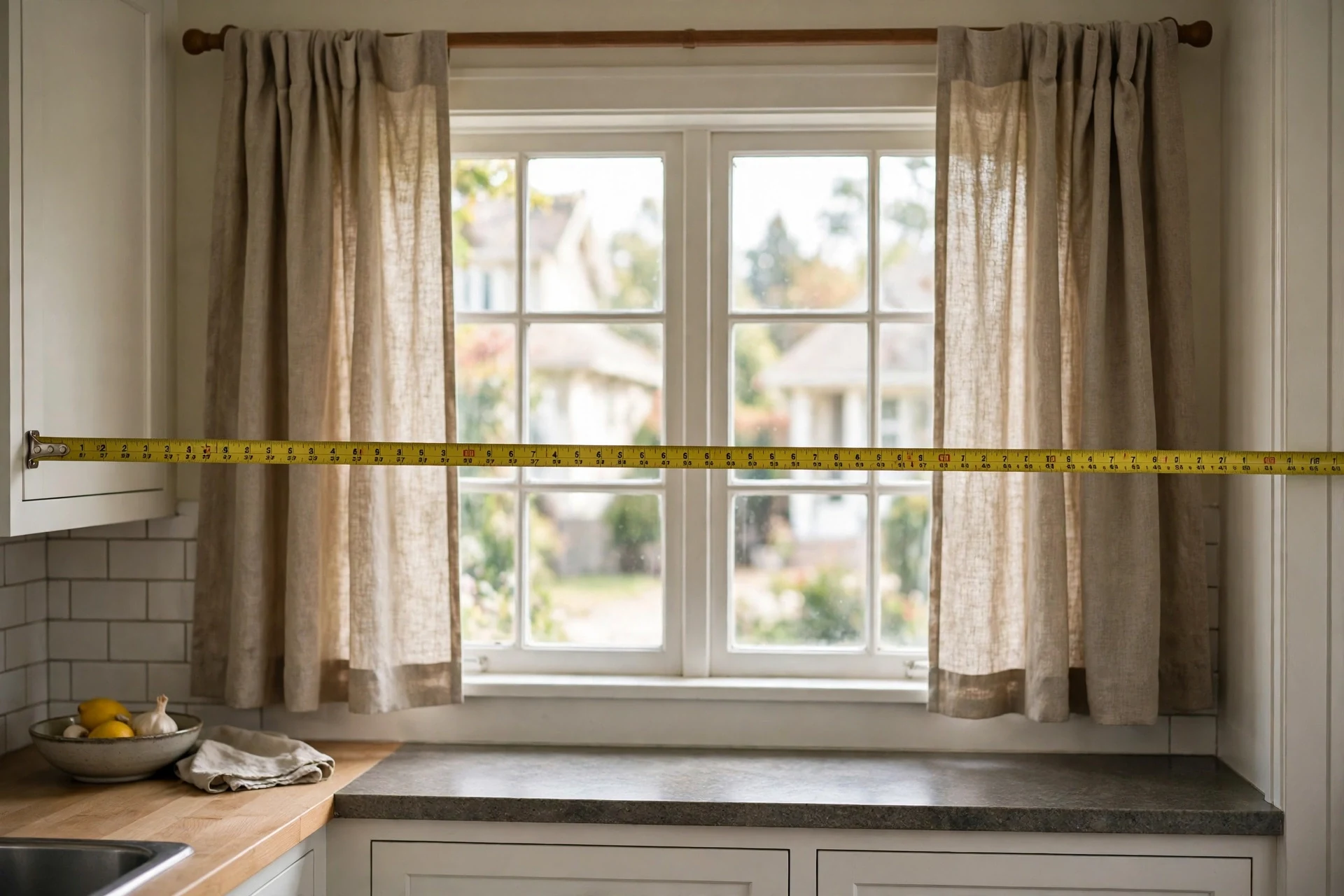
Measure in this order: window width, rod position, drop to the stopping point, and total panel width for fullness. The total panel width should be wider than the rod, so folds stay full when closed rather than stretched flat. For a cafe tier, each panel should still gather, not hang flat, or the tier will look thin and give patchy cover. For the full steps, see How to Measure for Curtains and How to Hang Curtains.
Floor length has a place in a kitchen too, but only where no work surface sits below the window. A floor-length panel suits a large eat-in window or a patio door, where the hem can fall clear of the floor and the panel can draw fully without catching on a counter. For a patio door, choose panels that stack clear of the sliding path and the door handle when open, and that draw fully shut without dragging, and check the hem against foot traffic, because a floor-length kitchen panel meets more dirt than a short panel. Even at floor length, the fabric must stay clear of heat, and a patio-door panel near a stove needs the same heat check as any other kitchen cover.
Ordering checklist for a kitchen window
A kitchen window order is right when the type fits the window job, the length clears the work below it, the fabric washes easily, and the night cover is planned.
- Name the window job: sink, stove side, small, street-facing, large, or eat-in.
- Pick the type for that job from the comparison in this guide, and decide the night layer if the window faces a street.
- Measure the rod position and the drop to the stopping point, and check that point against the faucet and the counter.
- Read the fiber content and the care label, and pick a fabric you will actually wash on a kitchen rhythm.
- Check what the set includes and whether the rod and hardware are part of it.
- If no ready-made length fits the window, check custom-made sizes before settling for a length that rests on a counter or falls short.
- Check heat clearance near a stove. If any check fails, change the type or the length, not just the color.
Frequently asked questions about kitchen curtains
The questions people ask most about kitchen curtains cover privacy, length, washing, blinds, roller shades, and style choices, with the detail in the guide above.
Are cafe curtains enough for privacy in a kitchen?
Cafe curtains are enough for daytime privacy at eye level, but not for full night privacy on their own. They screen the lower glass while the open top lets in daylight. At night, with kitchen lights on, the open top is visible from outside, so a street-facing kitchen needs a closing layer or a full panel for the evening.
Can I hang curtains above a kitchen sink?
Yes, if the panels are short, washable, and end clear of the counter and the faucet. Cafe curtains and short panels keep fabric out of the splash zone and come down fast for washing. A long panel over a sink will rest on a wet counter and get in the way at the faucet, so length is the deciding point, not the style name.
What length is best for kitchen curtains?
The best length for most kitchen curtains is short: a cafe tier that covers the lower window, or a panel that ends at or just below the sill. Short lengths stay clear of sinks, counters, and appliances, wash with less fuss, and keep the room bright. Longer lengths suit only windows with no work surface below them, such as a large eat-in window, and even there the fabric must stay clear of heat.
Are Roman shades better than curtains in a kitchen?
Roman shades are better than curtains for a large kitchen window that needs a tidy finish and full cover, and curtains are better for a sink window or a small kitchen where fast washing matters. A shade covers the whole window when lowered and raises fully clear. A short curtain panel washes faster and stays farther from steam and splash. The window job decides, not the product type alone.
Do kitchen curtains get greasy?
Yes, kitchen curtains near cooking collect a thin grease film over time, and panels near a stove collect it fastest. No common fabric stays grease free on its own, so the fix is washing rhythm, not a special fiber claim. Washable fabric and spot cleaning a fresh mark on the day it appears keep grease from building into a dull film.
How often should I wash kitchen curtains?
Wash kitchen curtains when they look dull, feel greasy at the lower edge, or smell stale after cooking, which for a daily cooking sink window can mean every few weeks. A breakfast nook panel far from the stove can go much longer. Judge by look, feel, and smell, not by a fixed calendar, and dry panels fully before rehanging.
Can I use a valance alone in a kitchen?
A valance alone works only where privacy and light control are already solved, such as a window with privacy glass or a shade underneath, or a private garden window. On a street-facing window, a valance alone gives almost no privacy, because most of the glass stays bare. Pair it with cover underneath if the window needs screening.
Are blinds or shades better than curtains in a kitchen?
Blinds or shades are better than curtains in a kitchen where wipe-clean care, a tight space, or a stove-adjacent window matters most, and curtains are better where fast washing and a softer look matter most. A blind or shade sits close to the glass, takes no side stack, and wipes clean where its material allows, while a short curtain panel comes down fast for washing and softens light more gently. The window job decides, not the type name alone.
Are roller shades good for a kitchen?
Roller shades are good for a kitchen where a wipe-clean, close-fitting cover is needed, especially a small window or a stove-adjacent window where loose fabric must stay out. A roller shade sits close to the glass, takes no side stack, and many roller materials wipe clean with a damp cloth, but it still needs the same heat check as any cover, and a fabric roller that cannot be wiped is no easier in a kitchen than a short curtain panel.
What color or pattern suits my kitchen style?
Match color and pattern to the kitchen style, not to the window alone. A farmhouse kitchen suits a small check or a warm neutral, a modern kitchen suits a plain panel in a clean color, a traditional kitchen suits a soft floral or a warm mid tone, a small kitchen suits a plain light panel that does not crowd the wall, and an open-concept kitchen suits a shared neutral that sits well with the next room. In every style, a small check, stripe, or floral print breaks up a mark better than a plain pale panel.
For other curtain types, see Best Window Curtains.
This guide is research-based curation: we compared maker specifications, published reviews, and current prices. Read how we choose.