 Best
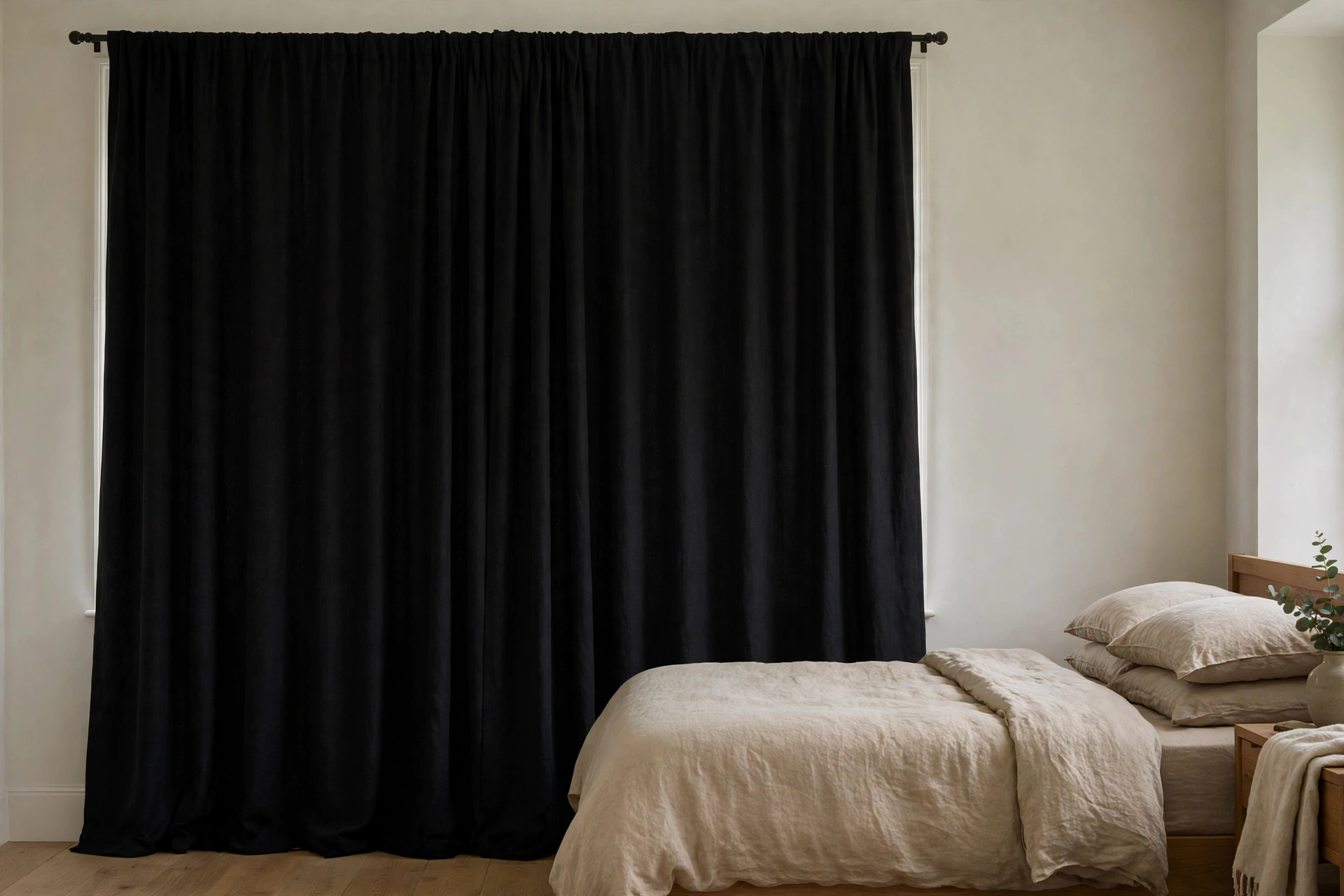
Best Soundproof Curtains
No curtain fully soundproofs a room, but a heavy, well-hung panel takes the edge off traffic and voices and calms echo. This guide sorts the honest picks by job.
No curtain fully soundproofs a room, and any guide that promises silence from fabric alone is overselling. A heavy, multi-layered panel hung wide and sealed at the edges takes the edge off traffic hum and voices, calms echo inside the room, and adds darkness and warmth as side benefits. This guide explains what curtains can and cannot do for noise, how to read a listing for the facts that matter, and six picks grouped by job.
Soundproof picks by job
Three-layer noise-reducing blackout suits street-facing bedrooms, velvet suits echoey rooms with hard floors, and heavy ceiling-to-floor panels suit home offices and studios. The picks are grouped by the noise job each one tackles, not by brand. Check layer count, core material, panel weight, heading, and the care label on the listing for the panel you choose.
As an Amazon Associate, we earn from qualifying purchases.
| Pick | Type | Build | Best for |
|---|---|---|---|
| 1 | Three-layer noise-reducing blackout panels | Three layers | Street-facing bedrooms |
| 2 | Dense triple-weave blackout panels | Dense woven layers | Everyday noise softening |
| 3 | Velvet noise-absorbing panels | Velvet pile face | Echoey rooms with hard floors |
| 4 | Lined blackout panels with sewn-in liner | Face plus sewn liner | Living rooms facing traffic |
| 5 | Heavy ceiling-to-floor room-divider panels | Heavy full-height panels | Home offices and studios |
| 6 | Four-layer dust-filtering blackout panels | Four layers, filter layer | Bedrooms near busy roads with dust |
1. Three-layer noise-reducing blackout panels: best for street-facing bedrooms
- Best for: A bedroom facing a street, where night traffic and voices need softening and darkness matters as much as quiet.
- Key features: Three-layer build, noise-reducing blackout result, thermal insulation, full-length fall, 52 by 84 inches, sold as a pair
- Pros: Strong noise softening for a retail build, darkness and warmth ride along, three layers add mass that single layers lack.
- Cons: Heavy, so it needs a strong rod and firm brackets, check the listing for the heading and the care label before ordering, because layered builds wash differently from single layers.
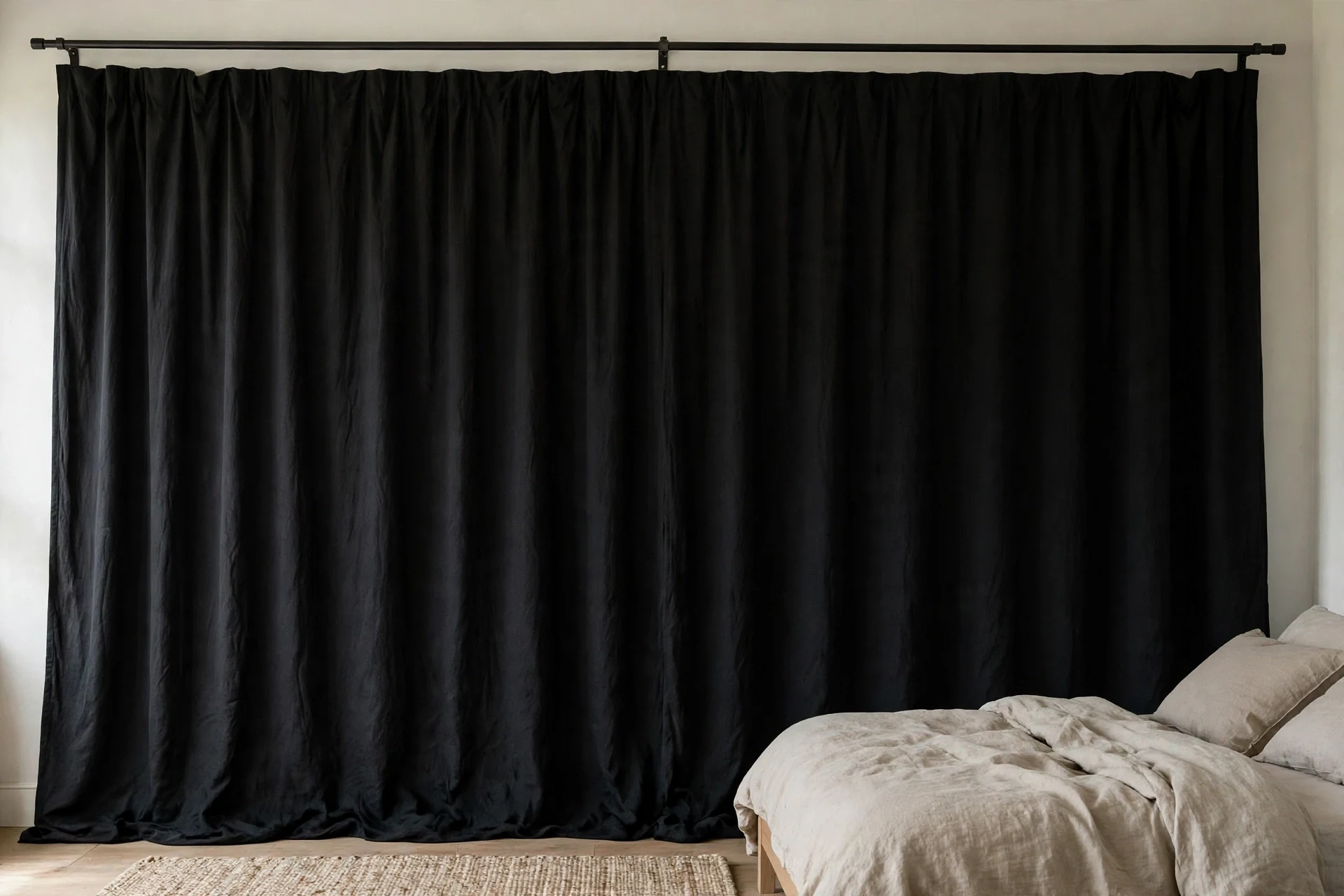
2. Dense triple-weave blackout panels: best for everyday noise softening
- Best for: A room where everyday street hum and voices need taking down a notch, without paying for a specialist acoustic build.
- Key features: Dense triple-weave polyester face, blackout or near-blackout result, medium-heavy fall, grommet or rod-pocket heading.
- Pros: Good first step before spending more, widely listed in many colors and lengths, usually machine washable, adds darkness and slows cold air at the window.
- Cons: Less mass than a felt-core panel, so less softening, a thin triple-weave panel is just a blackout panel with a noise word on it, so check the weight.
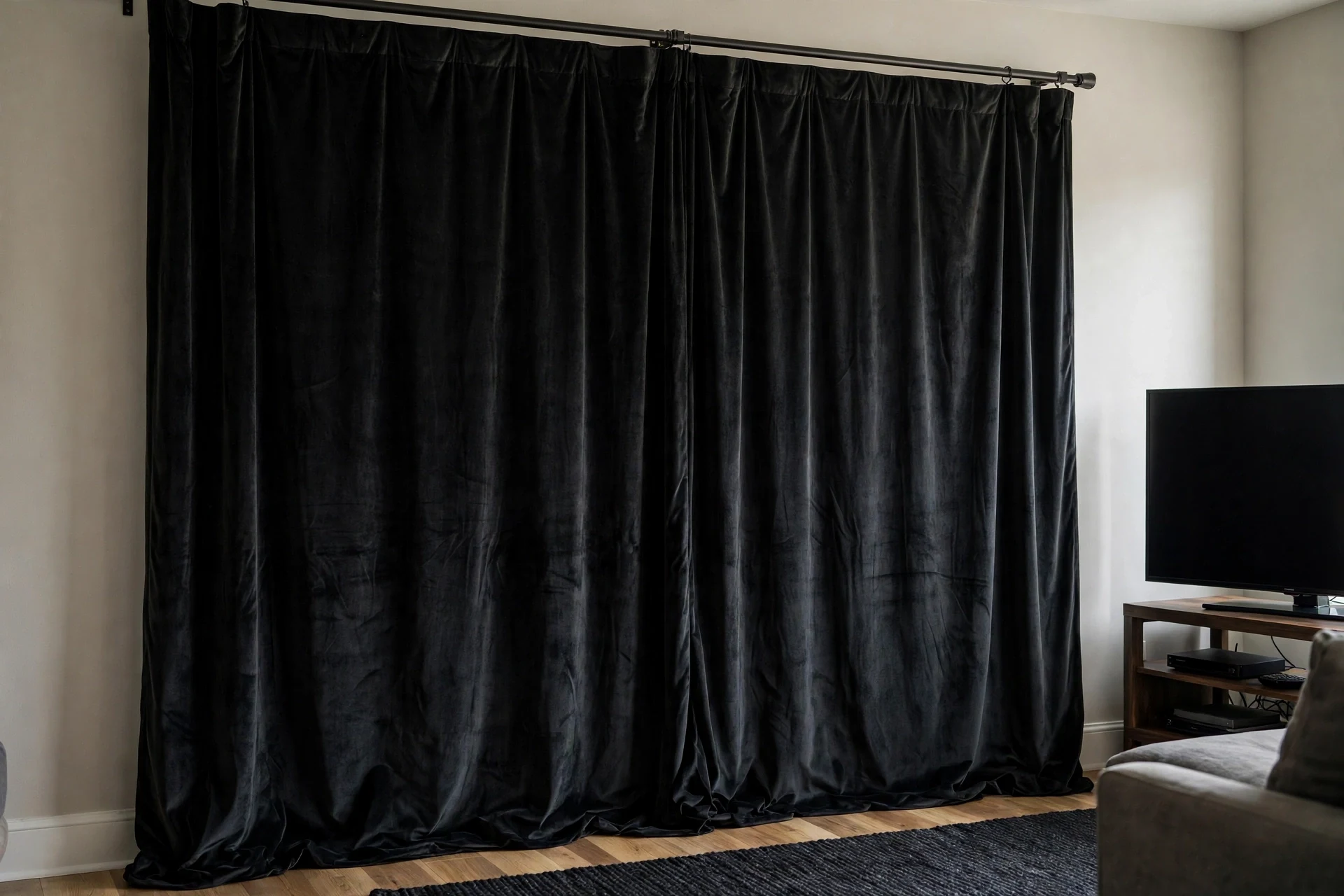
3. Velvet noise-absorbing panels: best for echoey rooms with hard floors
- Best for: A hard-floored living room or media room where voices echo, the television fights its own reflections, and the room sounds harsh.
- Key features: Velvet pile face, heavy fall, room-darkening to near-blackout by color, rod-pocket or back tab heading.
- Pros: Best absorbing surface among retail fabrics, because the pile gives sound a soft, air-filled surface, calms echo and harshness, looks like a normal curtain, not treatment.
- Cons: Absorbs reflections inside the room rather than blocking noise from outside, needs gentler care than flat polyester, shows crush marks if handled roughly.
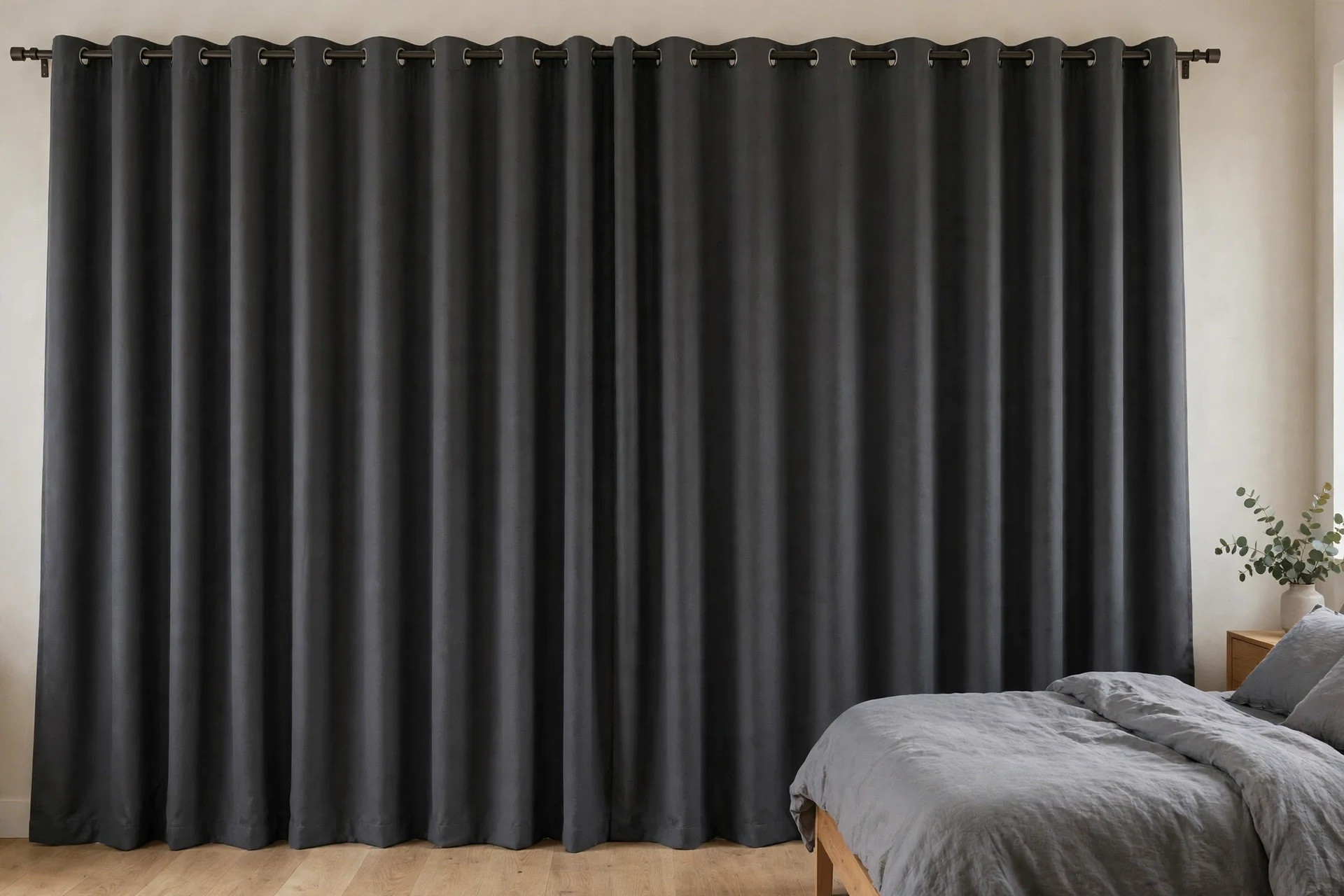
4. Lined blackout panels with sewn-in liner: best for living rooms facing traffic
- Best for: A living room facing a road, where darkness, warmth, and moderate noise softening all matter and the panel must look at home in daylight.
- Key features: NICETOWN face fabric plus sewn-in black liner, full shading blackout, two layers with a trapped air space, grommet heading, 52 by 90 inches, 2 panels, full-length fall.
- Pros: Two layers give more mass than a single layer, full blackout and slowed cold air ride along, hangs like a normal curtain with a fuller drape.
- Cons: Heavier than a single layer, so brackets must be firm, liner care may differ from face care, so read the label, costs more than a single-layer panel.
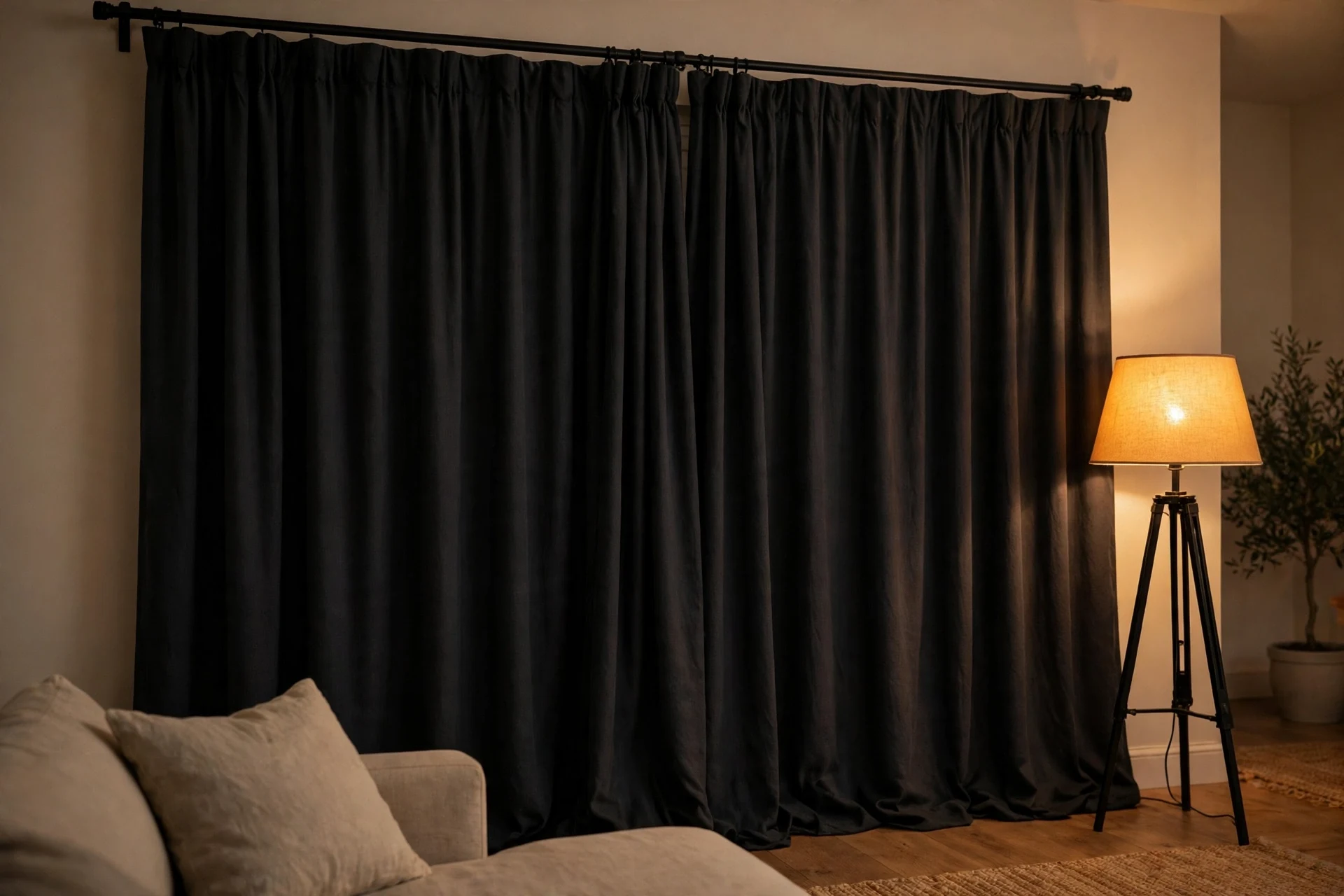
5. Heavy ceiling-to-floor room-divider panels: best for home offices and studios
- Best for: A home office or studio where a window wall or an open room needs dividing into a quieter work zone, with full-height coverage.
- Key features: Heavy full-height panels, ceiling or high rod mounting, wide coverage past the opening, grommet heading.
- Pros: Covers a whole wall or opening, not just a window, so fewer gaps, calms echo on video calls and in recordings, doubles as a room divider.
- Cons: Industrial look suits work rooms better than formal rooms, needs a ceiling track or a very strong rod, heavy panels are hard to wash at home.
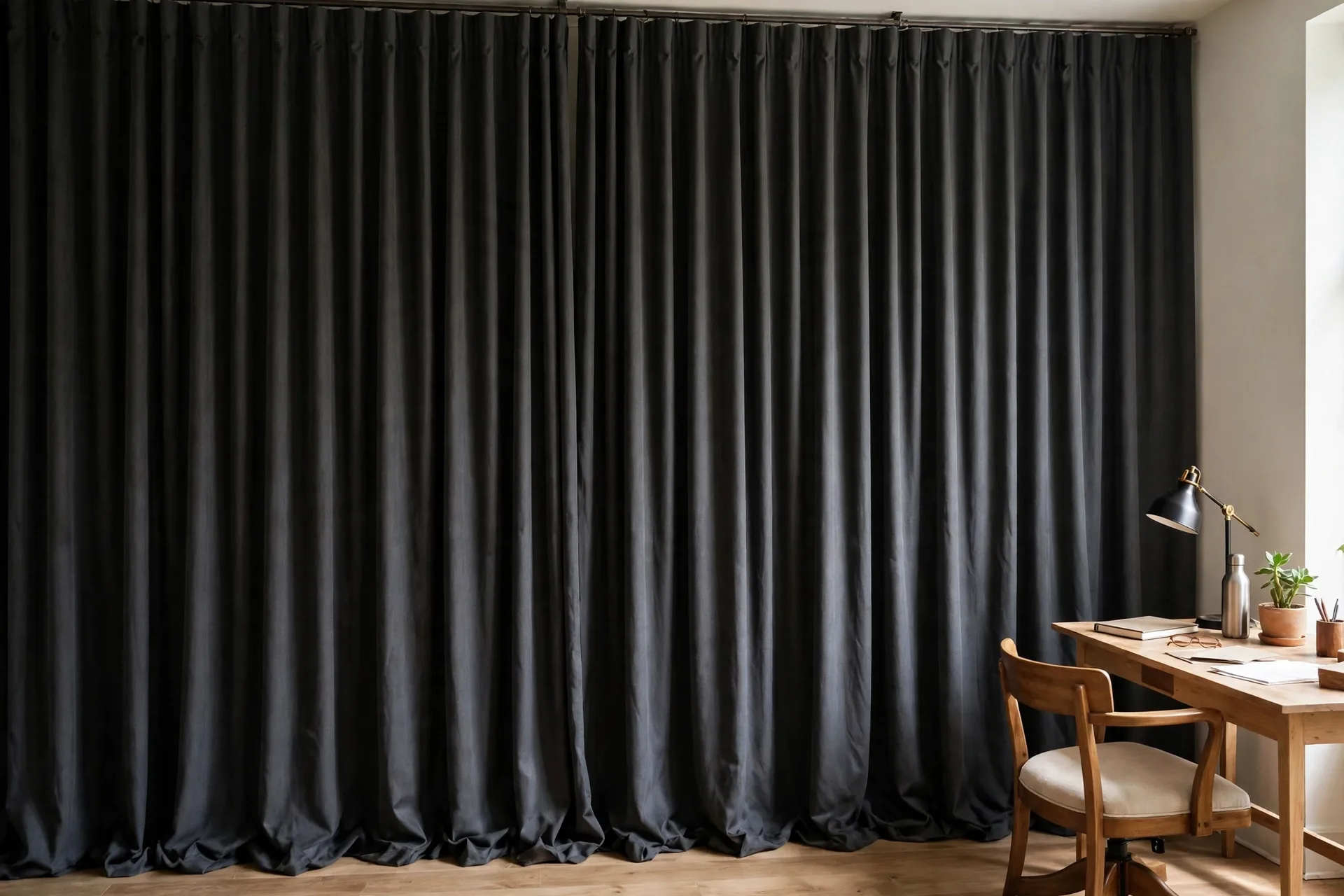
6. Four-layer dust-filtering blackout panels: best for bedrooms near busy roads with dust
- Best for: A bedroom near a busy road or building work where dust in the air troubles sleep as much as noise does.
- Key features: Four-layer build, face fabric, filter layer, dense core, backing, blackout result, full-length fall.
- Pros: Solves two problems at once, dust filtering plus noise softening, blackout and warmth ride along, suits allergy-prone sleepers near roads.
- Cons: Heaviest retail build, so hardware must be serious, filter layer care needs checking on the label, costs more than a single-purpose panel.
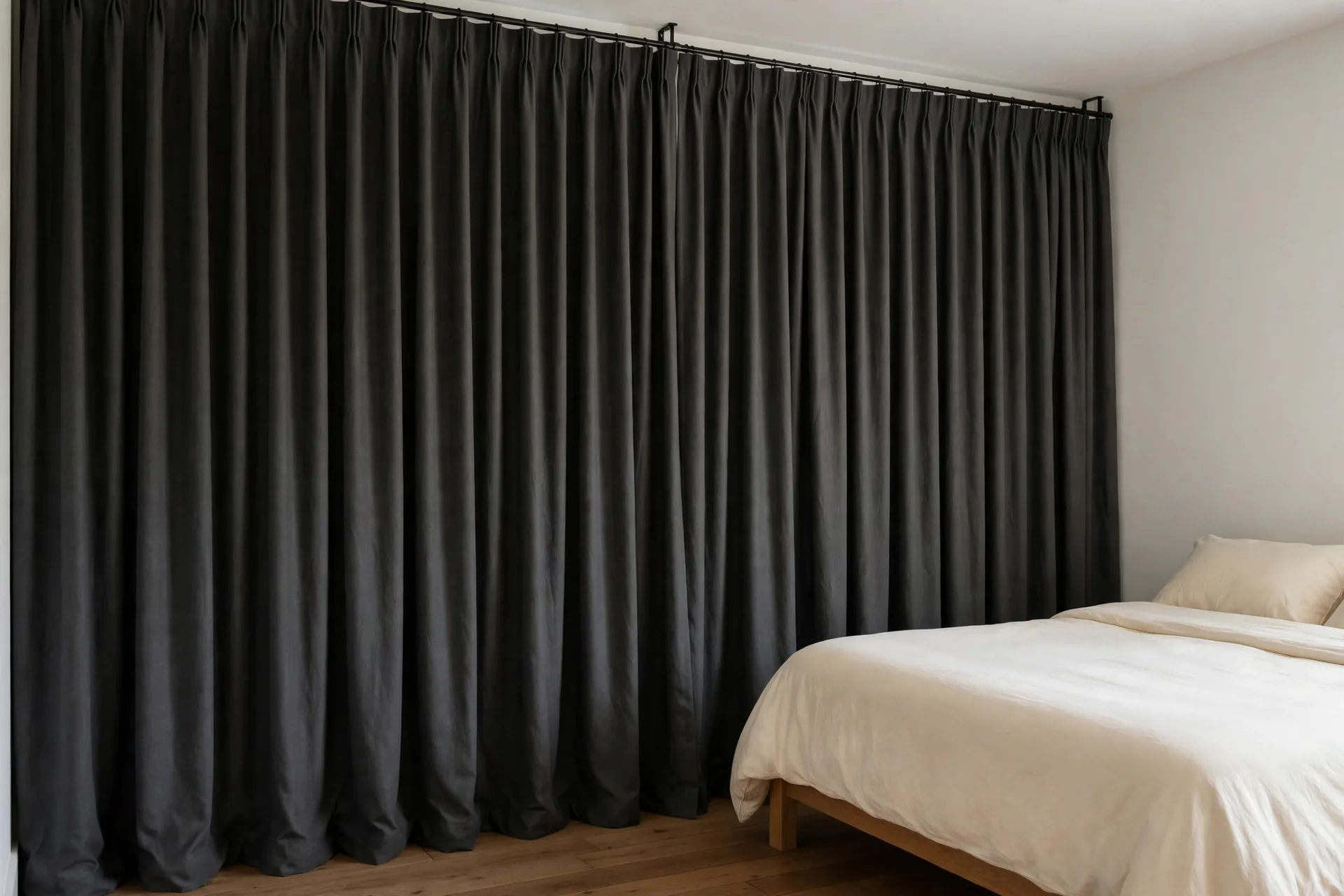
What curtains actually do to sound
Curtains do two different jobs for sound, and confusing them is how buyers get disappointed. The first job is absorbing sound inside the room: soft, heavy fabric soaks up reflections, so voices sound less harsh, a television stops fighting its own echo, and a hard-floored room feels calmer. The second job is blocking sound from outside: stopping noise from passing through the window into the room. Curtains are good at the first job and weak at the second, because blocking needs mass, an airtight seal, and an air gap, and a rod-hung curtain has only partial mass, no perimeter seal, and little air gap.
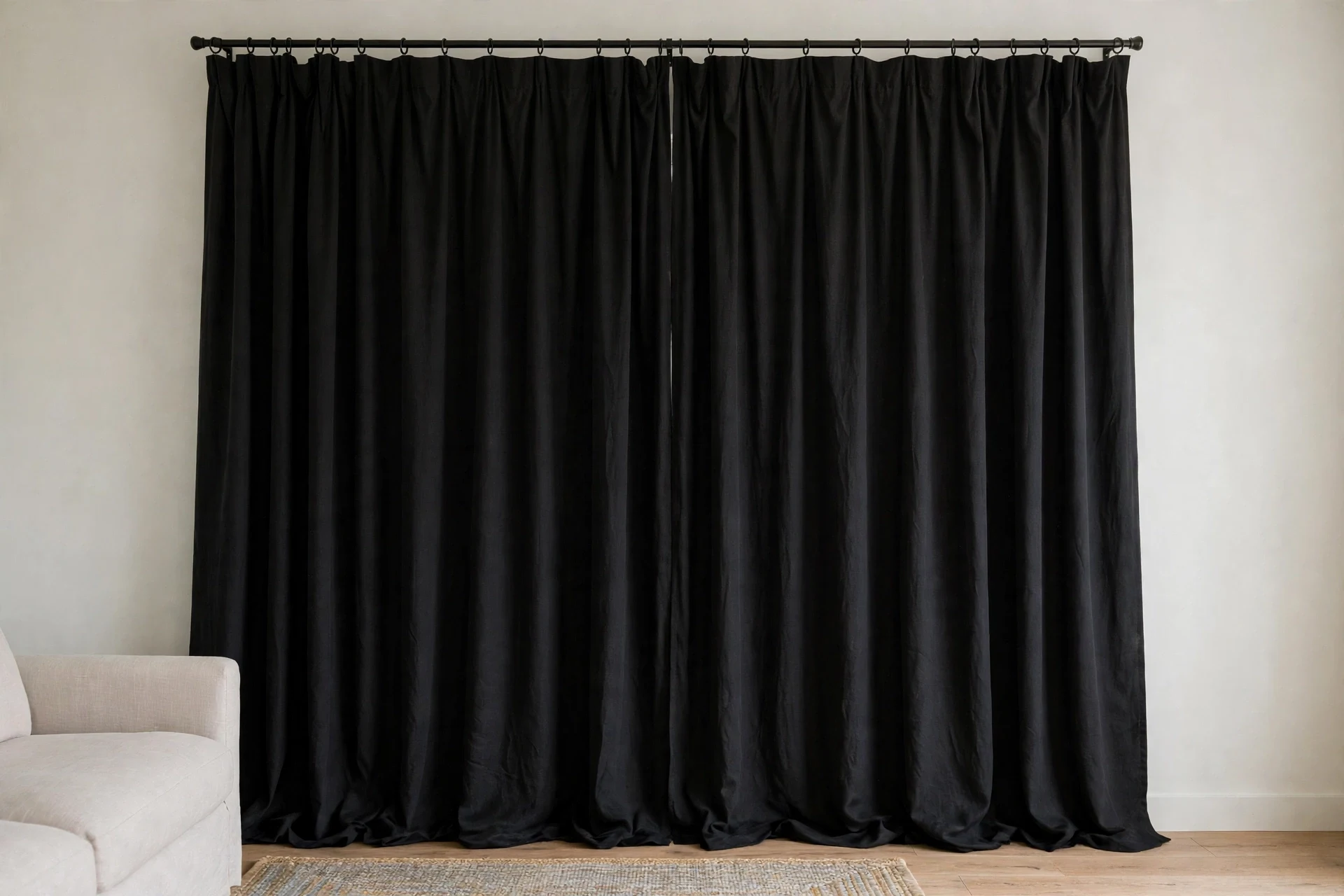
That is why a heavy curtain helps most with mid and high sounds such as voices, traffic hiss, and horns, and least with low sounds such as bass from music, truck rumble, and building work. Low sounds carry long, powerful waves that pass through soft materials with little loss, and no fabric panel stops them well.
A second confusion is the word soundproof itself. It is a marketing label, not a technical description, because no fabric hanging from a rod seals a window the way a wall or a sealed pane does. The honest words are noise-reducing and sound-absorbing, and this guide uses them for what curtains actually do. A panel that claims a lab-tested transmission rating for fabric alone deserves skepticism, because transmission ratings belong to sealed assemblies such as walls and windows. Judge a curtain by its build, not by its noise word.
Two ratings describe what curtains do, and they measure different things. NRC rates absorption, which is what curtains actually do: a heavy gathered drape soaks up a good share of the sound striking it. STC rates transmission blocking, which belongs to walls, windows, and vinyl cores: ordinary curtains carry no meaningful STC, and the word noise-canceling belongs to headphones, because no fabric cancels sound.
How to read a listing for noise
A listing that means it for noise names three facts, and a listing that hides them is usually selling a relabeled blackout panel. The first fact is layer count: a genuine noise-reducing curtain has three or more layers, or a named dense core, while a single-layer panel, however dark, has little mass to work with. The second fact is panel weight: heavier panels soften more, and a listing that gives weight per panel lets you compare honestly, while a listing that gives no weight at all is asking you to trust the noise word alone. The third fact is the core material: felt, dense fiber, or a named filter layer means real mass, while vague words such as acoustic fabric with no build behind them mean little.

Coverage facts matter as much as build facts. A listing that offers lengths reaching the floor and widths well past the frame supports the sealed hang this job needs, while a listing that offers only short or narrow sizes forces gaps at the bottom and sides. Heading matters too: a heading that lets panels draw fully shut, such as grommets or rings, seals the center better than a heading that grips the rod and leaves the panels half-drawn.
Run this test on every listing before ordering: if it fails two of those five checks, it is a blackout panel with a noise word on it, not a noise panel, and the everyday triple-weave pick above is the honest version of that buy.
Weight is the number a buyer can check. Look for about 3 lb per panel for basic reduction or 5 lb and more for meaningful performance. If a listing omits weight, divide the shipping weight by the panel count as a comparison baseline across listings.
Color does not affect sound, and texture helps high frequencies only slightly. A listing that sells a color or a surface pattern as a noise feature is selling looks, not performance.
Hanging for noise: wide, high, sealed
Hanging decides how much of a heavy panel's promise survives, because sound travels through gaps before it travels through fabric. Hang the rod well past the frame on each side, so closed panels overlap the wall and leave no open strip at the edges, and hang it high enough that the panels reach the floor or pool slightly on it, so no gap sits under the hem. A perfectly heavy panel hung too narrow performs worse than a lighter panel with full coverage, because the open edges leak more than the fabric blocks. For rod placement steps, see How to Hang Curtains.
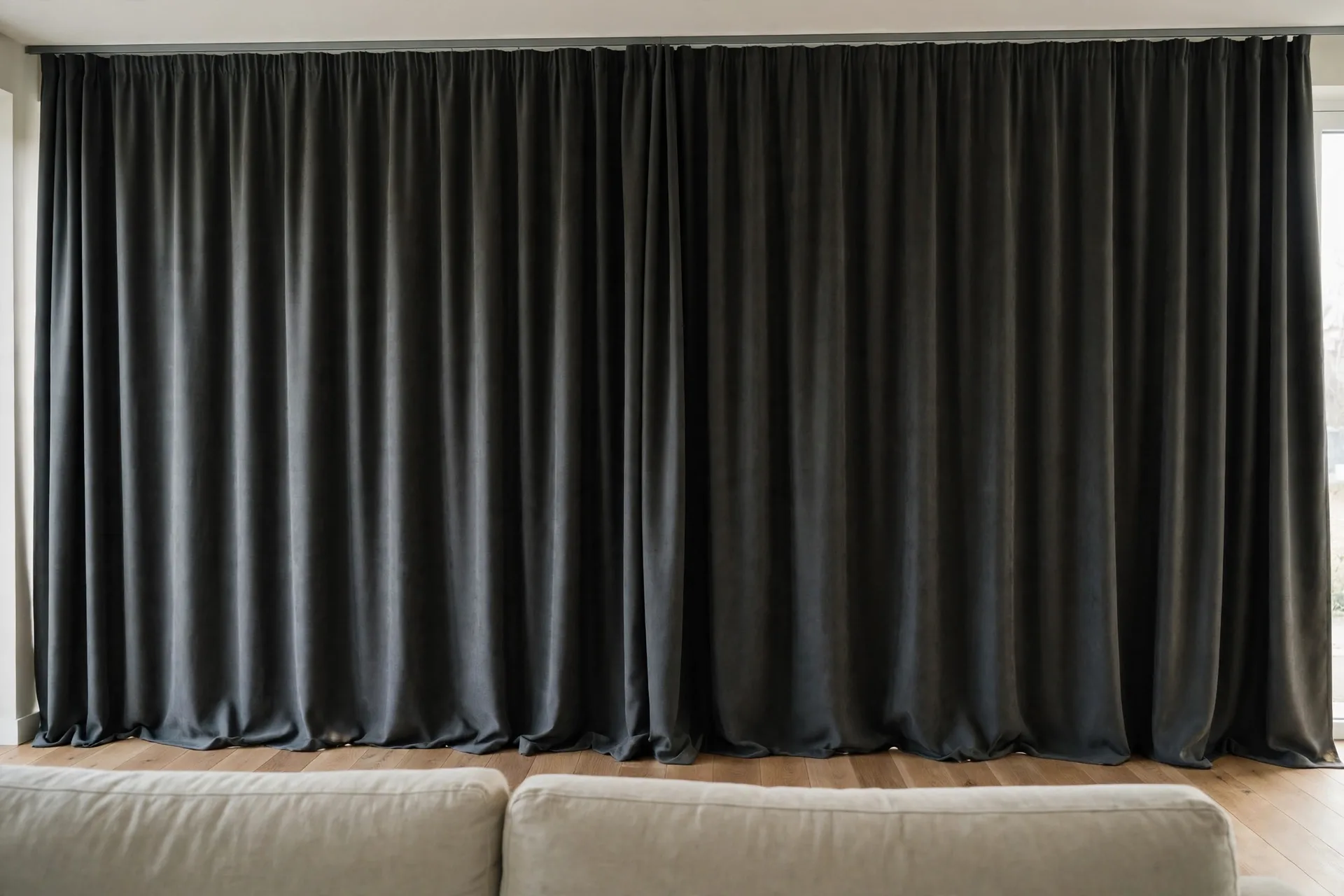
Seal the top and the center as well as the sides. A ceiling-mounted track closes the top gap better than a wall rod, because the track sits tight to the ceiling and leaves no open strip above the panels. A wrap-around rod, which curves back to the wall at each end, closes the side gaps in the same way. At the center, panels that meet and overlap, or a magnetic closure that pulls the two panels together, seal the seam that otherwise leaks both light and sound every time the panels close. The bottom should brush the floor or sill with no visible gap, because a hem that stops short leaves a slot for sound to pass under.
Keep an air gap between the panel and the glass. A panel hung a little out from the wall, rather than flat against the window, traps air between fabric and glass, and that trapped air helps more than an extra thin layer of fabric. For measuring steps, see How to Measure for Curtains.
Wraparound or return rods and ceiling tracks close the side and top gaps that open-end rods leave, and that sealing makes a small but noticeable difference over an open-end rod. Hang the panels 2 to 4 inches from the glass, so a real air gap sits between fabric and window instead of the panel lying flat against the glass.
Doubling up is the practical limit for layering: two layers on one rod, with the heavier layer closest to the window and an air gap between them. More than two layers loads the rod, fouls the returns, and adds little, so stop at two.
Noise by source: street, voices, echo, bass
Street noise is the job heavy curtains do best, within limits. Traffic hum, tire hiss, and horns sit in the mid and high range where fabric mass and absorption work, and a felt-core or lined panel hung wide and sealed takes the edge off them noticeably. The result is a softer street, not a silent one: a loud truck or a horn close by will still come through, and a bedroom facing a highway will still hear the highway, only less sharply.
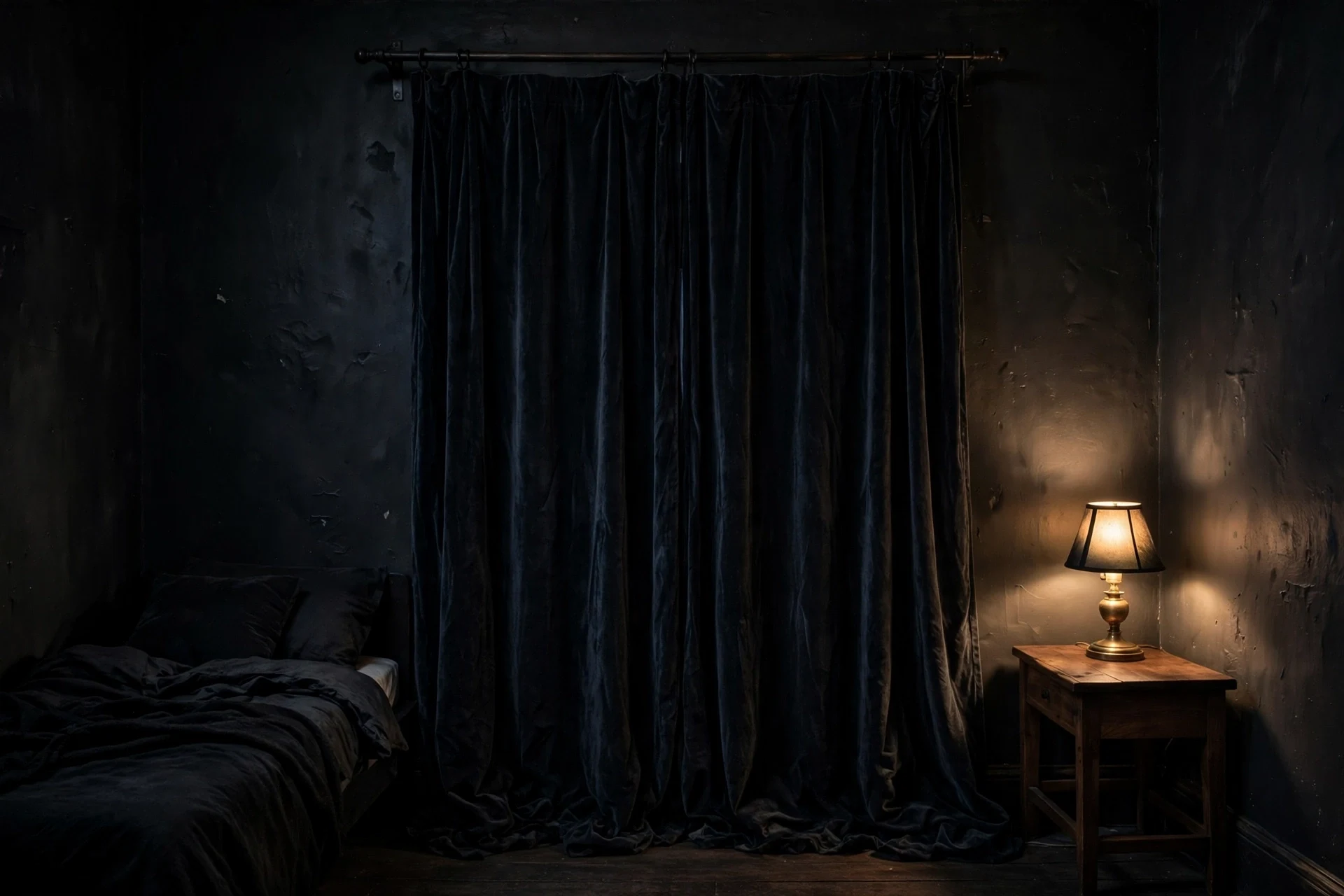
Voices from outside, from a shared hall, or from the next room soften well, because speech sits in the same mid range. A heavy panel over the window plus a closed door does more for voices than either alone, and a velvet or felt-core panel in the room itself calms voices further by absorbing reflections.
Echo inside the room is the job curtains do best of all. A bare room with hard floors, bare walls, and large glass sounds harsh because sound bounces between hard surfaces, and heavy fabric on the window breaks those reflections. Velvet pile is the strongest echo absorber among retail fabrics, because its deep pile gives sound a soft, air-filled surface, and full-height panels on a whole wall calm a room more than a single window panel.
Bass is the job curtains cannot do. Bass from music, a subwoofer next door, a bus engine, or building work carries long waves with too much energy for fabric to stop, and no curtain, however heavy, blocks it well. A buyer whose main problem is bass should not buy curtains for bass at all, and should instead look at the heavier answers in the section on when curtains are not enough.
Small reductions still matter, because hearing reads changes on a curve: a small drop is just perceptible, a bigger one is clearly noticeable, and a large one reads as roughly half as loud. A bedroom dropping toward the WHO night-noise guideline of 40 dB shows why even a modest reduction can help sleep.
Rooms that gain most from heavy curtains
Bedrooms facing streets gain most, because night traffic, passing voices, and general urban noise sit in the range where curtains perform best, and the noise softening combines with blackout darkness to help sleep. A felt-core or lined blackout panel hung wide, high, and sealed gives both sides of the sleep job at once, and a darker, quieter bedroom helps most sleepers rest better than a bright, noisy one. For room-wide bedroom advice, see Best Curtains for Bedroom.
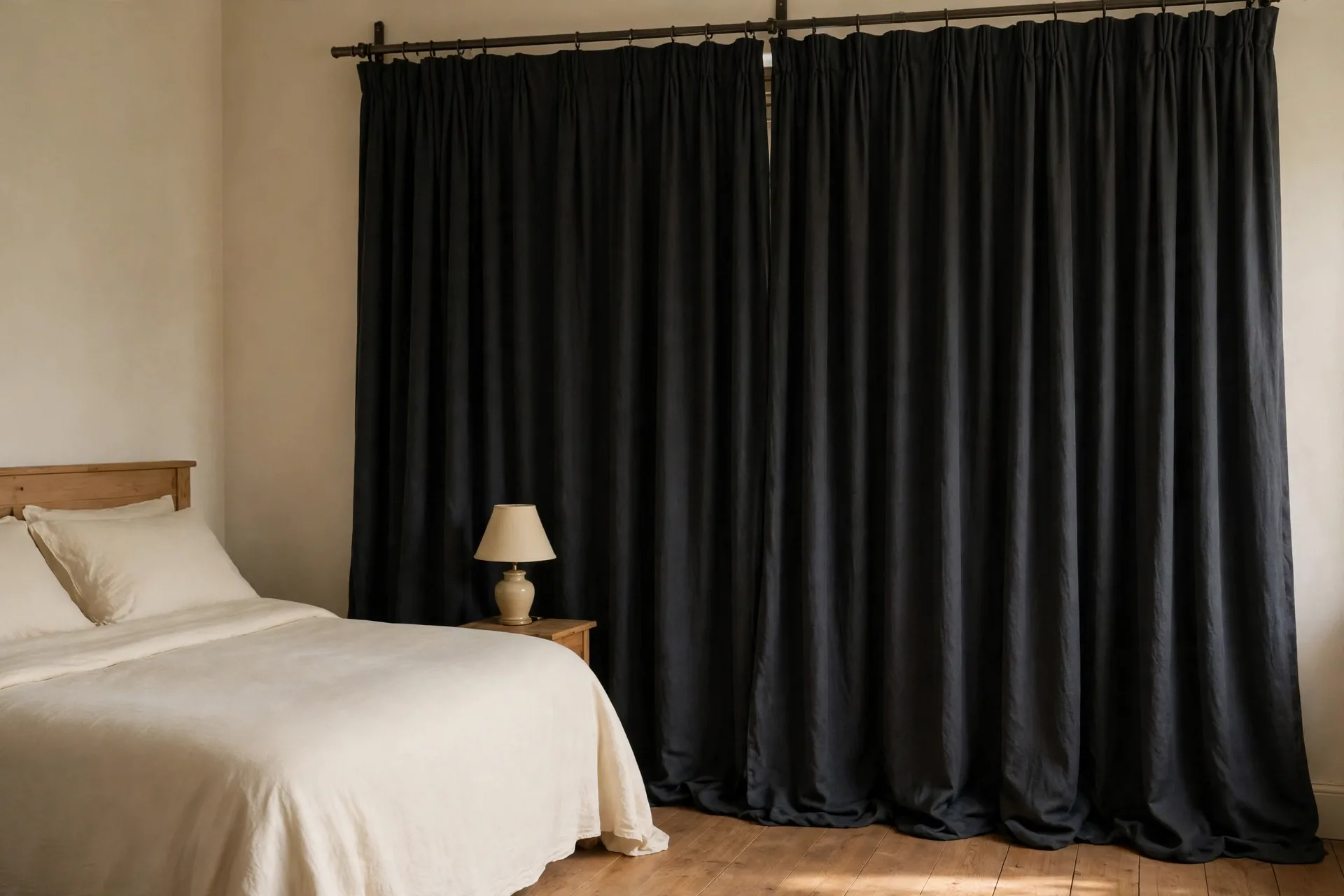
Home offices on busy streets or above ground-floor shops gain next, because reduced background noise helps calls and focused work, and a heavy panel behind the desk also calms echo on video calls. Nurseries and children's rooms gain from both darkness and moderate noise softening, and in a nursery the panel must be cordless, with the crib kept away from the window and its cords, because cord safety outranks noise in any child's room.
Living rooms with large windows facing traffic gain in conversational comfort: voices soften, the television needs less volume, and the room feels calmer without a full renovation. A lined blackout panel suits a living room better than a specialist acoustic build, because it looks like a normal curtain in daylight while giving moderate softening.
Curtains also help over interior doors, because a hollow-core door transmits nearly as much noise as an open window. Hang a curtain over the door, add a door sweep at the bottom, and weatherstrip around the frame, and the door stops being the weak point in the room.
When curtains are not enough
Curtains have a ceiling, and a buyer who needs more than that ceiling should know before spending, not after. If the room still hears traffic clearly after a heavy, well-sealed panel, the window itself is the problem, and the next steps are window steps, not fabric steps. Sealing gaps around the existing frame with weatherstripping or caulk often helps more than adding another curtain, because gaps carry noise the way they carry cold air, and a sealed frame under a heavy curtain beats an unsealed frame under two curtains.
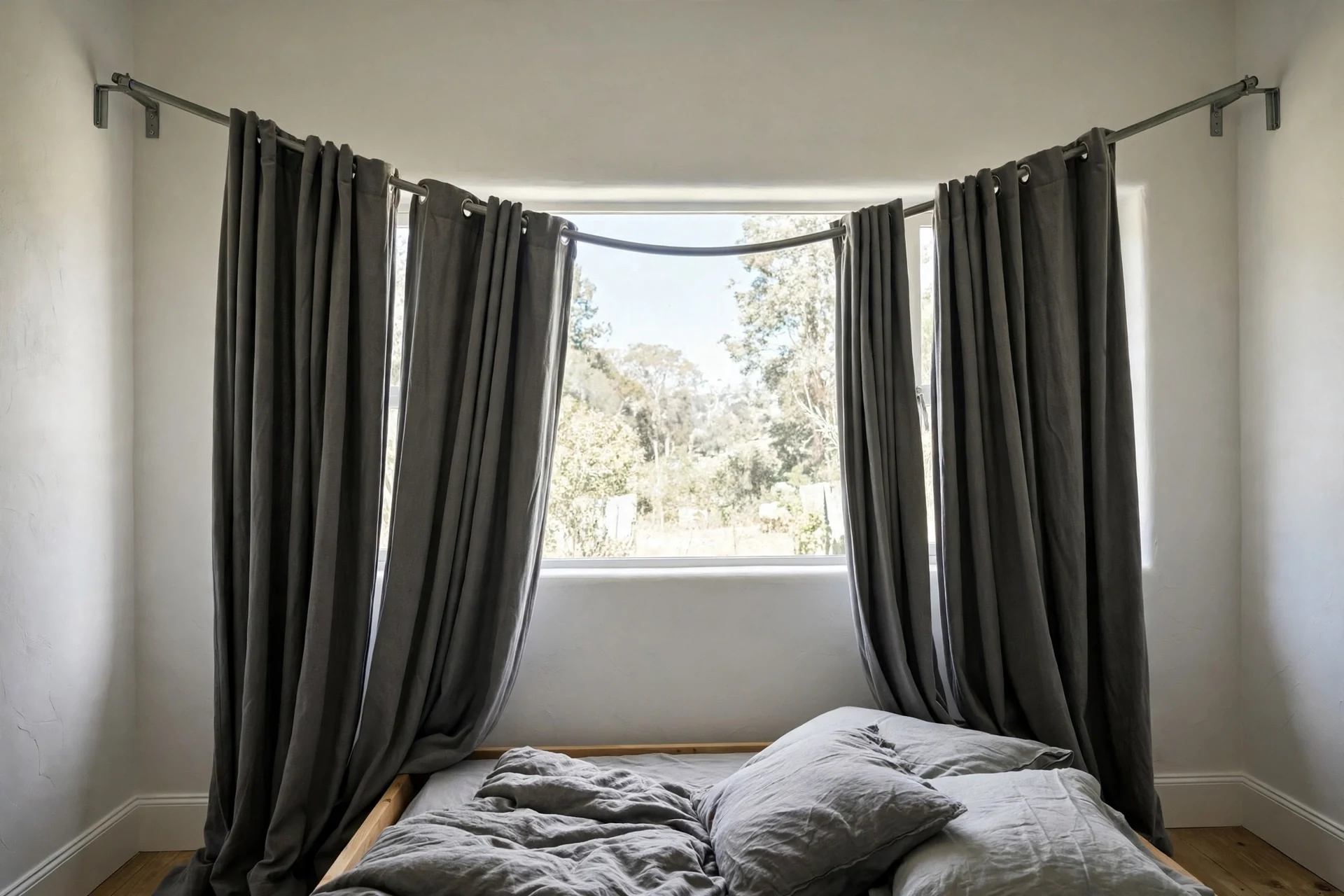
Acoustic window inserts are the strongest window-only answer short of replacing the window. A clear panel mounted inside the existing frame creates a sealed air gap that fabric cannot, and it suits renters better than reglazing because it comes out cleanly. Replacing single glazing with double or triple glazing is the permanent answer, but it is building work, not a curtain buy, and it needs a window supplier rather than a curtain listing.
Layering is the honest middle path. A sealed shade close to the glass, a heavy curtain over it, and sealed frames underneath give the best window-treatment-only result, because each layer adds a little: the shade seals, the curtain adds mass, and the air between them cushions. The rule is simple: buy curtains for softening and echo, buy window answers for blocking, and do not pay curtain money for a blocking job.
Vinyl-cored professional curtains are the one curtain category that truly blocks sound, with maker-published STC 13 and 17 lining ratings. They are custom priced and need track-grade hardware, so they belong to a different budget and fitting job than ready-made panels.
Before buying heavier curtains, run a hand around the frame while noise is present. If you feel air movement, seal the gaps first, because a leaking frame will defeat any panel, however heavy.
Washing heavy panels without wrecking them
Heavy panels are harder to wash than light ones, and the care label matters more here than anywhere else in this guide. A felt core, a filter layer, or a sewn-in liner may wash differently from the face fabric, and a panel whose core cannot be washed needs a removable liner that comes out on hooks or loops, so the face washes while the core stays dry.
Weight is the practical problem.
A heavy panel is heavy dry and far heavier wet, so a home machine may struggle with two panels at once, and a panel washed in a small machine can come out creased, bunched, or still dirty in the folds. Wash one panel at a time where the label allows machine washing, use a gentle cycle with mild detergent, and hang the panel back up while slightly damp so its own weight pulls creases out as it dries.
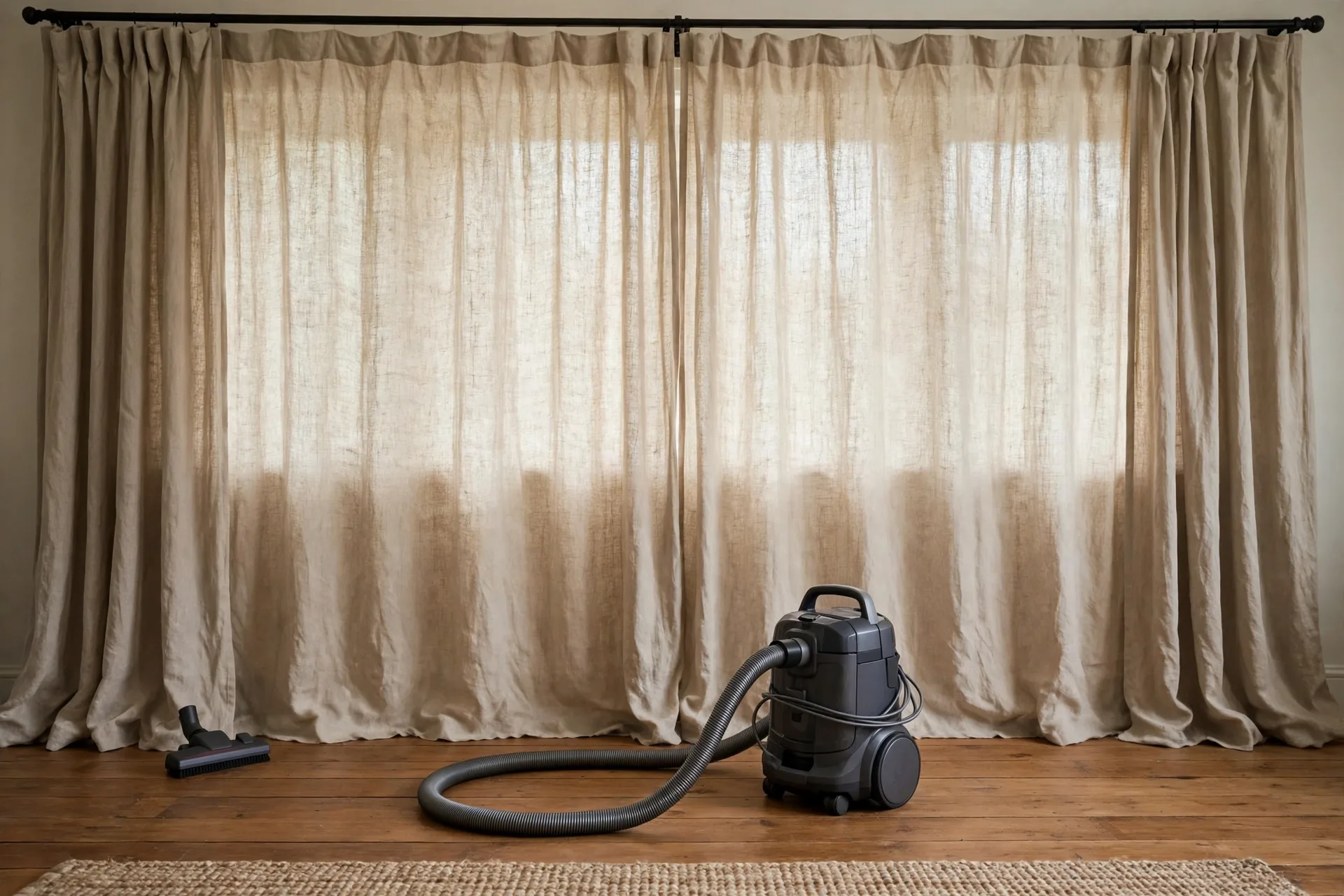
Vacuum heavy panels between washes with a soft brush head, always in the direction the fabric lies, and brush velvet pile gently rather than scrubbing it, because scrubbing crushes pile and leaves a lasting mark. The wash, dry, and iron symbols on the label follow the international care labeling standard, and those symbols are explained by GINETEX under that standard.
Felt-core panels need felt-core care. Spot-clean only, because a felt or fiber core can shift or bunch in a machine. Do not roll one tightly, because tight rolling compresses the core permanently. Store it in a breathable bag, not plastic, fold it around a pool noodle for moves, and hold it up to light once a year to check for thin spots.
Mistakes that waste money on noise
The most expensive noise mistake is buying a thin panel with a noise word on it. A single-layer blackout panel, however dark, has little mass, and its noise word is marketing rather than build. Run the listing test from the reading section: count layers, name the core, note the weight, check the sizes, and check the heading. A listing that fails two of those five checks is a blackout panel, not a noise panel, and the honest buy is the everyday triple-weave pick, not the premium price.
The second mistake is hanging a good panel badly. A heavy panel hung narrow, short, or gapped leaks more than it blocks, because sound travels through gaps before it travels through fabric. Hang wide past the frame, high to the floor, and sealed at the center, and fix the window frame gaps first.
A third mistake is ignoring hardware. Heavy panels need strong rods, firm brackets fixed into solid wall or proper anchors, and a center support on a wide span, and a thin rod that suits a sheer panel can bow or pull out under a felt-core set.
Frequently asked questions about soundproof curtains
Most soundproof questions come down to one honest answer: curtains soften and absorb, they do not silence. Get that right and the rest follows.
Do soundproof curtains really work?
Soundproof curtains work partly. A heavy, multi-layered panel hung wide and sealed softens traffic hum, voices, and echo noticeably, and calms a harsh room. The honest words are noise-reducing and sound-absorbing.
What is the difference between sound absorbing and sound blocking?
Sound absorbing means soaking up reflections inside the room, so voices sound less harsh and echo drops. Sound blocking means stopping noise from passing through a barrier into the room, which needs mass, an airtight seal, and an air gap.
Can curtains block bass from music or traffic?
No, not well. Bass carries long, powerful waves that pass through soft materials with little loss, and no curtain stops deep bass well.
Are blackout curtains the same as soundproof curtains?
No. Blackout curtains block light with an opaque weave or coating, but most are single-layer and light, so they have little mass for noise. Some blackout curtains happen to be dense enough to soften noise a little, and some noise panels include blackout as a side benefit, but the label alone tells you nothing. For the full blackout job, see Best Blackout Curtains.
How should soundproof curtains be hung for the best result?
Hang them wide past the frame on each side, high enough to reach the floor, and sealed at the center where the panels meet, with no visible gaps at the top, sides, or bottom. A ceiling track or a wrap-around rod seals better than a plain wall rod, and a small air gap between the panel and the glass helps.
Do soundproof curtains help with sleep?
A darker, quieter bedroom helps most sleepers rest better, and a heavy blackout panel gives both darkness and noise softening at once. For the full sleep job, see Best Curtains for Bedroom.
What weight and layers should I look for?
Look for three or more layers, or a named dense core such as felt or fiber, and a panel weight clearly heavier than a standard blackout panel. A single-layer panel with no named core and no stated weight is usually a relabeled blackout panel.
Can renters use soundproof curtains?
Yes, with one caution: heavy panels need strong rods and firm brackets, and a light tension rod will not hold a felt-core set. In a rental, use rods and brackets already in place where they suit the weight, or ask permission for proper brackets, and take the panels with you at move-out.
Do soundproof curtains also block light and cold air?
Most noise panels do, because the same mass and layers that soften sound also block light and slow cold air at the window. For the full warmth job, see Best Thermal Insulated Curtains.
When should I skip curtains and fix the window instead?
Skip curtains as the main answer when the room still hears traffic clearly after a heavy, well-sealed panel, when noise comes through walls or ceilings rather than windows, or when bass dominates.
For other curtain types, see Best Window Curtains.
This guide is research-based curation: we compared maker specifications, published reviews, and current prices. Read how we choose.