 Best
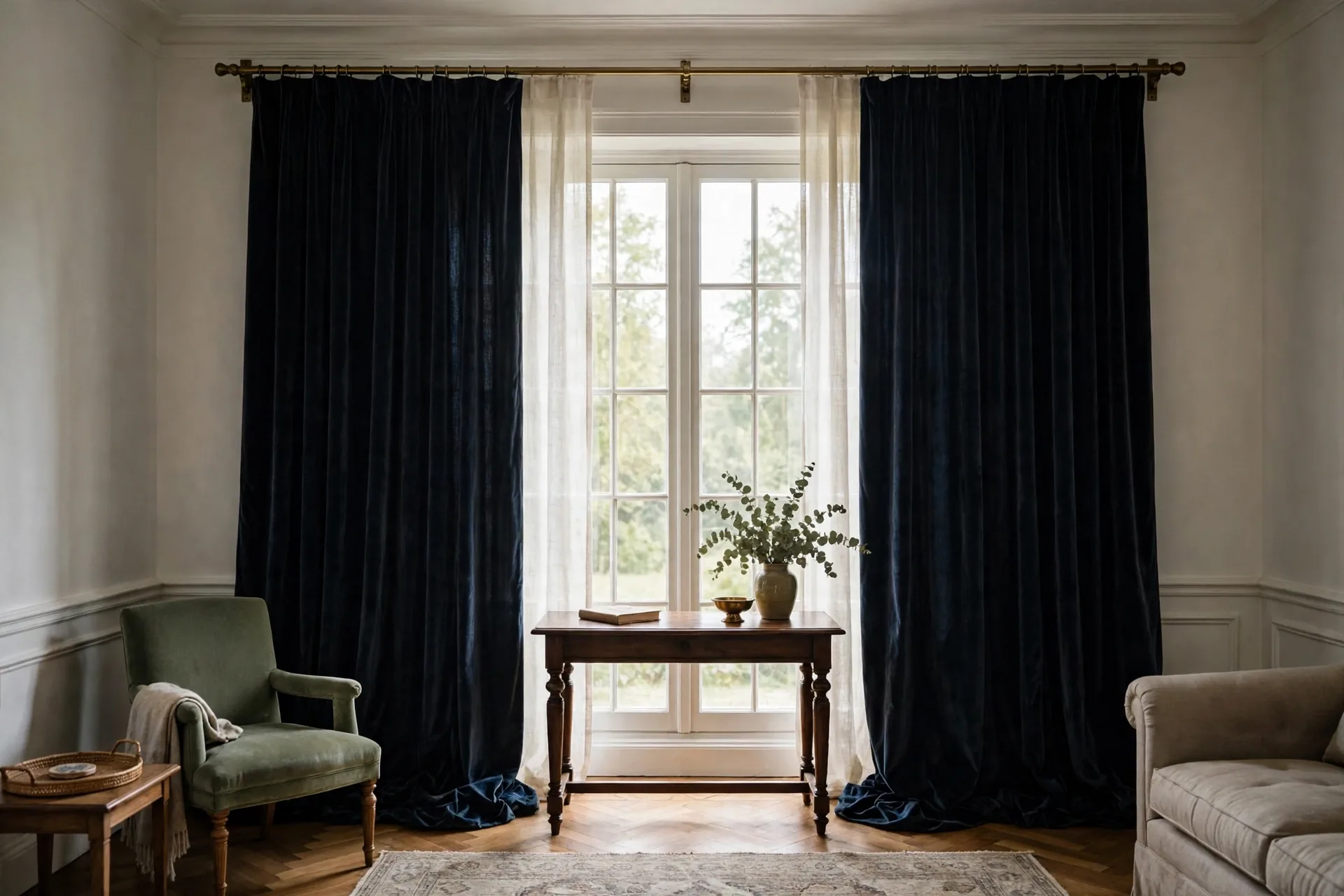
Best Velvet Curtains
Velvet gives a room weight, soft light control, and a formal feel, but the wrong type can sag a rod, trap dust, or leave a bedroom bright. This guide sorts velvet by type, lining, and room job.
The best velvet curtains are the ones that match the room job first and the look second. A heavy blackout-lined panel suits a bedroom or a media room, while a lighter unlined panel suits a formal room where daylight still matters. Pick by lining and weight before color.
Velvet is a pile fabric: short fibers stand up from a woven backing and catch light from different angles. That pile gives velvet its soft hand and deep color, and it also makes velvet heavier, warmer, and harder to keep dust free than a flat fabric. This guide sorts velvet types, explains what each lining really blocks, matches panels to formal rooms, bedrooms, and media rooms, and states plainly where velvet is the wrong choice.
Velvet picks by job
Blackout-lined velvet suits bedrooms and media rooms; unlined velvet suits formal rooms that still want daylight. The picks below are sorted by the room job each one does best, not by brand. No pick names a maker or a size here, because those vary by listing and must be confirmed on the listing before you order. Check fiber content, lining, heading, and care label on the listing for the panel you choose.
As an Amazon Associate, we earn from qualifying purchases.
| Pick | Type | Lining | Best for |
|---|---|---|---|
| 1 | Rod-pocket cotton velvet panels | Unlined | Formal rooms |
| 2 | Unlined polyester velvet panels | Unlined | Everyday formal living rooms |
| 3 | Standard-lined velvet panels | Standard lining | Street-facing formal rooms |
| 4 | Blackout-lined velvet panels (rod pocket) | Blackout lining | Bedrooms |
| 5 | Blackout-lined velvet panels (grommet) | Blackout lining | Media rooms |
| 6 | Unlined velvet panels layered over sheer | Unlined, over a sheer layer | Formal rooms that need daylight by day and cover at night |
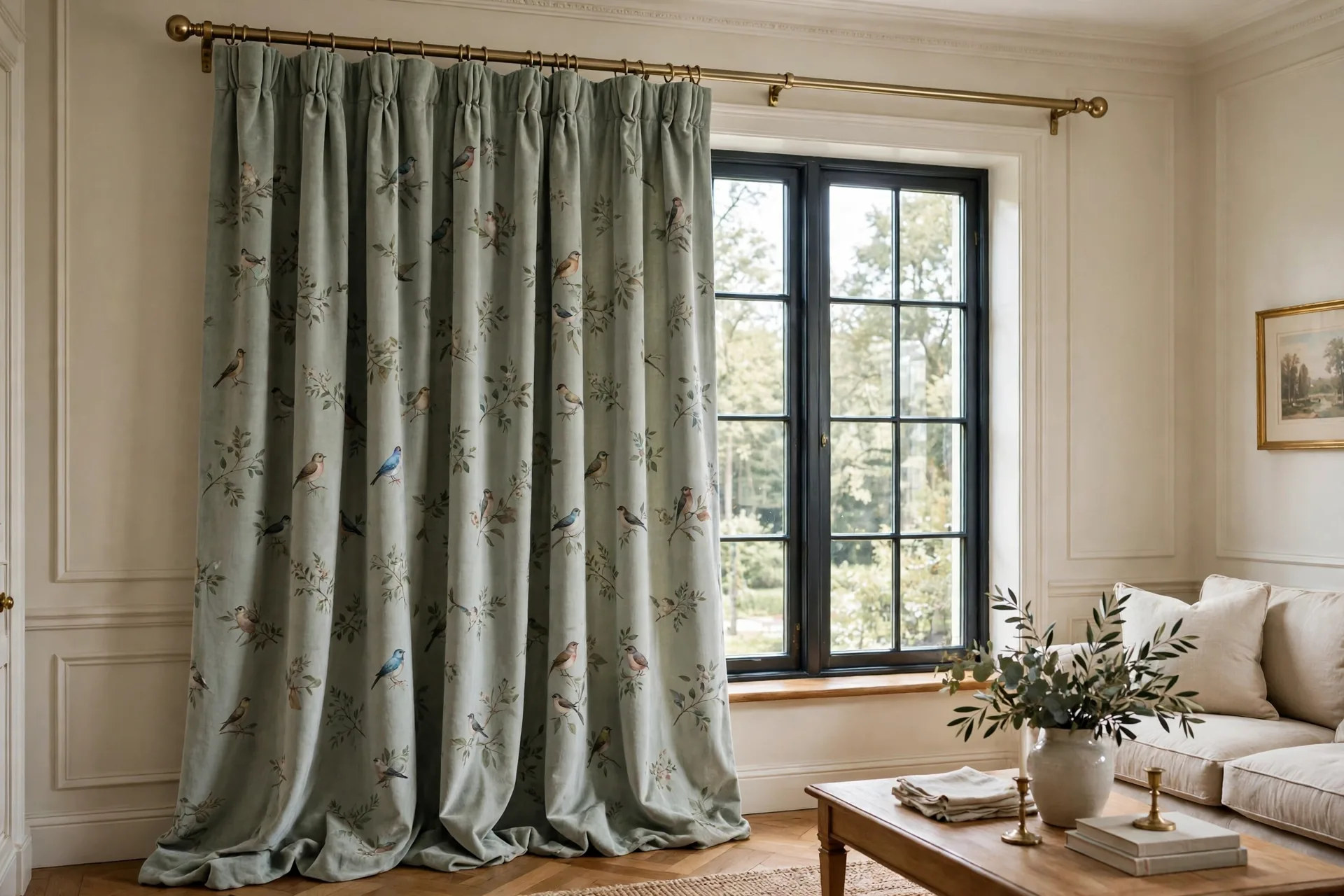
Rod-pocket cotton velvet panels: best for a formal room with a soft, natural hand
- Best for: A formal room where a soft, matte velvet hand and gentle folds matter most, and daylight is still welcome.
- Key features: Cotton velvet face; unlined fall; rod-pocket heading; printed bird design; listing states sheer opacity, so check it, since velvet normally dims light rather than passing it; sold as a single panel.
- Pros: Soft, natural feel; gentle drape; deep color from the pile.
- Cons: Needs gentler care than polyester velvet; marks easily from water and pressure; little darkness alone; printed design suits plain rooms better than patterned rooms; single panel, so order enough panels for the full width.
Unlined polyester velvet panels: best for an everyday formal living room
- Best for: A formal living room that is used daily, where velvet style must survive regular opening, closing, and cleaning.
- Key features: Polyester velvet face; unlined fall; even pile that holds its shape; grommet or back tab heading for daily sliding.
- Pros: Holds pile shape well; easier to live with than cotton velvet; soft daylight and daytime privacy.
- Cons: Less natural hand than cotton velvet; no real darkness alone; color can shift with light angle.
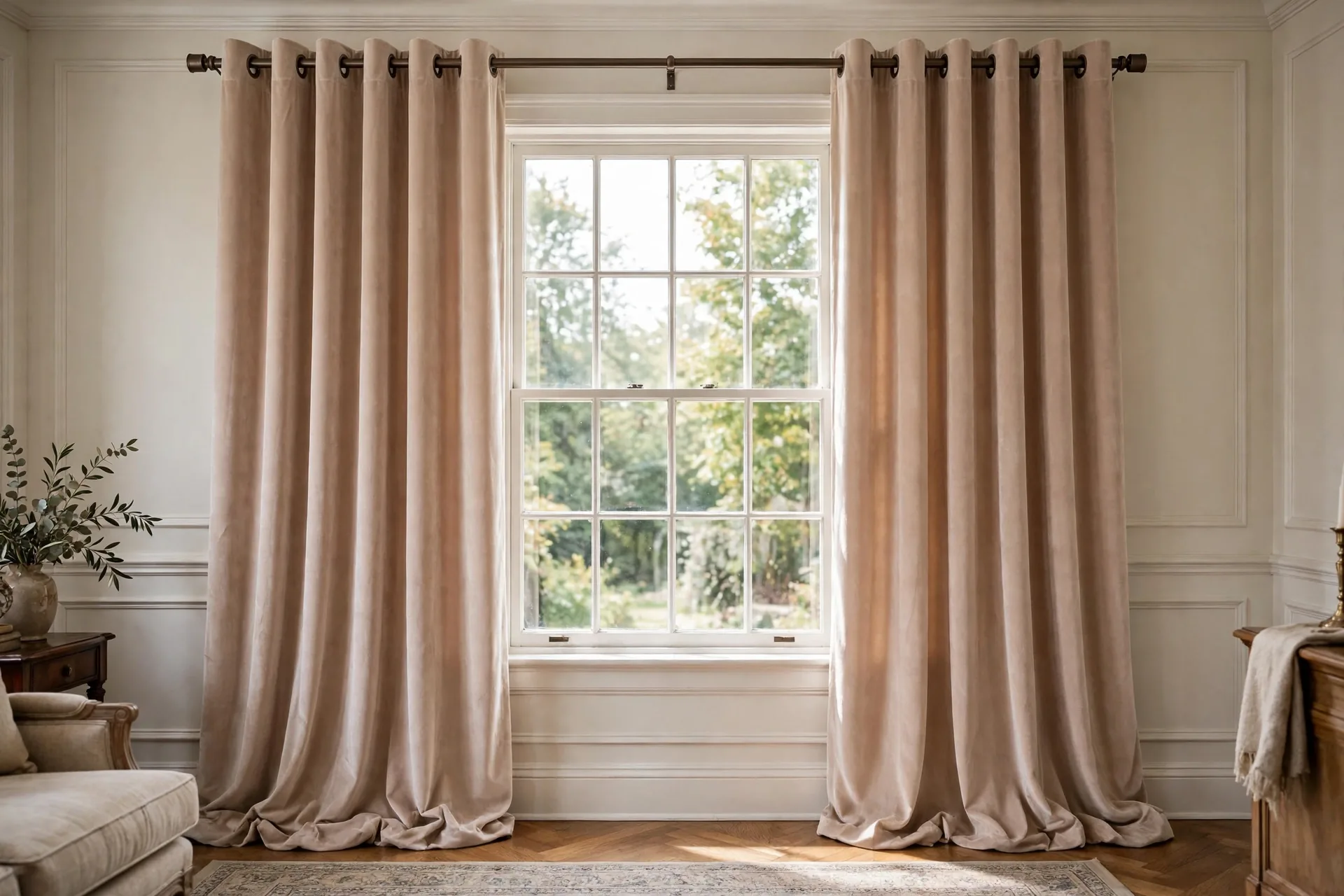
Standard-lined velvet panels: best for a street-facing formal room
- Best for: A formal room facing a street, where daytime privacy and a fuller fall matter more than full darkness.
- Key features: Velvet face with a standard lining; fuller, more even folds; lining protects the velvet face from sun.
- Pros: Stronger daytime privacy than unlined velvet; fuller drape.
- Cons: Heavier than unlined velvet, so it needs a stronger rod; stacks wider when open; not a blackout panel.
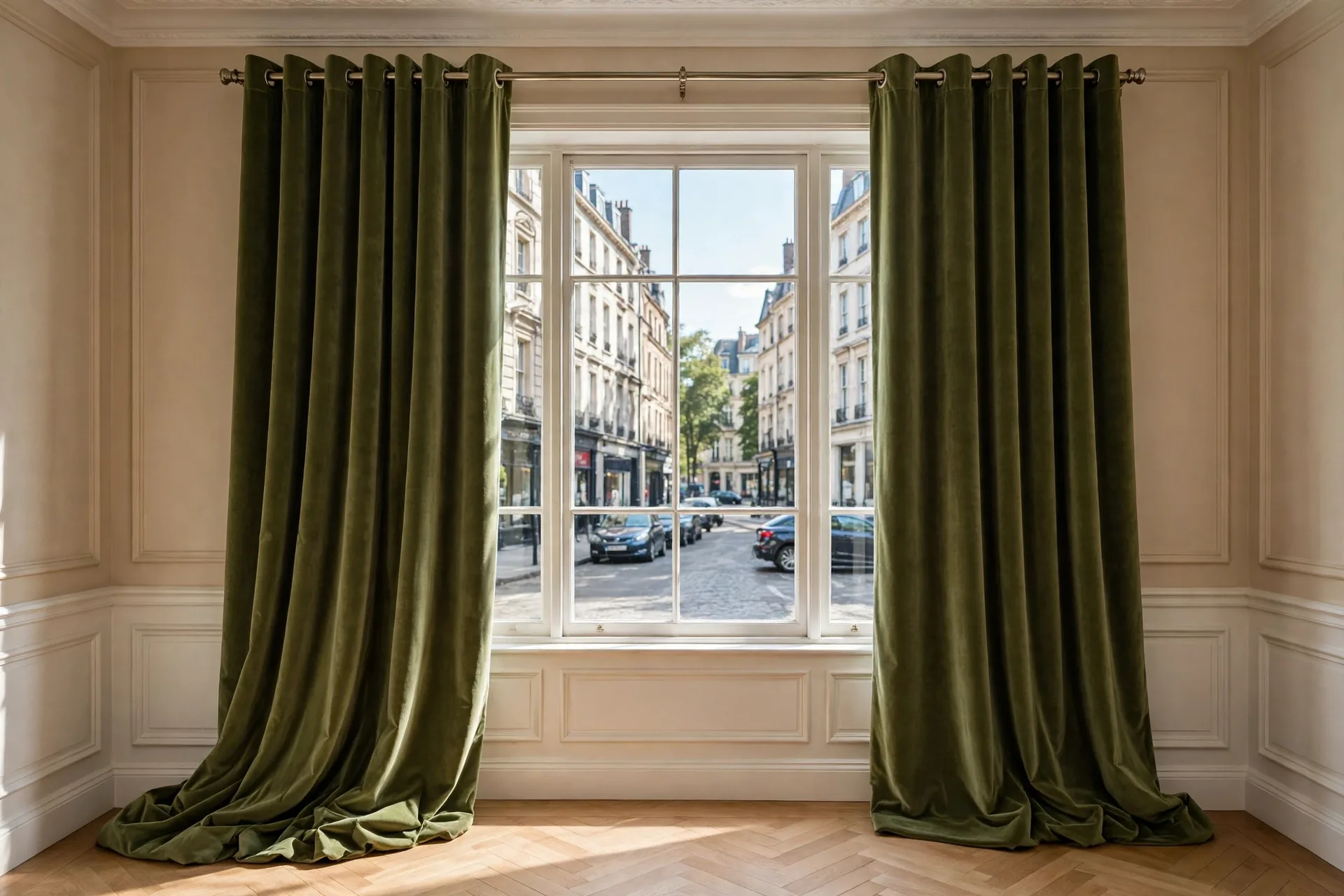
Blackout-lined velvet panels (rod pocket): best for a bedroom that must stay dark
- Best for: A bedroom where sleep comes first, including rooms facing street light or morning sun.
- Key features: Velvet face with a blackout lining; plain, restful color; heading that lets panels draw fully shut.
- Pros: Strongest darkness of any velvet type; velvet texture inside the room.
- Cons: Heaviest velvet type, so rod and brackets must be firm; needs full closed coverage or light leaks at the edges; check the care label.
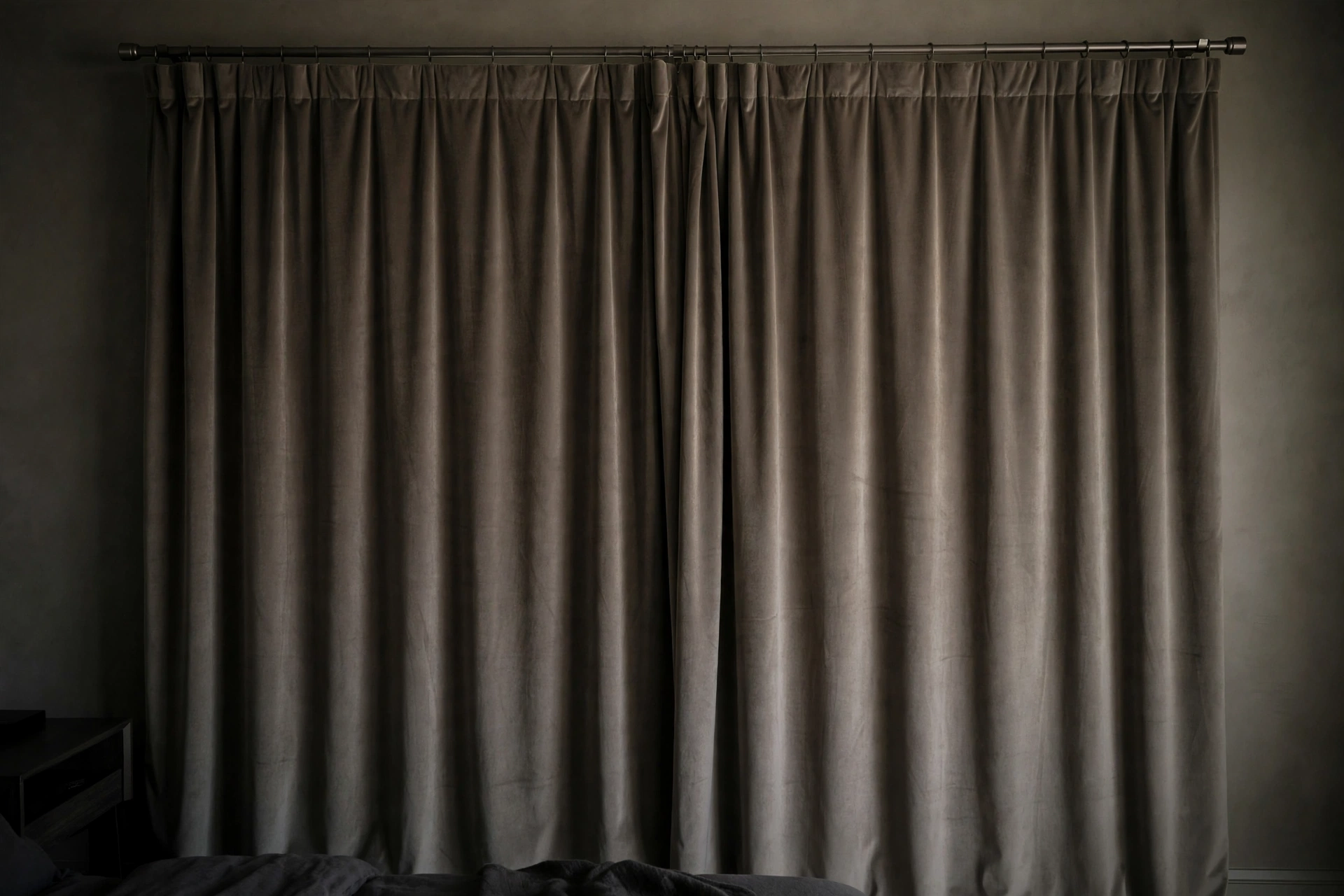
Blackout-lined velvet panels (grommet): best for a media room that must stay glare free
- Best for: A media room where screen glare, not sleep, is the reason for darkness.
- Key features: Velvet face with a blackout lining; dark, matte, plain pile; thermal insulated and noise reducing; full window plus frame coverage when closed.
- Pros: Cuts glare across the whole window; pile absorbs light instead of reflecting it; quiet look on the wall.
- Cons: Same weight and rod demands as the bedroom blackout pick; one uncovered window can undo the rest; crushed velvet is a poor substitute here.
Choose a dark color on the page; the link opens the white version.
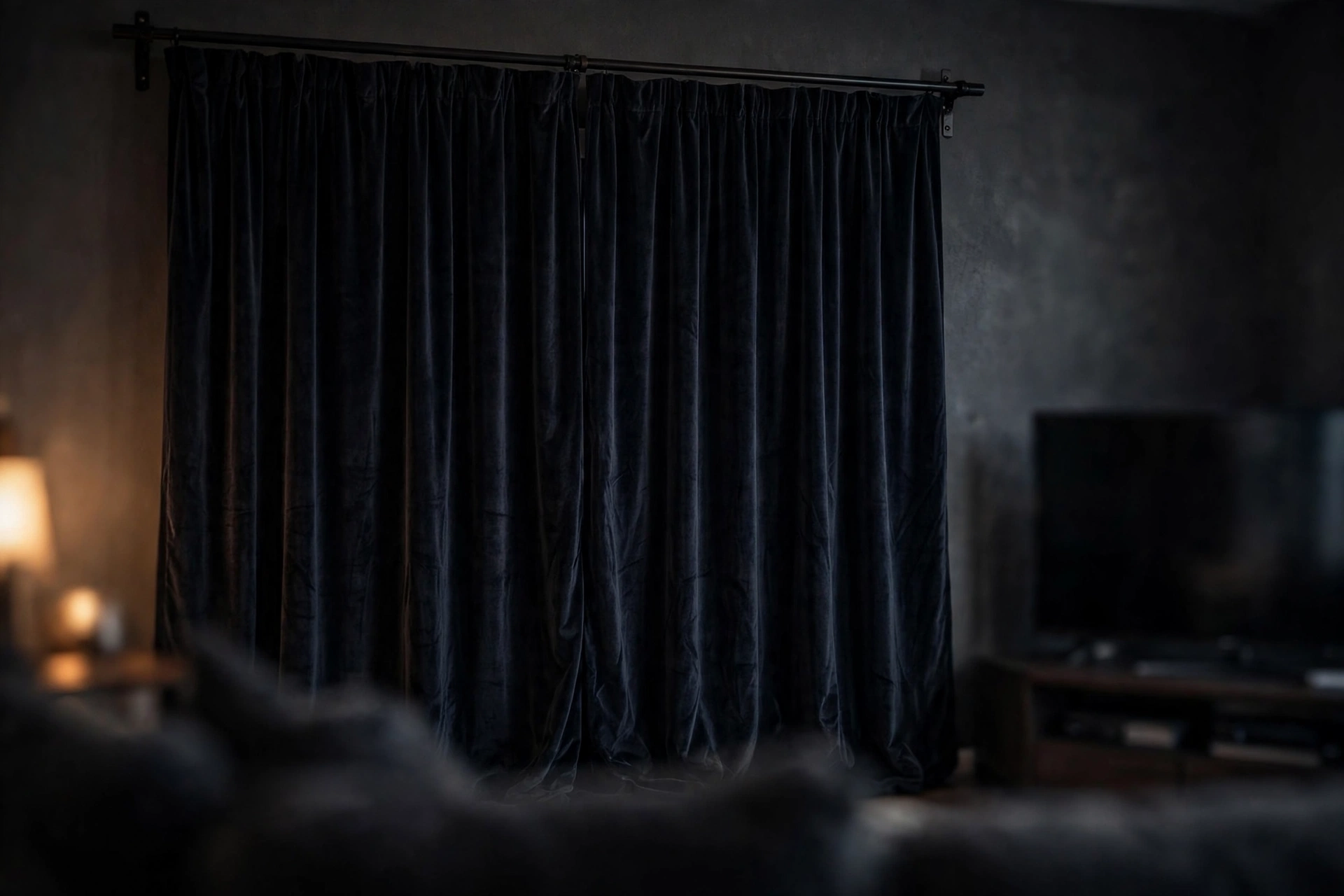
Unlined velvet panels layered over sheer: best for a formal room that needs daylight by day and cover at night
- Best for: A formal room that should stay bright by day, with the velvet drawn for evening privacy and warmth.
- Key features: Unlined velvet panel on the room side, sheer panel nearest the glass; velvet drawn only in the evening.
- Pros: Daylight through the sheer by day; velvet weight and formality at night.
- Cons: Needs a double rod or track; two layers stack wider; night privacy still needs the velvet fully closed.
The sheer layer is bought separately; this link is the velvet panel only.
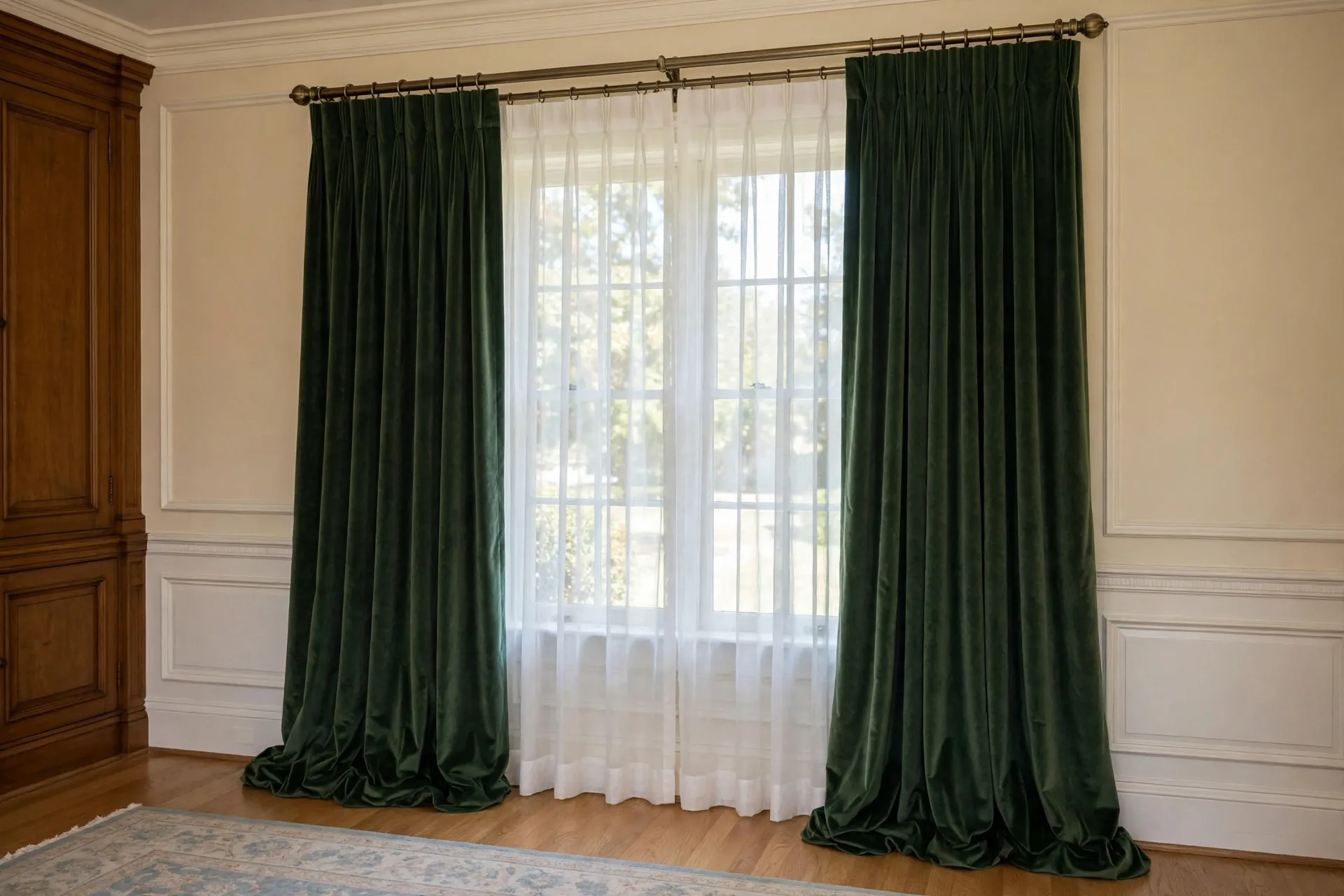
Velvet types in plain words
Cotton velvet, polyester velvet, and crushed velvet differ in feel, care, and how they hold up in sun, so the fiber name matters as much as the word velvet. Cotton velvet feels soft and matte, drapes in gentle folds, and suits a room where a natural hand matters more than easy washing. Polyester velvet feels smooth and even, holds its pile shape well, and is often the easier panel to live with in a busy room. Crushed velvet is not a separate fiber. It is velvet whose pile has been pressed in different directions, so its surface shows light and dark patches that shift as the panel moves.
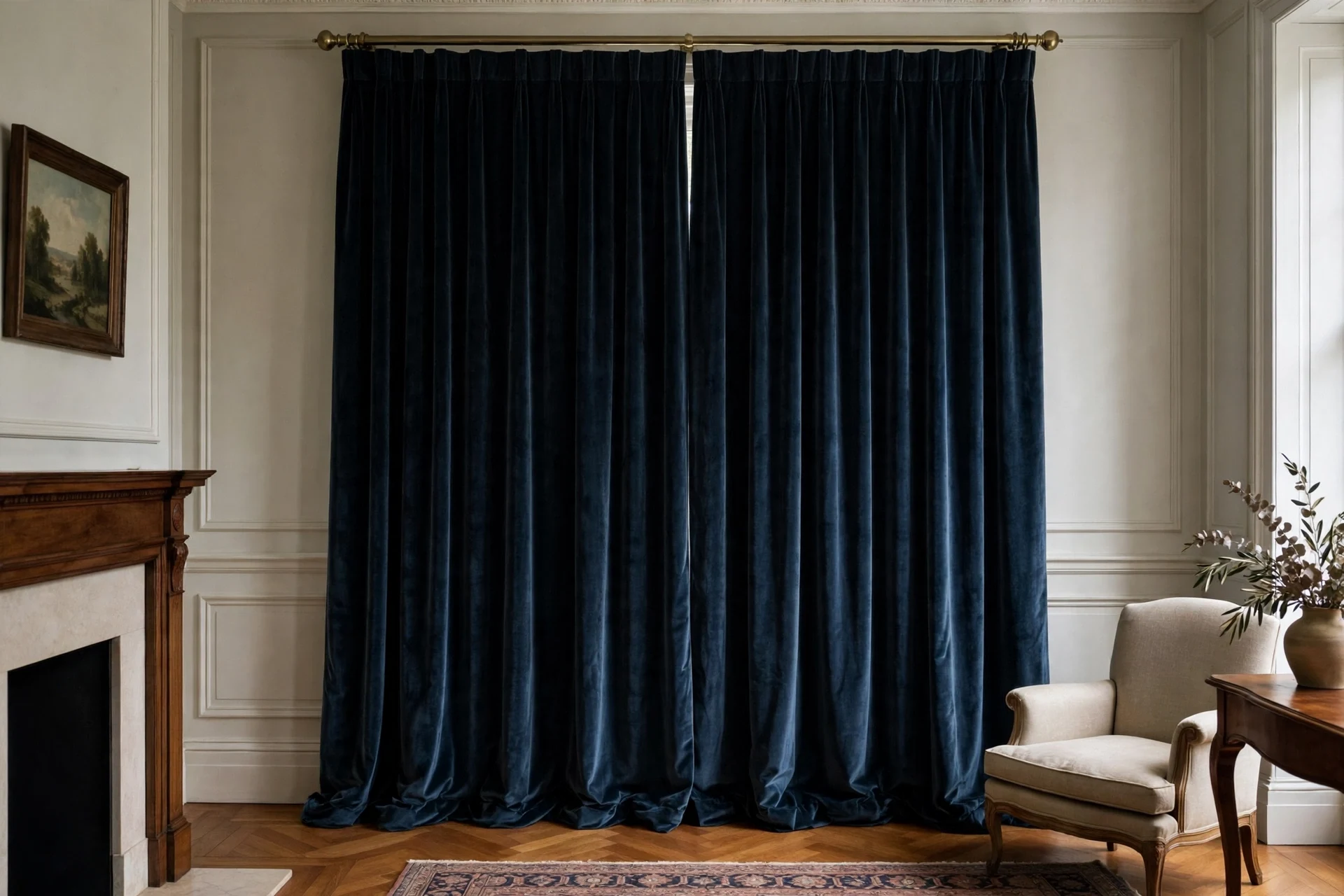
Check the fiber line on the listing before you judge a panel by its title. A panel called velvet may be cotton, polyester, or a blend, and each one behaves differently after washing and in strong sun. Cotton velvet marks more easily from water and pressure and usually needs gentler care. Polyester velvet resists crushing better, but only the care label on the panel you buy settles how it washes. Never assume one velvet panel washes like another because both use the word velvet.
Weight is the other type check. A light velvet panel hangs with a softer fall, blocks less light on its own, and asks less of its rod. A medium weight panel gives a fuller fall and stronger daytime cover, while a heavyweight panel gives the fullest fall and the most darkness from the face fabric, but it also asks the most of its rod and brackets and stacks widest when open. Judge weight by the fall and by the rod it needs, and check the listing for the panel weight before you order.
Viscose velvet, also called rayon velvet, is worth knowing by name, because it looks different from cotton and polyester velvet. It has a deep sheen and rich color, but it wrinkles more readily, marks more easily from moisture, and often needs professional cleaning, so check its care label before you buy it for a room that gets daily use.
Microsuede is a short, suede-like surface that reads as velvet at a glance but has a much shorter pile. For a pet household, it is worth checking on the listing, because its short surface can show pet hair less plainly than a long velvet pile, and it still needs the same vacuuming routine as any pile fabric. It does not remove the pet caution in the rooms section below, but it softens it.
Velveteen is not velvet. It is a short-pile cotton fabric made to look like velvet, without the same pile depth, so judge a velveteen panel by its own label and not by velvet rules. If a listing names a certification, check what it covers on the listing. For example, the OEKO-TEX STANDARD 100 label means the textile was tested for harmful substances, as set out in OEKO-TEX's explanation of the STANDARD 100 label, which tests textiles for harmful substances.
Color also behaves differently on velvet than on a flat fabric. The same color can look lighter or darker as light hits the pile from different angles. That shift is normal, not a fault, but it matters when you match panels to a wall or sofa. Look at a swatch in daylight and at night, from more than one angle, before you order a full set. For a plain fabric comparison, see Best Linen Curtains.
Unlined, lined, and blackout-lined velvet: what each one blocks
Unlined velvet dims light and gives daytime privacy, lined velvet adds body and stronger light control, and blackout-lined velvet is the only one of the three that can darken a room well. The lining, not the velvet face alone, decides how dark the room gets. An unlined panel, even in a dark color, still lets light through the weave and around the edges, so it softens a room rather than darkening it.
A standard lining sits behind the velvet face and gives the panel more body, helps the folds fall evenly, and protects the velvet from sun.
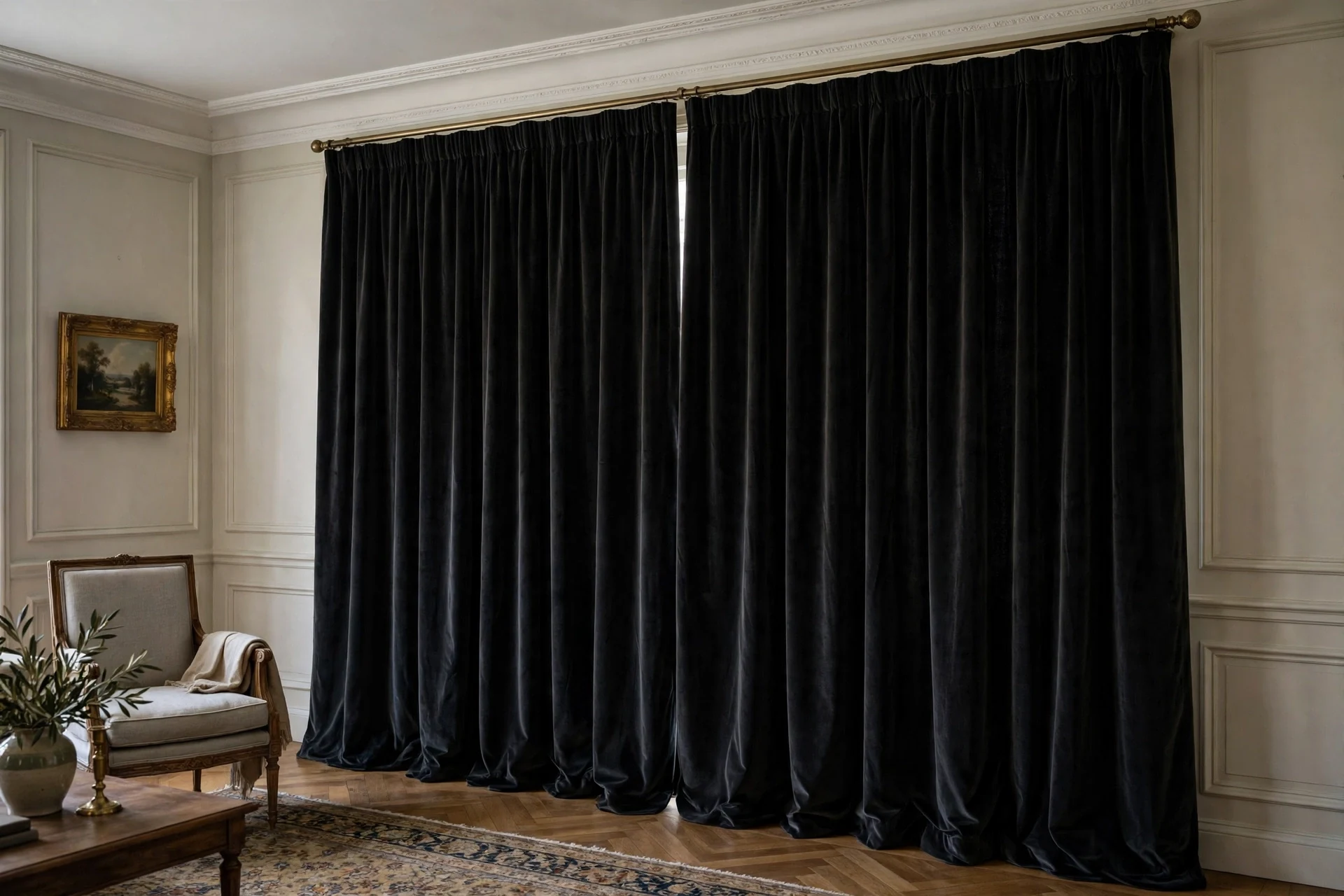
It also adds daytime privacy and dims daylight more than the same panel unlined. Room darkening is the standard-lined result. It sits between light filtering and blackout: it dims daylight strongly but does not block it fully, so it suits a living room or formal room where soft light is still welcome. A blackout lining is a separate, denser layer. It blocks most light through the fabric itself, which is why it suits bedrooms and media rooms.
A thermal lining is a third lining choice, alongside standard and blackout lining. It sits behind the velvet face and helps slow heat loss at the window and soften drafts, which suits a cold room or a drafty window better than a standard lining alone. It adds weight, so it asks more of the rod, and it does not darken a room on its own, so pair it with the light job you actually need.
Interlining is a further layer, not a lining choice on its own. It sits between the velvet face and the lining, gives the panel extra body and a fuller fall, and helps with warmth and sound softening, but it adds weight and cost and is most often found on made-to-measure panels. If a listing names interlining, check the total panel weight and the rod it needs before you order.
A lining also helps with sun. It cuts the sun reaching the velvet face, which helps slow fading, but no lining makes velvet sunproof, and strong direct sun can still fade color over time. In a sun-blasted window, a lining is protection, not a promise that color will never change.
Light still leaks at the sides, at the top, and through the center gap where two panels meet, even with a blackout lining. That leak is a hanging problem, not a fabric problem, and it is covered in the rod section below. For the full darkness job, see Best Blackout Curtains. Do not buy an unlined velvet panel and expect blackout results from color alone. Dark velvet looks dark on the rod, but light still passes through it.
Velvet for a formal room that stays dressed, not stiff
A formal room suits velvet well when the panel is chosen for drape first, because a stiff, flat hang is what makes velvet look heavy instead of formal. An unlined or standard-lined velvet panel in a deep, plain color gives a formal room weight and calm without shutting out daylight. Hang the panels floor length and let the folds fall full.
Color choice sets the mood more than pattern does on velvet.
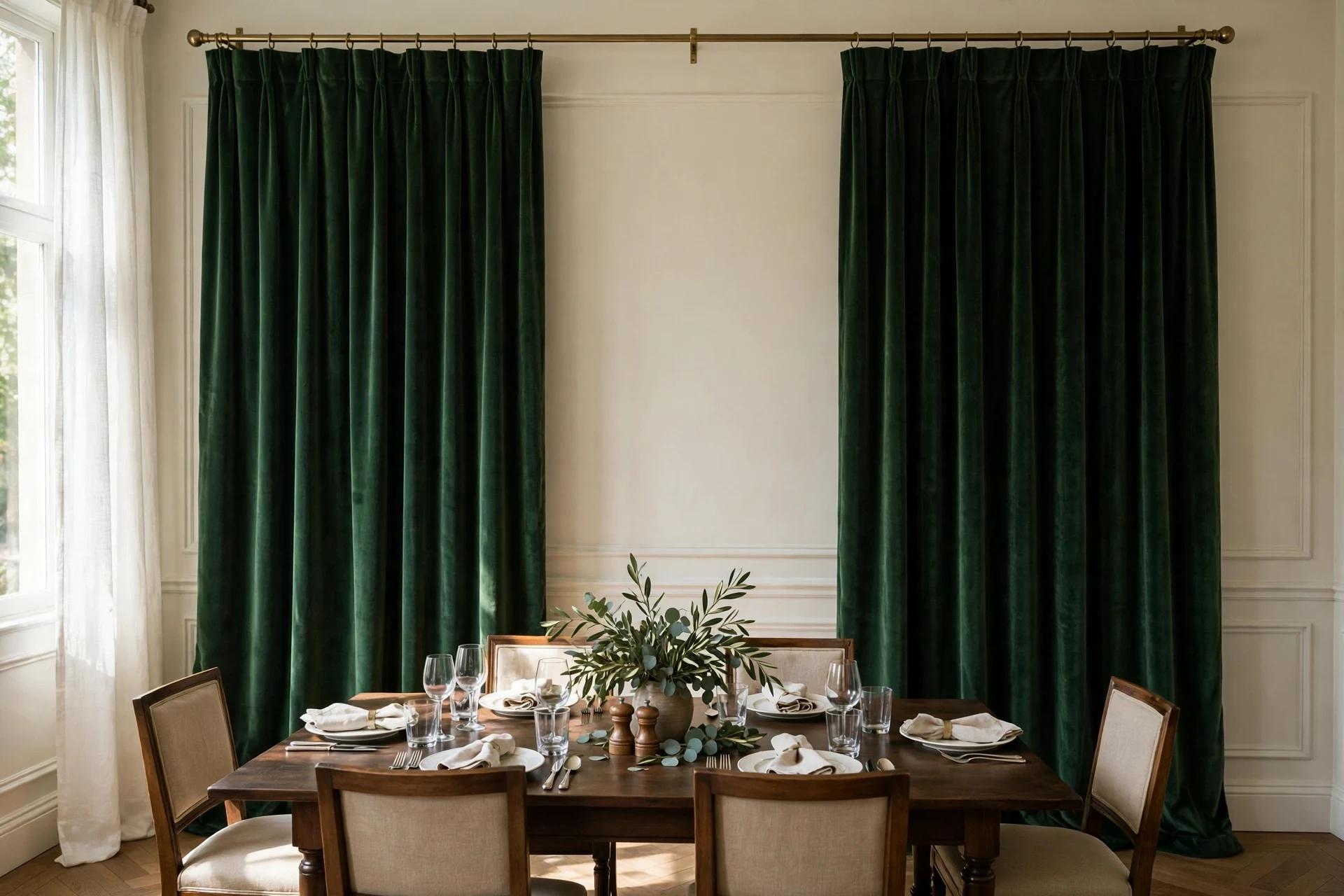
Deep green, navy, burgundy, charcoal, and warm brown read as formal because the pile gives them depth, while pale velvet shows dust and marks sooner. The pile already adds visual interest, and a bold print can fight with the texture. If the room already has patterned rugs or upholstery, a plain velvet panel is the safer pick. In a plain room, a printed panel can work well, because the print has no pattern to fight with, and that plain room is where the printed pick above suits best. The printed pick uses a rod-pocket heading, which suits a formal panel that mostly stays in place rather than one drawn daily.
Keep the heading formal too. A pinch pleat heading gives neat, tailored folds and suits a formal room better than a casual grommet heading, which reads as relaxed even on a heavy fabric. A back tab heading sits between the two, with a clean fall and no visible rings. For a full formal room guide, see Best Curtains for Living Room, and for length choices, see Curtain Sizes.
A dining room takes the same formal logic in a smaller dose. A plain velvet panel in a deep color, hung floor length, gives a dining room warmth and formality for evening meals without needing blackout darkness. Keep velvet in the dining room itself, away from cooking steam and grease, and choose a standard lining for body where the room gets daylight, so the panels fall full and still let soft light through by day. For the full dining room guide, see Best Curtains for Dining Room.
Velvet for a bedroom that stays dark for sleep
A bedroom needs blackout-lined velvet, because unlined velvet will not darken a bedroom well no matter how dark its color is. Morning sun still comes through an unlined panel, and street light still glows through it at night. A blackout lining behind the velvet face gives both sides of the job: velvet texture inside the room and darkness behind it.
Closed width matters as much as lining.
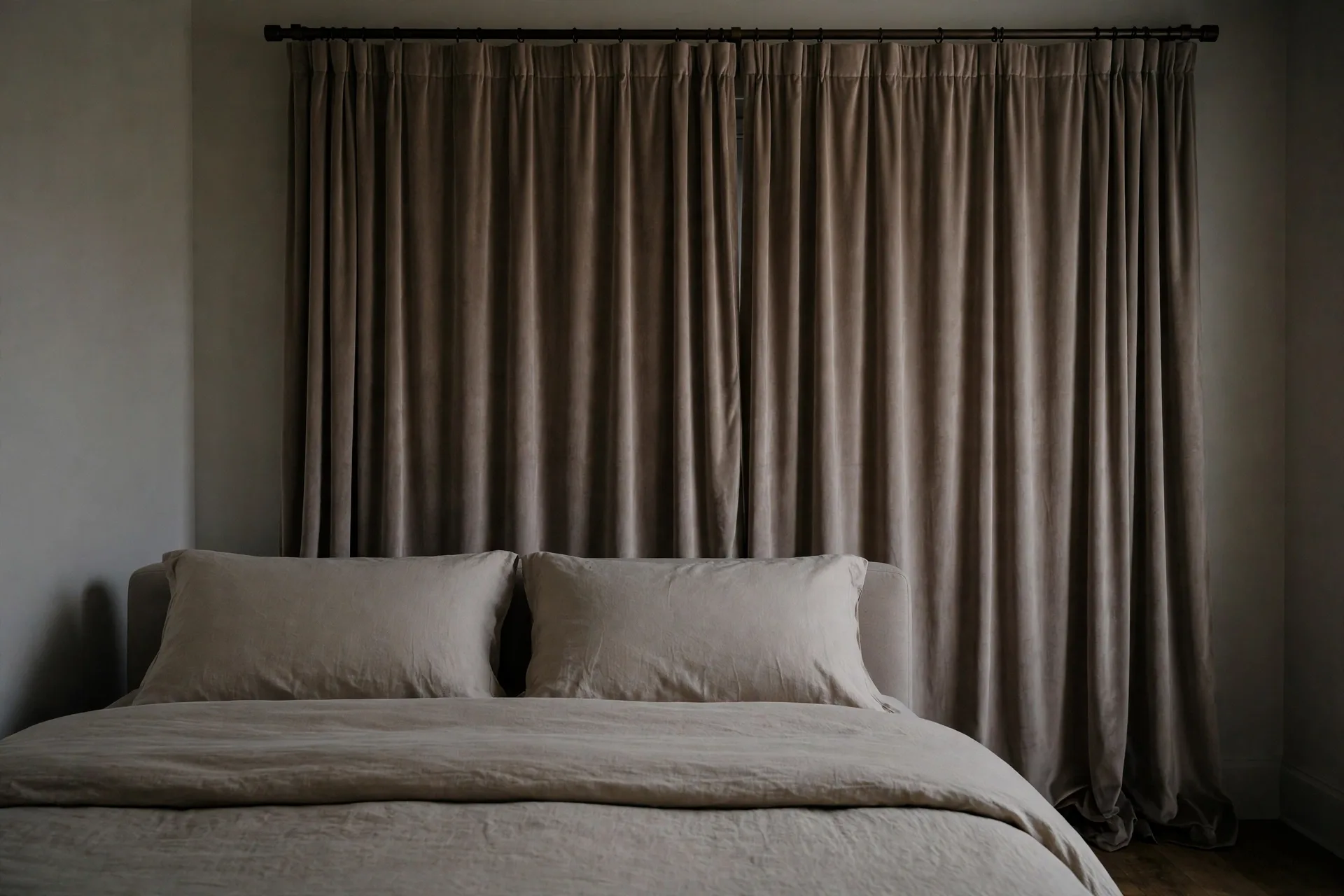
Panels that just meet in the middle leave a light gap, and panels that stop at the frame edge leave light at the sides. Hang the rod past the frame on each side so closed panels overlap the frame, and choose total panel width well beyond the rod width so folds stay full when closed. Check closed coverage before you order, because adding a panel later can mean a different dye shade.
Pair the panels with a plain, restful color, and avoid a crushed finish where calm matters more than show. For room-wide bedroom advice, see Best Curtains for Bedroom.
Velvet for a media room that keeps glare off the screen
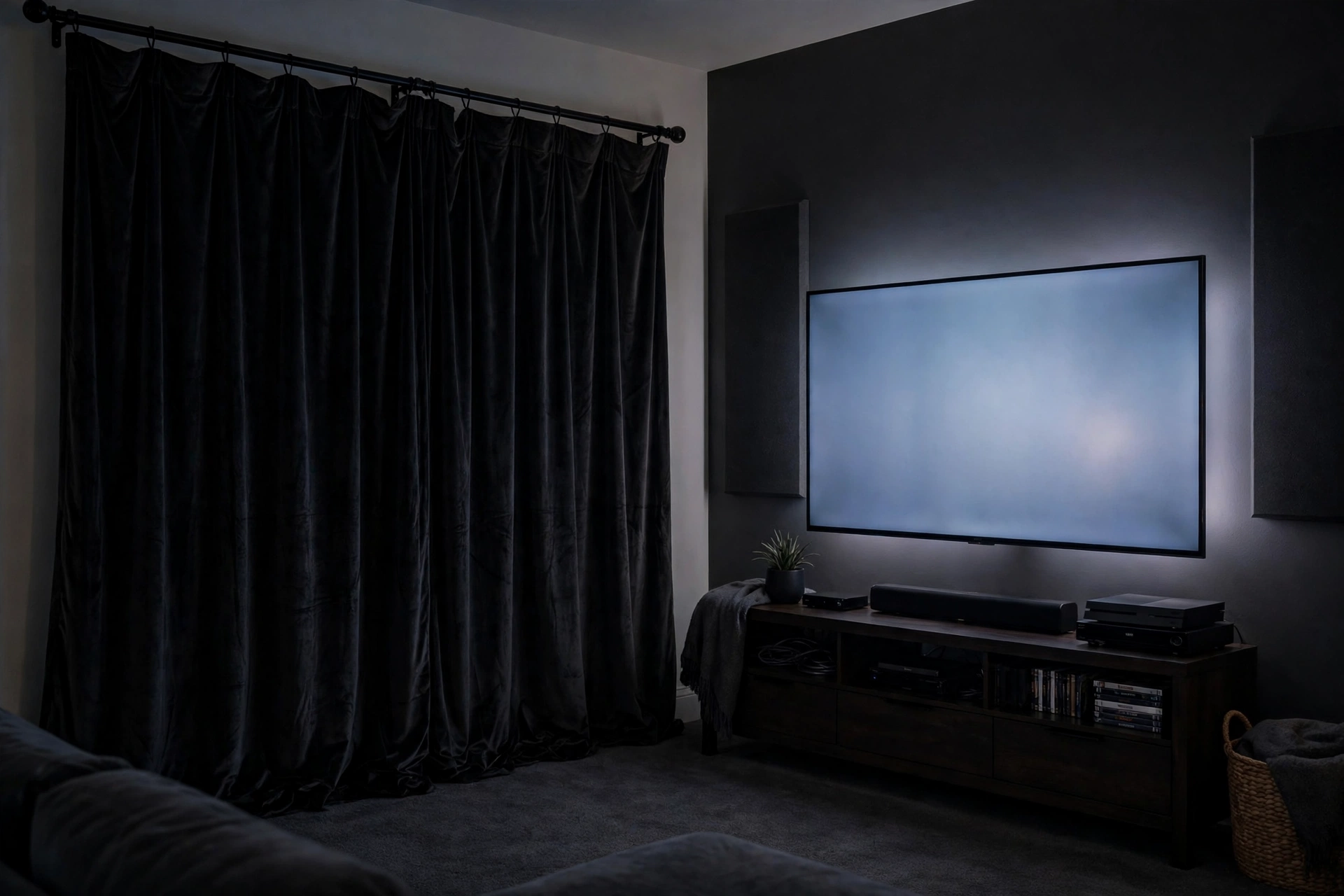
A media room needs the same blackout lining as a bedroom, but for a different reason: glare on the screen, not sleep. Velvet suits a media room because the pile absorbs light instead of reflecting it, and a dark, plain color keeps stray light from bouncing around the room. Choose a blackout-lined panel in a dark, matte color, and hang it to cover the full window plus the frame.
Side light is the main enemy in a media room. A bright strip at the edge of a panel can distract from the screen even when the center of the window is covered. A rod that extends past the frame, panels that overlap the frame when closed, and a heading that lets panels draw fully shut all help more than a darker color alone.
Keep media room panels plain, dark, and fully closing. See How to Hang Curtains for rod placement.
Velvet and sound: what it softens and what it does not
Velvet softens sound in a room, because its pile and weight absorb echo and take the hard edge off everyday noise, and a heavier, lined panel softens sound more than a light, unlined one. Full coverage helps too, because a panel that covers the whole window and frame leaves fewer gaps for sound to pass around it.
Velvet does not soundproof a window. It will not block street noise or noise from the next room, and gaps at the sides, top, and center leak sound in the same way they leak light, so buy velvet for a quieter feeling room, not for silence.
Rods, brackets, and fullness: holding velvet up without sag
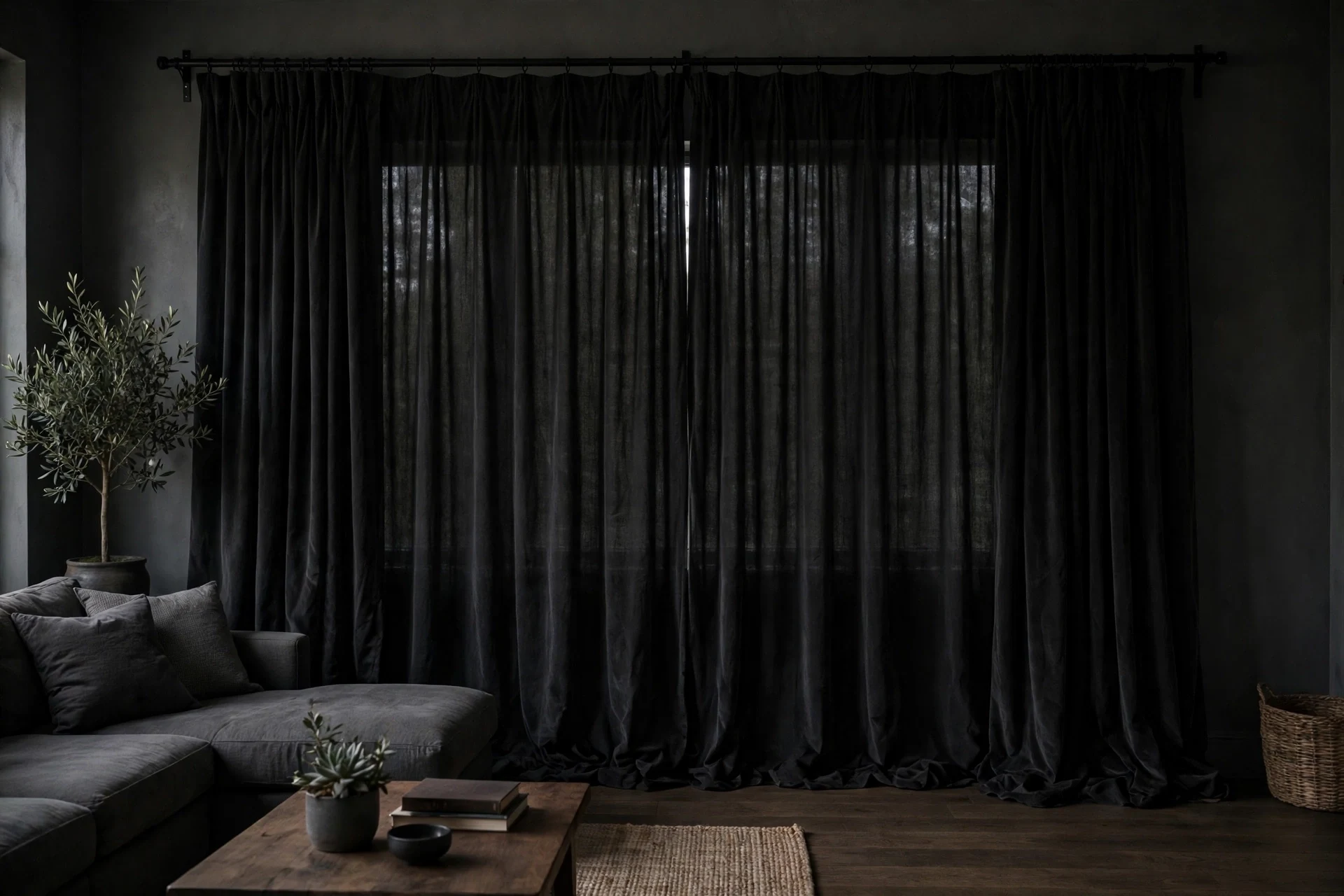
Velvet needs a stronger rod and firmer brackets than a light fabric, because its weight pulls down and outward over time. A thin rod that suits a sheer panel can bow under velvet, and brackets fixed only into drywall can loosen as the panels slide. Choose a rod rated for heavy panels, fix brackets into solid wall or proper anchors, and add a center support on a wide span.
Fullness is how much fabric covers the window when closed.
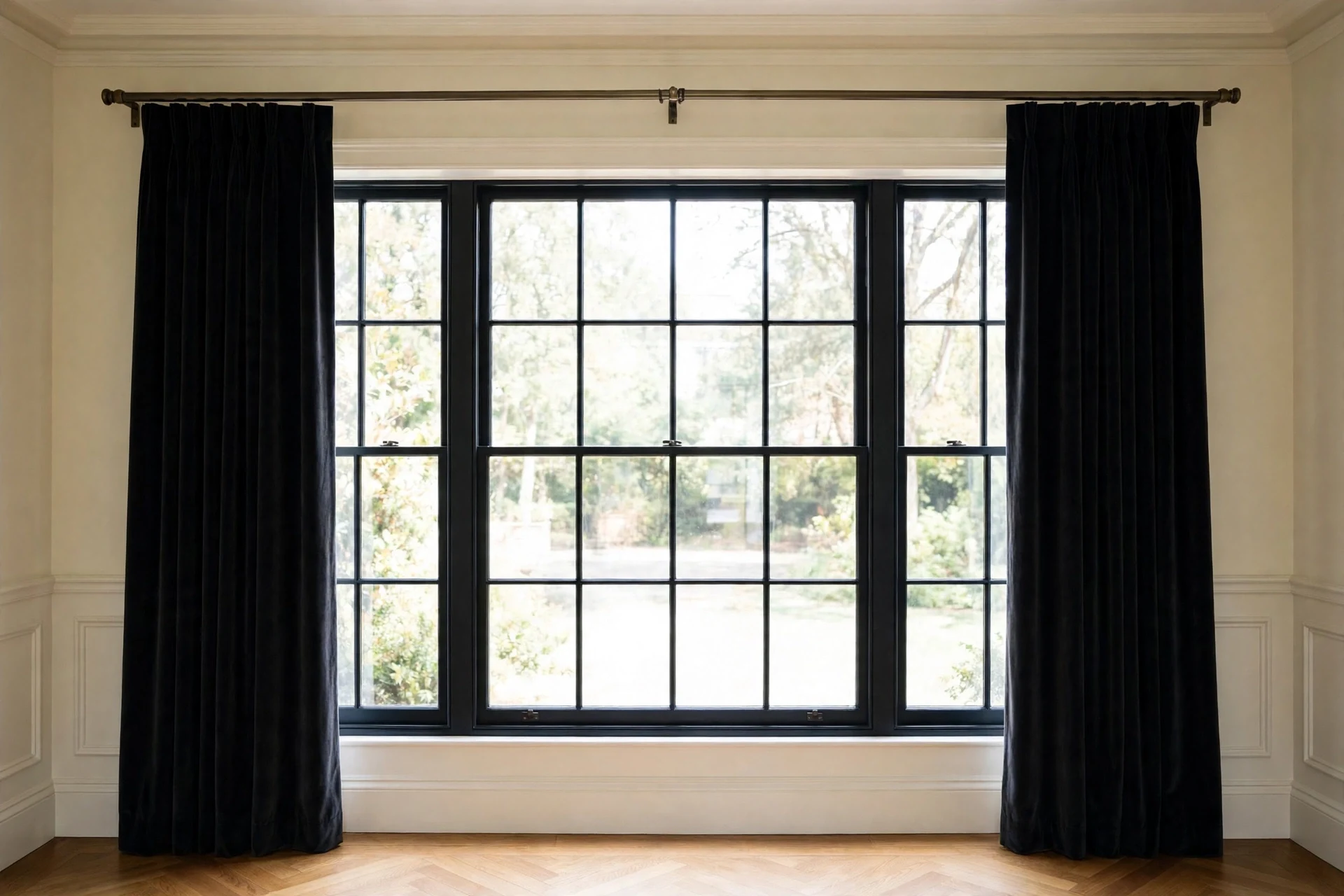
Too little fabric looks thin and flat, with gaps between folds, and it also lets more light through at the folds. Aim for total panel width of about twice the rod width for standard fullness, not just equal to it, and add a panel rather than stretching two thin panels across a wide window. Velvet folds are deep, so a velvet panel stacks wider when open than a thin panel does. Leave enough rod past the frame for the open stack, or the panels will cover part of the glass even when open.
Heading choice changes how easily heavy panels slide. A grommet heading slides freely and suits panels that open and close daily, while a rod pocket heading can grip the rod and suits panels that mostly stay in place. A back tab heading gives a tailored fall with less sliding ease than grommets. If you open and close velvet daily, favor grommets or rings. For measuring steps, see How to Measure for Curtains.
Length is a ceiling decision as much as a window decision. As a starting point only, ready-made drops often sit near the usual 84, 96, and 108 inch marks, matched in turn to lower, standard, and taller rooms, but confirm the exact finished drop on the listing before you order, because heading and hem change the fall. A panel that just kisses the floor gives a clean formal fall and stays clear of feet, while a puddle, where extra fabric pools on the floor, looks softer but collects dust and needs keeping out of walkways, so it suits a formal room that is not a through route.
Wide windows and patio doors need the same rod logic at a larger scale. Add panels rather than stretching two thin panels across the span, leave stack space on each side so the open panels clear the glass and the door path, and check that the closed panels clear the door handle when drawn. A ceiling-mounted rod or track is another option here, because it lifts the eye, gives a floor-to-ceiling fall, and can run past the frame where a wall rod would stop short.
Renters face a harder choice with velvet, because heavy panels need fixed brackets. If drilling is not allowed, use a rod that fits brackets already in place, or choose a lighter velvet weight, and do not hang heavy velvet on a light tension rod, because it can slip and fall. Where drilling is allowed only with permission, that permission is worth settling before you order a heavy set.
Dust, allergies, and velvet care that protects the pile
Velvet traps dust in its pile, so a velvet room needs a dust routine that a flat fabric does not. The upright fibers catch dust, pet hair, and pollen between them, and that build-up dulls the color and can trouble people with dust allergies. Vacuum velvet gently with a soft brush head, always in the direction the pile lies, and brush lightly with a soft clothes brush between vacuums. Never scrub velvet, because scrubbing crushes the pile and can leave a lasting mark.
Allergy advice here is plain.
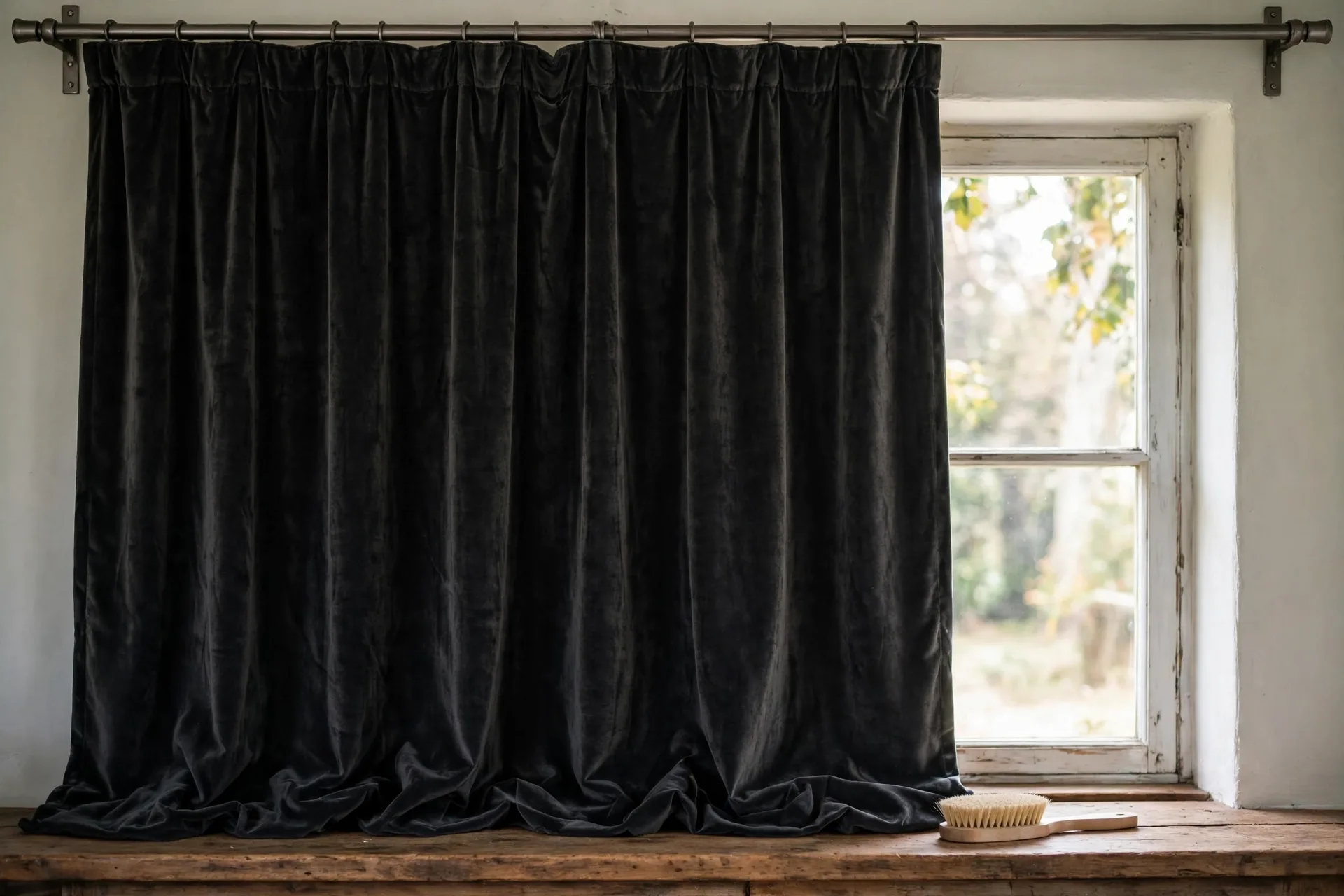
Velvet is not the best pick for a home where dust allergies are a daily problem, because no dust routine removes everything trapped deep in the pile. A flat, washable fabric will be easier to keep clean. If you still want velvet, keep it out of the allergic person's bedroom and vacuum it often. A separate washable layer behind the velvet can help in a bedroom, but it does not turn velvet into a low-dust fabric.
Water is the other velvet risk. A spill left to soak can leave a ring or a flattened patch where the pile dried in the wrong direction, so blot a spill at once and never rub it. Steam held a short distance from the fabric can lift crushed pile and ease creases, but do not soak the panel and do not press it with an iron, because heat and pressure can flatten the pile and leave a shiny mark. The care label on the panel you bought is the rule for washing: some polyester velvet panels wash on a gentle cycle, while many cotton velvet panels need dry cleaning. This section covers only velvet-specific care.
New panels often arrive with creases from packing. Hang them and give the creases time to fall out, and use steam held a short distance from the fabric for stubborn creases, following the care label, rather than pressing with an iron. For washing steps beyond velvet-specific care, see How to Wash Curtains.
Rooms where velvet works against you
Velvet is the wrong pick for wet, steamy, greasy, and very sunny rooms. Bathrooms and kitchens expose velvet to steam, splashes, and cooking grease, which the pile absorbs and holds. A wet velvet panel can mark, smell stale, and grow musty in a room that never fully dries. Choose a short, washable panel for those rooms instead, and keep velvet for dry rooms.
A small, dark room is another poor fit.
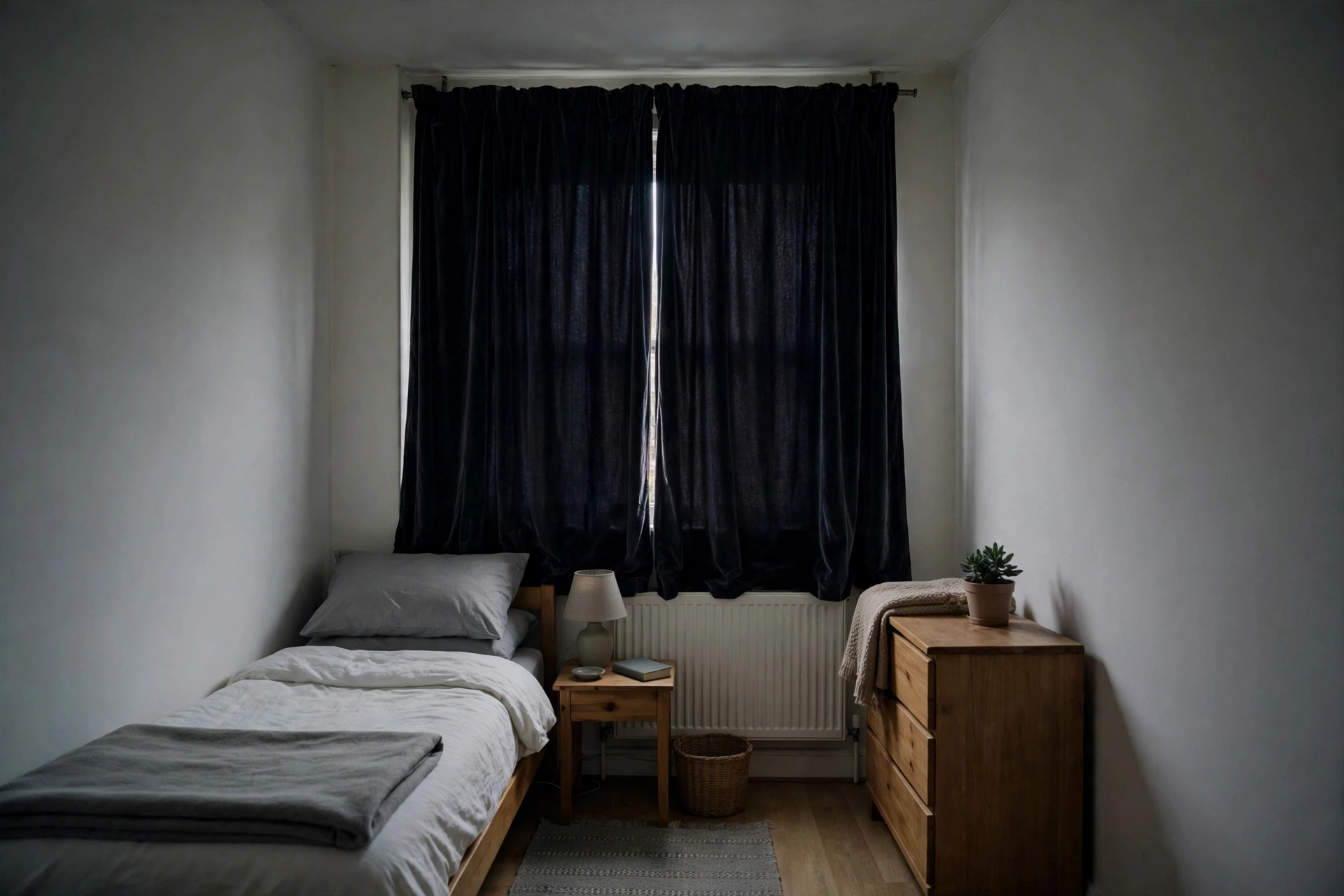
Heavy velvet in a dark color can make a small room feel smaller and gloomier, especially when the panels stay closed for much of the day. A lighter fabric that lets daylight through suits a small room better. Strong, direct sun is a third risk. Velvet color can fade over time in a sun-blasted window, and a standard lining behind the velvet helps protect the face, but it does not remove the risk.
Pets are a fourth caution. Pet hair clings to the pile, claws can snag it, and a panel that pets brush past daily will show wear at the leading edge first. That does not rule velvet out for pet owners, but it means more vacuuming and a tougher polyester velvet rather than a soft cotton velvet.
Checks to run before you order velvet
Start with the fiber label, not the title. Confirm whether the panel is cotton velvet, polyester velvet, a blend, or crushed velvet, and match that fact to your care patience and your room. Next, confirm the light job: light filtering, room darkening, or blackout, and whether that result comes from the fabric alone or from a lining. A listing that calls a panel blackout without naming a blackout lining deserves a second look.
Then check the heading, total panel width, and finished length against your rod and window, using How to Measure for Curtains and How to Hang Curtains. Confirm the rod and brackets suit a heavy panel, and leave rod space past the frame for the open stack. Order a swatch where one is offered, and look at it in daylight and at night. For the full range of curtain types, see Best Window Curtains.
Frequently asked questions about velvet curtains
Most velvet questions come down to fiber, lining, and rod, and to what velvet cannot do. Get those right for the room.
Are velvet curtains good for blackout?
Blackout-lined velvet is good for blackout, but unlined velvet is not. The velvet face alone dims light and gives privacy, yet light still passes through it and around its edges. For a dark bedroom or media room, choose a blackout lining and hang panels to overlap the frame when closed.
Do velvet curtains keep a room warmer?
Velvet can help a room feel warmer, because its weight and pile slow heat loss at the window more than a thin panel does. It does not replace insulation, and a lined panel helps more than an unlined one. For the full warmth job, see Best Thermal Insulated Curtains.
Are velvet curtains bad for allergies?
Velvet can trouble dust allergies, because its pile traps dust, pet hair, and pollen between the fibers. Regular vacuuming with a soft brush head helps, but it does not remove everything trapped deep in the pile. In a home where dust allergies are a daily problem, a flat, washable fabric is easier to keep clean.
Can you wash velvet curtains at home?
Some velvet curtains can be washed at home, and some cannot. The care label on your panel is the rule. Some polyester velvet panels wash on a gentle cycle, while many cotton velvet panels need dry cleaning. Never machine wash a panel whose label says dry clean only, and never rub a spill, because rubbing crushes the pile.
Why does velvet look lighter or darker when brushed?
Velvet looks lighter or darker when brushed because its pile fibers lean in different directions and catch light differently. Brushing the pile one way smooths it and reflects more light, while brushing it the other way looks darker. That shift is normal for velvet, not a fault, and it is one reason to check a swatch from more than one angle.
Do velvet curtains fade in sunlight?
Velvet color can fade over time in strong, direct sun, and pale colors show the change sooner than deep colors. A standard lining behind the velvet helps protect the face, but it does not remove the risk.
What kind of rod do velvet curtains need?
Velvet curtains need a rod rated for heavy panels, brackets fixed into solid wall or proper anchors, and a center support on a wide span. A thin rod can bow under velvet, and loose brackets can shift as heavy panels slide.
Can velvet curtains go in a bathroom or kitchen?
Velvet is a poor pick for a bathroom or kitchen. Steam, splashes, and cooking grease soak into the pile, and a panel that never fully dries can mark and smell stale. Choose a short, washable panel for those rooms.
Do velvet curtains block noise?
Velvet curtains can soften sound in a room, but they do not block noise or soundproof a window. The pile and weight absorb echo and take the hard edge off everyday noise, and a heavier, lined panel softens sound more than a light, unlined one. Gaps at the sides, top, and center still let sound through, so expect a quieter feeling room, not silence.
What are the disadvantages of velvet curtains?
The disadvantages of velvet curtains are weight, dust, crushing, care, cost, and fading. Heavy panels need a strong rod and firm brackets, the pile traps dust and pet hair, pressure can crush the pile and leave marks, many panels need gentle washing or dry cleaning, lined and interlined panels cost more, add weight, and need more care, and strong direct sun can fade color over time. None of these rules velvet out on its own, but together they are why velvet suits a dry, formal room better than a wet, busy one.
For other curtain types, see Best Window Curtains.
This guide is research-based curation: we compared maker specifications, published reviews, and current prices. Read how we choose.