 Best
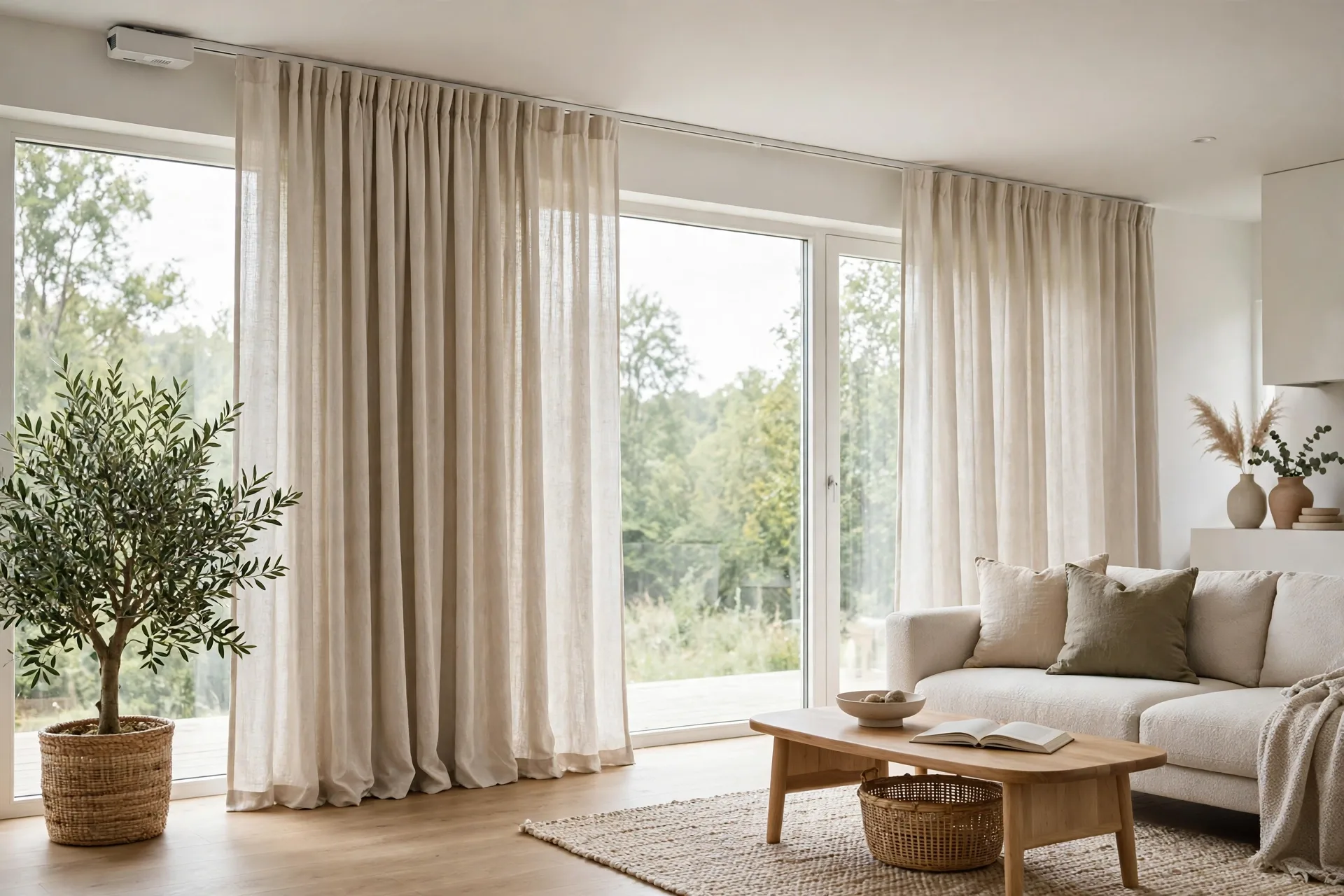
Best Motorized Curtain Tracks
This motor earns its keep on tall, wide, heavy, or hard-to-reach curtains. This guide sorts full tracks from retrofit motors, power from noise, and picks by window type.
The best motorized curtain track is the one that fits your window span, carries your curtain weight, and runs on the power you actually have beside the window. A full motorized track suits a tall, wide, or heavy window that needs a fresh start, while a clip-on retrofit motor suits a rod you already like, and the choice between battery, mains, and solar power decides where the track can go and how often you will think about it.
Best motorized curtain tracks and retrofit motors by job
A no-cut telescopic track suits a standard window that needs motor power without cutting, a sectional track suits a very wide window or a wall of glass, and a battery track suits a window with no outlet nearby. The picks below are grouped by job, not by brand. No pick names a maker here, because the track type and its limits are what decide the fit, and the maker, the span, and the weight rating must be confirmed on the listing before you order.
As an Amazon Associate, we earn from qualifying purchases.
| Pick | Type | Power | Best for |
|---|---|---|---|
| 1 | No-cut telescopic motorized track with hub-free app and voice control | Mains | A standard window that needs motor power without cutting |
| 2 | Sectional motorized track with custom-length sections | Mains | A very wide window or a wall of glass |
| 3 | Compact mini-motor track for a bedroom | Mains | A quiet bedroom and light to mid-weight blackout panels |
| 4 | Battery-powered motorized track with remote and schedule via hub | Battery | A window with no outlet nearby |
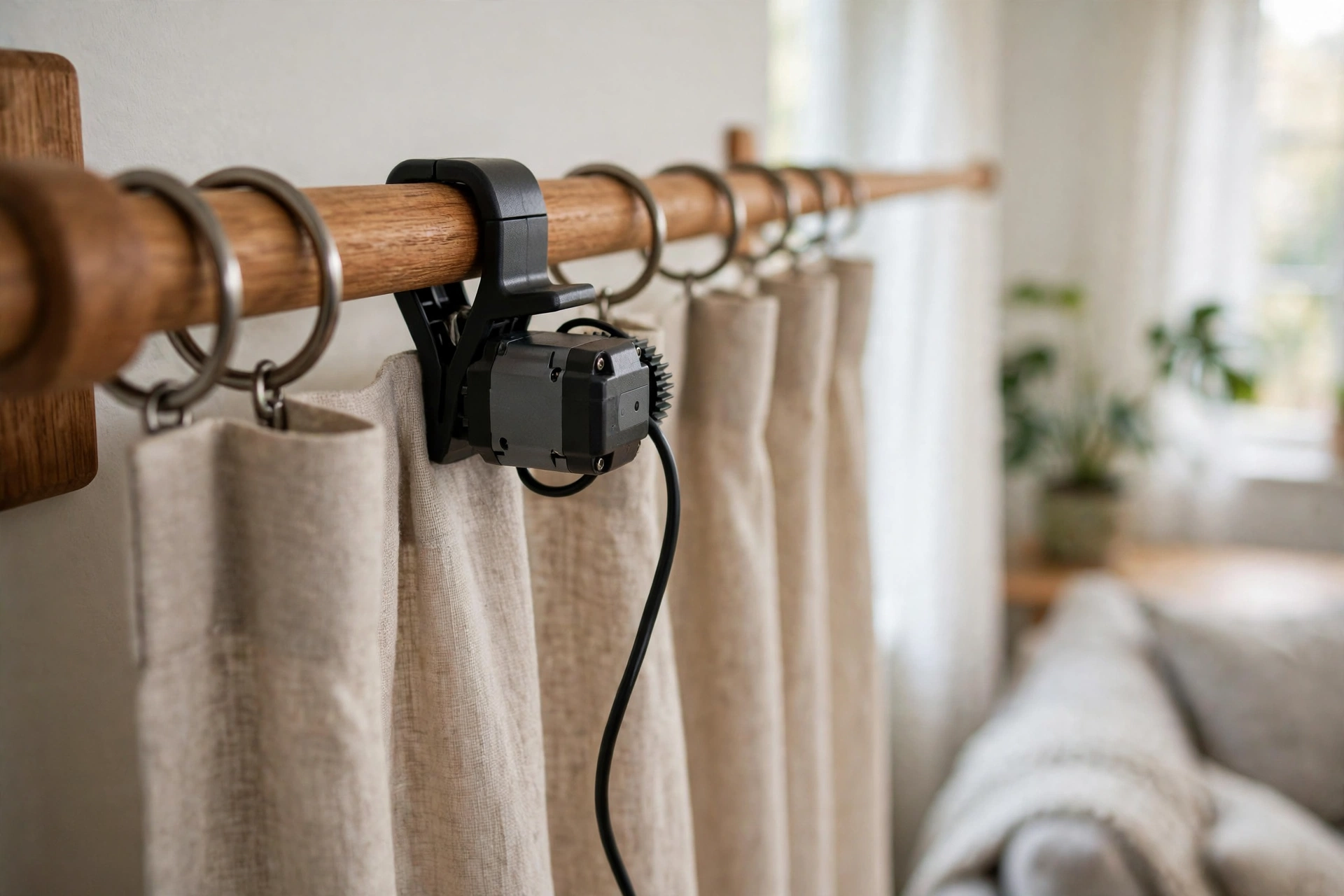
| 5 | Retrofit clip-on motor for an existing rod | Battery | A rod you already like and want to keep |
| 6 | Dual-track motorized system for sheer plus blackout layering | Mains | A room that needs day sheer and night blackout on one fitting, with both layers moving together |
1. No-cut telescopic motorized track with hub-free app and voice control: best for a standard window that needs motor power without cutting
Best for: A standard window that needs motor power without cutting, with app and voice control and no separate hub.
Key features: Telescopic rail that adjusts from 70 to 129 inches without cutting, mains plug-in motor (100-240 Vac) with a 3 m cord, app, remote, and voice control with no hub, carries up to 132 lb, ceiling or wall mount, schedules in the app.
Pros: Fits most standard windows from one box, no cutting, app and voice control without a hub, strong 132 lb limit for lined panels.
Cons: The listing does not state the opening type, so confirm center-opening or one-way on the listing before you order, mains power needs an outlet beside the window, fixed maximum span of 129 inches.
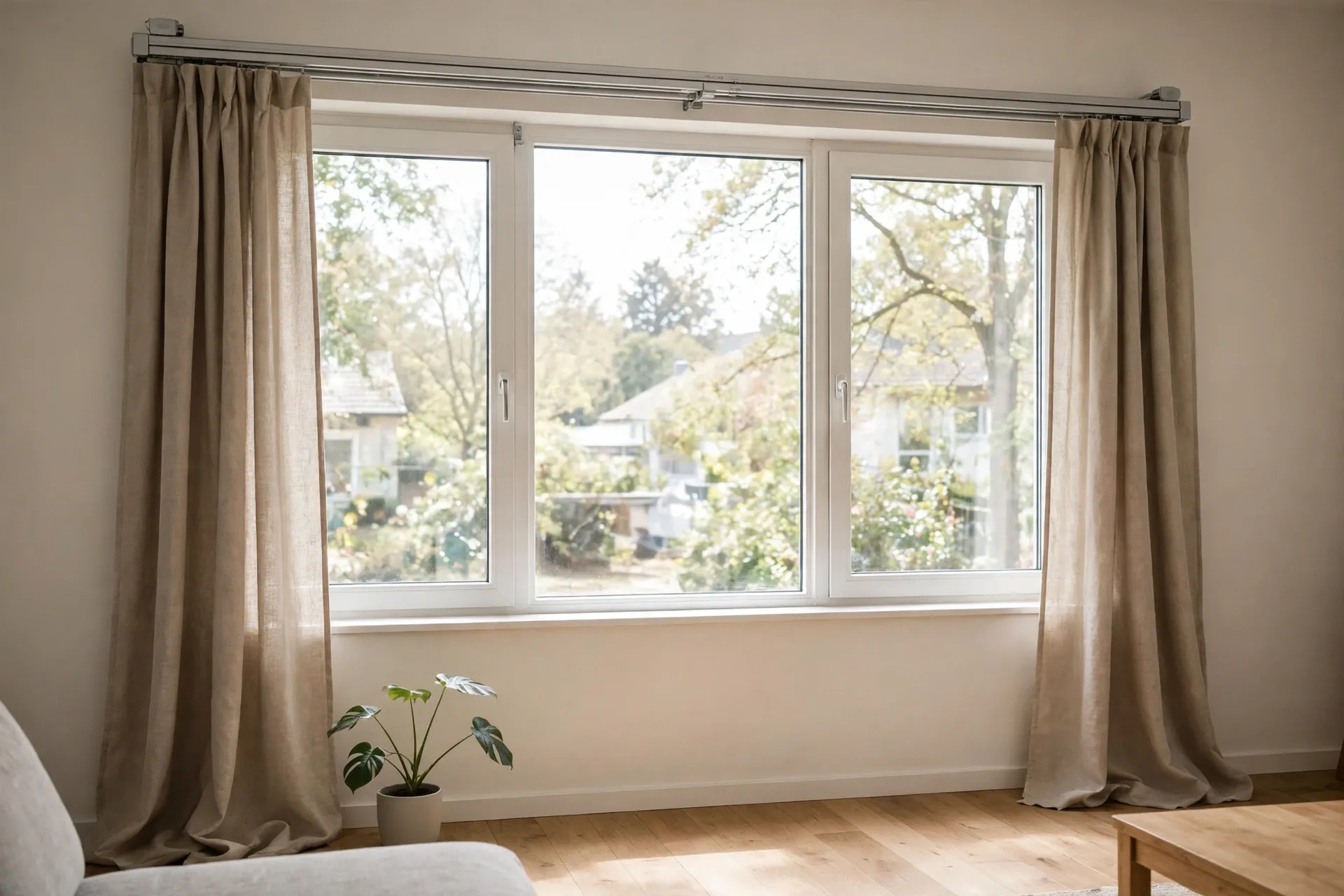
2. Sectional motorized track with custom-length sections: best for a very wide window or a wall of glass
Best for: A very wide window or a wall of glass where a telescopic track cannot reach.
Key features: Track sections that join to a custom length, strong motor for long spans, wall or ceiling mounting, app, remote, and voice control, wall brackets are not included (sold separately).
Pros: Reaches spans no telescopic track can, sections match the window exactly, strong enough for heavy lined panels.
Cons: Joiners can show on the track face, fitting takes longer, the longest spans may need professional fitting.
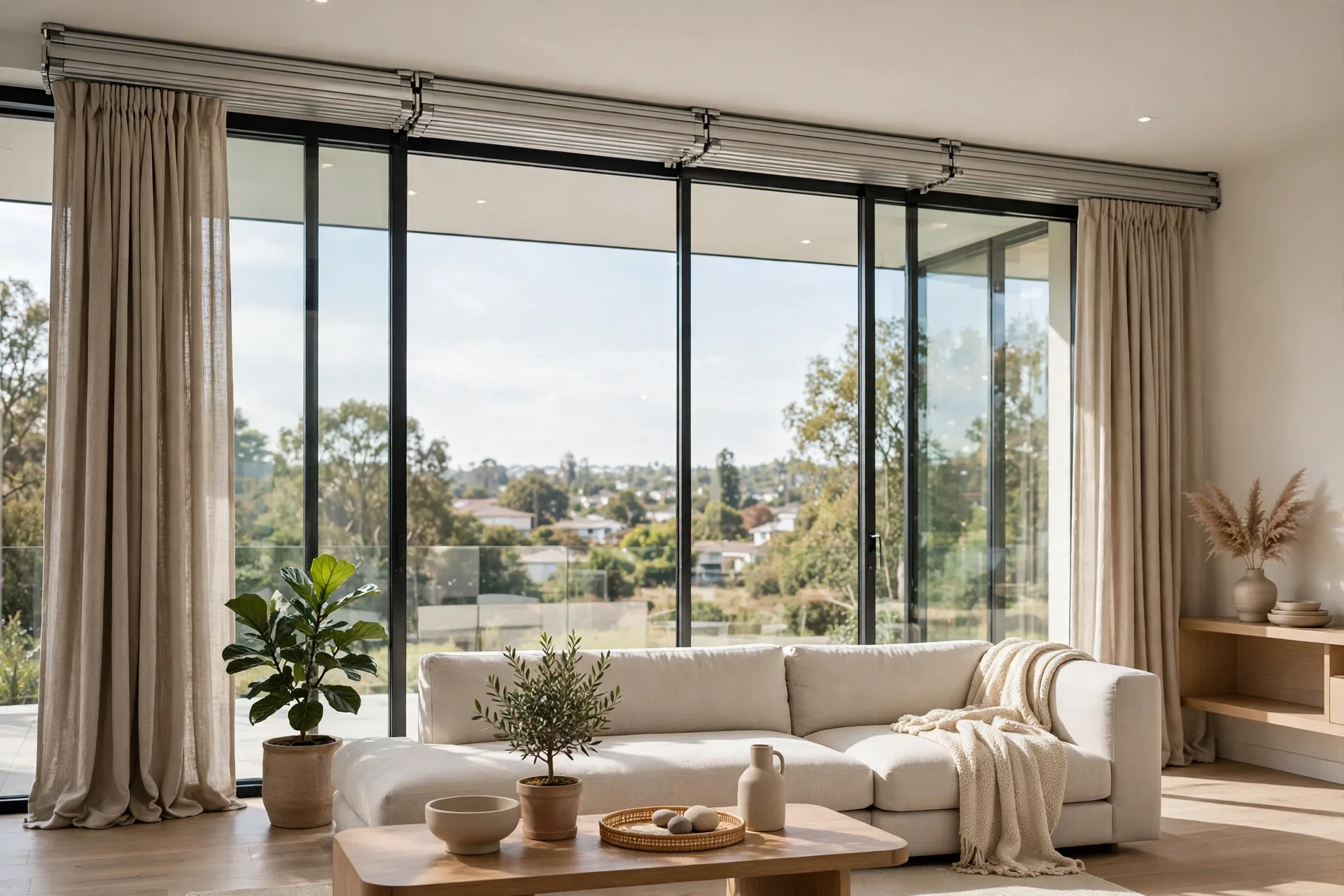
3. Compact mini-motor track for a bedroom: best for a quiet bedroom and light to mid-weight blackout panels
Best for: A bedroom where the motor must stay quiet, carrying light to mid-weight blackout panels.
Key features: Compact mini motor that sits small beside the drape, mains plug-in, hub-free Matter over Wi-Fi for Apple Home, Alexa, and Google, remote, app, voice, and schedules, center opening only, hook or pinch-pleat headings only, carries up to 66 lb, seller states the motor at 35 dB and the full system at 45 dB.
Pros: Small motor hides beside the fabric, quiet enough for a sleep schedule on the seller's figures, schedules close the curtains without touching them, no hub to buy.
Cons: Lower weight limit than a heavy-duty track, center-opening only, hook or pinch-pleat headings only, so grommet and rod pocket panels do not fit, mains power needs an outlet beside the window.
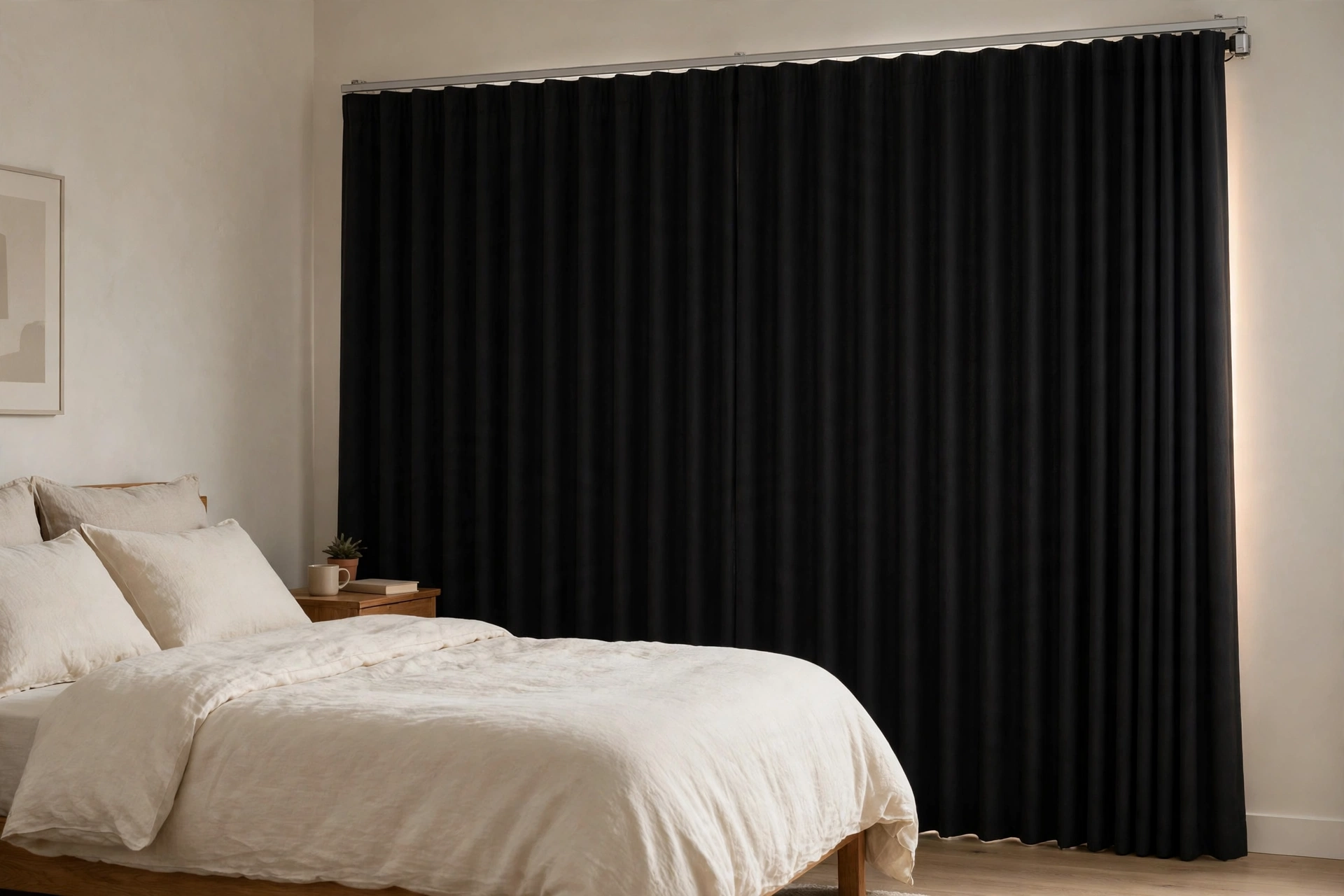
4. Battery-powered motorized track with remote and schedule via hub: best for a window with no outlet nearby
Best for: A window with no outlet beside it, or a rented home where wiring is not an option.
Key features: Rechargeable 3200 mAh / 7.4 V battery pack in the motor housing, charged by USB, RF remote included, adjustable track with wall and ceiling brackets, app and voice control only with a Tuya Zigbee hub (M6), sold separately.
Pros: Goes anywhere with no outlet and no cable run, easy to fit, remote included in the box.
Cons: The battery needs recharging, and the seller states no months-between-charges figure, so do not plan around one, app control and schedules need the hub, which is not included, a heavy curtain drains it faster than a light one.
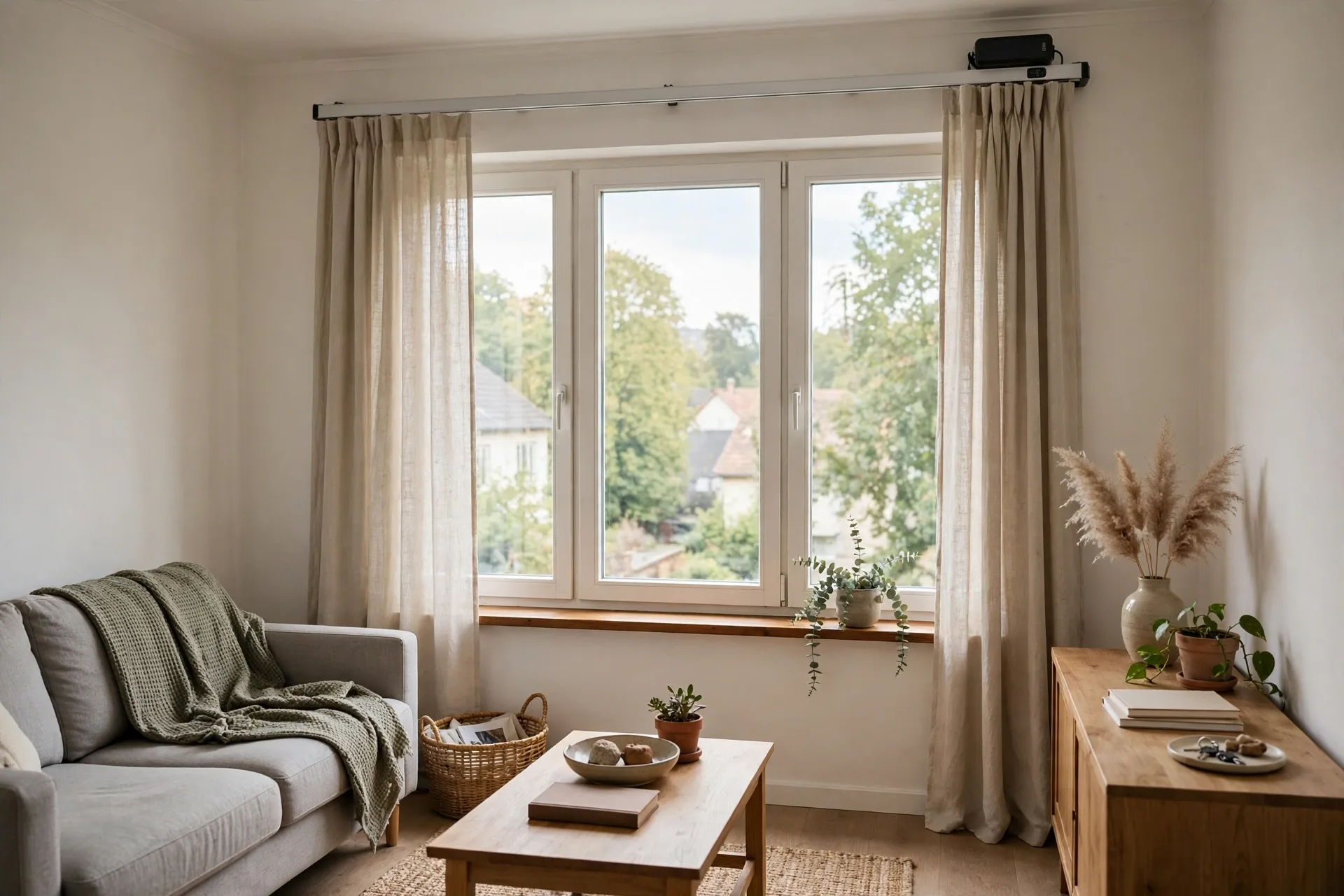
5. Retrofit clip-on motor for an existing rod: best for a rod you already like and want to keep
Best for: A rod that already fits, where the job is to add motor power without replacing the rod or the curtains.
Key features: Clip-on motor that drives the existing rod, battery powered with USB-C rechargeable 3350 mAh battery, up to about 8 months per the seller, Bluetooth app control, QuietDrift under 25 dB as the seller states, carries up to 15 kg (33 lb), fits rods 0.59 to 1.57 inches.
Pros: Keeps the rod, brackets, and curtains you already have, cheapest route to motor power where it fits, quiet on the seller's figures.
Cons: Lowest weight limit here at 33 lb, fits only rods from 0.59 to 1.57 inches, and not extendable rods under 5/8 inch, the hub is sold separately for voice control and Matter, and the remote is sold separately for this single unit, a center-opening pair needs two units.
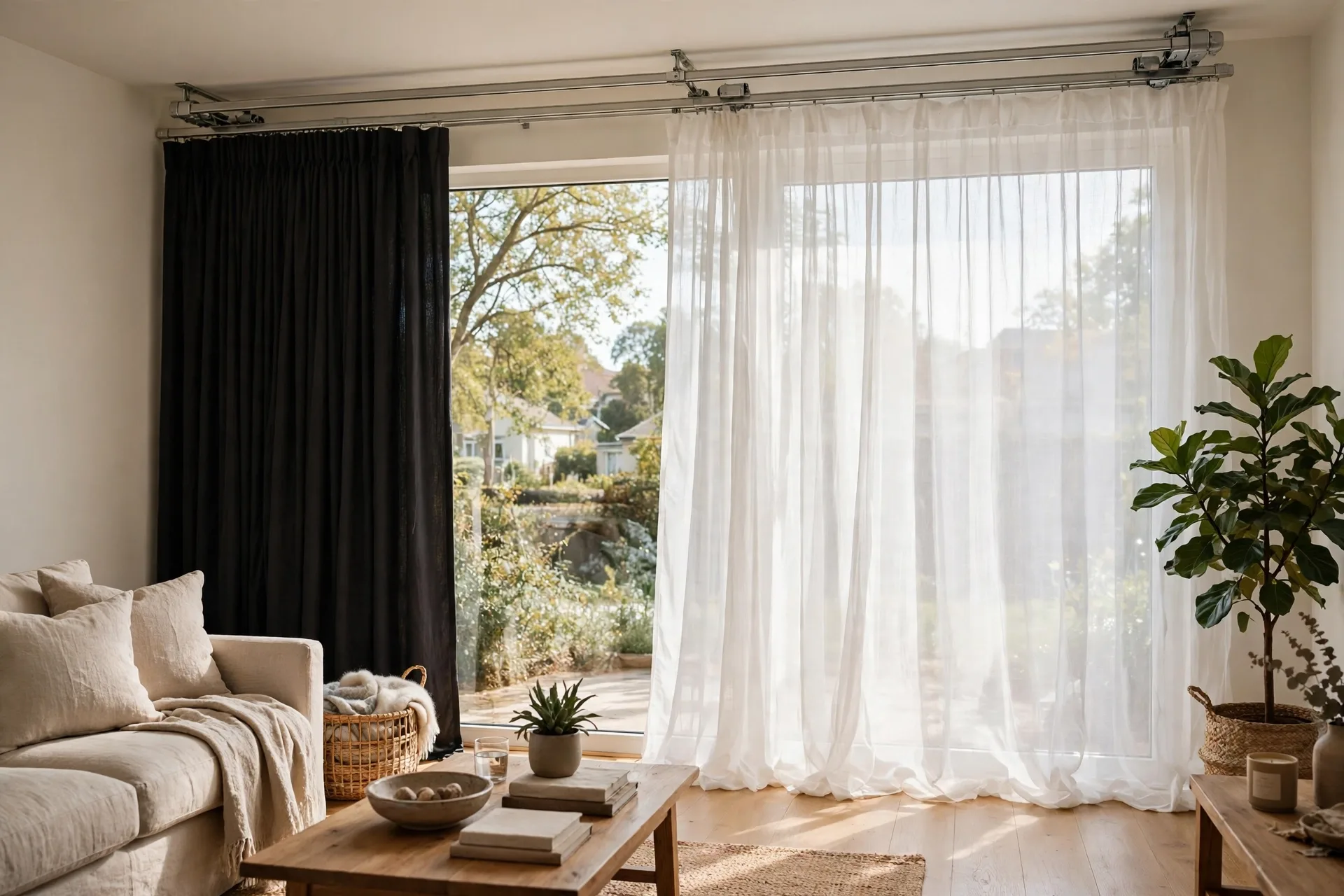
6. Dual-track motorized system for sheer plus blackout layering: best for a room that needs day sheer and night blackout on one system
Best for: A room that needs a sheer layer and a blackout layer on one fitting, where both layers move together.
Key features: Double-track design that layers sheer and blackout on one fitting, one motor drives both layers together, fixed 5 ft 3 in (1.6 m) span, single-side opening, remote, app, Alexa, and Google control, wall or ceiling mount, carries up to 110 lb, seller states about 33 dB.
Pros: Day sheer and night blackout on one fitting, strong 110 lb limit, quiet on the seller's figures.
Cons: One motor means the layers move together, not independently, so each layer cannot run on its own schedule, fixed 63-inch span, so it suits one window size only, single-side opening.
Full track or retrofit motor: which one your window needs
A full motorized track replaces the rod or track entirely, with the motor built into the rail and the curtains hanging from carriers that run inside a channel. It is the right choice where the window is tall, wide, or heavy, where the existing rod sags, or where the curtains must open and close every day without a hand on them. The motor drives the carriers directly, so the pull is even across the whole span.
A retrofit motor clips onto a rod or track you already have and drives the curtains along it.
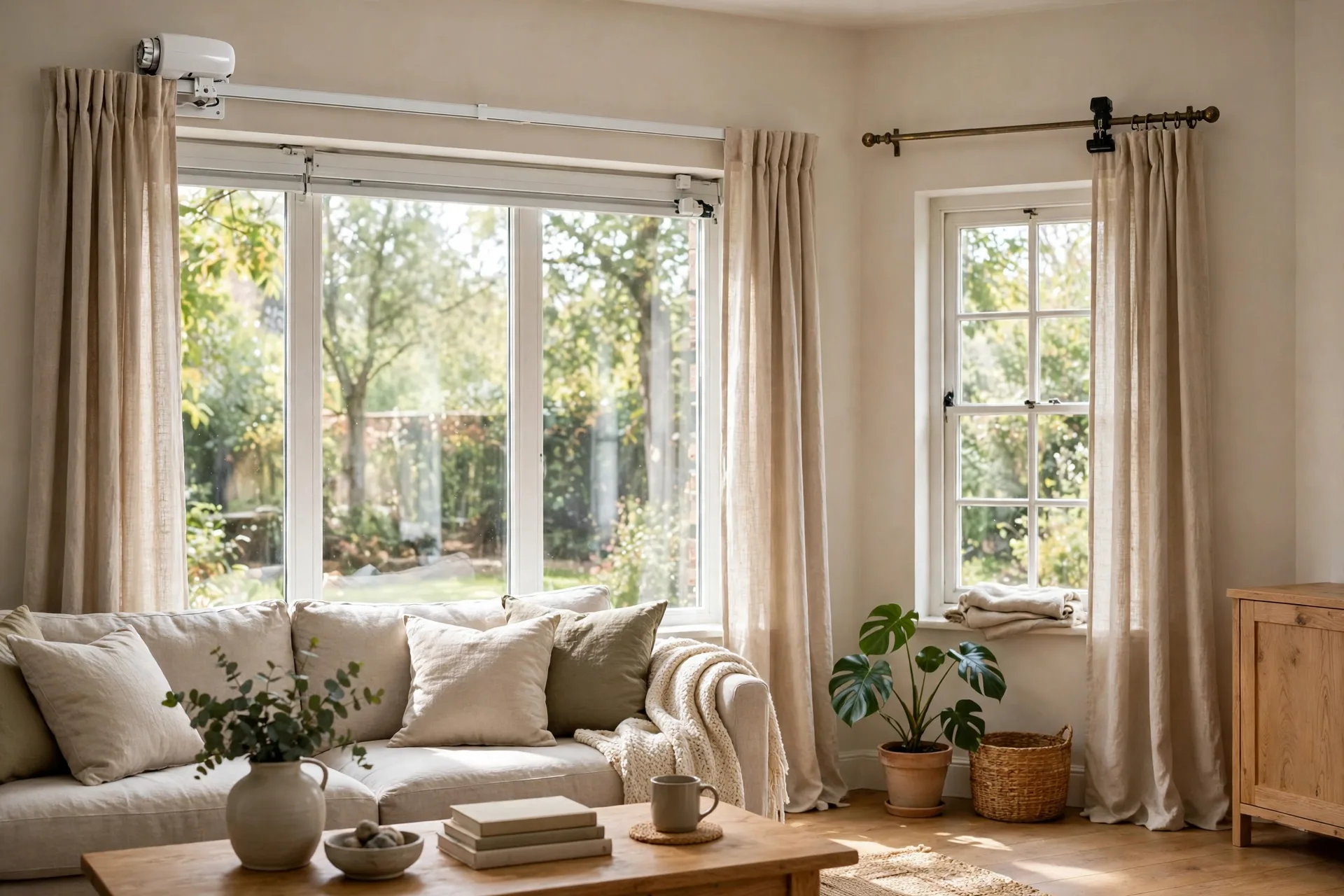
It is the right choice where the rod already fits, the brackets are sound, and the curtains are light enough for the motor to move. It is not a way to rescue a sagging rod or a bent track, because the motor adds weight and pull to a fitting that is already struggling.
The deciding question is the weight. A retrofit motor typically carries up to about 33 pounds, which is enough for light curtains on a standard window and not enough for lined blackout panels on a wide window. A full track typically carries 66 pounds, and heavy-duty models carry up to 110 or 132 pounds. If the curtains are anywhere near the retrofit limit, choose the full track.
Battery, mains, or solar: power as sellers describe it
Motorized tracks run on mains power, battery power, or solar-assisted battery power. Mains power means a cable from the motor to an outlet, and it is the choice where an outlet sits beside the window. It never needs charging, it carries the heaviest curtains, and it suits a track that runs many times a day. Its cost is the cable: where no outlet is near, a mains track means a cable across the wall or a new outlet, and in a rented home that may not be an option.
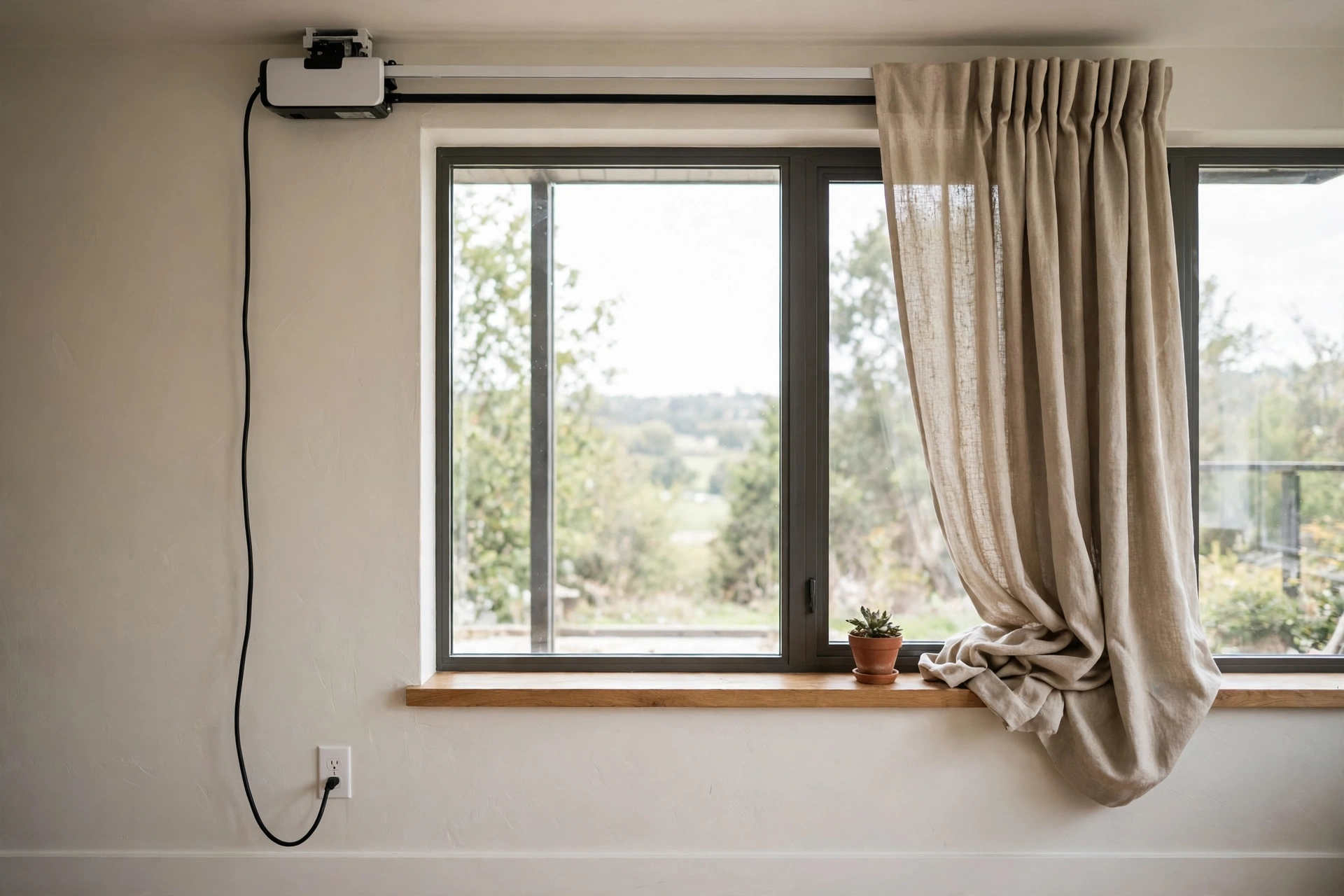
Battery power means a rechargeable pack in the motor housing, and it is the choice where no outlet is near or where a cable would spoil the room. Sellers describe battery tracks as running for months between charges on typical daily use, but the figure varies by maker, by curtain weight, and by how often the track runs, so check the listing for the maker's stated figure and treat it as an expectation, not a promise.
Solar power, as sellers describe it, is a small solar panel that trickle-charges the battery on a sunny window. It stretches the time between charges rather than removing charging entirely. Check the listing for whether the solar panel is included or sold separately.
Check the cable length before you order a mains track. Motor wires run about 3.2 m on some tracks, and a short cord may need an extension cord to reach the outlet. Makers' months-between-charges figures are measured under stated test conditions, for example a 3 m runway, an 8 kg curtain, opened and closed twice a day, at 25 degrees, so the figure is a test result, not a promise. No months figure is quoted here, because no listing figure was consistent enough to stand on.
Weight and span limits: the two numbers that rule out a track
Every motorized track has two limits, and both must be checked before you order: the weight it can carry and the span it can cover. The weight limit is the total weight of the curtains, including lining. Common figures are 66 pounds (30 kilograms) for a standard track, 110 pounds (50 kilograms) for a strong track, and up to 132 pounds (60 kilograms) for a heavy-duty track, with the limit sometimes falling as the span grows. Add the weight of all the panels together, not just one.
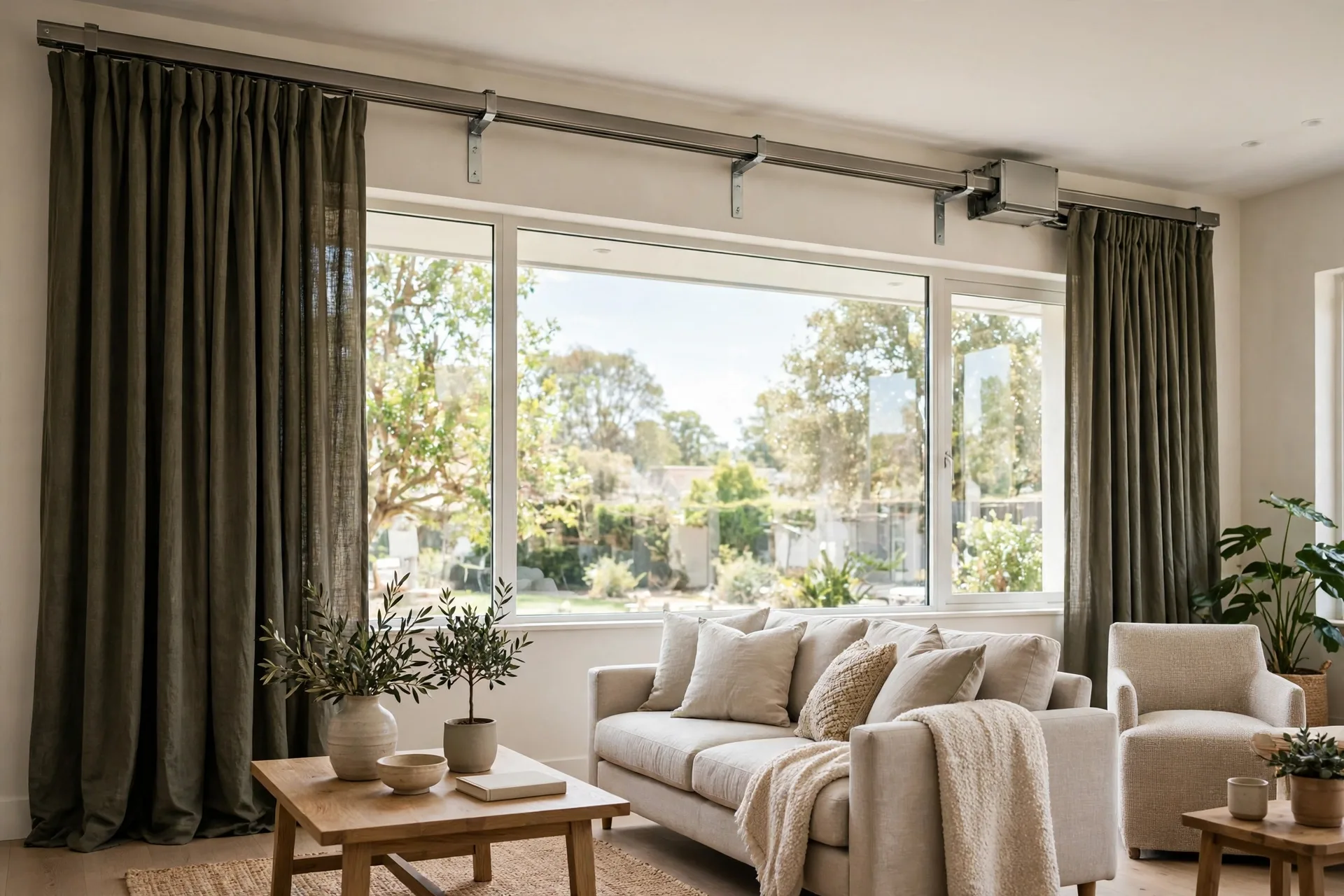
The span limit is the longest track the model can cover. Telescopic tracks adjust across a range, commonly up to about 130 to 160 inches, while sectional tracks join to longer lengths, with the longest verified span at 196 inches. Measure the span you need before you order: for a standard window it is the rod width, bracket to bracket, and for a sliding door it is the rod width including the stack space on each side. For the measuring steps, see How to Measure for Curtains.
The two limits interact: some sellers state a lower weight limit for the longest spans, and that lower figure is the one that counts. If your window is both wide and heavy, choose a heavy-duty track rather than a standard one at its limit.
Load limits fall with length, so check the limit for the span you will actually buy, not the headline figure. A track rated 88 to 132 lb depending on length carries far less at its longest span than at its shortest, so check the overload protection and the torque ratings on the listing. Longer sizes also need two people to fit, or a professional, and the anchors must go into concrete, wood studs, or reinforced points, because a long loaded track pulls hard on its brackets. Check whether wall brackets are included: some tracks ship ceiling brackets only, with wall brackets sold separately. Allow about 6 to 12 inches beyond each side when sizing a track, so the panels close past the frame edge and the stack has somewhere to go.
Center-open or one-way: matching the track to the way you use the door
The track opens in the middle or to one side, and the choice follows the way the window or door is used. A center-open track splits the curtains in the middle and draws half to each side, which suits a standard window and a sliding door that opens from either side, because the view clears from the middle and the two stacks balance each other. Most telescopic tracks in this guide are center-opening, and opening type varies by listing.
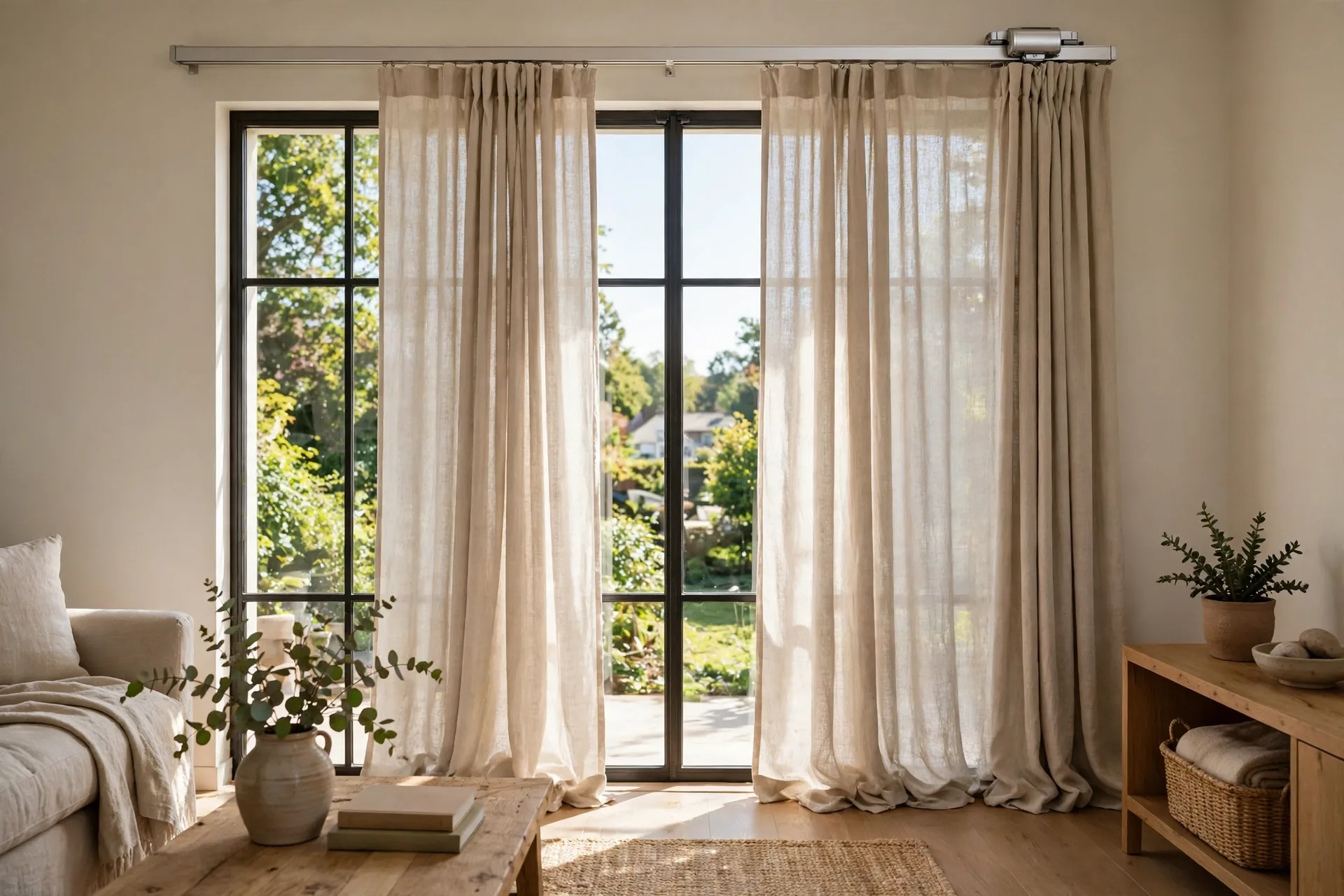
A one-way track draws all the fabric to one side, which suits a sliding door where one side is the walking side and the other side holds the fixed panel, or a window beside a wall where only one side has room for a stack. The stack side must have enough wall for the whole gathered pile, so measure the wall on the stack side before you choose.
Check the opening type on the listing before you order, because it is fixed by the model and cannot be changed after fitting. A center-opening track cannot be made to draw one way, and a one-way track cannot be made to split in the middle.
Positioning magnets are a small detail that prevents light gaps without adjustment: the magnets pull the panels together at the center so they meet cleanly. Center-opening is the standard on most tracks, and some models do not offer one-way opening at all, so a one-way draw must be confirmed on the listing, not assumed.
Noise and speed: what to expect from the motor
A motorized track makes a sound, and the question is how much and whether it matters in the room. Sellers state noise figures for their motors, and the figures cluster in a narrow band: many sellers quote around 33 decibels for a quiet motor, and others quote under 45 decibels, both quieter than normal conversation. Some listings quote figures far lower, which read as laboratory figures rather than room figures. Treat the lowest figures with care, and expect any motor to be audible in a silent room at night.
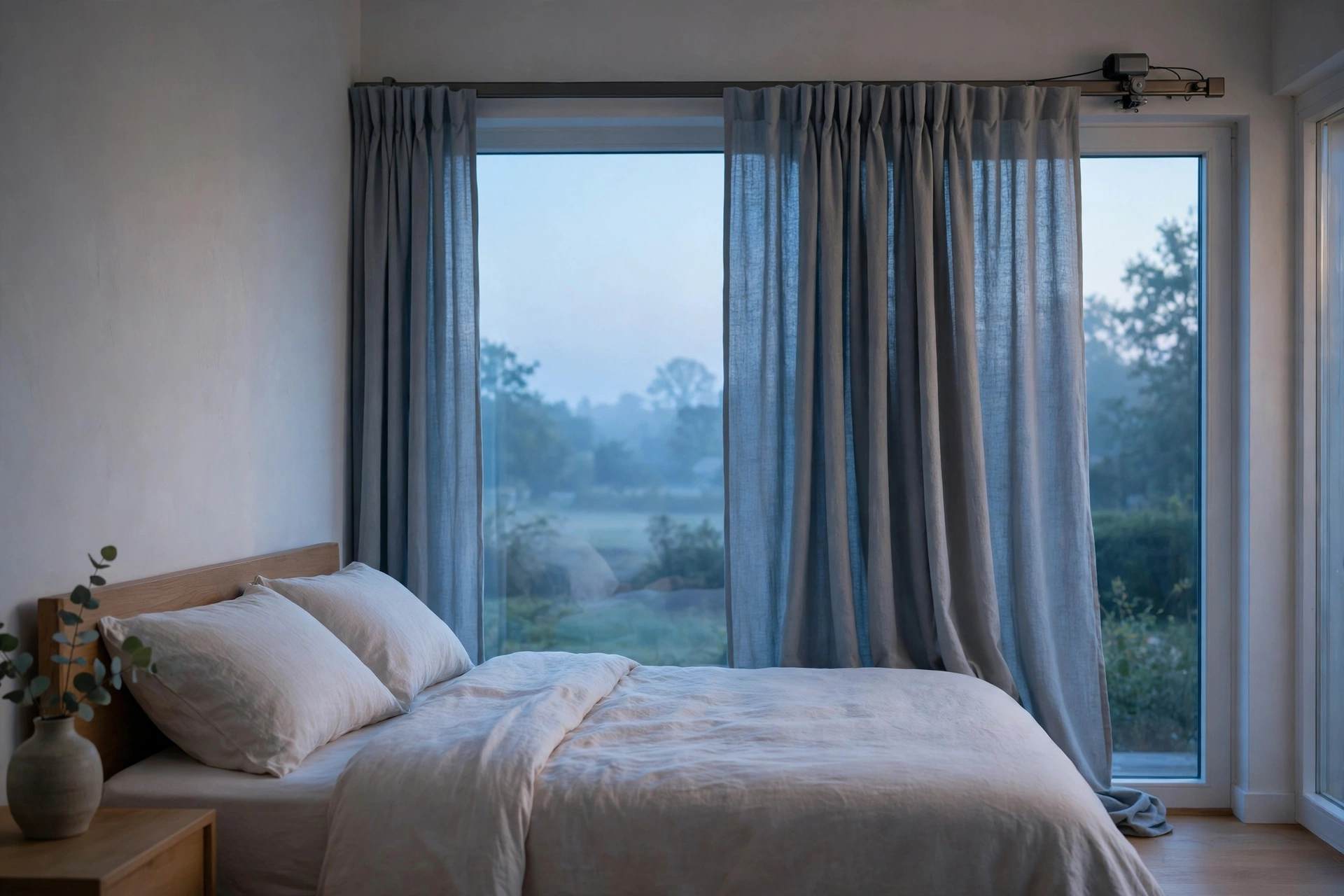
What matters more than the number is when the motor runs. A track that opens in the morning and closes at night runs when the house is awake, and its sound passes unnoticed. A track that runs on a sleep schedule runs when the house is silent, and the same hum is the loudest thing in the room. For a bedroom, choose the quietest motor the listing offers, and test the schedule while you are awake before you trust it overnight.
Speed is the other expectation to set. One seller states a motor speed of 10 centimeters per second, which means a three-meter track takes about half a minute to cross. Expect a smooth, steady draw that takes well under a minute on a standard window.
Travel speed varies by motor, so check the listing, and soft-start functions reduce startup noise by easing the motor into motion instead of jerking the curtains. Test the noise before you buy where you can: run the track in a showroom, or watch customer videos of the exact model, because a decibel figure on a listing says little about how the hum sounds in a quiet room.
Hubs, apps, and remotes: what the track needs to run
This motor is controlled by a remote, an app, a voice assistant, or a schedule. A remote is the simplest control: it comes in the box with many tracks and needs nothing else, but check the listing, because on some tracks the remote is sold separately. An app adds schedules, timers, and control from outside the house, and it needs a phone and the maker's app, which is usually free. Voice control adds hands-free opening through a voice assistant, and it needs the assistant and a connection between the assistant and the track.
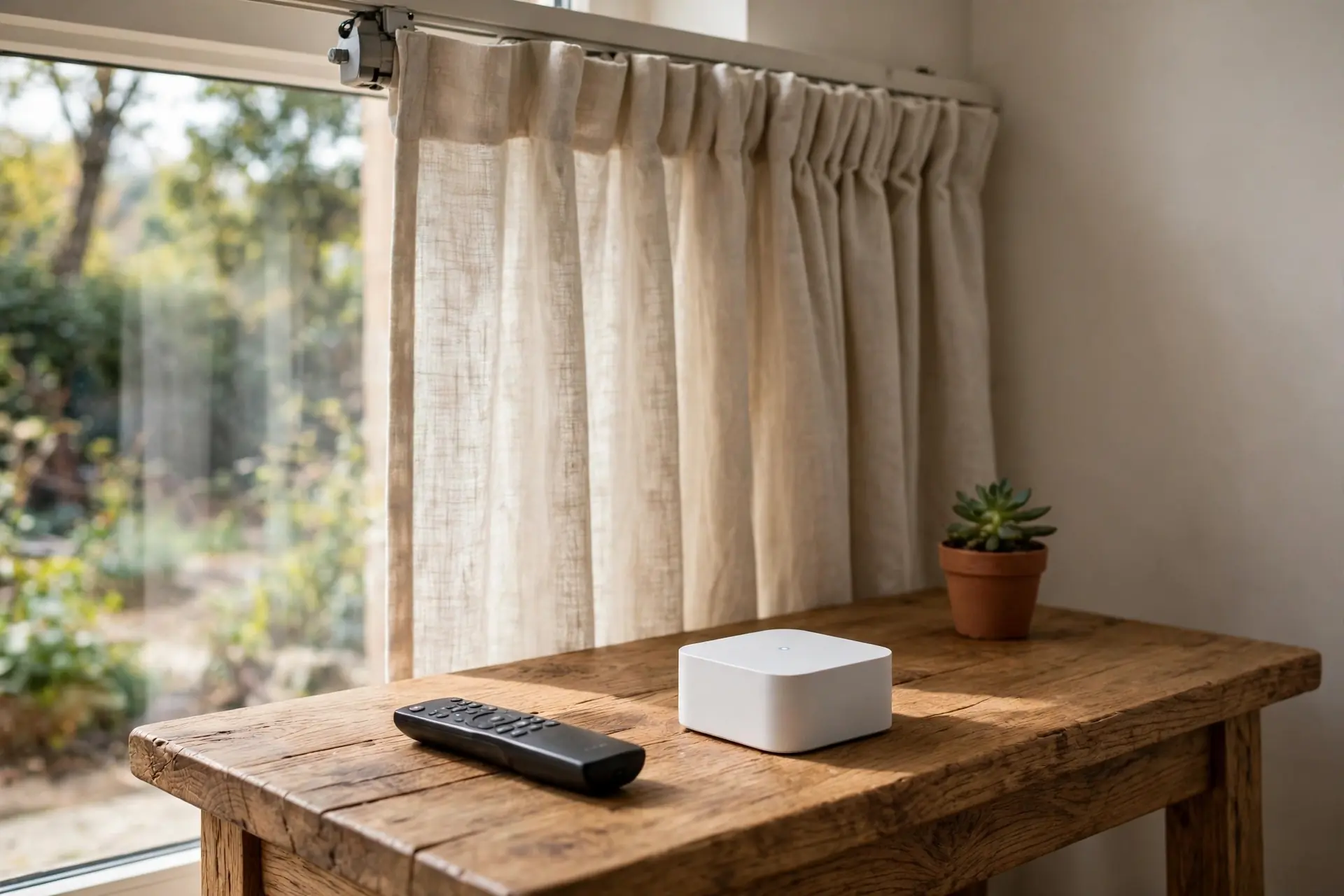
The hub is the part that trips buyers up. Some tracks connect directly to a voice assistant with no hub, which sellers describe as hub-free. Others need a hub, a small bridge that sits between the track and the home network, and those tracks will not answer a voice command until the hub is fitted and paired. A hub is sometimes included in the box and sometimes sold separately, so check the listing for the words hub-free or hub required, and check which assistants the track supports.
The app itself needs checking too. Some makers use their own app, while others use a shared smart home app, and the app decides what the track can do: schedules, sunrise and sunset opening, grouping several tracks together, and manual override when the power fails. Check that the app is still supported, because a track whose app has been abandoned is a track that loses its schedules.
Pull-to-start is a control worth knowing about: pull the curtain lightly by hand and the motor takes over and finishes the move. Control can also be exact rather than open or closed: some tracks open to a set percentage by voice, app, or remote, so the curtains stop partway on command. Some motors need 2.4 GHz Wi-Fi specifically, not 5 GHz, so check the band before you order. Local control matters too: check whether the track still works when the Wi-Fi is down, and whether it keeps its position memory through a connectivity break, because a track that forgets where it is needs a full run to find itself again. Wireless range matters for multi-room control: remotes reach about 124 ft, while Bluetooth range is limited by walls and distance. A motion sensor can also trigger the track, opening or closing the curtains on detected movement.
What cannot be retrofitted onto a motor
Not every curtain can be motorized, and the limits are set by the heading, the rod, and the weight. A grommet heading and a rod pocket heading cannot run on a motorized track, because the track carries the curtains on carriers that hook to the heading, and a grommet ring does not fit a carrier. A pinch pleat heading, a pencil pleat heading, and a wave fold heading fit a track, because they hang from hooks that clip to the carriers. If your curtains are grommet-topped, they need new headings or new panels before a track will carry them.

A bent rod, a sagging rod, or a rod with a center bracket that the curtains cannot pass cannot be retrofitted either. A retrofit motor pulls the curtains along the rod, and a rod that already sags will sag further under the motor's pull, while a center bracket will stop the curtains in the middle of their travel.
A track that must bend around a bay or a corner cannot be made from a telescopic model, because telescopic rails are straight. A bend needs a sectional track with bendable sections, or a custom-bent track. A ceiling-mounted track cannot be fitted where the ceiling cannot take the anchors, such as a drywall ceiling with no joist or anchor point above the window.
A shortlist by window type and power available
The shortlist below matches the track type to the window and the power. Confirm the span, the weight limit, and the opening type on the listing before you order.
A standard window with an outlet nearby takes the no-cut telescopic track, mains powered, with hub-free app and voice control. Confirm the opening type on the listing before you order, because the listing does not state it. The same window with no outlet nearby takes the battery-powered track instead, with remote and schedule control.
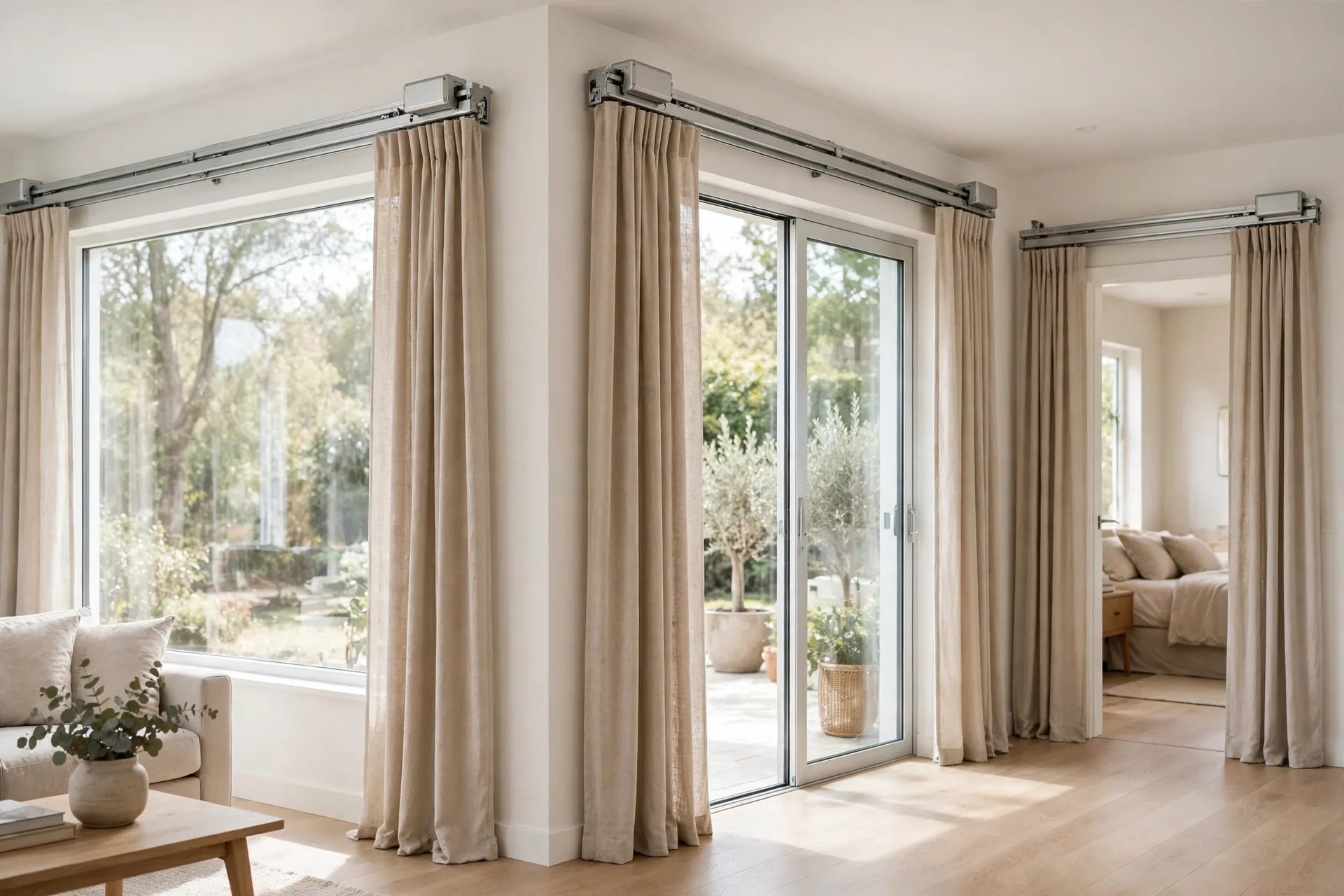
A standard window with a rod you already like takes the retrofit clip-on motor, battery powered, provided the curtains are light enough for its weight limit. A very wide window or a wall of glass takes the sectional track, mains powered, because only a sectional track reaches the span and only mains power carries the weight without recharging. A bay or corner window takes a sectional track with bendable sections, and the bend must be stated on the listing. A tall or hard-to-reach window takes any full track with app and schedule control, because the schedule opens and closes the curtains without a ladder. A bedroom takes the compact mini-motor track, with the quietest motor the listing offers. A living room with a sheer layer and a blackout layer takes the dual-track system, with one motor driving both layers together, so the sheer and the blackout move as one rather than on separate schedules. For the sheer layer itself, see Best Sheer Curtains, and for the blackout layer, see Best Blackout Curtains.
Hidden or concealed motor designs suit a room where the hardware should not show, with side-hook motor concealment hiding the motor beside the fabric for a cleaner look. Some tracks mount as a room divider, on a wall, on a ceiling, or across a room to divide it, which suits a studio or an open-plan space. A bay or corner window takes bend connectors, 90-degree and 135-degree metal connectors that join straight sections around the bend, and S-Wave runner kits are sold separately where the heading needs them. Check the frame for durability: aluminum alloy frames with rustproof, waterproof, and anti-aging coatings last longest in damp or sunny rooms, and double-track designs distribute the weight across both layers.
Motorized tracks for a dark bedroom
The track can make a bedroom truly dark, but the track alone does not do it: the darkness comes from the fabric, the lining, and the way the panels meet the wall. The first choice is between a separate blackout lining and a coated face fabric. A separate lining is a second layer sewn behind the face fabric, and it blocks light while the face fabric keeps its own color and texture. A coated face fabric has the blackout coating applied to the back of the face fabric itself, which blocks light in one layer but can feel stiffer.
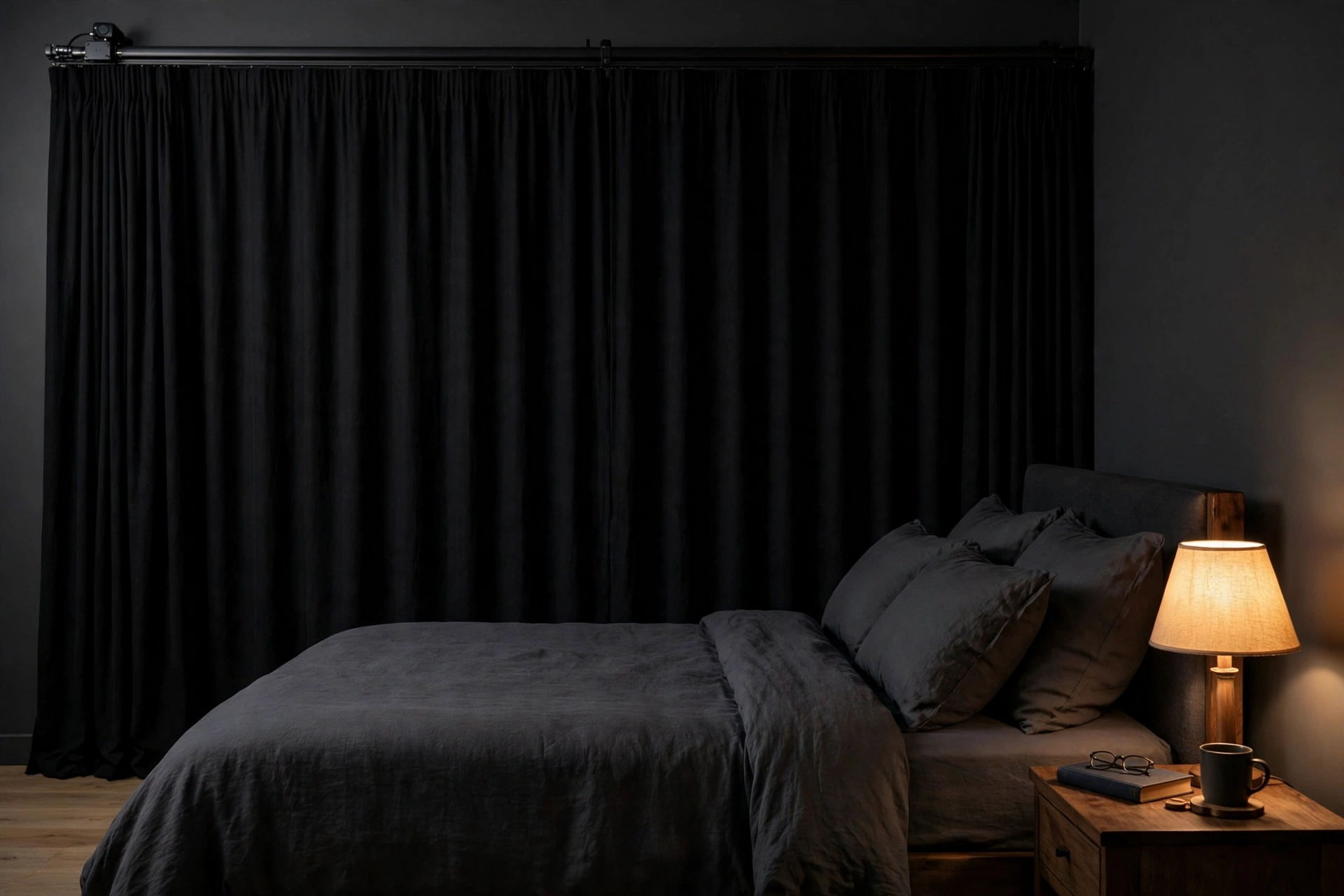
The second choice is the edges, because light leaks at the edges, not through the middle. A panel that ends at the frame edge leaves a gap at each side, and a panel that meets in the middle leaves a gap at the center. Side returns, where the track bends back to the wall at each end, close the side gaps by carrying the fabric to the wall. A cornice, a box that covers the top of the track, closes the top gap, and a ceiling pocket, a recess in the ceiling that hides the track, closes it more completely. For the full darkness job, see Best Blackout Curtains, and for the bedroom as a whole, see Best Curtains for Bedroom.
The motor itself must be quiet. Sellers quote quiet motors at around 33 decibels and under 45 decibels, and those figures are expectations to check on the listing, not promises: a motor that is quiet in a showroom can still be audible in a silent bedroom at 2 a.m., and the only sure test is to run the schedule while you are awake and listen. Battery life is the same: sellers describe battery tracks as running for months between charges on typical daily use, but no listing figure was consistent enough to quote here, so check the maker's stated figure on the listing and treat it as an expectation, not a promise.
Schedules are where a motorized bedroom track earns its keep. A schedule that closes the curtains at bedtime and opens them at waking time removes the nightly task entirely, and it suits shift workers who sleep in the day, because the curtains can close at dawn and open at dusk without anyone touching them. A final benefit is safety: a motorized track has no cords, so there is nothing for a child to reach, which makes it the safest curtain control for a nursery or a child's bedroom. Safety sensors add one more layer: the motor stops on resistance, including if a child pulls the curtain, so a caught hand or a tugged panel halts the track instead of dragging on.
Frequently asked questions about motorized curtain tracks
Most motorized track questions come down to power, weight, noise, and whether an existing rod can be kept.
Do motorized curtain tracks need an outlet?
A mains track needs an outlet beside the window. A battery track runs on a rechargeable pack, and a solar-assisted track trickle-charges its battery from a sunny window. Choose mains where an outlet is near and the curtains are heavy, and battery where no outlet is near.
Can I motorize curtains I already own?
Yes, if the curtains hang from a heading that fits a carrier, such as pinch pleat, pencil pleat, or wave fold, and if their weight sits inside the motor limit. Grommet and rod pocket headings do not fit a track.
How heavy a curtain can a motorized track carry?
Sellers list standard tracks at about 66 pounds, strong tracks at about 110 pounds, and heavy-duty tracks at up to 132 pounds. Retrofit motors carry far less, typically up to about 33 pounds. Add the weight of all the panels together and compare it with the limit on the listing.
How noisy is a motorized curtain track?
Sellers quote quiet motors at around 33 decibels and under 45 decibels, which is quieter than normal conversation. Expect any motor to be audible in a silent room at night, and test a bedroom schedule while you are awake before you trust it overnight.
How long does a motorized track battery last?
Sellers describe battery tracks as running for months between charges on typical daily use, but the figure varies by maker, by curtain weight, and by how often the track runs, so check the maker's stated figure on the listing.
Do I need a hub for a motorized curtain track?
Some tracks connect to a voice assistant with no hub, which sellers describe as hub-free. Others need a hub, a small bridge between the track and the home network, and those tracks will not answer a voice command until the hub is fitted and paired. Check the listing for hub-free or hub required.
Can a motorized track open one way instead of in the middle?
Yes, but only if the model is built that way. Most telescopic tracks in this guide are center-opening, while some sectional tracks offer a one-way fitting by model. Opening type varies by listing. The opening type is fixed by the model and cannot be changed after fitting.
What happens to a motorized track when the power goes out?
A mains track stops where it is until the power returns, unless the model has a manual override that lets you pull the curtains by hand. A battery track keeps running on its battery.
Can I move a motorized track by hand when the power is out?
Several tracks can be operated by hand when powered off, and some keep a manual pull as the fallback, so the curtains can still be drawn by hand. Check the listing for a manual override before you buy, because a track with no hand operation stays where it stopped until the power returns.
For the general measuring steps behind the span, see How to Measure for Curtains, and for the room the track will serve, see Best Curtains for Living Room.
This guide is research-based curation: we compared maker specifications, published reviews, and current prices. Read how we choose.