 Best
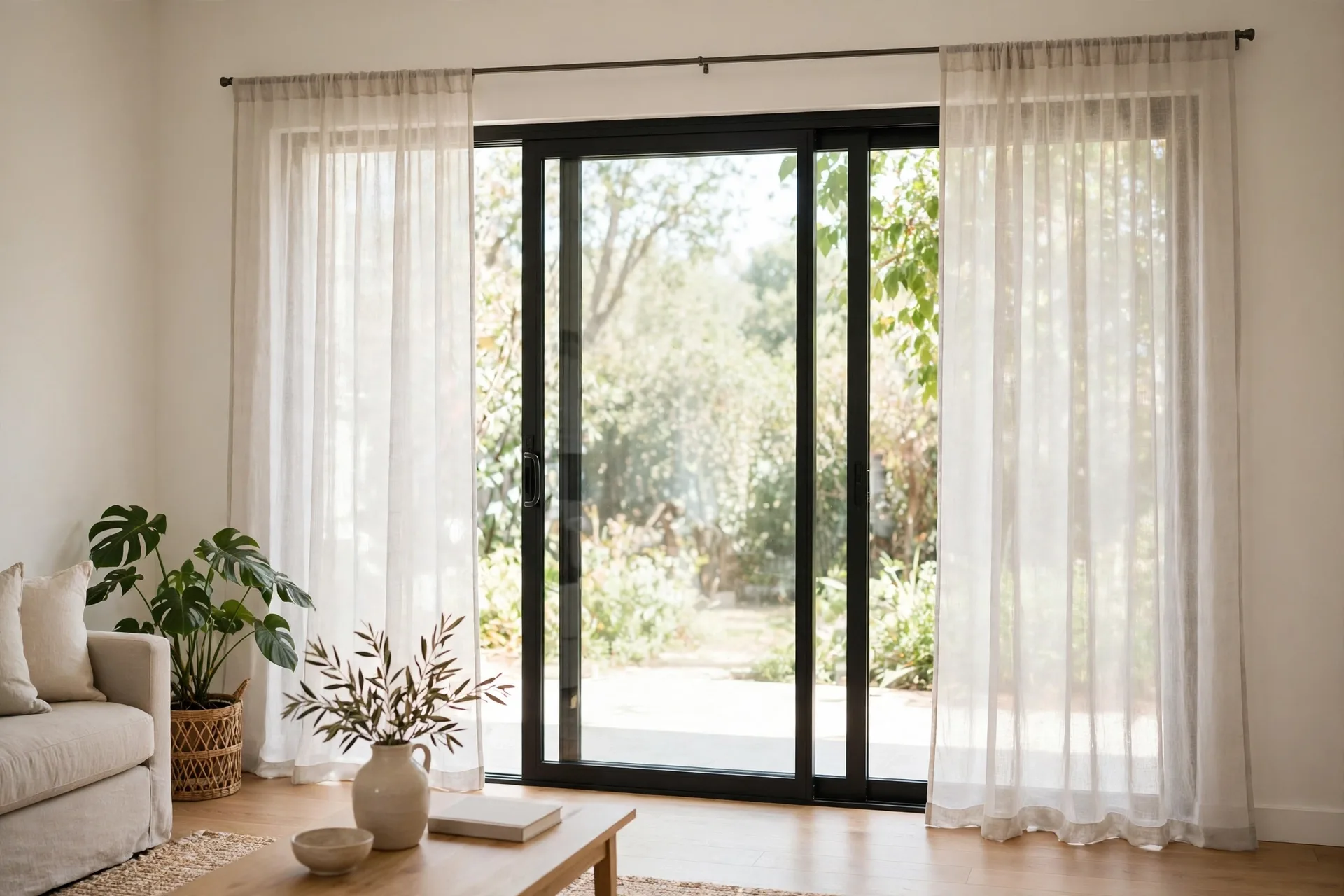
Best Curtains for Sliding Glass Doors
A sliding glass door is a wide doorway and a wide window at the same time. This guide matches curtains to the job, sizes them for full coverage, and keeps the walkway clear.
The best curtains for sliding glass doors are wide, floor-length panels that cover the full glass when closed, stack clear of the doorway when open, and slide easily on a strong rod or track. The fabric job still matters, so a bedroom door needs darkness, a living room door needs daytime privacy without losing light, and a sun-facing door needs help with heat and glare. Start with the door itself, then pick the fabric for the room behind it.
Best curtains for sliding glass doors: the picks by job
Blackout panels suit bedroom doors, sheer panels suit bright living room doors, and thermal panels suit sun-facing doors. The best pick for a sliding glass door depends on its job, so the picks below are grouped by job, not by rank, and each pick is named by product type only, with no brand named; details below come from the listings. Check them before you order, including panel width, drop, header, lining, and care instructions.
As an Amazon Associate, we earn from qualifying purchases.
| Pick | Best for | Day and night use |
|---|---|---|
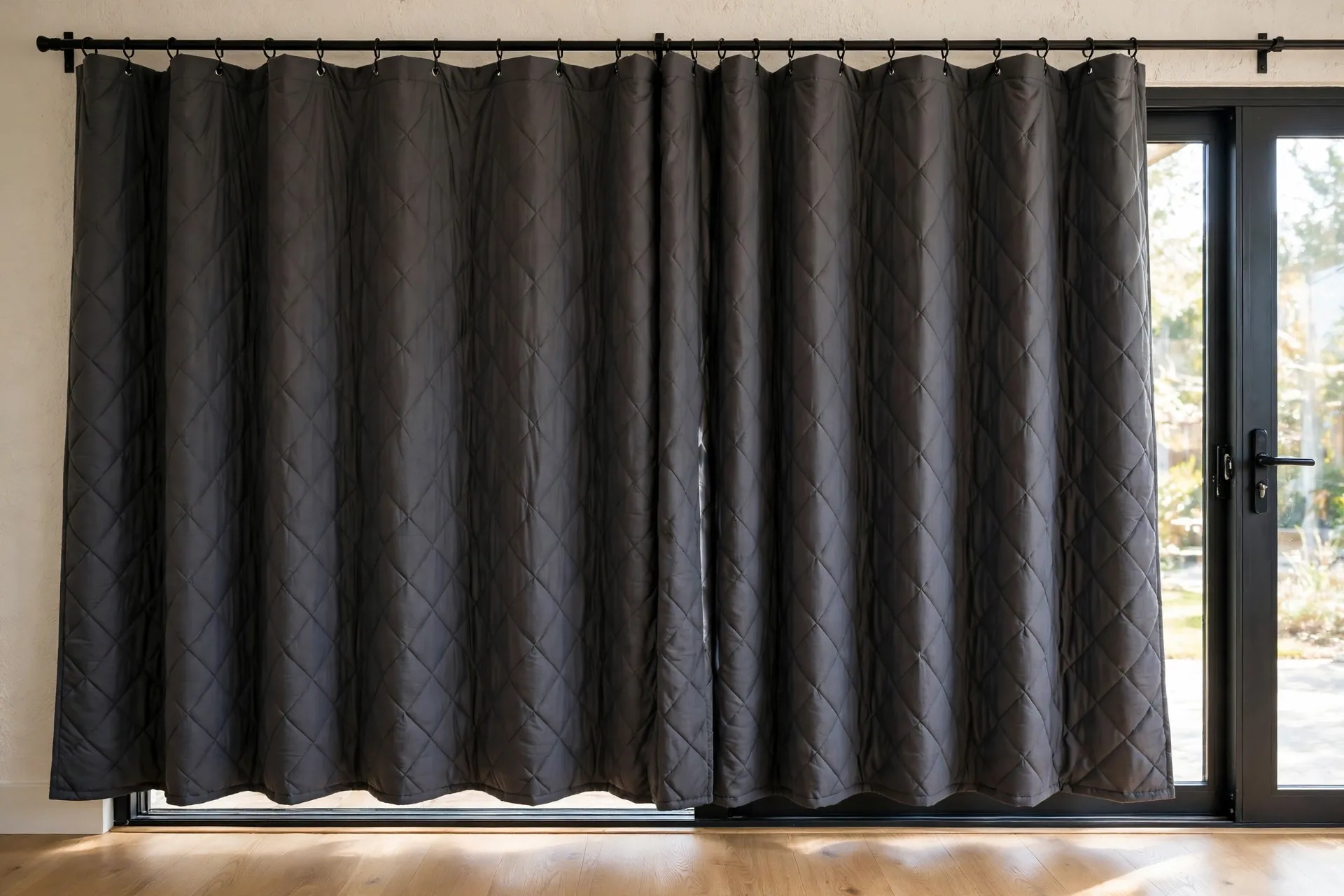
| 1. Wide grommet blackout panel | Darkness and night privacy | Closes for sleep and films, opens by day |
| 2. Wide sheer voile panel | Bright daytime privacy | Day layer, needs a night layer |
| 3. Wide lined thermal panel | Heat, cold, and glare at a glass wall | Closes for sun and cold, opens for the view |
| 4. Wide panel set for very wide doors | Full coverage across a wide span | Panels draw to each side |
| 5. Ripple fold track panel | Smooth daily sliding | Glides on a track, stacks tight |
| 6. Wide light-filtering linen-look panel | Everyday living and soft daylight | Day use, with a night layer if needed |
1. Wide grommet blackout panel for sliding doors
- Best for: bedroom sliders and sun-facing doors where darkness, glare control, and night privacy are the main jobs.
- Key features: Blackout lining or blackout construction that blocks most daylight when closed, Wide panel made to span part of a sliding door, used as a pair or set across the full width
- Pros: Strongest darkness and night privacy of the picks here, Cuts glare on screens and helps a bedroom stay dark in the morning.
- Cons: Heavy when wide, so it needs a strong rod and solid brackets, Needs generous stack back, or the open panels will cover part of the glass.
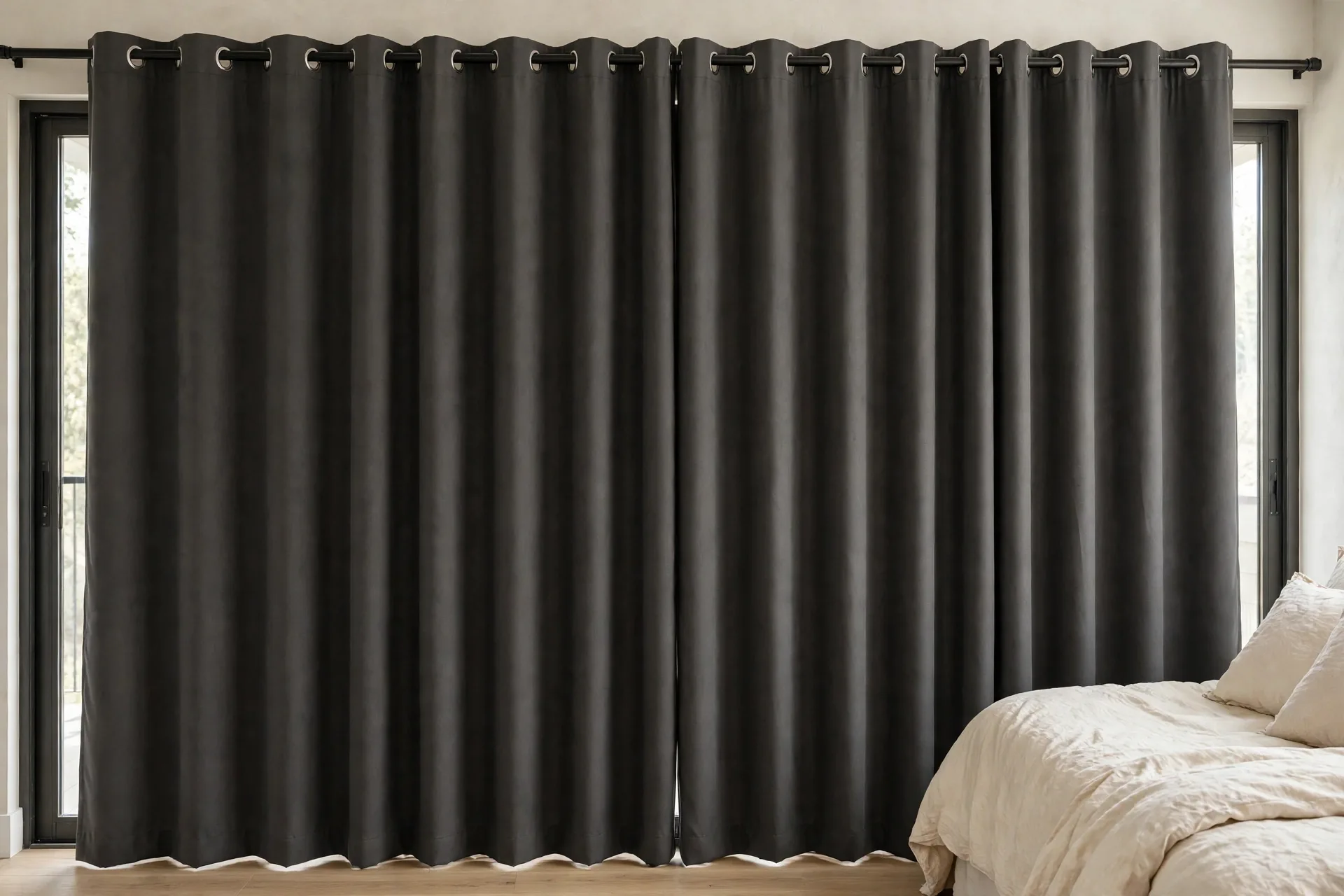
2. Wide sheer voile panel for sliding doors
- Best for: living room and patio doors where the room should stay bright by day with softened daylight and daytime privacy.
- Key features: Sheer voile weave that filters light and softens the view, Wide panel made to span part of a sliding door, used as a pair or set across the full width
- Pros: Keeps the room bright and keeps the view in soft focus by day, Light weight puts less strain on the rod than heavy blackout fabric.
- Cons: Gives little night privacy once interior lights are on, since shapes show through sheer fabric, Needs a closable night layer for bedrooms and street-facing doors.
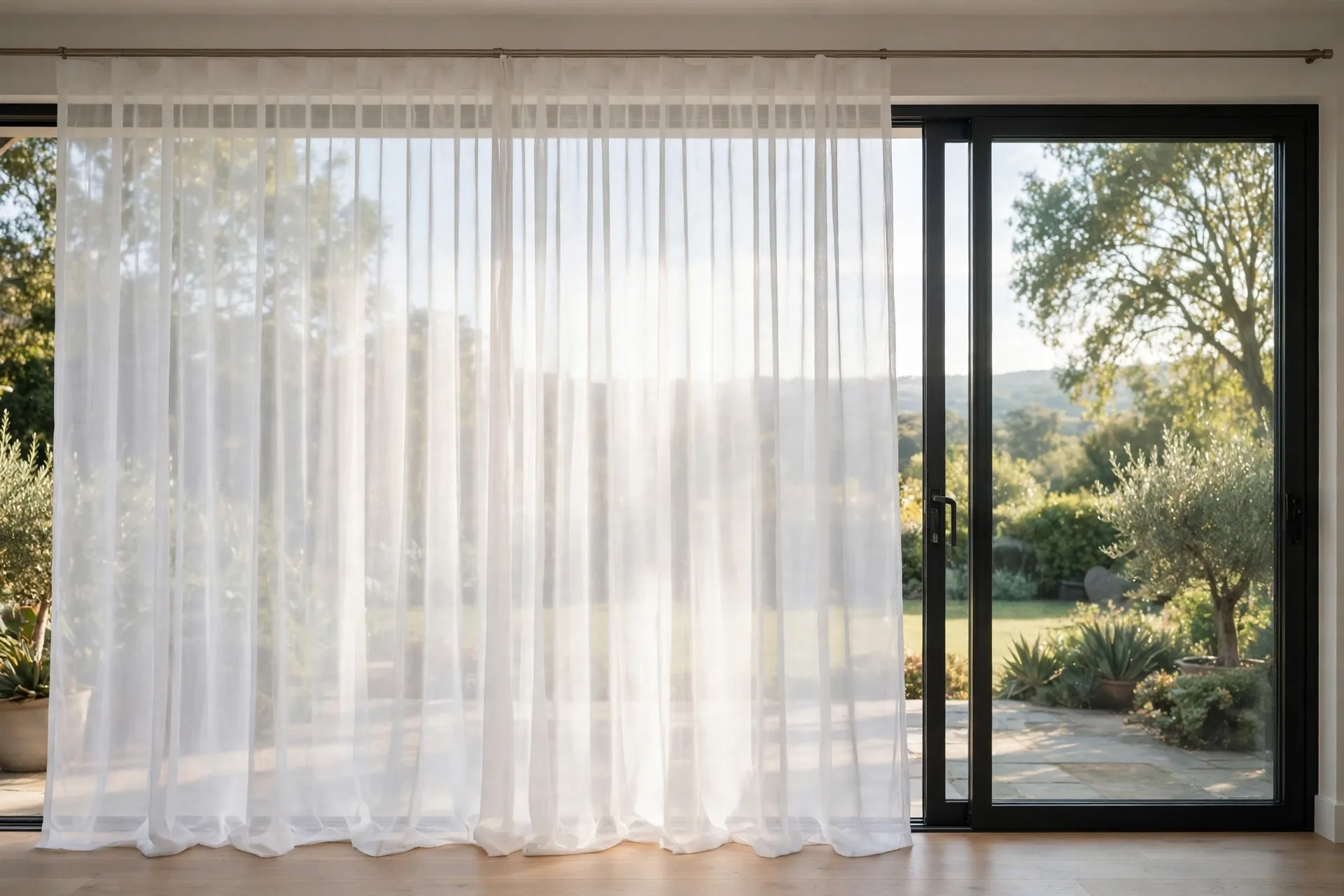
3. Wide lined thermal panel for sliding doors
- Best for: glass walls that lose heat in winter, gain heat in summer, or face strong sun for much of the day.
- Key features: Thermal black liner behind a face fabric, made to slow heat moving through the glass, Wide panel made to span part of a sliding door, used as a pair or set across the full width
- Pros: Helps a cold glass wall feel less drafty and a hot glass wall feel less harsh, Adds light control and privacy on top of the insulation job, The dark liner cuts sunlight and glare more than an unlined panel.
- Cons: Lined panels are heavier than sheer panels, so rod strength matters more.
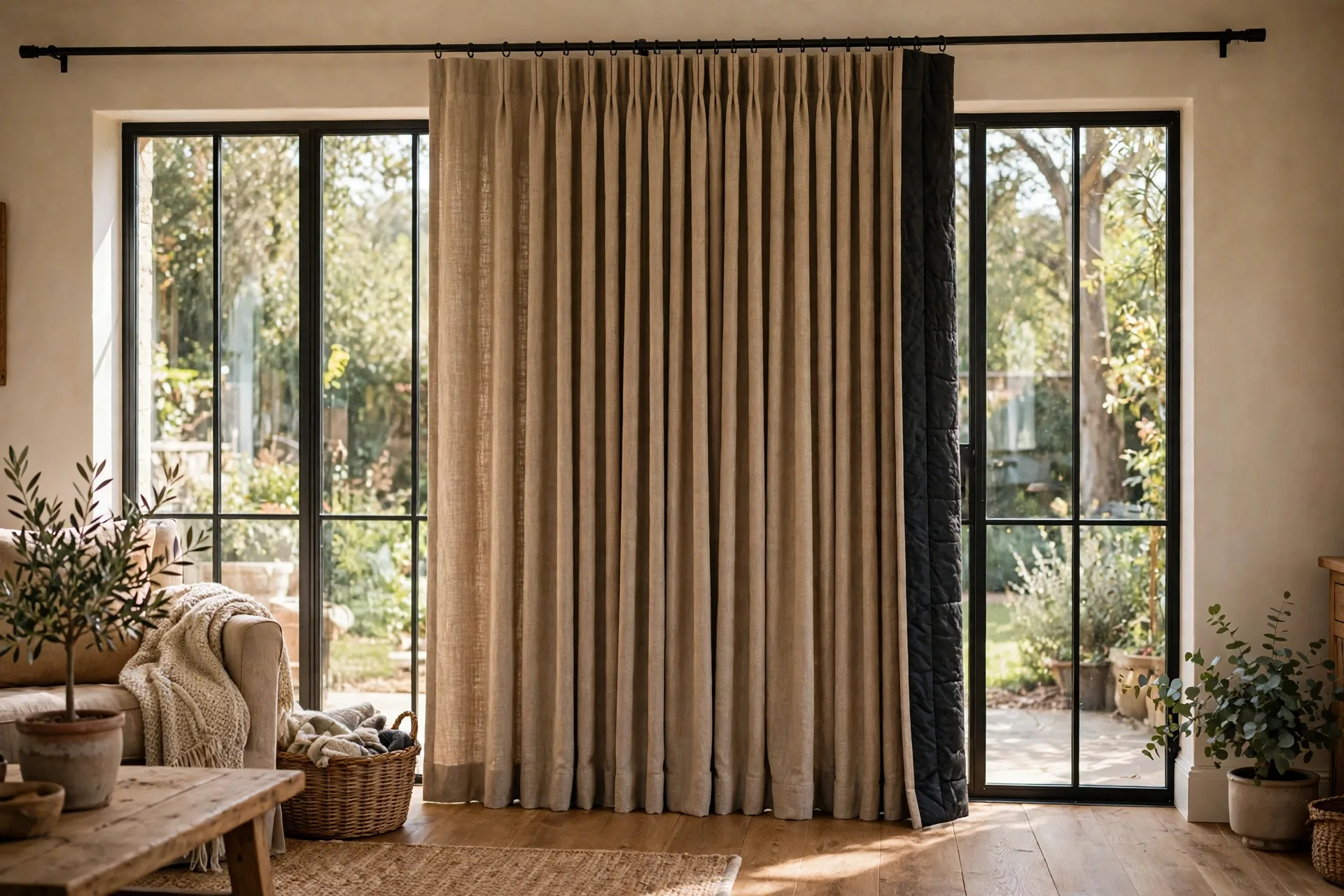
4. Wide panel set for very wide doors
- Best for: very wide sliders and glass walls where a single pair of standard panels would stretch flat or leave a gap in the middle.
- Key features: A set of panels planned as one treatment for a wide span, rather than one pair stretched across it, Panels that draw to each side so the doorway can open from either side, Fullness planned from the rod width, as set out in the width section below
- Pros: Keeps folds across the full closed width instead of a flat sheet, Lets you open one side for daily use and close the full span at night.
- Cons: More fabric means more weight, more stack back, and a stronger rod, Panel widths and counts vary by product, so the set must be planned from your rod width, not guessed.
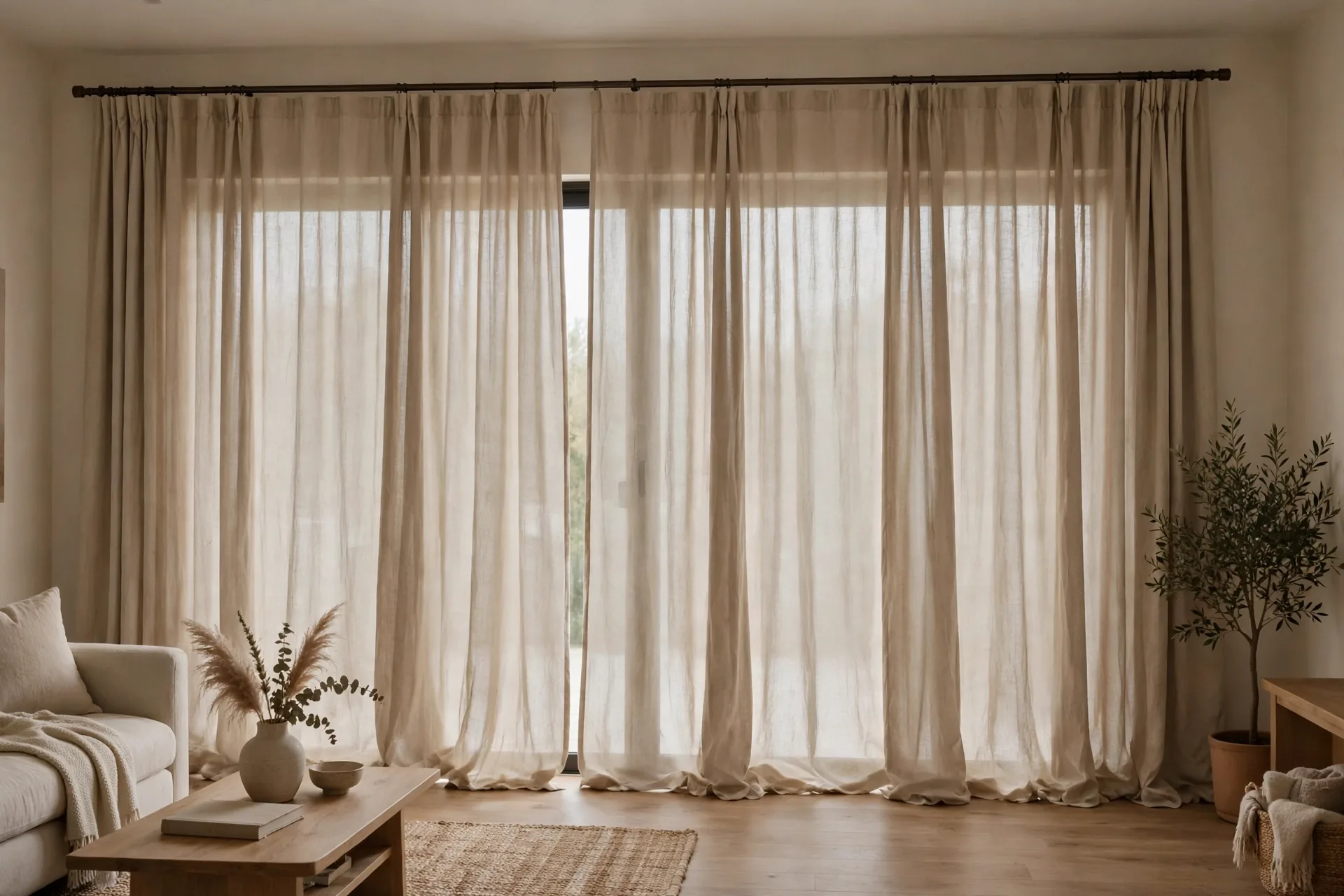
5. Ripple fold track panel for sliding doors
- Best for: doors opened many times a day, wide spans, and rooms where a tight, neat stack matters.
- Key features: Ripple fold header that falls in even waves on a track, Track carriers that glide rather than fabric gripping a rod, Panel made to span part of a sliding door, used as a set across the full width, Track kit included with the panels, for ceiling or wall mounting.
- Pros: Smoothest daily slide of the picks here, with even folds open and closed, Stacks tightly to the side, so more glass stays clear when the door is open.
- Cons: Needs a track, not a plain decorative rod, so the hardware plan changes, The look is modern and regular, which suits some rooms less than a soft grommet drape.

6. Wide light-filtering linen-look panel for sliding doors
- Best for: everyday living rooms and dining rooms where the door should soften sun and give daytime privacy without darkening the room.
- Key features: Linen look weave that filters daylight into a soft glow, Wide panel made to span part of a sliding door, used as a pair or set across the full width
- Pros: Keeps the room bright while taking the edge off direct sun, Texture adds warmth to a large glass wall without a heavy look.
- Cons: Does not give full night privacy, so a night layer is needed for bedrooms and street-facing doors, Will not control strong west sun or full darkness on its own.
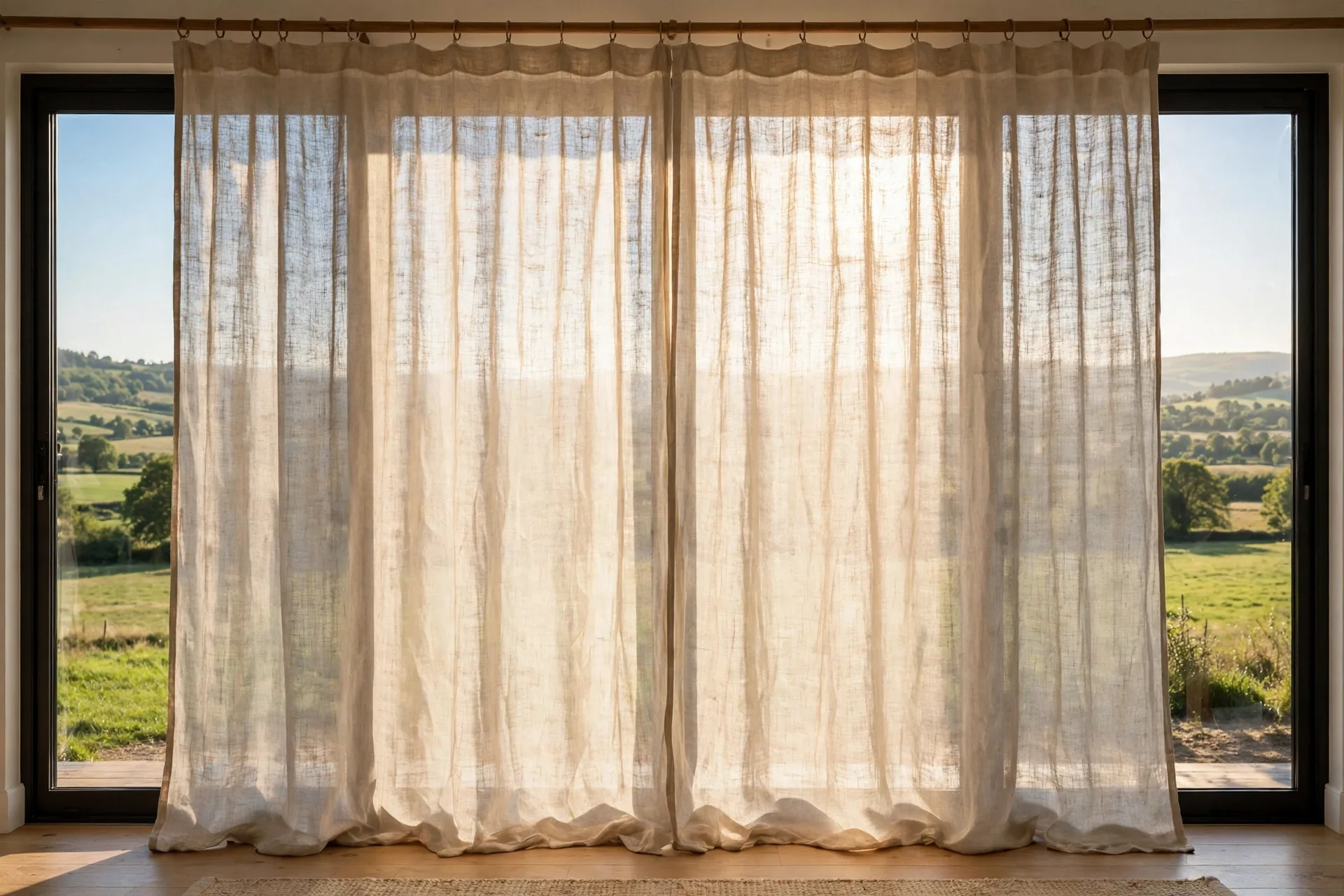
Sliding glass doors start with the door, not the fabric
A sliding glass door fails as a curtain job before fabric enters the picture, because the panels must move sideways every day, clear a walkway, and cover a span far wider than a normal window. Treat it as a doorway first: the panels need wall space on each side to stack onto, a rod or track that can carry their weight across the full span, and a header that glides rather than drags. Even the right blackout or sheer will annoy you daily if it bunches over the glass or catches on the rod.
For the full measuring and hanging steps, see How to Measure for Curtains and How to Hang Curtains. Room advice for the spaces behind most sliders is in Best Curtains for Living Room and Best Curtains for Bedroom.
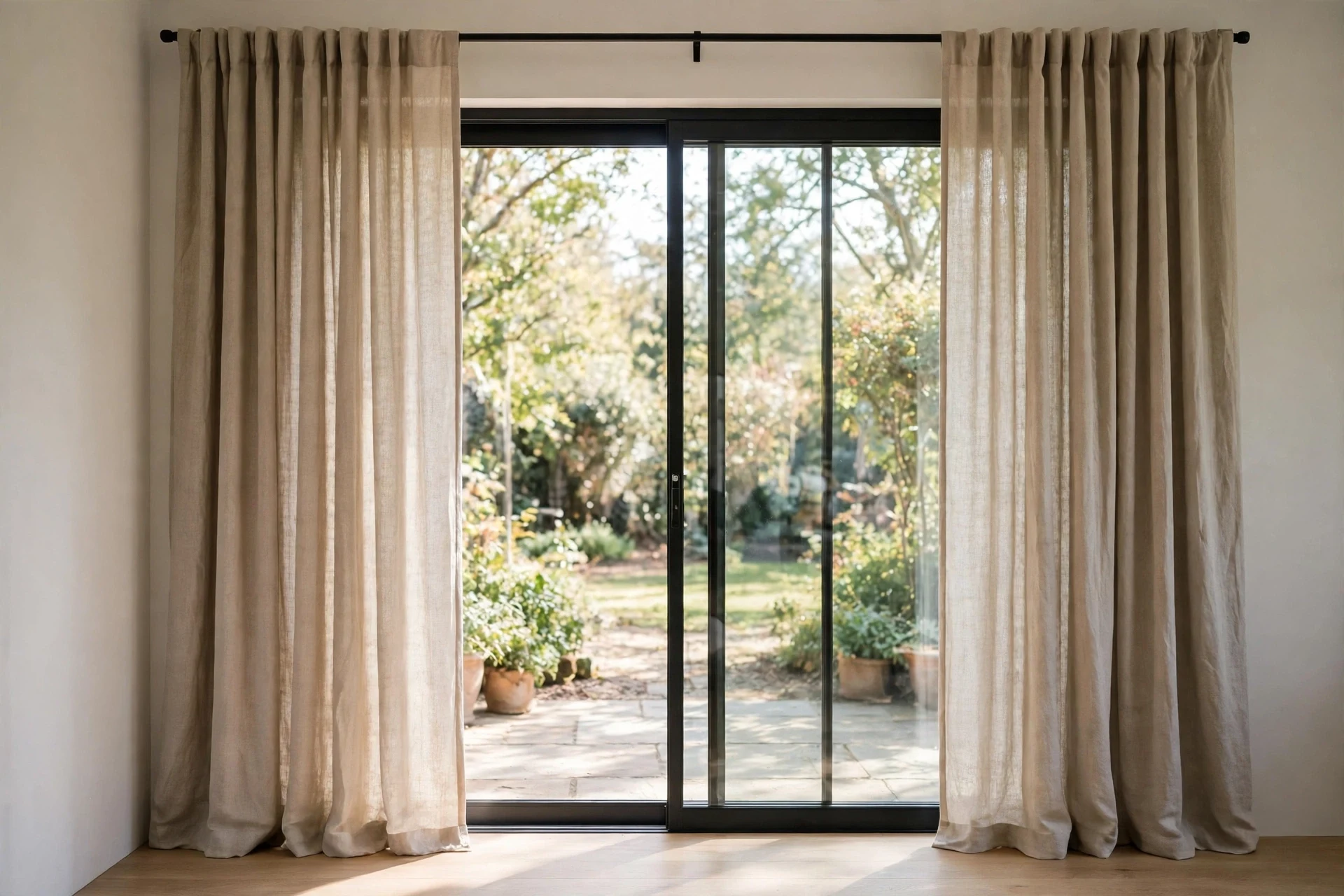
Hinged patio doors and sliding doors need different treatments
Hinged patio doors and sliding doors need different treatments because one swings toward you and the other slides sideways, and a curtain that works for one can block the other. A sliding door needs panels that draw left and right and stack on the wall beside the glass, so the walkway stays open. A hinged door, often called a French door, swings on hinges, so a long panel hung on a wall rod above it can swing with the door, catch on the handle, or block the swing path.
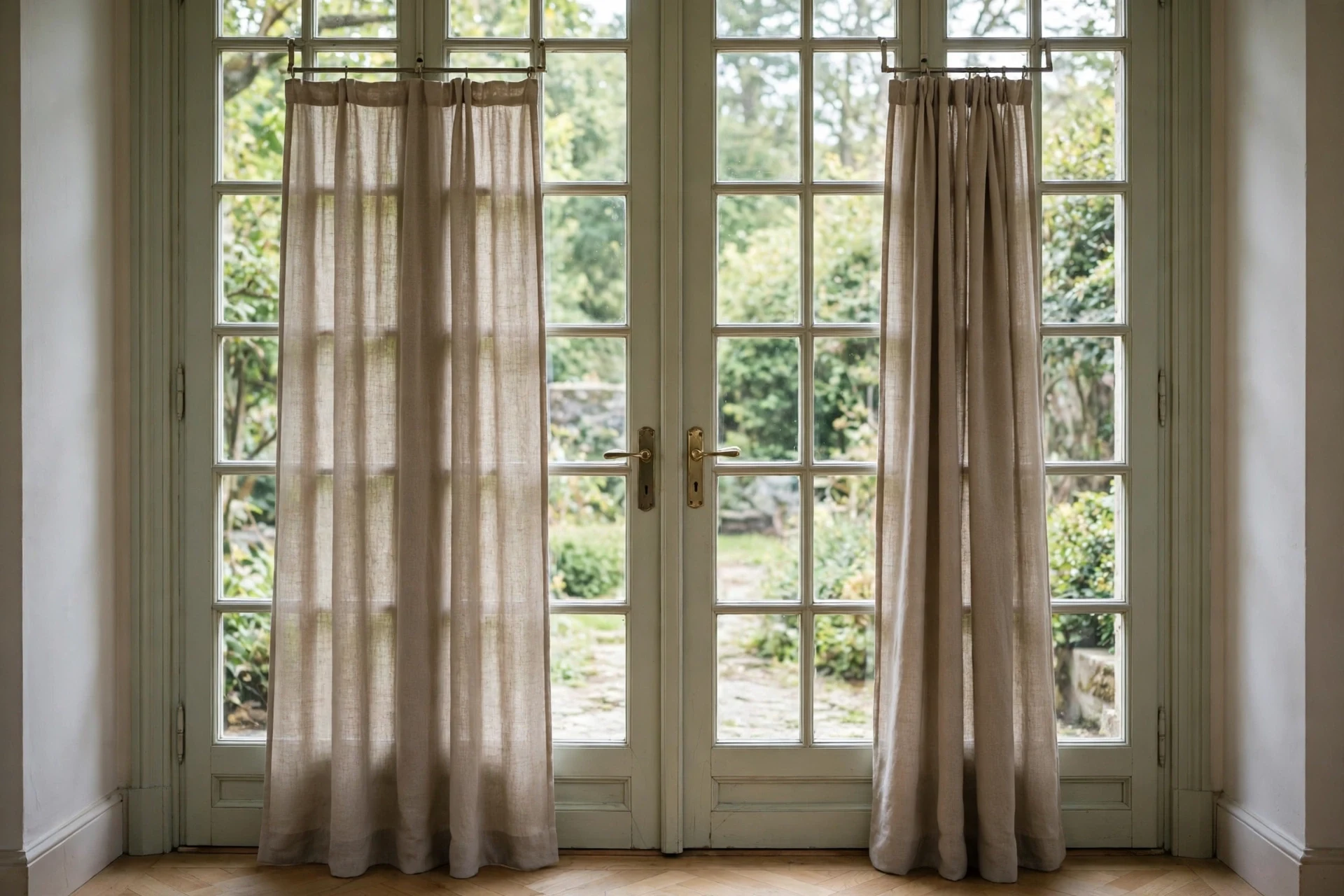
For hinged doors, the usual answer is a treatment fixed to the door itself, such as a slim rod fitted to the door panel above and below the glass, with a light fabric that adds little bulk or weight to the swinging panel. Heavy, wide slider panels are a poor fit for hinged doors: they add weight, bulk up around the handle, and can drag or gap when the door opens.
How wide is wide enough for a sliding glass door
Wide enough for a sliding glass door means the total fabric width, when closed, is clearly wider than the rod it hangs on, so the panels still show folds instead of stretching flat across the glass. Work it out in three steps. First, measure the rod from end to end, not counting decorative finials, or measure the door frame and add stack back space on each side if the rod is not yet up. Stack back is the wall space where the open panels rest, and on a slider it must be generous, or the open panels will sit over the glass and narrow the doorway.
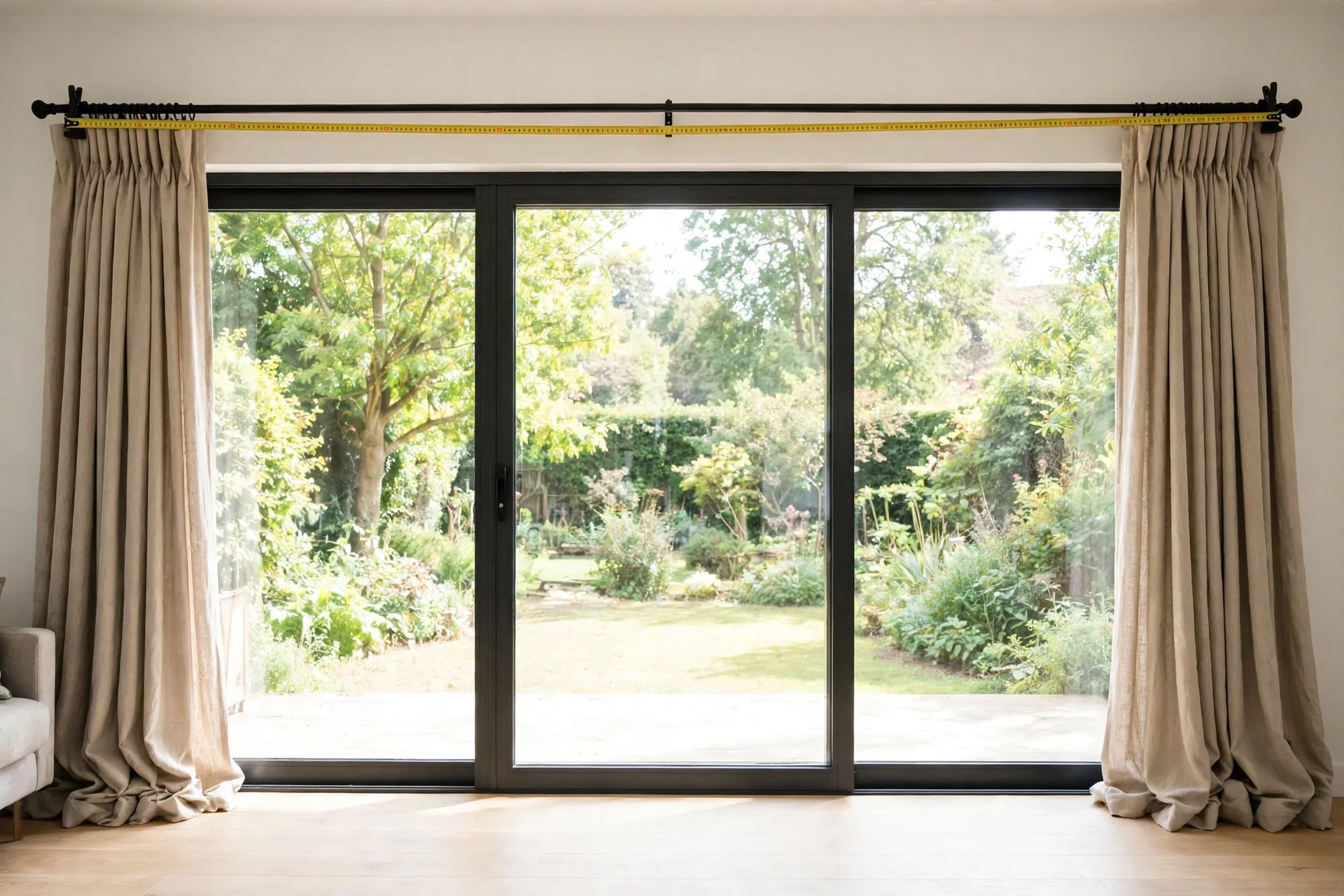
Second, multiply the rod width by a fullness multiple. A multiple near one gives a flat sheet with almost no folds. A multiple around one and a half gives a soft, gathered look. A multiple around two gives a full, pleated look that suits a wide glass wall. Third, split that total across panels that draw to each side, so each side can open on its own and the center can close without a gap. As an example of the math only, a rod of 120 units at two times fullness needs 240 units of total fabric width.
Worked sizes for common sliding doors
Worked sizes for common sliding doors start with the rod, not the door alone. As a starting point, plan the rod about 8 to 12 inches past each side of the door frame, so the open panels have wall space to stack onto. Measure your own door before ordering, because frame trim, handle position, and the wall space beside the door all change how much extension is practical in your room. The table below uses that extension range with a fullness multiple of about two, so treat every figure as a starting point to confirm against the listing, not as a fit that suits every door.
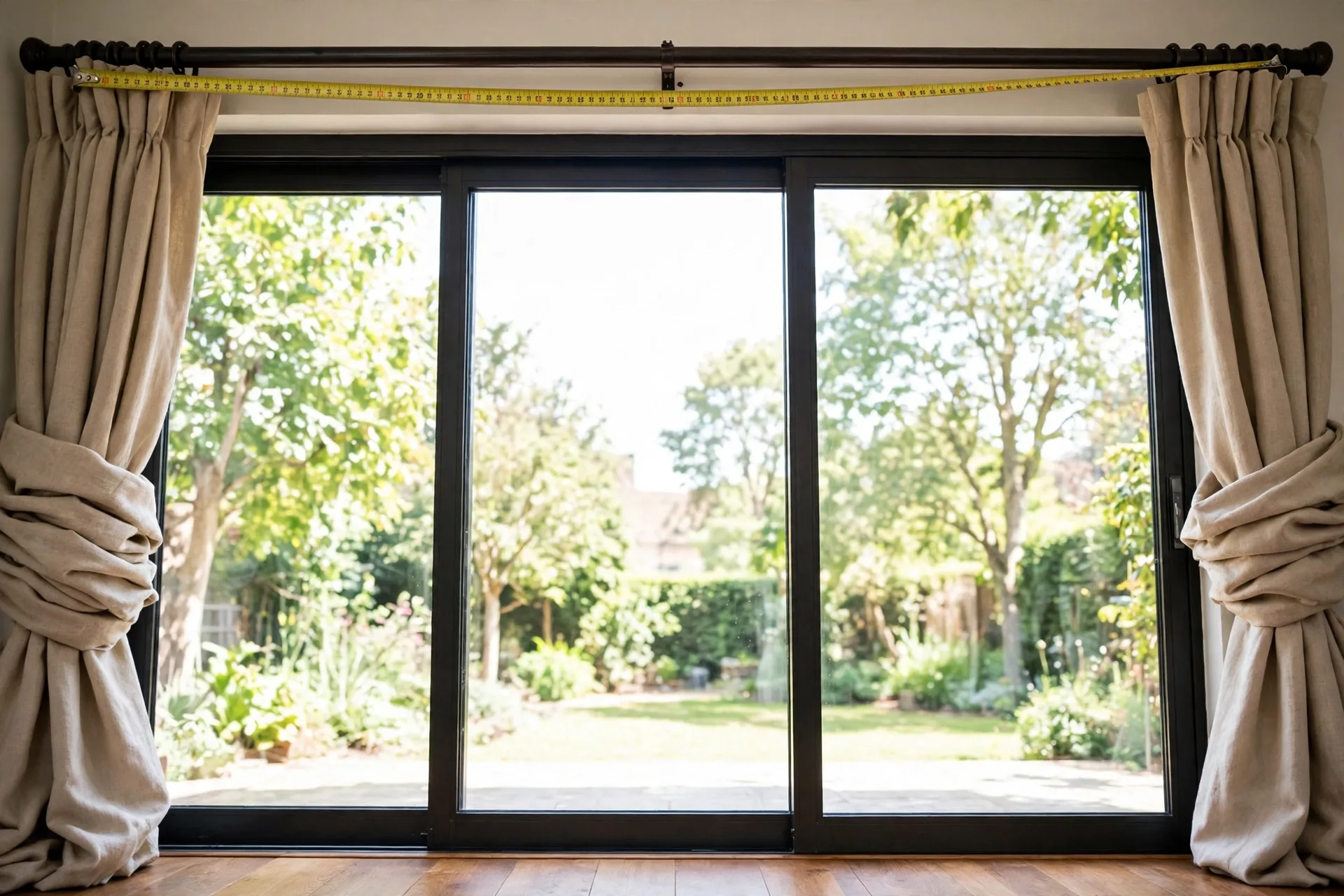
| Door width | Rod width | Total panel width at about twice the rod width | Panels to plan |
|---|---|---|---|
| 60 inches | 76 to 84 inches | 152 to 168 inches | 2 wide panels, or 4 narrower panels that glide more easily |
| 72 inches | 88 to 96 inches | 176 to 192 inches | 4 panels |
| 80 inches | 96 to 104 inches | 192 to 208 inches | 4 panels |
| 96 inches | 112 to 120 inches | 224 to 240 inches | 4 to 6 panels, planned as one set |
For drop length, compare your rod to floor measurement against common ready-made drops of 84, 96, and 108 inches, and choose the drop that ends about half an inch to an inch above the floor. Those lengths are starting points only, since rod height and floor level vary from room to room.
Sliders are often non-standard widths and heights, so the ready-made or made-to-measure choice matters here more than on a normal window. A ready-made pair can work when its total width reaches the fullness multiple for your rod and its drop lands just above the floor. When a ready-made pair cannot reach the fullness multiple, check first whether a wider set or extra panels from the same listing close the gap, and choose a made-to-measure panel only when no ready-made combination reaches the width and drop you measured.
A rod that stays straight across a wide sliding door
A rod that stays straight across a wide sliding door needs a strong rod, solid anchors, and intermediate support along the span, because a long rod carrying heavy fabric will bow in the middle without help. A thin telescoping rod is the weakest choice for a wide slider. Choose a sturdy rod or a track rated for wide spans and heavy panels, and fix every bracket into solid wall material or a proper wall anchor, not into plaster alone. For rod types, diameters, and brackets in full, see Best Curtain Rods.
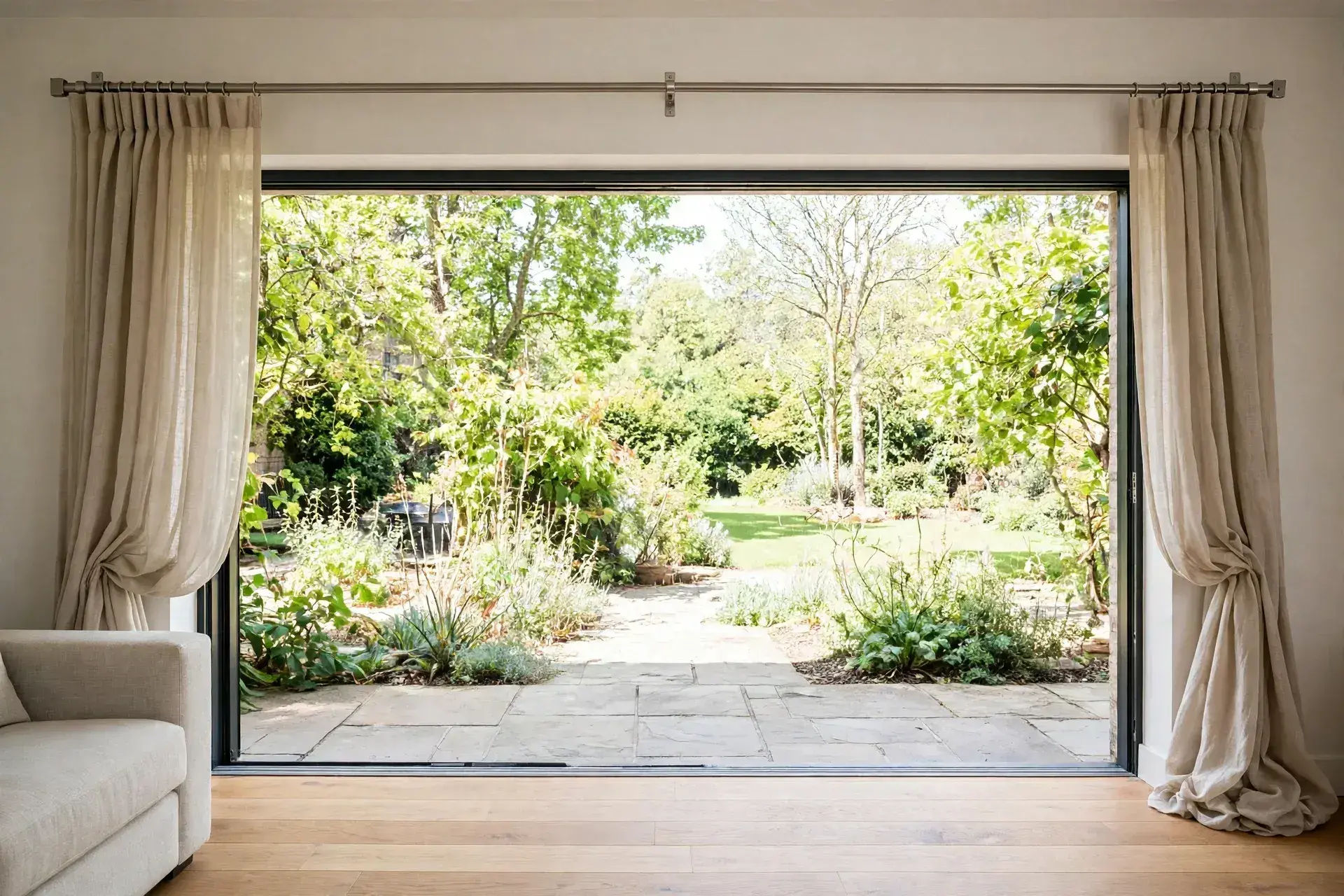
The center support needs planning, because it changes how the panels move. A bracket in the middle of the rod stops a single panel sliding past it, so the normal slider plan is two panels that meet in the middle, one on each side of the center support, each drawing to its own side. If you want every panel to stack on one side, a center bracket will block that plan, and the answer is a track system or bypass hardware made for one-way draw, where the carriers pass the support, or a ceiling track that spreads the load and removes the rod sag problem altogether. A traversing rod or track is the name for this kind of system when its carriers are pulled along by a cord, a wand, or a motor, so one pull draws the panels across a wide door instead of pulling each panel by hand.
A ceiling track is worth choosing when the span is very wide, when heavy panels would bow a rod even with a center support, or when there is little or no wall space beside the door for panels to stack onto, since the track can run across the ceiling and carry the load above the opening. Check that the ceiling mount suits your ceiling type before ordering, since a track is only as strong as its anchors.
Motorization suits a slider when the door is tall, the panels are heavy, or pulling a cord or panel by hand is difficult. A motorized track opens and closes the panels with one control, so a wide or heavy treatment can be moved without reaching across the glass or tugging a long panel. Treat it as a hardware choice to plan with the track, not as an add-on to a plain rod, and confirm that the track, carriers, and panel weight suit each other on the listing.
Headers that slide every day without catching
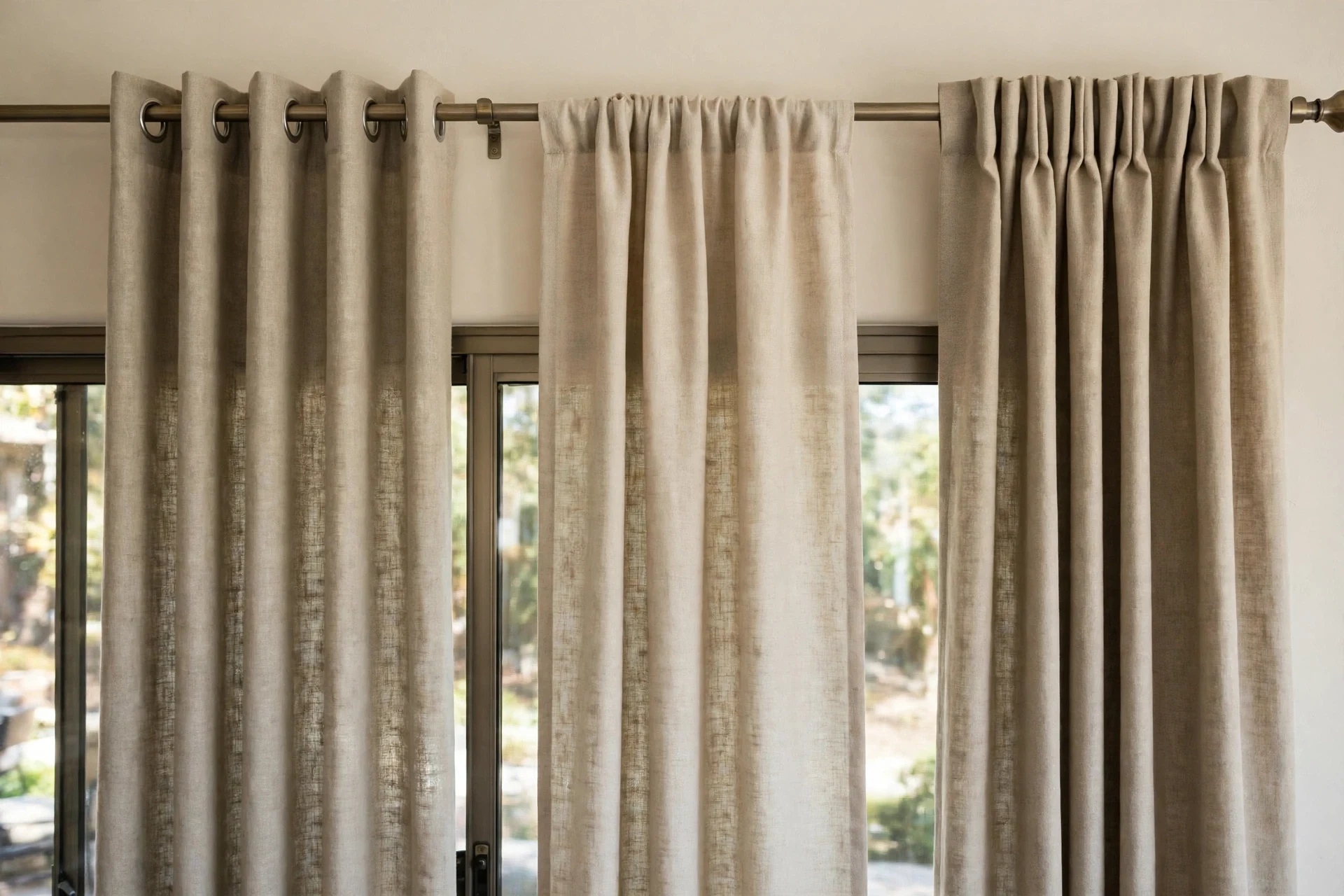
Headers that slide every day without catching are the ones with large, smooth openings or carriers that glide, rather than fabric bunched tight around the rod. Grommet tops, with wide metal rings around the rod, slide freely and suit a door used many times a day. Ripple fold and pinch pleat panels on a track glide on carriers and stack in neat, even folds, which suits wide doors and heavier fabric, though they need a track rather than a plain rod.
Rod pocket headers are the poor choice for a slider, because the fabric grips the rod along its full width, bunches when you pull, and snags instead of gliding. Back tab headers sit between the two: they look clean with the rod hidden, but they slide less freely than grommets or track carriers, so they suit doors opened less often.
Layering a sheer day layer with a closable night layer on a slider
Layering a sheer day layer with a closable night layer on a slider gives the most flexible door, because the sheer stays closed by day for soft light and daytime privacy, and the heavier layer closes at night or for films. Hang the sheer on the inner rod or track, closest to the glass, and the heavier panel on the outer rod or track, so each layer moves on its own without dragging the other.
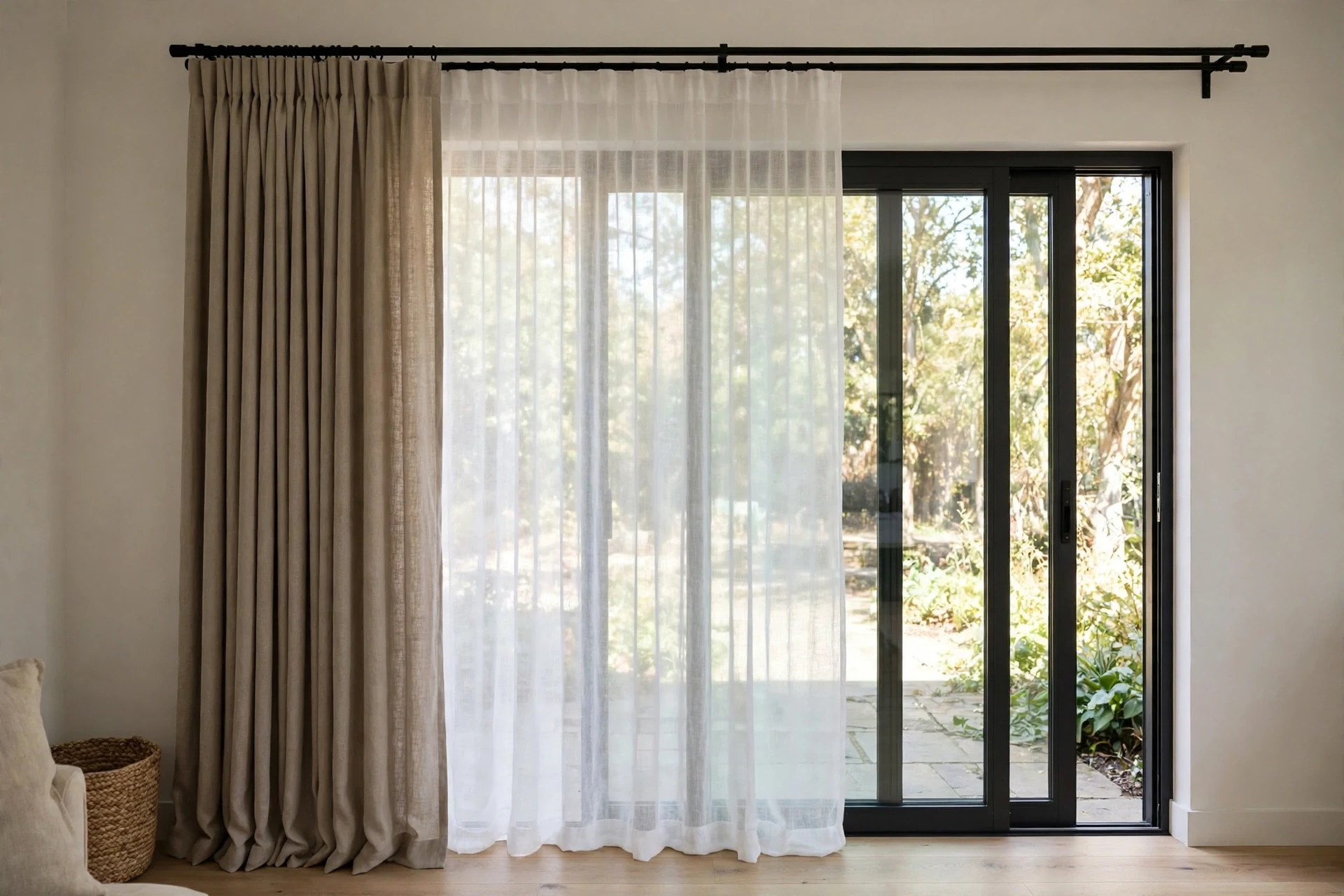
That plan needs double hardware and double stack back, since two layers stack wider than one. For layering plans in full, see How to Layer Curtains. For fabric detail on each layer, see Best Sheer Curtains, Best Blackout Curtains, Best Thermal Insulated Curtains, and Best Linen Curtains.
Fabric choice and care for a high-traffic door
Fabric choice for a slider starts with how often the panels are handled. Cotton gives a soft, natural look and suits everyday living doors, though plain cotton lets in more light than a lined panel. Velvet brings weight and warmth and suits a formal glass wall, but it is heavy on a long rod and needs gentler care. Polyester blends look like linen or cotton from across the room, resist creasing, and wash more easily, so they suit a door opened many times a day. Avoid a fabric that needs dry cleaning only, or that marks and snags easily, for a door handled daily, since slider panels are pulled, brushed past, and washed more often than panels on a window that is rarely touched.
Color and pattern need the same practical check. Pale colors tend to show fading less harshly than very dark colors on a sun-facing door, but a bright white can yellow with strong sun over time, so a warm cream or soft gray is often the safer pale choice for a door in full sun. A lining or a second layer protects the face fabric on the sunniest doors. On a very wide span, pattern scale matters too: a small print repeats so often across the closed width that it reads as texture, while a large print needs enough closed width to show its full repeat, so check the pattern repeat against the total panel width before ordering.
Care for slider panels follows the care label, which decides the method for each panel. Many cotton and polyester-blend panels can be machine washed on a gentle cycle, while velvet, silk-look, and lined panels often need gentler washing or dry cleaning. The symbols on the label follow the international care labeling system, and care symbols explained by GINETEX under the international ISO 3758 care labeling standard explains what each tub, triangle, square, iron, and circle symbol means, so check the symbols for washing, drying, and ironing before the first wash, and rehang panels while slightly damp so the folds fall back into shape.
Floor clearance, handles, and the walkway test
Panels for a daily slider should end about half an inch to an inch above the floor, floating clear of the track and the threshold, so feet, pets, and the door itself never catch the hem. Floor clearance, handles, and the walkway test decide whether a slider stays usable, because a hem that drags in the track, a panel that catches the handle, or a stack that blocks the walkway will annoy you every day.
A sliding door handle sticks out from the glass, and a panel hung too close to the wall will snag on it or gap around it. Mount the rod or track far enough from the wall for the panel to pass the handle freely, and test the full slide with the handle in place before you call the job done. Tie-backs or holdbacks give a second fix: hold the open panel back against the wall by day so it sits clear of the handle, and release it when you close the door at night. Then run the walkway test: open the door fully, walk through with both hands full, and check that no panel hangs over the opening and no hem catches your feet.
Other treatments for a slider, and when curtains are not the answer
Other treatments for a slider suit rooms where curtains alone do not fit the door, the wall, or the way the door is used. Vertical blinds give fine light control, since each slat turns, and they stack to one side, but the slats can swing and clatter in a draft and they feel harder and less soft than fabric panels.
Panel-track curtains are wide, flat fabric panels that slide on a multi-channel track, and they suit extra-wide doors because the flat panels handle a long span without sagging, though they need a track and a modern, flat look that suits some rooms less than soft folds. Roller or solar shades roll up out of the way and a solar shade cuts glare while keeping the view, but a shade alone gives no soft drape look and usually needs side panels for full night privacy or full darkness.
Curtains are not the answer when there is almost no wall space for panels to stack onto, when the door must stay fully clear every time it opens, or when precise daytime light control matters more than soft fabric. In those cases a shade or panel track fitted close to the frame, or a shade layered under side panels that stay drawn back, often serves the door better than curtains forced onto a wall that cannot hold their stack.
Sliding door mistakes that block the door or flatten the look
Sliding door mistakes that block the door or flatten the look come from sizing and hardware, not from fabric taste, and most of them are fixed before ordering. A rod that ends at the frame leaves no stack back, so open panels sit over the glass and narrow the doorway. Total fabric near the rod width leaves a flat sheet when closed, with no folds. A rod pocket header on a daily door bunches and snags. A thin rod with no intermediate support bows in the middle and drags. A center bracket with a one-way draw plan traps panels on the wrong side of the support.
Avoid each one in order: rod wider than the frame, total fabric planned by a fullness multiple, a gliding header, a strong rod with support, and a draw plan that matches the brackets.
Choosing your sliding door curtains in six steps
Choosing your sliding door curtains in six steps keeps the order right, so the fabric choice comes after the door plan. One, name the main job: darkness, daytime privacy, heat help, or everyday soft light. Two, check whether the door slides or swings, using the hinged section above, since that decides the whole treatment. Three, measure the door and plan the rod width with stack back on each side, then work out total fabric width from the fullness multiple in the width section.
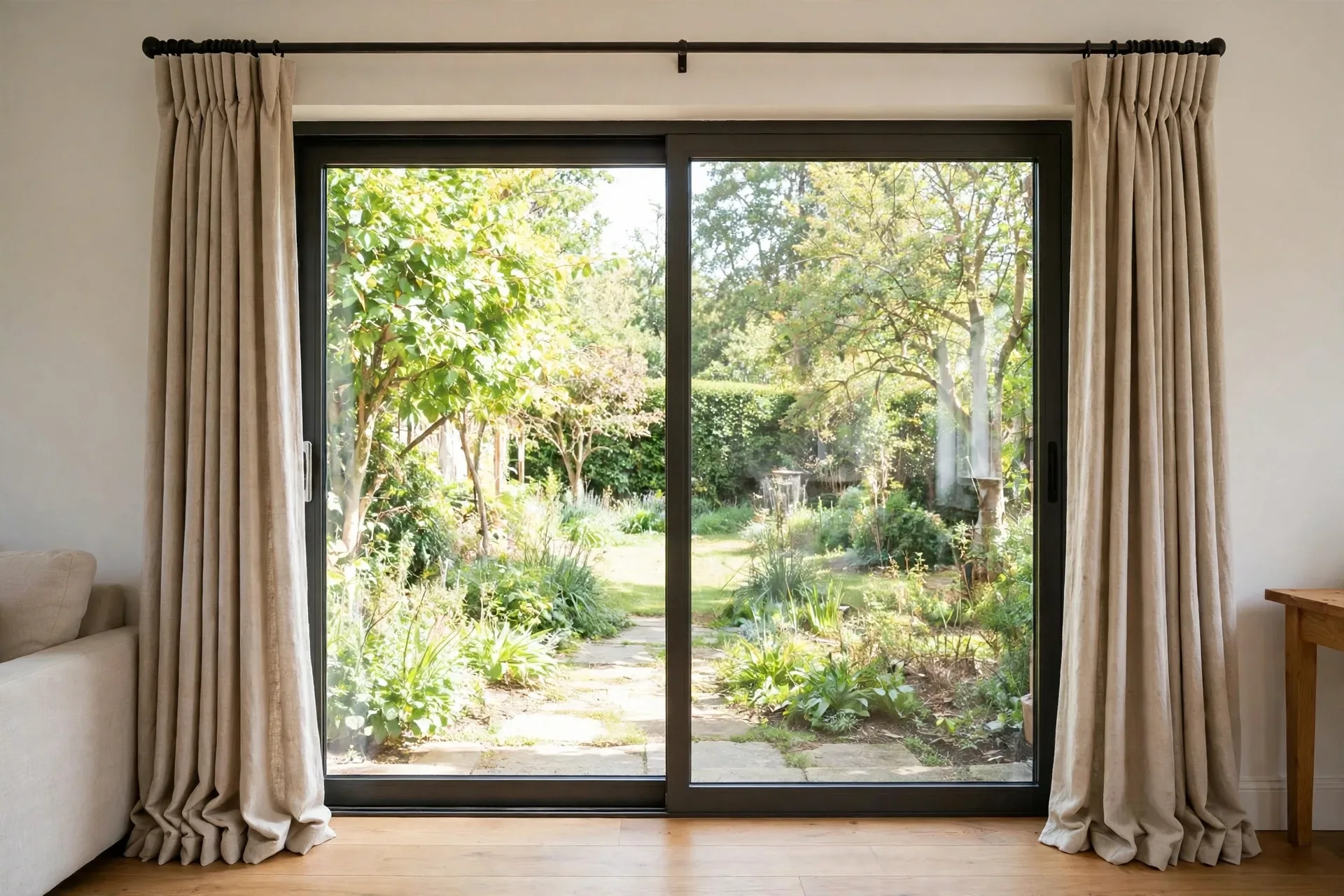
Four, choose the rod or track and its supports to match the span and the fabric weight, with a draw plan that fits the brackets. Five, pick the header for how often the door opens, grommet or track for daily use. Six, pick the fabric and layer from the picks above, then confirm the exact panel width, drop, header, lining, and care details on the listing before ordering.
The short list follows from those answers: bedroom and sun-facing doors point to Pick 1 or Pick 3, bright living and patio doors point to Pick 2 or Pick 6, very wide doors point to Pick 4, and doors opened all day point to Pick 5. The main Best Window Curtains guide covers type, fabric, and room choices together, and Curtain Sizes carries length and width detail for other window shapes.
Frequently asked questions about curtains for sliding glass doors
How many panels do I need for a sliding glass door?
For most sliding glass doors, you need at least two panels, one drawing to each side, so the panels clear the opening and the center can close without a gap. Very wide doors need a set planned from the rod width, with more panels across the span, so the closed width keeps its folds.
What width of curtains do I need for a sliding glass door?
You need a total fabric width worked out from the rod width, not from the door width alone. Measure the rod end to end, or plan the rod as the door width plus stack back on each side, then multiply the rod width by a fullness multiple around one and a half for a soft look or around two for a full look. Split that total across panels that draw to each side.
Should sliding glass door curtains touch the floor?
No, not on a door used daily. Panels for a daily slider should end just above the floor, floating clear of the track and threshold, so the hem never catches feet or the door.
Can a single panel cover a sliding glass door?
A single panel can cover a narrow door, but it is a poor plan for most sliders. A single panel bunches on one side, carries all the weight on one part of the rod, and cannot pass a center support bracket.
What header works best for a sliding glass door?
Grommet tops and track headers work best for a door opened daily, because they glide rather than grip. Grommets slide freely on a rod, while ripple fold and pinch pleat panels on a track glide on carriers and stack neatly. Rod pocket headers grip the rod and bunch when pulled.
Do sliding glass door curtains help with heat and cold?
They help, but they do not fix a drafty door on their own. A lined thermal panel closed across the full glass slows heat moving through it, and a floor-length panel that closes past the frame helps more than a short or gapped panel.
Do sheer curtains give privacy on a sliding glass door at night?
No, not on their own. Sheer panels give daytime privacy by softening the view from outside, but once interior lights are on, shapes and movement show through sheer fabric. For night privacy, close a heavier outer layer.
Can I use the same curtains on a sliding door and a hinged patio door?
No, not as a single plan. A sliding door needs panels that draw sideways and stack on the wall, while a hinged door swings and needs a treatment fixed to the door panel itself with light fabric.
Will curtains block the door from opening?
No, not when the panels stack clear of the opening. Plan the rod wider than the frame, leave stack back on each side, and run the walkway test with the door fully open, so no panel hangs over the opening when you walk through.
Do sliding door curtains help with insulation?
Yes, a little, but they do not fix a door that lets in cold air on its own. A floor-length lined or thermal panel closed across the full glass traps air at the glass and slows heat moving through it, and a panel that closes past the frame and sits snugly at the top helps more than a short or gapped panel. For how opening and closing coverings through the day affects heat gain and loss, see energy guidance on window coverings from the U.S. Department of Energy.
Can I use regular curtains on a sliding door?
Yes, with adjustments for daily sideways movement. Choose a gliding header such as grommets or a track, a strong rod or track with support across the span, total width planned from the rod width with a fullness multiple, and a drop that ends just above the floor, so regular panels behave like slider panels.
How do I keep curtains off the door handle?
Mount the rod or track far enough from the wall for the panel to pass the handle freely, and test the full slide with the handle in place. Tie-backs or holdbacks give a second fix by holding the open panel back against the wall by day, clear of the handle.
What if there is almost no wall space either side?
Choose a treatment with a tight stack, such as a ceiling track or a panel track, or a shade fitted close to the frame, since curtains that must stack on a wall that is not there will cover the glass and narrow the doorway. Measure the wall space that does exist before ordering, and plan the stack width from that measurement.
This guide is research-based curation: we compared maker specifications, published reviews, and current prices. Read how we choose.