 Best

Curtain Lining Types Explained
The lining is the hidden layer that decides light, warmth, drape, and how long a curtain lasts. This guide explains each type in plain words.
A curtain lining is a second layer of fabric sewn behind the face fabric, and it decides how much light gets through, how warm the room stays, how the curtain drapes, and how long the face fabric lasts in sun. The face fabric is what you see, but the lining is what does most of the work.
Most lining confusion comes from names that sound alike. Standard, blackout, thermal, and interlining are not four versions of the same layer; they are four different jobs, and a lining that is right for a bedroom can be wrong for a living room.
What a curtain lining is, and what it does
A lining is a layer of fabric attached to the back of a curtain panel, facing the window, so it takes the sun and shields the face fabric. It is usually a neutral cotton, polyester, or cotton-polyester blend, in white, ivory, or cream, though blackout lining can also come in beige or gray. The lining is sewn in at making, or it can be a separate liner that clips, buttons, or hooks behind a panel you already own.
A lining does five jobs at once. It controls light, by softening daylight or blocking it, depending on the type.
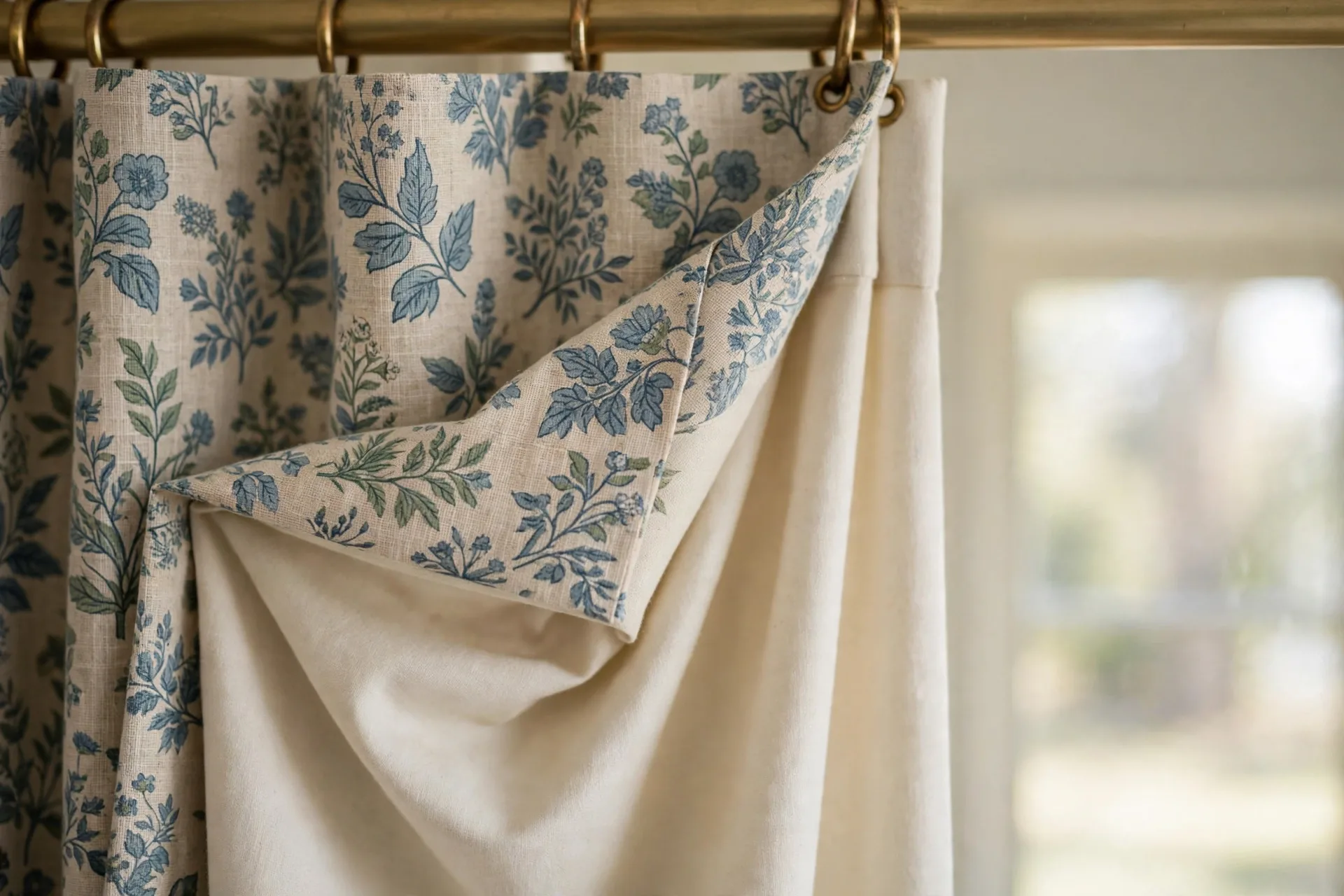
It adds privacy, by making the panel more opaque so silhouettes do not show at night. It adds warmth, by trapping a layer of still air between the fabric and the glass. It protects the face fabric, by taking ultraviolet light that would otherwise fade and weaken it. And it adds body, by giving the panel weight and fullness so the folds hang straight and the pleats set cleanly.
An unlined curtain has none of those benefits, but it has its own place. Unlined sheers let daylight through in a soft glow, unlined linen shows its natural texture, and unlined cotton hangs lightly in a casual room. A lining would take away the very quality that makes those fabrics work, so sheers are almost always unlined, and light linens are often unlined too.
There is one soft exception: a soft lining of about 70 percent polyester and 30 percent cotton protects sheer fabric while preserving its airiness, so a sheer that needs a little protection does not have to go fully unlined. For sheer light without a lining, see Best Sheer Curtains.
Standard lining in plain words
Standard lining is a plain cotton or cotton-polyester lining sewn behind the face fabric, with no coating and no extra thermal layer. It gives the curtain body so it hangs and folds well, it protects the face fabric from sun fading from the back, and it gives a clean, uniform look from outside the house.
Standard lining suits rooms that do not need darkness or strong warmth: a living room, a dining room, a kitchen, or a spare room where the job is a tidy drape and a little sun protection.
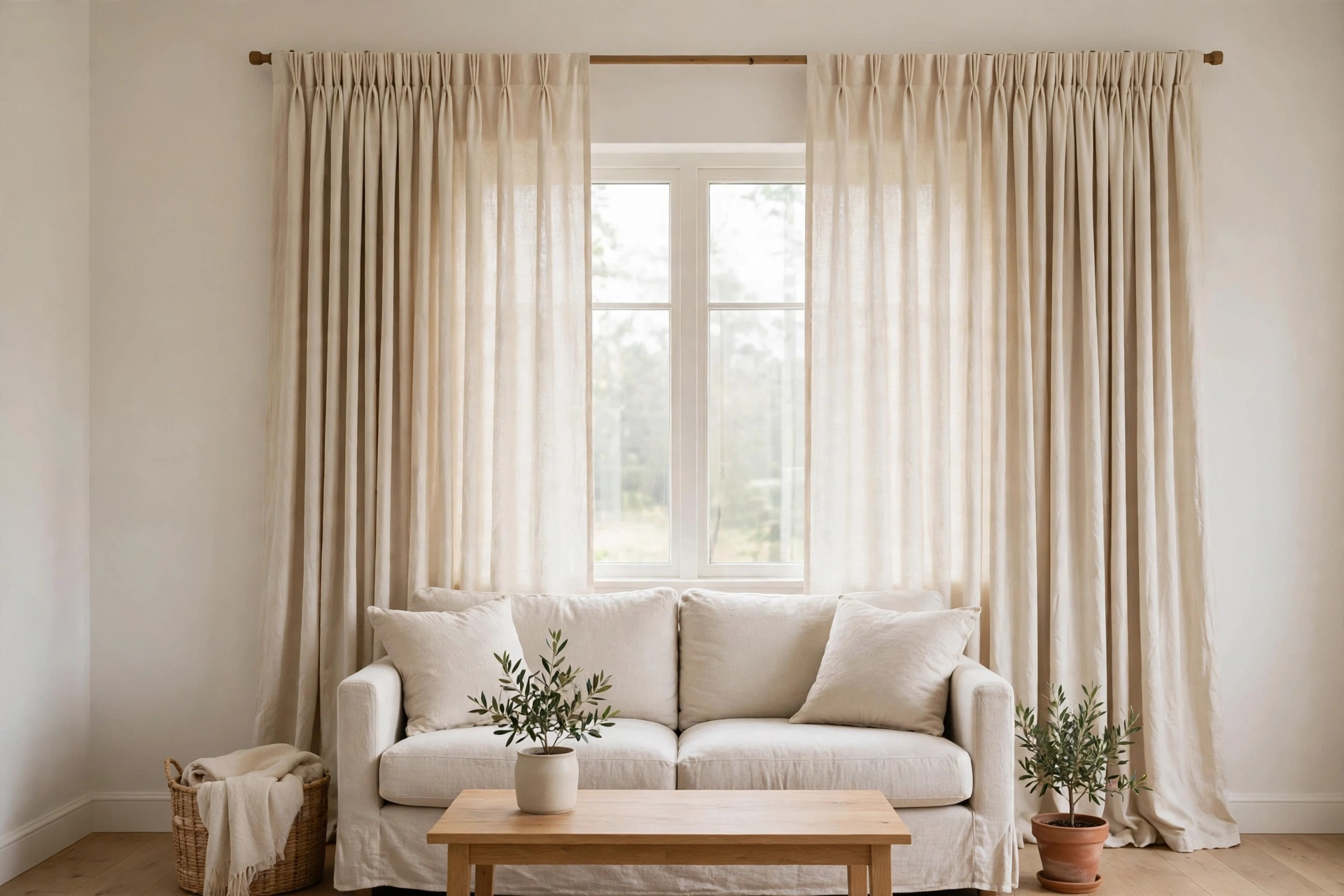
It suits face fabrics that need body, such as a light cotton or a loose linen, and it suits rooms where the curtain is mostly decorative.
The limits of standard lining are plain. It will not block light for sleep, it will not keep a cold room warm, and it will not give night privacy on its own if the face fabric is thin. A standard-lined curtain in a bedroom will still let morning light through, and a standard-lined curtain on a drafty window will still let cold air past the edges.
Face fabric decides how much lining matters: velvet and chenille are always lined, silk rots and shreds in sun without lining, and polyester blends are versatile enough to take any lining type.
Blackout lining in plain words
Blackout lining is a lining with a coating that blocks light, usually applied in three passes: a white foam layer, a black opaque layer, and a final white or cream layer for finish. The three-pass coating is what blocks light through the fabric itself, though light can still leak around the edges, over the top, and under the hem if the curtain does not fit well.
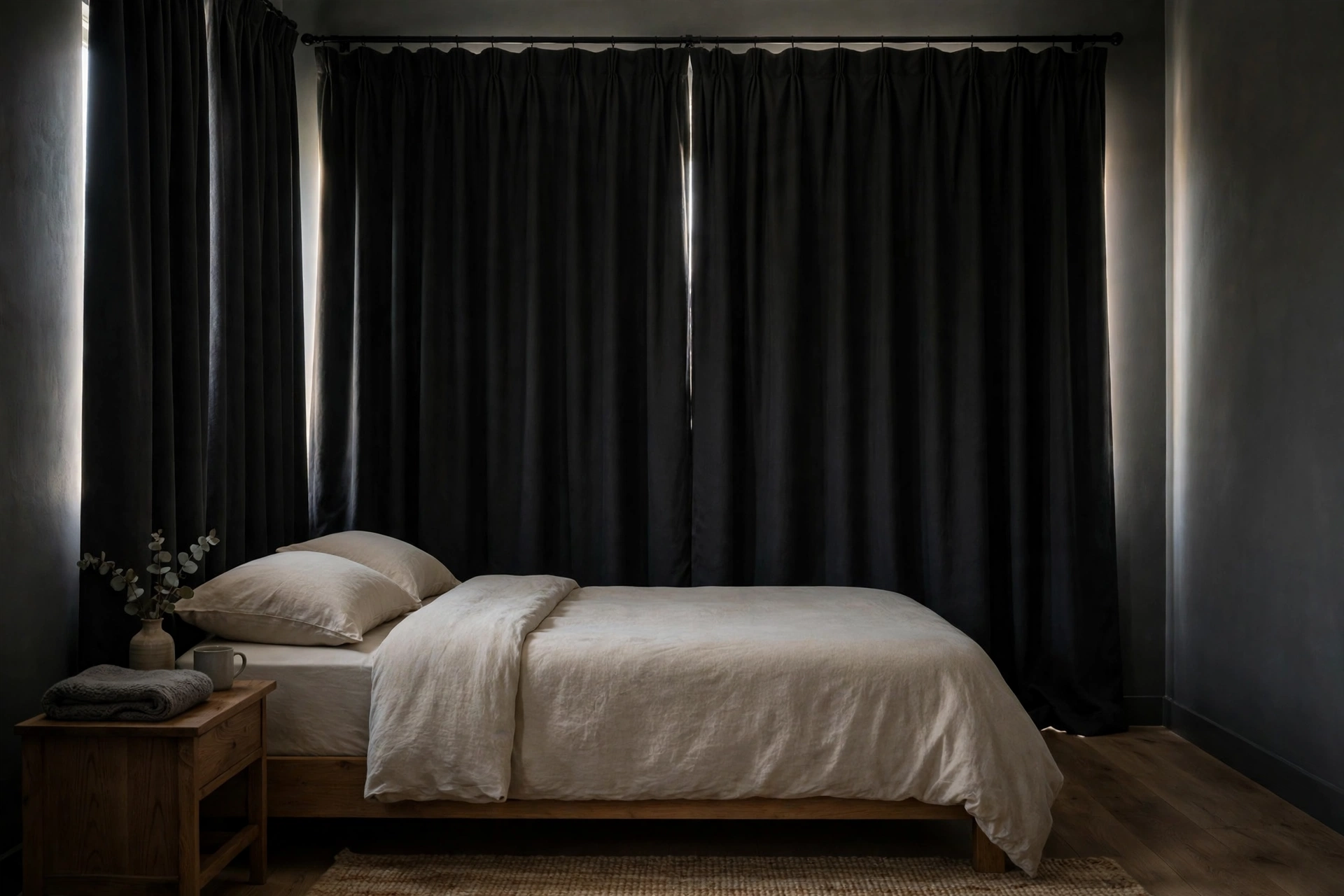
Blackout lining suits bedrooms, nurseries, media rooms, and any room where darkness matters. It suits a face fabric you love but that does not block light on its own, because the lining turns almost any fabric into a darkening curtain. It also suits a room where privacy matters at night, because a blackout-lined panel blocks the view in completely when it is closed. For the full darkness job, see Best Blackout Curtains.
The trade-offs of blackout lining are weight, stiffness, and care. A blackout-lined panel is heavier than a standard-lined panel, so the rod and brackets must suit the weight, and the fabric can feel stiff and less fluid than an unlined panel. The coating can feel rubbery on the back, and it needs gentle washing, because heat and harsh detergent can damage the coating.
Triple weave is a separate type worth knowing: a black layer is woven between two outer layers, with a soft handle and a gray or taupe face, and it dims a room rather than blacking it out, so it pairs well with sheers where full darkness is not the job.
Heading choice matters for blackout lining: avoid tie tops, eyelets, and tab tops, because the holes and gaps let light through, and use pinch pleat, rod pocket, back tab, or a flat panel instead.
Seal the side gaps as well: a hook-and-eye fastening pulls the panel edge to the wall, and a French return rod with curved ends sits about 4 inches out from the wall and closes the gap at each side.
A blackout lining behind blackout fabric gives double blackout, which is the darkest pairing there is, and it suits a room where even a faint glow matters.
Lining also keeps face colors true: it stops sunlight washing out or distorting the face color, so white does not read as ivory in strong sun, and a darker, denser face fabric helps blackout perform better.
Thermal lining in plain words
Thermal lining is a lining built to reduce heat transfer through the window, usually with a coating on one side or a brushed, flannel-like finish on one side. A coated thermal lining has an acrylic coating that reduces the passage of air through the fabric, and a lining with one coat is often called a thermal or dimout lining, while a lining with two or three coats is usually called a blackout lining, because the extra coats also block light.
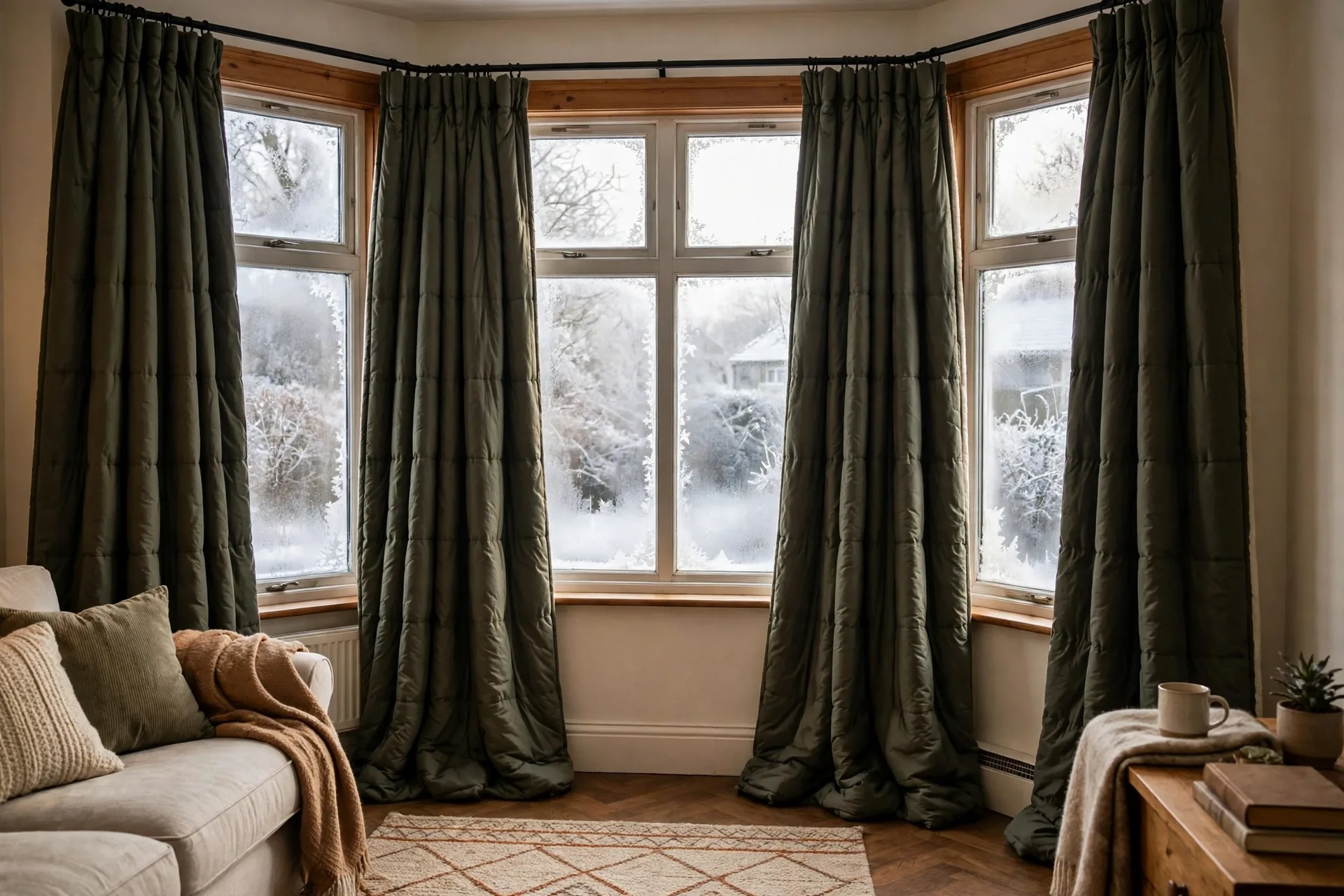
Thermal lining suits cold rooms, drafty windows, bay windows, and rooms that feel chilly in winter. It also helps in summer, because it slows heat coming in through sunlit glass, though it does not replace shade outside the window. It suits a room where the job is warmth first and darkness second, and it pairs well with a heavy face fabric such as velvet or a dense cotton. For the full warmth job, see Best Thermal Insulated Curtains.
The limits of thermal lining are honest. It slows heat loss, it does not stop it, and a thermal lining on a curtain that does not fit well will still let cold air past the sides and the top. A thermal lining adds weight, so the rod must suit it, and a coated thermal lining needs gentle washing, because heat can damage the coating.
Habits matter as much as the lining: close curtains at dusk, keep a close fit, use a valance where the window has one, let the panel run to the floor or the sill so it holds warm air, and keep the fabric clear of radiators.
Interlining in plain words
Interlining is a soft, thick layer sandwiched between the face fabric and the lining, so the curtain has three layers: face fabric, interlining, and lining. The interlining is usually a cotton flannel, a polyester and cotton blend, or a thick napped cotton, and it adds weight, padding, and a layer of trapped air.
Interlining is not a lining on its own. It is always used with a lining, either standard or blackout, and the lining is what faces the window and protects the interlining from sun and dust.
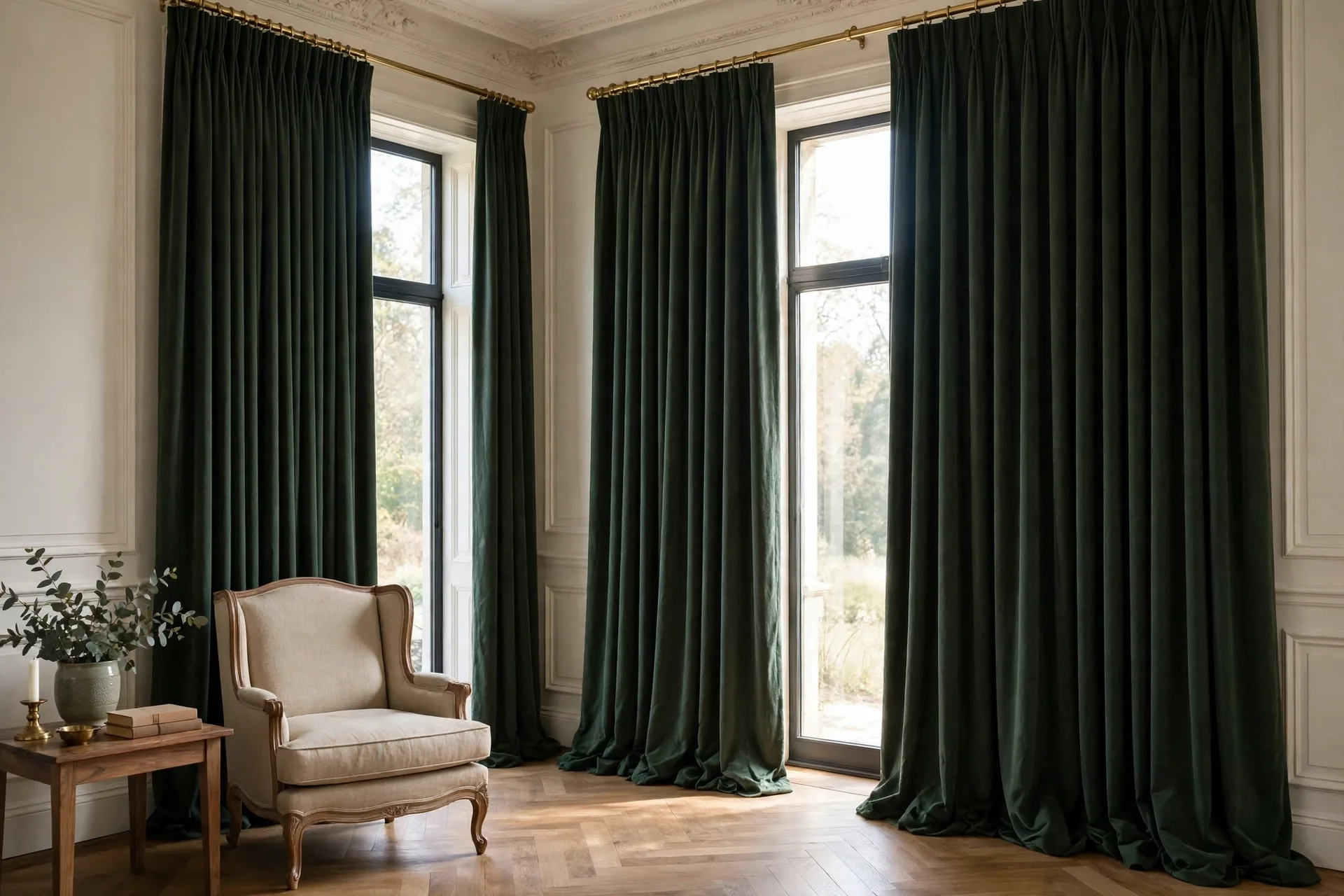
A combined lining, where interlining is bonded to the back of a lining, gives a similar thickness in one layer, but it can drape less well than a separate interlining sewn in as its own layer.
Interlining suits large windows, period homes, formal rooms, and rooms where you want a heavy, substantial curtain. It suits a face fabric that needs body, such as a light silk or a fine cotton, and it suits a room where the curtain is a feature, not just a cover.
Lining compared: light, warmth, drape, and weight
The linings differ in what they do to light, warmth, drape, and weight, and the table below sets them side by side so the choice is plain.
| Lining | Light | Warmth | Drape and weight | Best for |
|---|---|---|---|---|
| Standard | Softens daylight, no darkness | Modest warmth | Light body, easy drape | Living room, dining room, spare room |
| Blackout | Blocks most light through the fabric | Good warmth | Heavier, stiffer fall | Bedroom, nursery, media room |
| Triple weave | Dims light, not blackout | Modest warmth | Soft handle, medium weight | Sheer pairing, rooms that need dimming only |
| Thermal | Cuts light, dimout to dark | Strong warmth | Heavier, fuller fall | Cold room, drafty window, bay window |
| Interlining | Softens light, with blackout if paired | Best warmth | Heaviest, fullest drape | Floor-length, formal, drafty, door curtain |
| Unlined | Lets daylight through | Minimal warmth | Lightest, most fluid fall | Sheers, light linen, casual room |
Light is the first difference. Standard lining softens daylight but does not darken a room, blackout lining blocks most light through the fabric, thermal lining cuts light to a dimout or dark level depending on its coats, and interlining softens light on its own but needs a blackout lining behind it for true darkness.
Drape and weight follow the same order in reverse for lightness. Standard lining is the lightest and easiest to hang, blackout and thermal are heavier and stiffer, and interlining is the heaviest and fullest. A heavy lining needs a stronger rod, stronger brackets, and a heading that can carry the weight, while a light lining suits a slim rod and a simple header.
Lined curtains also dampen sound, especially blackout and interlining, because mass absorbs sound, so a lined panel makes a room quieter as well as darker and warmer.
Fullness for a lined curtain runs in bands, standard 1.5 to 2 times the rod width, full 2 to 2.5 times, pinch pleat 2.5 to 3 times, and sheer 2 to 2.5 times, and floor length beats sill length for light leaks, because a short panel leaves the bottom edge open to light.
Count the weight too: lining effectively doubles the weight of a panel, so rods and tracks must be heavy-duty where a lining is added.
Unlined has its own case beyond sheers: it suits summer use and secondary spaces such as a utility room, a hallway, or a cloakroom, where a budget choice is enough.
Standard lining or privacy lining: telling the two apart
Standard lining and privacy lining sound like the same thing, and in many listings they are, but the names point to different jobs. Standard lining is the general term for a plain lining that gives body, sun protection, and a tidy back, with no special light or warmth job. Privacy lining is a standard-weight lining sold for its privacy job: it softens glare, protects the face fabric, and blocks the view in from outside, while still letting daylight through. In practice, a privacy lining is a standard lining chosen for a room where privacy matters, and the difference is in the selling, not in the fabric.
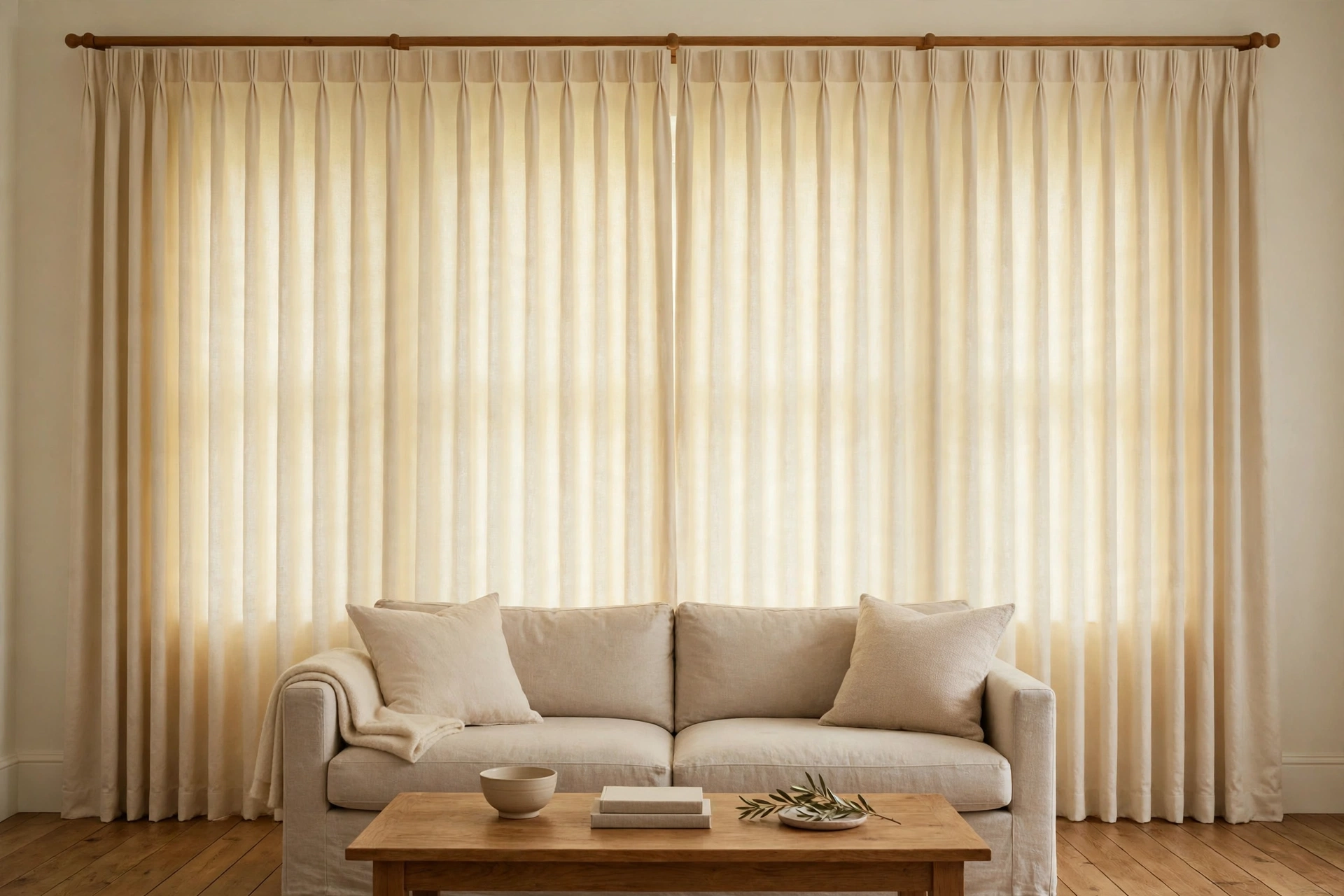
The test is in the listing detail, not in the name. A lining that says privacy should state that it blocks the view in while letting light through, and it should not claim to darken a room. A lining that says standard should state its fiber, its weight, and its color, and it should not claim a warmth or darkness job it does not do.
Which lining suits which room
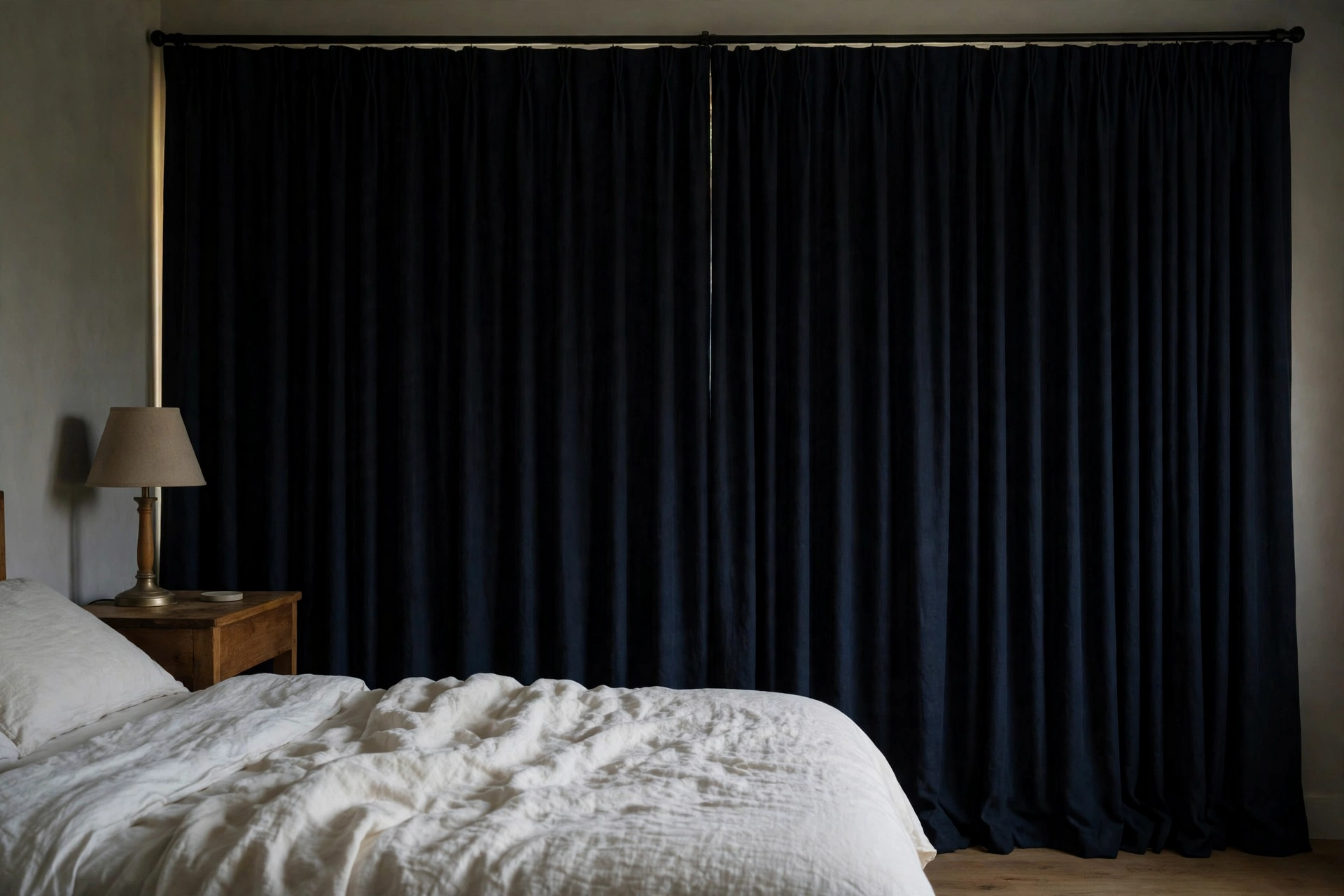
A bedroom suits blackout lining first, because sleep needs darkness and night privacy, and blackout lining gives both. A bedroom that is also cold suits blackout lining plus interlining, or a thermal lining, because the extra layer adds warmth without changing the darkness job. A nursery suits blackout lining for the same reason, with a lining color that suits the room from outside. For bedroom sleep jobs, see Best Curtains for Bedroom.
A living room suits standard or privacy lining, because the living room job is soft daylight, daytime privacy, and a bright, open feel. A living room with a television suits a standard lining with a light-filtering face, because it cuts glare without darkening the room. A living room that is also cold suits a thermal lining, but it will darken the room more, so a standard lining plus a separate thermal liner that can be removed in summer is a better fit. For living room direction, see Best Curtains for Living Room.
A dining room suits standard lining, because meals feel better in soft, even light than in harsh glare, and a standard lining gives that light with a tidy drape. A formal dining room suits interlining, because the heavy drape suits a formal room and the extra warmth suits long evening meals. A kitchen suits standard lining or no lining, because steam and splashes reach the fabric and a light lining washes more easily than a coated one.
Window direction matters as much as the room: south- and west-facing windows take hard afternoon sun and earn a heavier lining, while north-facing light is gentle and suits a lighter one.
Lining and washing: what changes after a wash
Washing changes a lining more than it changes a face fabric, because the lining is made from a different fiber and often has a coating. A standard cotton lining can shrink more than a polyester face fabric, so a lined curtain washed on a hot cycle can come out with a lining that pulls the face fabric out of shape. A poly-cotton lining shrinks less than a pure cotton lining, and it holds its shape better, which is why many makers now use a poly-cotton blend for standard lining. Check the care label for both layers, not just for the face fabric, because the lining decides the wash.
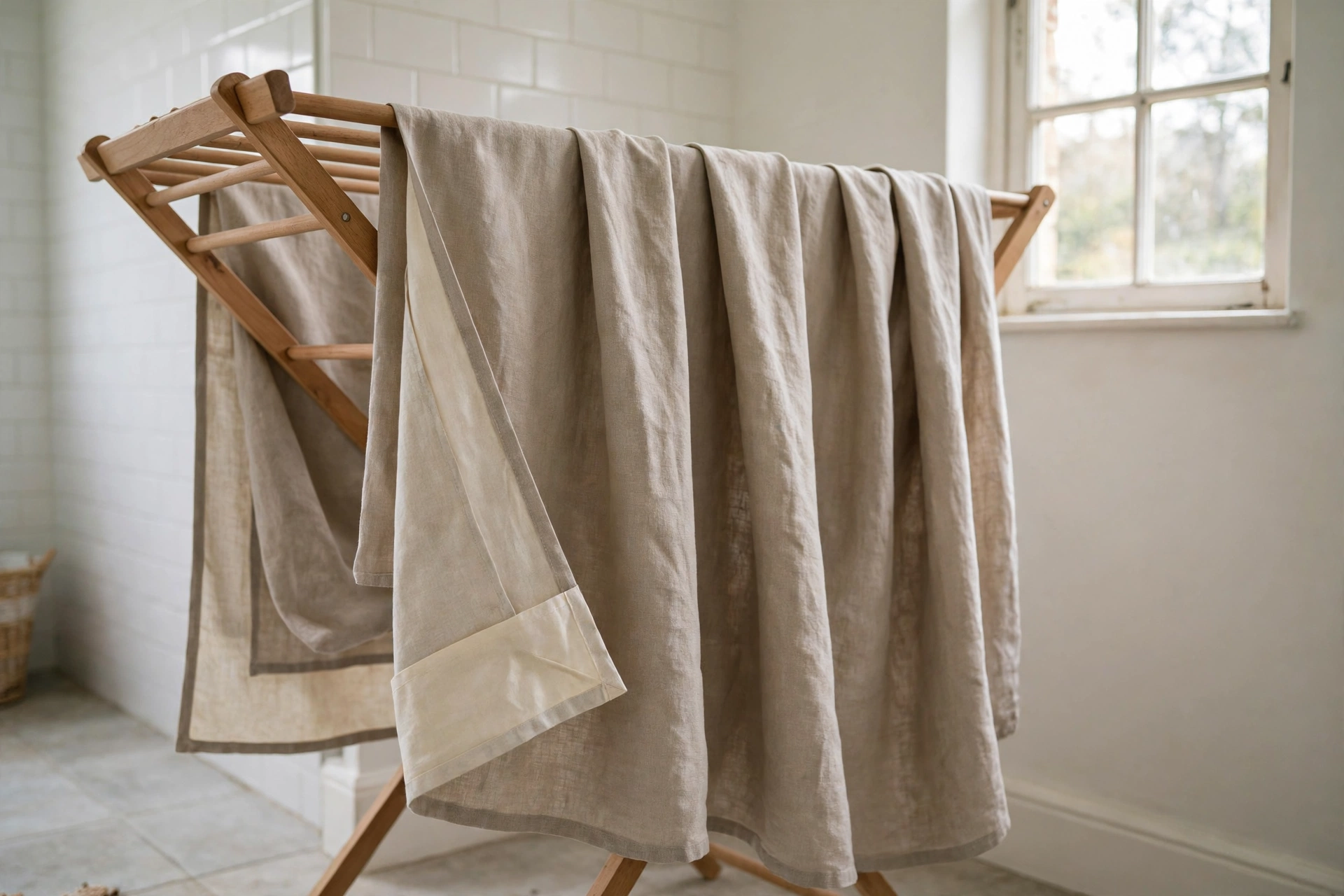
A coated blackout or thermal lining needs the gentlest washing of all. Heat can damage the coating, harsh detergent can break it down, and a hot tumble dryer can crack it. Wash a coated lining on a gentle cycle in cool water with a mild detergent, and dry it in open air, not on high heat. A blackout lining that has been washed too hot can lose its light-blocking power, and the damage cannot be washed out.
Mind condensation too: lined curtains hung too flush to the glass trap moisture, so leave clearance from the glass for air to circulate, or mildew follows.
The interlining decision: when the extra layer is worth it
Interlining is worth it when the curtain is floor-length, the room is drafty, the room is formal, or the curtain hangs on a door, because those are the cases where weight, warmth, and drape matter most. A floor-length curtain with interlining hangs in full, even folds from top to floor, and the weight keeps it straight in a draft. A drafty room with interlining feels warmer, because the extra layer traps more air and the heavy panel seals the window better when it is closed. A formal room with interlining looks dressed, because the fullness suits the room.
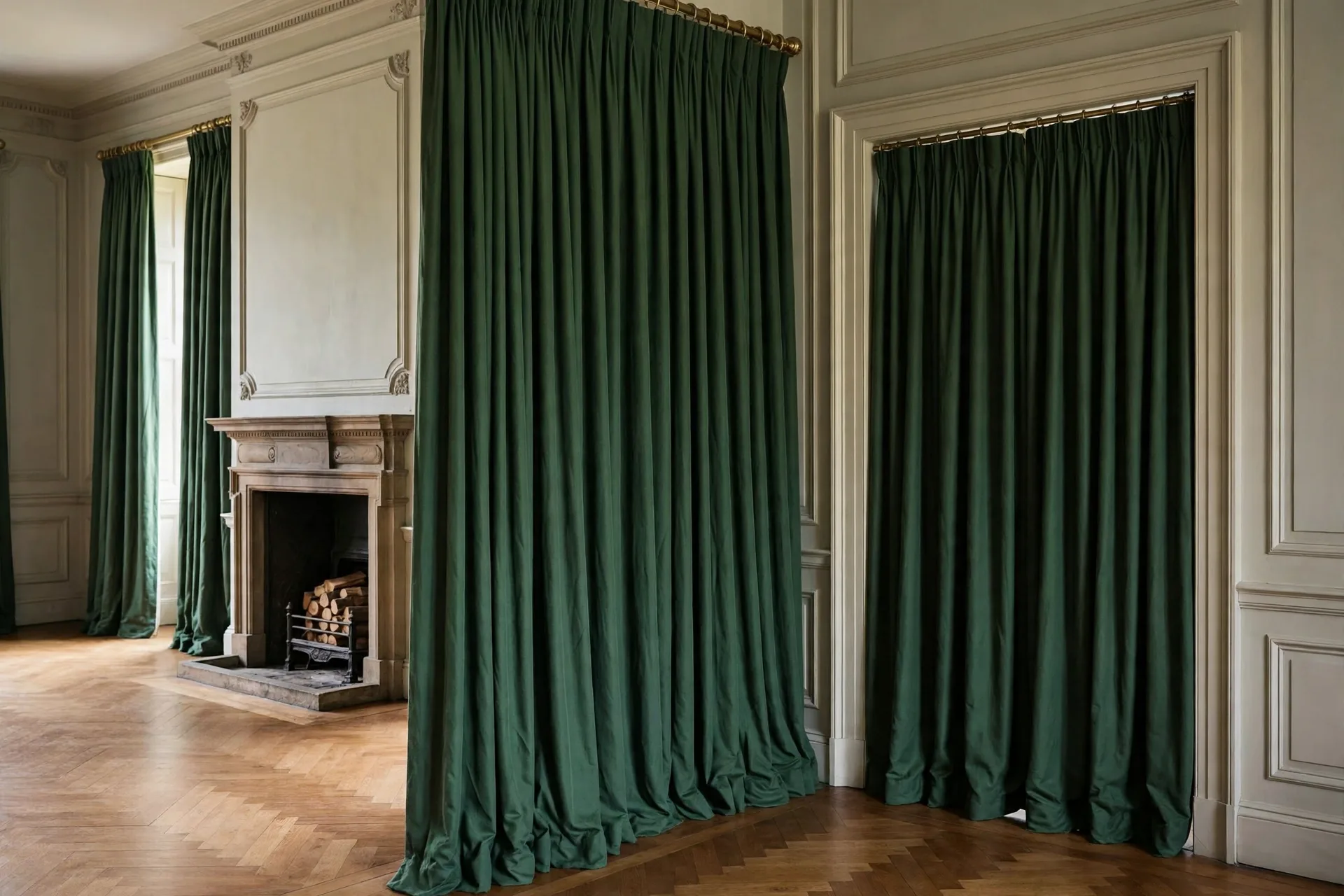
Interlining is not worth it for a short curtain, a small window, a casual room, or a sheer, because the extra weight and cost buy little there. A short curtain does not need the drape that interlining gives, a small window does not need the warmth, a casual room looks better with a lighter fall, and a sheer would lose its light quality behind interlining.
The cost logic is plain: interlining costs more in fabric, because it adds a full layer of material, and more in making, because it adds time to sew three layers as one. It also costs more in hardware, because it needs a stronger rod and stronger brackets, and more in care, because it needs dry cleaning. That cost is worth it when the curtain is a long-term feature in a room you use daily, and it is not worth it when the curtain is a short-term cover in a room you rarely use.
Eco-friendly and recycled linings are worth asking about: they give the same performance with a lower impact, so the lining choice does not have to cost the room its warmth or darkness to be kinder.
How to read a lining label before you buy
Read the lining label before you buy, because the label tells you what the lining is, what it does, and how to care for it, while the headline tells you only what the seller wants you to hear. Start with the fiber: cotton, polyester, or a cotton-polyester blend, and check whether the fiber matches the face fabric, because a cotton lining behind a polyester face can shrink differently in a wash.
Next, check the light job in plain words.
A lining that says blocks light, blackout, or room-darkening is built for darkness, while a lining that says softens light, privacy, or light-filtering is built for daylight. A lining that says thermal should state that it reduces heat loss, and a lining that says interlined should state that it has a layer between the face and the lining.
Next, check the care label for both layers. A label that says dry clean only means dry clean only, even if the face fabric could be washed, because the lining decides the care. A label that says machine wash should state the temperature and the cycle, and a coated lining should state cool water and a gentle cycle. Finally, check the lining color, because the lining is what people see from outside, and a white lining suits a bright house, a beige lining suits warm face fabrics, and a gray lining suits cool face fabrics.
Hold the lining up to the light before you buy, and watch how much light comes through: the test shows the real light job better than any label claim.
Colored lining changes the room as well: light filtering through a colored lining intensifies the face color, and a dark exterior cladding in gray, taupe, or charcoal avoids stark white rectangles on the outside of the house.
Made-to-measure closes the gaps that off-the-shelf panels leave, so a panel cut for the window fits tighter and leaks less light at the edges than a standard size.
Frequently asked questions about curtain lining types
Most lining questions come down to which lining does which job, and whether the extra layer is worth it.
What is the best lining for curtains?
The best lining depends on the room. Blackout lining suits a bedroom, a nursery, or a media room where darkness matters. Standard or privacy lining suits a living room, a dining room, or a kitchen where soft daylight matters. Thermal lining suits a cold or drafty room. Interlining suits a floor-length, formal, or door curtain where warmth and drape matter most.
Does a lining block all light?
No, only a blackout lining is built to block most light through the fabric, and even then light can leak around the edges, over the top, and under the hem if the curtain does not fit well. Standard, thermal, and interlining soften light but do not block it fully. A lining that says privacy softens glare and blocks the view in, but it does not darken a room.
What is the difference between standard and blackout lining?
Standard lining is a plain cotton or cotton-polyester lining with no coating, which gives body, sun protection, and a tidy drape, but does not darken a room. Blackout lining has a three-pass coating that blocks most light through the fabric, and it also adds warmth and sound softening. Blackout lining is heavier, stiffer, and needs gentler washing than standard lining.
Is thermal lining the same as blackout lining?
No, thermal lining is built for warmth, while blackout lining is built for darkness, though the two overlap. A thermal lining with one coat is often called a dimout lining, while a lining with two or three coats is usually called a blackout lining, because the extra coats also block light. A blackout lining also gives good warmth, and a thermal lining also cuts light, so the choice depends on which job matters more in the room.
Do I need interlining?
You need interlining when the curtain is floor-length, the room is drafty, the room is formal, or the curtain hangs on a door, because those are the cases where weight, warmth, and drape matter most. You do not need interlining for a short curtain, a small window, a casual room, or a sheer. Interlining adds weight, cost, and dry-cleaning care, so choose it for curtains you will live with for years.
Can you add lining to curtains you already own?
Yes, a separate liner that clips, buttons, or hooks behind a panel you already own can add privacy, light control, and warmth without replacing the curtain. A sewn-in lining gives the cleanest drape and the most complete light control, but it needs a maker to sew it in. A separate liner is easier to remove for washing, and it suits a panel you want to keep.
This guide is research-based curation: we compared maker specifications, published reviews, and current prices. Read how we choose.