 Best
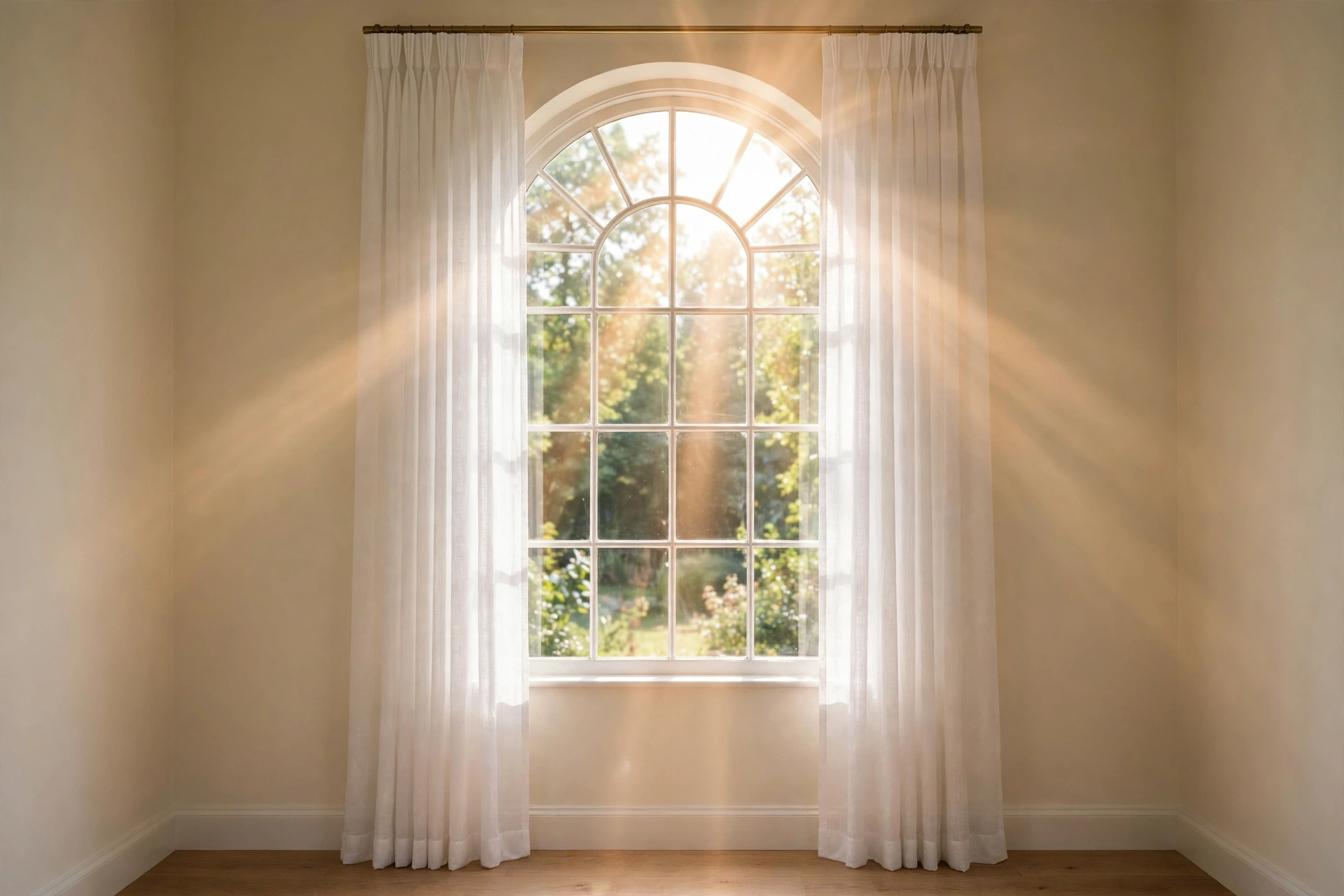
Best Curtains for Arched Windows
An arched window is a curve, not a rectangle, and the curtain must either clear the arch, follow it, or dress it without hiding it. This guide sorts the four ways by arch shape and job.
The best curtains for an arched window are the ones that settle the arch question first: show the arch, or cover it. A rod above the arch with panels that draw across the whole window covers it and gives full light control, while a curved rod inside the arch or a stationary panel shows it and gives softness without full cover. Neither choice is wrong, but mixing them without deciding leaves a window that does neither job well.
An arched window is a window with a curved or pointed top, from a simple half circle to a tall pointed arch, and the curve is the feature that makes the window worth having. That curve is also what makes a standard straight rod a poor fit, because a straight rod either cuts across the arch and hides it, or stops below it and leaves the curved glass bare. This guide sorts the arch shapes, the four ways to dress them, the hardware, the measuring, and the fabrics.
Arched window picks by job
Sheer voile suits a living room arch you want to show off, blackout suits a bedroom arch that must stay dark, and pinch-pleated linen suits a formal arch. The picks are grouped by the arch job each one fits, not by brand. Check the heading, the lining, the finished length, and the care label on the listing for the panel you choose.
As an Amazon Associate, we earn from qualifying purchases.
| Pick | Type | Mounting | Best for |
|---|---|---|---|
| 1 | NICETOWN White Voile Sheer Curtains | Straight rod above the arch | A living room arch you want to show off |
| 2 | SimpleHome 100% Blackout Curtains | Straight rod above the arch | A bedroom arch that must stay dark |
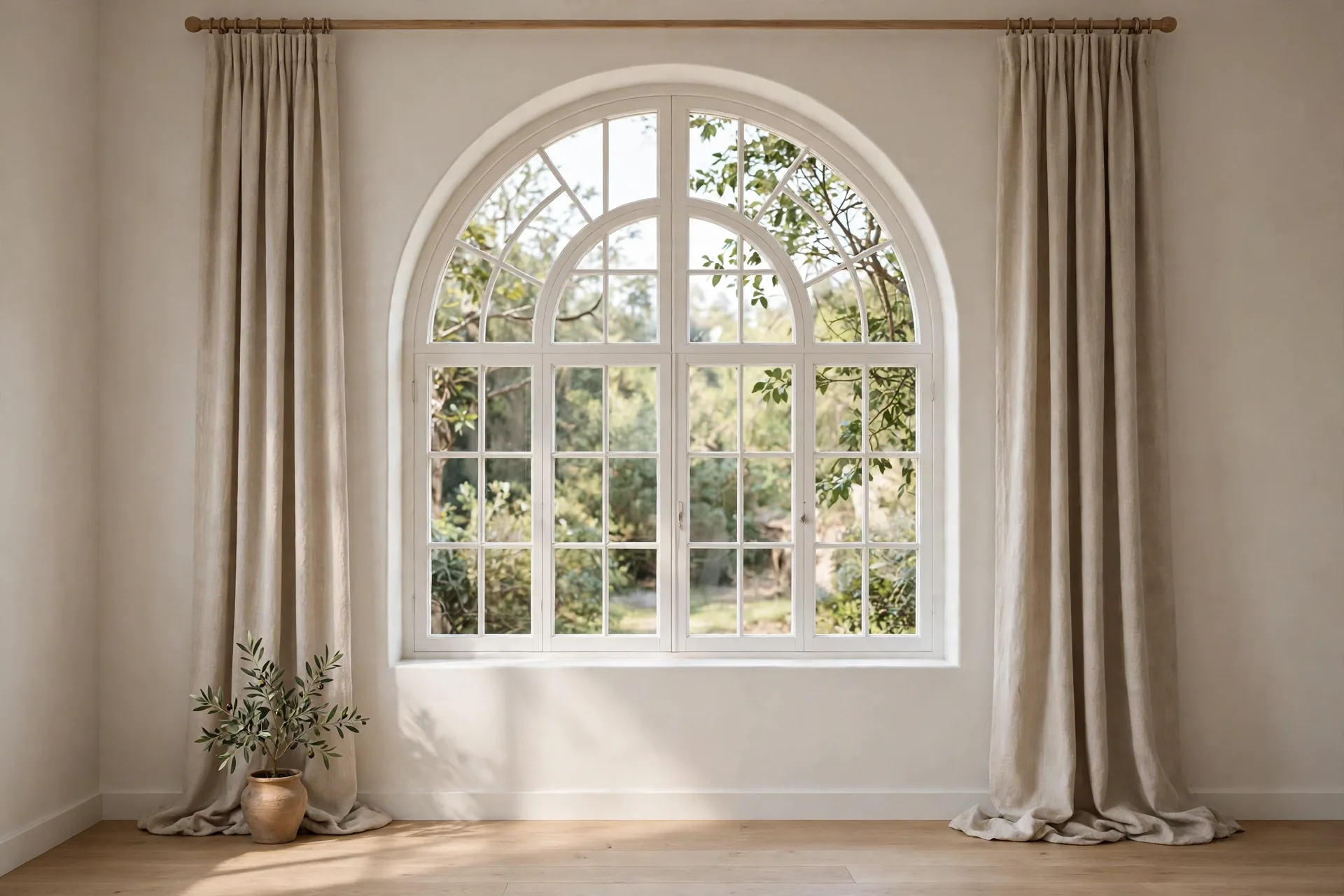
| 3 | ANRODUO Pinch Pleated Linen Curtains | Curved rod inside the arch | A formal arch with a soft curve |
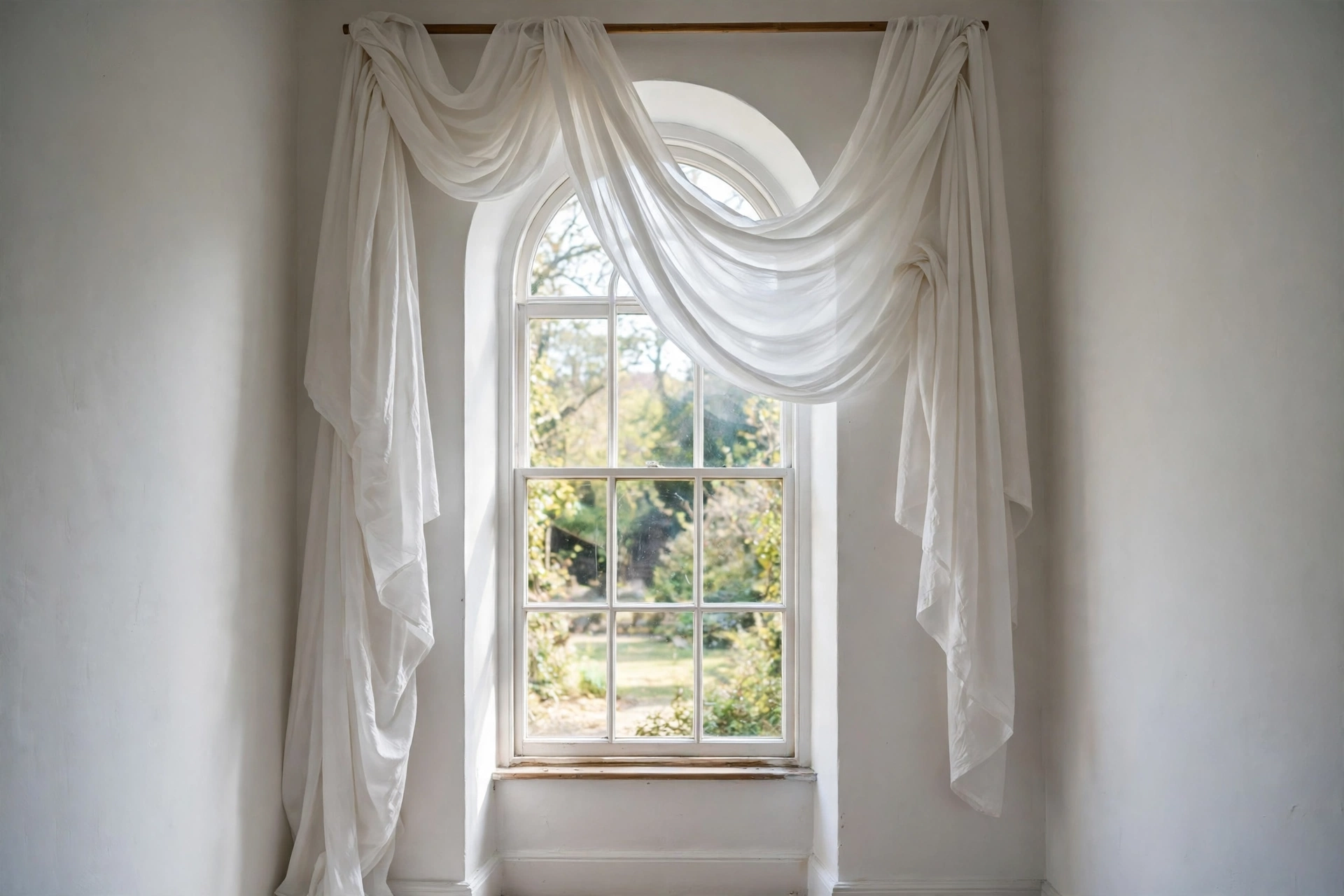
| 4 | OWENIE White Voile Sheer Curtains | Holdbacks along the arch | A tall arch that stays dressed, not drawn |
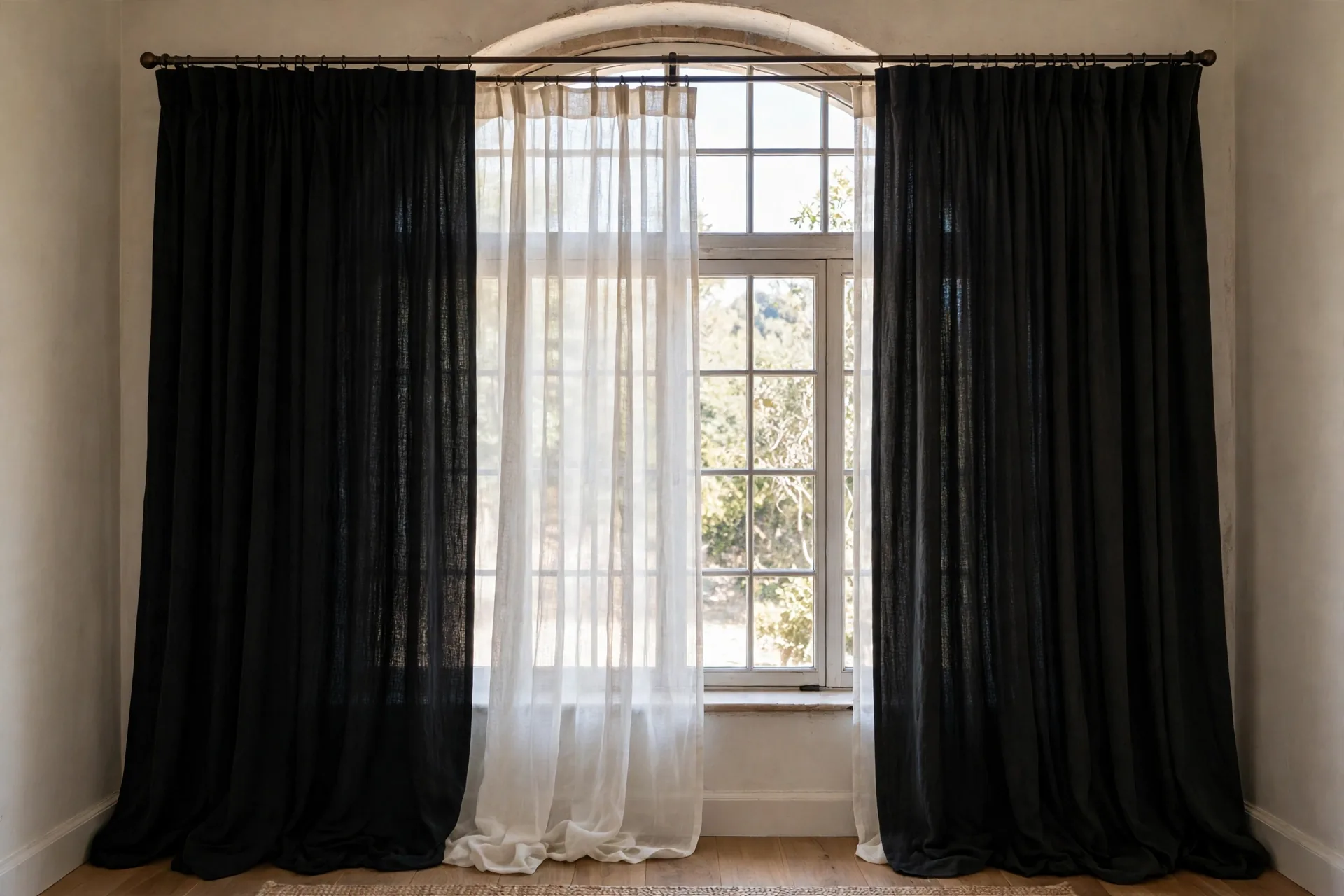
| 5 | Best Home Fashion uMIXm Mix and Match Tulle Sheer and Blackout Curtain Set | Double straight rod above the arch | An arch used day and night |
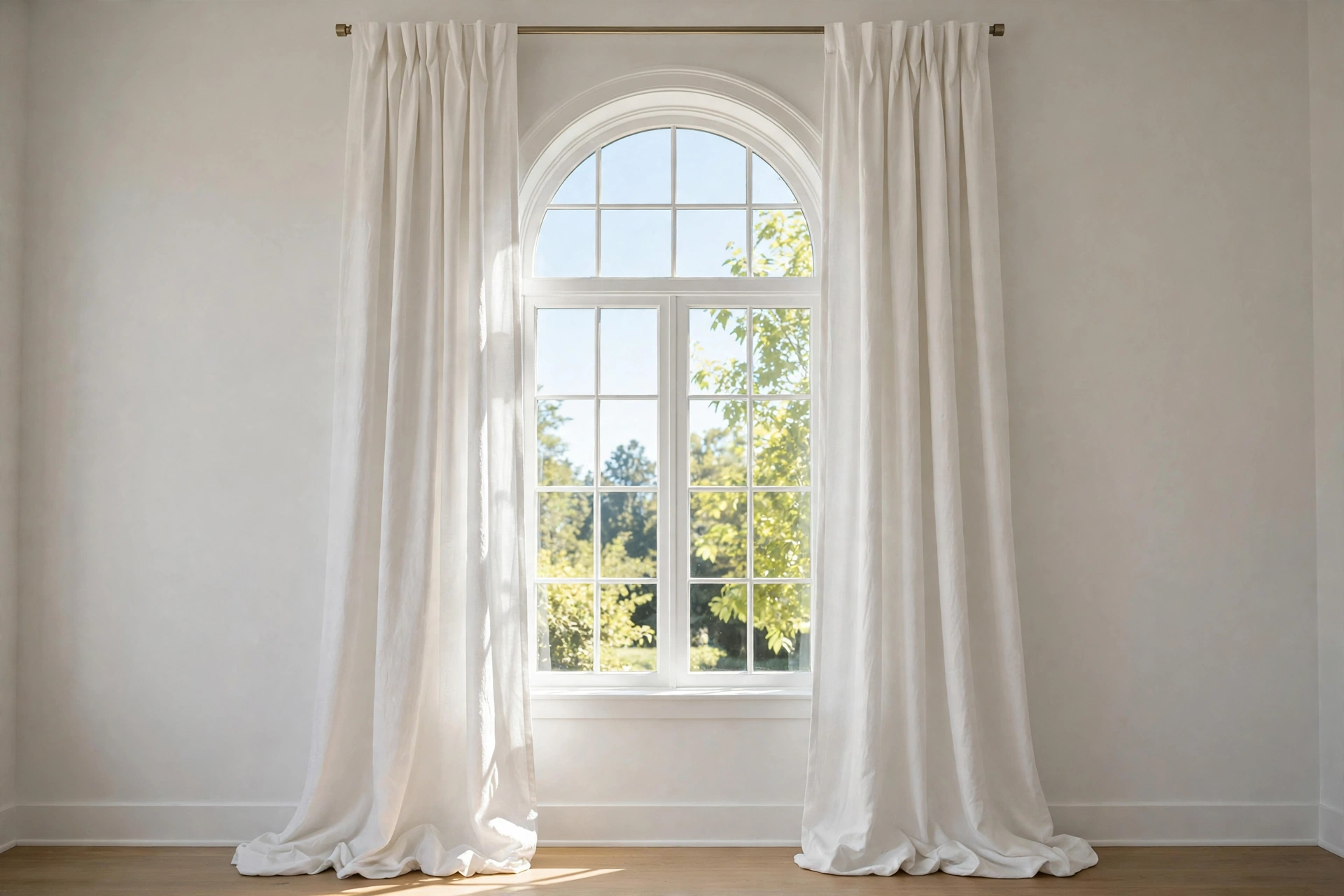
| 6 | KOUFALL White Room Darkening Curtains | Straight rod above the arch, tiebacks | A tall arch in a sunny room |
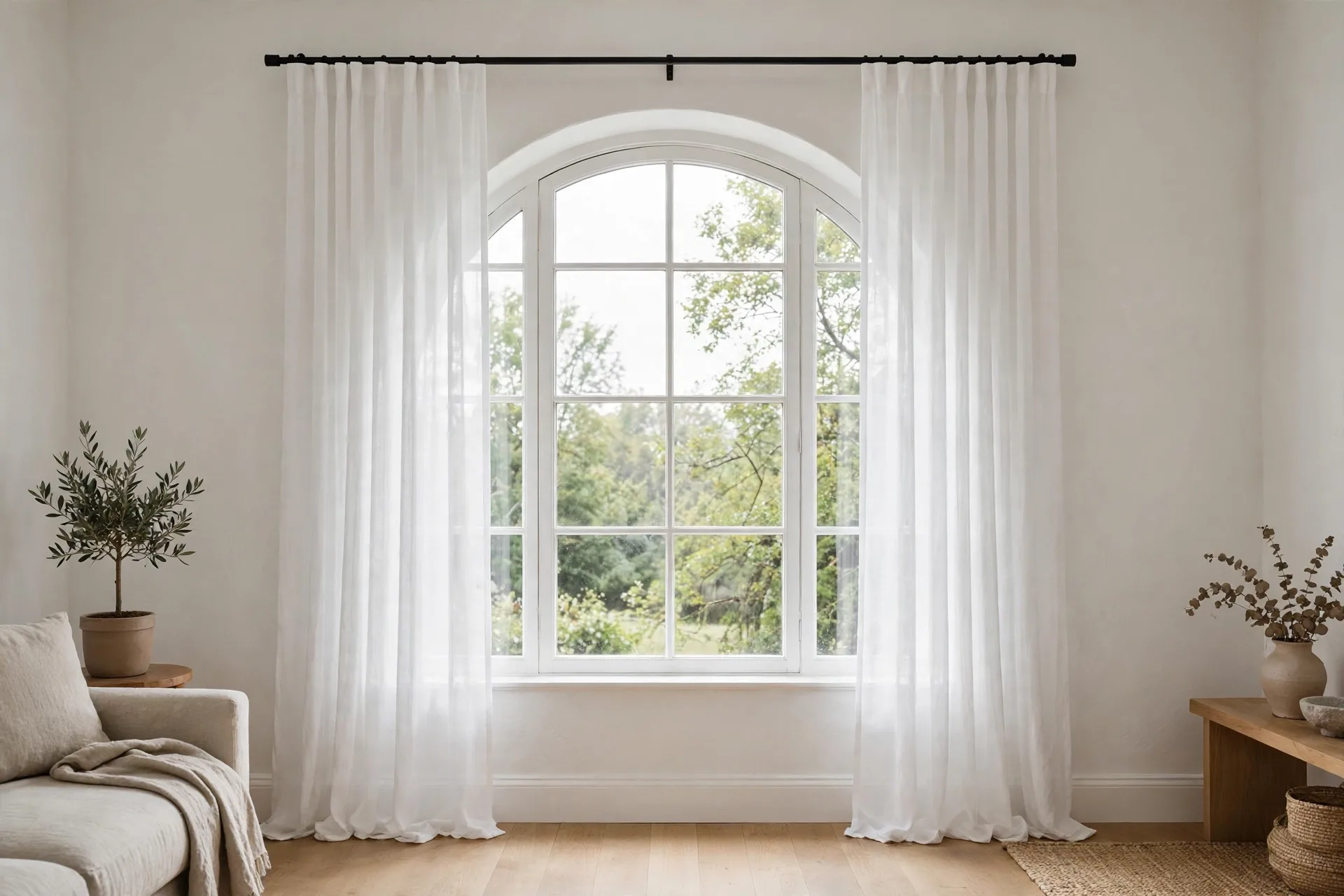
1. NICETOWN White Voile Sheer Curtains: best for a living room arch you want to show off
- Best for: A living room arch where the curve is the feature, with soft daylight and gentle daytime privacy.
- Key features: Lightweight sheer panels, straight rod fixed above the arch peak, panels draw across the whole window, soft filtered light.
- Pros: Shows the arch shape through the sheer, keeps the room bright, simple hardware.
- Cons: Little privacy at night once indoor lights are on, no real darkness alone, the arch is covered when closed.
2. SimpleHome 100% Blackout Curtains: best for a bedroom arch that must stay dark
- Best for: A bedroom arch where sleep comes first, including rooms facing street light or morning sun.
- Key features: SimpleHome 100% blackout panels, thermal-insulated, triple-weave 100% polyester, grommet heading, cream, black back, 52 by 84 inches, 2 panels, straight rod above the arch peak, panels overlap the frame when closed.
- Pros: Strong darkness for sleep, treats the arch as one tall window, plain panels suit a restful room.
- Cons: The arch is hidden when the panels close, heavier panels need firm brackets; check the care label before washing.
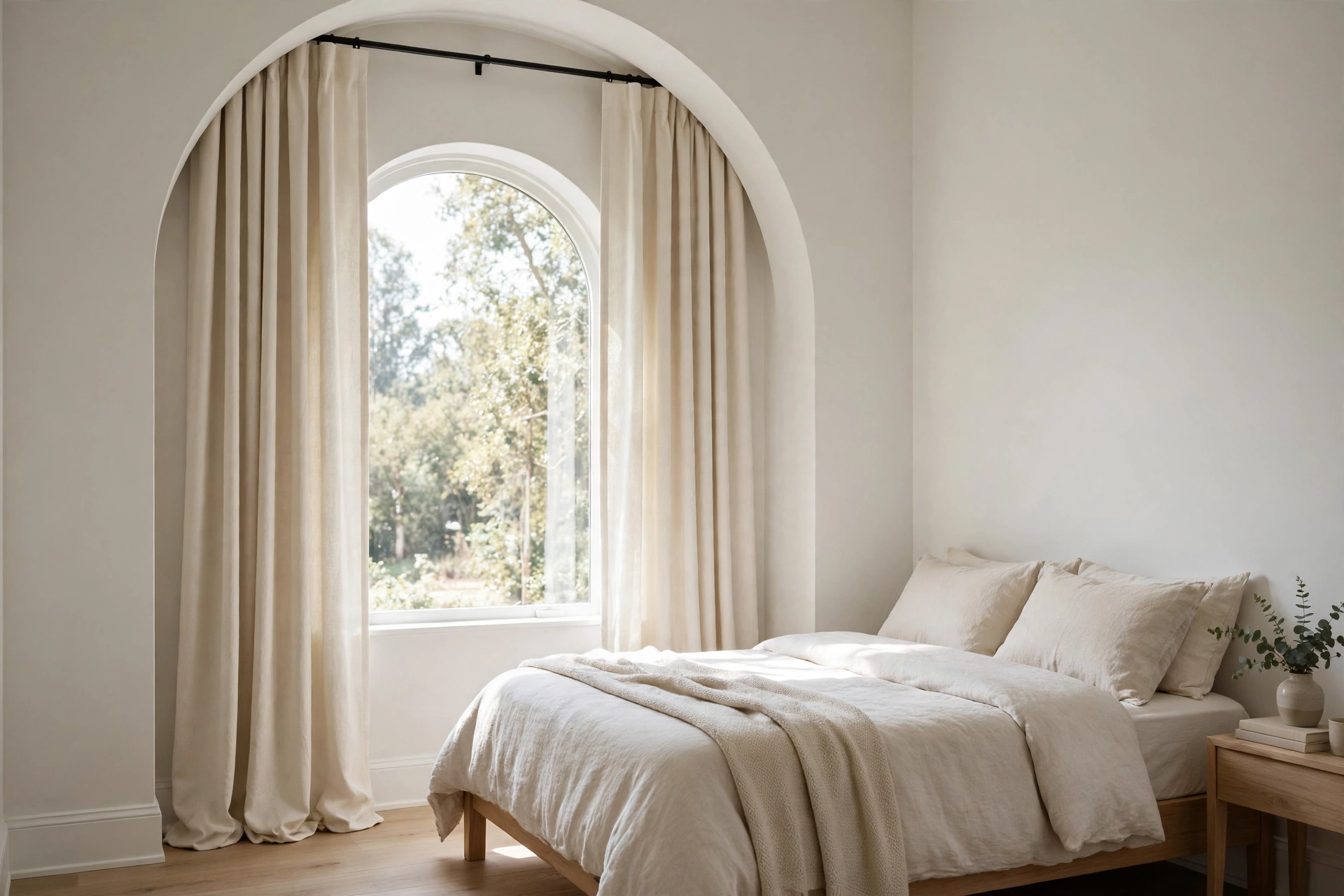
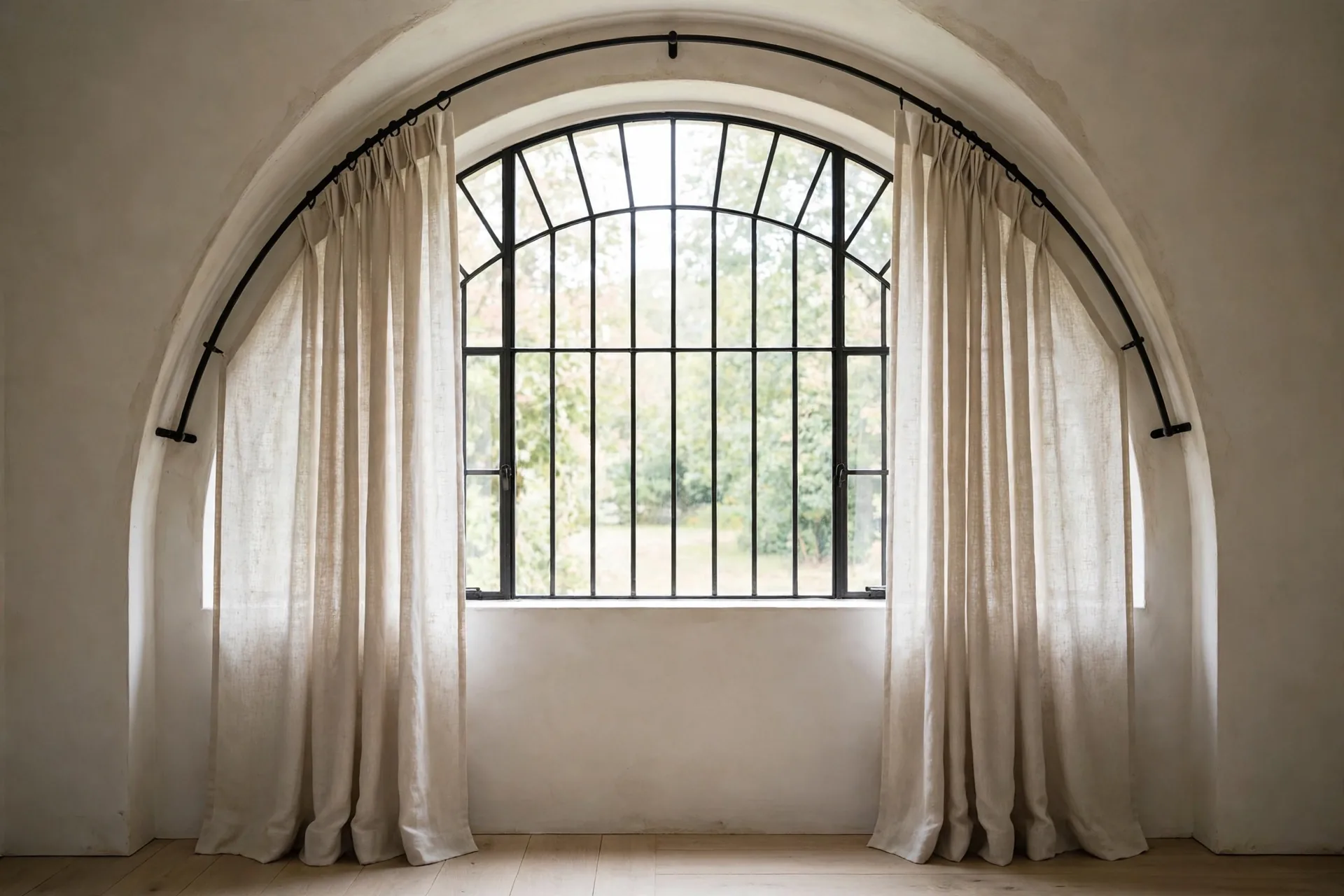
3. ANRODUO Pinch Pleated Linen Curtains: best for a formal arch with a soft curve
- Best for: A formal living room or dining room arch where the curve itself should stay visible and the panels should follow it.
- Key features: Lightweight linen panels, curved rod bent to the arch, panels follow the curve, soft natural drape, 102 inches long.
- Pros: Follows the arch shape instead of cutting across it, keeps the architectural feature on show, gentle light and privacy.
- Cons: Needs a curved rod cut or bent to the arch, so measuring matters more, heavy fabric fights the bend, limited darkness alone.
4. OWENIE White Voile Sheer Curtains: best for a tall arch that stays dressed, not drawn
- Best for: A tall or hard-to-reach arch, such as a stairwell or a two-story arch, where the panels dress the window and never need drawing.
- Key features: Sheer panels fixed in swags on holdbacks along the arch, sold separately, no drawing, soft gathered folds, arch shape stays visible.
- Pros: Shows the arch while softening it, no rod mechanism to reach or maintain, suits very tall arches well.
- Cons: No light control or privacy change through the day, the panels are decorative, so pair with a shade where cover is needed.
5. Best Home Fashion uMIXm Mix and Match Tulle Sheer and Blackout Curtain Set: best for an arch used day and night
- Best for: An arch that works as a living space by day and needs full cover at night, such as a bedroom arch or a street-facing living room arch.
- Key features: Sheer layer nearest the glass, drape layer on the room side, double straight rod above the arch, each layer moves on its own.
- Pros: Daylight through the sheer by day, full cover at night, each layer draws on its own without dragging the other.
- Cons: Two layers stack wider when open, so leave stack space at each end, needs a double rod, the arch is covered when the drape closes.
6. KOUFALL White Room Darkening Curtains: best for a tall arch in a sunny room
- Best for: A tall sunny arch where glare and heat need taming by day, with the arch shape shown when the panels are tied back.
- Key features: Room-darkening panels, straight rod above the arch, pair with tiebacks (sold separately) to hold the panels clear of the glass.
- Pros: Tames glare and strong sun better than a sheer, tiebacks show the arch shape by day, panels close for evening privacy.
- Cons: Room darkening dims but does not black out, so it suits living rooms better than bedrooms, tiebacks need anchor points that suit the wall.
Arch shapes in plain words
A round arch is a half circle on top of a rectangular window, and it is the most common arched shape in homes. An eyebrow arch is a flattened, shallow curve, lower and wider than a half circle, and it suits rooms where a full arch would feel too grand. A pointed arch rises to a peak, and it draws the eye upward more strongly than a round arch. A segmental arch is a shallow arc struck from a circle wider than the window, giving a gentle curve that reads as soft. An elliptical arch is a stretched oval curve, longer than it is tall, and it suits wide windows.
The shape sets the dressing choice, because a shallow eyebrow or segmental arch is easier to clear with a rod above it, while a tall round or pointed arch rewards a treatment that follows the curve or shows it. A small arch suits a light treatment, because a heavy panel overwhelms a small curve, while a large arch can carry floor-length panels without losing its shape. Note the shape before choosing anything.
One more shape completes the set: the trefoil arch, with three lobes for an ornate window.
Four ways to dress an arch
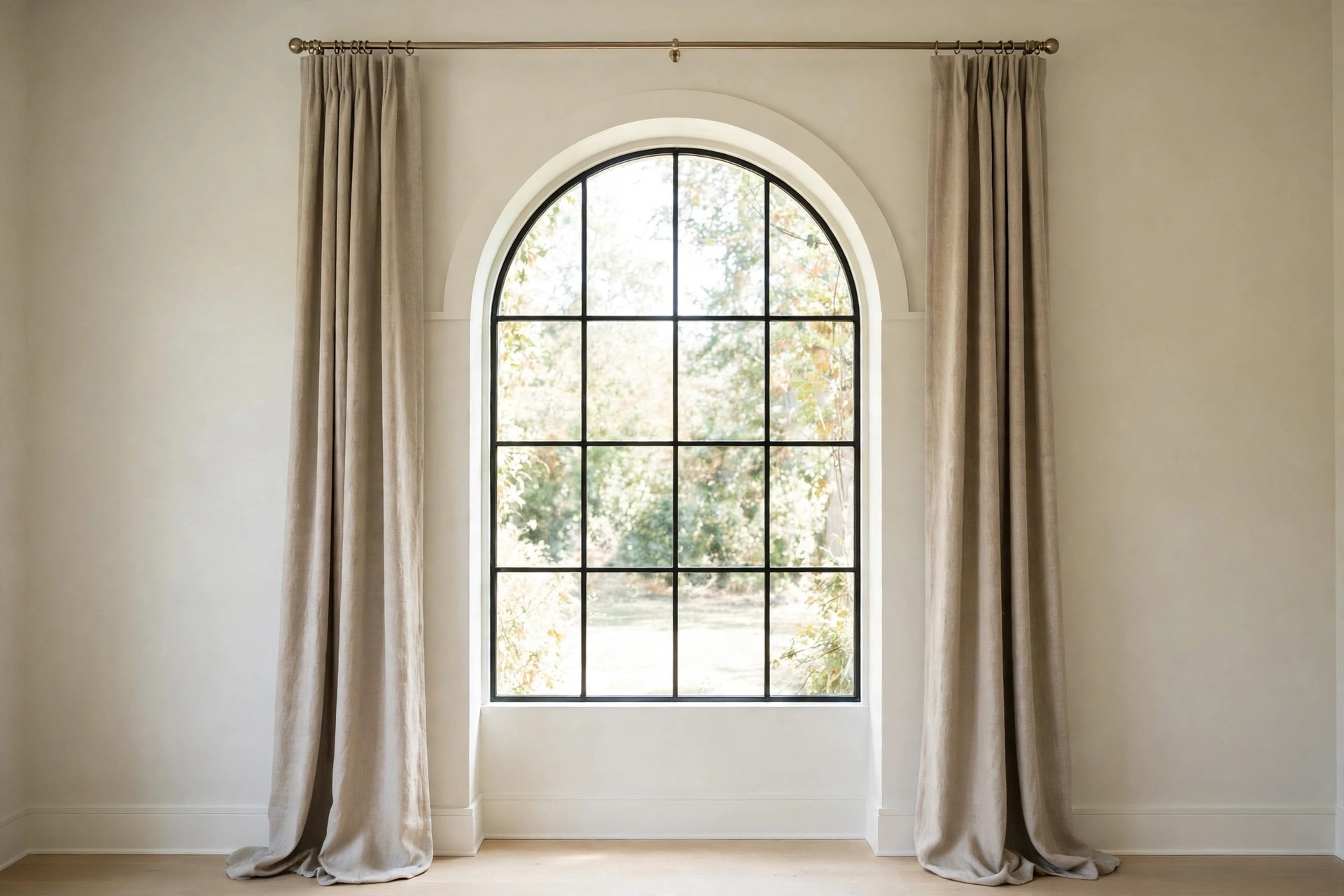
The first way is a rod above the arch, with panels that draw across the whole window as if the arch were one tall rectangle. This way gives full light control and privacy, suits bedrooms and street-facing rooms, and takes any ready-made panel. Its cost is the arch itself: when the panels close, the curve is hidden.
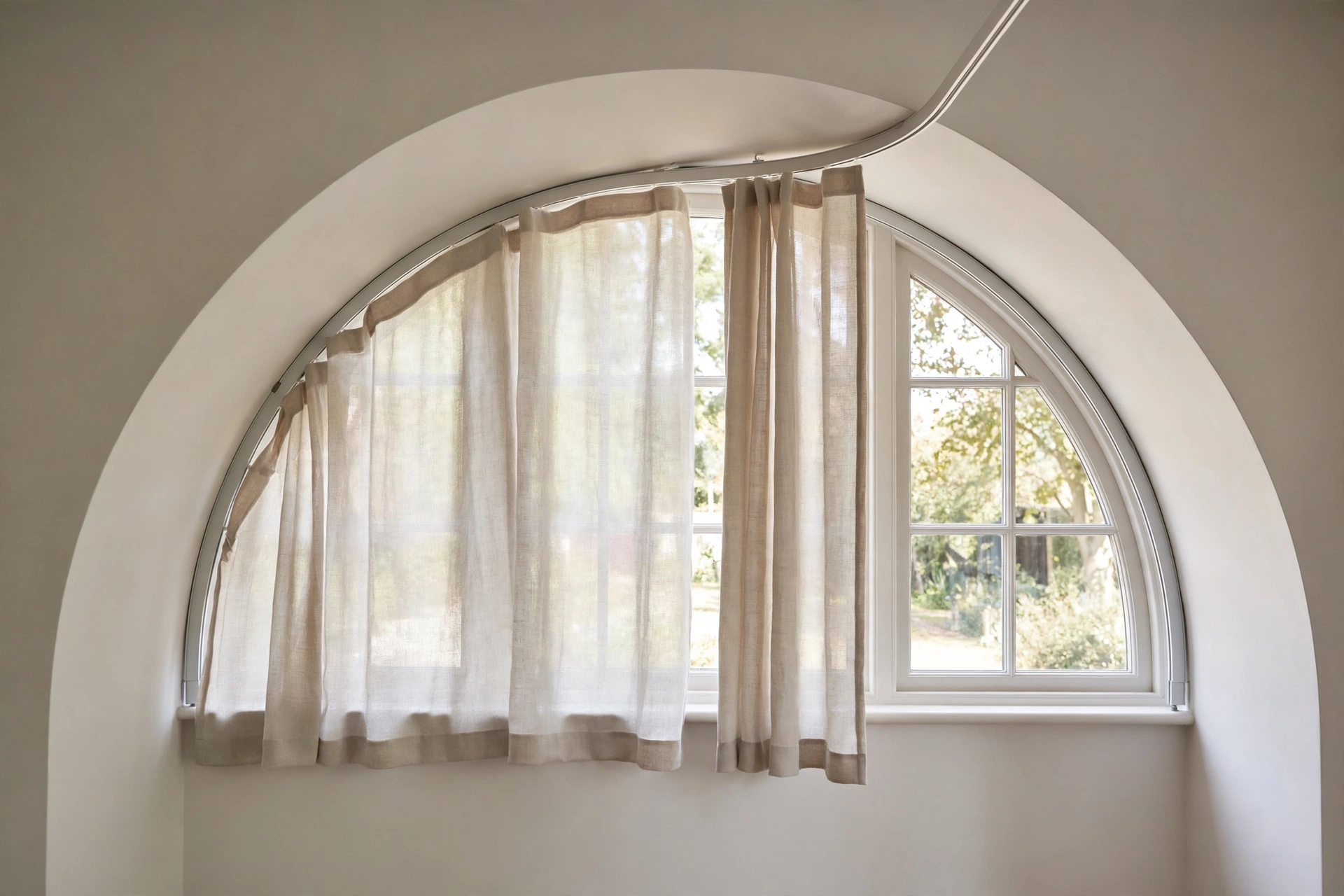
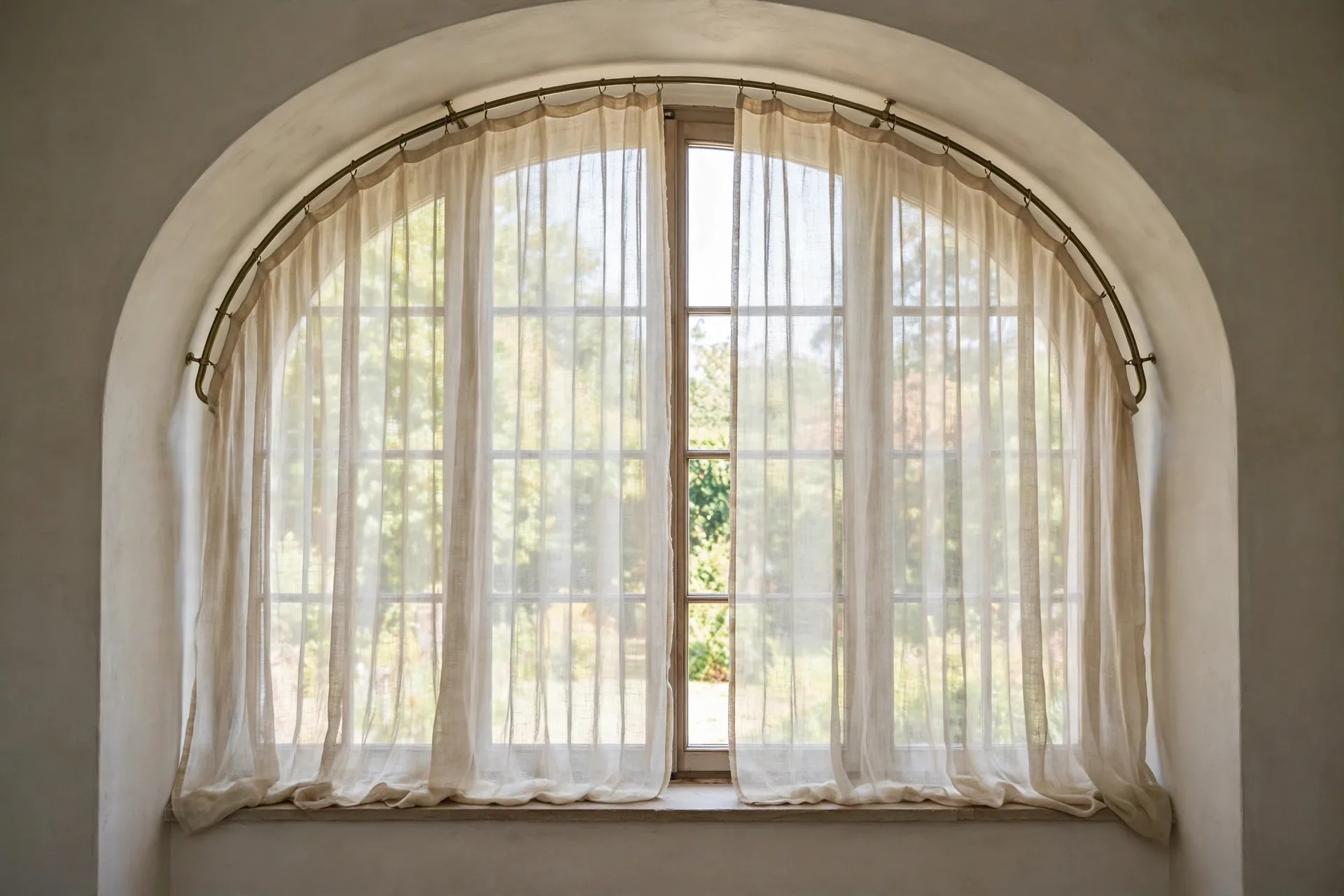
The second way is a curved rod or a flexible track inside the arch, with panels that follow the curve. This way shows the arch, suits formal rooms and living rooms where the shape is the feature.
Its cost is fit: the rod must match the curve, the fabric must be light enough to follow the bend, and darkness is limited.
The third way is a stationary treatment: sheer swags on holdbacks, a valance that echoes the curve, or fixed panels that dress the arch and never draw. This way suits tall, hard-to-reach, or purely decorative arches. Its cost is function: with no drawing, light and privacy do not change through the day.
A fourth way leaves the arch itself exposed and hangs functional curtains only on the lower, rectangular part of the window, which suits a room where the arch is the feature.
For a rod above the arch, mount the straight rod about halfway between the top of the arch and the ceiling, and extend it 6 to 10 inches past the frame on each side, so panels stack fully clear of the glass.
Valance styles can echo the arch: scalloped valances whose curves mirror the arch, swag valances with gathered formal drape, tiered valances in layered sections, and tailored valances with crisp pleats for an architectural look.
Curved rods and flexible tracks that follow the arch
A curved rod is a rod bent to the arch, either cut to order or bent on site, so the panels hang along the curve instead of cutting across it. It suits round and segmental arches best, and it takes lightweight panels with headings that glide, because a heavy or stiff panel resists the bend and draws in jerks. A flexible track is the lighter version of the same idea: a bendable track fixed inside the arch or on the ceiling, which follows curves a rigid rod cannot.
A straight rod above the arch needs none of this, but it needs height: fix it above the arch peak, not at the spring line where the curve starts, or the panels will cut through the arch and leave a crescent of bare glass above them. Fix brackets into solid wall or proper anchors, and check the load rating, because a tall arch carries long panels and needs a center support where the span is wide.
Space mounting clips every 10 to 12 inches, with an extra clip near each end of the curve and one right at the peak, so a flexible track cannot sag between anchors.
No reliable no-drill option exists for functional arch curtains, because the weight and daily-use stress need a securely drilled installation; adhesive hooks suit only very lightweight decorative sheers.
How to measure an arched window without guessing the curve
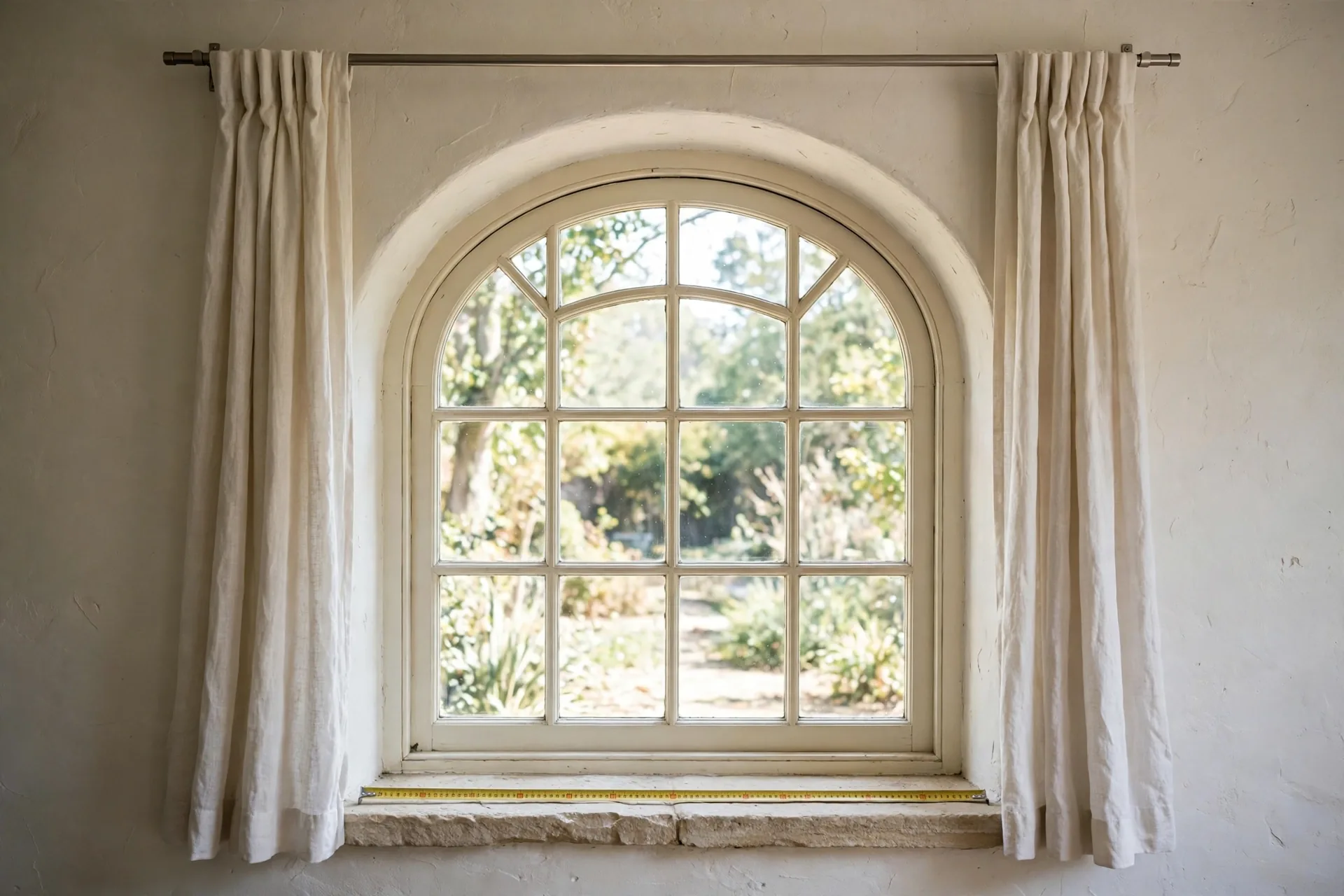
Measure an arched window in two parts: the rectangle below the arch, and the arch itself. For the rectangle, measure the width at the spring line, where the curve starts, and the height from the sill to the spring line. For the arch, measure the height from the spring line to the peak, and the width again at the widest point, because the arch width and the rectangle width should match, and a mismatch means the window is not a true half circle.
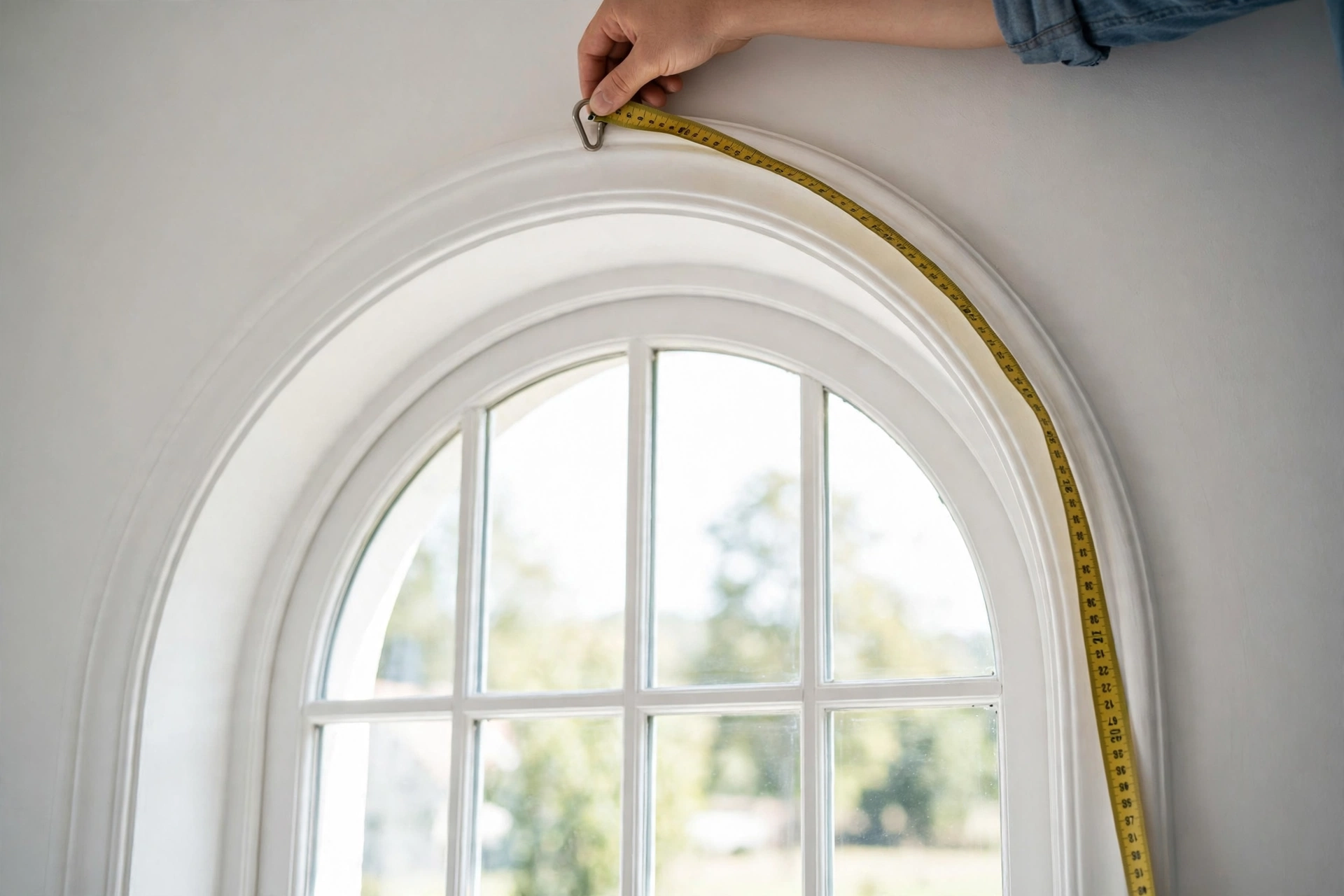
For a curved rod, the curve itself must be matched, so take a template where you can: a strip of card or a flexible tape held along the curve, marked at the spring line and the peak. For a rod above the arch, measure the full height from the sill to above the peak, and the width plus stack space past each frame edge, so the open panels clear the glass. For the full measuring steps, see How to Measure for Curtains, and for length choices, see Curtain Sizes.
Fabrics that follow a curve without fighting it
Lightweight fabrics follow a curve, and heavy fabrics fight it, so the arch sets the fabric before the room does. Sheer linen, voile, and fine cotton drape along a curved rod without bulk, and they let filtered light show the arch shape through the fabric. A light linen blend gives a little more body than a voile without losing the drape.
Heavy velvet, thick brocade, and stiff lined panels resist a curve, bunch at the bend, and draw stiffly, so they suit a rod above the arch better than a curved rod inside it, where they can hang straight and full.
Pattern needs care on an arch too: a bold pattern competes with the curve. Where pattern is wanted, keep it small and regular. For fabric detail, see Best Linen Curtains for linen behavior.
Arch fullness runs about 2.5 times the rod width for a soft draping fold: too little looks skimpy against the curve, and too much overwhelms the window.
Light and privacy on a tall arched window
A tall arched window brings in more light than a flat window of the same width, because the arch glass adds a whole curved section above the rectangle. Sheers suit it by day, because they soften glare from the arch without shutting out the daylight that makes the arch worth having. For the sheer job in full, see Best Sheer Curtains. For night privacy, the panels must close across the whole window, including the arch, because a bare arch at night is a lit crescent, and a sheer alone gives no night privacy once indoor lights are on.
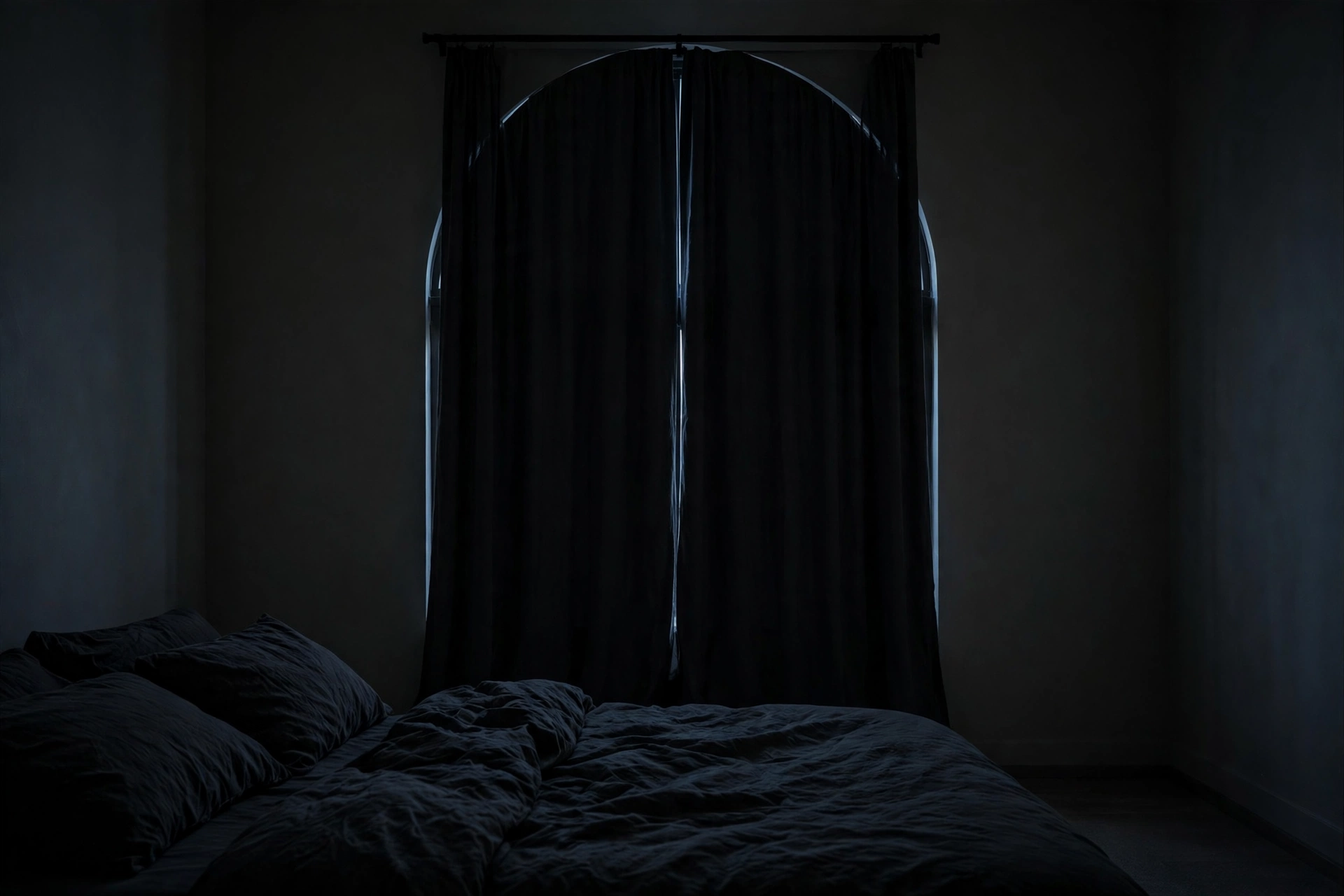
Darkness on an arch is harder than on a flat window, because the curved glass is hard to seal at the edges. The practical fix is a rod above the arch with panels wide enough to overlap the frame, plus a shade or blind fitted to the arch where full darkness matters. For the full darkness job, see Best Blackout Curtains.
Honeycomb (cellular) shades shaped for the arch add insulation alongside panels, as a shaped option where the panel alone leaks at the curve.
Arched windows by room
A living room arch suits a sheer or a light linen panel that shows the curve, because the living room job is daylight and shape. For living room direction and color, see Best Curtains for Living Room. A bedroom arch needs a blackout layer above the arch, because sleep needs darkness across the whole window including the arch, and an arch shade helps where the panel alone leaks at the curve. For room-wide bedroom advice, see Best Curtains for Bedroom.
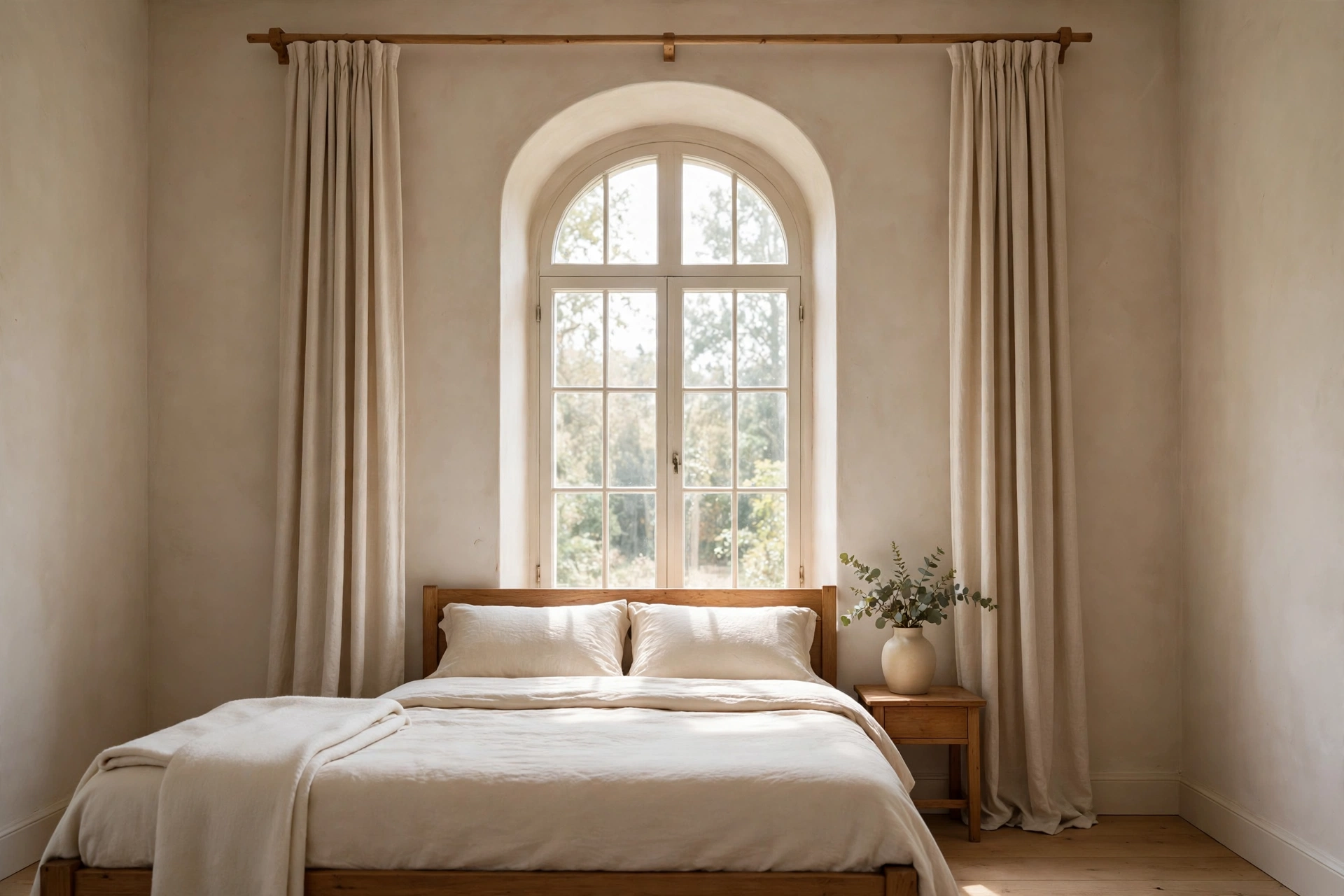
A bathroom arch suits a light, washable panel or a shade, because steam reaches the fabric and the job is privacy at eye level more than full cover. A stairwell or hallway arch suits a stationary sheer or a valance, because the window is often out of reach and the job is softening light, not daily drawing. A dining room arch suits a linen or light drape that shows the curve, because meals feel better in soft, even light than in harsh glare.
Coordinate arched and rectangular windows with the same fabric and hardware on all windows in the room, and mount the rod on the arched window significantly higher, to tie the room together.
Arched window mistakes that hide the shape
The most common arched window mistake is a rod fixed at the spring line, where the curve starts, so the panels cut through the arch and leave a bare crescent above them. The rod belongs above the peak, or inside the curve on a curved rod, never through the middle of it. The second is a heavy, stiff fabric on a curved rod, which bunches at the bend and hides the curve under bulk instead of following it.
The third is measuring only the rectangle and guessing the arch, which gives a rod or a panel that fits the straight part and misses the curve entirely. Other mistakes follow from the same inattention: a bold pattern that fights the curve, a short panel that cuts across the arch at an awkward height, and a valance fixed too low, which chops the arch in half.
Checks to run before you order arched window curtains
Start with the arch shape: round, eyebrow, pointed, segmental, or elliptical, and note whether the curve is shallow or tall. Next, decide the way: above the arch, inside the arch on a curved rod, or stationary, or leaving the arch exposed with curtains only below it, and let that decision set the hardware before the fabric is chosen. Then check the mounting: solid wall or proper anchors above the peak, and a center support where the span is wide, because a tall arch carries long panels.
Then check the light job: day only, night only, or both, and match it to sheer, closing, or layered panels, with a shade fitted to the arch where full darkness matters. Confirm the heading suits the hardware, because a lightweight panel glides on a curved rod where a stiff, heavy panel drags. Order a swatch where one is offered, and look at it in daylight and at night.
Frequently asked questions about arched window curtains
Most arched window questions come down to the rod position, the curve, and whether the arch stays on show.
What is the best way to hang curtains on an arched window?
The best way to hang curtains on an arched window depends on whether the arch stays on show. A rod above the arch peak with panels that draw across the whole window gives full light control and privacy. A curved rod inside the arch follows the curve and shows the shape, and a stationary swag dresses a tall arch.
Can you use a regular curtain rod on an arched window?
A regular straight rod suits an arched window only when it is fixed above the arch peak, so the panels treat the window as one tall rectangle. A straight rod fixed at the spring line cuts through the arch and leaves a bare crescent above it, and a straight rod cannot follow the curve inside the arch.
How do you measure an arched window for curtains?
Measure an arched window in two parts: the rectangle below the arch, width at the spring line and height from the sill to the spring line, and the arch itself, height from the spring line to the peak. For a curved rod, take a template of the curve with card or flexible tape marked at the spring line and the peak, because numbers alone do not give the rod maker the shape.
Should curtains cover the arch or show it?
Curtains should cover the arch where darkness or full privacy matters, as in a bedroom, and show the arch where the shape is the feature, as in a living room. A rod above the arch covers it when closed, a curved rod inside it shows it, and a stationary swag shows it always.
What fabric is best for arched windows?
Lightweight fabric is best for arched windows, because it follows a curve without bulk: sheer linen, voile, and fine cotton drape along a curved rod and let filtered light show the shape. Heavy velvet and stiff lined panels fight a curve, so they suit a rod above the arch, where they hang straight, better than a curved rod inside it.
How do you get privacy on an arched window at night?
Night privacy on an arched window needs panels that close across the whole window including the arch, or a shade fitted to the arch. A sheer alone gives no night privacy once indoor lights are on, because the lit glass shows the room. A blackout layer above the arch, plus an arch shade where the panel leaks at the curve, gives the night job.
Can you put blackout curtains on an arched window?
Blackout curtains suit an arched window when they hang on a rod above the arch peak, so the panels cover the whole window as one tall rectangle. Darkness at the curved edges is harder than on a flat window, so add an arch shade where full darkness matters, as in a bedroom.
Do arched windows need custom curtains?
Arched windows need custom work only where the treatment follows the curve, as with a curved rod or a shade fitted to the arch, because the curve must be matched. A rod above the arch takes ready-made panels, since the rod is straight and the panels hang as one tall window.
What length should curtains be on an arched window?
Curtain length on an arched window follows the same rules as any tall window: floor length suits a living room or bedroom arch, sill length suits a kitchen or bathroom arch, and no length should cut across the arch itself. Where the rod sits above the peak, measure from the rod to the end point, not from the arch.
For other curtain types, see Best Window Curtains.
This guide is research-based curation: we compared maker specifications, published reviews, and current prices. Read how we choose.