 Best
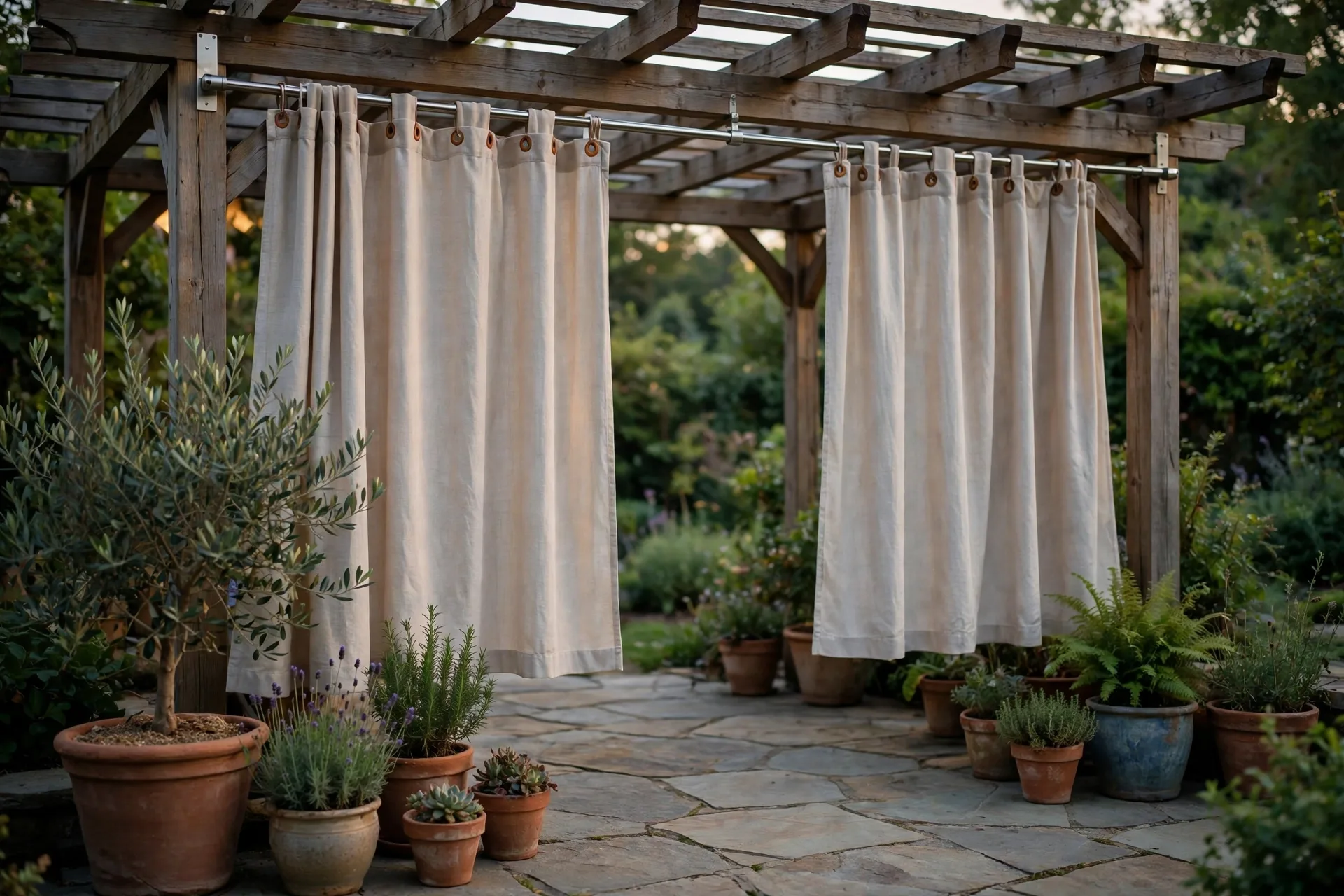
Best Outdoor Curtains
Outdoor curtains fail in predictable ways: they fade, they sail in wind, and they stay damp. This guide sorts fabric, weight, and hanging before you order.
The best outdoor curtains are heavy enough to hang straight in a breeze, made from a fabric that sheds rain and holds its color in sun, and hung on rust-proof hardware that fits the opening.
Outdoor curtains live a harder life than indoor curtains.
Outdoor curtain picks by job
Heavyweight light-filtering panels suit a sunny patio that needs shade without darkness, waterproof panels suit a porch or balcony close to neighbors, and blackout triple-weave panels suit a west-facing pergola that needs real heat and glare control. The picks below are grouped by job, not by brand. No pick names a maker or a size here, because those vary by listing and must be confirmed on the listing before you order. Check the fabric, the water rating, the finished length, the grommet material, and the care label on the listing for the panel you choose.
As an Amazon Associate, we earn from qualifying purchases.
| Pick | Type | Light job | Best for |
|---|---|---|---|
| 1 | Heavyweight light-filtering outdoor panels | Light filtering | A sunny patio that needs shade without darkness |
| 2 | Waterproof privacy outdoor panels | Light filtering with privacy | A porch or balcony close to neighbors |
| 3 | Blackout triple-weave outdoor panels | Blackout | A west-facing pergola that needs real heat and glare control |
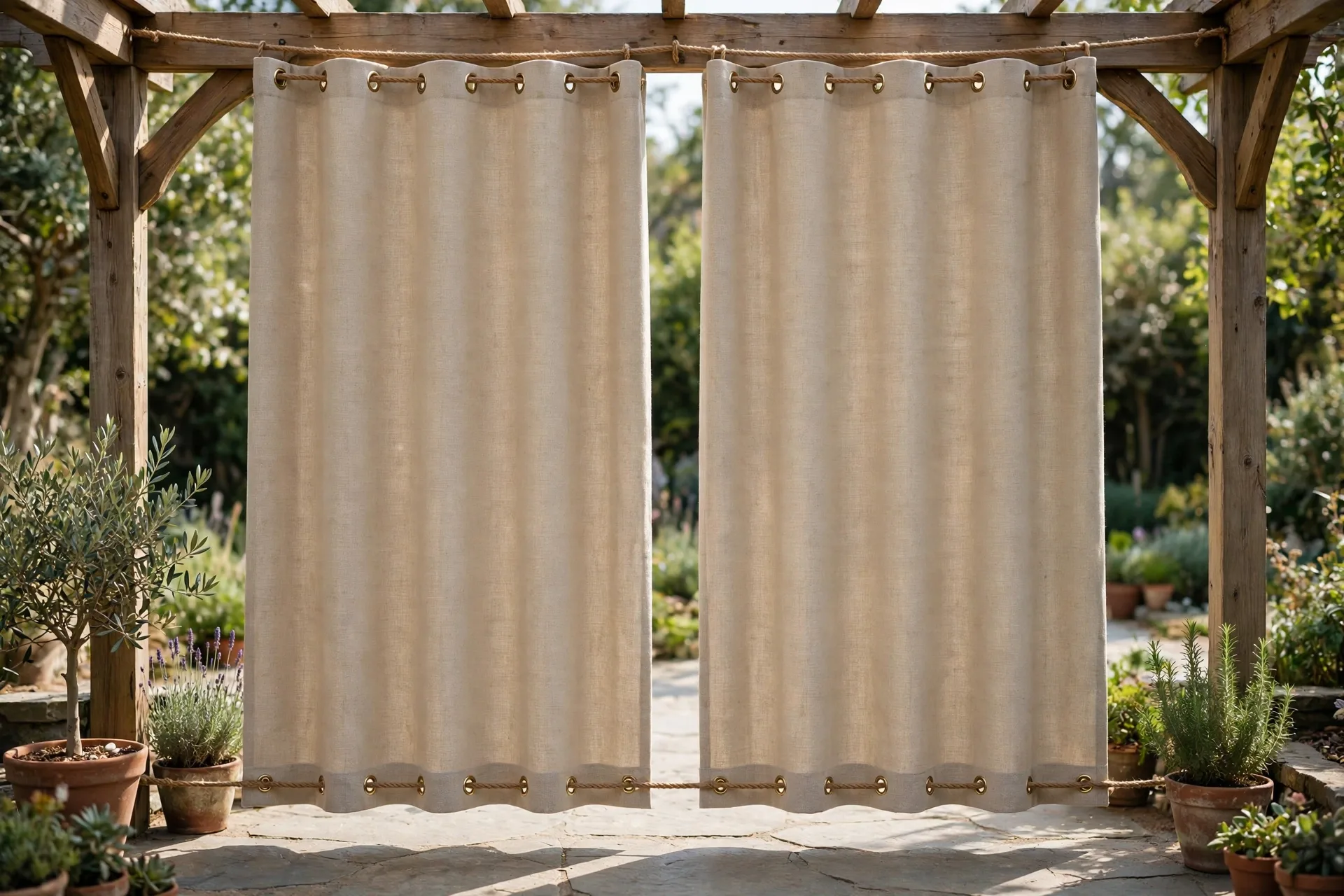
| 4 | Double-grommet weighted outdoor panels | Light filtering or blackout | A windy spot where panels must stay anchored top and bottom |
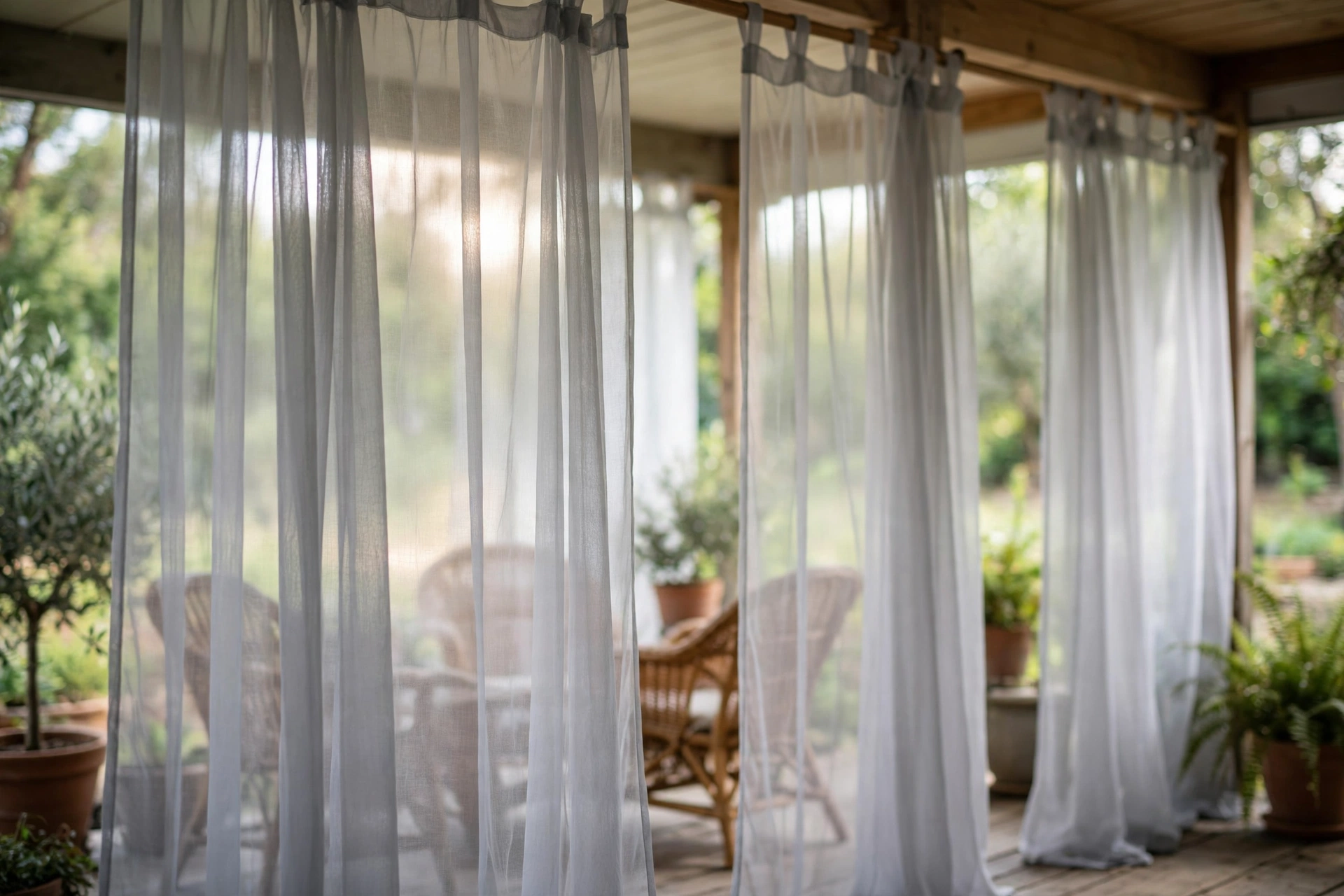
| 5 | Outdoor sheer panels | Sheer | A covered porch that needs soft light and a light, airy look |
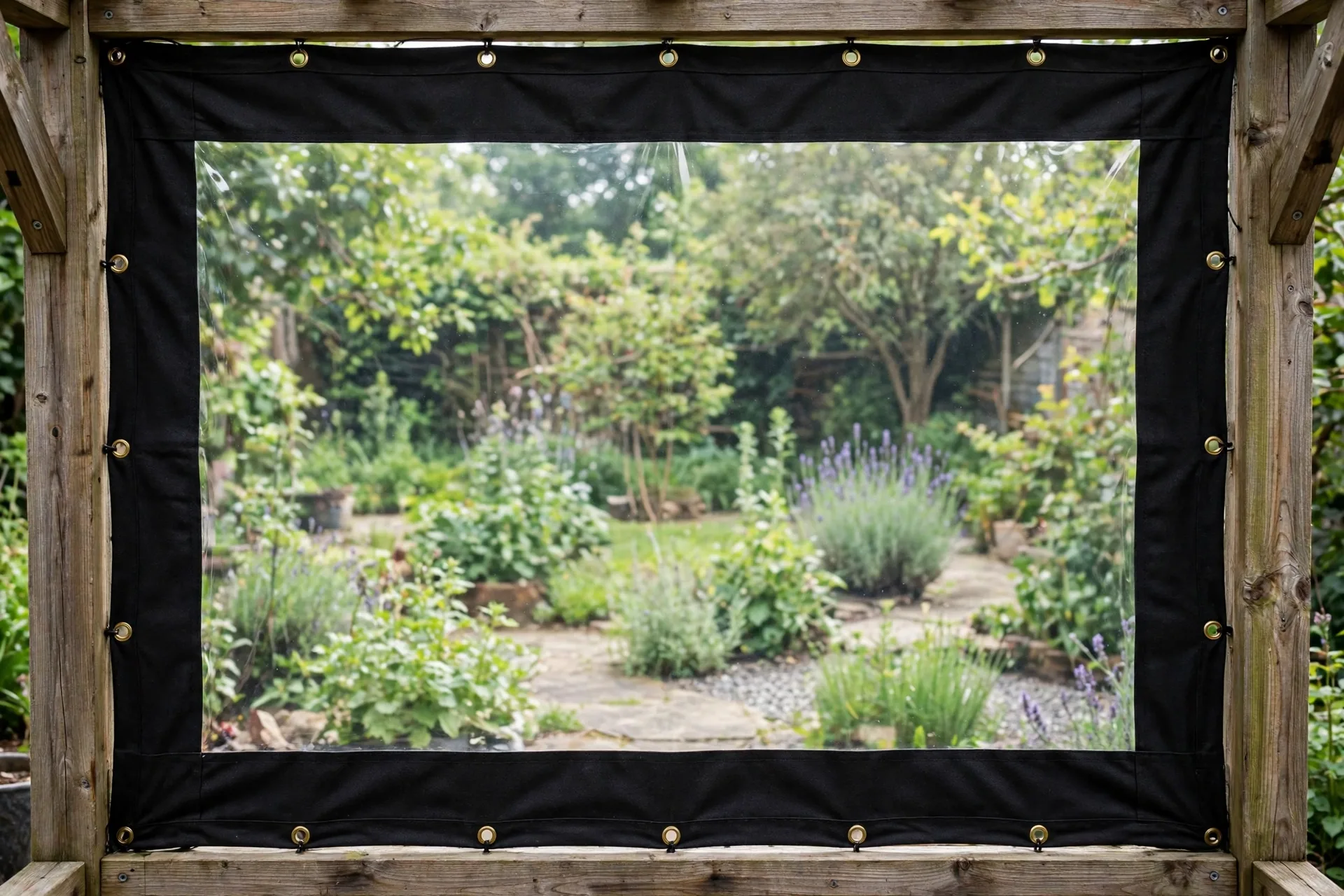
| 6 | Clear vinyl wind-screen panels | See-through screening | A windy patio where you want the view and a wind break |
1. Heavyweight light-filtering outdoor panels: best for a sunny patio that needs shade without darkness
Best for: A sunny patio where the job is cutting glare and heat while keeping the space bright and open.
Key features: Heavyweight polyester Oxford face, light-filtering fall, rust-proof grommets, waterproof as the seller states, single panel, 54 by 120 inches.
Pros: Cuts harsh sun without turning the patio into a dark room, heavier fabric hangs straighter than thin panels, suits patios, porches, and pergolas.
Cons: A single panel covers one bay, so order two for fullness, and even these panels still move in strong wind without weights or tiebacks.
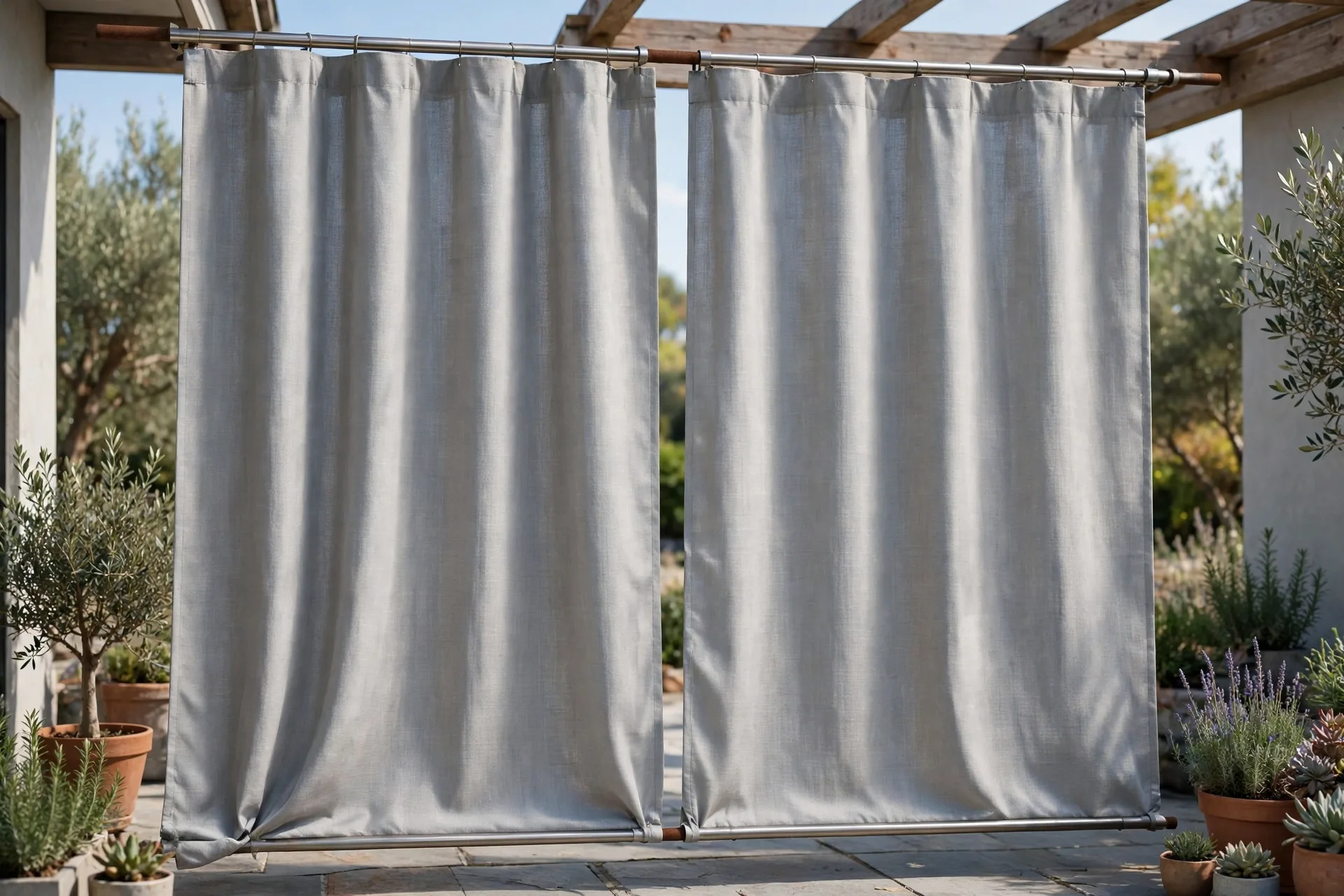
2. Waterproof privacy outdoor panels: best for a porch or balcony close to neighbors
Best for: A porch or balcony where privacy matters as much as weather, and the panel must block the view from outside.
Key features: Thick opaque triple-weave polyester, waterproof coating on both sides, same color on both sides, blocks 85-90% of sunlight.
Pros: Real daytime privacy, with evening privacy in darker colors, rain beads off instead of soaking in, looks finished from inside and outside.
Cons: Opaque fabric can darken a small porch, the panel still needs weights or tiebacks in wind, lighter colors block less light, so pick a darker tone for the sunniest side.
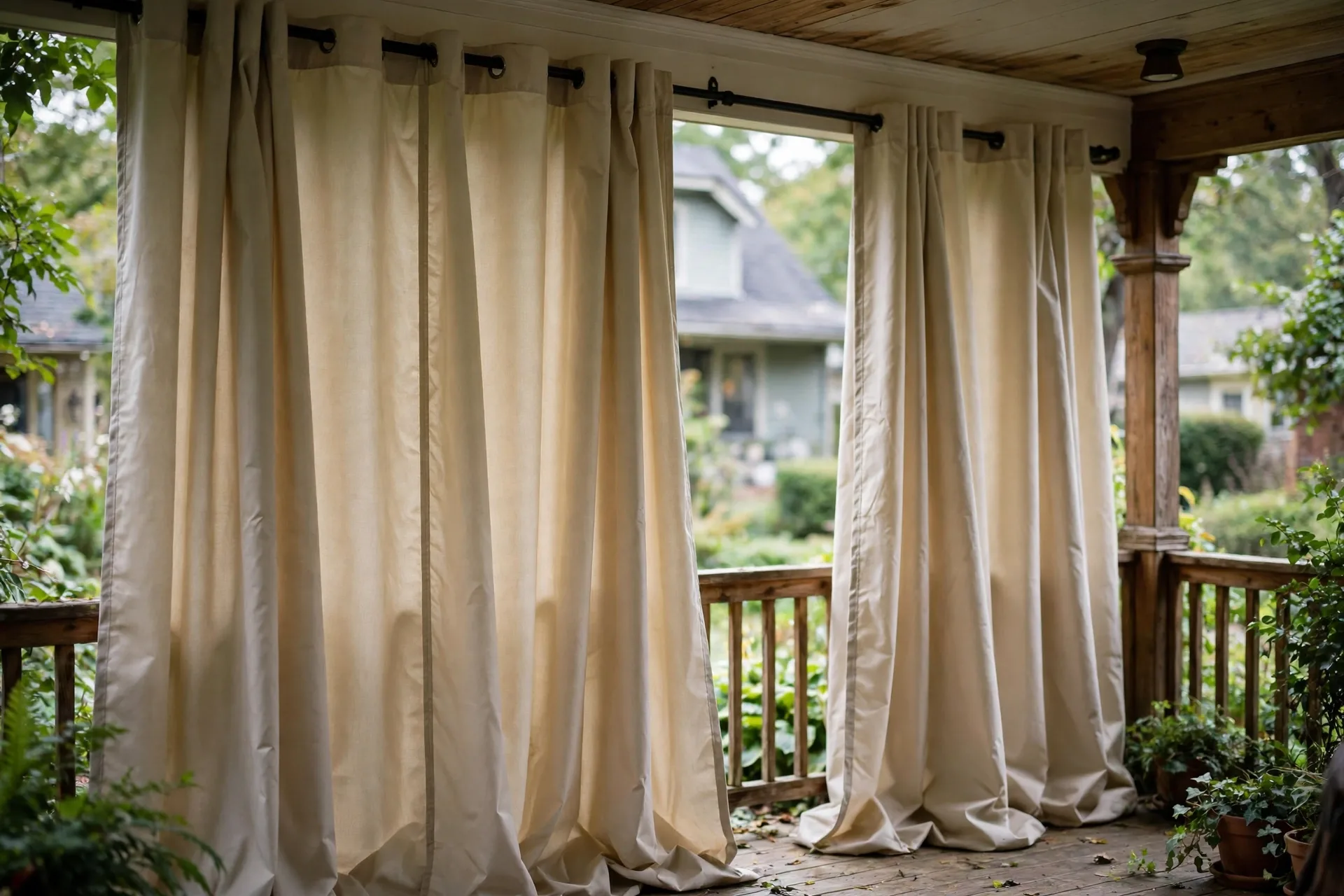
3. Blackout triple-weave outdoor panels: best for a west-facing pergola that needs real heat and glare control
Best for: A west-facing pergola or a hot deck where evening sun makes the space unusable and shade alone is not enough.
Key features: Triple-weave blackout fabric, waterproof finish, rust-proof grommets, wide size range.
Pros: Blocks most sunlight and cuts heat under the structure, keeps furniture out of direct sun, wide panels can cover a broad bay without a seam.
Cons: Blackout fabric closes a pergola in and cuts airflow on a warm evening, the thin bottom hem can be hard to weight, check grommets each season for pulling.
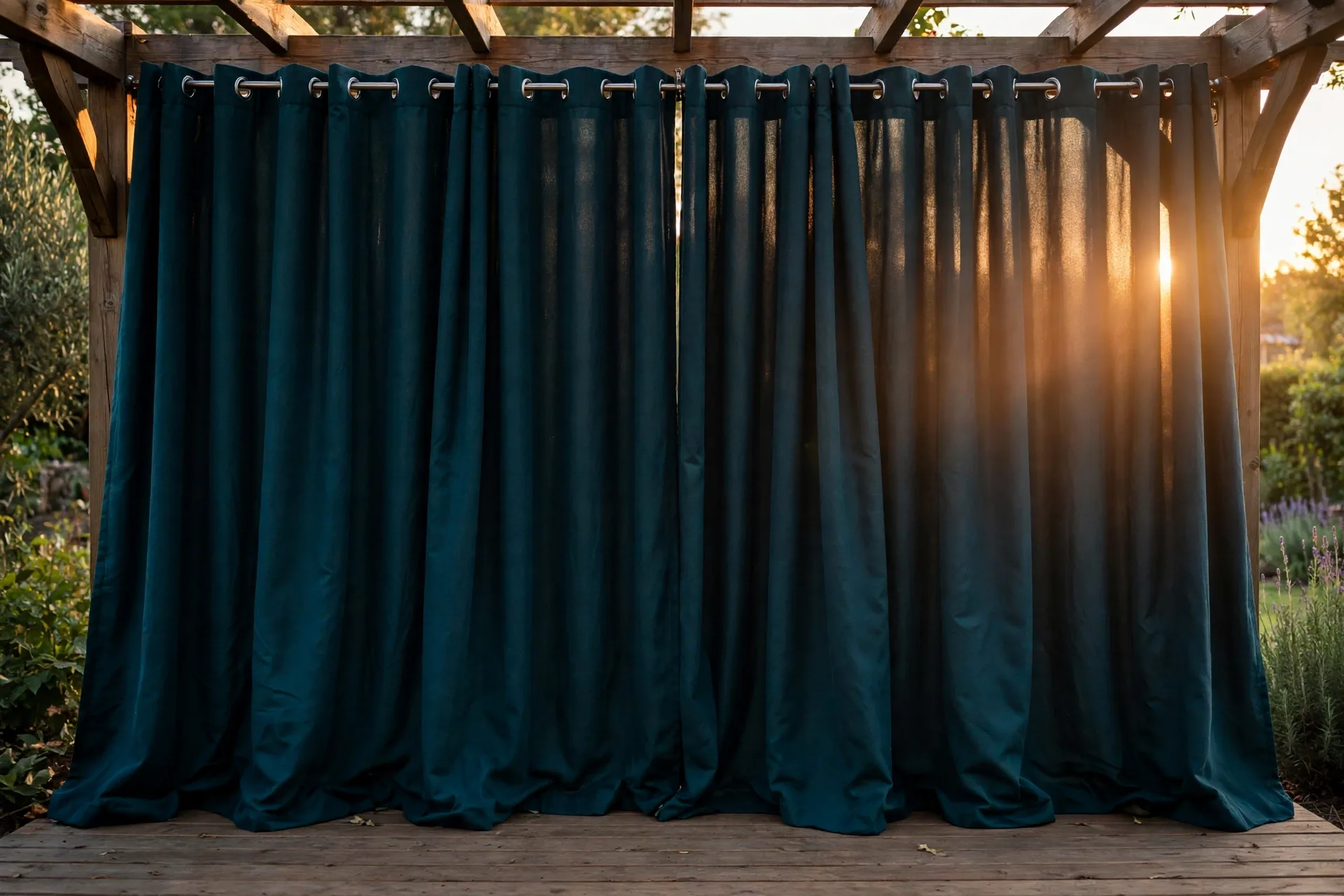
4. Double-grommet weighted outdoor panels: best for a windy spot where panels must stay anchored top and bottom
Best for: A windy patio, deck, or gazebo where ordinary panels flap, billow, and pull at the top grommets.
Key features: Grommets along the top and the bottom, thick triple-weave fabric, waterproof finish, machine-washable face.
Pros: A rod, rope, or weights through the bottom grommets hold the panel down, strong wind handling without giving up privacy, suits exposed corners.
Cons: Heavier to handle, especially when wet, brighter shades can fade fast in strong sun, so pick a darker tone for the sunniest side.
5. Outdoor sheer panels: best for a covered porch that needs soft light and a light, airy look
Best for: A covered porch or a sheltered gazebo where the job is softening light and adding style, not blocking rain or wind.
Key features: Sheer waterproof polyester voile, light airy fall, rod pockets at the top and bottom, so a rod can hold the panel down, no metal parts to rust.
Pros: Keeps the space bright while taming glare, moves gently in a breeze and gives a relaxed, open feel, the bottom rod pocket lets you anchor the panel against wind.
Cons: Little privacy at night once outdoor lights are on, a sheer weave still lets wind-blown rain through, whatever the coating, take sheer panels down in the off-season so they last more than one summer.
6. Clear vinyl wind-screen panels: best for a windy patio where you want the view and a wind break
Best for: A windy patio or deck where the job is screening wind while keeping the view, rather than hanging a fabric curtain.
Key features: Clear vinyl center with a fabric border, waterproof coated polyester, reinforced seams, rustproof brass grommets around the edges.
Pros: Blocks wind while letting light and the view through, waterproof build suits rain and spray, installs as a fixed panel so it does not flap.
Cons: Much less privacy than a fabric panel, vinyl can cloud or mark if it is folded wrong in storage, roll it instead, measure the opening exactly, because a fixed panel cannot be gathered to fit.
What makes a curtain an outdoor curtain
An outdoor curtain is a panel built for sun, rain, wind, and damp, while an indoor curtain is built for light, privacy, and looks in a dry room. The difference shows in the fabric, the finish, the hardware, and the weight.
An indoor curtain used outdoors will work for a single sunny afternoon, but it will fade, weaken, and mark fast if it stays out. Cotton absorbs rain and dries slowly, linen wrinkles and weakens in sun, and silk fades and rots outdoors.
The outdoor test is simple: read the listing for fiber, water rating, UV rating, grommet material, and care. A real outdoor panel states those plainly. A panel that only says pretty, soft, or elegant, with no weather detail, has not been built for outside.
You can also make your own outdoor curtains if you can sew and choose the right material, since the job is mostly straight seams in a weatherproof fabric, though a ready-made panel is the safer choice where the opening is wide or the wind is strong.
Climate changes the pick as well: desert heat, coastal salt air, and humid Gulf conditions each ask for something different, so a coastal panel needs salt-resistant grommets and seams, and olefin suits coastal use where salt air wears at ordinary hardware. For the indoor light jobs that outdoor panels borrow, see Best Sheer Curtains for sheer light and Best Blackout Curtains for full darkness indoors.
Outdoor curtain fabrics that hold up outside
Polyester is the most common outdoor curtain fabric, because it is strong, holds color well, dries fast, and washes easily. Most outdoor panels are polyester, often in a triple weave for blackout or a plain weave for light filtering.
Acrylic and olefin hold color in sun better than polyester and resist mildew well, which is why they appear in higher-grade outdoor fabric.
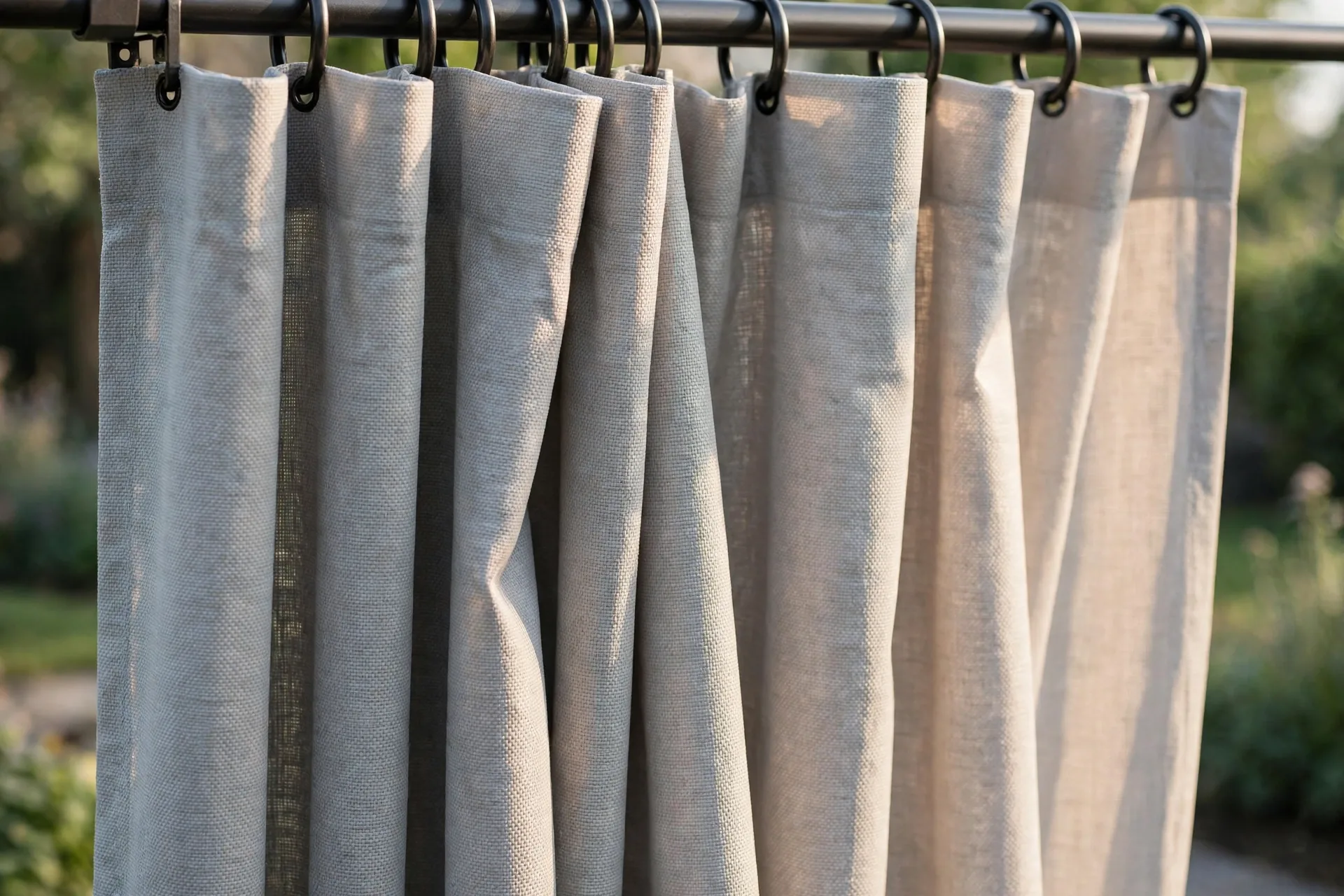
Linen-look polyester gives the relaxed texture of linen with the weather behavior of polyester, and it suits a patio where the look matters as much as the job. Real linen and real cotton look good outdoors for a day, but they absorb water, dry slowly, fade fast, and can grow mildew in damp air, so they are a poor choice for panels that stay up all season.
Sun, fading, and keeping color true outdoors
Sun is the slowest outdoor killer, because fading shows up gradually and cannot be washed out. Ultraviolet light breaks down dyes and weakens fibers, and the sun-facing side of a panel fades first, so a panel can look two-toned by the end of a season. A UV rating, such as UPF 50+, tells you the fabric blocks most ultraviolet light, which protects skin and furniture under the panel, but it does not promise the fabric color itself will never fade. Fade resistance comes from the dye and the fiber, not from the UV rating alone.
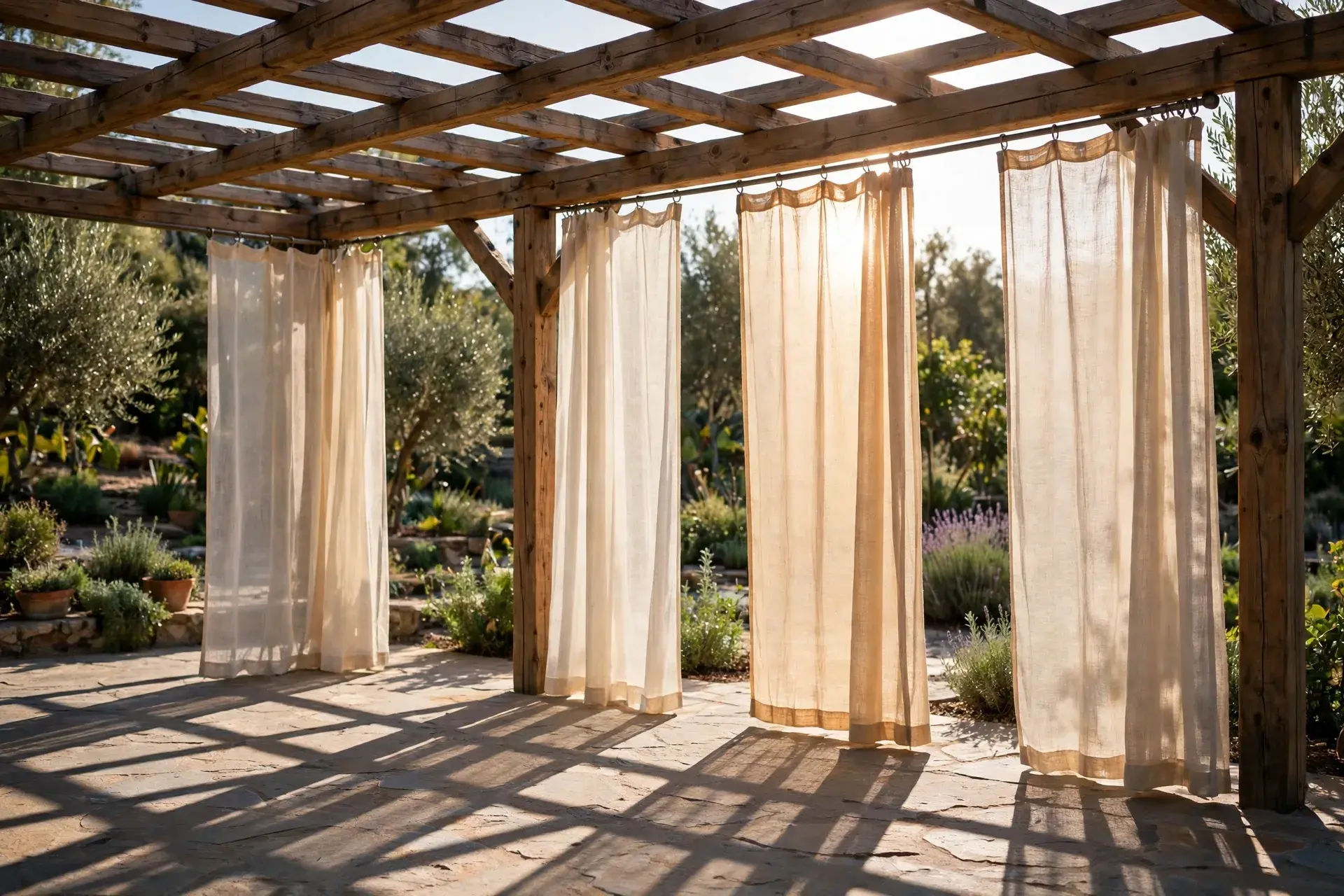
Darker colors and bright colors fade fastest in strong sun, while pale neutrals and mid tones show fading less. A biscotti beige or a pale cream panel can shift tone after a summer in direct sun, and a navy or black panel can turn dusty on the sun side.
Check whether a print is one-sided before you order: some stripe patterns print on one side only, with the back plain, so the panel looks different from inside and outside. Delivered colors can differ from the screen as well, so a shade darker hides fading longer. Watch for backlight too: a panel that looks sheer and private in flat light can go semi-transparent when afternoon sun sits behind it, which matters most where privacy is the main job. For heat control at the glass indoors, see Best Thermal Insulated Curtains.
Thermal panels earn their keep in winter too, not only in summer heat: they reduce heat loss in cold months, so the same panel that cuts glare in July keeps the patio usable longer into the cold season.
Rain, waterproof, and water-resistant in plain words
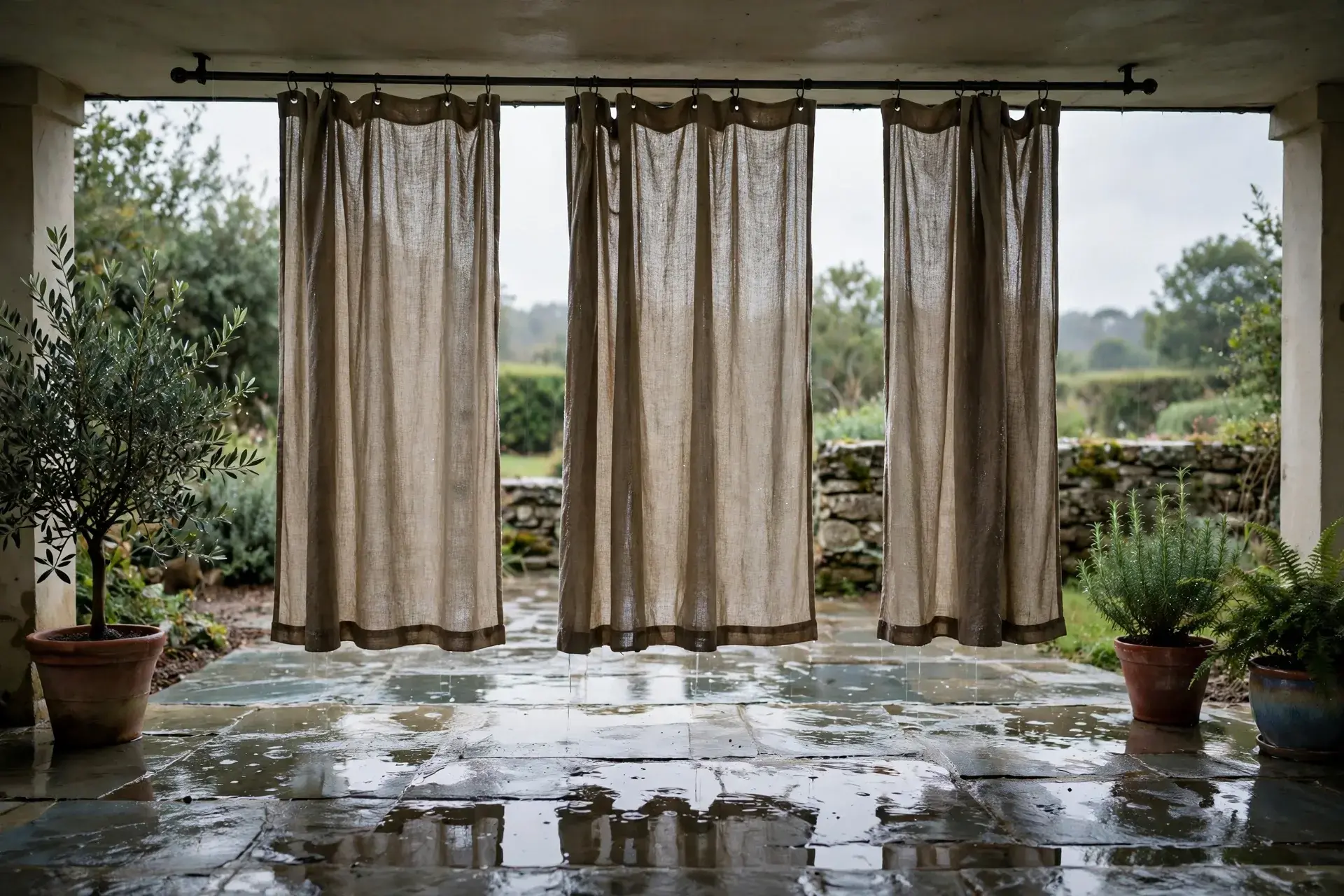
Waterproof and water-resistant sound alike, but they promise different things, and the difference decides whether a panel survives a storm. Waterproof means water does not pass through the fabric under normal rain, so a waterproof panel sheds a downpour and dries fast.
A waterproof panel usually has a coating or a triple weave that seals the fabric, and it feels denser and slightly stiffer in the hand.
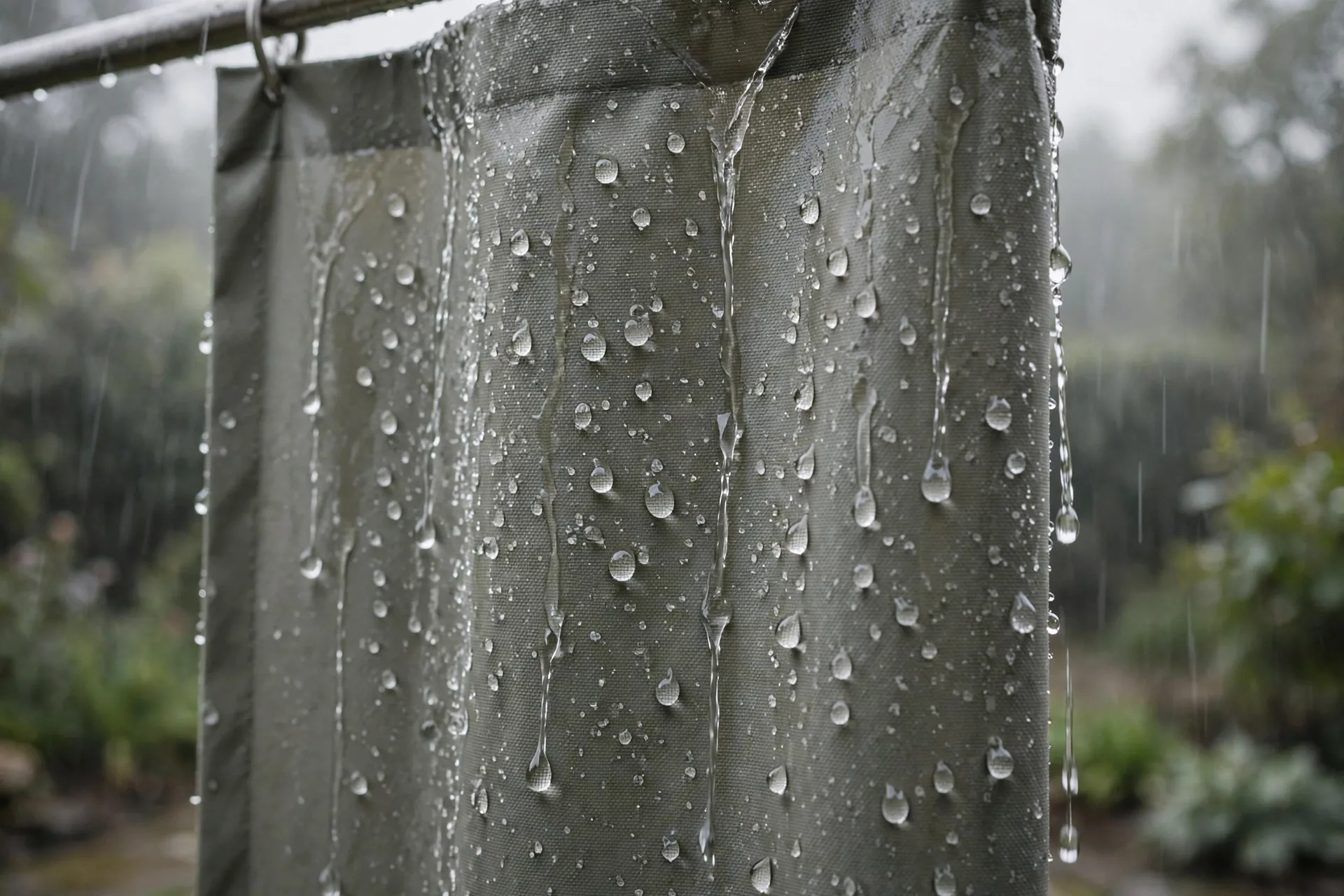
A water-repellent panel has a finish on the surface that beads water at first and wears down with washing and sun, so it needs re-treatment or replacement sooner.
Rain also adds weight. A wet panel is far heavier than a dry one, and that weight pulls on grommets and rods, so a rod that holds a dry panel can sag or pull loose when the panel is soaked.
Wind, weights, and keeping panels from sailing
Wind is the most visible outdoor problem, because a light panel turns into a sail, flaps, tangles, and pulls at its grommets. The fix is weight and anchoring, not a heavier headline. A panel needs weight at the bottom, a way to tie it back when it is open, and a top anchor that spreads the load across several grommets instead of one. A single thin panel on a long rod will always move more than two fuller panels on the same rod, because the fuller panels have more fabric and more weight to hold them down.
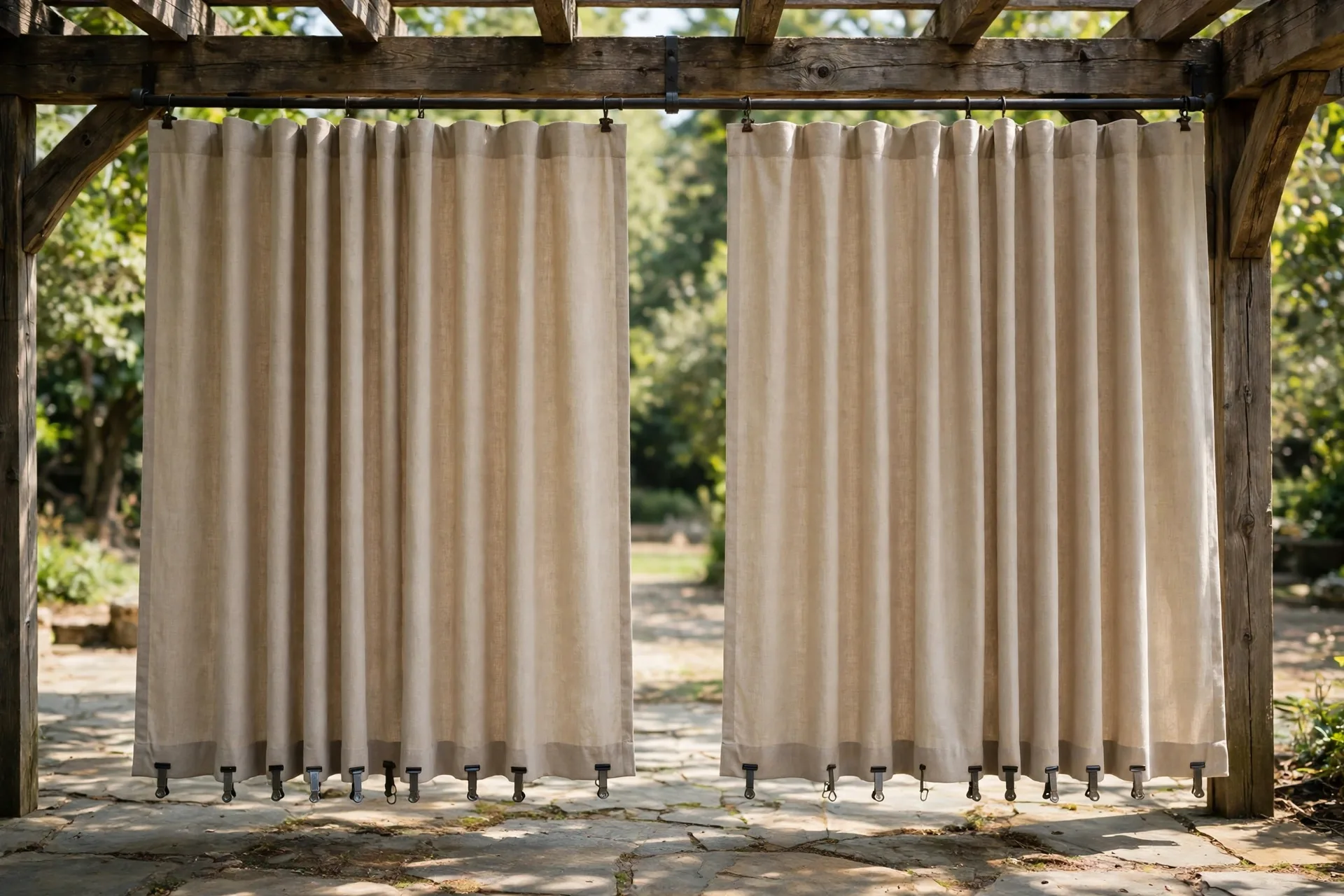
Curtain weights come in several forms: clip-on weights that grip the hem, chain or sandbag weights that slide into a hollow bottom hem, and a bottom rod or rope through double grommets. A hollow hem is the easiest place to add weight, because the weight sits inside the panel and does not show.
Weights are not the only anchor: bottom tabs on wind-focused sets, magnetic clips, and a lower cable or rod through a bottom rod pocket all stop panels lifting in wind, and they suit spots where weights alone do not hold. Check the bottom hem before you buy weights: some panels have a small bottom hem that will not take standard rod weights, so a windy spot needs another tie-down method instead. Do not hang anything you cannot take down quickly, and take the panels down before a storm: it is still the safest move when high wind is forecast.
Outdoor rods, tracks, and hanging that survives weather
Outdoor hardware must resist rust, hold wet weight, and let panels slide without catching. Stainless steel, powder-coated metal, and heavy-duty plastic are the safe choices, while plain steel, untreated iron, and cheap plated metal will rust and stain the fabric at the top.
A rod works well for a patio or a porch where panels open and close by hand, and a ceiling track works well for a pergola or a gazebo where the panel must follow a beam or a curve.
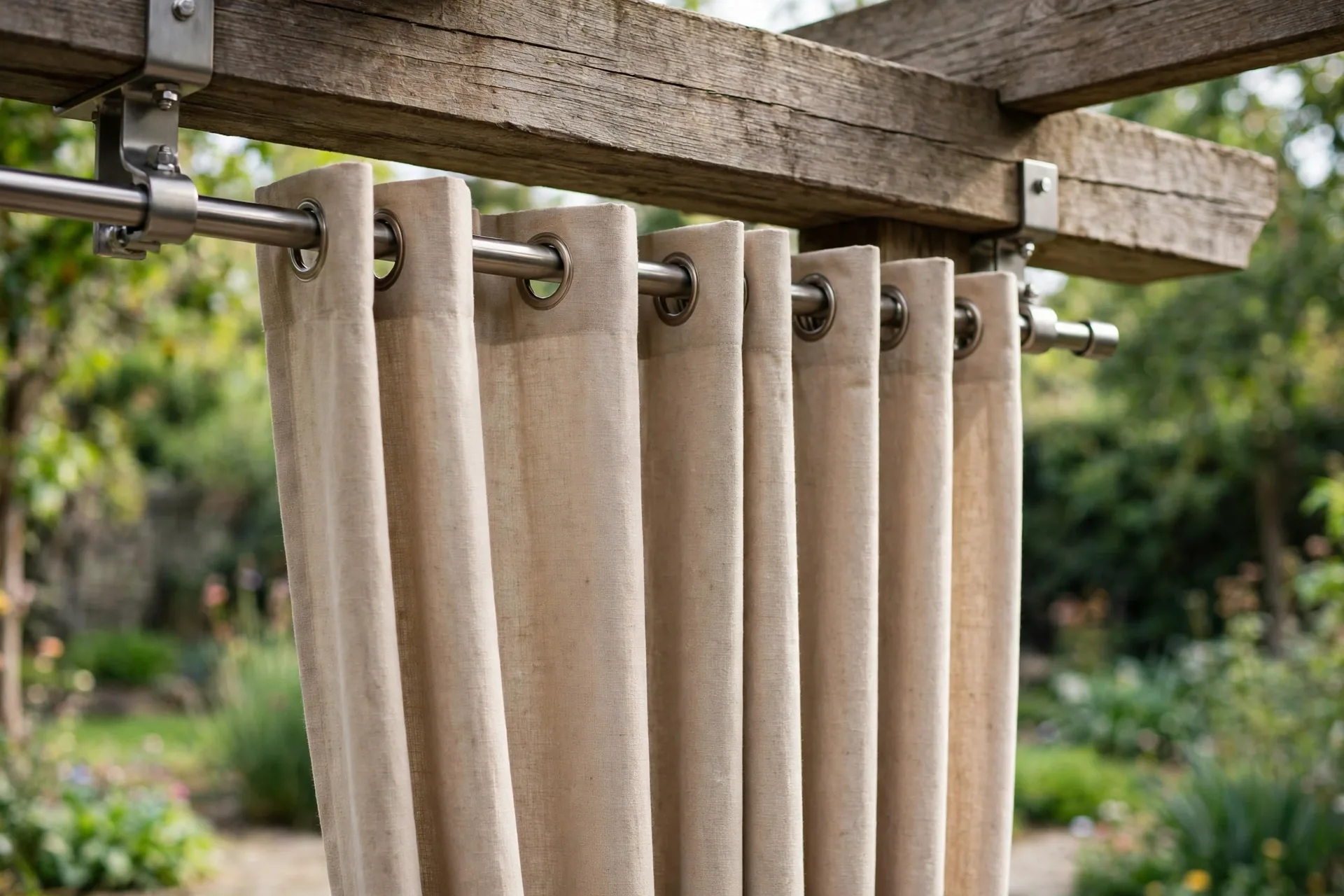
A track keeps panels from swinging in wind better than a rod, because the carriers hold the panel at regular points, but a track needs a firm anchor into a beam, not into thin fascia.
Check the grommet material as well: plastic rings can loosen after years of use, while metal holds up better, so metal grommets are the safer choice on a panel that stays up all season. Where the pergola is aluminum or vinyl, clamp brackets mount without drilling into the beams, which suits a metal or vinyl frame that screws would split or mark.
Hang outdoor panels a little higher than indoor panels, so the hem clears the floor and stays out of puddles, leaves, and mud. A hem that pools on a patio floor stays damp, picks up dirt, and grows mildew, while a hem that ends just above the floor dries fast and stays clean.
Pooling has one point in its favor: it can look elegant and shield better against wind, but the mildew risk is why this guide keeps the hem clear of the floor. For hanging steps, see How to Hang Curtains.
Outdoor curtains by place: patio, pergola, and gazebo
A patio is usually a paved area beside the house, often partly covered, with one or two open sides. The patio job is shade and privacy from neighbors, and the panels can be lighter, because the house wall shelters one side from wind. Light-filtering or waterproof privacy panels suit most patios, with a blackout panel on the west side where evening sun is strongest. A patio panel can be taken down easily at the end of the season, because the rod is usually within reach.
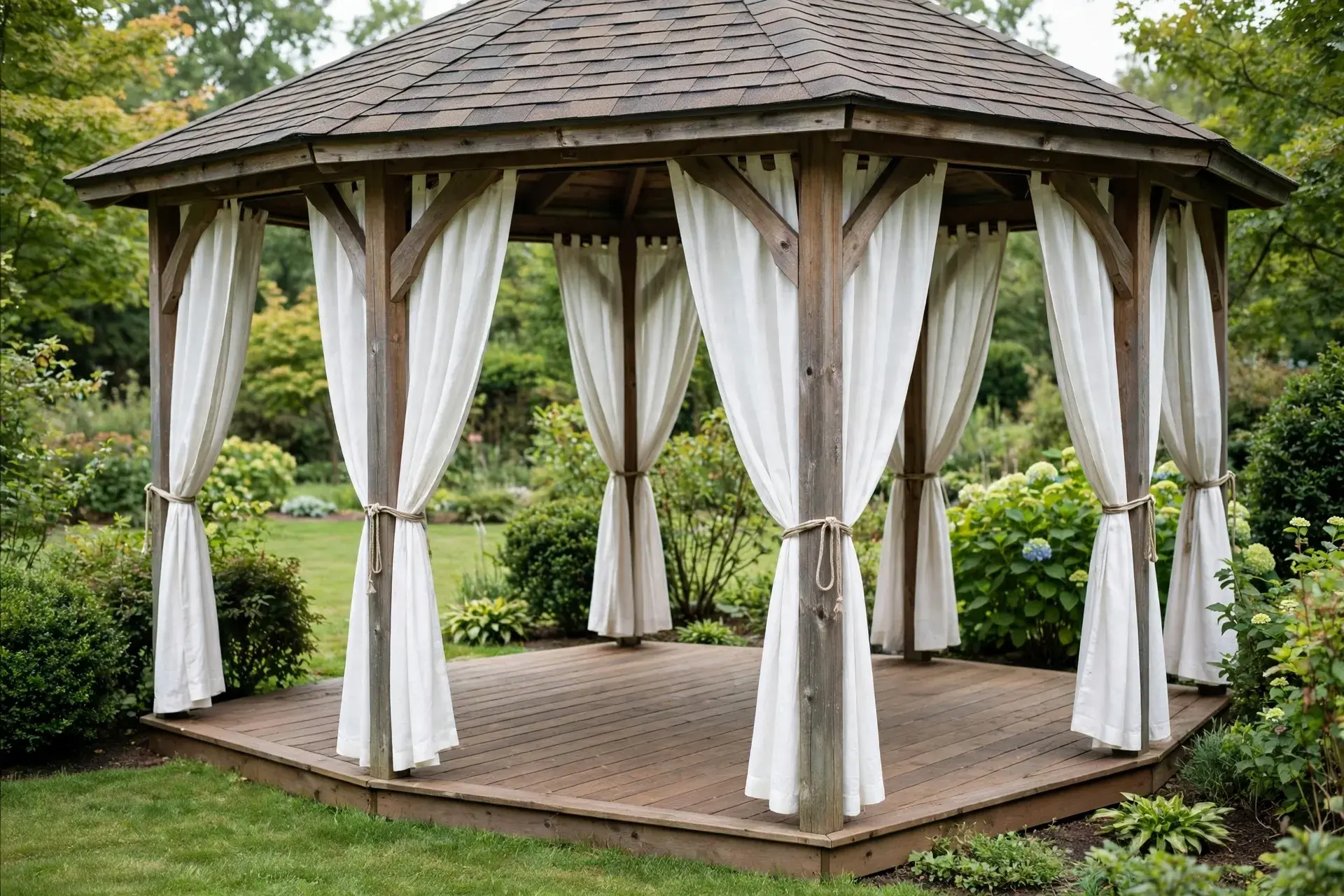
A pergola is an open frame with beams and slats, not a solid roof, so sun and rain come through the top as well as the sides. The pergola job is cutting low sun and wind, not stopping rain from above, so a curtain alone cannot make a pergola dry.
Mesh panels are a separate type worth knowing: they keep insects out while letting air through, with rod pockets top and bottom, and they pin down with a lower rod, a bungee, or a wire. Mesh pairs well with vinyl, with mesh on the insect side and vinyl on the windward side.
The beam and roof structure decides what can hang: a louvered roof and an open roof take different mounts, beam spacing sets where the anchor can go, and you need clearance at the top of the beam. Mount under the beam or to its side as the structure allows, hang from the center outward with even folds, and use hook-and-loop tabs where you cannot drill into a wooden beam. Tension wire is the cheapest way to hang sheer mesh.
A sheer panel with a removable blackout liner is a useful hybrid: the liner clips on and off with magnetic clips, so the same window gives soft light by day and darkness when the liner is clipped in.
Measuring an outdoor opening without gaps
Measure the opening, not the panel you hope will fit, because outdoor openings are rarely standard and a short panel leaves a gap where low sun and wind get through. Measure the width of each bay at the top, where the rod or track will sit, and measure the drop from the rod to the floor or to the point where you want the hem to end. Write down each bay separately, because a pergola with four bays can have four different widths. For measuring steps that also apply indoors, see How to Measure for Curtains.
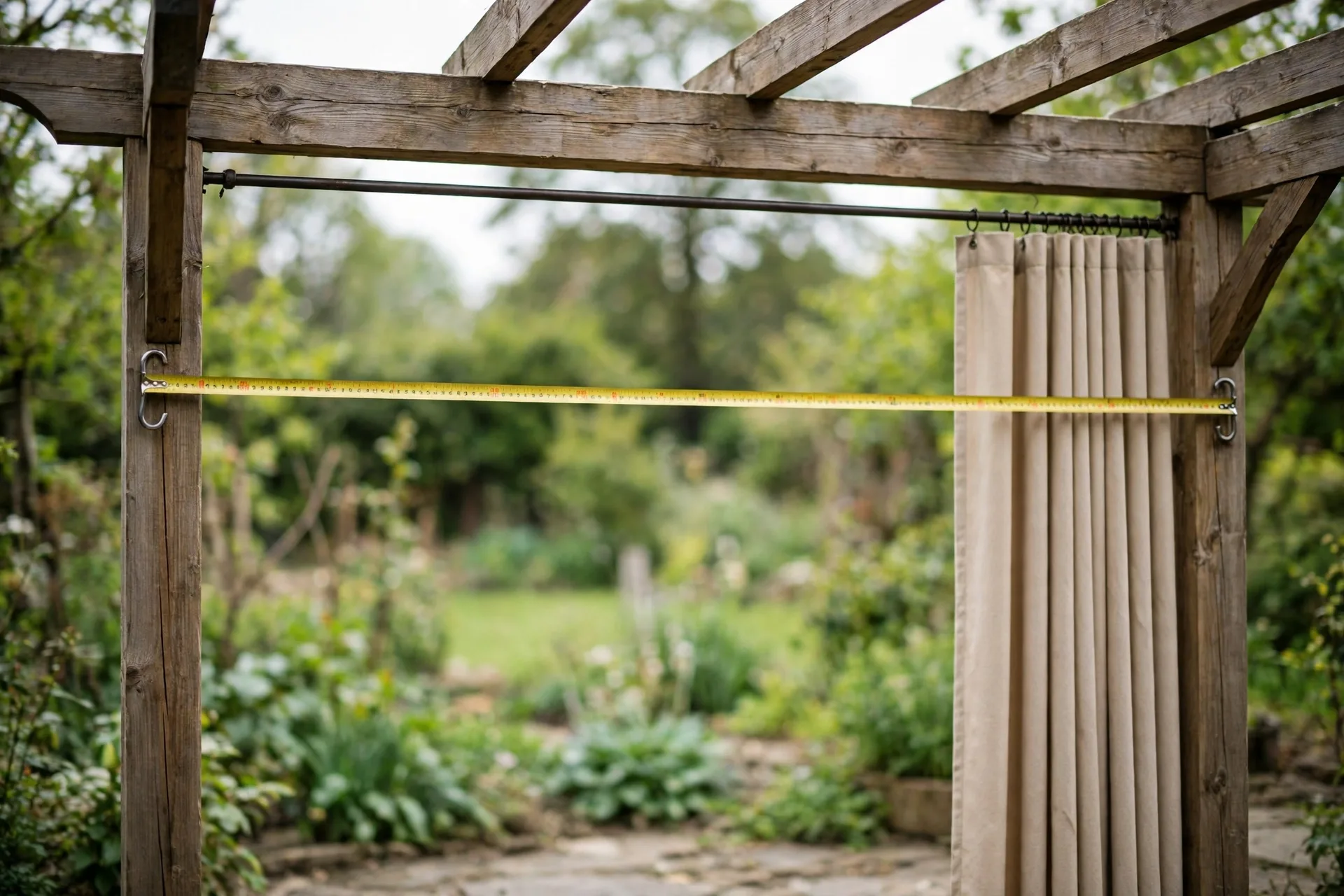
Allow fullness, because a flat panel stretched tight across a bay looks thin and lets light through the weave. A light-filtering outdoor panel needs about one and a half to two times the bay width in fabric, so two panels per bay usually look better than one.
Check the rod length against the bay width before you order panels, because the rod must extend past the opening on each side so panels can stack clear of the glass or the view when they are open.
Order with variation in mind: length can vary by 1 to 2 inches between panels in the same pack, and panels of the same color can differ in shade, so check each panel as you unpack it. Test before committing to a full set: hang one pair on one bay first, and order the rest only if the color holds in your light.
Care and storage through the off-season
Outdoor panels last longer when they are washed, dried fully, and stored dry, and they fail fast when they are folded damp or left up through winter.
Dry panels in the open air, hanging on the rod or on a line, until they are fully dry to the touch on both sides. A panel that feels dry on the face can still be damp in the hem or the folds, and that damp spot is where mildew starts.
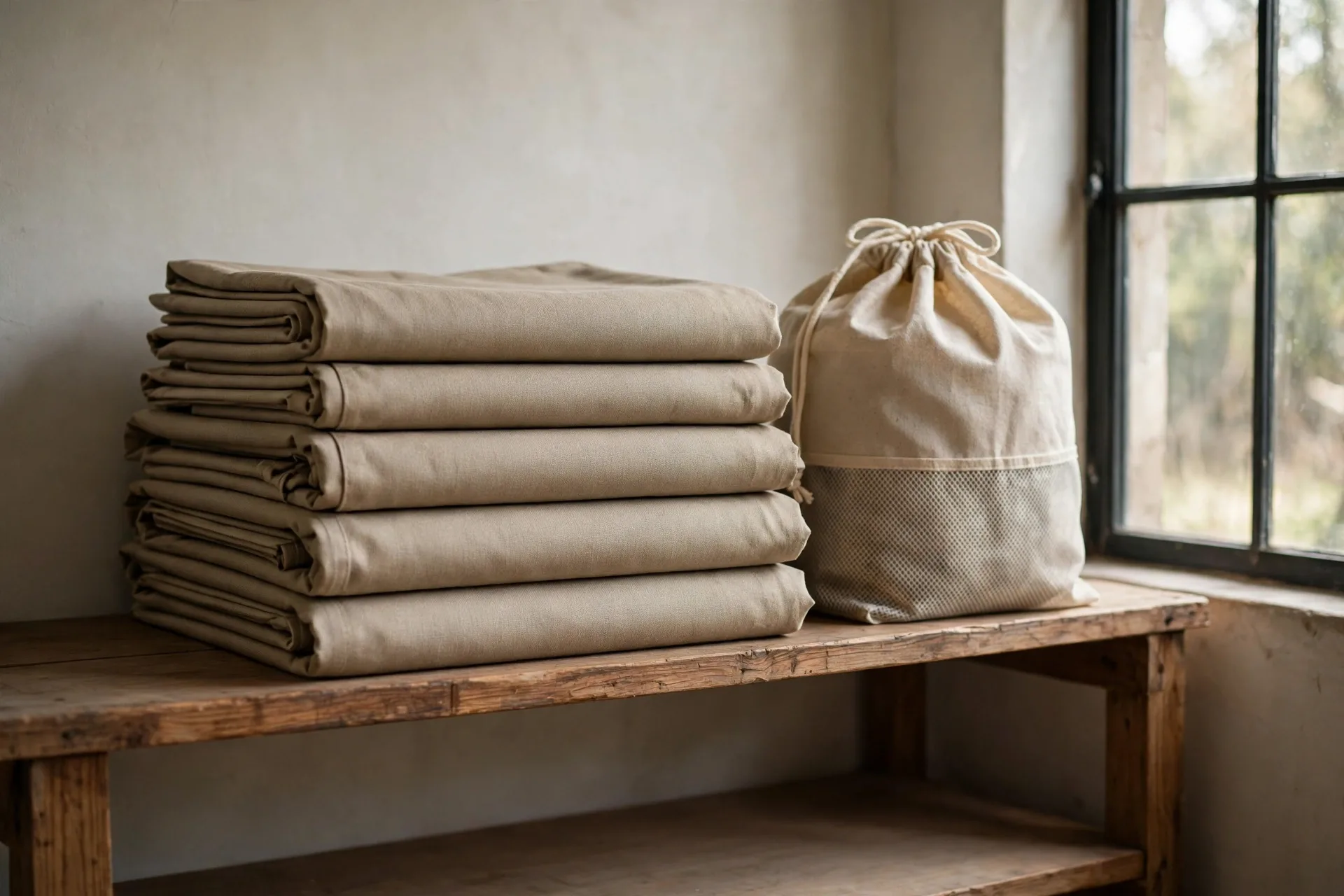
Store panels clean and fully dry, loosely rolled or folded, in a dry place out of direct sun, in a breathable bag or a clean box, not in a sealed plastic bag that traps damp. Roll vinyl panels instead of folding them, because a sharp fold can crease vinyl and leave a permanent line.
Outdoor curtain mistakes that shorten panel life
The most common outdoor mistake is buying an indoor panel for an outdoor job, because it looks right on the day it goes up and fails by the end of the season. The second is buying a water-repellent panel for a spot that gets driving rain, then blaming the panel when it soaks through.
Other mistakes follow from hanging and care: letting the hem pool on a wet patio floor, where it stays damp and grows mildew; fixing a rod to thin fascia instead of a beam, so wet weight pulls it loose; and folding damp panels into storage, where they smell by spring. A further mistake is ordering one panel per bay and stretching it flat, which looks thin and lets sun through, where two fuller panels would have closed properly.
Frequently asked questions about outdoor curtains
Most outdoor curtain questions come down to weather, wind, and how long a panel will last outside.
Can indoor curtains be used outdoors?
Indoor curtains can be used outdoors for a single sunny afternoon, but they are not built for sun, rain, wind, and damp, so they fade, weaken, and mark fast if they stay out. Cotton absorbs rain and dries slowly, linen weakens in sun, and silk fades outdoors. Use a real outdoor panel for any panel that stays up all season, and bring indoor panels in before rain and before night.
Are outdoor curtains waterproof?
Some outdoor curtains are waterproof, and most are water-repellent. Waterproof means water does not pass through under normal rain, while water-repellent means the fabric sheds light rain but driving rain will soak through. Read the listing detail, not the headline, and put the waterproof panel on the side that gets driving rain.
How do I keep outdoor curtains from blowing in the wind?
Add weight at the bottom, through a hollow hem, clip-on weights, or a bottom rod or rope through double grommets, and use tiebacks when panels are open. A fuller panel hangs straighter than a flat one, and a fixed vinyl wind-screen panel suits a very windy spot better than a free-hanging fabric panel. Take panels down before a forecast storm.
Do outdoor curtains block sun and heat?
Outdoor curtains block sun and heat in proportion to their fabric and weave. Light-filtering panels cut glare while keeping the space bright, and blackout triple-weave panels block most sunlight and cut heat under a pergola or on a deck. A UV rating tells you the fabric blocks ultraviolet light, but the color and the weave decide how much light and heat reach you.
How long do outdoor curtains last?
Outdoor curtains last longer when they are made from a fade-resistant fiber, hung on rust-proof hardware, taken down in the off-season, and stored clean and dry. A panel left up year-round in full sun and rain will fade and wear far faster than the same panel stored indoors through winter. Check grommets and hems each season, and replace a panel when the fabric weakens or the color has faded unevenly.
This guide is research-based curation: we compared maker specifications, published reviews, and current prices. Read how we choose.